
Why Does My Dog Chew on My Hair? 5 Reasons

You bend down to say hello, and your dog goes straight for your hair. A gentle nibble, a curious tug, maybe even a full-on chew. If you’ve ever asked “why does my dog chew on my hair?”, you’re not alone — it’s one of those odd little habits that feels personal. The good news: it’s almost always affection, boredom, or instinct rather than anything to worry about. Let’s break down the five most common reasons — and exactly what to do about it.
Table of Contents
1. Grooming Instinct
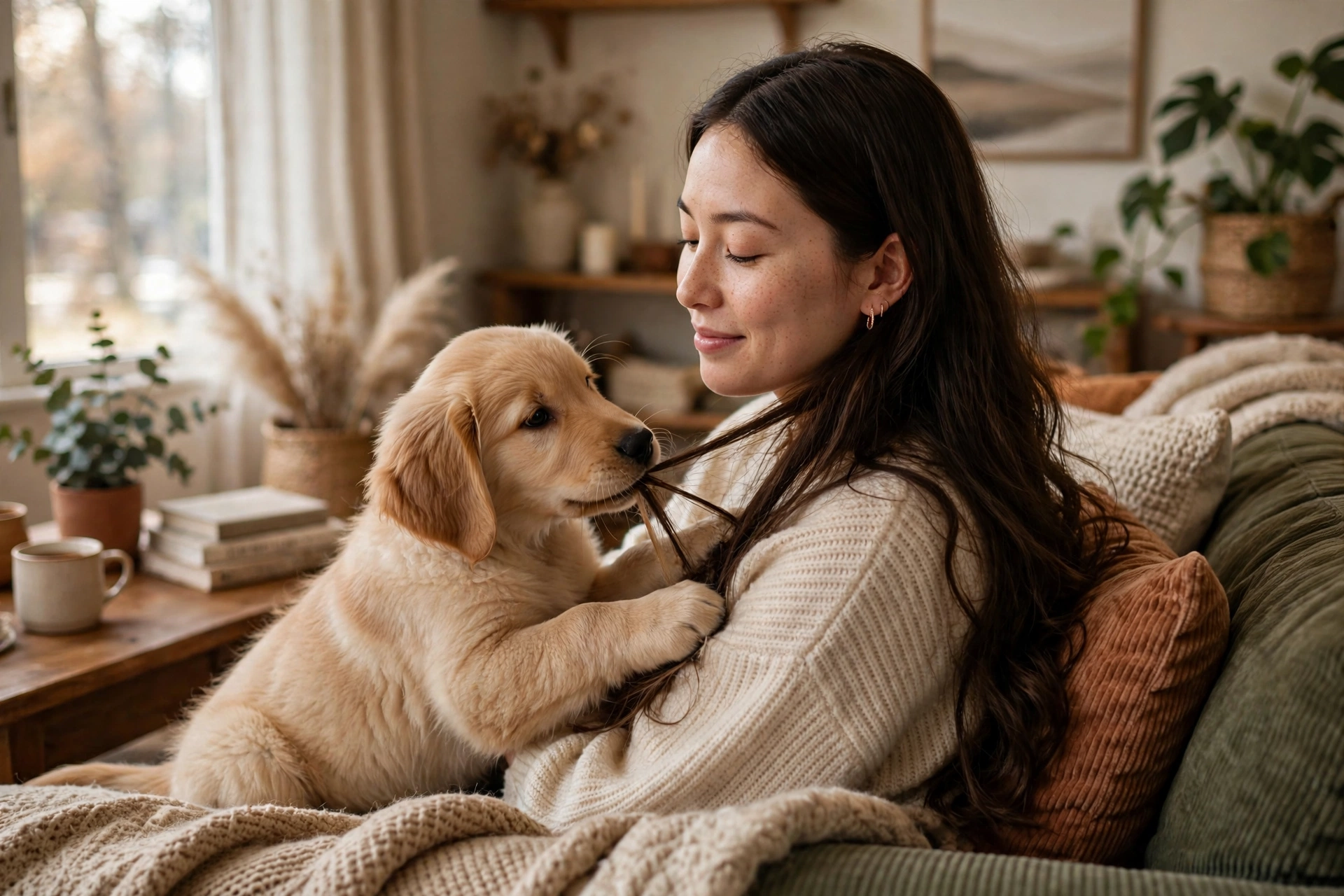
What it means: Dogs groom each other to strengthen social bonds, and nibbling is part of that ritual. When your dog softly chews your hair, it’s often treating you the way it would a beloved pack mate — a rough, affectionate “grooming session.” This is especially common in puppies, who learn social behaviors through Puppies are the worst offenders because mouthing is how they explore the world, but adult dogs do it too — especially affectionate breeds like Cavaliers, Labs, and Goldens.
What to do: If it’s gentle and occasional, take it as a compliment. Acknowledge the affection with a calm word, then redirect to something more appropriate before it becomes a habit. Puppies usually outgrow the mouthiest version of this as they mature.
Helpful pick: KONG Classic — stuff it with peanut butter to give that mouthy energy a better target.
2. Attention-Seeking

What it means: Chewing your hair works brilliantly as an attention-grabber. You react — you laugh, you yelp, you turn around — and your dog learns that hair-chewing reliably makes you notice them. Dogs repeat whatever gets a reaction, so even scolding counts as a win in their minds.
What to do: Stay calm and neutral. Calmly move your hair out of reach, offer a chew toy instead, and reward the moment your dog takes the toy. The key is making the toy more interesting than your reaction. If you work from home and your dog pesters you at your desk, build short play breaks into your schedule — many attention-seekers are really just bored.
Helpful pick: Outward Hound Tornado Puzzle Toy — interactive fun that earns your dog praise without involving your hair.
3. Comfort and Self-Soothing

What it means: Some dogs mouth soft things — blankets, stuffed toys, and yes, hair — as a way to soothe themselves, much like a child with a security blanket. If your dog only chews your hair when sleepy, during storms, or in new environments, it’s likely a self-calming habit.
What to do: There’s nothing wrong with a gentle soothing habit, but hair can be a choking hazard if swallowed in quantity. Offer a soft plush toy or blanket as a substitute, and keep the routine calm and consistent. Rescue dogs especially benefit from a predictable wind-down ritual at the same time each evening.
Helpful pick: ADAPTIL Calm Home Diffuser — supports a calmer environment for anxious, mouthy dogs.
4. Your Scent
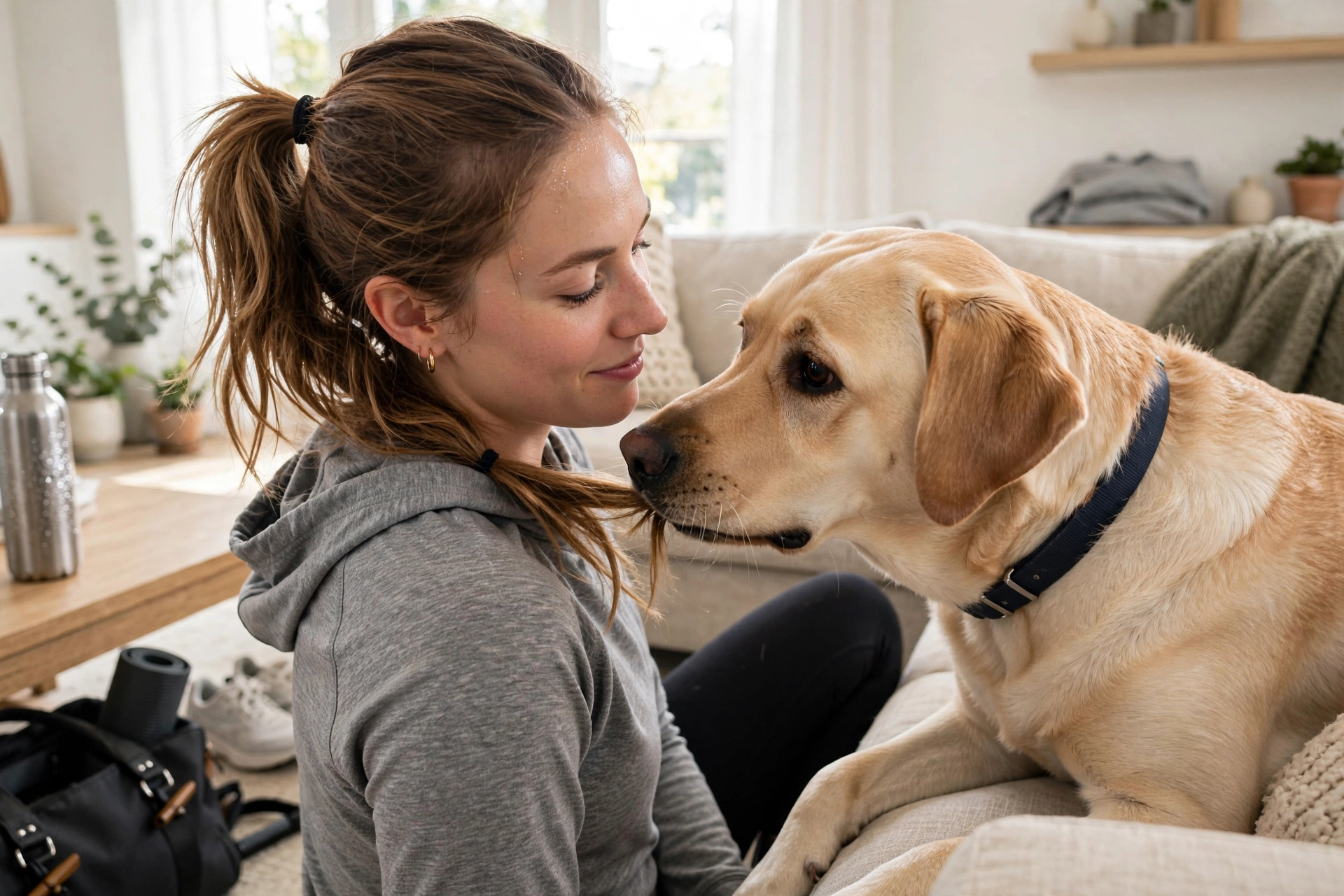
What it means: Hair holds your scent more strongly than almost anything else you wear, and your scent is your dog’s favorite thing in the world. After a workout, a shower, or time outside, your hair smells novel and fascinating. Nibbling is your dog’s way of “reading” where you’ve been — like scrolling your social feed.
What to do: Letting them sniff is fine; chewing is where you draw the line. Keep long hair tied back when cuddling, and give them a worn t-shirt to snuggle with instead — same scent, much safer. This is also why some dogs raid laundry hampers; the instinct is identical.
Helpful pick: Benebone Wishbone Chew Toy — a long-lasting chew for dogs who just need something in their mouth.
5. Playfulness

What it means: Hair that dangles, swings, and moves when you turn your head is basically a built-in tug toy. Many dogs chew hair simply because it’s fun — it moves, it makes you react, and it turns into a game. Puppies and young dogs are the biggest offenders.
What to do: Turn it into a training moment: the second your dog goes for your hair, swap in a tug toy and praise enthusiastically when they take it. You’re teaching “toys are for tugging, hair is not” without killing the fun. Short, frequent play sessions tire out a playful chewer faster than one long session.
Helpful pick: Zuke’s Mini Naturals Training Treats — reward every good toy-choice instantly to lock in the habit.
How to Stop Hair Chewing
If the habit has gotten out of hand, here’s a simple plan:
- Manage access: Tie long hair back or wear a bun during cuddle time until the habit fades.
- Redirect every time: Calmly swap hair for a chew toy — no scolding, just a trade.
- Reward the swap: Treat and praise the moment your dog chooses the toy.
- Meet their needs: Plenty of exercise and mental enrichment reduces boredom-driven chewing.
- Stay consistent: Everyone in the household must follow the same rules, or the behavior won’t fade.
If hair-chewing becomes obsessive or your dog is swallowing large amounts of hair (risking gastrointestinal blockage), check in with your veterinarian to rule out anxiety disorders or pica. In the meantime, keep loose strands picked up off floors and couches — prevention is always easier than correction.
Frequently Asked Questions
Is it safe for my dog to chew on my hair?
Occasional gentle nibbling is unlikely to cause harm, but swallowing lots of hair can cause digestive upset or, in rare cases, a blockage. It’s best to redirect the habit — and if your dog is gulping down strands, monitor their appetite and stool for a day or two.
Why does my dog only chew my hair and not anyone else’s?
Your dog has the strongest bond — and the strongest scent association — with you. Hair-chewing is often a sign of attachment, which is why it’s usually reserved for their favorite person. If your dog ignores everyone else’s hair, take it as a backhanded compliment.
Should I punish my dog for chewing my hair?
No. Punishment usually increases anxiety and makes attention-seeking behaviors worse. Calm redirection plus rewarding the right choice works far better — and it keeps your bond strong instead of teaching your dog to fear your hands near their mouth.
Do puppies grow out of hair chewing?
Most do, as teething ends and they learn household manners — usually by 6 to 12 months. Consistent redirection speeds things up. If an adult dog is still at it, it’s typically an attention or boredom issue rather than teething.
Could hair chewing mean my dog is anxious?
It can be one sign, especially if it happens during storms, separations, or other stress triggers. If the behavior is compulsive or paired with pacing, whining, or appetite changes, talk to your vet. They can help you tell the difference between a quirky habit and genuine distress.
Keep Reading: Why Does My Dog Lick My Hands? · Signs Your Dog Loves You · How to Teach Your Dog to Come When Called · Why Does My Dog Lick the Air?
As an Amazon Associate, PetPostHub earns from qualifying purchases.


