DIY Beef Liver Dog Food Recipe: Turkey & Brown Rice Bowl (2026)
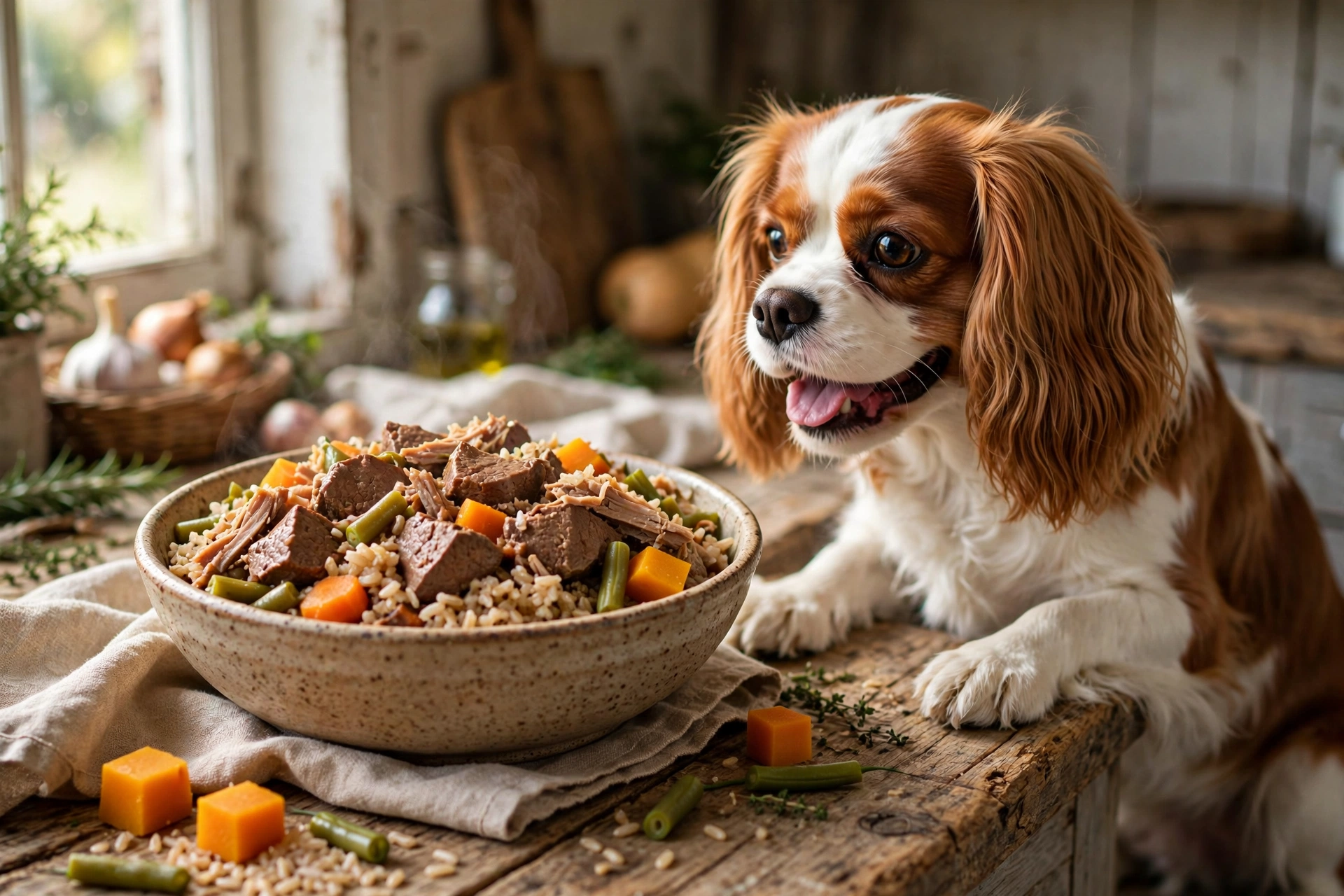
Making a beef liver dog food recipe at home is one of the smartest upgrades you can give your dog’s bowl. Beef liver is one of the most nutrient-packed foods you can feed a dog — rich in protein, iron, B vitamins, copper, and vitamin A — and it costs far less than premium kibble or commercial fresh-food subscriptions. The catch is that liver is so potent you have to use it in the right proportion, which is exactly what this recipe does.
In this guide, you’ll get my single go-to beef liver dog food recipe — a complete, balanced-style meal with ground turkey, brown rice, butternut squash, and fresh vegetables — plus the safety rules for how much liver is safe, the calcium fix most homemade diets miss, exact portions by dog size, and storage instructions.
Why Beef Liver Is a Powerhouse for Dogs
Gram for gram, beef liver delivers more iron, copper, vitamin B12, and vitamin A than nearly any other whole food you can put in a dog’s bowl. That density is why dogs with dull coats, low energy, or picky appetites often respond so visibly once liver enters their rotation — it fills micronutrient gaps that muscle meat alone can’t cover. It’s also one of the cheapest animal foods at the butcher counter, since human shoppers rarely buy it.
But potency cuts both ways. Liver is extremely high in vitamin A, which is fat-soluble and accumulates in the body over time. Too much, for too long, can lead to joint pain, brittle bones, and liver damage — the classic hypervitaminosis A problem. That’s why the safe ceiling for liver is about 5–10% of the total diet, and this recipe keeps the liver portion right inside that line.
The second thing homemade diets almost always miss is calcium. Muscle meat and organs are loaded with phosphorus and carry almost no calcium, so you have to add it yourself. A small scoop of ground eggshell powder — basically free, made from shells you’d otherwise throw away — closes the single most common nutrient gap in home-cooked dog diets.
DIY Beef Liver Dog Food: Turkey, Liver & Brown Rice Bowl
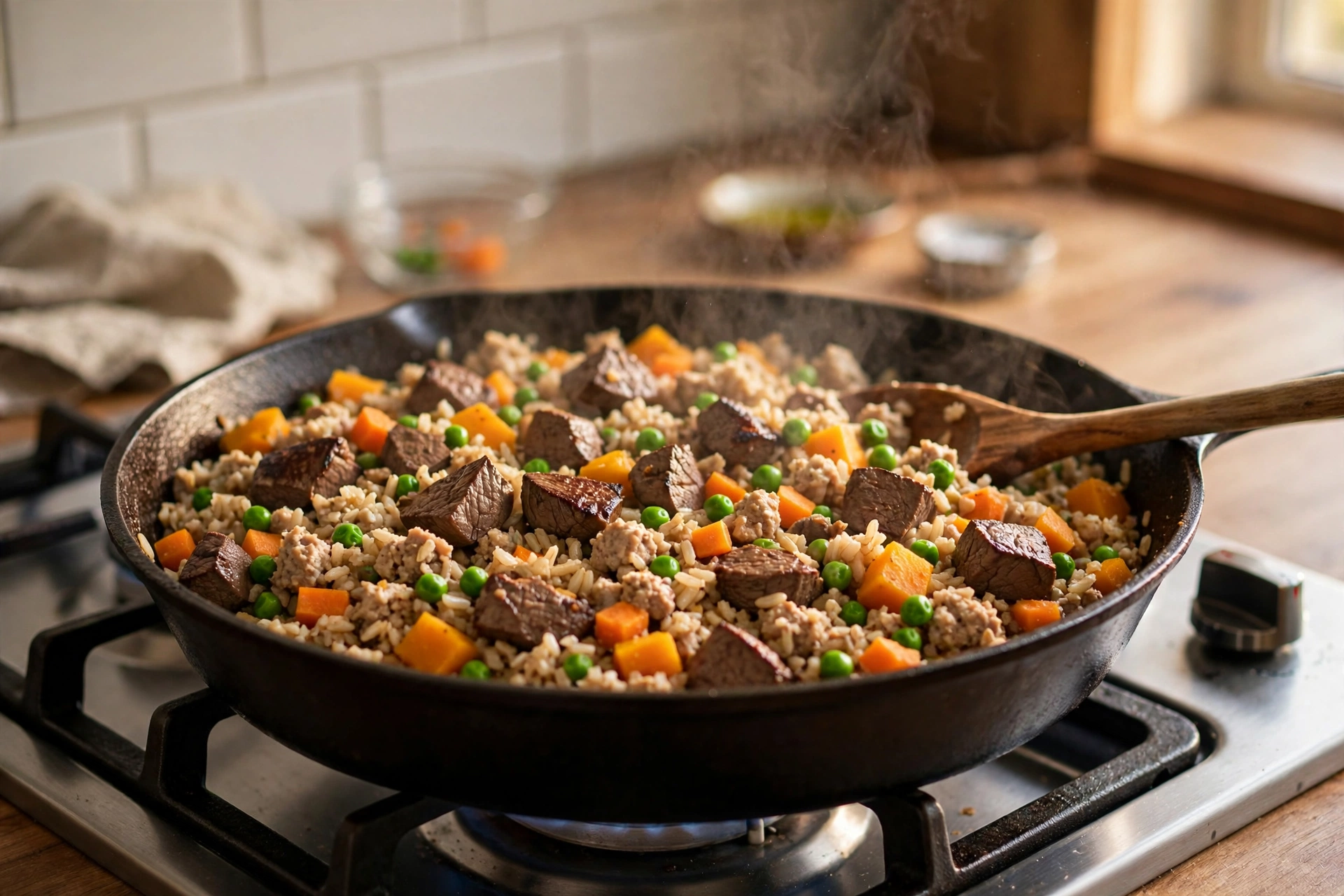
This is the recipe I rotate through my own kitchen: browned ground turkey plus a carefully measured portion of diced beef liver, folded into nutty brown rice with soft-cooked butternut squash and garden vegetables, finished with egg and eggshell calcium. It takes about 45 minutes, most of it hands-off while the rice simmers.
Ingredients
| Ingredient | Amount |
|---|---|
| Ground turkey (93% lean) | 1 lb |
| Beef liver, fresh | 3 oz (under 1/4 lb) |
| Brown rice, uncooked | 1 cup |
| Butternut squash, peeled and diced | 1 cup |
| Green beans, trimmed and chopped | 3/4 cup |
| Carrots, diced | 1/2 cup |
| Whole egg | 1 large |
| Ground eggshell powder | 1/2 teaspoon |
| Water or low-sodium chicken broth | 2 1/2 cups |
Instructions
- Prep the liver. Rinse the beef liver under cold running water and pat it completely dry. Trim away any thick membranes or tough connective tissue. Dice it into small, pea-sized cubes — small pieces distribute evenly so no single bowl gets a liver overload.
- Brown the turkey. Heat a large, deep skillet or Dutch oven over medium heat. Add the ground turkey and break it apart with a wooden spoon. Cook for 7–8 minutes until no pink remains. Leave the fat in the pan — your dog needs the calories and flavor.
- Sear the liver. Push the turkey to one side of the pan and add the diced liver. Stir-fry for 3–4 minutes until browned on the outside but still slightly rosy inside. This keeps the texture tender and preserves more of the B vitamins. Transfer the meat mixture to a large mixing bowl.
- Start the rice and squash. In the same pan, pour in the water (or broth), brown rice, and diced butternut squash. Bring to a boil, then reduce to a low simmer and cover. Cook for 20 minutes.
- Steam the vegetables and egg. Scatter the green beans and carrots over the rice for the last 8 minutes of cooking, and crack the egg right on top. Cover and let the residual heat cook the egg through — stir it in after a minute so it scrambles into the rice.
- Combine everything. Pour the rice-vegetable mixture into the bowl with the meat. Sprinkle the eggshell powder evenly over the top and stir thoroughly until every scoop looks the same.
- Cool fast. Spread the finished food on a rimmed sheet pan in a thin layer. It cools to room temperature in about 20 minutes, which keeps it safely out of the bacterial danger zone.
- Portion it out. Divide into daily containers using the serving table below. Refrigerate what you’ll use in the next few days and freeze the rest.
Method Variations
Slow cooker version: Add the turkey, rice, squash, vegetables, and broth to a slow cooker; cook on low 5–6 hours. Brown and dice the liver separately on the stovetop (3–4 minutes), stir it into the cooker for the last 30 minutes, then add the egg and eggshell powder at the end.
Chicken swap: Ground chicken works exactly like ground turkey here if that’s what your dog prefers. Keep everything else the same.
Grain-swap for sensitive stomachs: Replace the brown rice with the same amount of pearled barley or white rice — cook times stay nearly identical, and white rice is gentler for dogs with touchy digestion.
Portion and Serving Sizes
These are starting points for an average-activity adult dog. Watch your dog’s weight over 2–3 weeks and adjust up or down 10% as needed — you should be able to feel the ribs without seeing them.
| Dog Weight | Cups Per Day |
|---|---|
| 10 lbs | 3/4 cup |
| 20 lbs | 1 1/4 cups |
| 30 lbs | 1 1/2 cups |
| 50 lbs | 2 1/4 cups |
| 70 lbs | 2 3/4 cups |
| 90 lbs | 3 1/4 cups |
Transition gradually if your dog currently eats kibble: mix 25% homemade with 75% kibble for three days, then 50/50 for three days, then 75/25, then full homemade. A sudden swap almost always causes loose stools.
Storage Instructions
Fridge: Keeps for 4 days in airtight containers.
Freezer: Keeps for 3 months. Portion into flat freezer bags — they freeze and thaw much faster than bulky tubs, and you can stack a week’s worth in one drawer.
Always thaw frozen portions in the fridge overnight, never on the counter. Warm the serving to room temperature before feeding; microwave hot spots can burn mouths, so stir well if you warm it that way.
Liver Safety Rules Every Owner Must Know
Liver is a supplement-food, not an everyday base. Stick to the 5–10% rule: in this recipe, the 3 oz of liver spread across the full batch lands well under the ceiling for any adult dog. If you scale the recipe up, scale the liver proportionally — don’t just add more because it’s healthy.
Always cook liver thoroughly for dogs — raw liver can carry bacteria, and searing it dry in a hot pan (no oil needed) gives it the caramelized aroma that convinces even picky eaters. And because long-term homemade diets should always be checked against your vet’s advice, mention the organ-meat ratio at your next appointment, especially for puppies, pregnant dogs, or dogs with liver conditions.
Frequently Asked Questions
How much beef liver is safe for dogs per day?
Liver should make up no more than 5–10% of your dog’s total diet. This recipe keeps it well inside that range by measuring it against the full batch — follow the portions and you’re safe.
Can dogs eat beef liver every day?
Small measured amounts daily are fine as long as the weekly total stays under the 10% ceiling. This recipe is designed for daily feeding at the listed portions.
Is raw beef liver safe for dogs?
Cook it. Raw liver can carry bacteria and parasites, and searing it is easy and makes it far more appealing to dogs. Three to four minutes in a hot pan does the job.
Do I really need the eggshell powder?
Yes — calcium is the most commonly missing nutrient in homemade dog diets, and eggshell powder is the cheapest, simplest fix. Bake rinsed shells at 300°F for 10 minutes, grind to a fine powder, and add 1/2 teaspoon per pound of meat.
What does this batch cost compared to kibble?
Roughly $7–8 per batch using sale-priced turkey and butcher-counter liver, which covers about 6 days for a 30-pound dog — typically cheaper than a premium kibble bag and far cheaper than a fresh-food subscription.