10 DIY Dog Leash Ideas You Can Make at Home
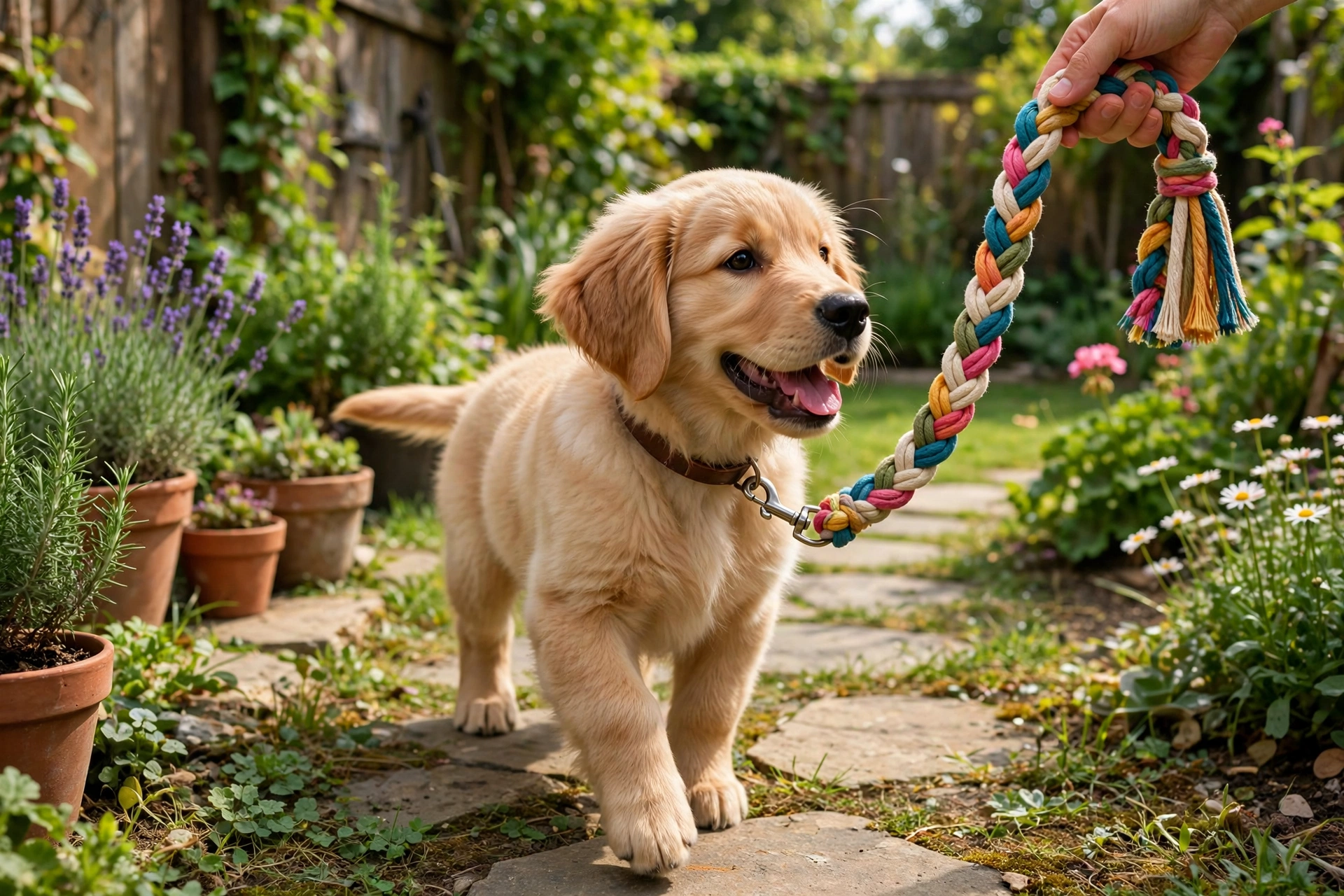
Making your own dog leash DIY project is one of the most rewarding crafts a dog owner can try. Store-bought leashes cost $20 to $85, wear out in months, and rarely match your style. A homemade leash costs under $15, takes less than two hours, and lets you pick the exact color, length, and handle that fit your dog’s size and pull strength. Below are 10 DIY dog leash designs, from no-sew T-shirt braids to braided leather and reflective night-walk leashes, each with materials, build steps, and a product pick to get you started.
Table of Contents
- 1. Classic Twisted Cotton Rope Leash with Padded Handle
- 2. Cobra-Weave 550 Paracord Leash
- 3. No-Sew Upcycled T-Shirt Braided Leash
- 4. Flat Webbing Leash with Traffic Handle
- 5. Boho Macramé Slip Lead
- 6. Mountain Climbing Rope Leash
- 7. Reflective Night-Walk Leash
- 8. Rinse-and-Go Waterproof Leash
- 9. Braided Genuine Leather Leash
- 10. Hands-Free Convertible Waist-Belt Leash
- Frequently Asked Questions
1. Classic Twisted Cotton Rope Leash with Padded Handle
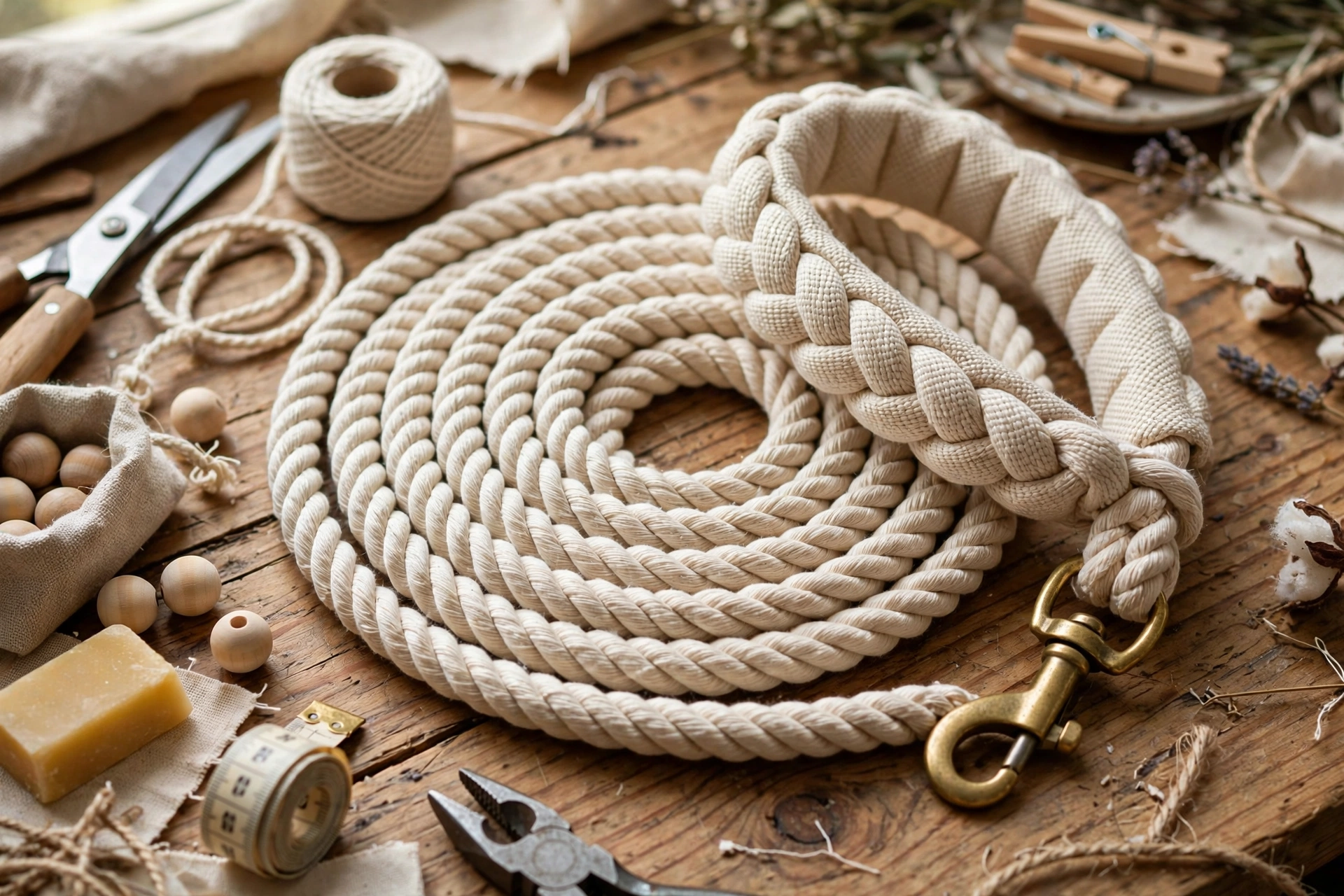
This timeless rope leash works for dogs of all sizes and costs under $10 to make. The soft cotton is gentle on hands, and the natural stretch of the rope absorbs some of the shock when your dog lunges. Cut 7 feet of 1/2-inch twisted cotton rope, thread one end through a swivel snap hook, fold it back 3 inches, and whip the joint tightly with waxed thread for a finish that will not slip.
For the handle, fold a 6-inch loop at the other end and wrap it with the same rope to create a padded grip. Seal cut ends with a lighter flame for a few seconds to stop fraying, then rinse the finished leash with the hose after muddy walks.
Helpful pick: MKMJ Natural Twisted Cotton Rope, 1/2in x 50ft — plenty of soft, easy-to-knot cotton for several leashes.
2. Cobra-Weave 550 Paracord Leash
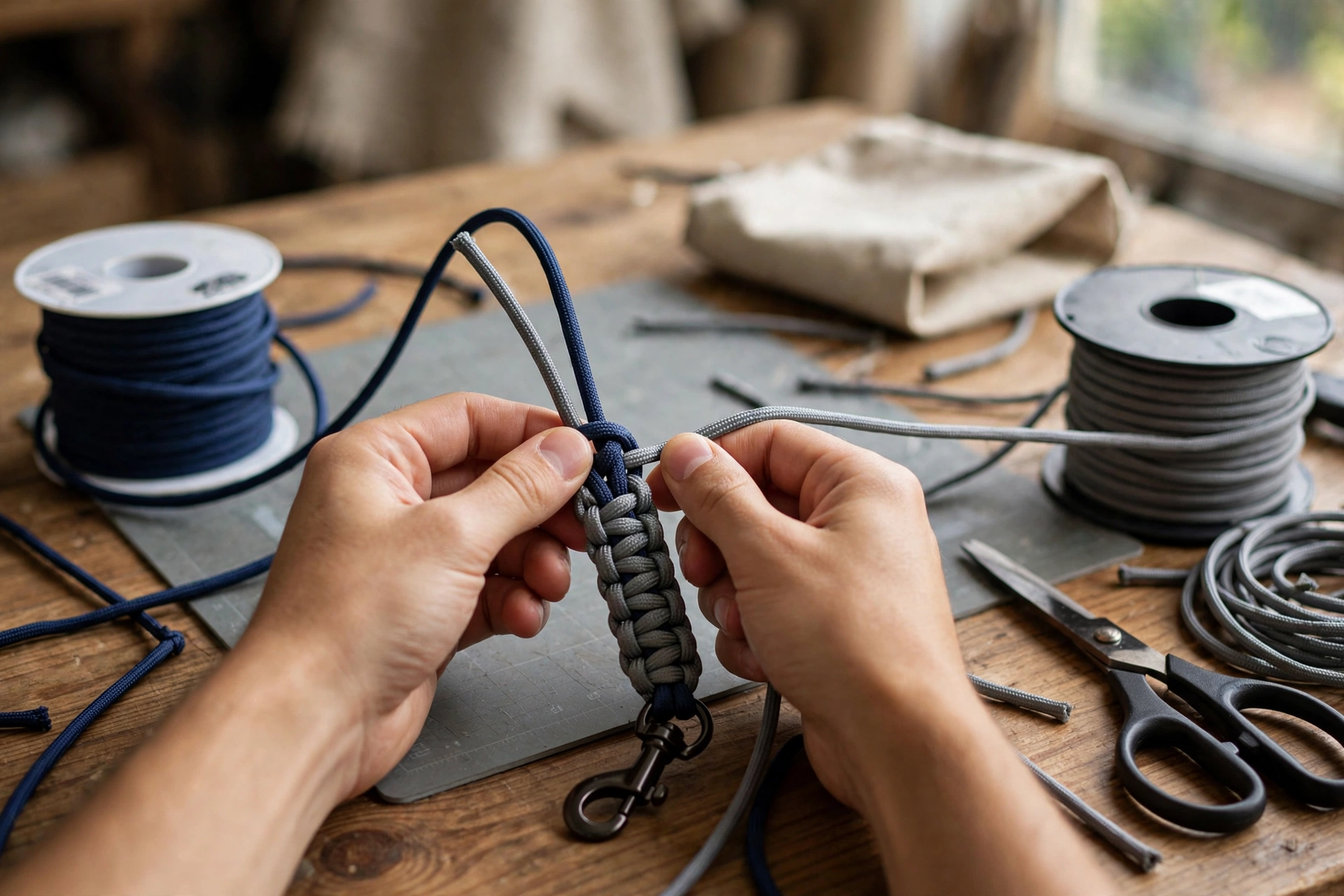
Paracord leashes look professional and hold up to strong pullers. This no-sew project uses a cobra weave, the same knot pattern used for survival bracelets. Thread 25 feet of 550-grade paracord through a swivel clip, then weave the two strands over and under in alternating loops down the length until you have a 6-foot leash.
The result is a thick, cushioned leash that resists water, sun, and mud. Add a short traffic handle 18 inches from the clip with a few extra cobra knots for close control at crosswalks. Flame-seal every cut end so the strands never fray.
Helpful pick: TECEUM 550 Paracord, 100ft, Type III Mil-Spec — strong nylon cord in dozens of colors for woven leashes.
3. No-Sew Upcycled T-Shirt Braided Leash

This is the easiest leash on the list and a great way to recycle old T-shirts. Cut three strips about 2 inches wide from soft jersey tees, tie them to a swivel snap hook with a firm lark’s head knot, and braid tightly down the full length. Tie off the end with a knot, then loop and knot a handle.
The fabric braid has natural give, so it is comfortable for small and medium dogs. Use shirts in your favorite colors for a custom striped look, and wash the finished leash in a laundry bag whenever it gets dirty.
Helpful pick: Swivel Eye Bolt Snap Hooks, Heavy Duty, 4-Pack — solid clips that make any DIY leash attachment reliable.
4. Flat Webbing Leash with Traffic Handle

Flat webbing leashes are light, packable, and strong enough for big dogs. Cut 7 feet of 1-inch nylon webbing, fold one end around a swivel snap hook, and box-stitch the joint with heavy-duty thread. Add a second handle 18 inches from the clip by folding a loop into the webbing and stitching it flat.
The traffic handle gives you instant close control near traffic, dogs, and crowded sidewalks without switching leashes. Melt the cut ends with a lighter to prevent fraying, and choose bright webbing colors so the leash is easy to spot at the dog park.
Helpful pick: JIAKAI 1-Inch Heavy Duty Nylon Webbing, 10 Yards — sturdy strap material in a 1-inch width perfect for leashes.
5. Boho Macramé Slip Lead
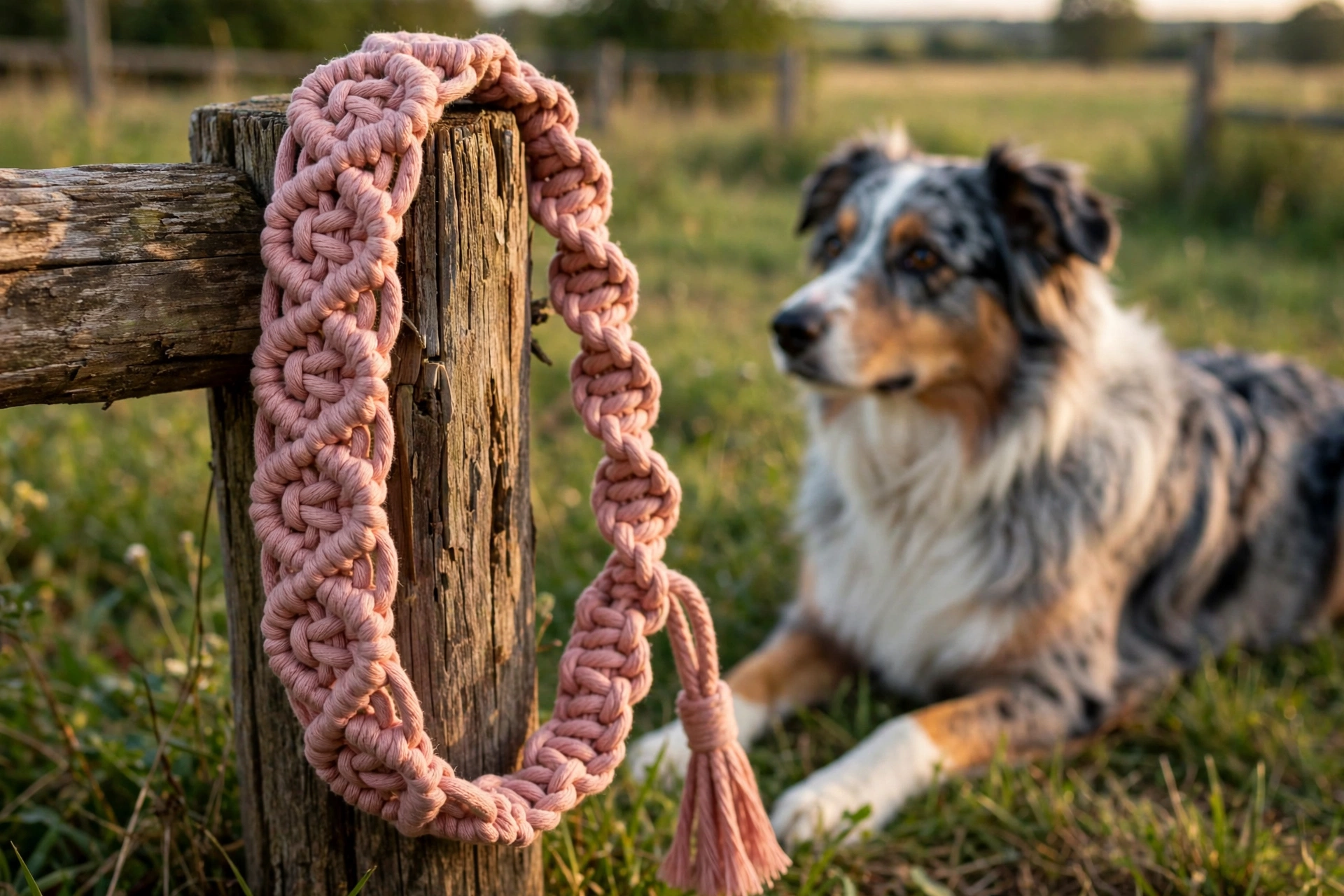
A slip lead needs no collar at all, which makes it ideal for quick vet visits, grooming appointments, and escape-artist dogs. Thread 8 feet of 4mm cotton cord through an O-ring to form an adjustable loop, then work square knots down one side to build the handle section.
The loop tightens gently behind the ears when the dog pulls and releases when they walk beside you, giving calm one-handed control. Cotton cord is soft on hands and washes on the gentle cycle. Never leave a slip lead on an unsupervised dog, and size it for dogs in the 15 to 60 pound range.
Helpful pick: AIFUN Macrame Cord 4mm, Natural Cotton — soft twisted cotton that knots beautifully for slip leads.
6. Mountain Climbing Rope Leash
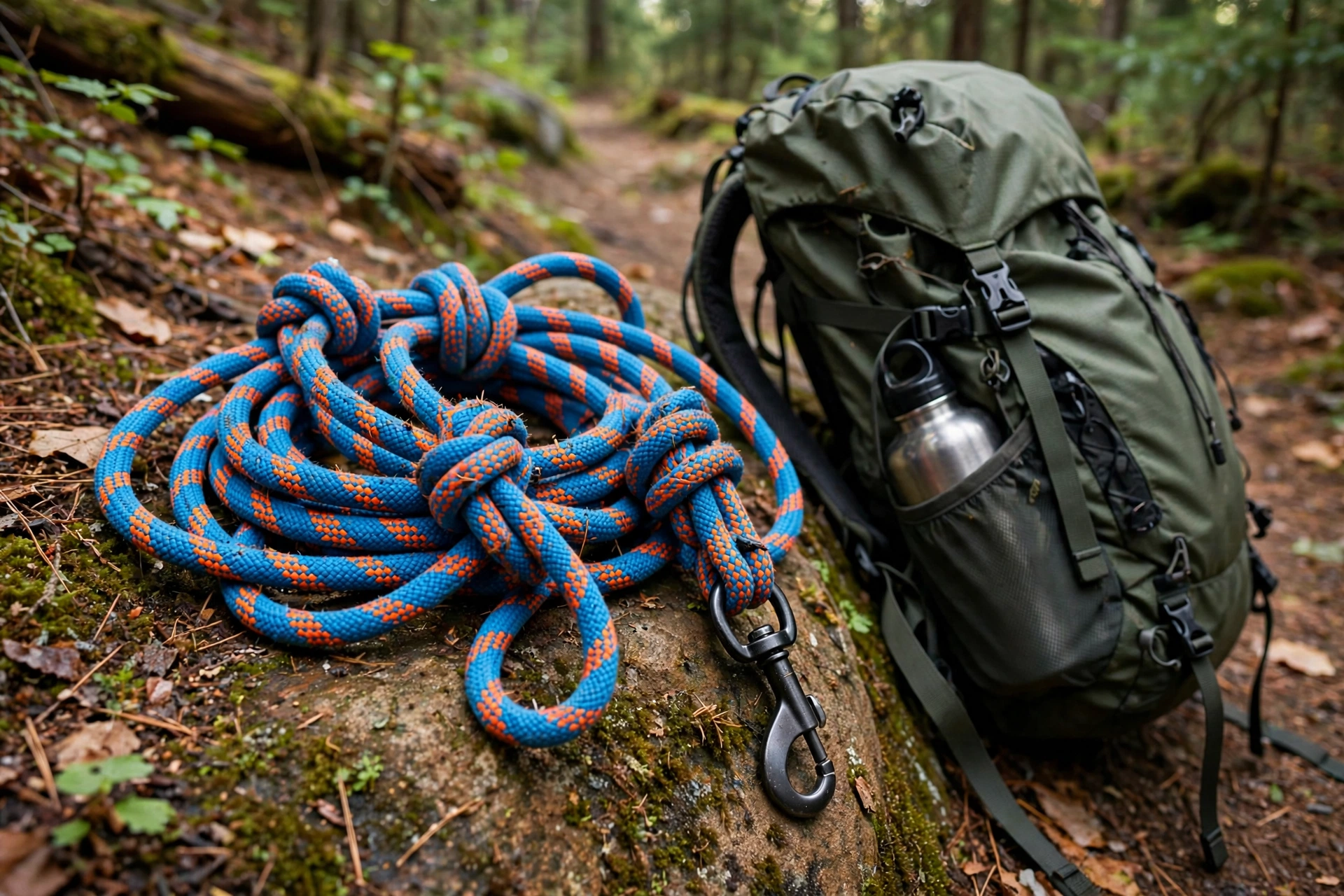
Climbing accessory cord is built for abrasion, weather, and serious load, which makes it perfect for hiking and adventure dogs. Cut 8 feet of 6mm static accessory cord, thread it through a swivel clip, fold back 3 inches, and secure the joint with a double fisherman’s knot backed by tightly whipped waxed thread.
Form the handle with a bowline loop or a whipped wrap, then flame-seal the ends. The finished leash is compact and nearly indestructible. Choose bright cord colors so it stays visible on the trail and in photos.
Helpful pick: NewDoar Static Climbing Rope, 6mm Accessory Cord — high-strength cord that ties clean, secure knots for leashes.
7. Reflective Night-Walk Leash
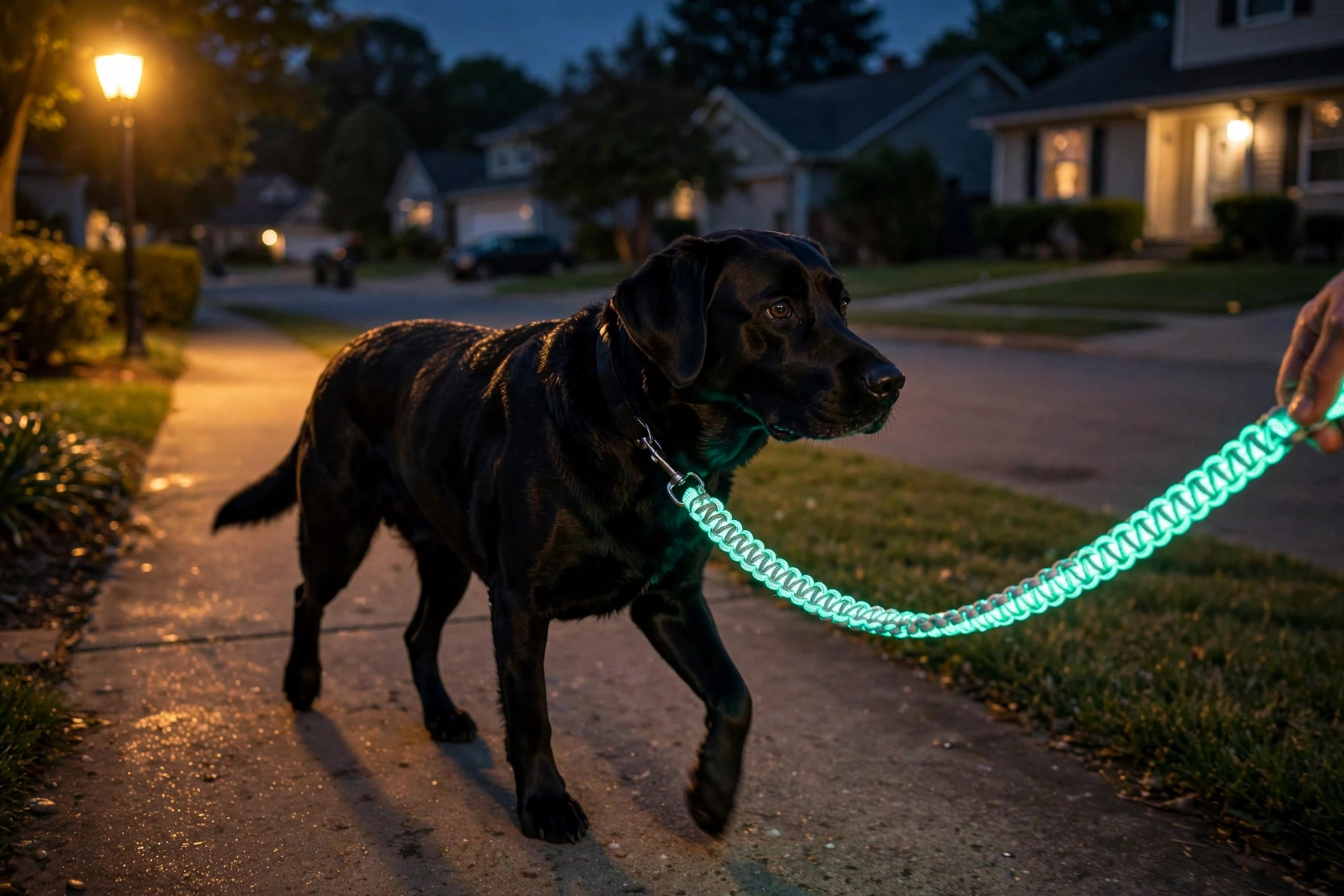
If you walk after dark, a reflective leash is a real safety upgrade. Build a flat webbing leash following idea #4, then sew a strip of reflective fabric tape along the full length of both sides. The tape catches headlights and street lamps so drivers see you from hundreds of feet away.
Use a contrasting webbing color under the silver tape so the leash also looks sharp in daylight. Stitch both edges of the tape down for a permanent, washable finish.
Helpful pick: JINBING Reflective Fabric Tape, Sew-On — high-visibility silver tape that sews easily onto leash webbing.
8. Rinse-and-Go Waterproof Leash
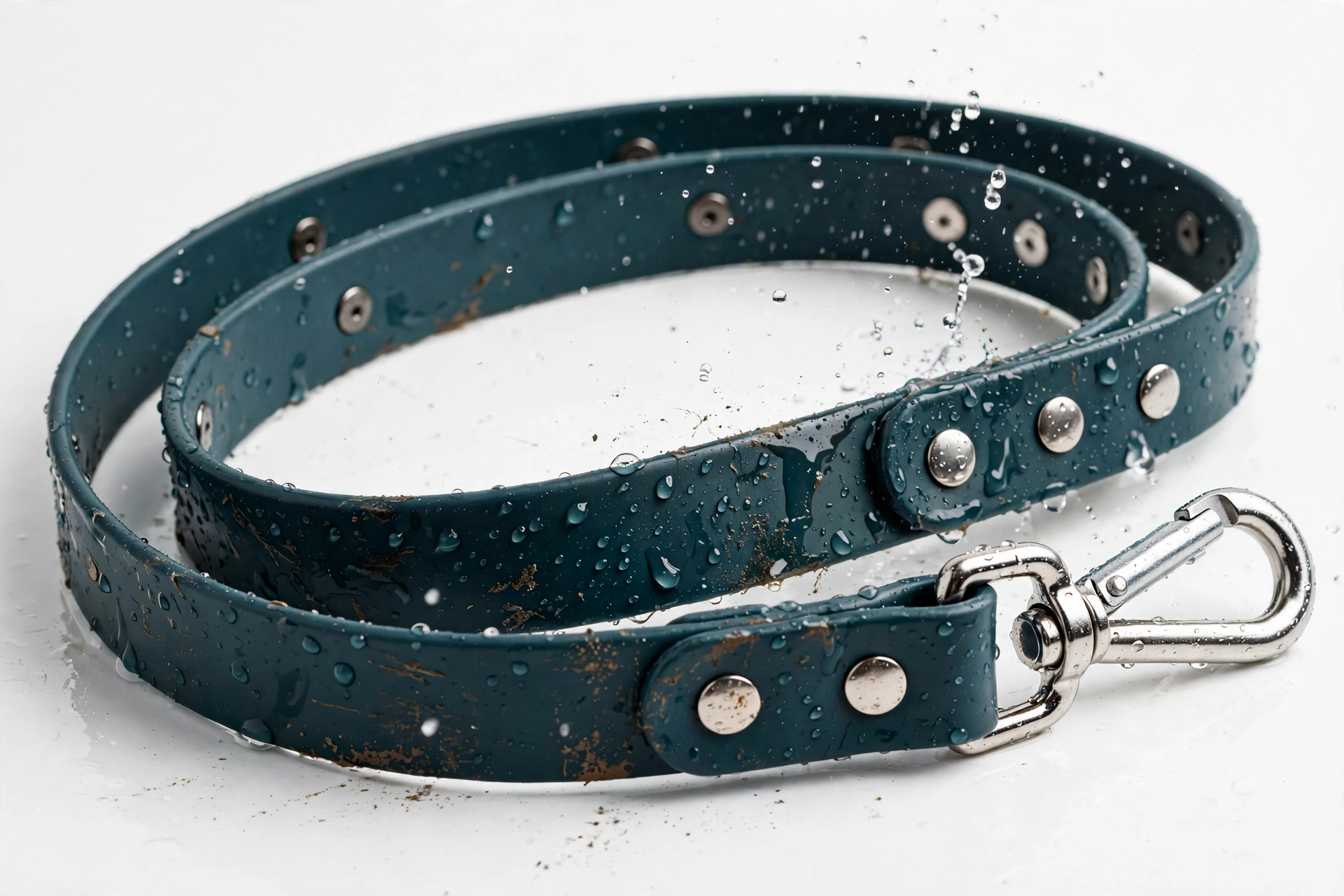
Muddy trails and beach days destroy fabric leashes, but a waterproof leash rinses clean in seconds. Use coated webbing or a smooth, non-porous strap material, attach a swivel snap hook at one end with rivets or box stitching, and form the handle the same way.
The finished leash sheds water, mud, and sand, and it never picks up the sour smell wet nylon gets. Keep a short traffic handle near the clip for slippery conditions, and store the leash hung up so it dries fast between walks.
Helpful pick: CooBigo 12-Pack Metal Swivel Snap Hooks — corrosion-resistant clips that stand up to water and mud.
9. Braided Genuine Leather Leash

A braided leather leash develops a beautiful patina and can last for years. Cut six long strips of 2mm round or flat leather cord, knot them together at a swivel clip, and braid them in two groups of three down the length. Finish with a wrapped knot and a looped handle.
Condition the finished leash with leather balm every few months to keep it supple, and avoid soaking it in water. Leather suits calm walkers best, since hard chewers can gnaw through the braid.
Helpful pick: GENIQUE Genuine Round Leather Cord, 2mm — strong, flexible leather cord that braids cleanly for leashes.
10. Hands-Free Convertible Waist-Belt Leash
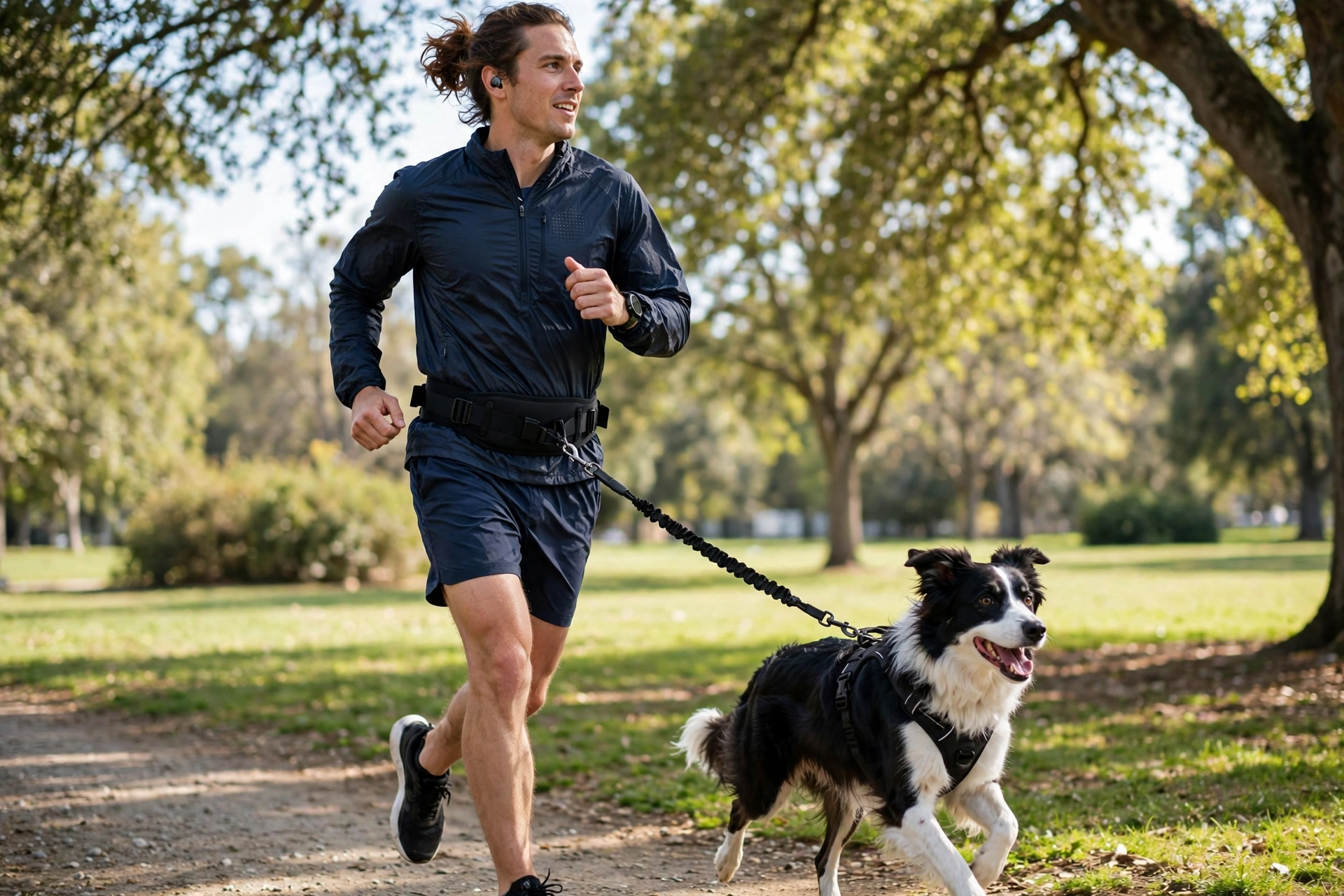
This convertible design works as a standard 6-foot leash and clips around your waist for hands-free jogging, hiking, or pushing a stroller. Make a flat webbing leash about 7 feet long with a swivel clip on each end, then add a quick-release buckle and a padded waist pad.
Wear it around your waist for trail runs, or clip both ends to a post for a temporary tie-out at the campground. Use a locking swivel clip on the dog end so an excited pull cannot unclip it.
Helpful pick: XQIGI Locking Swivel Leash Clips, 2-Pack — auto-locking clips that keep a convertible leash secure.
Keep Reading
Frequently Asked Questions
What is the safest knot for a DIY dog leash?
The double fisherman’s knot and the bowline are the most trusted knots for rope leashes, and box stitching is the standard for webbing. Always test your finished leash by hanging a weight heavier than your dog from it overnight before trusting it on a walk.
What rope is strongest for a homemade dog leash?
550 paracord and 6mm climbing accessory cord offer the highest strength for their size. Twisted cotton rope and flat nylon webbing are also strong enough for most dogs when sized correctly.
How long should a DIY dog leash be?
Six feet is the standard length for everyday walks and keeps your dog close enough for control. Four feet works well for city sidewalks, and a traffic handle adds a short-grip option for busy areas.
Can I wash a handmade dog leash?
Yes. Cotton, paracord, and webbing leashes can be hand-washed with mild soap and air-dried. Leather leashes should only be wiped clean and conditioned with leather balm.
Are DIY leashes safe for strong pullers?
They can be, as long as you use rated hardware and correct knots, and test the leash before use. For very strong pullers, combine a DIY rope or webbing leash with a no-pull harness rather than a collar.
As an Amazon Associate, PetPostHub earns from qualifying purchases.