
9 DIY Dog Toys for Heavy Chewers That Actually Survive
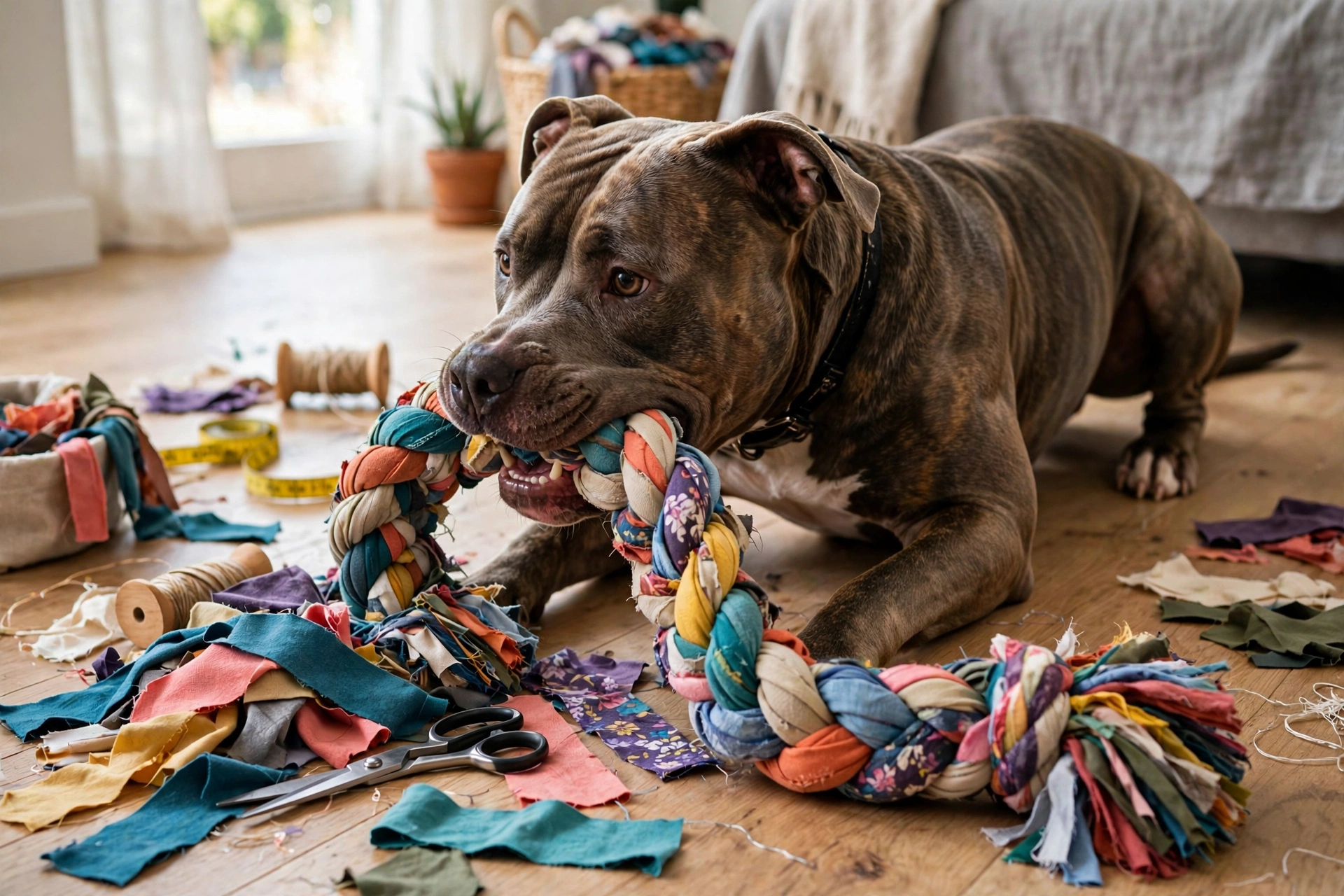
Shopping for diy dog toys for heavy chewers ideas starts with one painful truth: a dog who can shred a “tough” toy in one sitting doesn’t need a stronger toy — he needs a cheaper one. When your pit bull or German shepherd turns a $25 plush into confetti in six minutes, the smart move is building toys at home from old clothes and household scraps. These 9 projects cost almost nothing, take 10–20 minutes each, and are built specifically to survive serious jaws.
A quick safety note before you start: always supervise heavy chewers with homemade toys, and retire any toy once fabric starts unraveling into long strings. These builds are designed for interactive play, not unsupervised chewing marathons.
1. T-Shirt Yarn Braid Tug
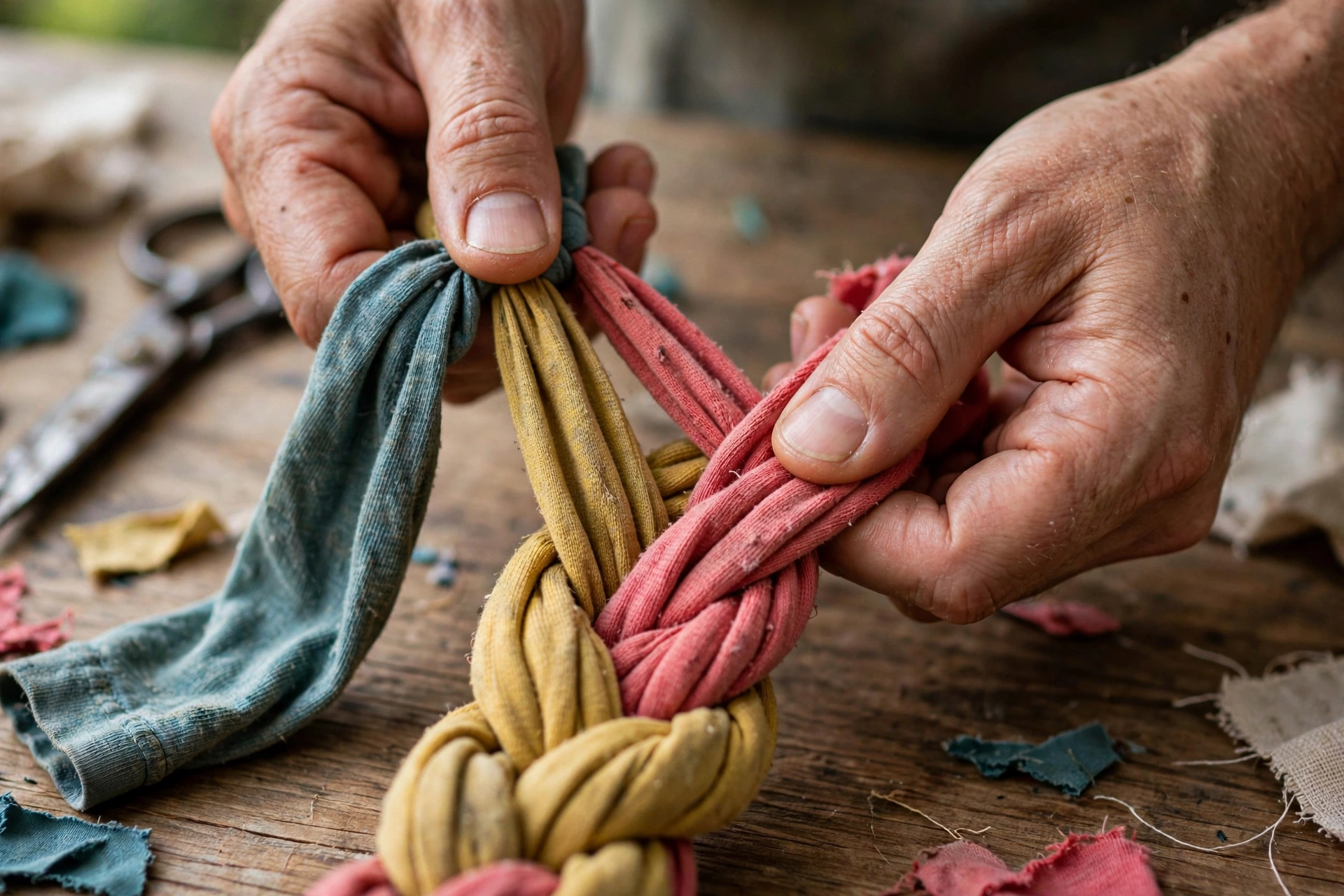
Old cotton t-shirts become “t-shirt yarn” with a few cuts, and that yarn braids into a shockingly strong tug toy. Cut shirts into continuous strips about 2 inches wide, knot three strips together at the top, and braid tightly down the length. Finish with a fat knot, leaving tassel ends your dog can grip.
The trick for heavy chewers is braid density: a loose braid unravels in minutes, but a tight, compact braid spreads the pulling force across every strand. Expect a solid 1–2 weeks of tug sessions before it needs replacing, and when it dies, you can build another in ten minutes.
Helpful pick: EOVEA Polar Fleece Fabric — softer fleece strips are gentler on puppy teeth if your chewer is still young.
2. Double-Knot Fleece Bone
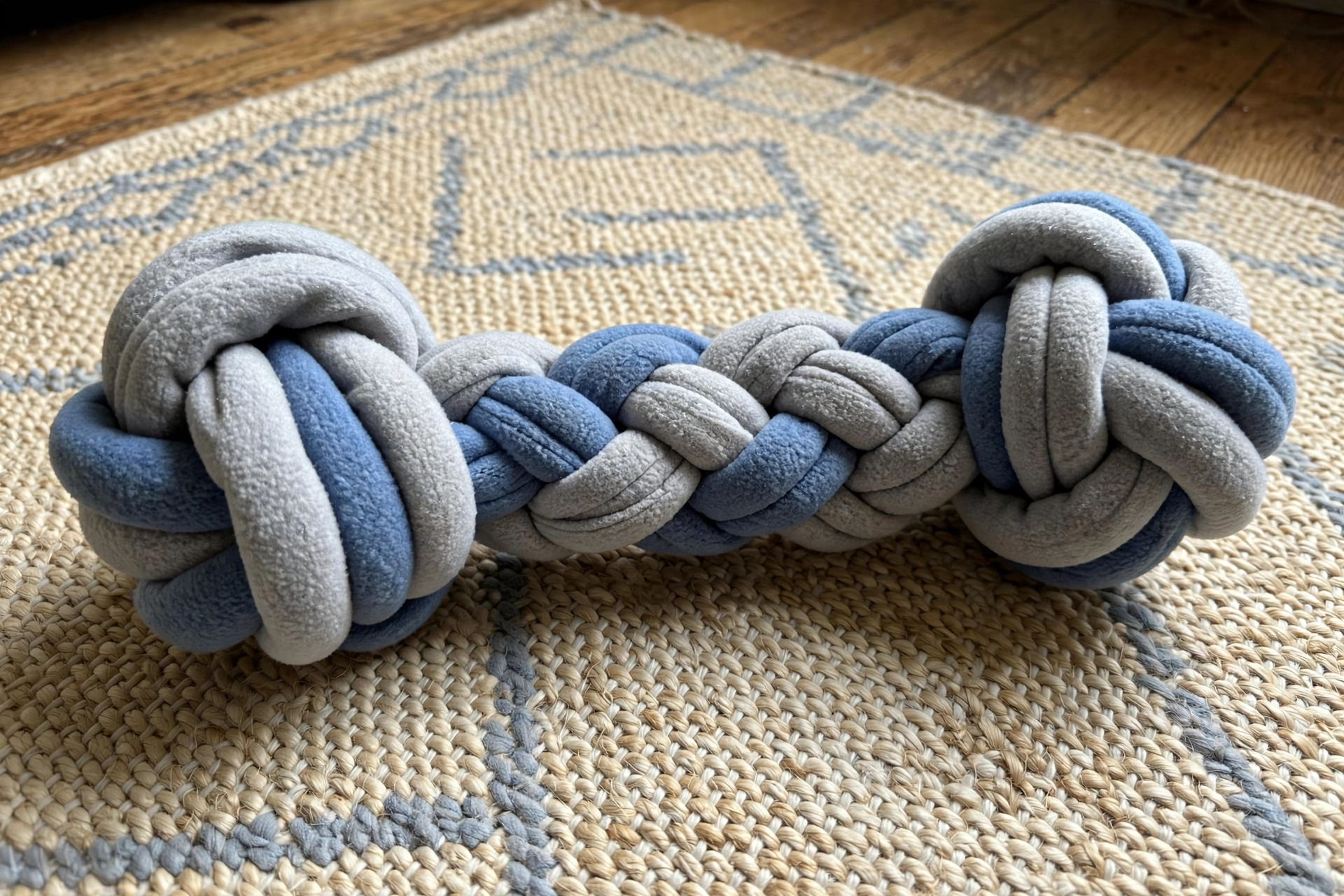
This one looks like a store-bought bone but costs nothing. Lay two long fleece strips in an X, tie a tight knot in the center, then tie a second knot at each end to form the “bone” tips. The center knot is the sweet spot — dogs love worrying it between their paws.
Choose thick fleece, not thin microfleece, and cut strips at least 3 inches wide. Thin strips tear along the weave too fast for determined chewers. Toss it in the washing machine when it gets slobbery, and air-dry to keep the knots tight.
Helpful pick: YourFleece Fleece Fabric — thicker fleece strips stand up noticeably longer to heavy chewing.
3. Seatbelt-Strap Handle Tug
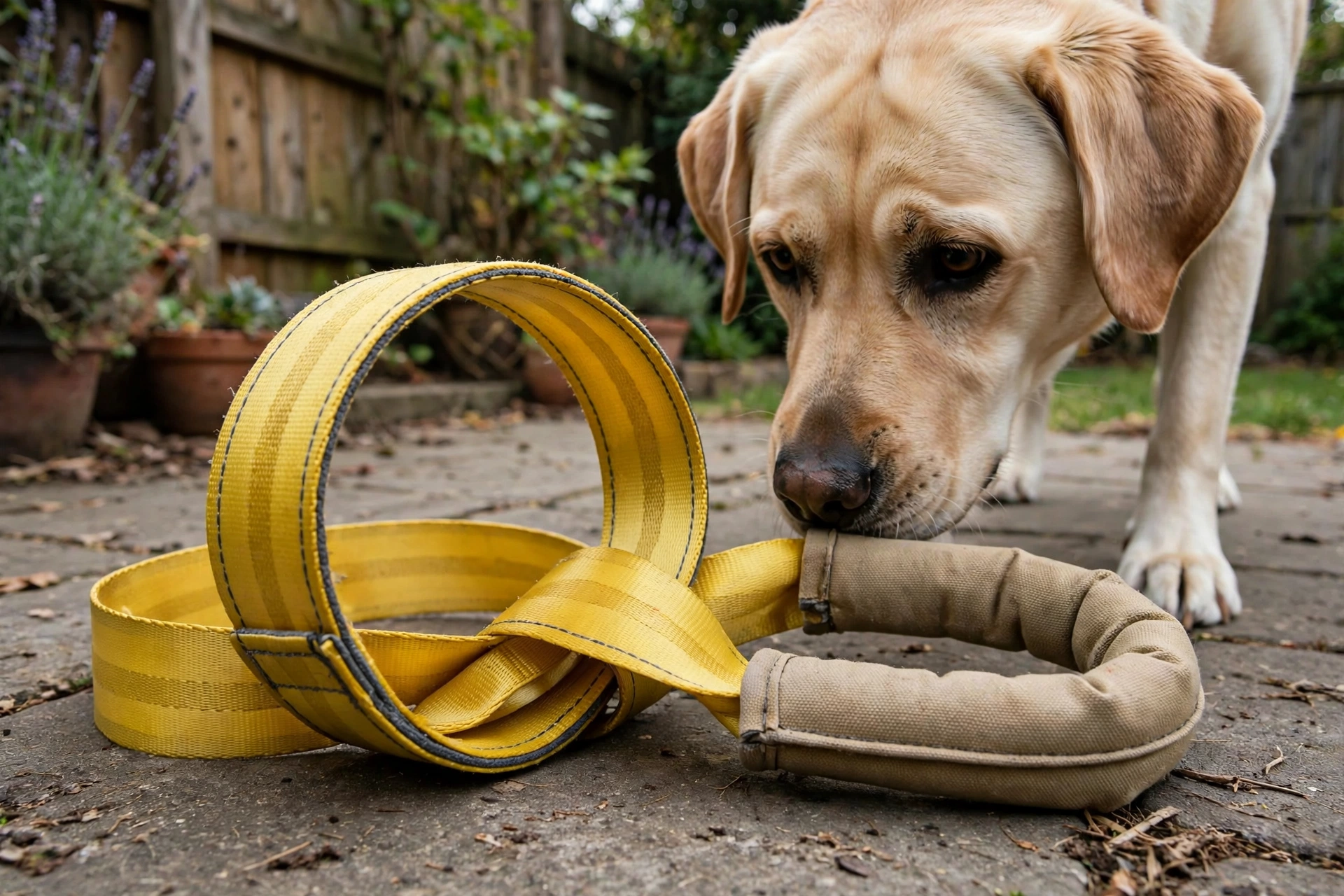
A retired car seatbelt is one of the toughest free materials you’ll ever find. Fold a length into a loop, stitch or knot it firmly to form a handle, and attach a braided fabric tug to the loop end. The woven nylon webbing resists tearing far better than any store rope toy.
Secure the webbing with multiple rows of stitching or heavy-duty knots — this is the one build where sloppy fastening ruins the whole toy. Test it yourself first with a hard pull before letting your dog at it.
Helpful pick: CooBigo Snap Hooks — a locking clip lets you swap tug attachments on the seatbelt handle in seconds.
4. Sock Sling Fetch Toy
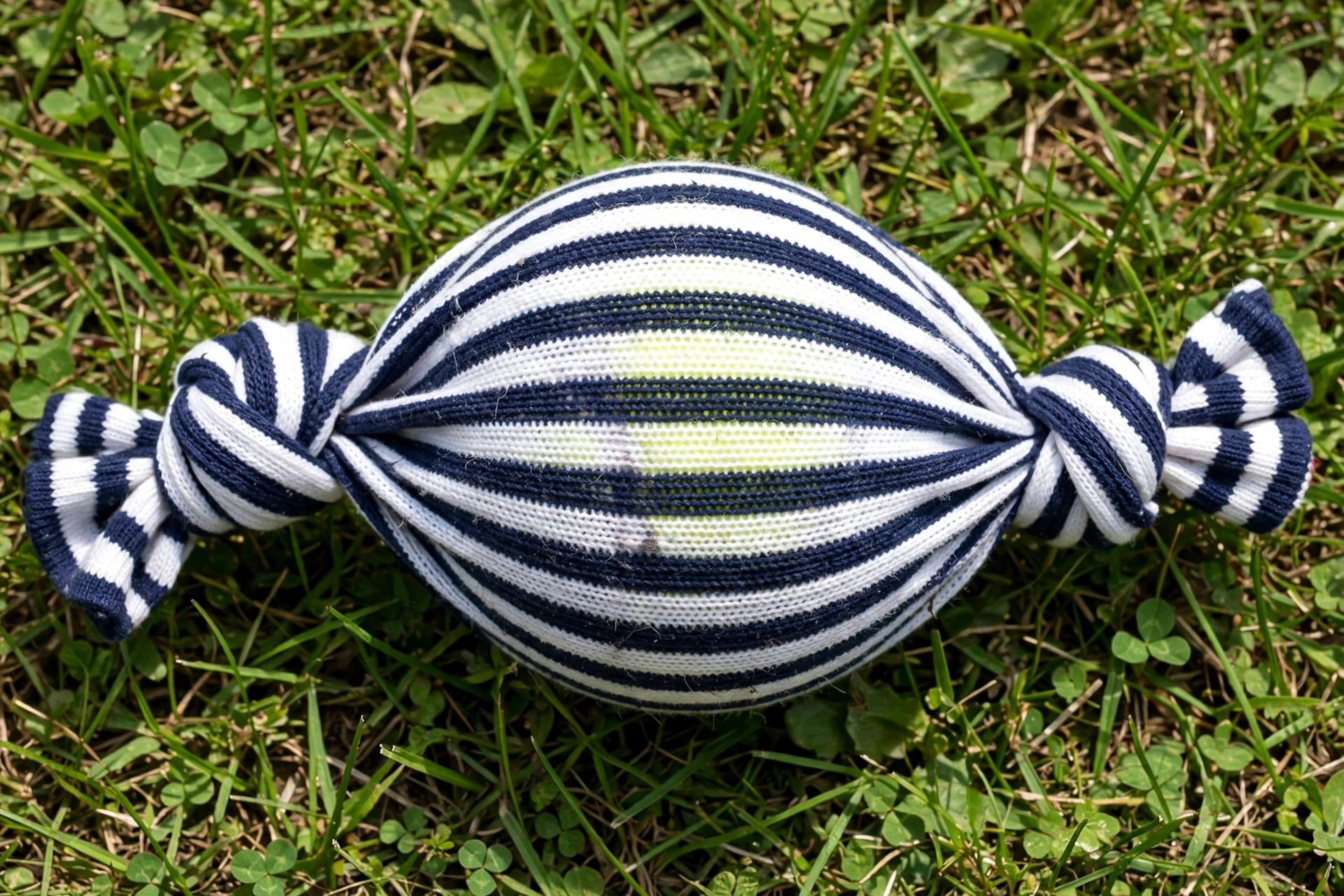
Drop a tennis ball into the toe of a long athletic sock, tie a tight knot right above the ball, and leave the rest of the sock as a throwing handle. Your arm gets a sling, your dog gets a toy with an irresistible squishy core, and a lost sock finally earns its keep.
Heavy chewers will eventually chew through the sock, so keep this one for fetch sessions rather than solo chewing. When the sock wears thin, swap it for a fresh one — the ball survives for dozens of rounds.
Helpful pick: Chuckit! Ultra Ball — upgrade the core to a tougher rubber ball for dogs that crack tennis balls open.
5. Rope-Cage Puzzle Ball
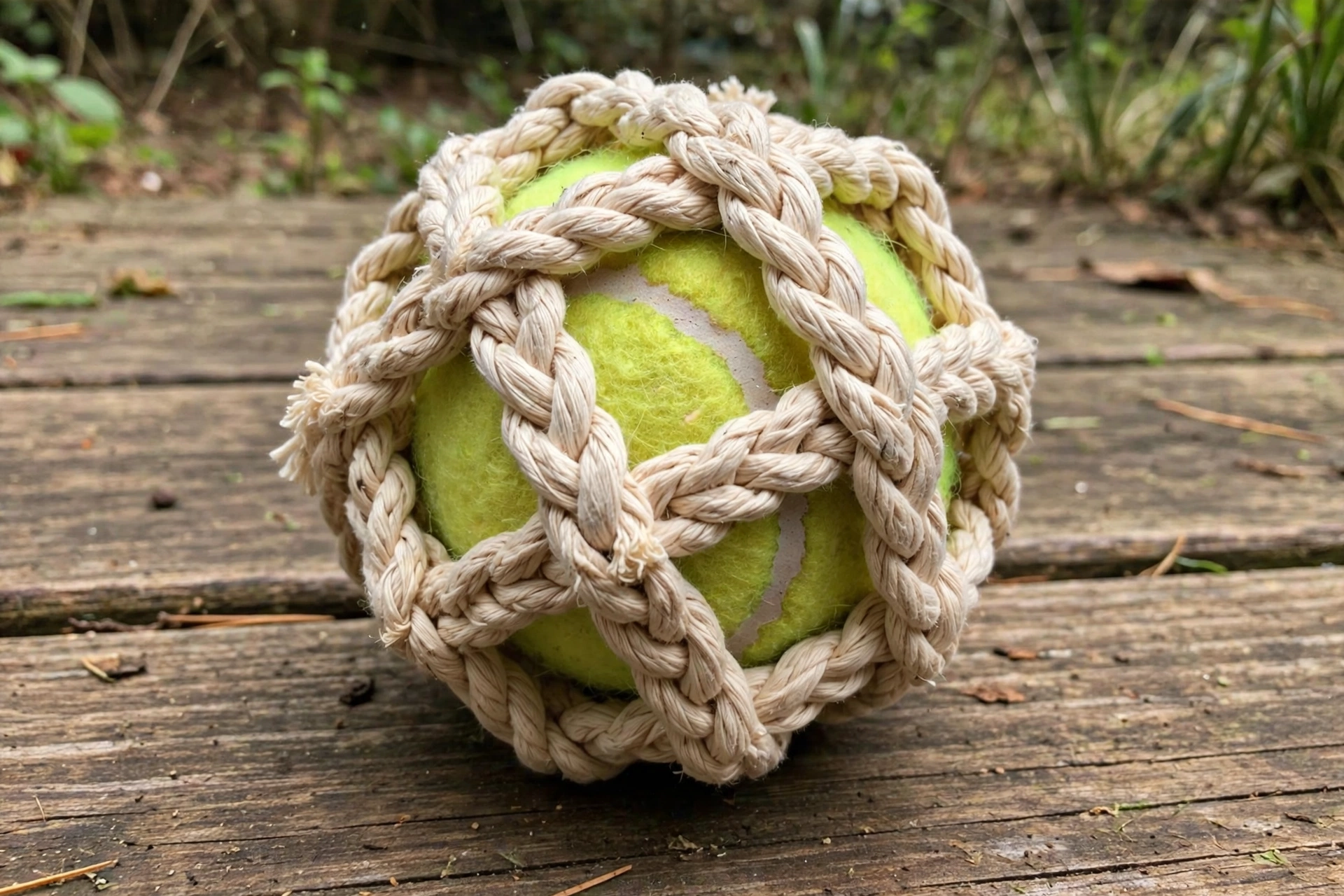
Wrap a tennis ball in a woven cage of cotton rope and your dog has to work the ball free before getting the real prize. Start with four rope strands crossed over the ball, then weave them over and under each other until the ball is fully caged. Knot everything tight on one side.
This is a great supervised puzzle for dogs who destroy toys in seconds — the weaving itself buys you 15–20 minutes of engagement as they untangle it. Rub a treat on the rope before the first use to spark interest.
Helpful pick: TECEUM 550 Paracord — tighter, stronger cord for a cage that survives more rounds before loosening.
6. Rolled Snuffle Towel
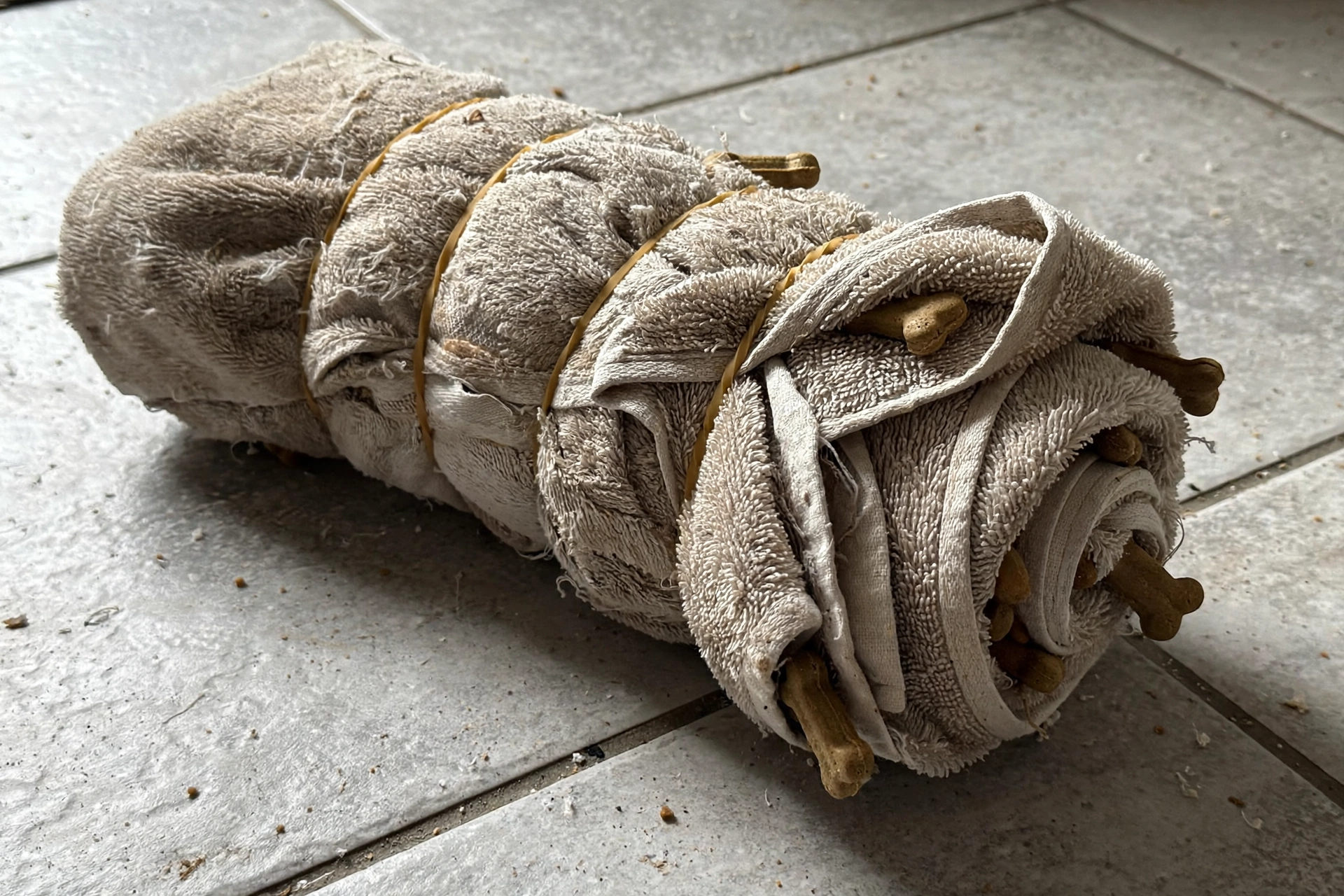
Lay a bath towel flat, scatter kibble or treats across it, roll it up, and loosely tie the roll with a couple of rubber bands. Your dog unrolls, sniffs, and forages — a full meal can take 10 minutes instead of 30 seconds, and the mental work tires them out.
Don’t tie the bands tightly; the goal is a roll that gives way with effort, not a puzzle that frustrates. Wash the towel every few uses, since treat crumbs and slobber build up fast.
Helpful pick: Ameami Snuffle Mat — a ready-made version for days when you don’t feel like rolling towels.
7. PVC Pipe Treat Dispenser
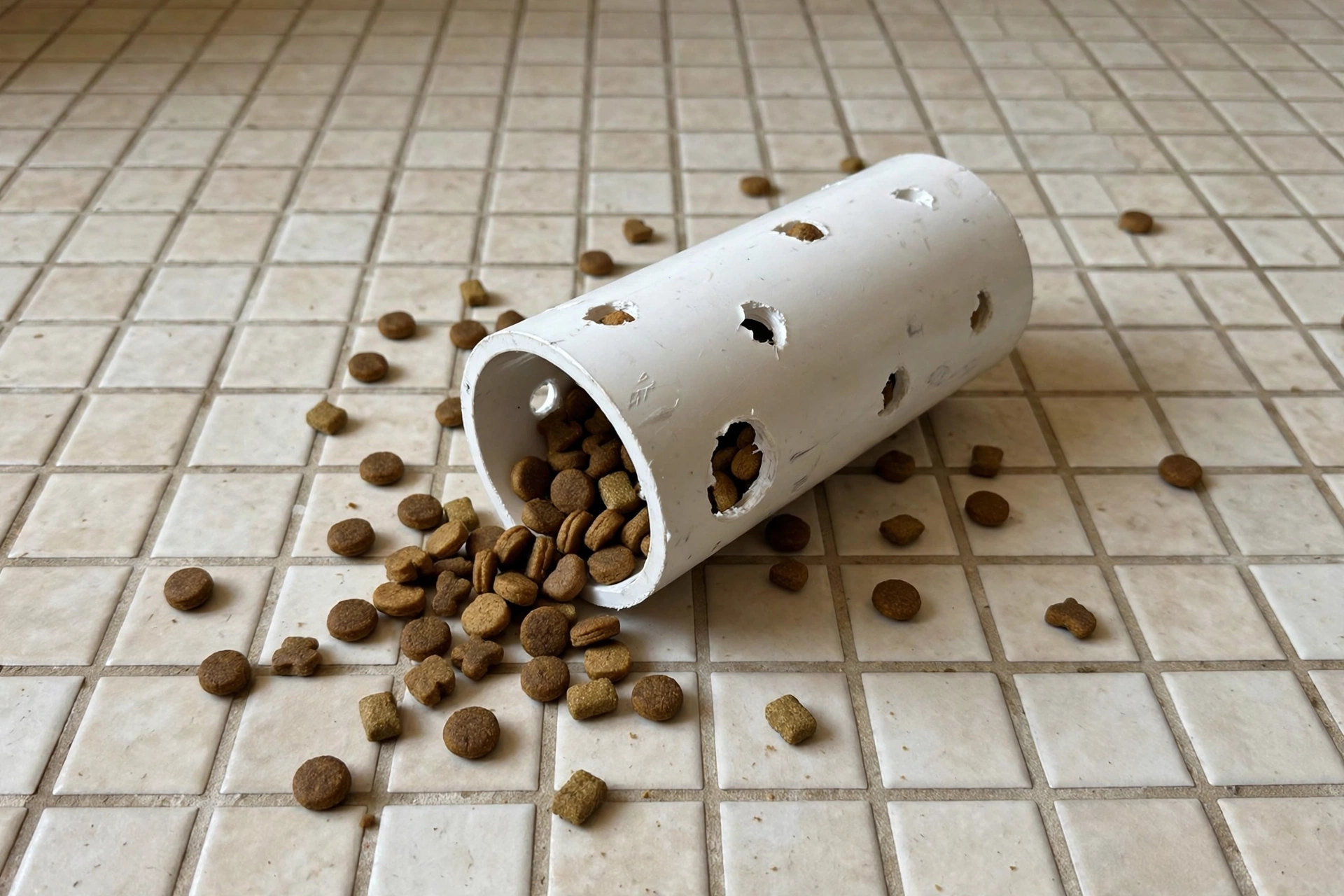
A short length of PVC pipe with holes drilled in the ends becomes a nearly indestructible treat dispenser. Cap or plug both ends, drill 3–4 holes just big enough for kibble, and load it up. Your dog rolls and nudges it until treats rattle out.
Sand every drilled edge completely smooth — raw PVC edges are the only real hazard here. This toy genuinely survives power chewers because there’s nothing to rip; it just rolls, and the noise of rattling kibble keeps dogs engaged for ages.
Helpful pick: KONG Classic — the classic commercial pairing for treat-dispensing play on days you skip the build.
8. Frozen Broth Sock Pop
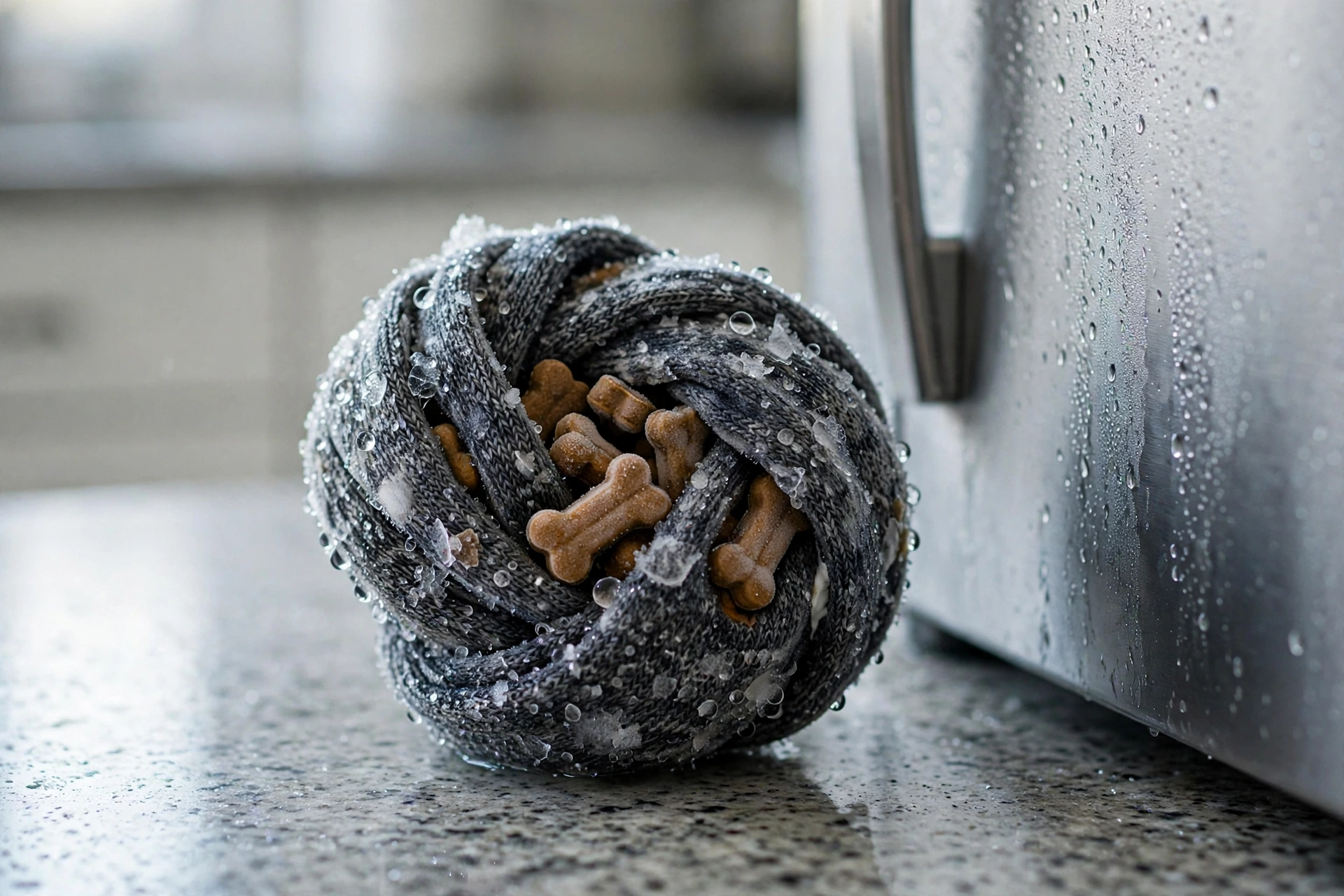
Soak a clean sock in low-sodium chicken broth, tuck a few treats inside, knot it, and freeze it solid. On hot afternoons this is the perfect heavy-chewer cooldown toy — the ice makes it take real work, and the broth keeps them licking and gnawing instead of destroying furniture.
Serve it outside or on a washable mat, because it melts into a drippy mess. Only make these in summer or for dogs who genuinely enjoy cold toys; some dogs lose interest once it thaws.
Helpful pick: Wag Dog Training Treats — small treats that freeze neatly inside the sock knot.
9. Fat-Knot Denim Tug Rope
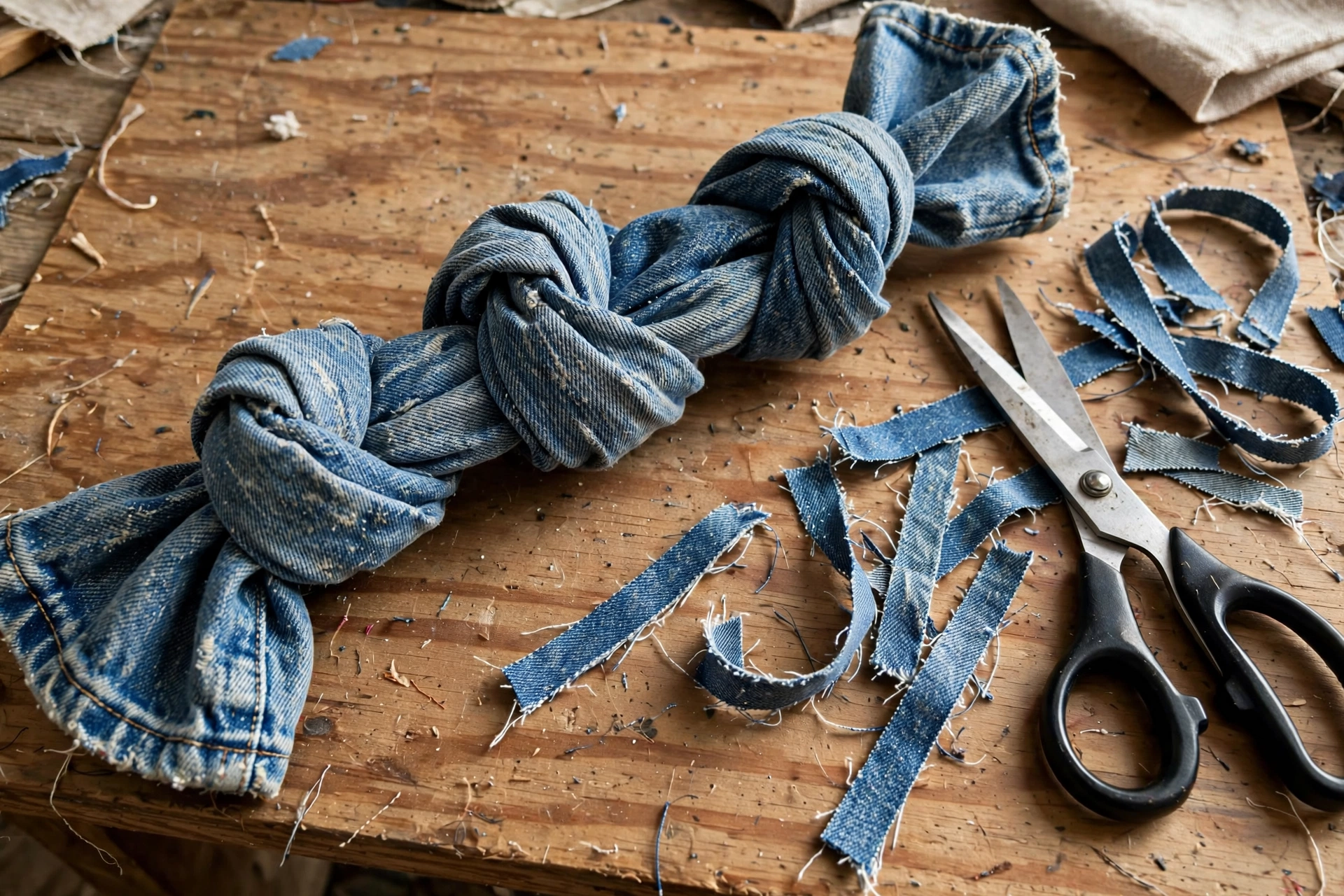
Denim is the toughest free fabric in your house, and this build uses it raw. Cut a jeans leg into strips, braid three strips tightly, and tie oversized fat knots every few inches. The knots become chew targets, and the denim’s tight weave resists shredding far longer than cotton.
Wash the jeans first to remove any treatments or finishes. Retire the toy the moment threads loosen into long strings — denim frays less than most fabrics, but supervision is still non-negotiable with power chewers.
Helpful pick: Nylabone Chew Pack — a commercial chew for solo time while the denim tug stays reserved for supervised play.
Keep Reading
- 7 DIY Dog Bunk Beds Your Pup Will Love (2026)
- 15 Indoor Dog Park Ideas for Rainy Days (2026)
- 10 Hotel for Dogs Ideas You’ll Love (2026)
- 10 Dog Photo Ideas You’ll Want to Try (2026)
- 10 Dog Painting Ideas to Try (2026)
Frequently Asked Questions
Are DIY toys safe for aggressive chewers?
They’re safe for supervised, interactive play when built from clean, non-toxic materials. No homemade fabric toy is truly chew-proof for unsupervised gnawing, so always watch your dog and retire toys that start unraveling.
How long do homemade toys last for heavy chewers?
It depends on the build and the dog. Tight braids and PVC toys can survive weeks of play sessions, while simple fabric tugs may last only a few days. The advantage is cost — replacing a free toy beats replacing a $25 one.
What materials should I avoid?
Skip anything with small parts, buttons, zippers, or treated wood. Avoid fabrics with loose metallic threads, and never use foam or materials that crumble into swallowable pieces.
Can I wash DIY dog toys?
Most fabric builds wash fine on a cold cycle — just air-dry them to keep knots tight and prevent shrinkage. Rinse PVC toys with warm soapy water.
My dog ignores homemade toys. What helps?
Rub a little low-sodium chicken broth or a smear of peanut butter on the toy for the first few play sessions. Once the dog associates the toy with good smells, most start grabbing it on their own.
As an Amazon Associate, PetPostHub earns from qualifying purchases.



4 Comments