3-Ingredient Sweet Potato Dog Cookies: Easy Homemade Treats (2026)
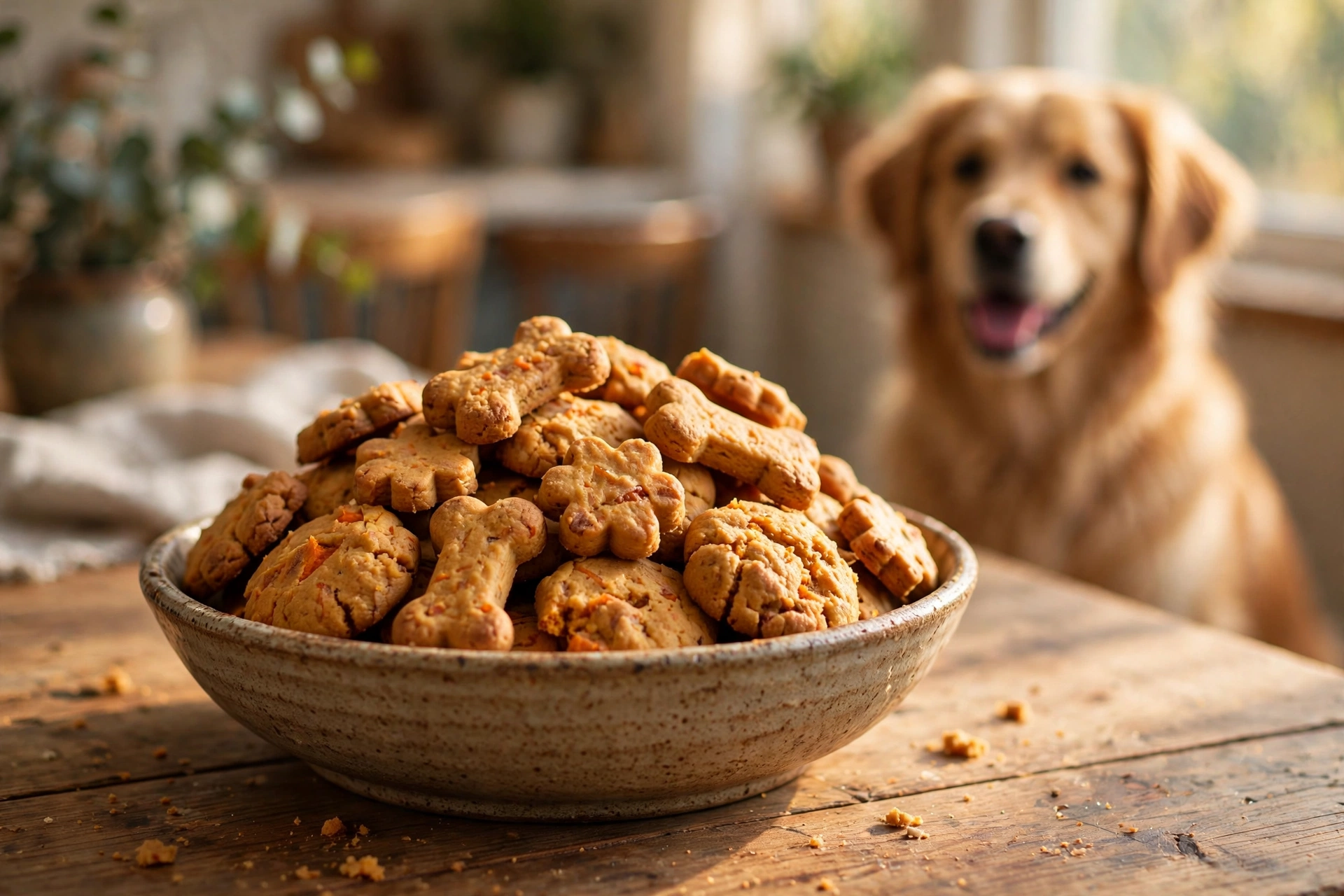
Nothing beats the smell of something warm baking in the oven when your dog is waiting nearby, nose twitching with every new scent. These sweet potato dog cookies fill your kitchen with a cozy roasted aroma, take about half an hour from start to finish, and call for only three simple ingredients you probably already have on hand. They are crunchy enough to clean teeth, soft enough for small jaws, and loved by dogs of every age.
If you have ever wished store-bought treats came with a shorter ingredient list, this recipe is your answer. Let’s bake a batch your pup will drool over.
Table of Contents
- Are Sweet Potatoes Safe for Dogs?
- 3-Ingredient Sweet Potato Coconut Crunch Cookies
- Portion and Serving Sizes
- Storage Instructions
- Frequently Asked Questions
- Keep Reading
Are Sweet Potatoes Safe for Dogs?
Yes, plain cooked sweet potatoes are safe for dogs and pack a surprising amount of nutrition into every bite. The orange flesh is rich in beta-carotene, which the body converts to vitamin A for healthy eyes, skin, and immune function. They also deliver vitamin C, vitamin B6, manganese, and potassium — all in a naturally sweet, low-fat package that most dogs find irresistible.
The fiber in sweet potatoes is especially valuable for digestive health. It helps firm up loose stools, feeds beneficial gut bacteria, and keeps your dog feeling full between meals. Because they are a whole food with no additives, sweet potatoes are a favorite base ingredient for homemade treats among owners of dogs with sensitive stomachs.
A few sensible precautions apply. Always serve sweet potatoes cooked — raw sweet potato is hard to digest and can cause stomach upset. Skip any seasoning, butter, or sweeteners, and remove the skin before mashing, since thick skin can be difficult for smaller dogs to chew and digest. Peel, cook until completely soft, and mash thoroughly.
The other two ingredients in this recipe pull their weight too. Coconut flour is a grain-free option that adds structure to the dough and is naturally high in fiber; it absorbs a lot of moisture, which is why this recipe uses less flour than wheat-based versions. Eggs bind everything together and contribute protein, healthy fats, and B vitamins. Together, the three ingredients bake into a crisp, golden cookie that holds its shape beautifully.
3-Ingredient Sweet Potato Coconut Crunch Cookies
Sweet Potato Coconut Crunch Cookies
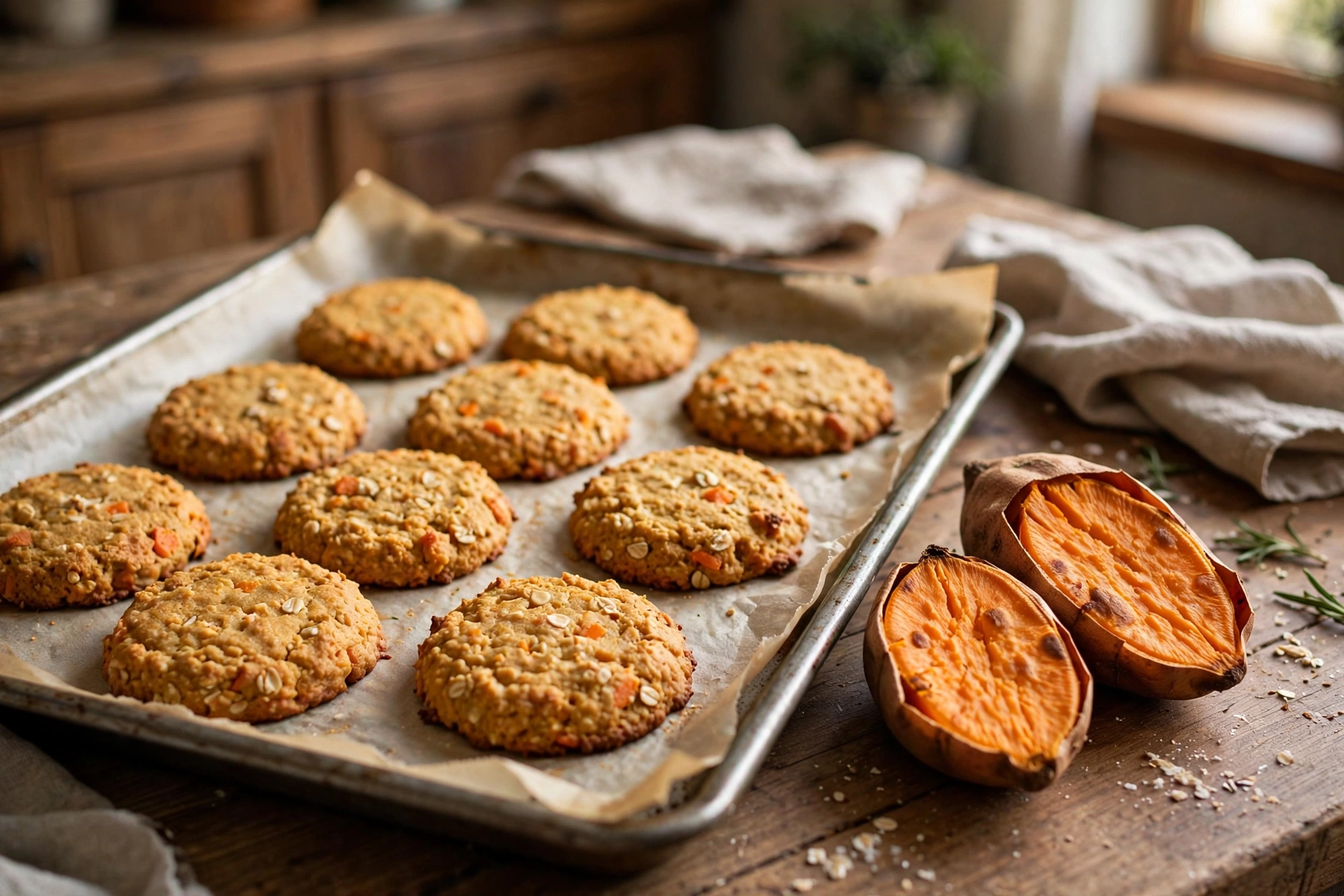
These crunchy little cookies taste like fall in a bite. The coconut flour gives them a lightly crisp edge while the sweet potato keeps the centers tender and chewy. Because there is no peanut butter involved, they are a perfect option for households managing nut allergies — and the dough comes together in one bowl with zero fuss.
| Ingredient | Amount |
|---|---|
| Cooked and mashed sweet potato | ¾ cup (about 1 medium sweet potato) |
| Coconut flour | ½ cup |
| Large egg | 1, lightly beaten |
- Bake the sweet potato. Scrub one medium sweet potato, prick it with a fork, and bake at 400°F for 45 to 50 minutes until completely soft inside. (A microwave works too: prick, wrap in a damp paper towel, and heat 6 to 8 minutes.) Let it cool slightly, peel off the skin, and mash until perfectly smooth.
- Heat the oven to 350°F. Line a large baking sheet with parchment paper so the cookies release cleanly after baking.
- Combine the wet base. Scoop ¾ cup of mashed sweet potato into a mixing bowl and stir in the beaten egg until the mixture looks uniform and glossy.
- Add the coconut flour. Sprinkle the coconut flour over the mixture a little at a time, stirring after each addition. Let the dough rest for 3 minutes; coconut flour drinks up moisture slowly, so the dough firms up as it sits.
- Check the texture. The finished dough should feel like soft playdough and hold a ball shape without cracking. If it crumbles, add a teaspoon of water; if it sticks to your fingers, dust in another tablespoon of coconut flour.
- Roll and cut. Roll the dough between two sheets of parchment to ¼-inch thickness. Press out shapes with cookie cutters, or score the slab into squares with a knife for rustic training-size bites.
- Bake 20 to 22 minutes. Arrange the cookies on the prepared sheet with a little space between them and bake until the edges turn golden brown and the tops feel dry to the touch. For a snappier crunch, switch the oven off at 20 minutes and leave the tray inside for another 10.
- Cool completely. Move the cookies to a wire rack and let them cool for at least 30 minutes. They crisp up noticeably as they cool, so do not judge the texture while they are warm.
Recipe tips: Coconut flour varies by brand, so measure with a kitchen scale if you have one (½ cup is roughly 60 grams). For senior dogs or puppies, bake 18 minutes and pull the tray a touch early for a softer bite. A tiny pinch of ground cinnamon stirred into the dry flour adds a warm scent dogs seem to enjoy — use no more than ¼ teaspoon per batch.
Portion and Serving Sizes
Homemade treats are wholesome, but they still count as calories. Keep treats to no more than 10 percent of your dog’s daily intake, and adjust the numbers below to your dog’s weight, age, and activity level. When in doubt, start small and watch how your dog responds.
| Dog Size | Weight | Daily Cookies |
|---|---|---|
| Small | Under 25 lbs | 1 cookie |
| Medium | 25–60 lbs | 2 cookies |
| Large | Over 60 lbs | 3 cookies |
Storage Instructions
Room temperature (up to 3 days): Keep fully cooled cookies in a sealed jar or zip-top bag on the counter. They stay crisp for about three days at normal room temperature.
Refrigerator (up to 2 weeks): For longer keeping, refrigerate the airtight container. The cookies stay fresh and crunchy for up to two weeks.
Freezer (up to 3 months): Freeze in a single layer on a tray, then transfer to a freezer bag. Thaw individual cookies at room temperature for 20 minutes before serving, or offer frozen as a longer-lasting chew for enthusiastic crunchers.
Discard any batch that smells sour, shows mold, or has been left out longer than the times above. When baking for gifting, tuck a handwritten date label on the bag so fellow pet parents know how fresh the treats are.
Frequently Asked Questions
Can puppies eat these sweet potato cookies?
Puppies over 12 weeks can enjoy a small piece once they are eating solid food confidently. Break a cookie into pea-sized bits, offer one or two pieces, and watch for any digestive upset before making it a regular treat.
Is coconut flour okay for dogs with grain allergies?
Yes. Coconut flour is not a grain, so it suits dogs avoiding wheat, corn, or rice. Introduce it gradually, since the high fiber content can surprise sensitive stomachs in large amounts.
How can I tell the cookies are fully baked?
The edges should be golden brown and the tops should feel dry and firm when tapped. The center of a cookie should not dent under gentle pressure. Remember they harden more while cooling, so do not overbake chasing a rock-hard texture.
Can I swap the egg for something else?
A mashed quarter banana works as a binder in a pinch, though it makes the cookies slightly softer and sweeter. Flaxseed meal mixed with water also binds, but eggs give the best structure and the crispiest finish.
Why did my dough turn out too dry?
Coconut flour is extremely absorbent, and sweet potato moisture varies. If the dough crumbles, add water a teaspoon at a time until it holds together. Letting the dough rest a few minutes after mixing lets the flour fully hydrate, which usually solves the problem.