
5 Easy Homemade Dog Food Recipes: Healthy, Simple & Budget-Friendly

Homemade dog food can be a convenient way to add fresh ingredients to your dog’s meals, but it should be more than simply mixing meat and vegetables together. Dogs need the right balance of protein, fat, carbohydrates, vitamins, and minerals to stay healthy.
The five recipes below are designed as simple meal ideas for healthy adult dogs. If you want to feed homemade food as your dog’s complete long-term diet, ask your veterinarian or a board-certified veterinary nutritionist to formulate the recipe for your dog’s specific age, weight, activity level, and health needs.
1. Beef, Rice & Vegetable Bowl
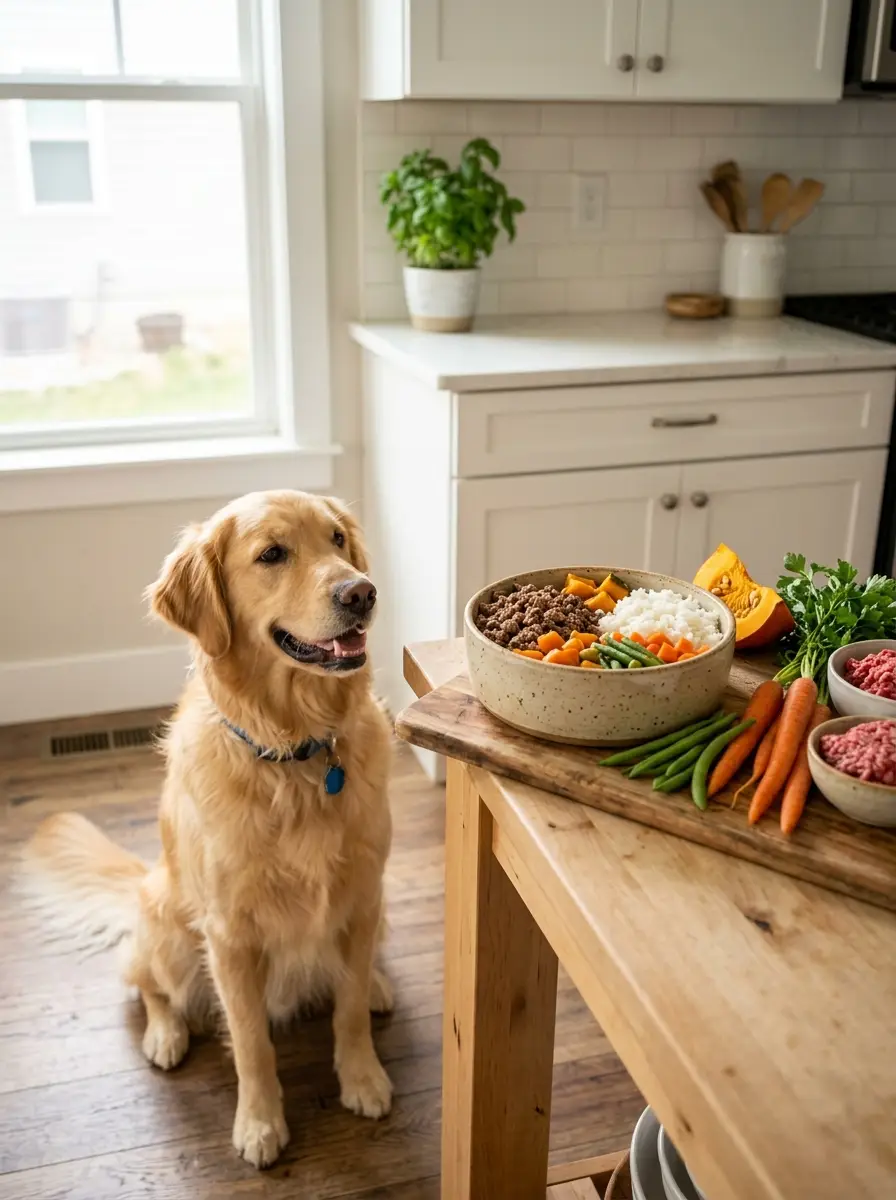
This simple combination is a good starting point for pet parents who want an easy cooked meal.
Ingredients
- 1 lb lean ground beef
- 2 cups cooked white or brown rice
- 1 cup chopped carrots
- 1 cup green beans
- ½ cup cooked pumpkin
- Water as needed
Directions
Brown the beef thoroughly in a large skillet. Add the carrots and green beans and cook until tender. Stir in the cooked rice and pumpkin, then allow the mixture to cool before serving.
Tip: Keep the ingredients plain. Avoid salt, onions, garlic, sauces, and seasoning blends.
2. Turkey & Sweet Potato Dinner
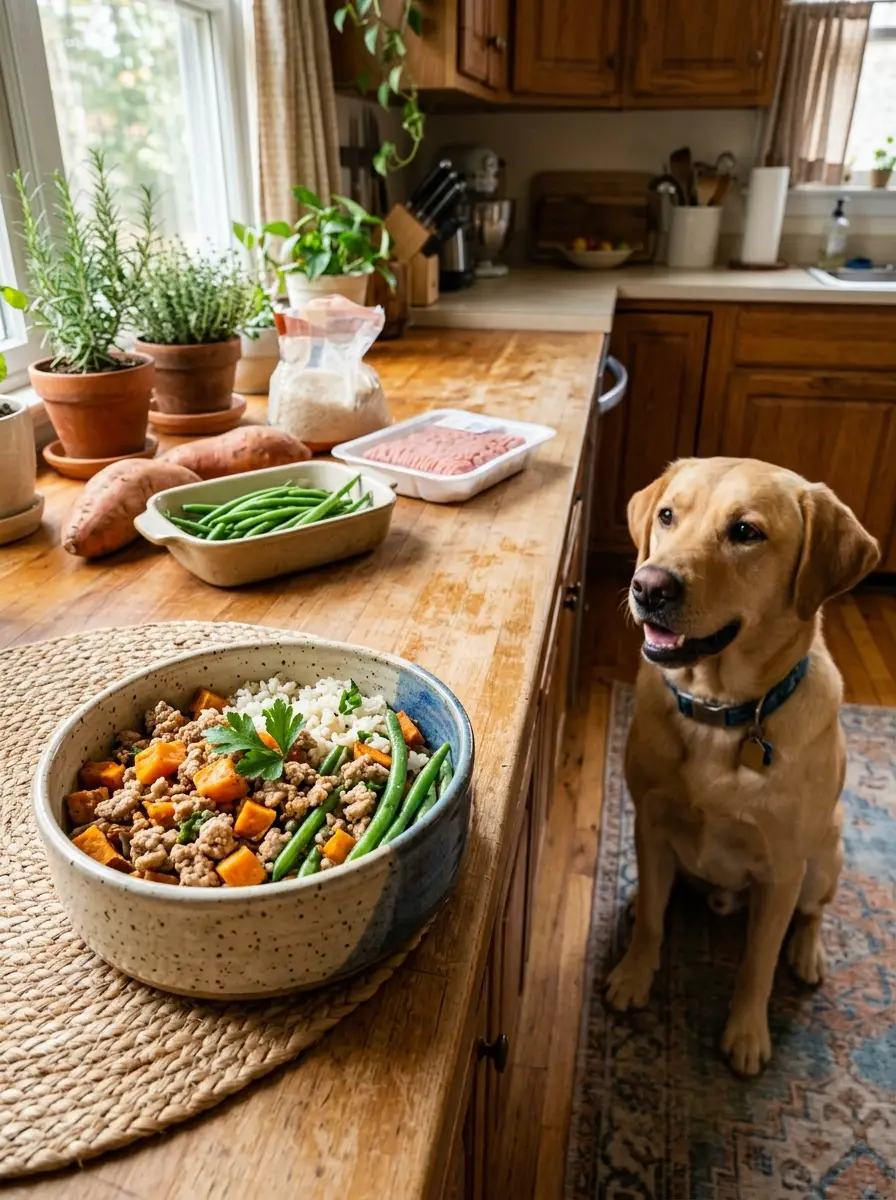
Turkey and sweet potato make a simple combination for dogs that enjoy softer meals.
Ingredients
- 1 lb lean ground turkey
- 2 cups cooked sweet potato
- 1 cup cooked rice
- ½ cup chopped green beans
- Water as needed
Directions
Cook the turkey completely in a skillet. Add the green beans and cook until soft. Mix with cooked sweet potato and rice, then cool before portioning.
Tip: Sweet potato should be cooked and served plain. Skip butter, sugar, and heavily seasoned toppings.
3. Chicken & Rice Homemade Dog Meal

Chicken and rice is one of the easiest homemade combinations to prepare, especially when you want a simple meal with familiar ingredients.
Ingredients
- 1 lb boneless, skinless chicken
- 2 cups cooked white rice
- 1 cup cooked carrots
- ½ cup plain pumpkin
Directions
Cook the chicken thoroughly and shred it after cooling slightly. Combine it with rice, carrots, and pumpkin.
Important: Chicken and rice alone is not nutritionally complete for long-term feeding. If this becomes a regular diet, use a veterinarian-recommended balancing supplement or professionally formulated recipe.
4. Turkey, Pumpkin & Oat Bowl
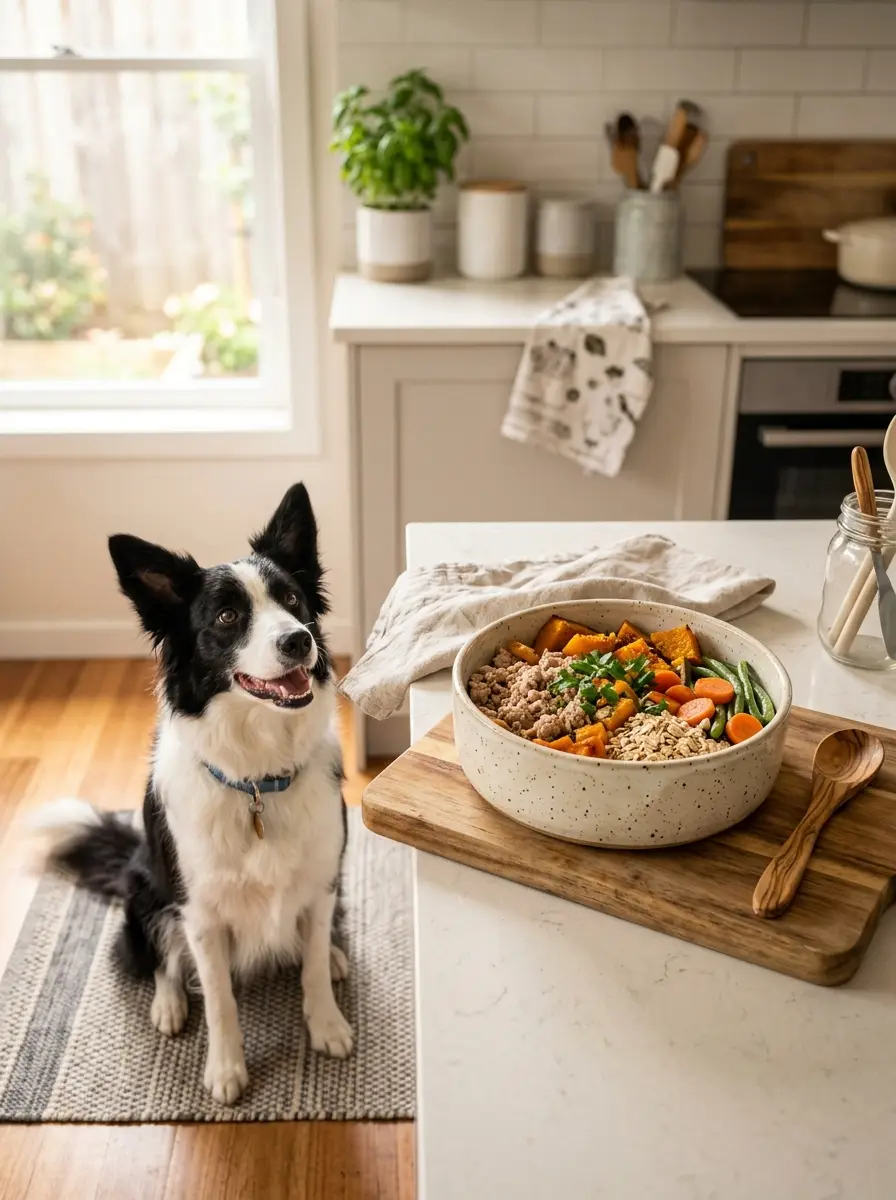
This recipe is useful when you want to prepare several portions at once.
Ingredients
- 1 lb lean ground turkey
- 1½ cups cooked oats
- 1 cup plain pumpkin
- 1 cup cooked carrots
- ½ cup green beans
Directions
Cook the turkey thoroughly. Add the vegetables and cook until tender. Stir in cooked oats and pumpkin, then let everything cool before dividing into meals.
Meal-prep tip: Store individual portions so you can quickly grab one meal at feeding time.
5. Salmon, Rice & Vegetable Bowl
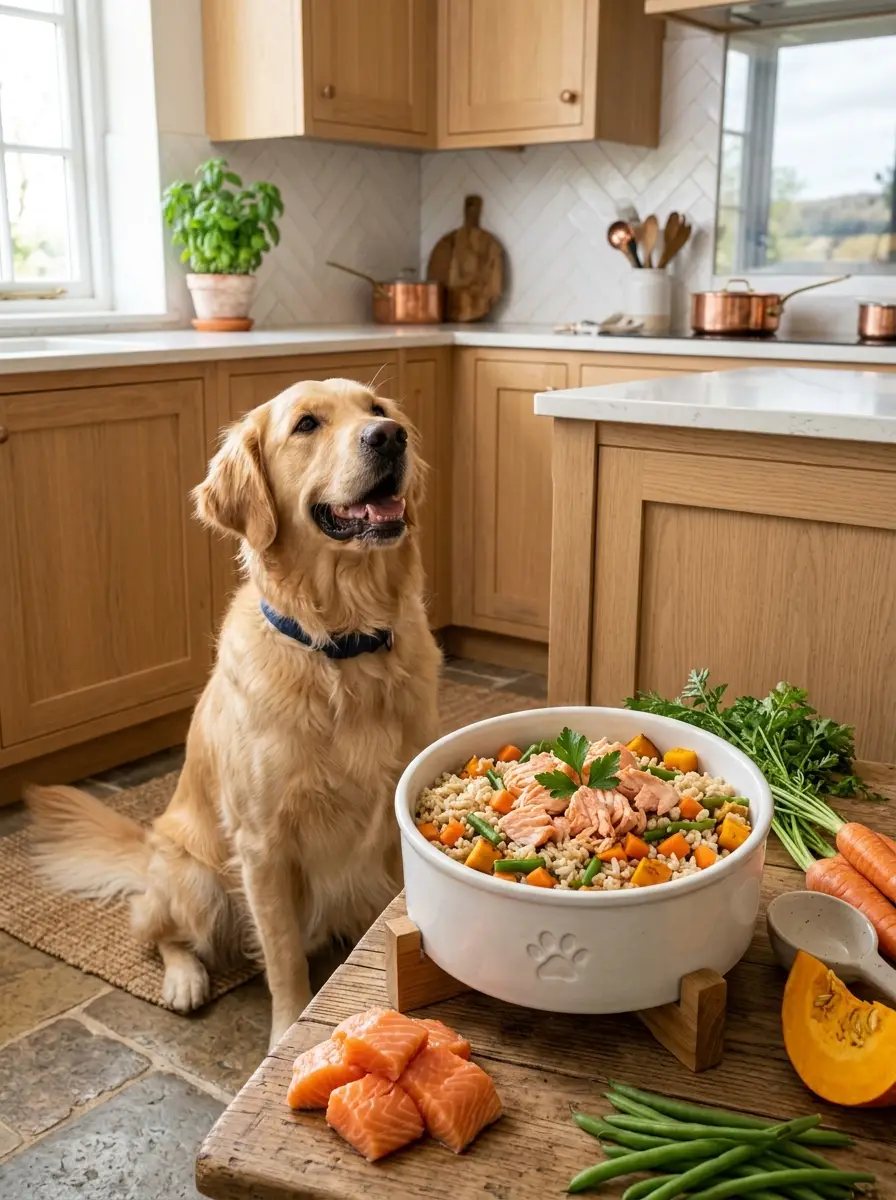
Salmon can add variety to a dog’s diet and provides beneficial omega-3 fatty acids.
Ingredients
- 12 oz fully cooked, boneless salmon
- 2 cups cooked rice
- 1 cup cooked carrots
- ½ cup green beans
- ½ cup plain pumpkin
Directions
Cook the salmon thoroughly and carefully remove all bones. Flake the fish and combine it with the remaining ingredients.
Safety tip: Never serve cooked fish with bones. Avoid raw salmon because uncooked fish can carry pathogens and other risks.
How Much Homemade Dog Food Should You Feed?
There is no single portion size that works for every dog. Calories needed depend on body weight, age, activity, breed, neuter status, and health.
Instead of relying only on a percentage of body weight, monitor your dog’s body condition and work with your veterinarian to determine an appropriate calorie target.
A kitchen scale can also make portioning much more consistent.
How to Make Homemade Dog Food Nutritionally Complete
This is the most important part of homemade feeding.
A meal containing meat, rice, and vegetables may look healthy but can still be deficient in essential nutrients, particularly calcium and certain vitamins and minerals.
For long-term feeding:
- Use a recipe formulated for your individual dog.
- Include an appropriate calcium source.
- Follow supplement instructions precisely.
- Do not randomly add human vitamins.
- Recheck portions as your dog’s weight changes.
- Ask your veterinarian about nutritional requirements.
Homemade food can be part of a healthy feeding plan, but “homemade” does not automatically mean “complete and balanced.”
Ingredients Dogs Should Never Eat
Keep these foods away from homemade dog meals:
- Onions and garlic
- Grapes and raisins
- Chocolate
- Xylitol
- Macadamia nuts
- Alcohol
- Foods containing excessive salt
- Cooked bones
When preparing meals, keep seasonings and sauces away from your dog’s portion.
Raw Homemade Dog Food: What to Know
Some homemade dog food recipes use raw meat, eggs, or fish. Raw feeding carries risks from bacteria and parasites and can also make nutritional balancing more difficult.
For most beginners, thoroughly cooked ingredients are a simpler and safer starting point. If you are considering a raw diet, discuss the plan with your veterinarian first and use careful food-handling practices.
How to Store Homemade Dog Food
After cooking, divide food into small portions and refrigerate promptly.
For longer storage, freeze individual servings and thaw them safely in the refrigerator.
Always check leftovers before serving. If the food smells unusual, looks spoiled, or has been left at unsafe temperatures, throw it away.
How to Switch From Kibble to Homemade Food
Avoid changing your dog’s entire diet overnight.
A gradual transition over about 7–10 days can be easier on the digestive system:
Days 1–3: Mostly current food with a small amount of the new food.
Days 4–6: Increase the homemade portion while reducing the previous food.
Days 7–10: Continue increasing the new food if your dog is tolerating it well.
If your dog develops persistent diarrhea, vomiting, refuses food, or seems unwell, stop the transition and contact your veterinarian.
Can Homemade Dog Food Replace Commercial Dog Food?
Yes, homemade food can be used as part of a dog’s diet, but a homemade recipe should be properly balanced if it will provide most or all of your dog’s nutrition.
Commercial foods that are labeled complete and balanced can be easier for owners who do not want to calculate nutrients and supplements themselves.
You can also combine professionally formulated homemade meals with a complete commercial diet if that fits your dog’s needs.
Frequently Asked Questions
Is homemade dog food healthier than kibble?
Not automatically. A properly formulated homemade diet can be nutritious, but an unbalanced homemade diet can cause nutritional deficiencies. The quality and nutritional completeness of the overall diet matter more than whether it is homemade.
What meat is best for homemade dog food?
Chicken, turkey, lean beef, and fully cooked salmon can all be useful protein choices for many healthy dogs. The best option depends on your dog’s nutritional needs and individual tolerance.
Can dogs eat rice every day?
Cooked rice can be included in a dog’s diet, but it should not replace the variety of nutrients required for a complete diet.
Can I feed these recipes every day?
These recipes are best viewed as meal ideas unless they have been professionally balanced for your dog. Feeding the same homemade combination long-term without appropriate supplementation can create nutritional deficiencies.
How long does homemade dog food last?
Keep prepared food refrigerated and follow safe food-storage practices. Freeze extra portions when you will not use them promptly.
Final Thoughts
Homemade dog food does not have to mean complicated recipes or hours in the kitchen. Simple combinations such as turkey and sweet potato, chicken and rice, or cooked salmon with vegetables can add variety to your dog’s meals.
The key is to prioritize safe ingredients, appropriate portions, proper storage, and nutritional balance. If homemade food will become your dog’s primary diet, get a recipe designed specifically for your dog rather than guessing at supplements or ingredient ratios.