
4-Ingredient Dog Food Recipe: Easy Homemade Turkey & Rice Meal
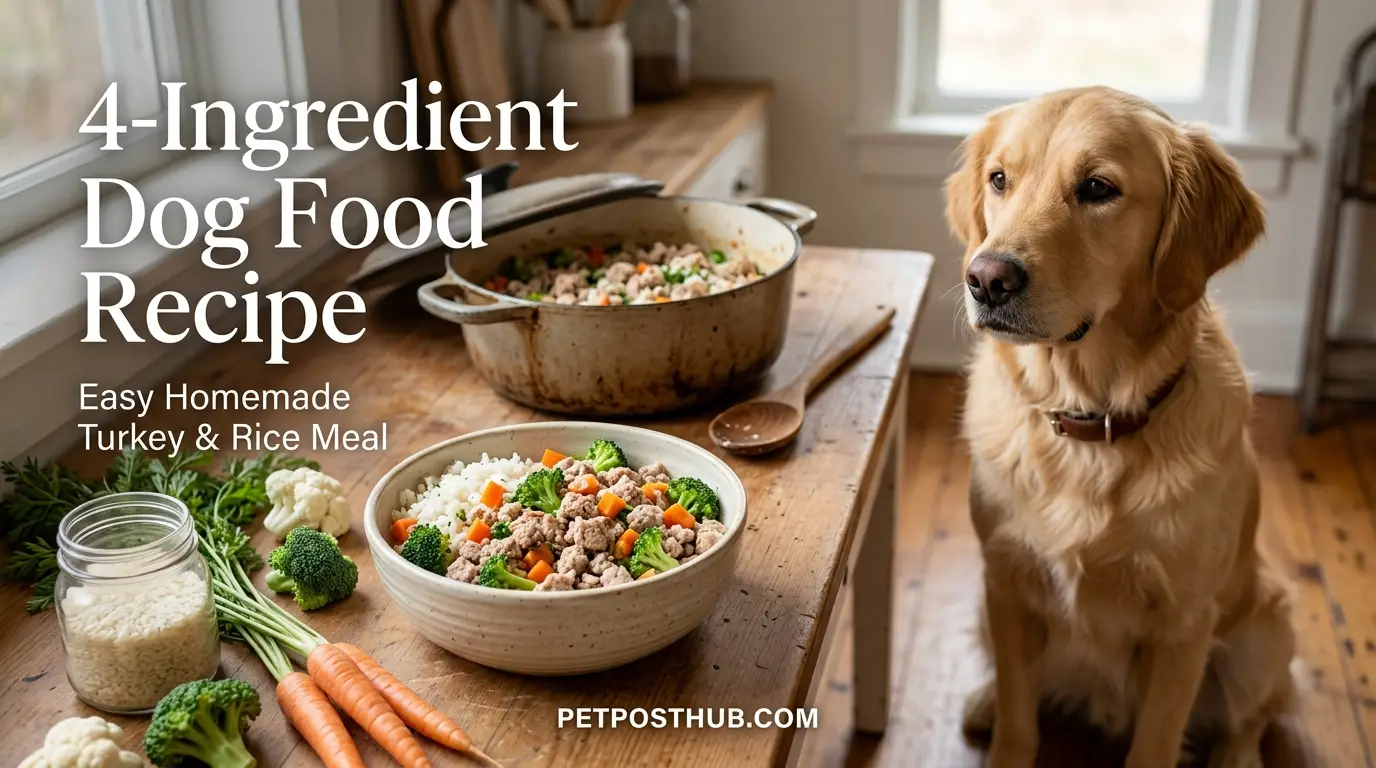
Making homemade food for your dog doesn’t have to mean buying a long list of ingredients or spending your entire evening in the kitchen. This simple 4-ingredient dog food recipe combines ground turkey, white rice, dog-safe vegetables, and water into an easy cooked meal.
It is especially convenient when you want a straightforward homemade option using ingredients that are easy to find. The recipe can also be prepared in a larger batch and portioned for later meals, making it practical for busy dog parents.
However, there is one important distinction: simple does not automatically mean complete and balanced. This recipe is best treated as a homemade meal option or supplemental food rather than a nutritionally complete replacement for your dog’s regular diet unless a veterinarian or veterinary nutritionist has formulated it for your dog.
Why This Easy Homemade Dog Food Recipe Works
1. Only Four Main Ingredients
You don’t need a complicated shopping list. The basic recipe uses ground turkey, white rice, dog-safe vegetables, and water.
That makes it easy to prepare when you want a homemade meal without searching for specialty ingredients.
2. One-Pot Preparation
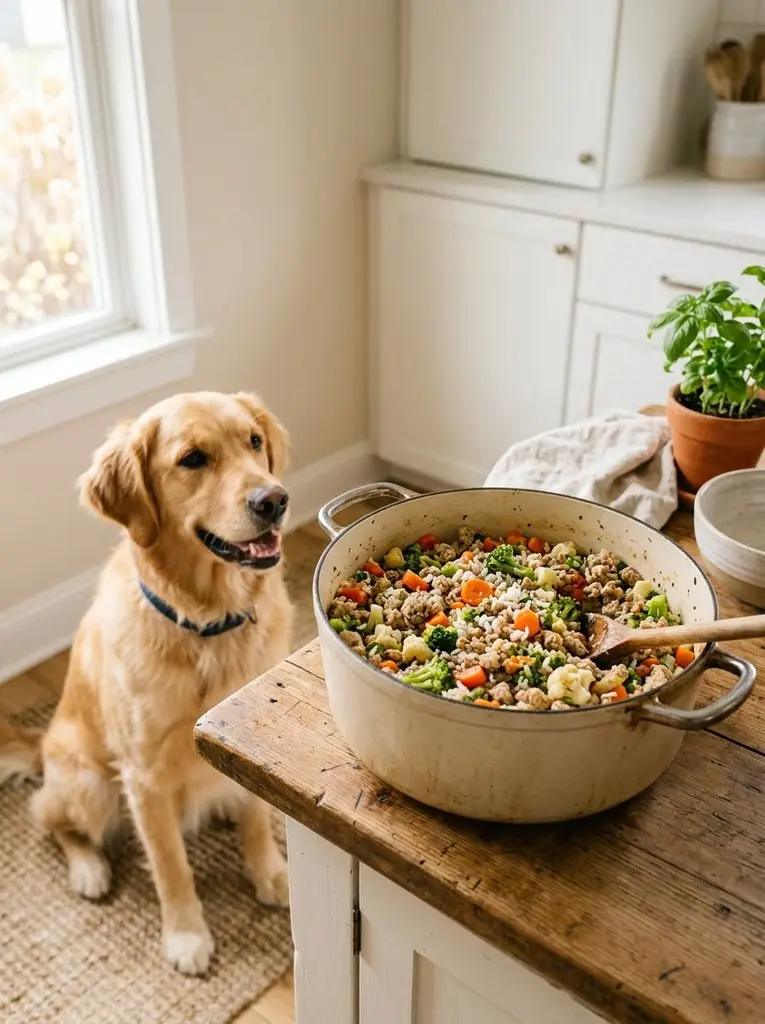
Everything cooks in one large pot, which means fewer dishes and less cleanup.
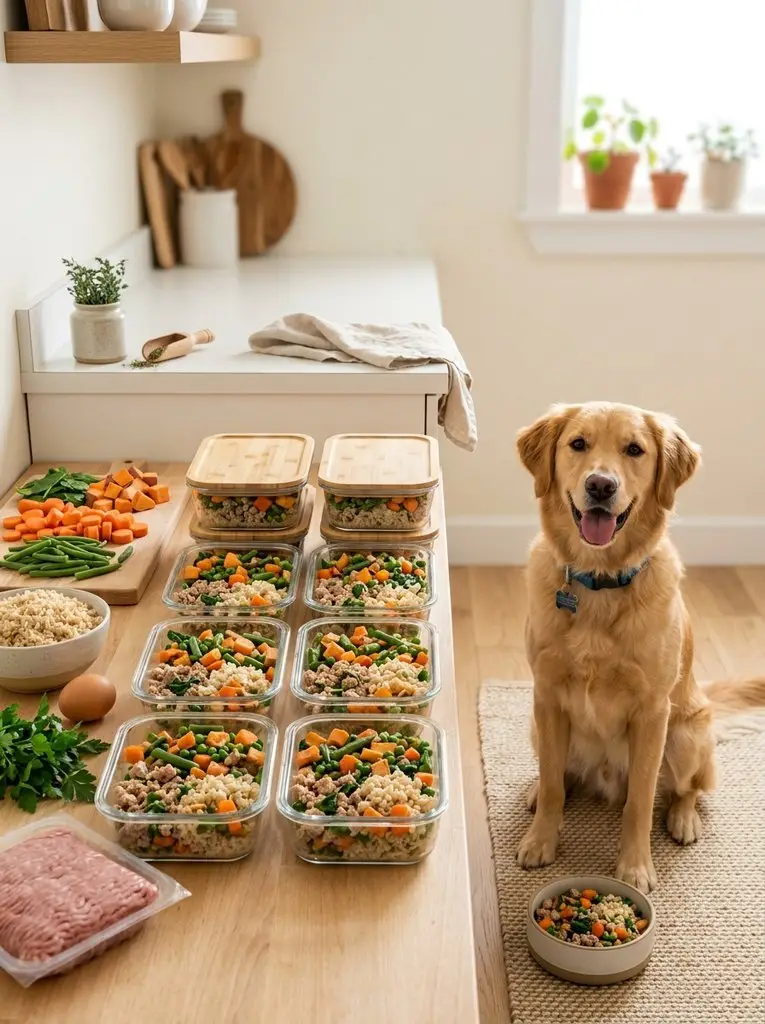
You can prepare a batch, allow it to cool, divide it into portions, and refrigerate or freeze what you won’t use immediately.
3. Simple Ingredients
Ground turkey provides protein, rice supplies carbohydrates, and vegetables contribute fiber and various vitamins and minerals.
Still, these ingredients alone don’t supply every nutrient a dog needs in the correct amounts for long-term feeding. Homemade diets can have important nutritional deficiencies when they aren’t properly formulated.
4. Easy to Customize Carefully
You can adjust the texture by adding a little more water or cooking the mixture longer.
If your dog has allergies, medical conditions, or specific nutritional requirements, however, don’t make ingredient substitutions without checking with your veterinarian.
Simple 4-Ingredient Dog Food Recipe
Ingredients
| Ingredient | Amount |
|---|---|
| Ground turkey | 1 pound |
| White rice, uncooked | 2 cups |
| Dog-safe mixed vegetables | About 2 cups |
| Water | 6 cups |
Optional: A small amount of turmeric may be used if your veterinarian approves it, but it isn’t necessary for the recipe.
Choosing the Right Vegetables
Use plain frozen or fresh vegetables without added salt, sauces, seasonings, onion, or garlic.
Carrots and small amounts of broccoli or cauliflower can work as part of a dog-safe vegetable mixture.
Avoid vegetable blends containing onions, garlic, leeks, chives, or heavy seasoning.
Also check the ingredient label on frozen vegetable packages carefully. A plain vegetable mix is very different from a seasoned side dish.
What You Need
Before starting, gather:
- Large Dutch oven or heavy-bottomed pot
- Wooden spoon or spatula
- Measuring cups
- Airtight food-storage containers
- Refrigerator or freezer space
- Clean serving bowl
A pot holding at least 6 quarts gives the ingredients enough room to cook without overflowing.
How to Make 4-Ingredient Dog Food
Step 1: Prepare the Ingredients
Measure the ground turkey, rice, vegetables, and water.
If you’re using frozen vegetables, there is generally no need to thaw them before adding them later in the recipe.
Keep raw turkey separate from ready-to-eat foods and wash your hands, utensils, and preparation surfaces after handling it. Safe handling is important because raw poultry can carry harmful bacteria.
Step 2: Add the Turkey and Rice
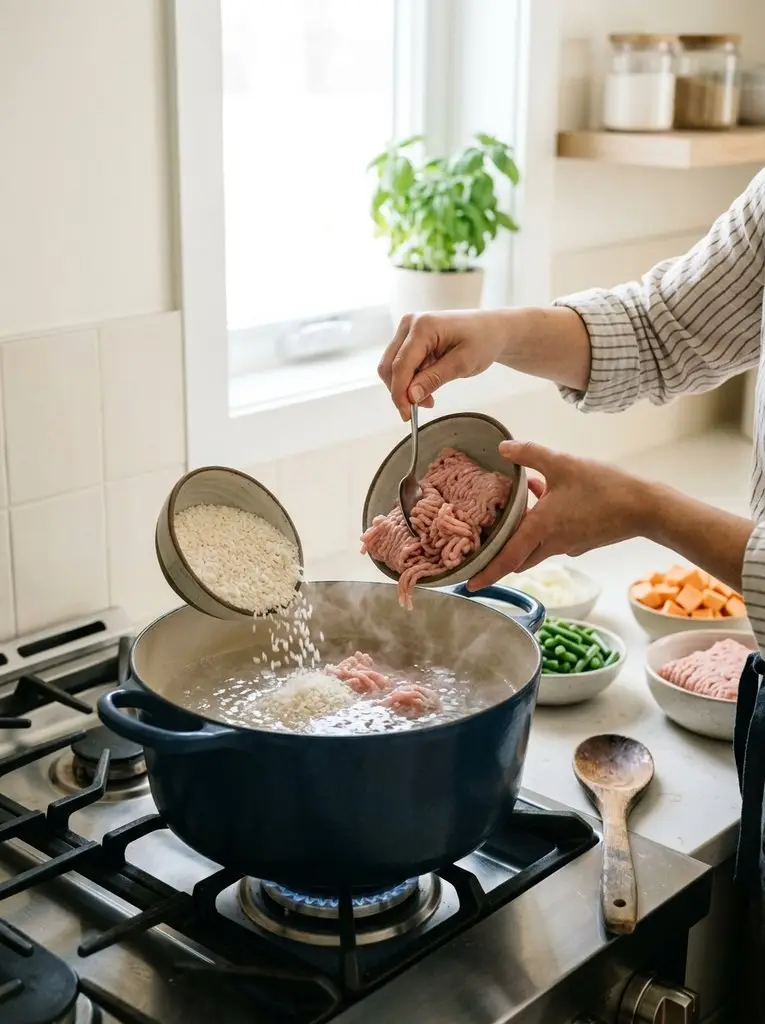
Place the ground turkey into a large pot.
Add the uncooked white rice and pour in the water.
Use a wooden spoon to break the turkey into small pieces so it cooks evenly.
Step 3: Bring the Mixture to a Boil
Place the pot over medium-high to high heat.
Stir occasionally while the mixture heats.
Once it reaches a full boil, reduce the heat.
Step 4: Simmer the Turkey and Rice
Reduce the heat to low and cover the pot.
Allow the mixture to simmer for approximately 20 minutes, stirring occasionally.
The rice should become tender and the turkey should be thoroughly cooked.
Step 5: Add the Vegetables
Add approximately 2 cups of plain dog-safe vegetables.
Stir them throughout the turkey and rice mixture.
Cover the pot again and continue cooking for about 5 minutes, or until the vegetables reach a soft texture.
Step 6: Check the Texture
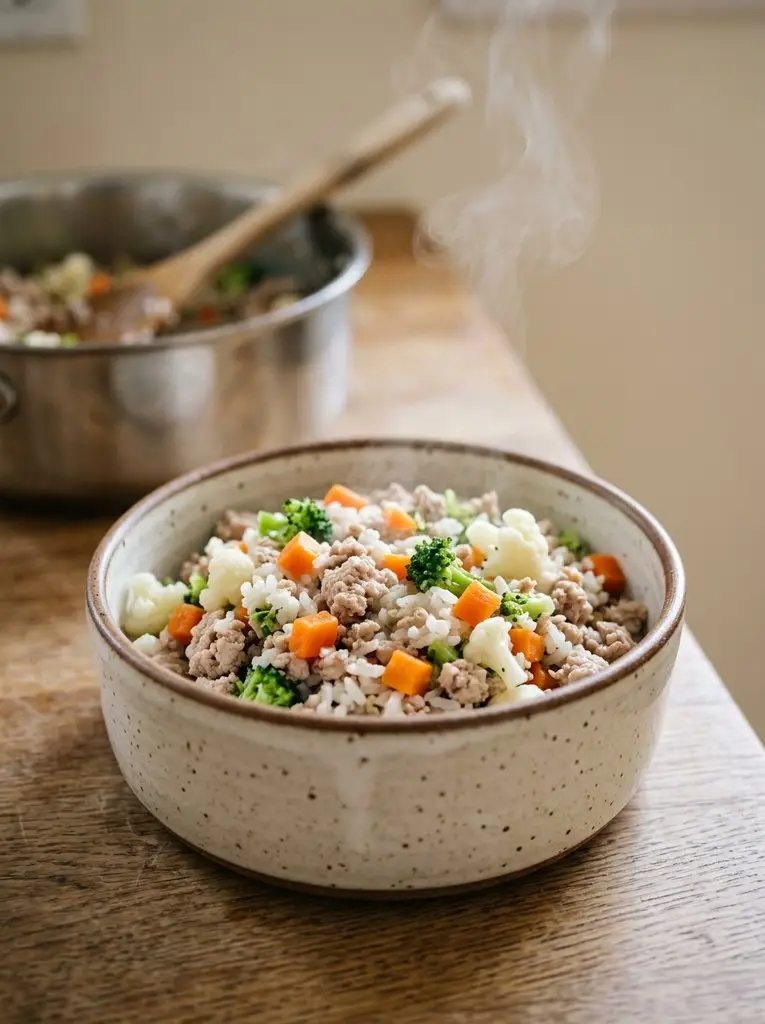
The finished mixture should be soft, moist, and easy to scoop.
If it seems too thick, you can add a little water and stir.
If it contains excess liquid, continue cooking briefly until you reach a consistency your dog can comfortably eat.
Step 7: Cool the Food Safely
Turn off the heat and allow the food to cool.
For food-safety reasons, don’t leave cooked food sitting at room temperature for an extended period. Divide a large batch into smaller, shallow containers so it cools more quickly, then refrigerate it promptly. FDA guidance recommends refrigerating perishable foods within two hours and keeping the refrigerator at 40°F/4°C or below.
Step 8: Portion Before Storing
Once cooled sufficiently, divide the homemade dog food into meal-sized portions.
This makes feeding easier and prevents repeatedly opening and warming the entire batch.
For dogs with specific calorie requirements, use your veterinarian’s recommended daily calorie intake rather than relying on a generic cup measurement.
How Much Homemade Dog Food Should You Feed?
This is one area where generic recipes often oversimplify things.
A dog’s food requirement depends on factors such as:
- Body weight
- Age
- Activity level
- Body condition
- Breed
- Neuter/spay status
- Growth or pregnancy
- Existing health conditions
- Total calories from treats and other food
For this reason, there isn’t one correct number of cups for every dog of a particular weight.
A better approach is to determine your dog’s approximate calorie needs with your veterinarian and then calculate how much of this particular recipe fits those needs.
If you’re using this food as a topper rather than a complete diet, keep the additional food appropriately limited so it doesn’t unintentionally replace essential nutrients from a complete and balanced diet.
WSAVA emphasizes considering a dog’s individual nutritional needs and calorie requirements rather than judging a diet solely by its ingredient list.
Can Dogs Eat Turkey, Rice, and Vegetables Together?
For many healthy dogs, plain cooked turkey, rice, and appropriate vegetables can be ingredients in a homemade meal.
The important part is how the ingredients are prepared.
Avoid:
- Onion
- Garlic
- Chives
- Leeks
- Excess salt
- Butter
- Heavy sauces
- Spicy seasonings
- Artificial sweeteners such as xylitol
- Cooked bones
Use plain cooked ingredients instead of leftovers from a seasoned human meal.
Is This a Complete Homemade Dog Food Diet?
No. Not by itself.
This is one of the most important things to understand before feeding homemade dog food regularly.
Turkey, rice, and vegetables provide useful nutrients, but a long-term canine diet needs carefully balanced amounts of protein, fat, essential fatty acids, vitamins, minerals, calcium, phosphorus, and other nutrients.
Simply adding a generic multivitamin doesn’t automatically make a homemade recipe complete and balanced.
WSAVA warns that generic homemade recipes can be nutritionally unbalanced and recommends working with a veterinarian or veterinary nutritionist when creating a home-prepared diet intended as a primary food.
Use this recipe as a simple homemade meal or supplemental option unless your veterinarian has specifically formulated it as part of your dog’s complete diet.
Homemade Dog Food for Sensitive Stomachs
A simple turkey-and-rice meal may sound appealing when a dog has digestive upset because it contains relatively straightforward ingredients.
However, a simple recipe isn’t automatically a treatment for vomiting, diarrhea, food allergies, pancreatitis, or another medical condition.
If your dog has repeated vomiting, persistent diarrhea, blood in the stool, severe lethargy, abdominal pain, dehydration, or refuses food, contact your veterinarian instead of relying on a homemade recipe.
Dogs with diagnosed food allergies or medical conditions may also require a specifically formulated therapeutic diet.
How to Store Homemade Dog Food
Proper storage is just as important as the recipe itself.
Refrigerator
Place the cooled food into clean, covered containers and refrigerate promptly.
Keep the refrigerator at 40°F (4°C) or below.
Rather than preparing more food than you can safely use, make smaller batches or freeze portions for later.
Freezer
For longer storage, divide the food into individual portions before freezing.
Small containers or freezer-safe bags make thawing easier because you only remove the amount you need.
Thaw frozen portions in the refrigerator rather than leaving them on the counter.
Serving
You can serve the food chilled, allow it to come closer to room temperature, or gently warm it.
If microwaving, stir thoroughly and check the temperature before serving so there are no hot spots.
Never serve food hot enough to burn your dog’s mouth.
Homemade Dog Food Storage Safety Tips
Keep these habits in mind whenever preparing homemade pet food:
- Wash your hands before and after preparation.
- Clean bowls and utensils regularly.
- Keep raw turkey away from other foods.
- Clean preparation surfaces after handling raw poultry.
- Refrigerate leftovers promptly.
- Don’t leave cooked food sitting out for hours.
- Discard food if you suspect it has spoiled.
- Keep stored food covered.
- Label containers with the preparation date.
FDA notes that pet food can become contaminated with harmful bacteria, making proper handling, cleaning, and storage important for both pets and people in the household.
How to Make This Recipe More Convenient
If you’re making homemade dog food regularly, a little preparation can save a lot of time.
Freeze Individual Portions
Instead of freezing the entire batch together, divide it into daily portions.
You can then move one portion from the freezer to the refrigerator as needed.
Use Reusable Containers
Small airtight containers make portioning simple and help keep your refrigerator organized.
Prepare a Meal Schedule
If you’re combining homemade food with your dog’s regular complete and balanced food, decide ahead of time how much homemade food you’re adding.
This helps prevent accidental overfeeding.
Keep the Recipe Simple
Avoid changing several ingredients at once.
If you suddenly introduce turkey, rice, vegetables, supplements, and treats simultaneously, it becomes much harder to determine what caused digestive upset if your dog reacts poorly.
Can Puppies Eat This 4-Ingredient Dog Food?
Puppies have different nutritional requirements from adult dogs because they’re growing rapidly.
A simple turkey-and-rice recipe should not be assumed to provide everything a growing puppy needs.
If you’re feeding a puppy homemade food, speak with your veterinarian or a veterinary nutritionist about a properly formulated growth diet.
This is especially important for large-breed puppies, whose calcium and energy requirements need careful management.
Can Senior Dogs Eat Homemade Turkey and Rice?
A healthy senior dog may be able to eat these ingredients, but age alone doesn’t determine whether a recipe is appropriate.
Older dogs may have changing calorie requirements or health conditions involving the kidneys, liver, heart, joints, or digestive system.
If your senior dog has a diagnosed condition, ask your veterinarian before replacing a complete diet with homemade food.
What If My Dog Is Allergic to Turkey?
Don’t automatically substitute another protein simply because a recipe says you can.
If your dog has a suspected or diagnosed food allergy, changing proteins can interfere with identifying the trigger.
Your veterinarian can recommend an appropriate elimination diet or alternative food based on your dog’s history.
Can I Add Supplements to Homemade Dog Food?
Supplements shouldn’t be added randomly.
Calcium, fish oil, vitamins, minerals, and other supplements can be useful in a properly formulated homemade diet, but the correct amount depends on the complete recipe and the individual dog.
Adding a little of several supplements does not guarantee nutritional balance.
For a diet intended to replace your dog’s regular food, have the complete recipe evaluated by a veterinary nutrition professional.
4-Ingredient Dog Food Recipe FAQ
What are the four ingredients in homemade dog food?
The four main ingredients in this recipe are ground turkey, white rice, dog-safe vegetables, and water.
Is homemade turkey and rice good for dogs?
Plain cooked turkey and rice can be appropriate ingredients for many healthy dogs, but turkey-and-rice alone isn’t a complete and balanced long-term diet.
Can I use chicken instead of turkey?
Chicken may be used in some homemade recipes, but if your dog has an allergy, medical condition, or dietary restriction, ask your veterinarian before changing the protein source.
Can I use brown rice instead of white rice?
Brown rice can be used in some homemade dog-food recipes, but it changes the texture, cooking time, and nutritional composition. White rice is used here because it cooks relatively quickly and produces a soft texture.
Can I use fresh vegetables?
Yes. Plain dog-safe fresh vegetables can be used instead of frozen vegetables.
Cut larger pieces into appropriately small pieces and cook them until soft.
Can I add salt to homemade dog food?
There is no need to add salt to this recipe. Dogs don’t need seasoned human-style food, and unnecessary sodium should be avoided.
Can I feed this recipe every day?
Not as the sole diet unless it has been professionally formulated to meet your dog’s complete nutritional requirements.
A basic four-ingredient recipe can be useful as an occasional homemade meal or supplemental food, but long-term primary feeding requires proper nutritional formulation.
How long does homemade dog food last in the refrigerator?
Store homemade food promptly in a refrigerator maintained at 40°F/4°C or below. For best safety, make batches you can use promptly or freeze portions for longer storage.
Can I freeze homemade dog food?
Yes. Portion the cooled food into freezer-safe containers or bags, label them with the date, and thaw portions safely in the refrigerator.
Is this recipe suitable for dogs with diarrhea?
Don’t assume this recipe will treat diarrhea. Mild digestive upset can have many causes, and persistent or severe symptoms should be discussed with a veterinarian.
What vegetables can dogs eat?
Common dog-safe choices can include carrots and appropriately prepared broccoli or cauliflower, but individual dogs can have different tolerances. Always avoid toxic ingredients such as onions and garlic.
Important Note Before Feeding Homemade Dog Food
Homemade food can be a useful part of a dog’s diet, but ingredient simplicity isn’t the same as nutritional completeness.
If this recipe is being used as an occasional meal or topper, keep your dog’s overall diet nutritionally appropriate. If you want homemade food to become your dog’s primary diet, have the full recipe calculated for your dog’s life stage, weight, health status, and calorie needs by your veterinarian or a qualified veterinary nutritionist. WSAVA recommends individualized nutritional assessment and professional evaluation of homemade diets because nutritional deficiencies or excesses can occur when recipes aren’t properly formulated.