Why Does My Dog Eat My Socks? 5 Reasons
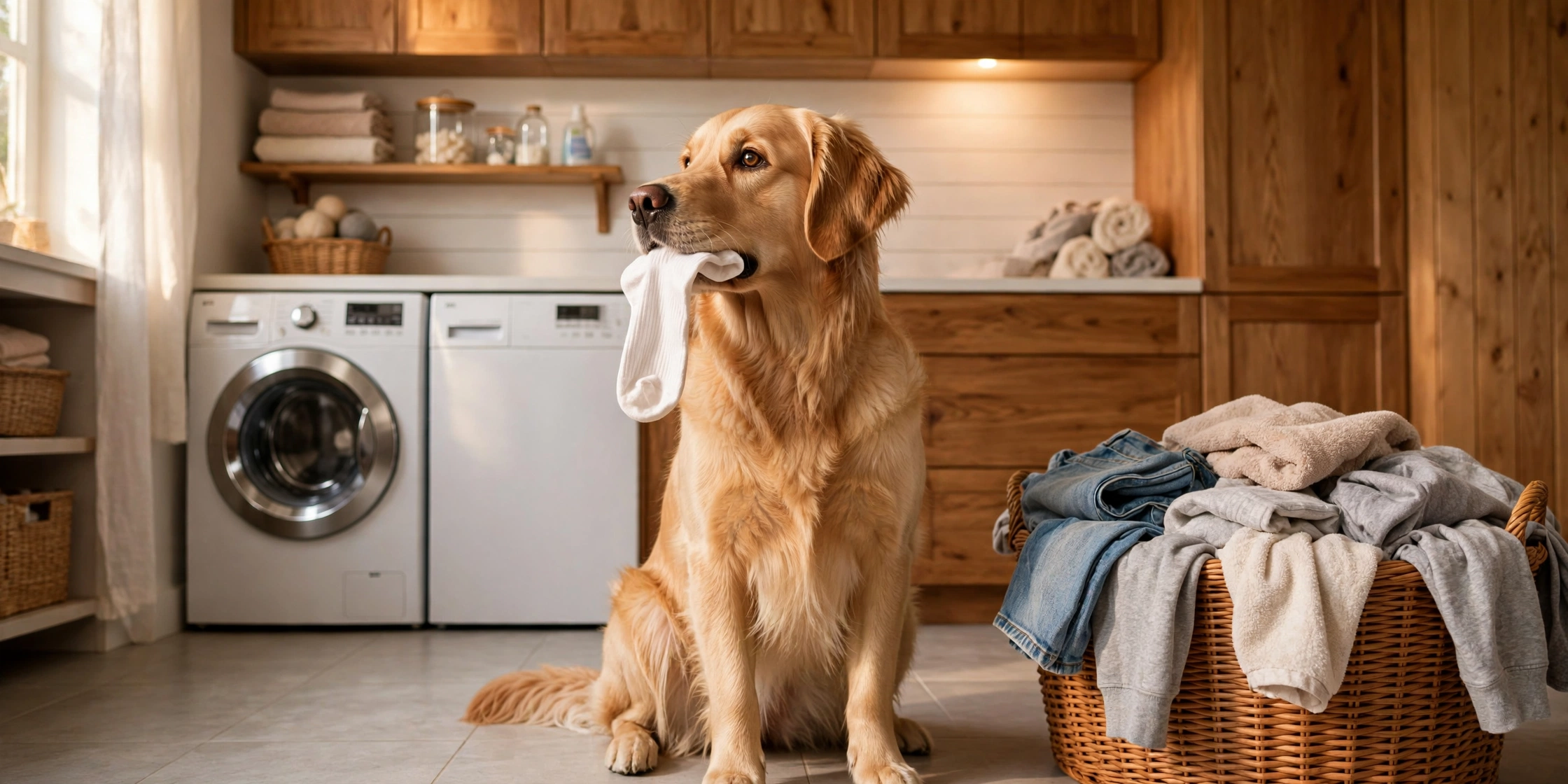
If you keep finding single socks with the toes chewed out, you have probably asked yourself why does my dog eat my socks instead of the pile of toys you bought for exactly that purpose. Worse, a swallowed sock can tangle in the intestines and cause a complete blockage, which can turn into a life-threatening emergency within a day or two.
Important: If your dog has just swallowed a sock, do not wait to see what happens — call your veterinarian right away. Repeated vomiting, dry heaving, a swollen or painful belly, lethargy, loss of appetite, or no bowel movements for more than 24 hours are red flags for a blockage, which can require surgery. Delays make the outcome worse.
The good news: sock-eating almost always has an identifiable cause, and most causes are manageable at home. Here are the five most common reasons, what each one really means, and what to do about it.
Table of Contents
- 1. Your Socks Smell Like You
- 2. Boredom and Lack of Mental Stimulation
- 3. Teething and the Need to Chew
- 4. Anxiety and Stress
- 5. Pica: A Compulsive Eating Disorder
- What to Do If Your Dog Ate a Sock
- Frequently Asked Questions
1. Your Socks Smell Like You
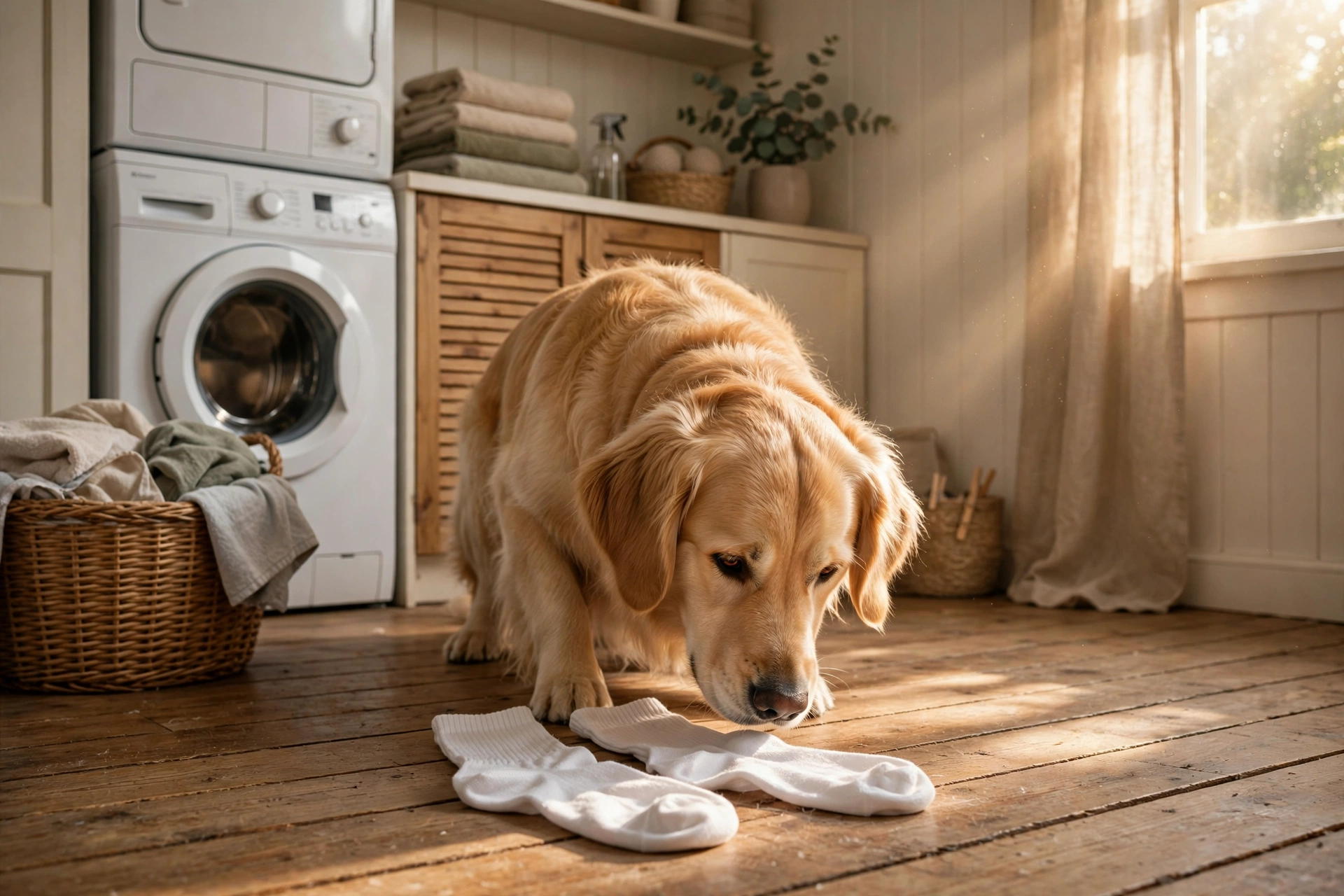
The simplest explanation is also the most common: your socks are saturated with your scent. To your dog, a worn sock is a concentrated dose of you — comforting and familiar. That is why the sock your dog steals is almost always the dirty one from the hamper, not the clean one from the drawer.
What it means: Scent-driven sock-stealing is usually a sign of attachment, not misbehavior. It tends to spike when dogs are left alone for long stretches or after a schedule change keeps you away more than usual.
What to do: Make worn socks unavailable — a lidded hamper and a closed bedroom door solve most scent-driven theft overnight. Leave a worn old T-shirt in your dog’s bed instead; it delivers the same comforting scent in a far safer form. And when you catch your dog carrying a sock, trade for a treat rather than chasing — a chase turns the sock into the world’s most exciting toy.
Helpful pick: SOLEDI 100L Laundry Hamper with Lid — removes temptation at the source: dirty socks never sit in an open pile your dog can raid.
2. Boredom and Lack of Mental Stimulation
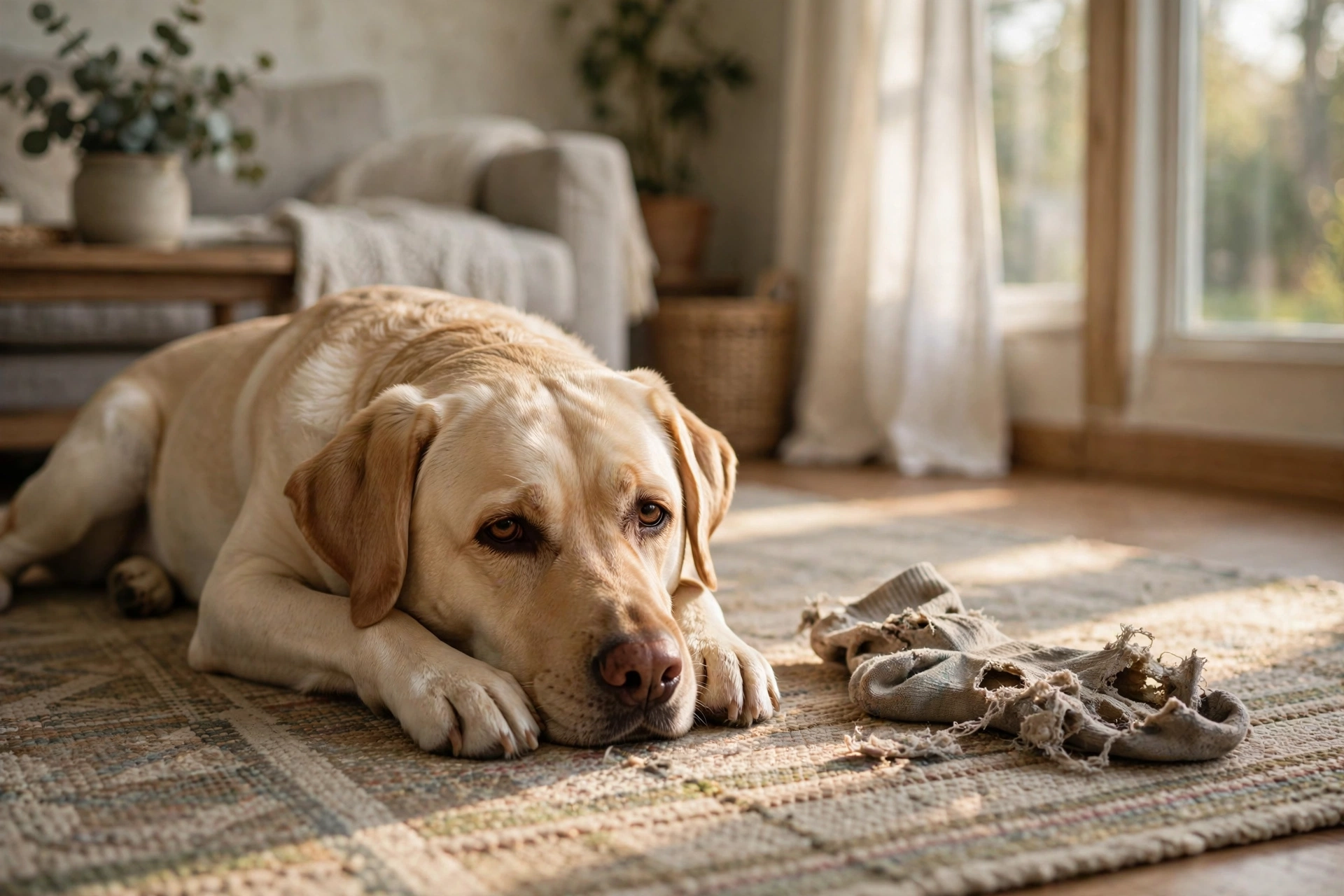
An under-stimulated dog is a creative dog, and a sock is the perfect boredom project: soft, stretchy, fun to shake, and endlessly shreddable. If the sock-chewing happens mostly when you are at work, when bad weather has shortened walks, or in the evening when the household winds down, boredom is the likely driver.
What it means: Your dog has energy and curiosity with nowhere productive to go. This is the same root cause behind many destructive habits — chewing furniture, digging, and excessive barking often travel with sock-stealing.
What to do: Add one genuine mental workout to the day: a 10-minute training session, a sniff walk where your dog sets the pace, or a food puzzle at dinner instead of a bowl. Tired brains steal fewer socks. Rotate toys every few days too — novelty keeps approved chew objects interesting, which makes forbidden ones less appealing.
Helpful pick: Outward Hound Hide-A-Squirrel Puzzle Toy — a plush puzzle toy gives your dog something soft to carry and a problem to solve, redirecting the instincts that make socks so tempting.
3. Teething and the Need to Chew
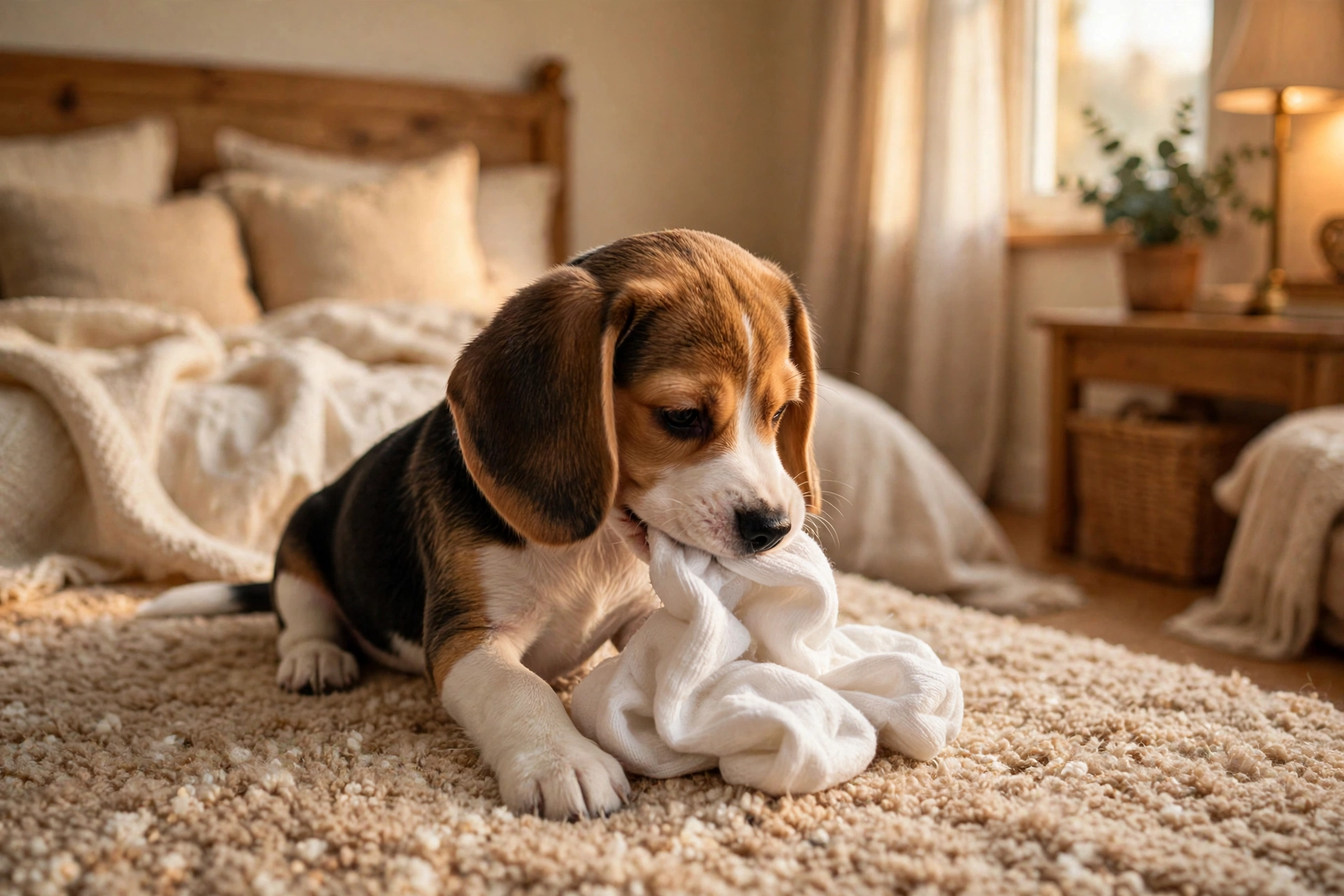
Puppies between roughly three and seven months are losing baby teeth and cutting adult ones, and their gums ache. Soft, yielding fabric feels wonderful on sore gums. From a teething puppy’s perspective, a sock is the ideal chew toy: it gives under pressure and it smells like the person they love most.
What it means: This is developmental, not defiance. The chewing urge fades as adult teeth finish coming in — but the habit of chewing fabric can outlast teething if the puppy learns socks are the go-to chew object.
What to do: Keep several acceptable chews in different textures within the puppy’s reach at all times, and keep socks off the floor during the teething months. If you catch the puppy with a sock, swap it calmly for an approved chew and praise the switch.
Helpful pick: KONG Puppy — made from softer rubber for teething puppies, it soothes sore gums without the blockage risk of a sock.
4. Anxiety and Stress
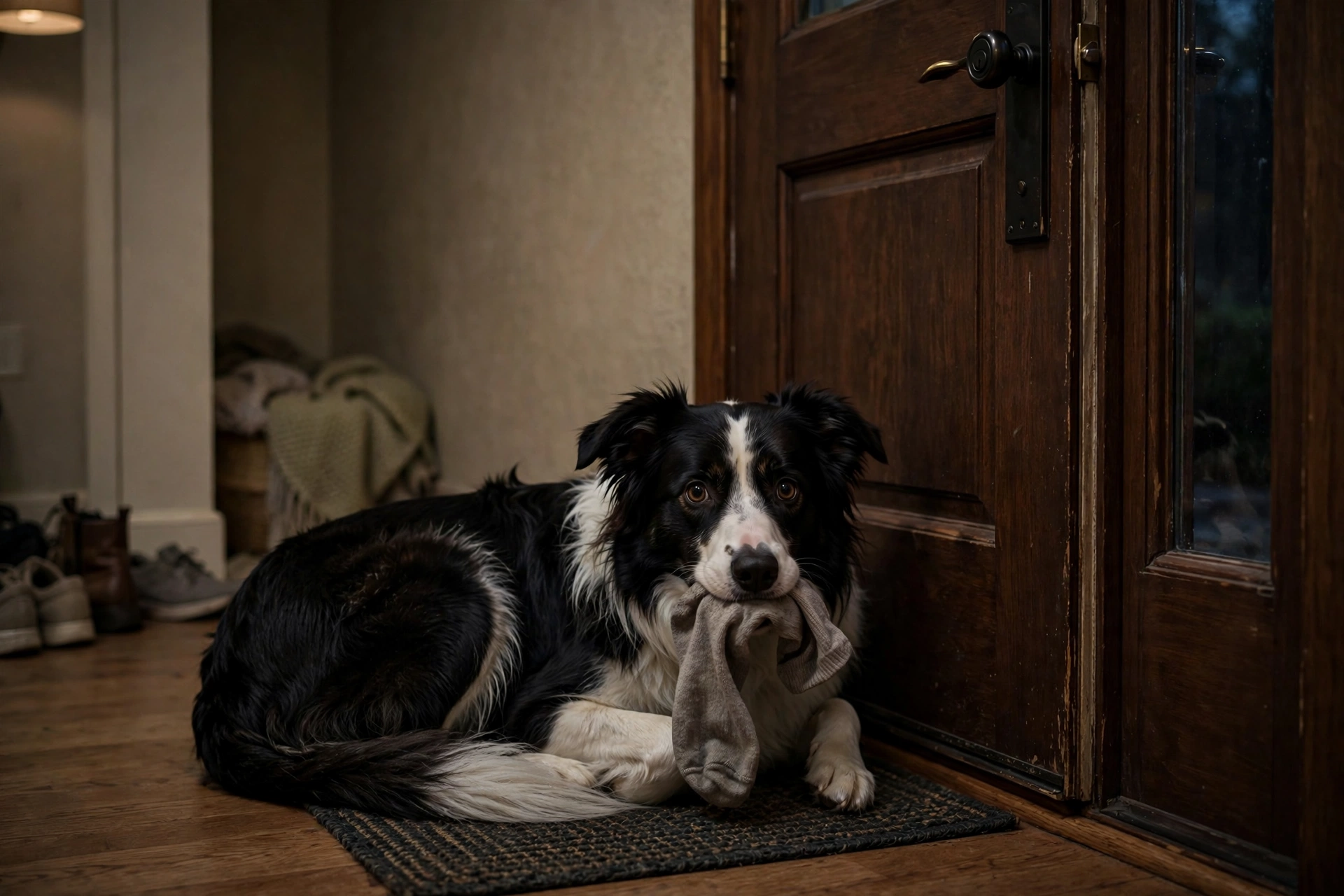
Some dogs chew and suck on fabric the way a child sucks a thumb — as self-soothing when they feel anxious. Dogs with separation anxiety are the classic sock-eaters: the chewing often starts within minutes of the owner leaving, and the chosen item is almost always something that smells strongly of the owner. Sock-sucking can also show up during thunderstorms, fireworks, or house moves.
What it means: The sock is a coping tool, not the problem. If your dog only destroys socks when alone, or pairs it with pacing, whining, or accidents in the house, anxiety is almost certainly the engine behind it.
What to do: Address the anxiety itself. Practice short, calm departures that gradually get longer, keep arrivals and departures low-key, and leave a worn shirt or a snuffle mat rather than loose laundry. For genuine separation anxiety, a vet or certified behaviorist can build a desensitization plan — and medication is a legitimate option for severe cases.
Helpful pick: Zesty Paws Calming Chews for Dogs — many owners use calming chews as part of an evening wind-down routine for anxious dogs; if anxiety is a persistent pattern, talk to your vet about a full plan.
5. Pica: A Compulsive Eating Disorder

Pica is the medical term for persistently eating non-food items, and socks are one of its favorite targets. Unlike the curious puppy or the bored chewer, a dog with pica does not just chew — it swallows, repeatedly, and often targets multiple materials: socks, rocks, feces, plastic. It can be triggered by nutritional deficiencies or gastrointestinal disorders, and it can also develop as a compulsive behavior in chronically stressed dogs.
What it means: If your dog swallows socks whole, does it daily, or eats other non-food items too, this is beyond a training problem. See your veterinarian. Pica needs a medical workup first — bloodwork, a diet review, and a GI check — before any behavior plan will stick.
What to do: Until you have a diagnosis, manage the environment: socks in lidded hampers, bedroom doors closed, and supervised or crated rest when you cannot watch your dog. Then work with your vet on the underlying cause — diet adjustments, enrichment, and in compulsive cases, behavior medication.
Helpful pick: MidWest Homes for Pets iCrate — a sturdy crate gives you a safe, sock-free resting space for times you cannot supervise while you and your vet sort out the underlying cause.
What to Do If Your Dog Ate a Sock
First, do not panic — but do act quickly. Here is the step-by-step:
- Call your vet now. Describe the size of the sock and the size of your dog. Small socks sometimes pass through large dogs; large socks in small dogs are far more dangerous. Your vet will tell you whether to come in immediately or monitor at home.
- Do not induce vomiting unless your vet tells you to. A sock coming back up can lodge in the throat or esophagus, which is worse than the original problem. Hydrogen peroxide vomiting is not a DIY first step — it is a vet-directed one.
- Watch for blockage signs for 48 hours. Learn to recognize the signs your dog is in pain: repeated vomiting, dry heaving, loss of appetite, a tense belly, lethargy, or no bowel movements. Any of these means an emergency vet visit, day or night.
- Check the stool. Check every bowel movement for the sock (or pieces of it) over the next two days. Feed normal meals — bulky food can help move things along, but only on your vet’s advice.
- Prevent the next one. Our detailed training guide on how to stop your dog from eating socks walks through the full prevention plan: management, training the “leave it” and “drop it” cues, and enrichment that makes socks boring by comparison.
Dogs that swallow fabric once often do it again — and other bathroom and laundry items carry similar risks. Treat a swallowed sock as a management problem to fix, not just a scare to forget.
Frequently Asked Questions
Is it dangerous if my dog eats a sock?
Yes. Socks are one of the most common causes of intestinal blockages in dogs. Fabric does not break down in the stomach, and a wedged sock can cut off blood flow to a section of gut. Blockages are surgical emergencies — this is not a “wait and hope” situation.
Will my dog poop out the sock on its own?
Sometimes, especially small socks in larger dogs. But there is no safe way to predict it, so call your vet, describe what was swallowed, and follow their monitoring instructions for the next 48 hours.
Why does my dog eat my socks but not my partner’s?
Usually scent and access. Dogs most often steal the socks of the person they are most bonded to, and if your socks are the ones left on the floor, yours are the ones that get eaten.
Should I punish my dog for eating socks?
No. Your dog cannot connect the scolding to a sock eaten an hour ago, and punishment can make anxiety-driven chewing worse. Manage the environment so socks are unavailable, and reward your dog for choosing approved chews instead.
How do I stop my dog from eating socks for good?
Combine management (lidded hampers, closed doors) with training (“leave it,” “drop it,” and a reliable trade game) and daily mental enrichment. See our full guide on how to stop your dog from eating socks for the complete step-by-step plan.
As an Amazon Associate, PetPostHub earns from qualifying purchases made through links in this article — it helps us keep the lights on at no extra cost to you.