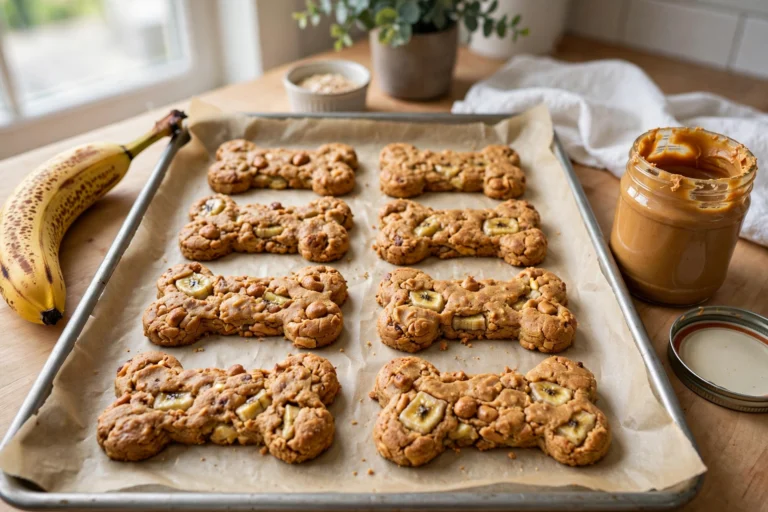
Peanut Butter Applesauce Dog Treats: Easy Recipe (2026)
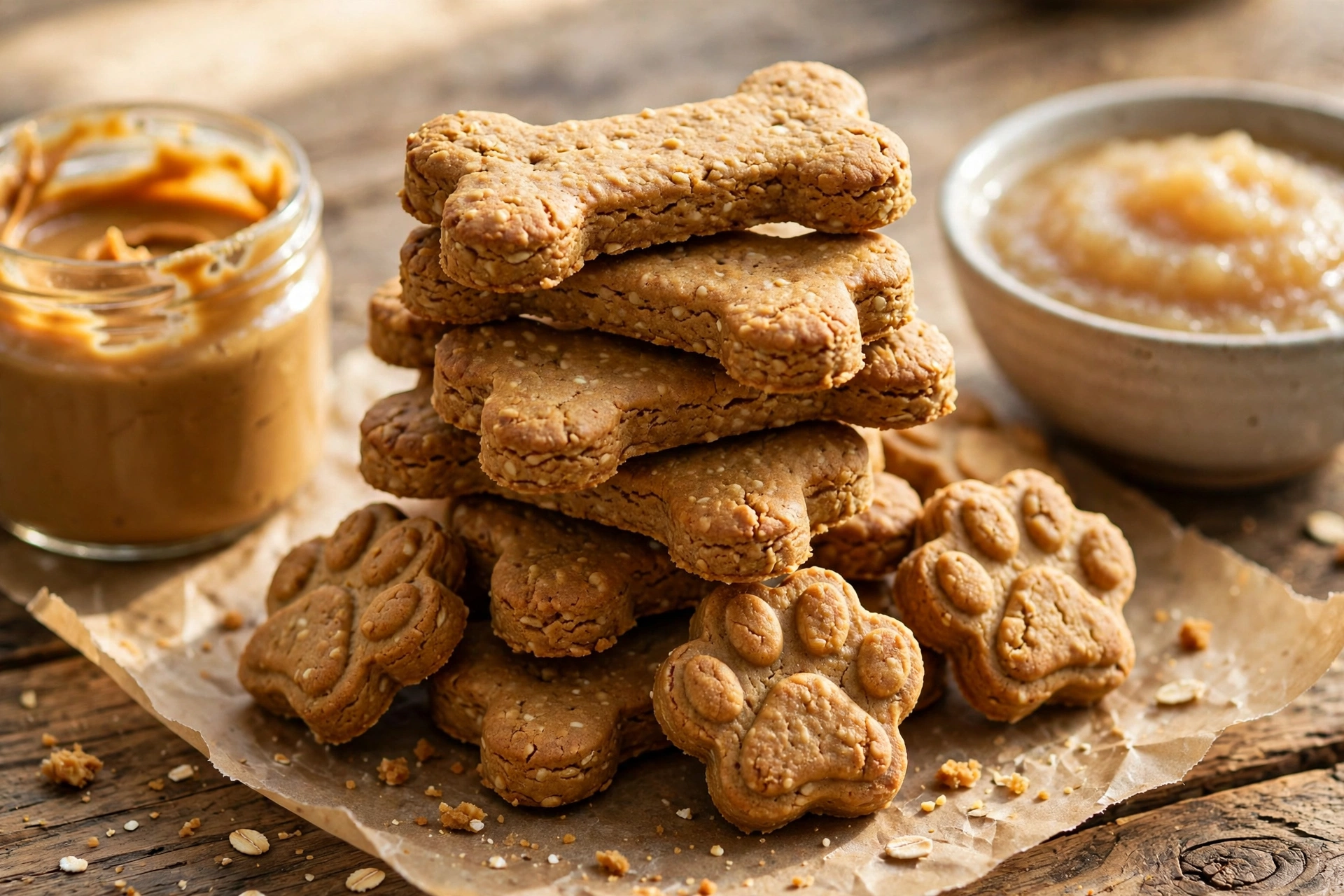
If you have ever opened the pantry and wondered what you could bake for your dog with ingredients you already own, peanut butter applesauce dog treats are the answer. Two simple pantry staples turn into golden, crunchy biscuits your pup will sit nicely for, and you never have to guess what went into them. This single recipe makes a generous batch of cut-out treats with a mild sweetness dogs adore and none of the mystery additives found in some store-bought options.
This guide walks you through everything from safety basics to baking steps, portion guidance, and storage. The instructions are written for beginner bakers, and the whole process takes under an hour from mixing bowl to cookie jar.
Contents
- Are Peanut Butter and Applesauce Safe for Dogs?
- Peanut Butter Applesauce Crunch Cookies
- Recipe Tips for the Perfect Batch
- Portion and Serving Sizes
- Storage Instructions
- Frequently Asked Questions
Are Peanut Butter and Applesauce Safe for Dogs?
Yes — plain peanut butter and unsweetened applesauce are both safe for dogs when chosen carefully. Peanut butter brings protein and heart-healthy fats that support skin and coat health, along with niacin and vitamin E. Applesauce contributes natural fiber that aids digestion and a touch of sweetness that means you never need to add sugar to the recipe. Together, they make a treat that smells tempting to dogs and feels wholesome to the humans baking them.
There are two non-negotiable rules. First, the peanut butter must be xylitol-free. Xylitol (also labeled as birch sugar or E967) is extremely toxic to dogs even in small amounts, and some brands add it to reduce calories. Always read the ingredient list on the jar — the only ingredients you want to see are peanuts and maybe salt. Second, the applesauce must be unsweetened. Sweetened varieties pack in added sugar dogs do not need, and some sugar-free products sneak in xylitol as well. Plain unsweetened applesauce from the grocery store works perfectly, and you can also stew and mash your own apples if you prefer.
As with any new food, introduce these treats gradually. If your dog has a peanut allergy, a sensitive stomach, or a medical condition like pancreatitis or diabetes, check with your veterinarian before baking. These biscuits are treats, not meals — they should stay within the ten-percent treat rule of your dog’s daily calories.
The Recipe
Peanut Butter Applesauce Crunch Cookies
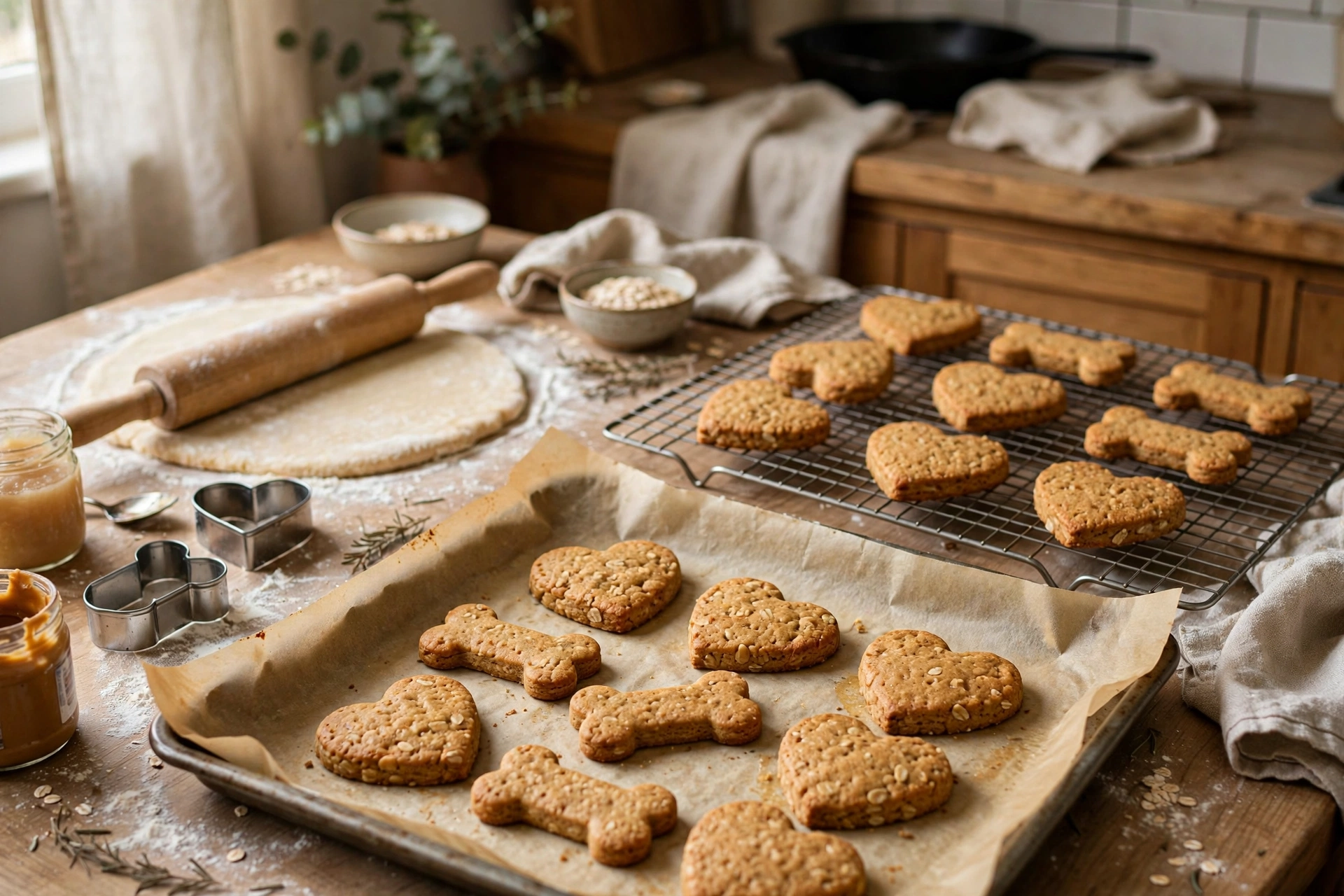
These crunchy cut-out cookies are easy to mix, fun to shape, and firm enough to last. The recipe below makes about 36 medium-sized bone-shaped treats.
| Ingredient | Amount |
|---|---|
| Oat flour (or whole wheat flour) | 2 1/2 cups |
| Rolled oats | 1/2 cup |
| Smooth natural peanut butter (xylitol-free) | 3/4 cup |
| Unsweetened applesauce | 1/2 cup |
| Large egg | 1 |
| Baking powder | 1 teaspoon |
| Ground cinnamon (optional) | 1/2 teaspoon |
| Water, if needed for texture | 2-3 tablespoons |
- Heat the oven. Set your oven to 325°F (165°C). Line two baking sheets with parchment paper so the biscuits lift off easily later.
- Mix the dry ingredients. In a large mixing bowl, whisk together the oat flour, rolled oats, baking powder, and cinnamon. Breaking up any clumps now gives you a smoother dough.
- Combine the wet ingredients. In a separate bowl, stir the peanut butter, applesauce, and egg until smooth and well blended. The peanut butter should be at room temperature — it mixes far more easily that way.
- Bring the dough together. Pour the wet mixture into the dry ingredients and stir with a sturdy spoon until a thick dough forms. If it feels crumbly, add water one tablespoon at a time until the dough holds together without sticking to your hands.
- Roll and cut. Turn the dough onto a lightly floured counter and roll it to about 1/4 inch thick. Press out shapes with a bone or paw cookie cutter, gathering and rerolling scraps until all the dough is used. Thinner biscuits bake crunchier; thicker ones stay slightly softer in the center.
- Bake. Arrange the cutouts about an inch apart on the prepared baking sheets. Bake for 22 to 28 minutes, until the edges are firm and lightly golden. For extra crunch, turn the oven off after baking and leave the trays inside with the door cracked for another 30 minutes.
- Cool completely. Move the baked treats to a wire cooling rack. They will crisp up further as they cool, so wait until they are fully at room temperature before storing — this usually takes 45 minutes to an hour.
- Serve and enjoy. Offer one biscuit as a training reward or an after-walk snack, and watch your dog’s tail go wild. Store the rest using the instructions below.
Recipe Tips for the Perfect Batch
A few small habits make the difference between good biscuits and great ones. First, measure your flour by spooning it into the cup and leveling it off rather than scooping straight from the bag — scooping packs flour down and can make the dough dry and crumbly. Second, do not overbake: the biscuits continue to firm up on the cooling rack, so pull them when the edges are set and just starting to color. Third, if you want a grain-free version, the oat flour already makes this recipe naturally wheat-free, since oats contain no gluten — just use certified gluten-free oats if your dog has a true grain sensitivity.
You can also shape the dough without a rolling pin by pressing small balls flat with your fingers for rustic rounds — perfect if you do not own cookie cutters. For older dogs with delicate teeth, roll the dough slightly thicker and bake on the shorter end of the time range so the centers stay tender rather than snappy.
Portion and Serving Sizes
Treats should make up no more than ten percent of your dog’s daily calories, no matter how wholesome they are. As a practical guide for these biscuits, which are roughly the size of a medium bone shape:
- Small dogs (under 20 lbs): 1 biscuit per day.
- Medium dogs (20-50 lbs): 1-2 biscuits per day.
- Large dogs (over 50 lbs): 2-3 biscuits per day.
These are starting points, not rules. Adjust down if your dog gets other treats or training snacks during the day, and watch their weight and stool quality when introducing any new treat. Puppies can enjoy a small piece of a biscuit crumbled into crumbs — just count it toward their daily treat allowance too.
Storage Instructions
Because these treats contain no preservatives, proper storage matters. Keep cooled biscuits in an airtight container or zip-top bag at room temperature for up to one week. In the refrigerator they stay fresh for up to three weeks — bring them to room temperature for a few minutes before serving, as cold biscuits can be harder for some dogs to crunch.
For the longest life, freeze them. Place biscuits in a freezer-safe bag or container with parchment between layers and store for up to three months. Thaw individual treats at room temperature for 20-30 minutes before handing them to your dog. Discard any treats that develop an off smell, mold, or a soft, slimy texture.
Frequently Asked Questions
Can dogs eat peanut butter and applesauce together?
Yes. Xylitol-free peanut butter and unsweetened applesauce are both safe for dogs and pair well in homemade treats. The key is reading labels: avoid any peanut butter or applesauce containing xylitol (birch sugar), and choose unsweetened products without added sugars or artificial sweeteners.
How many of these treats can I give my dog each day?
Follow the ten-percent rule — treats should not exceed ten percent of daily calories. For these biscuits, that means roughly 1 per day for small dogs, 1-2 for medium dogs, and 2-3 for large dogs. Reduce other treats accordingly so the total stays balanced.
Can I make these treats grain-free?
Yes. This recipe uses oat flour and rolled oats, which contain no wheat and are safe for most grain-sensitive dogs. For a stricter grain-free version, swap the rolled oats for coconut flour (use half the amount, since coconut flour absorbs more liquid) and use certified gluten-free oats in the flour base.
Why are my biscuits soft instead of crunchy?
Soft centers usually mean the dough was rolled too thick, the oven ran cool, or the treats were stored before cooling fully. Roll to 1/4 inch, bake until the edges are firm, and cool completely on a wire rack. Leaving the trays in the turned-off oven with the door cracked for 30 minutes after baking adds extra crispness.
Can puppies eat these treats?
Yes, once puppies are eating solid food and treats are size-appropriate. Offer small crumbled pieces rather than whole biscuits, keep the total within their daily treat allowance, and introduce any new treat gradually while watching for digestive upset.