Homemade Frosty Paws Recipe for Dogs
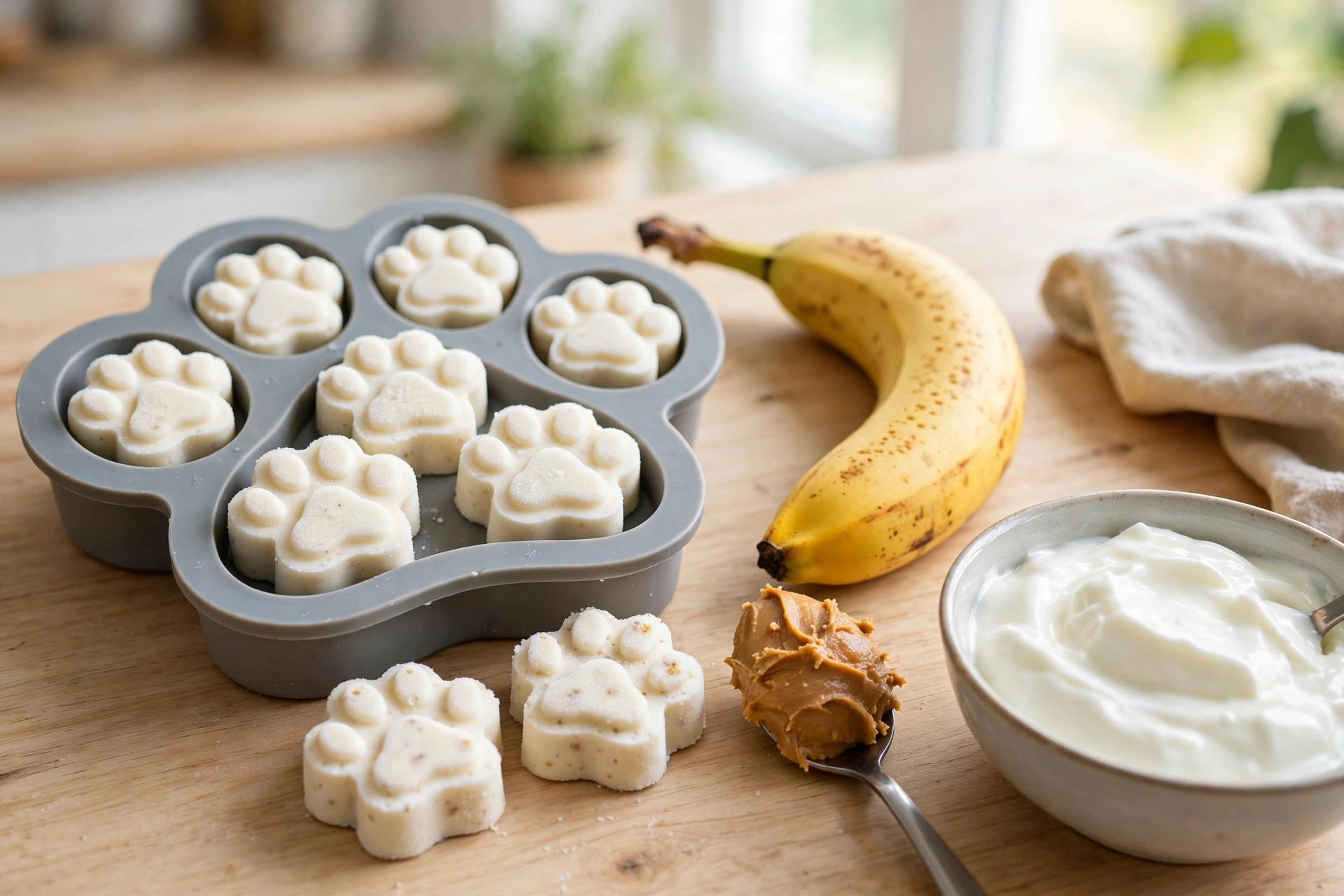
When the summer sun starts beating down and your dog is sprawled on the coolest patch of tile in the house, there is no better way to lift their spirits than with a cold, creamy treat made just for them. This homemade frosty paws recipe turns three simple, dog-safe ingredients into adorable paw-shaped frozen bites that will have your pup begging for seconds. No fancy equipment, no long ingredient list — just a blender, a freezer, and about ten minutes of your time.
I started making these for my own dog last summer, and they instantly became the highlight of every hot afternoon. The best part? You know exactly what goes into them. There are no preservatives, no artificial sweeteners, and no mystery ingredients — just real food your dog can actually enjoy safely. If you have ever wanted to make homemade frozen dog treats but felt intimidated by complicated recipes, this is the perfect place to start.
Table of Contents
- Is Frosty Paws Safe for Dogs?
- Homemade Frosty Paws Recipe
- Portion and Serving Sizes
- Storage Instructions
- Frequently Asked Questions
- Keep Reading
Is Frosty Paws Safe for Dogs?
Yes — as long as you stick to dog-safe ingredients and keep portions sensible, frosty paws are a perfectly safe summer treat. The three stars of this recipe are plain Greek yogurt, ripe bananas, and xylitol-free peanut butter, and each one brings something good to the bowl.
Plain Greek yogurt is a fantastic treat base. It is packed with protein and live probiotics that support healthy digestion, and most dogs find the tangy flavor irresistible. Always choose plain, unsweetened yogurt — flavored yogurts often contain added sugar, artificial sweeteners, or ingredients that can upset a dog’s stomach.
Ripe bananas add natural sweetness along with potassium, vitamin B6, and fiber. They blend into a smooth, creamy texture that helps the treats hold their shape once frozen. The riper the banana, the sweeter and creamier your treats will be.
Peanut butter is the flavor that drives most dogs wild, and it adds protein and healthy fats. The one non-negotiable rule: your peanut butter must be xylitol-free. Xylitol (also listed as birch sugar) is extremely toxic to dogs, even in small amounts. Read the label every time — natural peanut butter with just peanuts and salt is your safest choice.
Dogs with dairy sensitivities can swap the Greek yogurt for lactose-free yogurt or plain coconut yogurt. And as with any new treat, introduce these slowly — one small treat first, then watch for a happy tummy before offering more.
Homemade Frosty Paws Recipe
This single recipe makes about 24 paw-shaped treats (using standard paw-print silicone molds) and takes roughly 10 minutes of active time, plus 4 hours of freezing. The method is simple enough for any skill level, and the results look like they came from a boutique dog bakery.
Creamy Banana Peanut Butter Frosty Paws
| Ingredient | Amount |
|---|---|
| Plain Greek yogurt (unsweetened) | 1 1/2 cups |
| Ripe bananas | 2 medium |
| Natural peanut butter (xylitol-free) | 1/3 cup |
| Water (optional, for thinning) | 2 tablespoons |
- Prepare your molds. Set your paw-print silicone molds (or ice cube trays, or a mini muffin tin) on a small baking sheet or tray. The tray makes them easy to move to the freezer without spilling.
- Slice the bananas. Peel the bananas and slice them into coins. Slicing first helps the blender work faster and gives you a smoother final mixture.
- Measure the yogurt and peanut butter. Scoop the Greek yogurt and peanut butter into the blender jar. Make sure the peanut butter is at room temperature so it blends in easily instead of clumping.
- Blend until completely smooth. Add the banana slices and blend on high for 45 to 60 seconds, stopping once to scrape down the sides. The mixture should look like a thick, pourable smoothie. If it is too thick to pour, blend in the water one tablespoon at a time.
- Taste-check the consistency. The batter should ribbon off a spoon — thick enough to hold the paw-print shape, thin enough to flow into the mold details. This is what gives you crisp, recognizable paw shapes instead of blobby discs.
- Fill the molds. Pour or spoon the mixture into each paw cavity, filling to just below the rim. Tap the tray gently on the counter a few times to release trapped air bubbles and settle the mixture into the toe details.
- Freeze until solid. Slide the tray into the freezer and freeze for at least 4 hours, or overnight for best results. The treats should feel rock-solid and release cleanly from the molds.
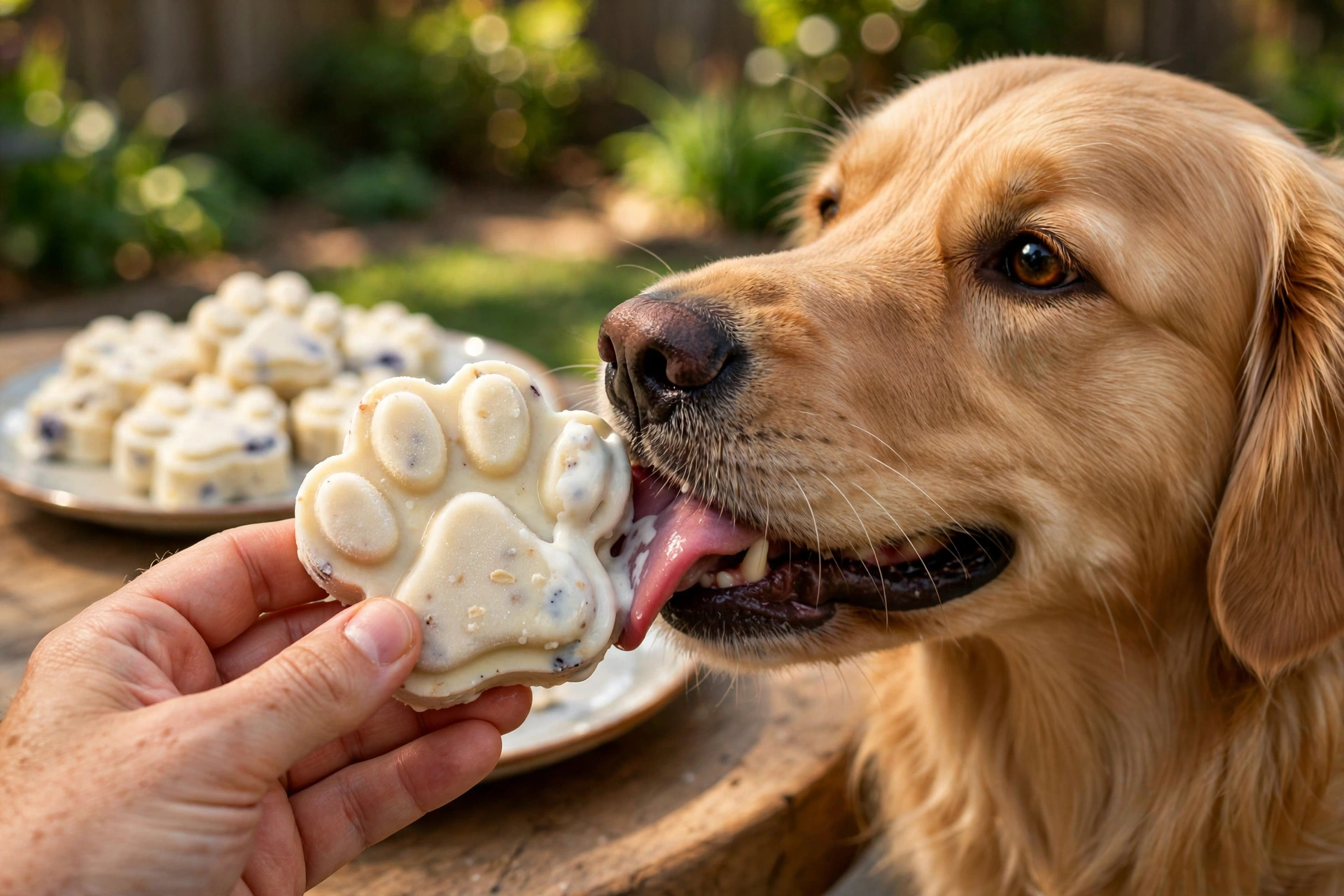
- Pop out and serve. Flex the silicone molds to release each treat. If they resist, let them sit on the counter for 60 seconds — they will loosen right up. Hand one to your very lucky dog.
Pro tip: For an extra-fun presentation, press a few blueberries into the top of each treat before freezing, or swirl a thin ribbon of peanut butter through the mixture with a toothpick before it goes into the freezer. If you want more no-bake frozen ideas, check out these peanut butter and yogurt frozen dog treats for easy variations on the same idea.
Portion and Serving Sizes
Frosty paws are a treat, not a meal — they should stay under 10% of your dog’s daily calories. Here is a practical guide based on your dog’s size, assuming standard paw-print molds (roughly 1 ounce each):
| Dog Size | Weight | Serving |
|---|---|---|
| Small | Under 20 lbs | 1 treat per day |
| Medium | 20–50 lbs | 1–2 treats per day |
| Large | 50–90 lbs | 2–3 treats per day |
| Giant | Over 90 lbs | 3 treats per day |
Offer treats in the afternoon when it is hottest, or as a reward after a walk. Because they are frozen, they also make a great slow-down enrichment tool — your dog has to lick and work at them, which keeps a bored pup happily busy for a solid ten minutes.
Storage Instructions
Once the treats are fully frozen, pop them out of the molds and transfer them to an airtight freezer bag or container. Layer them with small sheets of parchment paper if you are stacking, so they do not fuse together.
Freezer: Store for up to 2 months at 0°F or below. For the best flavor and texture, try to use them within the first month.
Labeling: Write the date on the bag or container with a marker. It is easy to forget how long things have been in the freezer, and a quick date saves the guesswork.
Serving from frozen: Serve these straight from the freezer — no thawing needed. That is the whole point. On very hot days, you can even drop one into your dog’s water bowl to make an enriching frozen puzzle they will lick at for ages.
Frequently Asked Questions
Can puppies have frosty paws treats?
Yes, puppies over 12 weeks old can enjoy these. Start with half a treat and make sure it does not upset their stomach. Puppies have more sensitive digestive systems, so introduce any new food slowly and in small amounts.
What if my dog is lactose intolerant?
Swap the Greek yogurt for lactose-free plain yogurt or unsweetened coconut yogurt. You can also use mashed banana and peanut butter blended with a splash of water as a dairy-free version — the recipe still freezes beautifully.
Are these safe for diabetic dogs?
These treats contain natural sugars from banana, so check with your veterinarian first if your dog is diabetic or managing blood sugar. Your vet may suggest reducing the banana or adjusting portion sizes.
How do I know if my peanut butter is safe?
Read the ingredients list. Safe peanut butter contains only peanuts and possibly salt. Avoid any product listing xylitol, birch sugar, or artificial sweeteners. When in doubt, choose a natural brand with the shortest ingredient list.
Can I make these without a blender?
You can mash everything by hand with a fork, but the texture will be chunkier and the treats will be less smooth. A food processor works just as well as a blender. Whatever you use, aim for the smoothest mixture you can manage so the paw shapes freeze cleanly.
Keep Reading
- 7 Homemade Frozen Dog Treats: Easy Recipes
- Homemade Frozen Dog Treats with Yogurt
- Peanut Butter and Yogurt Frozen Dog Treats
- Frozen Dog Treats with Banana
- Frozen Dog Treats with Blueberries
- Homemade Dog Ice Cream: Easy Recipe
- Ways to Keep Your Cavalier Cool During Summer
- Foods Dogs Can Eat vs Foods Dogs Can’t Eat