How to Easily Change Your Pet’s Diet Without Upsetting Their Stomach
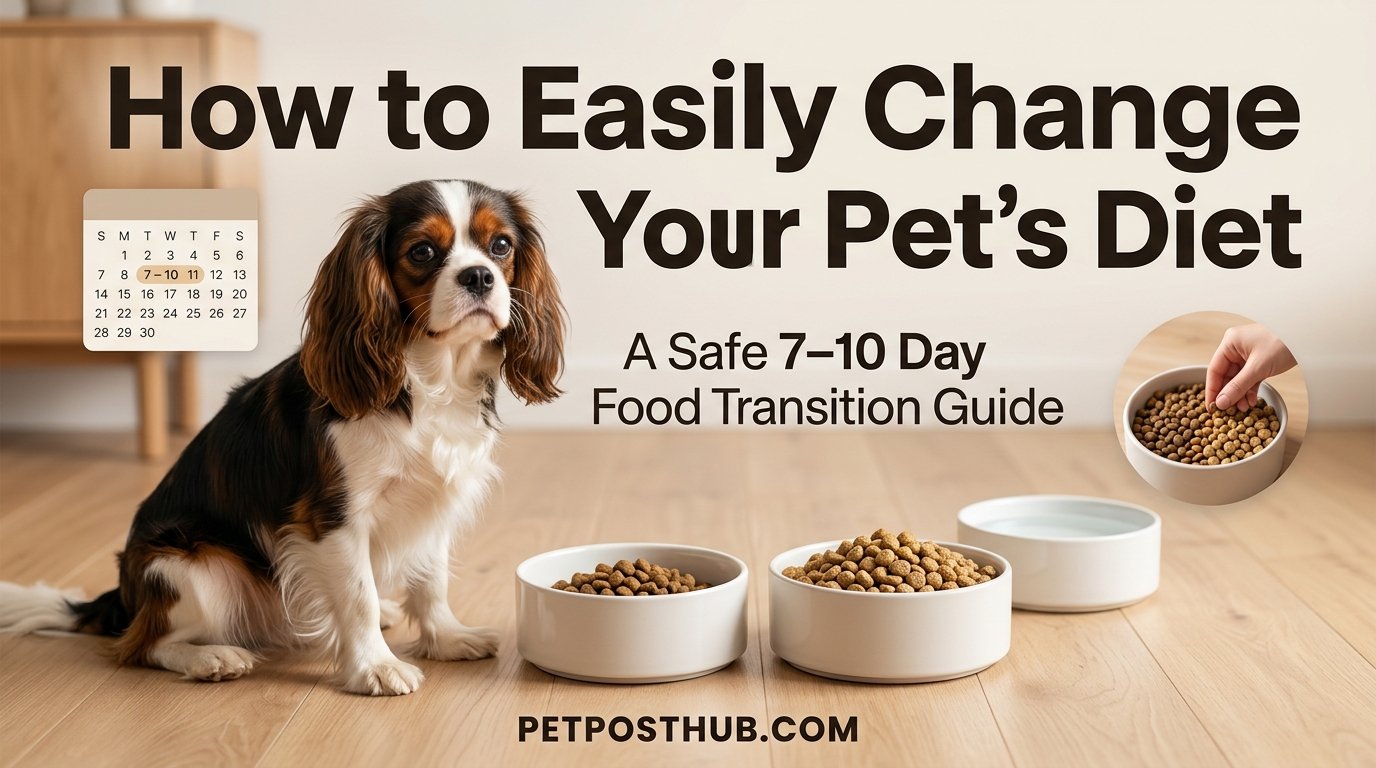
Changing your pet’s food may seem simple, but suddenly replacing their regular diet can cause digestive problems such as loose stools, gas, vomiting, or a temporary loss of appetite. Whether you are switching brands, moving from puppy to adult food, or choosing a diet recommended by your veterinarian, gradual food transition is usually the best approach.
Why Should You Change Dog Food Gradually?
Dogs become accustomed to the ingredients and nutrient profile of their regular food. A sudden change can be harder for their digestive system to handle.
A slow transition gives your pet time to adjust while reducing the chance of stomach upset.
A Simple 7–10 Day Dog Food Transition
You can use this general schedule when switching dog food:
| Days | Old Food | New Food |
|---|---|---|
| 1–2 | 75% | 25% |
| 3–4 | 50% | 50% |
| 5–7 | 25% | 75% |
| 8–10 | 0% | 100% |
Mix the foods together rather than serving them separately. If your dog develops digestive issues, slow the transition down and speak with your veterinarian if symptoms continue.
What If Your Dog Refuses the New Food?
Some dogs are naturally selective about what they eat. However, constantly returning to the old food whenever your dog refuses a new meal can make the transition more difficult.
Instead, stay consistent with the gradual transition. Make sure fresh water is always available, and avoid turning mealtimes into a battle.
That said, a dog refusing food should not automatically be treated as stubbornness. A sudden loss of appetite, repeated vomiting, diarrhea, weakness, pain, or other unusual symptoms can indicate an underlying problem and warrants veterinary advice.
Tips for Switching Your Pet’s Food Successfully
Choose a nutritionally appropriate food. Select a complete and balanced diet suitable for your dog’s age, size, activity level, and individual needs.
Keep portions consistent. Different foods can have different calorie densities, so follow the feeding guidance for the new food rather than assuming the same volume is appropriate.
Watch your dog’s stool. Changes in stool consistency can be an early sign that the transition is happening too quickly.
Avoid adding too many extras. Treats, table scraps, and sudden additions can make it harder to determine whether the new food is causing digestive problems.
Give the transition time. Some pets adjust quickly, while others need longer than a week. There is no benefit to rushing the process.
When Should You Contact a Veterinarian?
If your dog experiences persistent vomiting, significant diarrhea, blood in the stool, severe lethargy, signs of pain, dehydration, or refuses food for an unusually long period, contact a veterinarian.
Dogs with existing medical conditions or special dietary requirements may also need a specific transition plan.
Final Thoughts
The easiest way to change your pet’s diet is to make the change gradually rather than all at once. Start with a small amount of the new food, increase it over approximately 7–10 days, and monitor your dog’s appetite, stool, energy, and overall behavior.
A patient transition can make switching dog food much easier—and help your pet settle comfortably into their new diet.