High Value Dog Treats: Easy Training Recipe (2026)
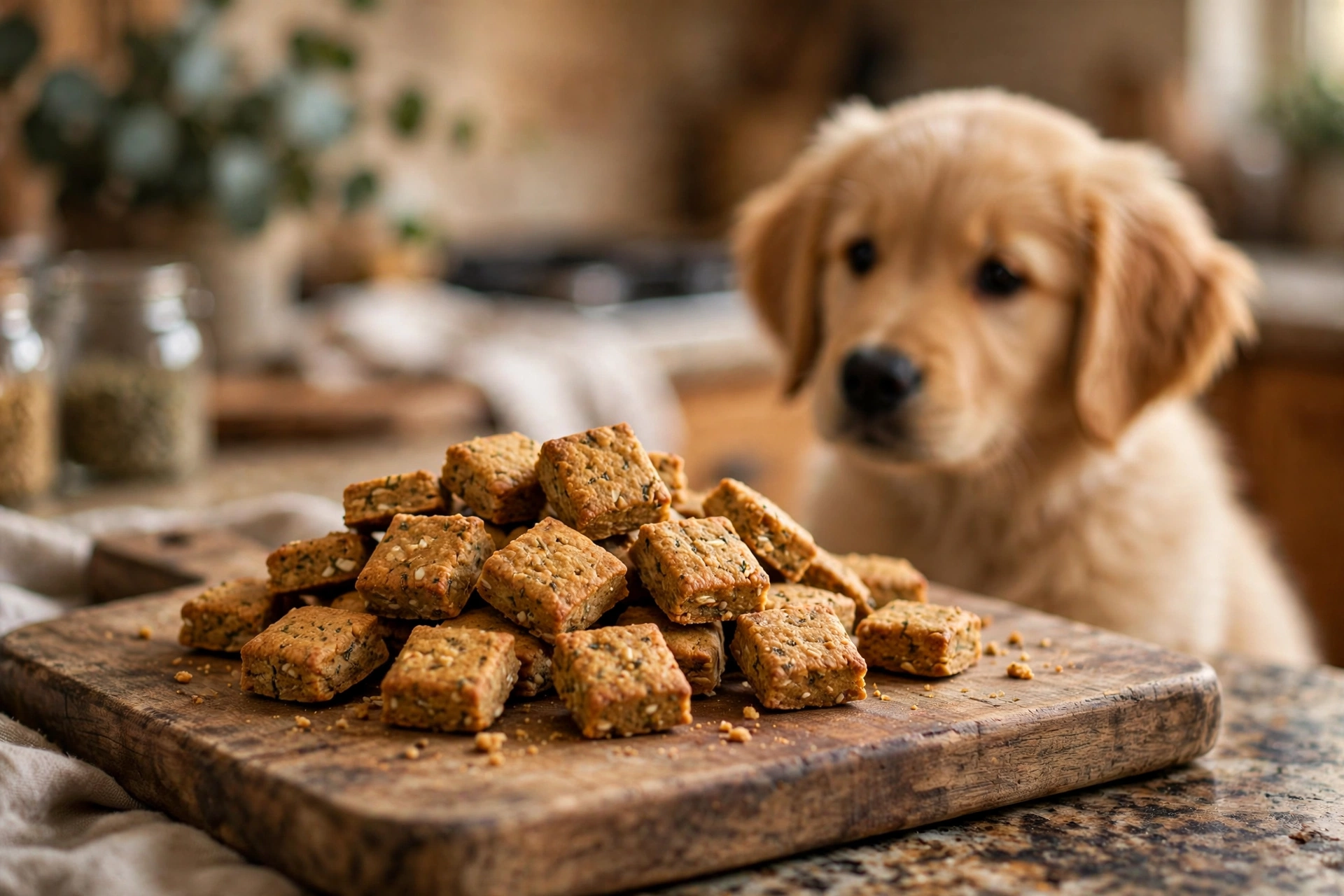
When you are working on a tough behavior — a distracted recall, loose-leash walking, or crate training — ordinary biscuits just do not cut it. High value dog treats are the secret weapon trainers rely on, and you do not need to buy pricey bags of freeze-dried meat to use them. With a handful of simple ingredients and about half an hour in the kitchen, you can bake a batch of training treats your dog will find impossible to resist. This recipe uses chicken liver for that irresistible aroma dogs obsess over, pumpkin for gentle fiber, and oat flour for a dough that is easy to roll and cut into tiny training-size squares.
Table of Contents
What Makes a Treat “High Value”?
In dog training, treats are ranked by how motivating they are. A dry kibble works for an easy “sit” at home, but the moment a squirrel shows up, your dog needs a reason to look back at you — and that reason has to smell amazing. High-value treats earn their name through one or more of these qualities:
- A strong aroma — dogs decide with their noses first. Meat-based treats always outrank bland starches.
- Real protein — liver, chicken, and fish carry a natural umami flavor dogs crave.
- A soft, chewy texture — soft treats are eaten in a second, so your dog stays focused instead of crunching and wandering off.
- Small, easy-to-eat size — you can reward often during a training session without filling your dog up.
The good news: the best high-value treats are also the cheapest. Chicken livers are one of the most affordable proteins at any grocery store or butcher, and this recipe turns a single pound into several weeks of training rewards.
Why Chicken Liver Is a Trainer’s Favorite
Professional trainers overwhelmingly favor liver-based treats, and the reason is biology. Dogs have roughly 300 million scent receptors (humans have about 6 million), and organ meats like liver release an intense aroma that cuts through competing smells in the environment. When your dog catches that scent, focus becomes almost automatic.
Nutritionally, chicken liver is packed with vitamin A, iron, B vitamins, and copper. That concentration is also why moderation matters: liver-based treats are meant as training rewards, given in small amounts during sessions, not as all-day snacks. As long as treats stay within the 10% rule — treats making up no more than 10% of daily calories — liver is a perfectly healthy part of your dog’s diet. If your dog has a health condition or takes medication, check with your veterinarian before introducing rich foods like liver.
Pumpkin brings gentle, soluble fiber that supports digestion, plus vitamins A and C. Oat flour keeps the recipe approachable for dogs with wheat sensitivities, and a touch of coconut oil helps the tiny squares stay pliable after baking.
Chicken Liver & Pumpkin Training Treats Recipe
Pumpkin & Chicken Liver Jackpot Squares
| Ingredient | Amount |
|---|---|
| Chicken livers | 1/2 lb (about 8 oz), cooked |
| Canned pumpkin purée (plain, no spices) | 1/3 cup |
| Egg | 1 large |
| Coconut oil, melted | 2 tablespoons |
| Oat flour | 1 cup, plus 2–3 tablespoons if needed |
- Cook the livers. Place the chicken livers in a saucepan and cover with water. Bring to a gentle boil, then reduce to a simmer and cook for 10–12 minutes, until no pink remains in the center. Drain and let cool completely. Do not add salt, oil, or seasonings.
- Preheat the oven. Heat your oven to 350°F (175°C). Line a baking sheet with parchment paper.
- Blend the wet base. Add the cooled livers, pumpkin purée, egg, and melted coconut oil to a food processor or blender. Process on high until completely smooth — the mixture should look like a thick, uniform paste.
- Build the dough. Add the 1 cup of oat flour and pulse until a dough forms. It will be tacky at first; add the extra flour one tablespoon at a time until the dough holds together and can be gathered into a ball without sticking to your hands. It should feel like soft modeling clay — firm but pliable.
- Roll it thin. Dust your counter with a little oat flour and roll the dough to about 1/4-inch thickness. Thinner dough bakes into crunchier treats; slightly thicker dough stays chewier.
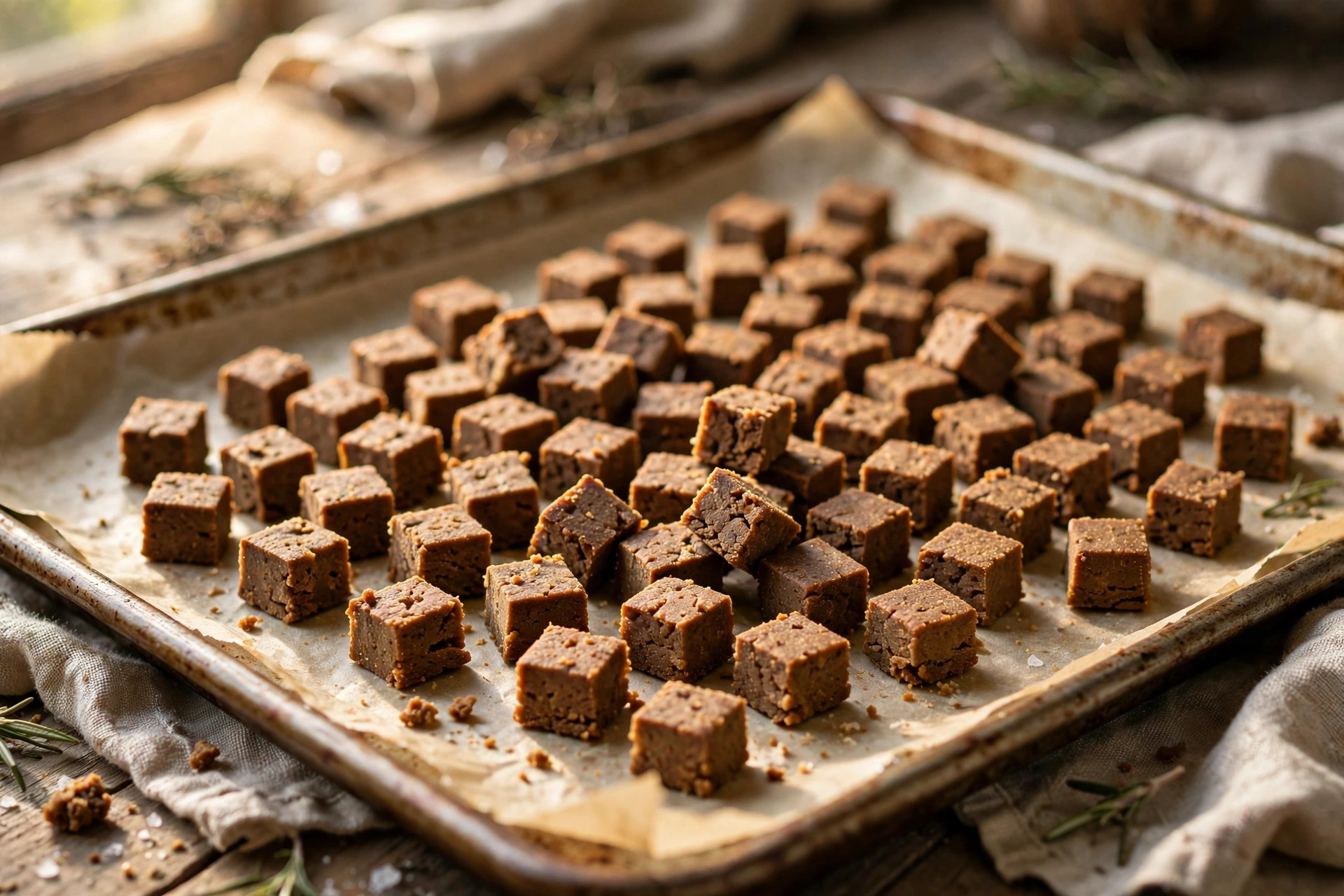
- Cut with a pizza cutter. Skip the cookie cutters — a pizza cutter or sharp knife turns the whole sheet into a grid of pea-to-nail-sized squares in seconds. This size is perfect for rapid-fire training rewards.
- Bake 14–16 minutes. Spread the squares on the prepared sheet (a little space between them is fine; they do not spread much). Bake until firm on the edges and just set in the center.
- Optional: dry them out. For pocket-friendly, crumble-resistant treats, turn the oven off after baking and leave the tray inside for 20–30 minutes as the oven cools. The treats will firm up without overbaking.
- Cool and portion. Let the squares cool fully on the tray, then break the grid apart. Store following the instructions below.
Easy Variations
- Carrot swap: Replace the pumpkin with 1/3 cup of finely shredded or steamed-and-mashed carrots for a slightly sweeter flavor and extra beta-carotene.
- Blueberry boost: Mash 1/4 cup of fresh blueberries into the wet base for antioxidant-rich treats with a deep color dogs find interesting.
- Grain swap: If your dog tolerates wheat, use whole wheat flour instead of oat flour at the same amount; the dough may need one extra tablespoon of flour.
- Softer training bites: Bake only 12 minutes and skip the oven-drying step for extra-soft treats that are gone in one gulp — ideal for quick-reward sessions.
Portion and Serving Sizes
These are training treats, so think small and frequent rather than large and occasional.
| Dog Size | Per Training Session |
|---|---|
| Small (under 20 lbs) | 5–10 tiny squares |
| Medium (20–50 lbs) | 10–20 tiny squares |
| Large (over 50 lbs) | 15–30 tiny squares |
Follow the 10% rule: all treats combined should make up no more than 10% of your dog’s daily calories. On heavy training days, reduce your dog’s regular meal portion slightly to compensate.
Storage Instructions
Because these treats contain meat, they are perishable — treat them like leftovers, not like shelf-stable biscuits.
- Refrigerator: Store in an airtight container for up to 4 days.
- Freezer (recommended): Divide into small portions in freezer bags or snack-size containers. They keep up to 3 months. Thaw a portion overnight in the fridge; a small square thaws in just a few minutes at room temperature.
- Training pouch tip: For an afternoon training session, pull out only what you will use. Warm treats smell stronger — let them sit at room temperature for 10–15 minutes before heading out, and your dog’s nose will do the rest.
Frequently Asked Questions
How much liver is safe for my dog?
Liver is nutrient-dense and rich in vitamin A, which is fat-soluble and can accumulate if overfed. That is exactly why this recipe is designed for small training-size treats used sparingly during sessions, not as meal replacements. Keep treats within the 10% rule and rotate with non-liver treats across the week.
Can I use beef liver instead of chicken liver?
Yes. Use the same amount — 1/2 lb, cooked through before blending. Beef liver has a stronger aroma (great for distracted dogs), while chicken liver is milder and usually easier to find and cheaper.
Can I make these without a food processor?
You can. Finely mince the cooked livers with a sharp knife, then mash them in a bowl with a potato masher or sturdy fork until as smooth as possible. Mix in the remaining wet ingredients, then fold in the flour by hand. The treats will be slightly more rustic but just as motivating.
Are these treats okay for puppies?
Yes, for puppies 12 weeks and older — just cut them even smaller. Puppies have tiny stomachs, so keep sessions short and count every reward toward the daily 10% treat limit. If your puppy is on a specific diet from your breeder or vet, confirm before adding liver.
What if my dog has a sensitive stomach?
Introduce any new treat slowly: one small square on day one, a couple on day two, watching for digestive upset. The oat flour and pumpkin are generally gentle, but liver is rich. If your dog is prone to diarrhea or pancreatitis, ask your veterinarian first.