Dog Food for Weight Loss: Homemade Recipe, Portions & Feeding Tips
When your dog gains a few extra pounds, it can be tempting to simply cut back on food. But successful dog weight loss is more than putting less in the bowl. The goal is to reduce excess calories while keeping meals filling, nutritious, and appropriate for your dog’s individual needs.
The best starting point is your dog’s target weight, not simply the number currently showing on the scale. Your veterinarian can help determine an ideal body condition, calorie target, and safe rate of weight loss.
How to Tell If Your Dog Needs to Lose Weight
You can do a quick body-condition check at home.
Look at your dog from above. There should be a noticeable waist behind the ribs. When you gently feel the ribs, you should be able to find them without pressing through a thick layer of fat.
From the side, the abdomen should rise toward the hind legs rather than appearing completely level or hanging downward.
These checks aren’t a substitute for a veterinary body-condition assessment, but they can help you notice changes early.
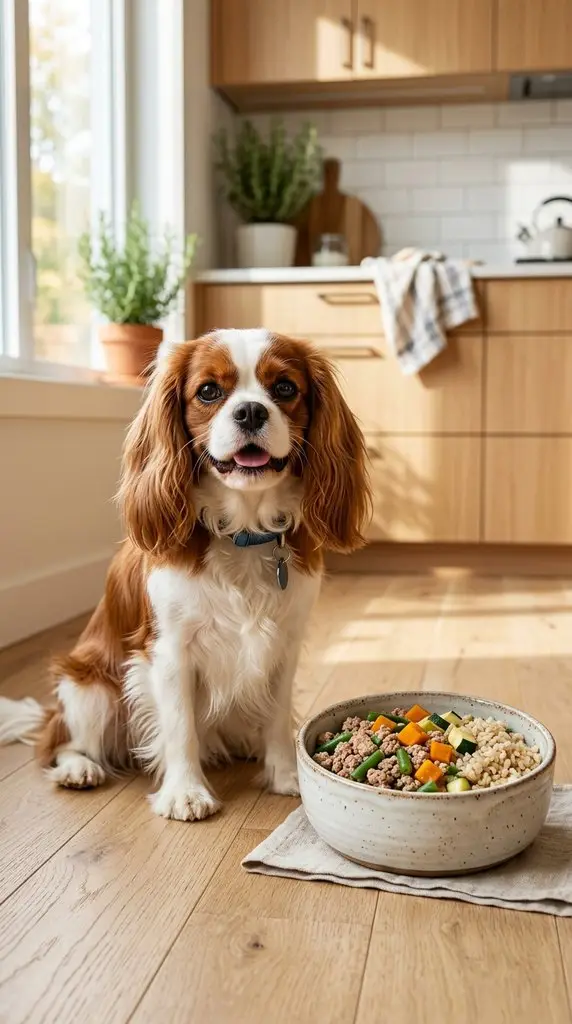
The Simple Dog Weight-Loss Formula
The most important part of a weight-loss diet is calorie control.
Instead of automatically feeding the amount recommended for your dog’s current weight, ask your veterinarian how much your dog should weigh and how many calories are appropriate for reaching that goal.
Then:
- Measure food with a kitchen scale whenever possible.
- Count treats as part of the daily calorie allowance.
- Avoid adding table scraps.
- Divide the daily food into two or three meals.
- Monitor body weight regularly.
- Adjust portions with your veterinarian if weight loss is too fast or too slow.
A food marketed for weight management can also be useful because properly formulated diets can provide essential nutrients at a lower calorie density.
Why Portion Size Matters More Than You Think
Extra calories can come from places you barely notice.
A small piece of cheese, leftover meat, training treats, or an extra scoop of kibble can add up quickly, especially in a small dog.
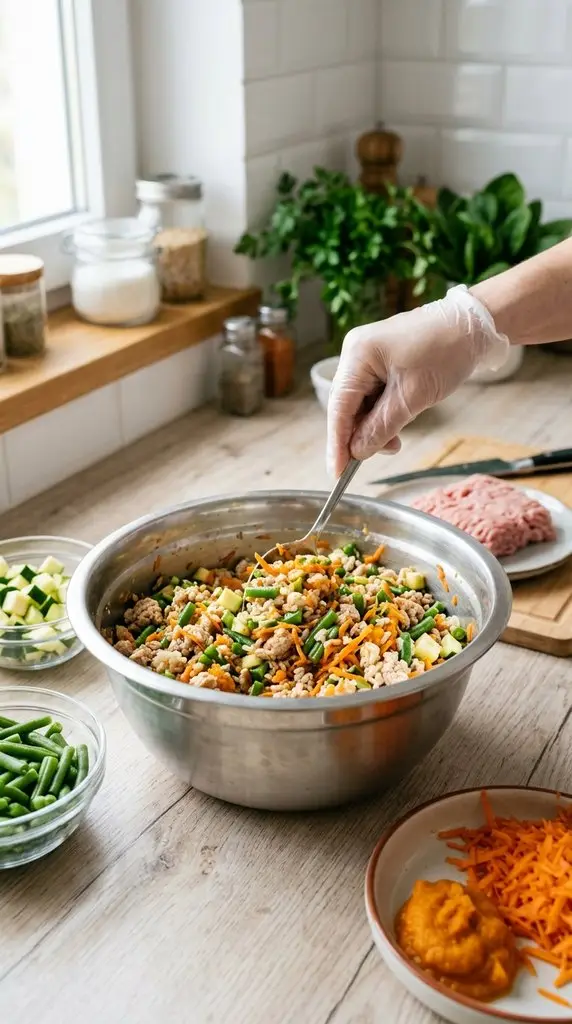
Try keeping a simple food log for several days. Write down meals, treats, chews, table food, and anything other household members give your dog.
You may find that the main problem isn’t the food itself—it’s everything being added around it.
Homemade Dog Food for Weight Loss
A homemade meal can include lean protein and vegetables, but homemade food shouldn’t automatically be considered nutritionally complete.
Dogs need appropriate amounts of protein, fat, essential fatty acids, vitamins, minerals, and other nutrients. Simply combining meat, vegetables, and rice can create deficiencies if the diet is fed long term.
For that reason, use a homemade recipe as an occasional meal or follow a recipe specifically formulated for your dog by a veterinary nutrition professional.
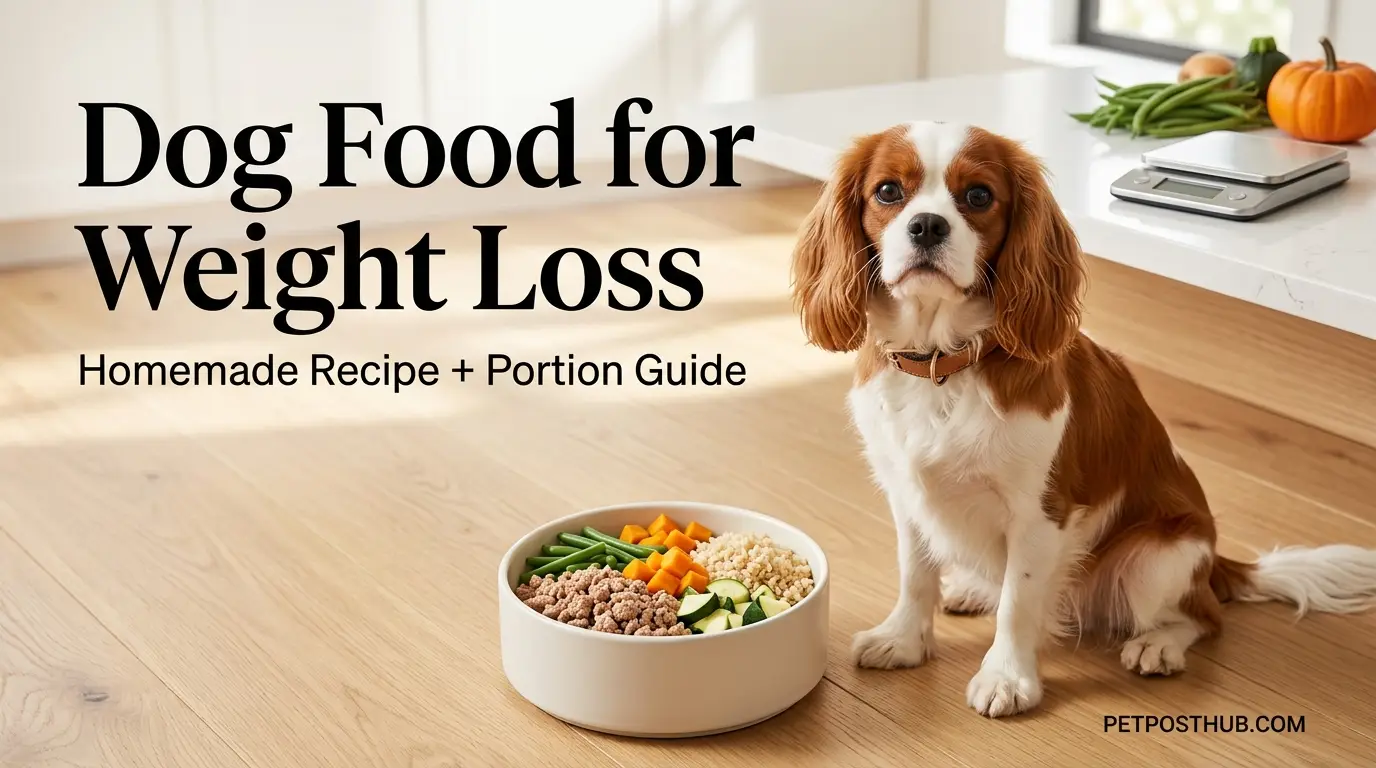
Lean Turkey & Vegetable Dog Food
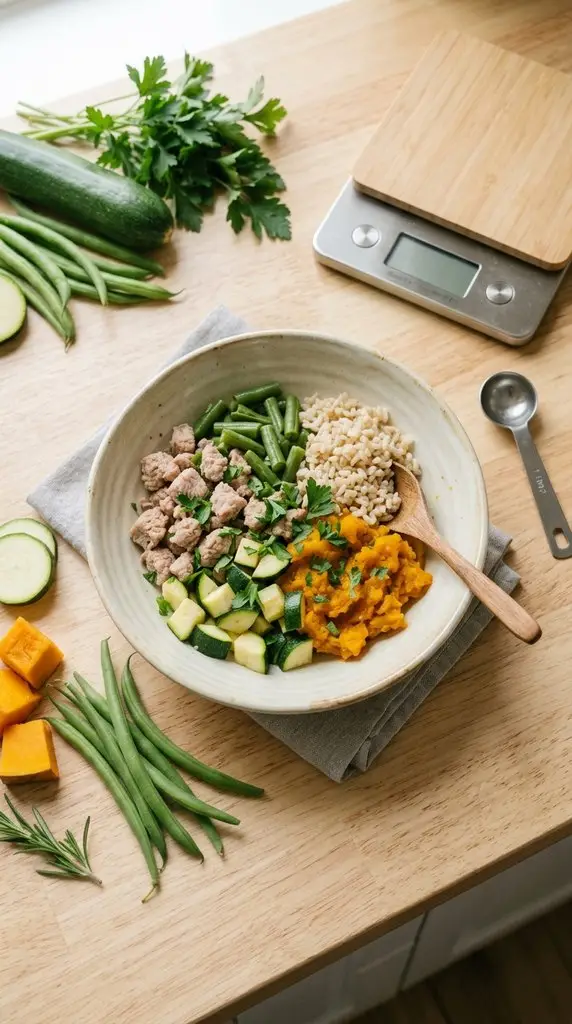
This simple combination uses lean turkey and vegetables to create a filling meal with plenty of moisture and fiber.
Ingredients
- 1 lb lean ground turkey
- 2 cups plain green beans
- 1 cup diced zucchini
- 1/2 cup grated carrot
- 1/2 cup plain pumpkin puree
- 1/2 cup cooked brown rice
- Water as needed
Do not use pumpkin pie filling, onions, garlic, salty seasonings, butter, or sauces.
How to Make It
- Cook the ground turkey thoroughly in a large pan without adding oil.
- Drain excess fat if necessary.
- Add the pumpkin, cooked rice, green beans, zucchini, carrot, and a small amount of water.
- Simmer until the vegetables are tender.
- Allow the food to cool completely.
- Divide into measured portions according to your veterinarian’s feeding plan.
Do not add calcium, fish oil, vitamin supplements, or other supplements at random. The correct amounts depend on the complete diet and your dog’s individual nutritional requirements.
Can Green Beans Help a Dog Lose Weight?
Plain green beans are relatively low in calories and can add volume to some dogs’ meals.
They may be useful as a small part of a weight-management plan, particularly when replacing higher-calorie extras. However, green beans should not simply be added on top of a full daily ration because additional food still contributes calories.
Use plain, cooked or appropriately prepared green beans without salt, butter, sauces, onion, or garlic.
How Much Should You Feed?
There isn’t one cup measurement that works for every dog.
Two dogs of the same weight can have very different calorie requirements because of differences in age, activity, neuter status, health, metabolism, and body condition.
A better approach is:
Target weight → veterinarian-approved calories → measured daily food → regular weight checks
Follow the calorie information on your specific food or recipe rather than assuming that one cup always contains the same number of calories.
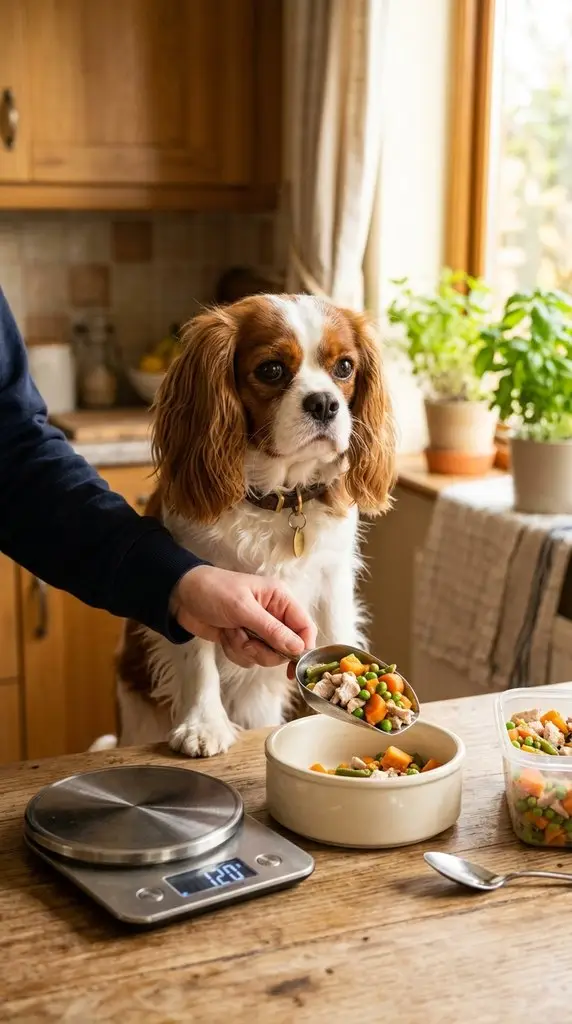
A Better Way to Handle Treats
Treats can quietly undermine an otherwise successful weight-loss plan.
Consider using small pieces of your dog’s regular food as training rewards. You can also ask your veterinarian whether low-calorie vegetables are appropriate for your dog.
Keep treats and extras limited, and remember that dental chews, flavored medications, toppers, and table scraps can also contribute calories.
How Fast Should a Dog Lose Weight?
Weight loss should be gradual rather than aggressive.
A commonly used veterinary goal is roughly 1–2% of body weight per week, but the appropriate rate depends on the individual dog.
Weigh your dog regularly and speak with your veterinarian if weight is dropping unusually quickly, not changing despite careful portion control, or if your dog develops weakness, vomiting, diarrhea, appetite changes, or other concerning symptoms.
Common Dog Weight-Loss Mistakes
Feeding Based on the Current Weight
If your dog needs to lose weight, the current body weight isn’t necessarily the correct basis for calculating the feeding plan.
Guessing Portions
A measuring cup is better than eyeballing food, while a kitchen scale provides even more accuracy.
Forgetting Treat Calories
Treats count. So do leftovers and food used for training.
Cutting Food Too Aggressively
Severely restricting food can create nutritional problems and may not provide a sustainable weight-loss plan.
Switching to Homemade Food Without Balancing It
Homemade doesn’t automatically mean healthier. Long-term homemade diets should be properly formulated for nutritional completeness.
Final Thoughts
The most effective dog food for weight loss isn’t necessarily a fancy recipe. It’s a feeding plan that controls calories while providing complete nutrition, appropriate portions, and enough food volume to keep your dog satisfied.
Start with your veterinarian’s target weight and calorie recommendation, measure every meal, control treats, and monitor progress consistently.
If you want to use homemade food long term, have the recipe evaluated or formulated by a veterinary nutrition professional. A safe weight-loss plan should help your dog become leaner without sacrificing the nutrition they need to stay healthy.