
Freezing Dog Near Death Gets a Second Chance After Woman Stops to Help

Some rescues start with sirens and shelters. Others start with one car slowing down on a quiet road when nobody else would. This is the story of a freezing dog rescued from the edge of a cold Georgia woodland — and the second chance he was given because a woman chose to stop, wait, and care.
On a raw November afternoon in rural Jasper County, Georgia, a young dog lay hidden in the underbrush, soaked by icy rain and trembling too hard to run. He watched cars rush past one after another, too weak to flee and too frightened to stay. Hour after hour passed before a single vehicle finally pulled over — and that one decision set in motion a chain of kindness that carried him from the brink of death to a warm foster home.
Table of Contents
Spotted at the Edge of the Woods

The dog had already been noticed once that morning. While out running an errand, the daughter of Kristy Stephens — the vice president of the animal advocacy group Whisker Warriors — caught sight of a thin, motionless shape at the tree line along a country road — and she called someone who could help.
When Stephens arrived, the sight stopped her cold. The young pup was drenched from the freezing rain, his body shaking, his eyes glazed with exhaustion. As she walked closer, he tried to push himself up — a small, brave effort that went nowhere. He simply had nothing left to give.
Stephens knew better than to grab at a terrified animal. She reached for food instead. A scared, starving dog will rarely trust a stranger’s hands, but hunger is a bridge. The pup hesitated, torn between fear and need, until instinct won. He crept toward the food, and Stephens gently slipped a leash around his neck — a quiet victory for both of them.
But getting the leash on was only the beginning. When she tried to guide him toward her car, he planted his feet and pulled back toward the woods, the only world he knew. Pushing him would have been faster, but it would also have destroyed the fragile trust they had just built. So she did the harder thing: she waited.
Hours Away From Freezing to Death
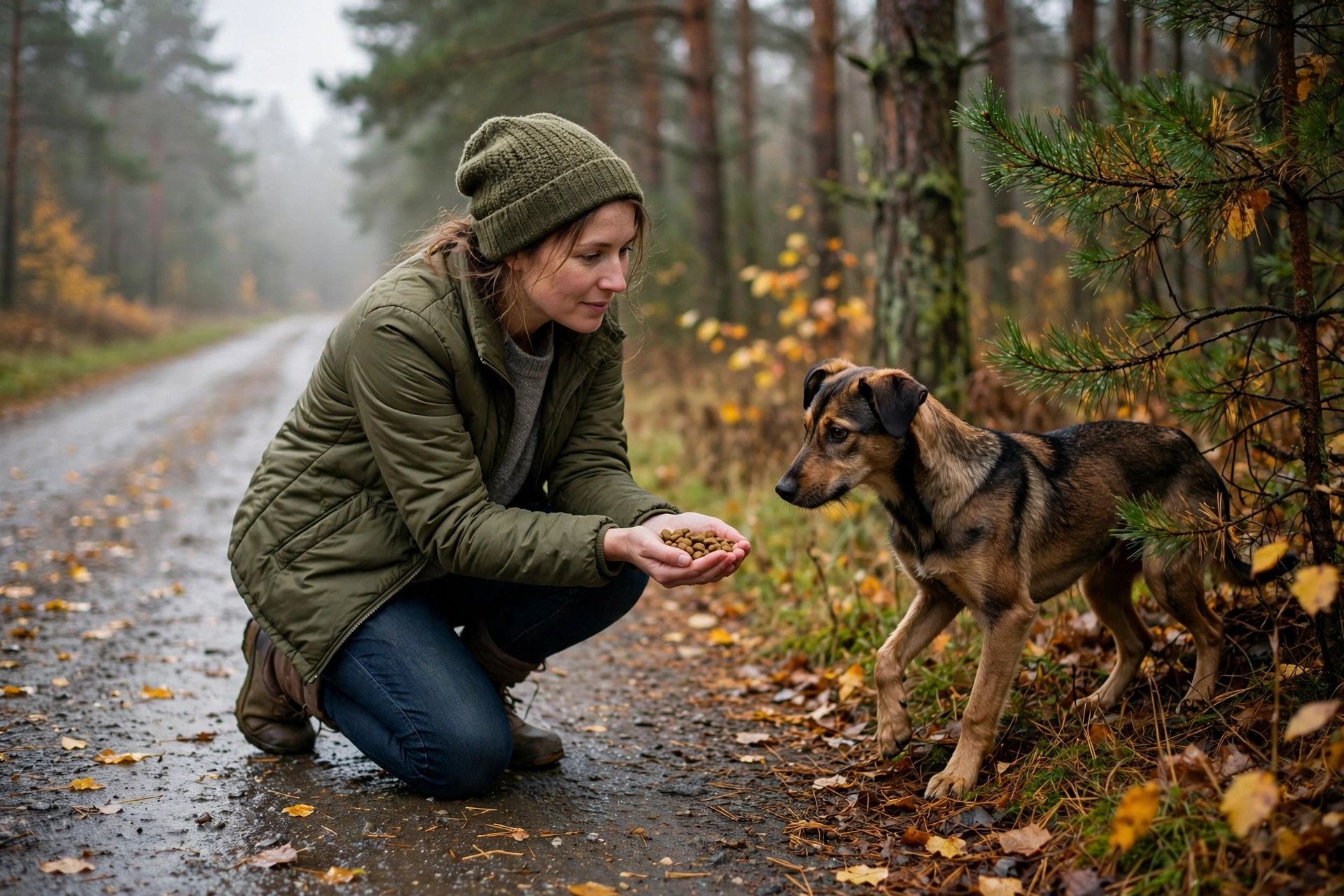
Stephens sent her daughter home for blankets and stayed behind in the cold, crouching near the dog and speaking to him softly. No chasing. No grabbing. Just a calm voice and patience. Slowly, the pup stopped flinching. He let her come closer. Eventually, he allowed her to touch him — and that touch carried something he had not felt in a long time: warmth.
It is impossible to know how long he had been out there, but the signs were grim. He was gaunt, soaked through, and lethargic. Later, rescuers would learn that his body temperature had dropped to a life-threatening low. The cold was not just uncomfortable; it was killing him, hour by hour.
The original plan was straightforward enough. Stephens would settle him into a crate, then hand him off to Tracy Campbell at the Jasper County Humane Society for care. Plans, however, tend to change when you are holding a dog who is barely hanging on. When they lifted him into the car, wrapped in a blanket, the seriousness of his condition became impossible to ignore. The crate idea was abandoned on the spot. They rushed him straight to the veterinarian instead.
There, the thermometer confirmed their worst fears: his core temperature had fallen to just 95 degrees Fahrenheit. A healthy dog runs between 101 and 102. Had he spent even a few more hours exposed to that icy rain, he would not have survived.
A Warm Blanket and a Race to the Vet
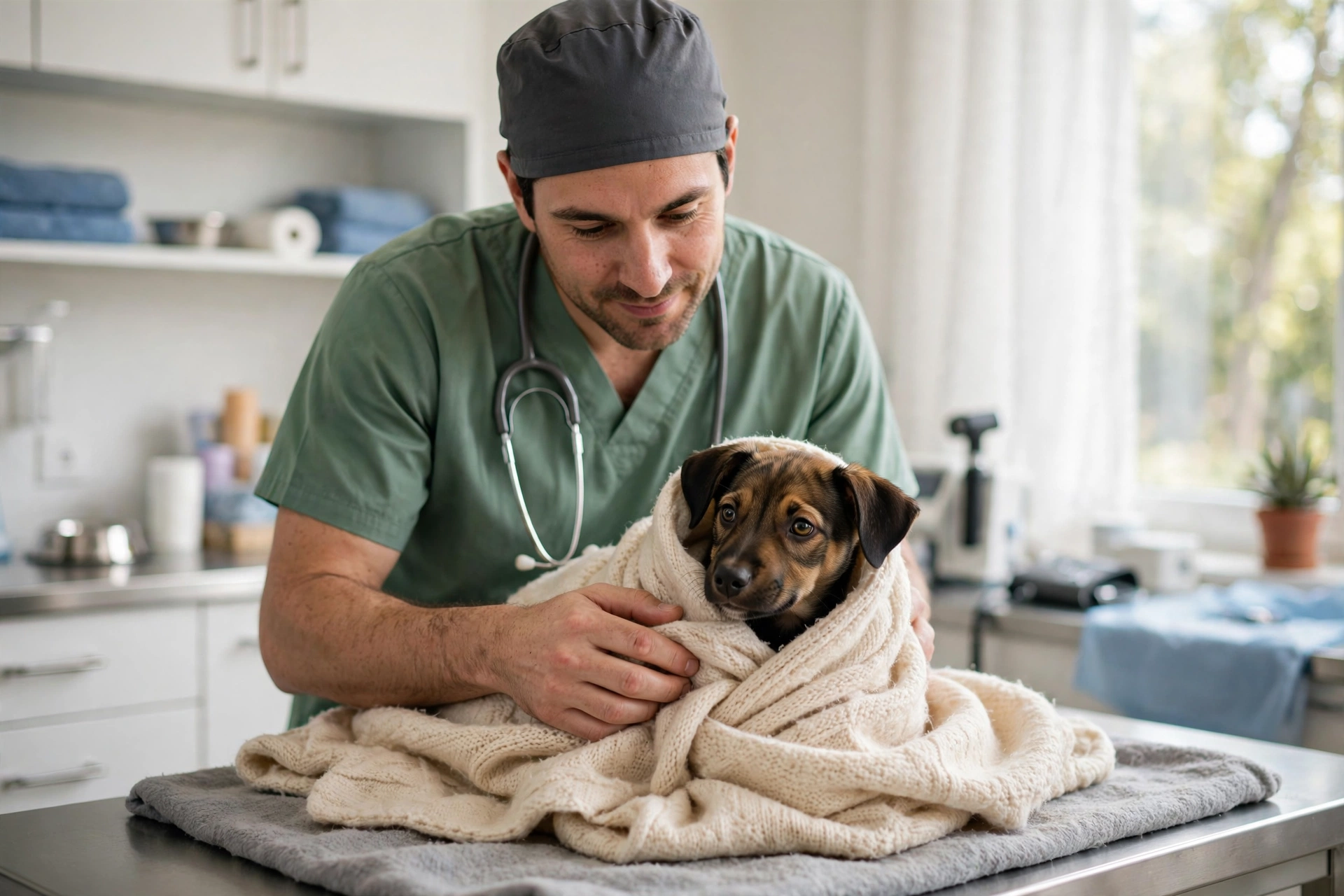
The veterinary team moved quickly but carefully. They worked to raise his body temperature gently, ran bloodwork to understand the full picture, and gave him fluids at a pace his fragile system could handle. Little by little, he stabilized — and as the fog of hypothermia lifted, his rescuers finally got a real look at the dog they had saved.
They named him Rhodey. He was only about a year old, yet he weighed just 41 pounds — roughly half of what a dog his size should weigh. He was anemic, and tests showed he was heartworm positive, though he was far too weak for that treatment to begin safely. Somewhere in his short life, he had spent what appeared to be weeks on his own, and it had nearly cost him everything.
And yet, as his strength returned, so did his spirit. Rhodey remained shy at first, but he began to interact cautiously with new canine friends. With Stephens, he discovered the simple joy of a slow walk — each one building the muscle and confidence he had lost. The fear in his eyes started to fade, replaced by something brighter: curiosity, and then hope.
Gaining weight was the first priority. The vet team and his caregivers monitored him closely, knowing that once he was strong enough, the heartworm treatment he so badly needed could finally begin.
Rhodey’s Second Chance at Home

While Rhodey was recovering, his story traveled. It reached a retired woman who knew grief all too well — she had lost her own pet and had promised herself she would never go through that heartbreak again. Then she saw Rhodey’s face. Those soulful eyes undid every promise.
On November 23, she took the leap and agreed to foster him. When Tracy Campbell brought Rhodey to the house, he did something that said everything: he walked through the door as if he had always belonged there. No hesitation. No looking back.
In the weeks that followed, Rhodey lived like a dog who had finally found his place. Warm rooms, regular meals, soft places to sleep, and a devoted companion by his side — after weeks in the cold, it must have felt like a dream. His foster mom watched over him carefully, working alongside the veterinary team as he continued to gain weight and build strength for his heartworm treatment.
Campbell even began to wonder aloud about a “foster fail” — the affectionate term for when a foster caregiver simply cannot give the animal back. Given how deeply Rhodey had settled in, nobody would have been surprised.
What Rhodey’s Story Teaches Us

Rhodey’s rescue was not the work of one hero. It was a relay: a daughter who noticed and called, a mother who stopped and waited in the cold, a humane society volunteer who drove him to safety, a veterinary team that fought for his body temperature, and a grieving woman who opened her heart when she had sworn she wouldn’t.
Every one of them could have kept driving. Every one of them could have decided someone else would handle it. None of them did. That is the quiet math of every animal rescue: a string of small, ordinary decisions that add up to one extraordinary outcome.
If you ever spot a stray dog shivering by the side of the road, Rhodey’s story offers a simple playbook: slow down, stay calm, and be patient. Food earns more trust than force, and a blanket matters more than you think.
Frequently Asked Questions
What is hypothermia in dogs?
Hypothermia happens when a dog’s body temperature drops dangerously below the normal range of about 101 to 102 degrees Fahrenheit. Small, thin, or short-coated dogs are especially vulnerable. Signs include violent shivering, lethargy, weak movement, and cold ears or paws. It is a medical emergency that needs veterinary attention.
What should I do if I find a freezing stray dog?
Approach slowly and speak softly — a scared dog may bite out of fear. Offer food to build trust, and avoid chasing. Get the dog somewhere warm and dry as quickly as you can, using blankets or even your car heater. Then contact a local shelter or veterinarian right away, since cold-stressed dogs often need professional care.
How did Rhodey’s rescuers earn his trust?
They refused to rush him. Stephens used food instead of force, let him set the pace, and stayed with him in the cold until he chose to accept her touch. Patience turned fear into trust — a technique that works far better with frightened strays than grabbing or cornering ever will.
What health problems did Rhodey have when rescued?
He was dangerously hypothermic with a body temperature of 95 degrees, severely underweight at just 41 pounds, anemic, and heartworm positive. He was too fragile for heartworm treatment immediately, so the team focused first on warming him, feeding him, and rebuilding his strength.
What is a “foster fail”?
A “foster fail” is the lighthearted term rescuers use when a foster caregiver decides to permanently adopt the animal they were only meant to foster temporarily. It happens a lot with dogs like Rhodey — and it is considered the happiest kind of failure there is.




One Comment