Cat Workouts 101: Safe Exercise and Play Routines for Indoor Cats

Most indoor cats sleep away half the day, and when they are awake they often just drift from the food bowl to the couch. But cat workouts and regular exercise routines matter far more for an indoor cat than most owners realize. A cat that never breaks a sweat can quietly slide into weight gain, stiff joints, and boredom-driven behavior problems like midnight zoomies, over-grooming, or scratching the sofa to shreds. The good news is that you do not need a gym or fancy equipment — a few minutes of smart, safe play each day can keep your cat fit, happy, and mentally sharp.
Why Your Indoor Cat Needs Real Exercise

A cat in the wild spends much of its waking time patrolling territory, climbing, pouncing, and hunting. An indoor cat loses all of that natural movement in one stroke. Without regular activity, excess calories quietly turn into extra weight, and extra weight puts strain on joints, the heart, and blood sugar regulation over time.
Regular movement supports flexible joints, a strong heart, and healthy circulation. It also burns off nervous energy and gives your cat’s brain a job to do — which means calmer behavior, less excessive meowing, less destructive scratching, and fewer 3 a.m. hallway sprints.
You do not need to train for a marathon here. For most healthy adult cats, two or three short play sessions a day — five to fifteen minutes each — are plenty. Consistency beats intensity: a little play every day does far more than one exhausting session on the weekend.
Is Your Cat Out of Shape? Simple Checks
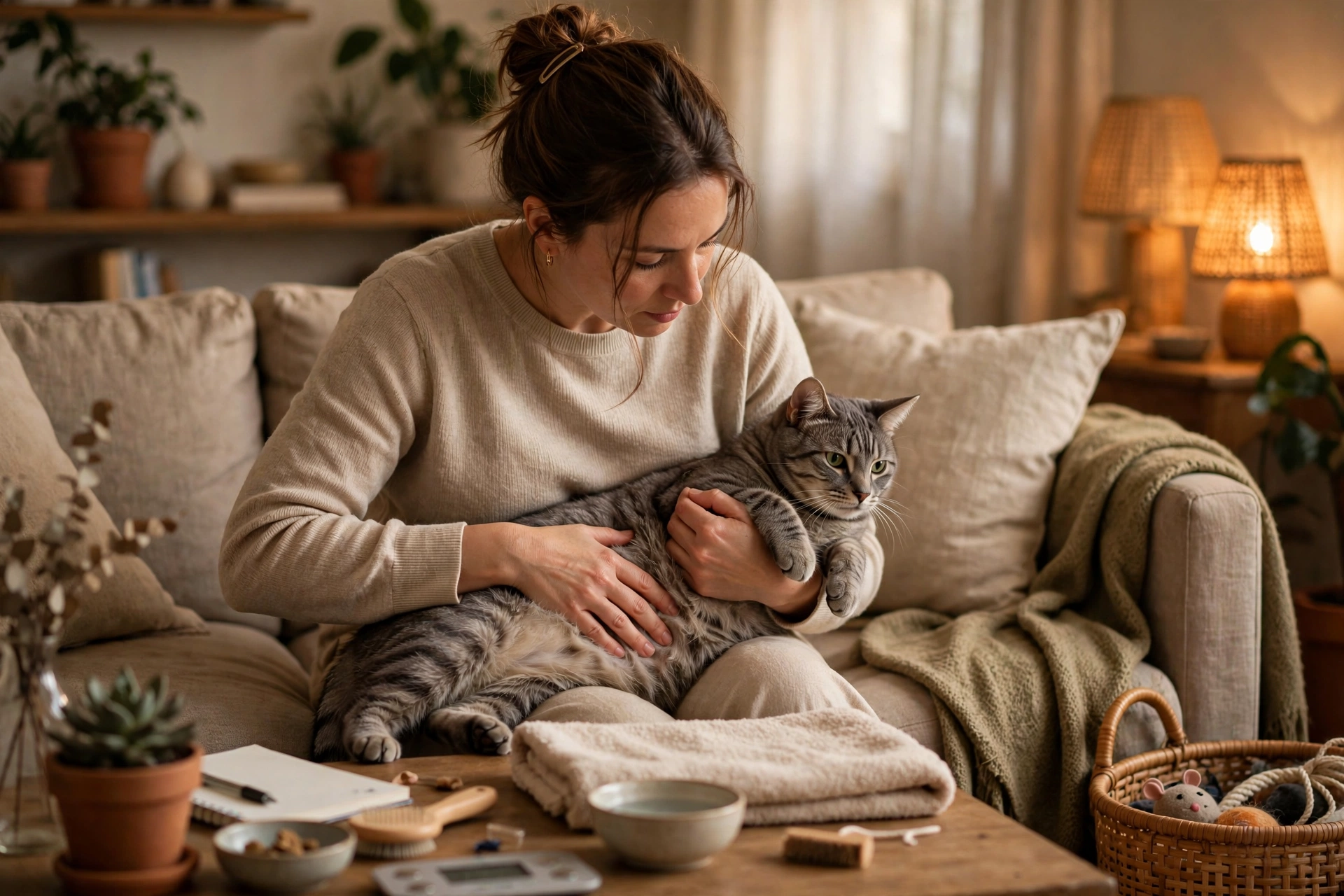
Before starting a workout routine, take a quick look at where your cat stands today. You do not need special tools — just your hands and your eyes.
Try the rib check first. Run your hands lightly along your cat’s sides. You should be able to feel the ribs easily under a thin layer of fat, roughly like the back of your hand under a light blanket of skin. If you have to press firmly to find them, your cat is likely carrying extra weight.
Next, look at your cat from above. A healthy-weight cat usually shows a gentle waist — a slight inward curve behind the ribs. From the side, the belly should tuck upward toward the hind legs rather than hang low and swing when walking.
Watch how your cat moves, too. A cat that hesitates before jumping, pants after short play, grooms less, or sleeps much more than usual may be slowing down — worth mentioning to your vet before ramping up activity.
Safe Play Routines That Mimic the Hunt

The best cat workouts copy nature. Cats are ambush hunters: stalk, chase, pounce, catch. Structure each play session around that cycle and your cat will stay engaged instead of getting bored after two minutes.
1. The feather-wand hunt. Use a wand toy and move it erratically — quick darts, pauses, sudden direction changes — the way real prey behaves. Let your cat stalk it behind furniture, then “escape” it around a corner. Always let your cat catch the toy at the end of the sequence. Being able to grab and “kill” the prey is what makes the game satisfying rather than frustrating.
2. The hallway relay. Toss a soft ball or crinkle toy down a hallway and let your cat sprint after it. Toss it again as soon as it comes back (or bring it back for you). A few rounds of this build short bursts of cardio — the feline equivalent of interval training.
3. The box ambush. Cut holes in a cardboard box, drop a toy mouse inside, and wiggle a wand through the openings. Your cat will crouch, pounce, and bat at the “prey” inside.
4. The laser finish. If you use a laser pointer, keep sessions short and always end by guiding the dot onto a real toy your cat can pounce on — ending on a catch prevents frustration.
Keep sessions under about fifteen minutes and end while your cat is still having fun. A short play burst followed by a small treat mirrors the natural hunt-eat-groom-sleep cycle.
Toys, Climbing Gear, and Puzzle Feeders
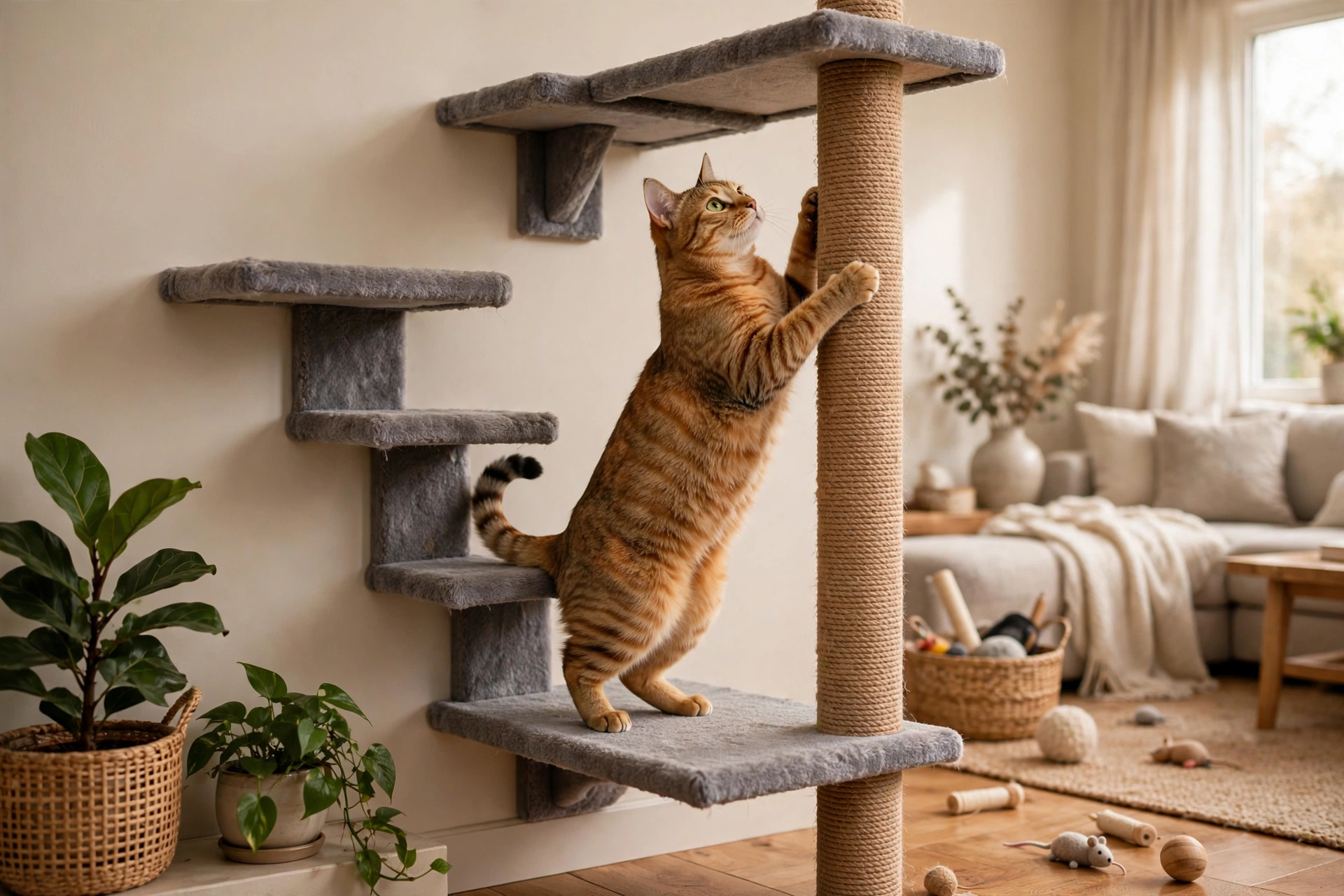
Good gear turns your home into a natural fitness space. You do not need everything at once — a few well-chosen pieces cover most of a cat’s needs.
A sturdy cat tree is the centerpiece: platforms at several heights, a hiding spot, and a sisal scratching post. Wall-mounted shelves work well in small homes. Make sure anything your cat climbs is solid and anchored — a wobbling perch is an injury waiting to happen.
Rotate toys every few days. Cats lose interest in the same toy surprisingly fast. Keep three small sets in rotation and store the resting ones in a sealed container so they feel “new” again later. Mix play styles across the sets: hunting toys (feather wands, toy mice), batting toys (balls, crinkle toys), and kicker toys (long plush toys for bunny-kicking).
Puzzle feeders turn breakfast into a ten-to-fifteen-minute hunting session: your cat bats, rolls, or paws kibble out of compartments instead of eating from a bowl in thirty seconds. On busy days, a puzzle feeder or battery-operated toy keeps your cat moving while you are out.
A Simple Daily Workout Schedule (Plus Adjustments)
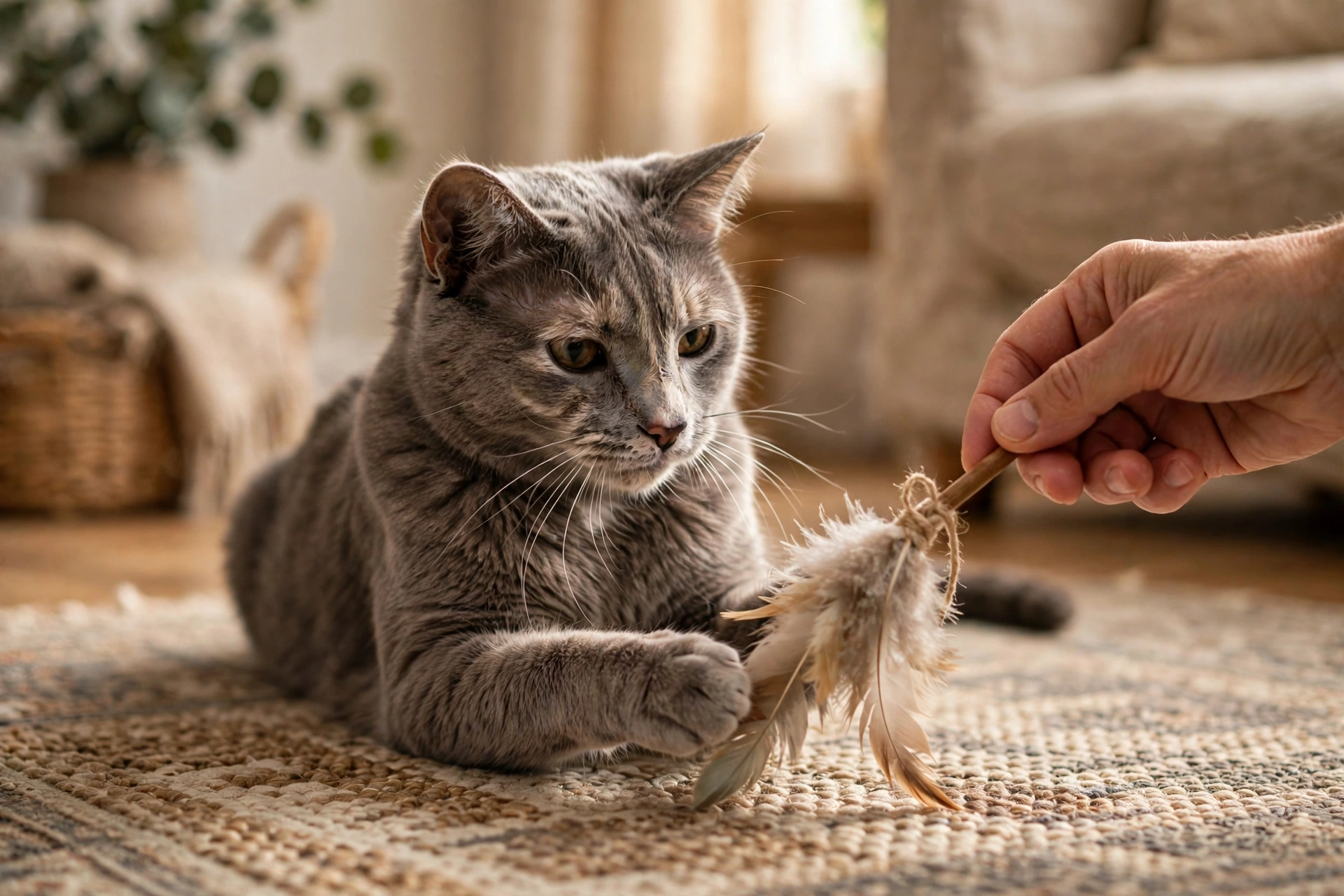
Here is a starter routine most adult cats do well with:
- Morning (5–10 minutes): a wand-toy hunt before breakfast (play first, then feed).
- Afternoon (5–10 minutes): puzzle feeder for part of the daily food, or a hallway ball relay.
- Evening (10–15 minutes): the main play session before dinner — wand toys, box ambush games, and a satisfying final catch.
Adjustments for kittens: Kittens have enormous energy but tiny bodies. Give them several short bursts of four to six minutes scattered through the day, and always let them rest when they want to. Avoid rough play that encourages biting hands — redirect to toys early.
Adjustments for senior cats: Cats over about ten do best with gentle, low-impact play at ground level — slow wand movements and short sessions. Add carpeted ramps or steps to favorite perches, and clear the plan with your vet if your senior has arthritis or heart issues.
For overweight cats, start with three-to-five-minute sessions and build up gradually over a few weeks.
Warning Signs to Stop Play Right Away

Most play is safe, but end the session immediately and let your cat rest if you notice any of these:
- Heavy panting, open-mouth breathing, or wheezing
- Suddenly flopping onto the side, stumbling, or seeming disoriented
- Limping during or after play, or refusing to put weight on a leg
- Excessive drooling, vomiting after exercise, or unusual lethargy
- Sudden aggression — swatting or biting that goes beyond playful
If these happen repeatedly, or your cat is a senior, flat-faced breed, very overweight, or has a known heart condition, talk to your vet before continuing. A quick checkup confirms what activity level is safe.
- 16 Cat Enrichment Ideas to Instantly Boost Your Kitty’s Happiness
- 12 Cat Playground Outdoor Ideas Your Kitty Will Absolutely Love
- 14 DIY Cat Stuff Ideas Your Kitty Will Absolutely Love
- 22 Cat Photoshoot Ideas for Adorable Pictures You Will Cherish
- 14 Cat Apartment Ideas to Transform Your Small Space Today
FAQs About Cat Workouts
How much exercise does an indoor cat need each day?
Most healthy adult indoor cats do well with ten to thirty minutes of active play per day, split into two or three short sessions. Overweight, senior, or very young cats should start with shorter sessions and build up gradually.
Is it safe to make my cat exercise?
For healthy cats, gentle daily play is safe and beneficial. If your cat is senior, very overweight, flat-faced, or has a health condition, check with your vet first.
What are the best toys for cat workouts?
Wand toys with feathers or strings are usually the top choice because they mimic prey movement. Puzzle feeders, crinkle balls, toy mice, and kicker toys round out a good rotation. Rotate toy sets every few days to keep your cat interested.
Can I exercise my cat with a laser pointer?
Yes, but use it thoughtfully. Keep laser sessions short and always guide the dot onto a physical toy your cat can catch at the end, so the game ends with the satisfaction of a real catch rather than frustration.
My cat sleeps all day and ignores toys. What should I do?
Try playing before meals when prey drive is strongest, switch toy styles, or try a puzzle feeder. If your cat is suddenly much less active or breathes heavily during play, see your vet.