6 DIY Dog Puzzles That Tire Out Your Dog (2026)

A tired brain beats tired legs every time. If your dog is bouncing off the walls, digging into the trash, or inventing their own entertainment with your couch cushions, what they really need is a mental workout. These DIY dog puzzles are cheap to build, take minutes to set up, and tap into your dog’s strongest sense: their nose. Here are six homemade puzzle games that turn boredom into focus, one sniff at a time.
1. The Muffin Tin Treat Hunt
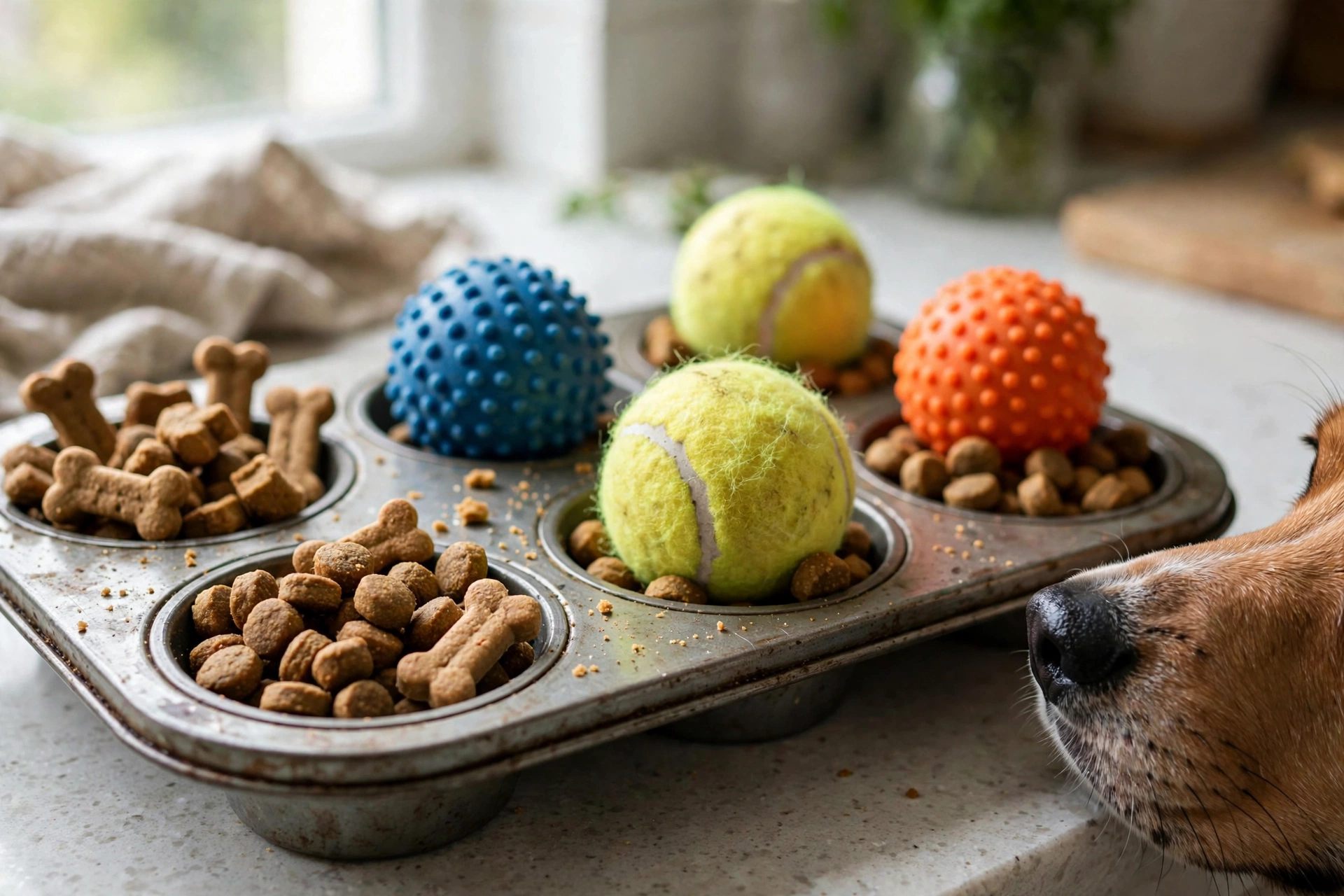
This classic DIY dog puzzle takes about two minutes to set up and buys you real peace. Drop a small treat into only some of the cups of a 12-cup muffin tin, then cover every cup with a ball. Your dog has to nose each ball aside and figure out which cups are hiding the payoff. The mystery is the point: not every cup pays out, so the brain stays working from the first cup to the last.
Mix up the ball sizes and textures so there is no visual pattern to crack. For beginners, leave some cups uncovered so your dog learns the game quickly. Once they get the hang of it, cover all twelve cups and watch them slow down and think. Swap the treat type every few days to keep the scent trail exciting.
Helpful pick: Wilton Gold Non-Stick 12-Cup Muffin Pan — a heavy, flat-bottomed tin stays put while your dog nudges the covers off.
2. The Tennis Ball Snack Dispenser
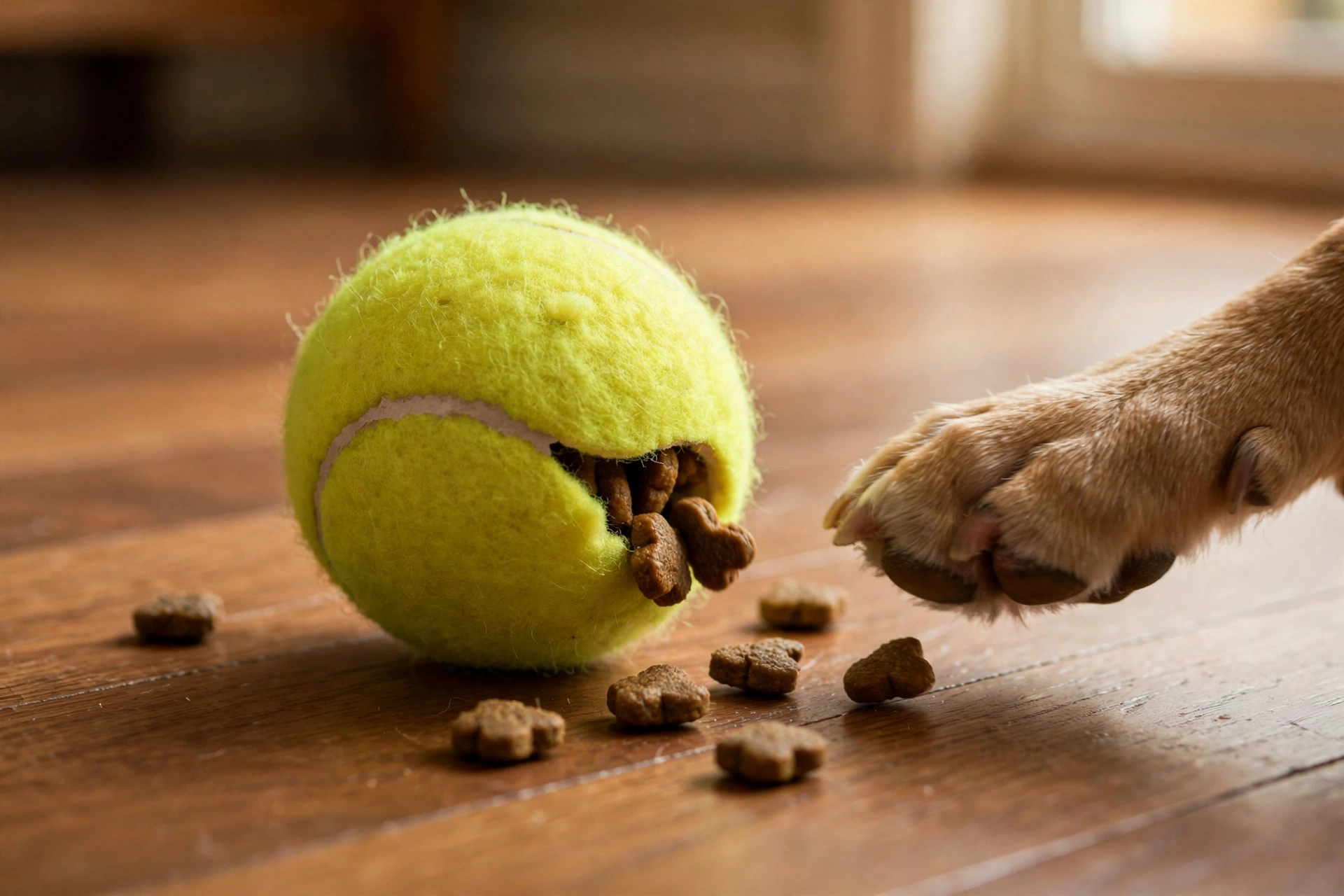
An old tennis ball makes a surprisingly good slow feeder with one small cut. Use a sharp box cutter to slice a 1 to 1.5-inch curved slit in the side of the ball, then squeeze the ball open and push in a handful of kibble or small training treats. Your dog has to nose, paw, and roll the ball to shake each piece free.
The trick is keeping the slit snug. If the cut is too wide, treats fall out on their own and the game is over in thirty seconds. A tight slit means your dog earns every piece. Supervise this one and replace the ball once the felt starts shredding, since some dogs will try to chew the puzzle instead of solving it.
Helpful pick: Penn Control+ Tennis Balls, 12-Ball Polybag — a cheap multi-pack means you can make several dispensers at different difficulty levels.
3. The Sock-Stuffed Lattice Ball
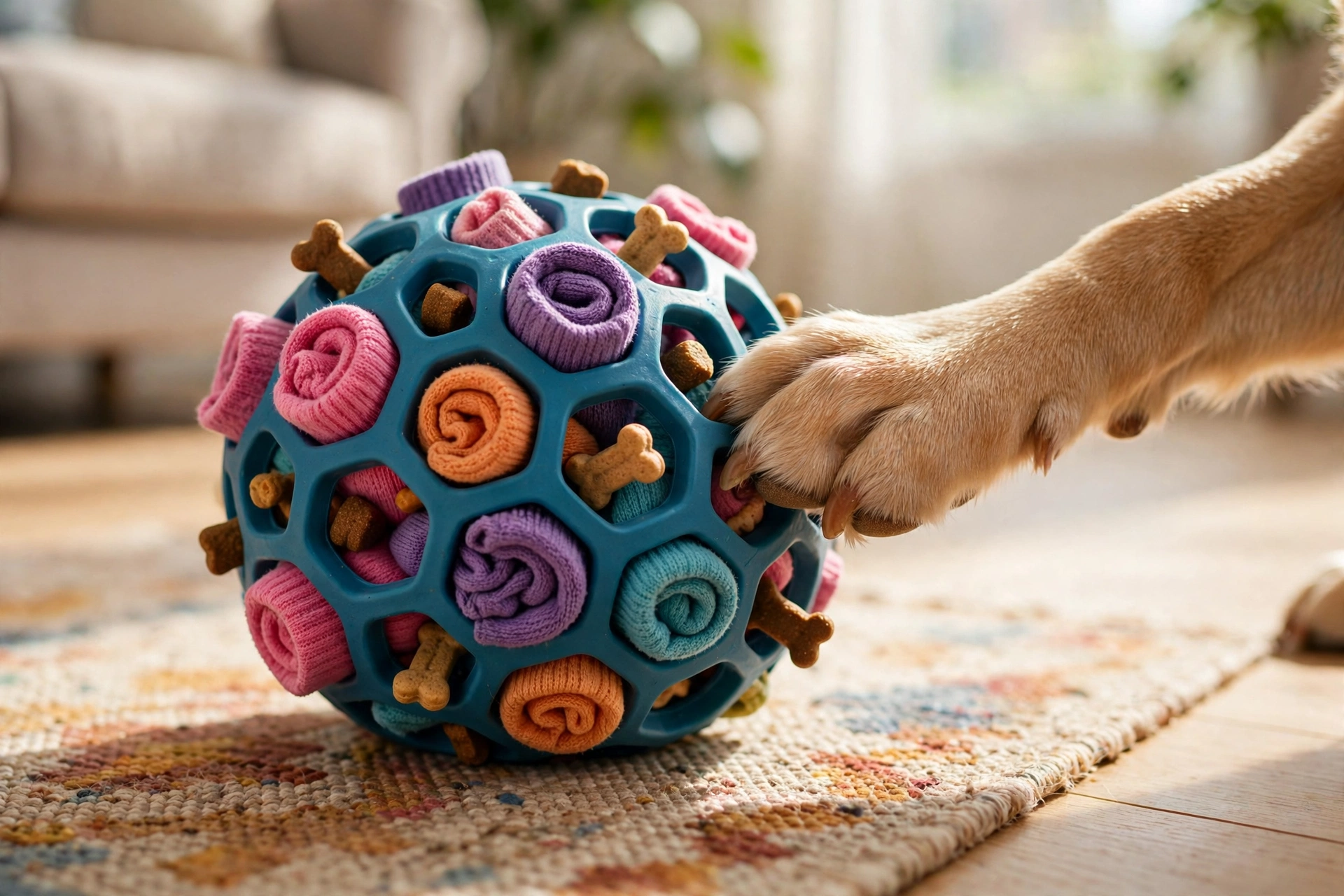
A lattice-style rubber ball becomes a multi-layer sniffing puzzle when you pack it with fabric. Roll small high-value treats inside old socks, then push the stuffed socks into the ball through different holes. Layer two or three socks in a crisscross so the scent has to travel through fabric and your dog has to work each layer apart to reach the good stuff.
The fabric layers are what make this puzzle special. Scent clings to cloth, so your dog gets a slow, evolving smell trail instead of one obvious hit. Cross the socks so they interlock inside the ball; if you stuff it loosely, most dogs will empty it in minutes. Tuck one treat deep in the center as the final prize for real problem-solving.
Helpful pick: JW Pet HOL-ee Roller, Natural Rubber, Medium 4.5in — the open lattice design is exactly what this layered stuffing game needs.
4. Toilet Roll Treat Bombs
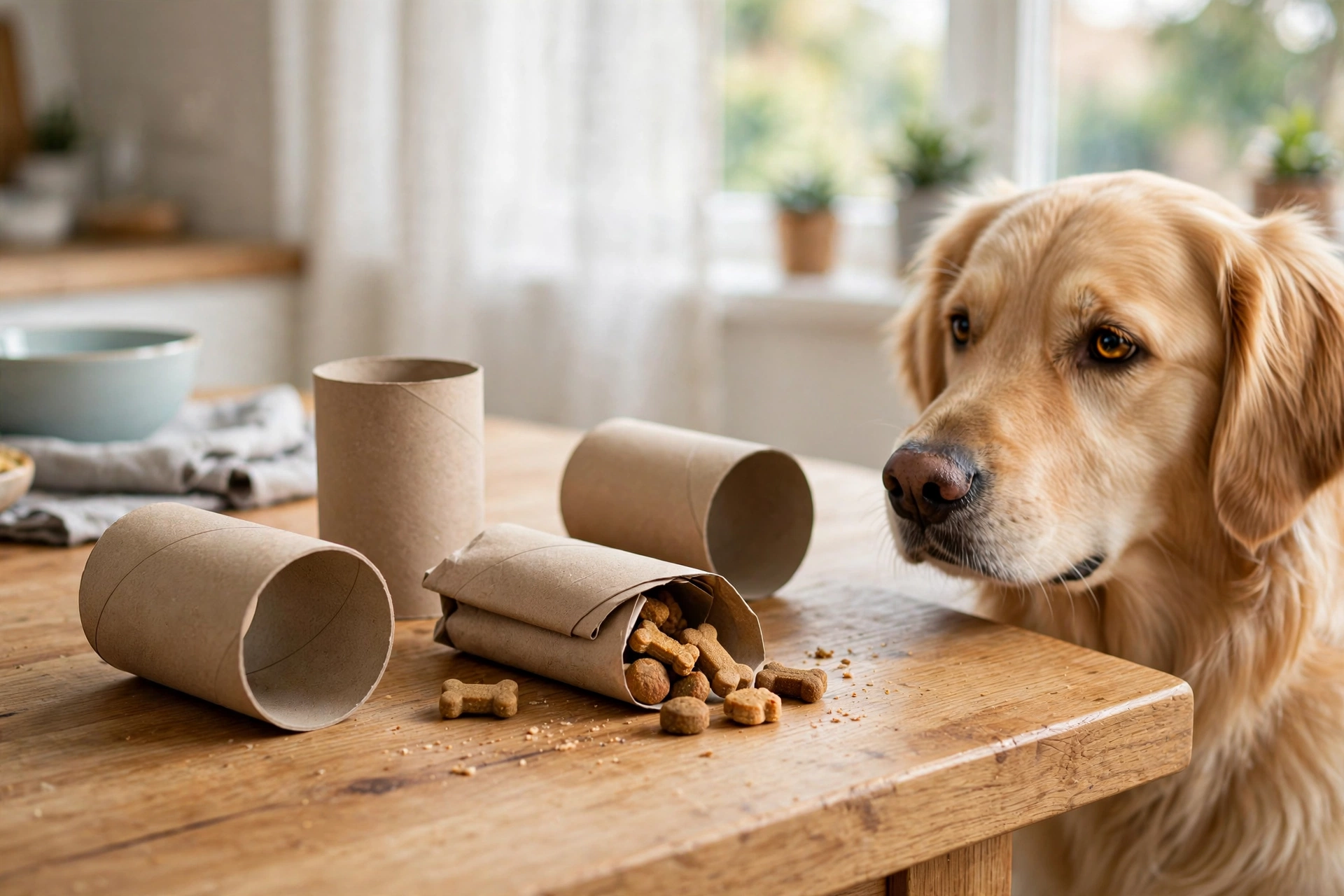
Save your empty toilet paper rolls because they are the cheapest puzzle toys you will ever make. Flatten one end of a roll, fold it shut like a gift box flap, drop in five or six small treats through the open end, then fold that end shut too. Hand it to your dog and let the shredding begin.
The cardboard gives just enough resistance to make your dog work without any frustration. Power chewers who demolish a single roll in seconds can be leveled up: nest two or three rolls inside each other before folding the ends, and you have a genuinely challenging multi-layer puzzle. Always supervise, and take away large loose pieces of cardboard as your dog breaks through.
Helpful pick: LickiMat Splash Slow Feeder Lick Mat for Dogs — spread a little peanut butter on it as a calm-down encore once the shredding is done.
5. The Cardboard Tube Sniff Garden
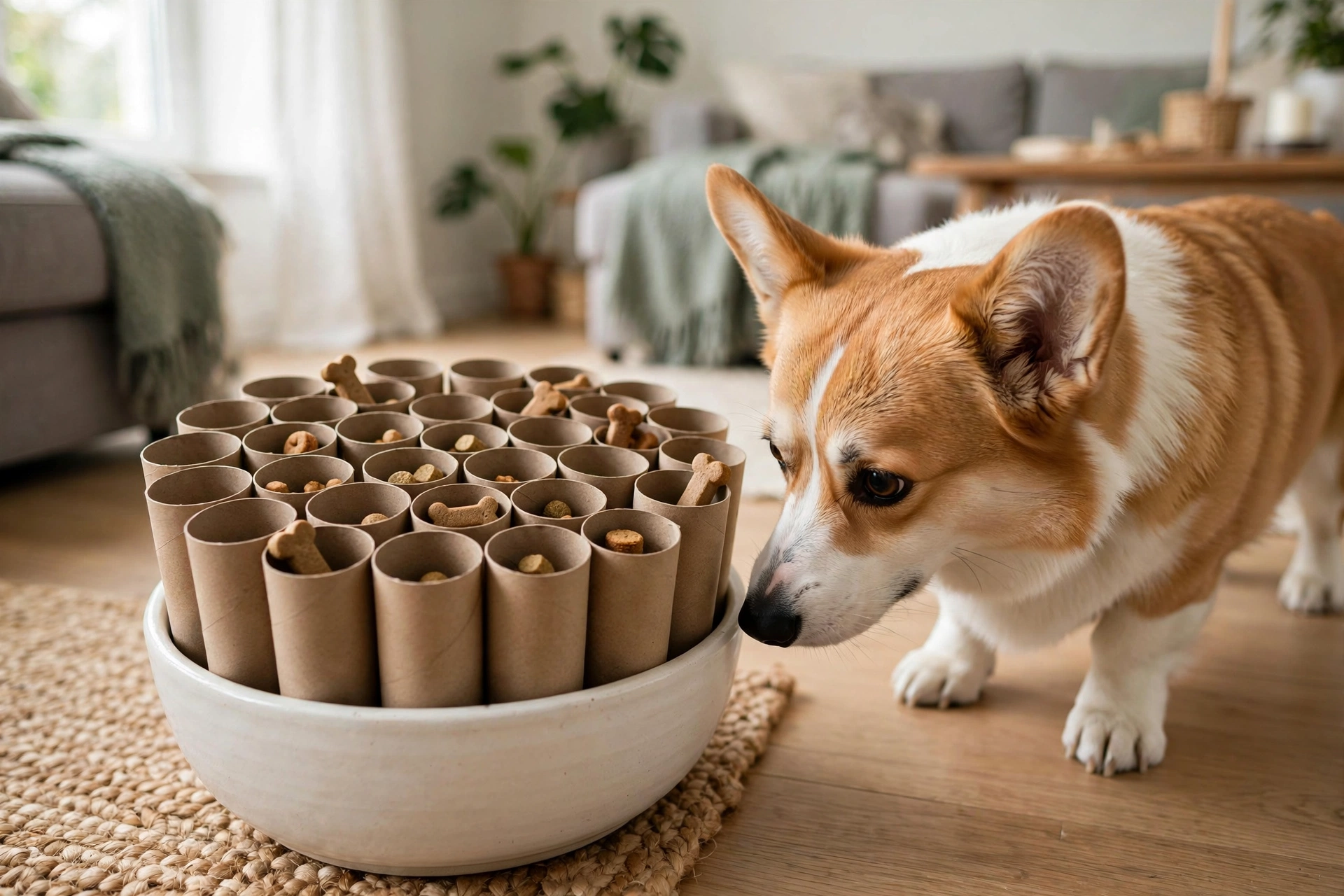
When one toilet roll is not enough, scale the concept up. Stand eight to twelve empty rolls upright in a bowl so they pack together like a honeycomb, then drop a treat into only a few of the tubes. Your dog has to investigate tube by tube, sniffing down each opening to find which ones are loaded.
This puzzle works the nose harder than any of the others because the treats are hidden vertically and the scent pools at the bottom of each tube. Hide treats in only some tubes so your dog learns to check every single one rather than assuming a pattern. Ten to fifteen minutes of focused sniffing tires many dogs out more than a long walk does.
Helpful pick: hyha Waterproof Dog Bed Blanket — lay it under the bowl to catch crumbs and slobber from an enthusiastic sniffer.
6. The Egg Carton Sniff Station
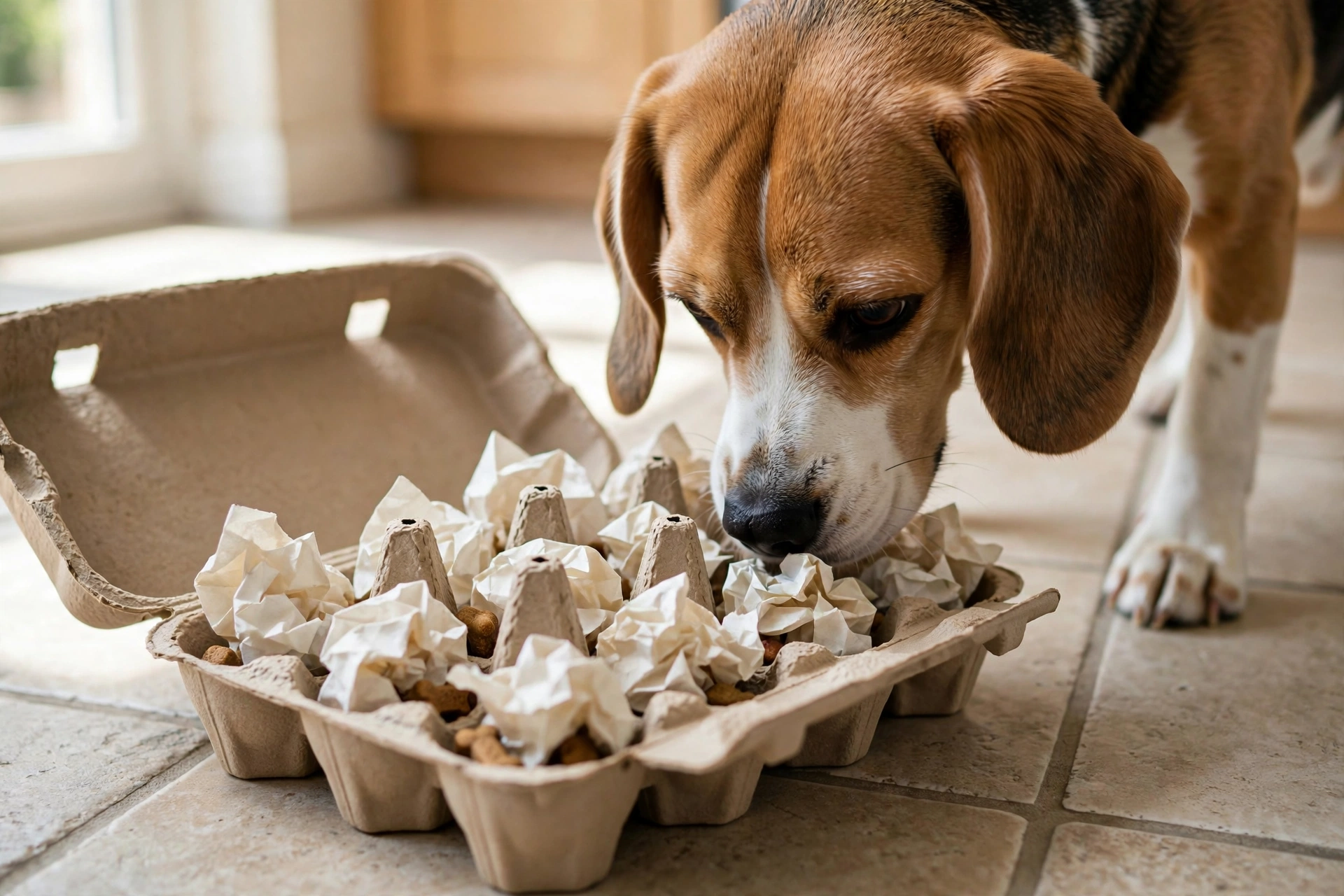
An empty egg carton makes a perfect multi-cup hiding puzzle. Drop a small treat into a few of the cups, cover each loaded cup with a crumpled paper square, then close the lid loosely over the top. Your dog has to lift the lid, paw the paper aside, and check cup by cup for the reward.
This one has built-in difficulty levels. Start with the lid open and only paper covers. Once your dog solves that confidently, close the lid loosely so they have to nose it open first, then work the paper covers. Rotating which cups hold treats keeps your dog from memorizing a pattern and checking cups on autopilot.
Helpful pick: KONG Extreme Dog Toy, Durable Natural Rubber Chew, Large — graduate to this nearly indestructible stuffable toy once your dog masters cardboard puzzles.
Puzzle Difficulty Tips That Keep Dogs Interested
Most homemade puzzles fail for the same reason: the dog solves them instantly and gets bored by day three. The fix is not hiding treats deeper. It is changing the mechanism your dog has to use. Rotate between puzzles that need sliding, lifting, unrolling, and pawing instead of repeating the same motion every day.
Start every new puzzle at the easiest level and only make it harder when your dog solves it twice in a row without hesitation. If your dog is ignoring a puzzle, the difficulty jumped too fast: drop back a level and rebuild their confidence. And rotate your treat flavors. The same kibble smells the same every time, and a boring smell means a bored dog. A new scent makes an old puzzle feel brand new.
Build two puzzles with different mechanics and alternate them day by day. That small rotation keeps the challenge fresh for weeks instead of days.
Keep Reading
- 10 DIY Dog Bunk Beds for Small Spaces
- 15 Indoor Dog Park Ideas for Rainy Days
- 10 Dog Photo Ideas Worth Framing
- 10 Stylish Hotel for Dogs Design Ideas
- 10 Dog Paintings to Brighten Your Walls
Frequently Asked Questions
Are DIY dog puzzles safe?
Yes, as long as you supervise. Cardboard and paper puzzles should always be watched, and any shredded pieces should be taken away before your dog swallows them. Skip small parts that could be a choking hazard.
How often should I give my dog puzzle toys?
Once a day is a great routine for most dogs. Ten to fifteen minutes of focused puzzle work provides solid mental exercise without overfeeding, especially if you use part of their regular meal as the reward.
What treats work best in homemade puzzles?
Small, smelly treats work best: freeze-dried liver, cheese cubes, or soft training treats. Strong scents keep your dog engaged, and small pieces mean more repetitions before the puzzle is empty.
My dog destroys every puzzle in seconds. What should I do?
Add layers instead of giving up. Nest rolls inside rolls, interlock fabric pieces, or switch to a sturdier commercial puzzle toy like a KONG. The goal is a challenge, not a demolition derby.
Do puzzle toys really tire a dog out?
Yes. Sniffing and problem-solving burn serious mental energy. Many owners find that fifteen minutes of focused puzzle work leaves their dog calmer than a thirty-minute walk.
As an Amazon Associate, PetPostHub earns from qualifying purchases.