
How to Keep Your Dog Entertained While You’re at Work: 10 Ideas

Learning how to keep dog entertained while at work is one of the best things you can do for your pup’s happiness — and your furniture. Dogs left alone for eight or more hours with nothing to do often invent their own “games,” and those usually involve chewing shoes, barking at neighbors, or rearranging the trash. The good news? A little planning turns a long, boring workday into a day of safe, enriching fun for your dog.
The secret isn’t one magic toy — it’s variety. Dogs thrive on a mix of food puzzles, chewing, scent games, movement, and rest. Below are 10 ideas that work for full-time workers, each one easy to set up before you leave in the morning.
Table of Contents
- 1. Freeze a Stuffed KONG Before You Leave
- 2. Serve Breakfast in a Puzzle Feeder
- 3. Set Up a Snuffle Mat Treasure Hunt
- 4. Rotate Safe, Long-Lasting Chews
- 5. Use a Pet Camera with a Treat Toss
- 6. Try Doggy Daycare Once or Twice a Week
- 7. Book a Midday Dog Walker
- 8. Leave Background TV or Music On
- 9. Create a Window Perch for Watching
- 10. Do a Quick Training Session Before Work
- Signs Your Dog Is Bored vs. Anxious
- Frequently Asked Questions
1. Freeze a Stuffed KONG Before You Leave

A frozen KONG is the gold standard for at-work entertainment. Stuff a KONG Classic with peanut butter (xylitol-free), banana slices, or a little kibble mixed with plain yogurt, then freeze it overnight. The frozen filling takes most dogs 30 to 60 minutes to work through — that’s a solid chunk of your workday covered in mental effort.
Tips: Keep two or three KONGs in rotation so you always have a frozen one ready. Layer fillings — kibble at the bottom, peanut butter in the middle, a big smear on top — and plug the small end with a treat. For power chewers, size up; the KONG should feel slightly too big rather than too small.
Helpful pick: KONG Classic Dog Toy — the original durable rubber stuffer, freezer-safe and practically indestructible for most chewers.
2. Serve Breakfast in a Puzzle Feeder

Dogs evolved to work for food, so dumping kibble in a bowl and leaving wastes an enrichment opportunity. A puzzle feeder turns breakfast into a 15-to-20-minute brain workout. Maze bowls, spinning compartments, and sliding-cover puzzles all slow down fast eaters while engaging their problem-solving skills.
Tips: Start easy — if the puzzle is too hard on day one, your dog will give up. Graduate to harder puzzles over a couple of weeks. A slow feeder bowl is also easier on digestion, reducing the risk of gulping air and vomiting later in the day.
Helpful pick: Outward Hound Fun Feeder Slo Bowl — a vet-designed maze bowl that slows speedy eaters and adds mental challenge to every meal.
3. Set Up a Snuffle Mat Treasure Hunt

A dog’s nose is its superpower — scent work tires dogs out faster than a walk does. Scatter a handful of kibble or small treats deep in a snuffle mat before you leave, and your dog will spend ages foraging. It’s calming, confidence-building, and completely quiet for apartment living.
Tips: Hide a few high-value treats (like freeze-dried liver) deep in the folds to keep motivation high. Machine-wash the mat regularly — food residue builds up fast. For variety, scatter some of the treats on the floor around the mat so your dog has to hunt a wider “field.”
Helpful pick: Snuffle Mat for Dogs — thick fleece strips that hide treats well and hold up to daily foraging.
4. Rotate Safe, Long-Lasting Chews

Chewing is a natural stress reliever for dogs — it releases calming endorphins. But the same chew left out every day gets boring fast. Keep a small basket of durable chews and rotate which ones are available each day, so there’s always something “new” to discover. Nylon wishbones, rubber chew toys, and natural chews like bully sticks all work well.
Tips: Always match chew size and hardness to your dog — too-hard chews can crack teeth in aggressive chewers. Supervise new chews the first few times, and toss any chew that develops sharp edges or gets small enough to swallow.
Helpful pick: Benebone Wishbone Chew Toy — a long-lasting flavored nylon chew shaped for easy gripping, made in the USA.
5. Use a Pet Camera with a Treat Toss

A pet camera with two-way audio and a treat dispenser lets you check in, talk to your dog, and toss treats during your lunch break. That midday interaction breaks up the loneliness of a long day and gives your dog something to look forward to. Many models also send barking or motion alerts to your phone.
Tips: Place the camera where your dog actually hangs out — the couch or dog bed area, not the hallway. Keep your check-ins short and upbeat; long emotional conversations can actually make some dogs more anxious. Use small, soft treats in the dispenser so they don’t jam.
Helpful pick: Furbo Mini Pet Camera — 360-degree view, two-way audio, and a treat-tossing feature you control from your phone.
6. Try Doggy Daycare Once or Twice a Week

If your dog is social and playful, even one or two daycare days per week can transform the whole week. A day of supervised play with other dogs burns enormous energy, and most dogs come home happily exhausted. It also breaks the monotony of five straight solo days.
Tips: Tour any facility first — look for small playgroups, trained staff, rest periods, and clean space. Ask about their temperament test process. If full days feel like too much, many places offer half days. A calming aid can ease the transition for dogs that get overexcited in new environments.
Helpful pick: ADAPTIL Calm Home Diffuser — releases calming pheromones that can help dogs settle during new or exciting experiences.
7. Book a Midday Dog Walker
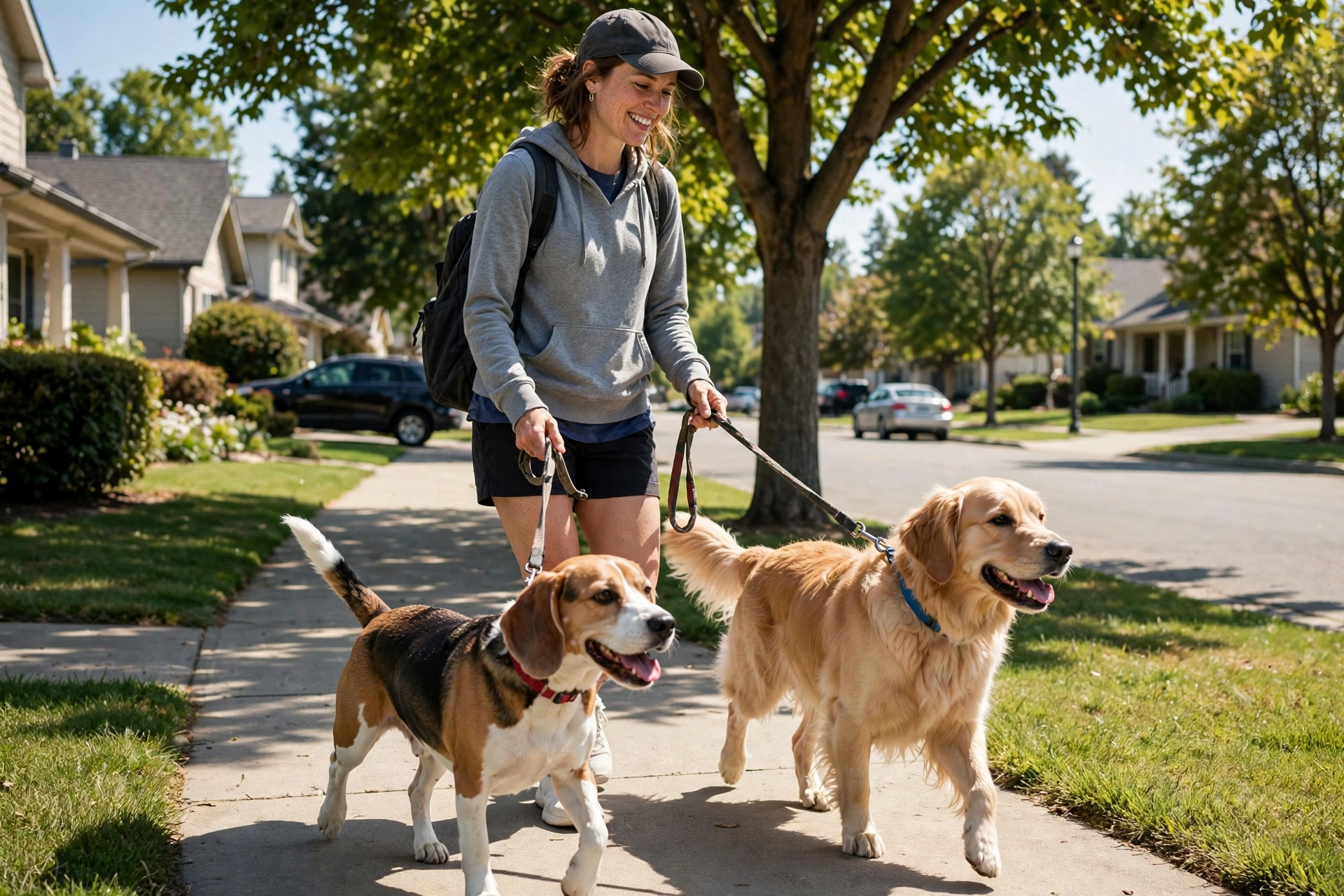
Eight to ten hours is a long time for a dog to hold it, let alone sit still. A midday walker splits the day in half: a potty break, a sniff-filled walk, and some human interaction right when your dog needs it most. For puppies, seniors, and high-energy breeds, this one is almost non-negotiable.
Tips: Ask walkers about their experience, group sizes, and what happens in bad weather. A consistent walker builds trust with your dog over time. Leave a long training leash by the door so the walker can give your dog extra sniffing freedom safely.
Helpful pick: Joytale 30ft Dog Training Leash — a long line that gives dogs sniffing freedom on walks while staying safely connected.
8. Leave Background TV or Music On
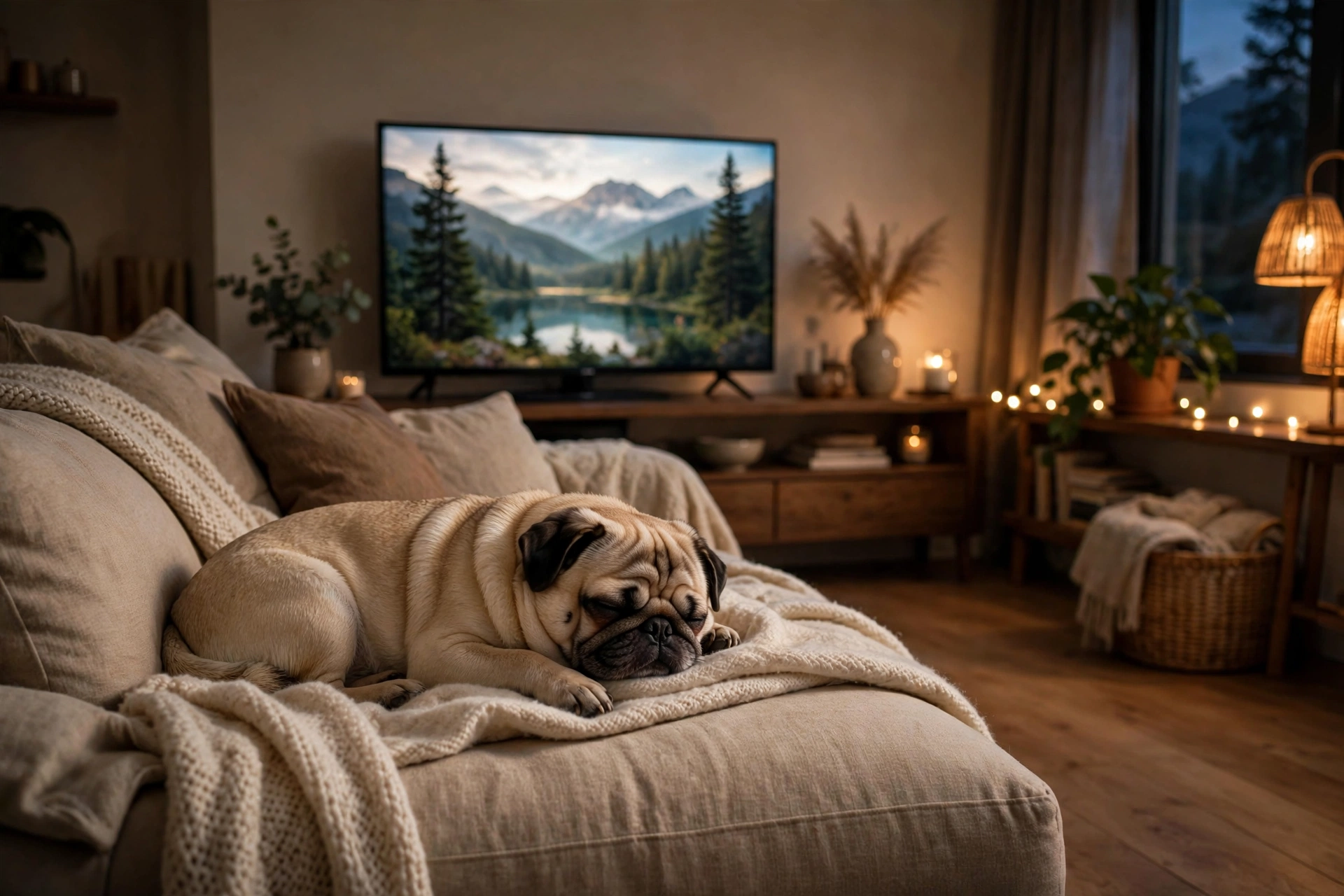
A silent house can feel eerie to a dog used to human sounds all evening. Calm background noise — classical music, talk radio, or dog-specific programming — masks startling outside sounds and provides a sense of company. Studies have shown that soft classical music can reduce stress behaviors like barking in shelter dogs.
Tips: Keep the volume low — dogs hear far better than we do. Nature documentaries or calm talk shows work better than action movies with sudden loud sounds. Some owners swear by white noise machines, which also mask doorbells and street noise that trigger barking.
Helpful pick: Snuggle Puppy Heartbeat Toy — a plush companion with a pulsing heartbeat that comforts dogs when the house feels empty.
9. Create a Window Perch for Watching

For many dogs, “neighborhood watch” is the best show on earth. A comfortable spot by a window — a low bench, a sturdy ottoman, or a raised dog bed — gives your dog hours of bird-watching, squirrel-spotting, and people-watching entertainment. Mental stimulation doesn’t get simpler than this.
Tips: Add a soft, washable cushion to the perch so it’s the comfiest seat in the house. If your dog is a reactive barker, test this on a weekend first — some dogs get more worked up watching triggers they can’t reach. For those dogs, frosted window film on the lower half keeps the light without the arousal.
Helpful pick: Best Friends by Sheri Donut Cuddler — a plush, round calming bed that makes any window spot irresistibly cozy.
10. Do a Quick Training Session Before Work

Ten minutes of training before you leave is worth an hour of fetch. Learning burns mental energy fast — practicing “place,” “leave it,” or a new trick leaves your dog pleasantly tired and satisfied. It also reinforces your bond right before the day apart, which eases separation stress.
Tips: End on a success, always. Keep sessions to 5–10 minutes and use tiny, high-value treats so you can reward generously without overfeeding. A treat pouch on your hip makes rewarding quick and smooth — no fumbling in pockets.
Helpful pick: Egiao Dog Treat Pouch — a handy waist-worn pouch that keeps training treats within instant reach.
Signs Your Dog Is Bored vs. Anxious
It’s important to tell boredom apart from separation anxiety, because they need different fixes. A bored dog chews things, digs, or gets into the trash — destructive but generally calm, and the behavior stops once enrichment is added. An anxious dog pants, drools, paces, tries to escape, or has accidents despite being house-trained — often starting within minutes of your departure.
Enrichment toys help both, but true separation anxiety usually needs a structured training plan (graduated absences, desensitization) and sometimes vet guidance. If your dog panics the moment you pick up your keys, read our guide on preventing separation anxiety and talk to your vet or a certified trainer.
Keep Reading
Looking for more ways to enrich your dog’s day? Check out our best dog toys for small dogs, these creative lick mat ideas, and our picks for chew toys for aggressive chewers.
Frequently Asked Questions
Is it cruel to leave a dog alone for 8 hours while at work?
Not necessarily — most adult dogs can handle a full workday if their needs are met: a morning walk or play session, enrichment like food puzzles while you’re gone, a midday potty break, and quality time in the evening. Puppies under 6 months, seniors, and dogs with anxiety need shorter alone stretches.
What is the best toy to leave with a dog all day?
A frozen stuffed KONG is the top pick for most dogs — it’s safe, long-lasting, and mentally engaging. Rotate it with puzzle feeders, snuffle mats, and durable chews so your dog doesn’t get bored with the same toy every day.
Should I leave the TV on for my dog?
It can help. Calm background sound masks startling noises and gives the house a “lived-in” feel. Keep the volume low and choose calm programming — nature shows or soft music work better than loud action movies.
How do I know if my dog is bored or has separation anxiety?
Bored dogs are destructive but calm — chewing, digging, trash-raiding. Anxious dogs show panic: panting, drooling, escape attempts, and accidents, often within minutes of you leaving. Boredom responds to enrichment; anxiety needs training and sometimes professional help.
Is doggy daycare good for every dog?
No — daycare suits social, playful dogs but can overwhelm shy, fearful, or reactive dogs. Tour the facility, ask about playgroup sizes and rest periods, and start with a trial half-day to see how your dog responds.
As an Amazon Associate, PetPostHub earns from qualifying purchases.





3 Comments