
10 DIY Dog Potty Area Designs That Keep Your Yard Clean

There is a special kind of frustration that comes from watching your dog do their business in the exact middle of the nicest patch of lawn you own. If you have ever wanted a DIY dog potty area 10 original builds you can finish in a weekend.
Table of Contents
- 1. Timber-Bordered Sand Pit
- 2. Indoor Grass Frame Station
- 3. Pea Gravel Station With Stone Border
- 4. Living Real Grass Spot
- 5. Fenced Flagstone Potty Yard
- 6. Raised Wire Mesh Tray Station
- 7. White Picket Fence Garden Gate
- 8. Apartment Balcony Corner
- 9. Night-Ready Station With Solar Lights
- 10. Odor-Controlled Cleaning Routine
- FAQ
1. Timber-Bordered Sand Pit

Dogs are drawn to loose ground they can sniff and scratch at, which is why a sand pit makes such a natural potty spot. Mark out a square of about 4 x 4 feet in a corner your dog already visits. Dig down roughly 3 inches, lay weed barrier fabric across the base, then frame the perimeter with pressure-treated landscape timbers joined at the corners with brackets. Pour in fine-grain play sand until the box is level.
Materials: 4 landscape timbers, 2-3 bags of play sand, weed barrier fabric, corner brackets and screws, drill, mallet.
To train your dog to the new spot, place a small piece of their used waste in the sand on day one so they recognize it as the right place. Scoop solids daily and replace the sand every 3 to 4 months.
Helpful pick: Quikrete Play Sand (50 lbs) — pre-washed and screened fine sand that stays soft on paws.
2. Indoor Grass Frame Station
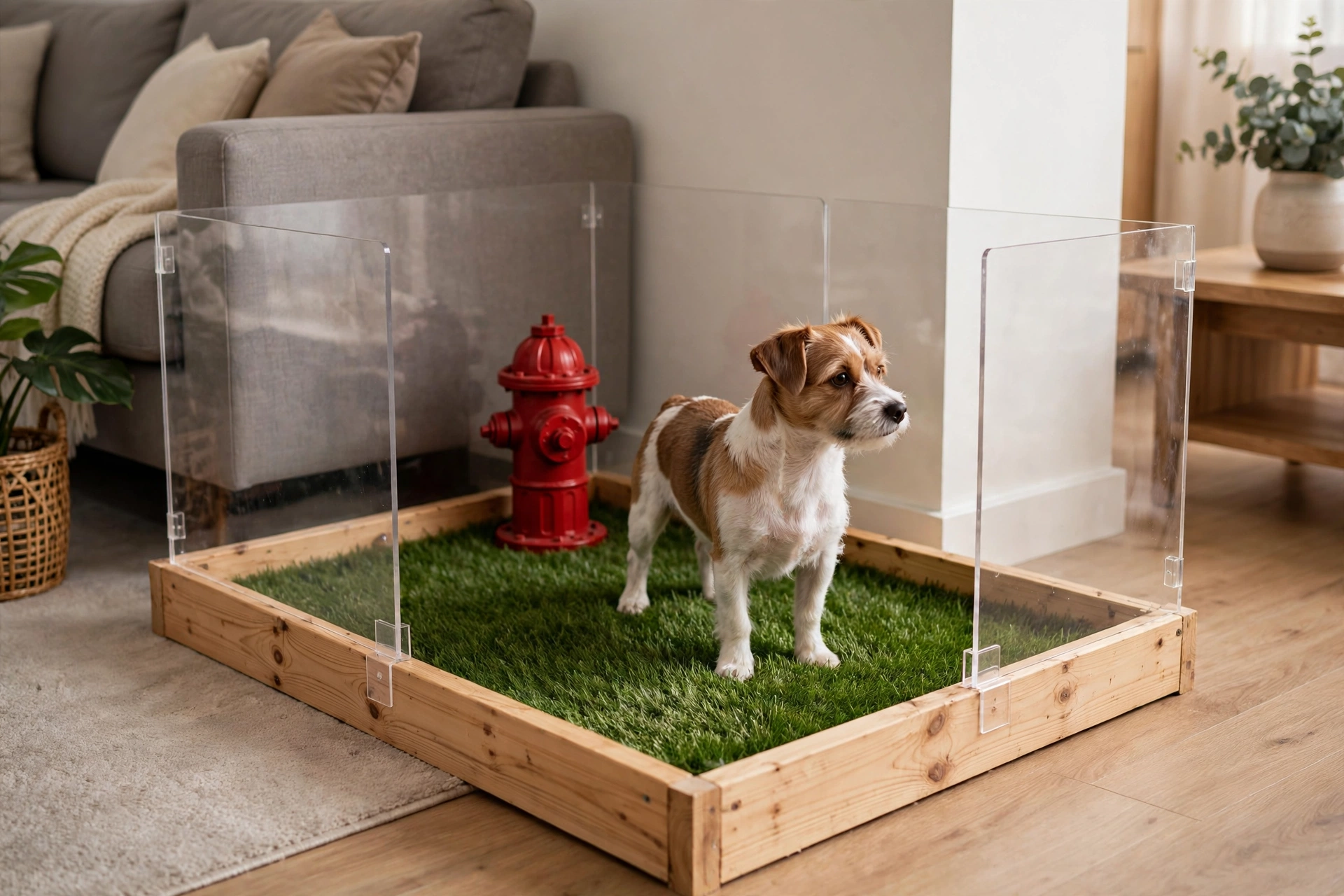
If you live somewhere with brutal winters or long workdays away from home, an indoor station gives your dog a legal spot without tearing up your floors. Build a shallow pine frame about 24 x 36 inches and 4 inches deep, sand every edge smooth, and seal the inside bottom with silicone sealant so urine cannot soak into the wood..
Materials: pine boards, artificial grass mat, acrylic panels with corner brackets, silicone sealant, drill, sandpaper.
Rinse the mat weekly with a white vinegar and water mix to keep it neutral-smelling, and place a pee pad under the mat for the first day or two while your dog learns the routine.
Helpful pick: CooZero Artificial Grass Mat — soft drainage-holed turf that cuts easily to fit your frame.
3. Pea Gravel Station With Stone Border
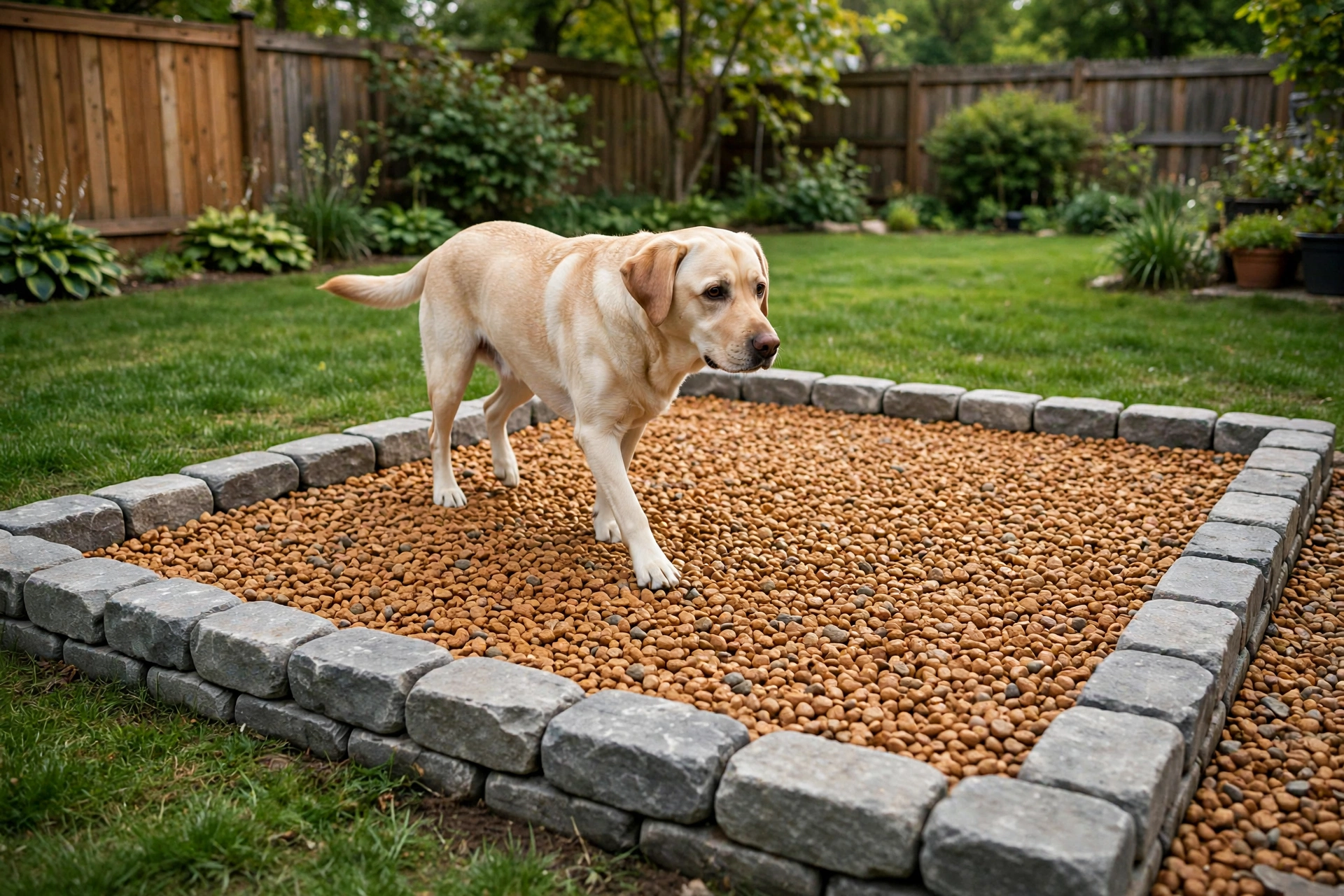
Pea gravel is one of the cleanest surfaces a dog can use because liquid drains straight through instead of pooling on top. Clear a 3 x 5 foot patch of thin or dead grass, lay weed barrier fabric over the soil, and spread gravel 2 to 3 inches deep. Edge the area with two staggered rows of tumbled stone blocks, setting each block firmly into the soil so they do not shift when your dog paws around.
Materials: pea gravel, weed barrier fabric, tumbled stone blocks, measuring tape, hand tamper.
Hose the gravel down once a week and spray a pet-safe enzyme cleaner over it once a month. The stone border keeps the gravel contained and gives the corner a finished look that does not scream “dog toilet.”
Helpful pick: Cureton Pea Gravel and River Rock Multi-Pack — rounded natural stone that is gentle on paws.
4. Living Real Grass Spot
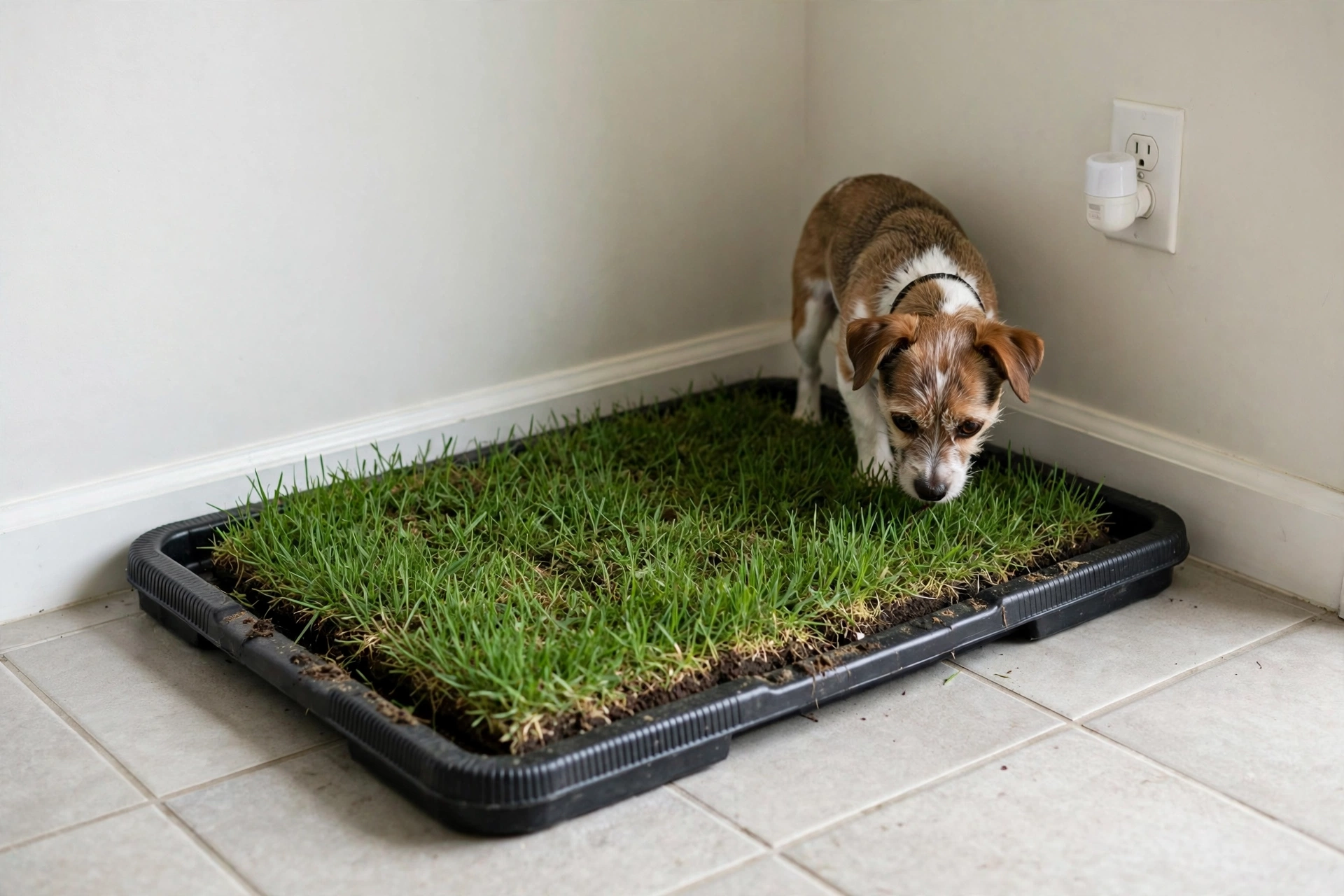
Some dogs refuse anything that is not real grass, and for them nothing beats a living patch. Instead of buying expensive replacement inserts, grow your own: pick a sheltered corner, loosen the top inch of soil or fill a shallow rimmed tray with soil, scatter fast-germinating ryegrass seed evenly, and water daily until it sprouts.
Materials: ryegrass seed, loose soil or a shallow tray, rake, watering can.
Once the grass is about 3 inches tall, let your dog use the spot and reseed lightly every few weeks to keep it dense. Real grass absorbs liquid naturally and triggers your dog’s instinct to go right away.
Helpful pick: Pennington Smart Seed Perennial Ryegrass (3 lbs) — fast-germinating seed that establishes in days.
5. Fenced Flagstone Potty Yard
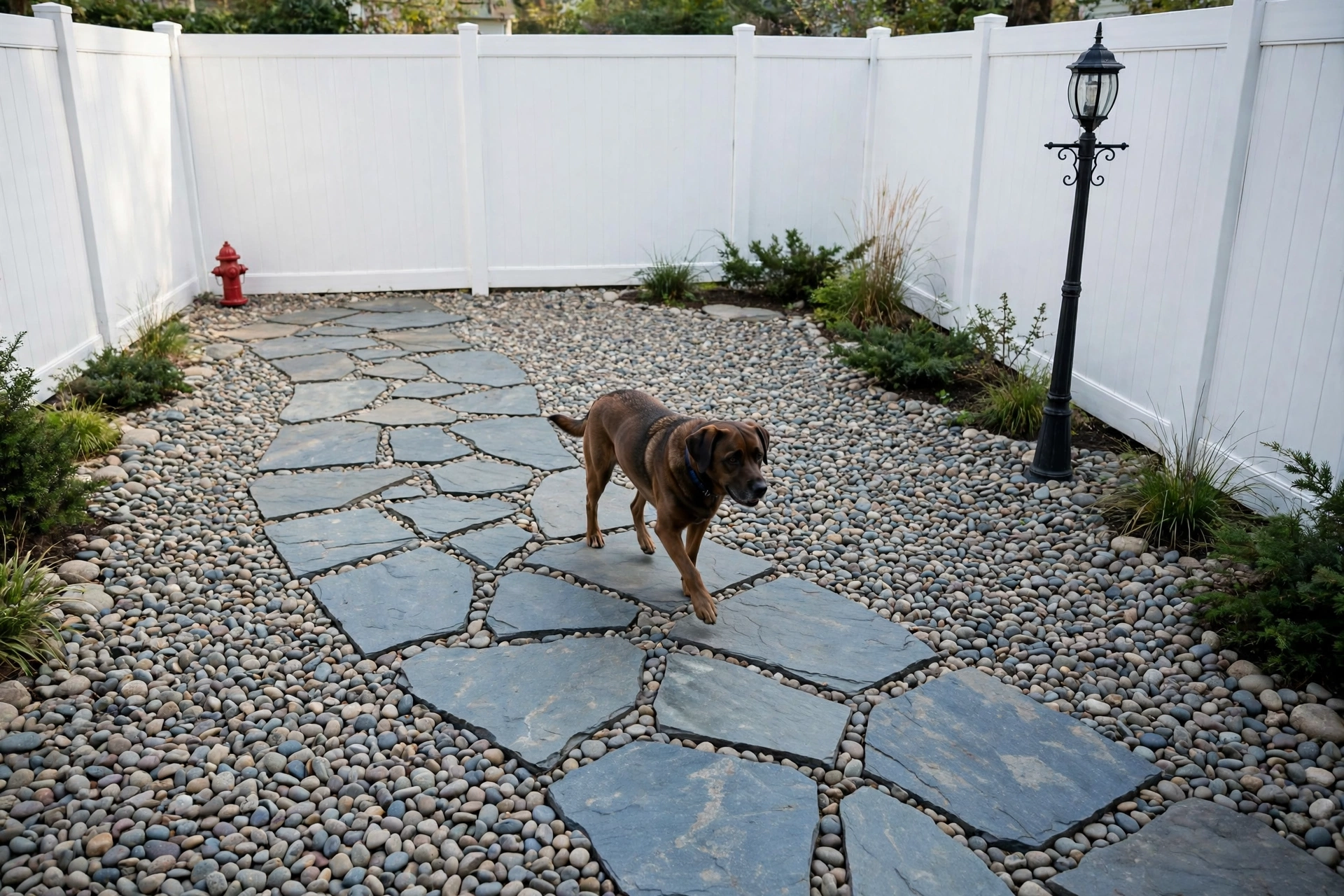
For a potty zone that looks like an intentional part of the landscape, lay river rock gravel 3 to 4 inches deep over landscape fabric, rake it level, and press irregular flagstone slabs down into the gravel leaving small gaps between them. and place a decorative fire hydrant in one corner as a visual target dogs instinctively want to investigate.
Materials: flagstone slabs, river rock gravel, landscape fabric, fence panels, fire hydrant marker, rubber mallet, level.
Wipe a tiny bit of your dog’s scent on the hydrant on day one to communicate that this is the spot. Rinse the stones weekly.
Helpful pick: Beuta Fake Fire Hydrant for Dogs — weather-resistant marker that trains your dog to one spot.
6. Raised Wire Mesh Tray Station
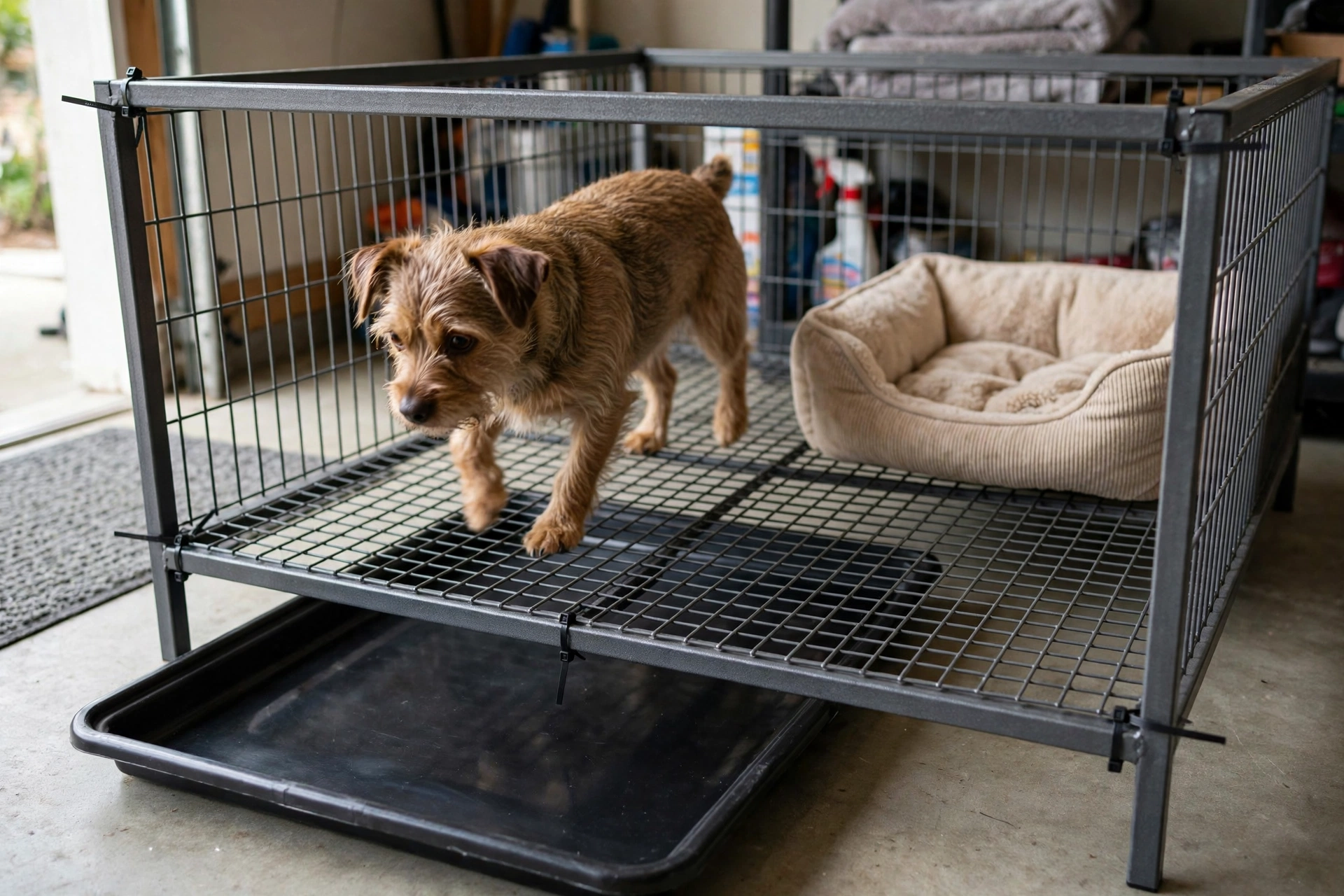
The raised mesh design keeps paws dry by letting liquid fall straight through into a tray underneath. Measure the inside floor of a small metal kennel frame, cut a powder-coated wire mesh panel to fit with no gaps at the edges, and clip it in place with zip ties at each corner.
Materials: wire mesh panels, kennel frame, plastic drip tray, zip ties, wire cutters, measuring tape.
Rinse the tray every other day with a vinegar and water mix.
Helpful pick: AMZDEPOT Stainless Steel Wire Mesh (4 Pack) — rust-proof 20-mesh panels that cut to size easily.
7. White Picket Fence Garden Gate
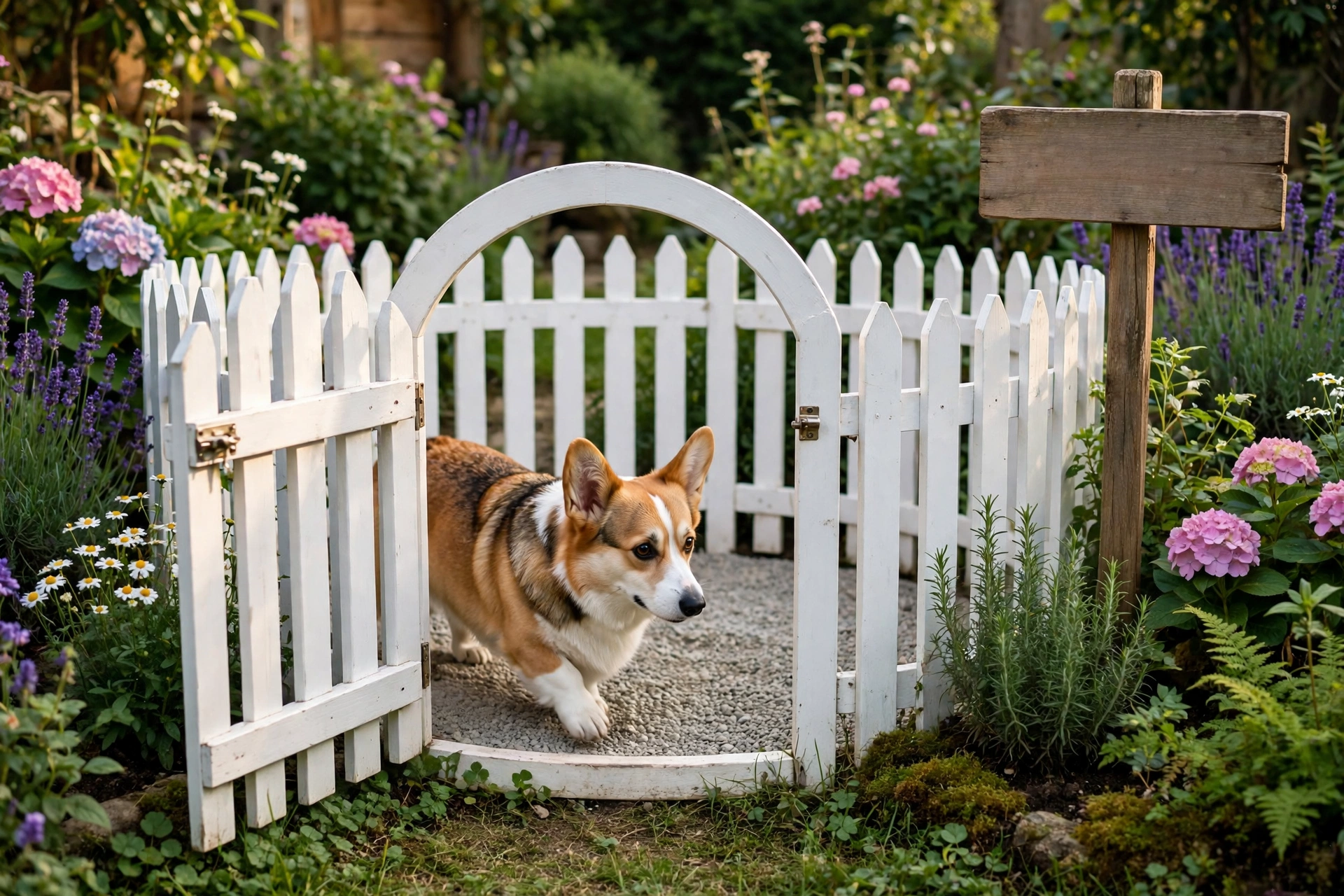
A tiny fenced enclosure turns an ordinary garden corner into your dog’s private bathroom. Assemble a no-dig vinyl picket fence around a small circle or square of mulch or gravel, adding a small gate so you can get in for cleanup.
Materials: no-dig vinyl picket fence kit, matching gate, mulch or gravel, screwdriver.
train with treats every time your dog uses the gate instead of wandering off into the garden beds.
Helpful pick: Zippity Madison No-Dig Vinyl Picket Fence Kit — 2-panel kit that assembles without digging post holes.
8. Apartment Balcony Corner

High-rise life does not have to mean hallway accidents on the elevator ride down. Dedicate one balcony corner to a grass pad with a built-in tray base, which keeps everything contained and protects your flooring.
Materials: grass pad with tray, waste bag dispenser, small lidded bin, vinegar spray bottle.
Place the tray where it gets a little sun so the grass stays fresh, and replace or wash the pad on a weekly schedule so your dog never hesitates to use it.
Helpful pick: HQ4US Dog Grass Pad With Tray (34″ x 23″) — large grass pad with hemmed edge and drainage base.
9. Night-Ready Station With Solar Lights
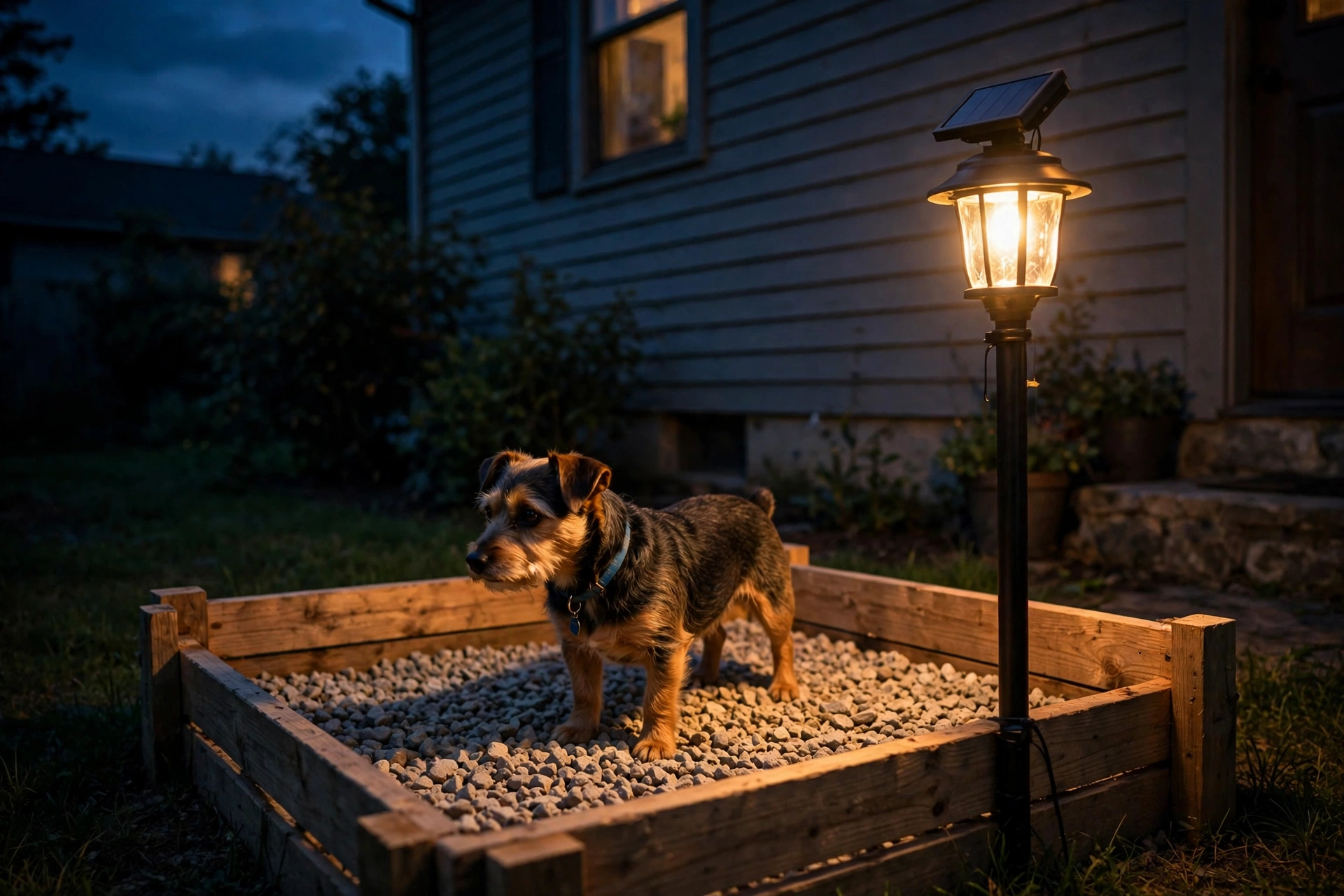
The most common excuse for skipping the designated spot is that nobody wants to cross a dark yard at 11 p.m. Line the edges of your potty area with solar path lights that charge by day and switch on automatically at dusk. You get a clearly visible target zone and you never have to fumble for a flashlight again.
Materials: solar path light set, gravel or mulch edging, measuring tape.
Place lights just outside the gravel border so they illuminate the area without becoming a chew target.
Helpful pick: Beau Jardin Solar Path Lights (8 Pack) — IP65 waterproof lights that run 8 to 12 hours per charge.
10. Odor-Controlled Cleaning Routine
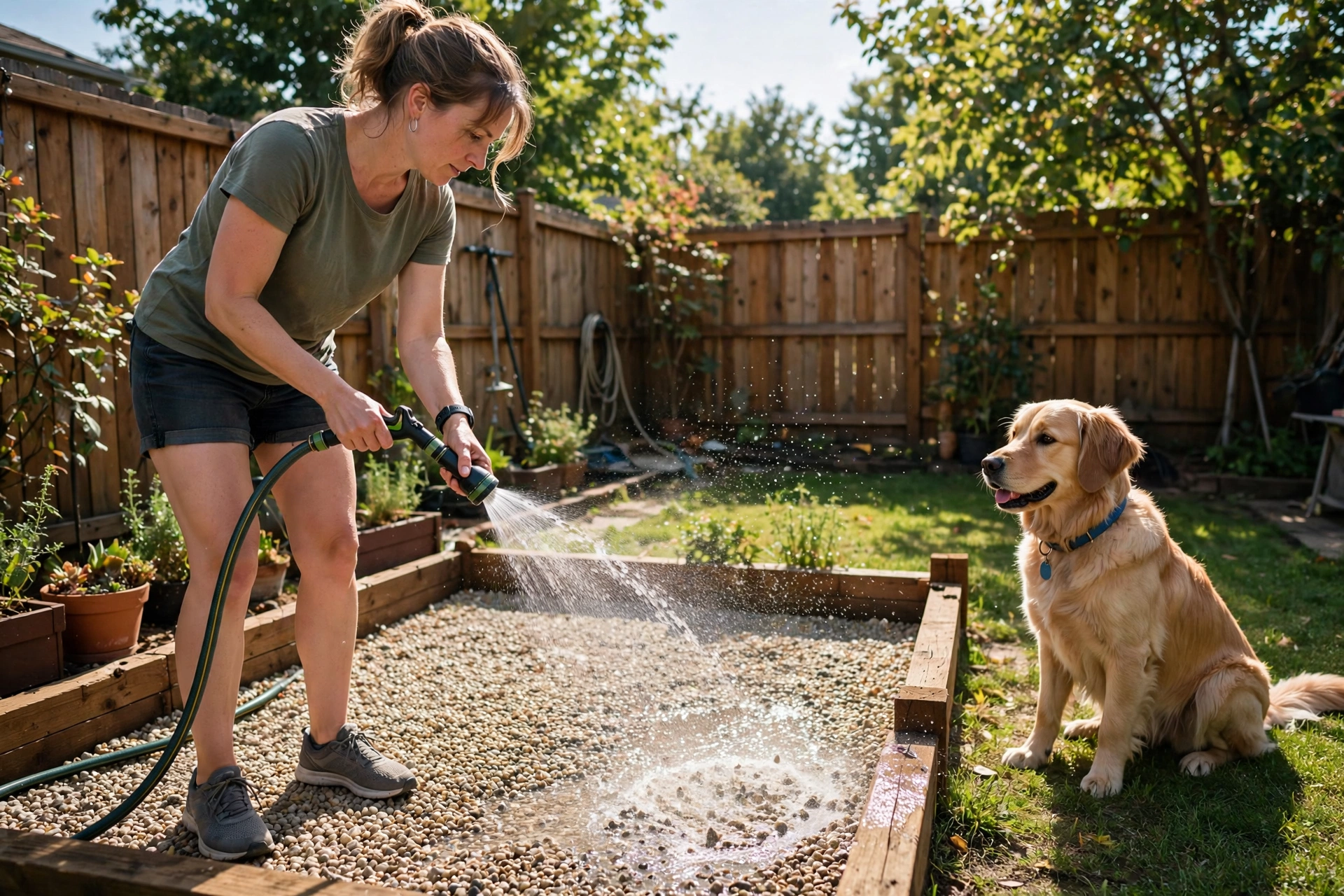
The tenth “design” is the one that makes all the others work: a cleaning routine. Scoop solids daily without exception, hose the surface weekly, and treat the area with a bio-enzymatic cleaner monthly to break down the urine compounds that cause lingering odor.
Materials: poop bags, garden hose with spray nozzle, enzyme cleaner, scoop.
Rotate your surface material once a season if odors persist, and keep a small cleaning caddy right by the back door so the routine takes two minutes, not twenty.
Helpful pick: Rocco & Roxie Stain & Odor Eliminator (32 oz) — enzyme-powered cleaner that is safe to use around pets.
Keep Reading
- 7 DIY Dog Bunk Bed Ideas Your Pup Will Love
- 15 Indoor Dog Park Ideas for Rainy Days
- 10 Outdoor Dog Shelter Ideas for Every Yard
- 10 DIY Dog Hotel Design Ideas
- 10 Best Dog Park Equipment Picks for Backyard Play
Frequently Asked Questions
What is the easiest DIY dog potty area to build?
The sand pit is the fastest weekend build: frame a square with landscape timbers over weed barrier fabric, fill it with play sand, and your dog has a natural spot within a few hours.
How do I train my dog to use a designated potty spot?
Take your dog to the spot on a leash after meals and naps, reward with a treat immediately after they go there, and place a small piece of their waste in the area on day one so the scent marks it as the right place.
What is the best surface for a dog potty area?
Pea gravel and sand are the most popular because they drain quickly and are easy to scoop. Artificial turf works well indoors, while real grass is best for dogs that refuse anything else.
How do I keep a dog potty area from smelling?
Scoop solids daily, rinse the surface weekly, and apply an enzyme cleaner monthly. Replacing sand or gravel every few months prevents odor from building up in the material itself.
Can a dog potty area work in an apartment?
Yes. A grass pad with a tray base on a balcony, or a framed indoor turf station with splash panels, gives apartment dogs a consistent legal spot without damaging floors.
As an Amazon Associate, PetPostHub earns from qualifying purchases.


2 Comments