
8 Things Senior Cavaliers Will Thank You For Doing
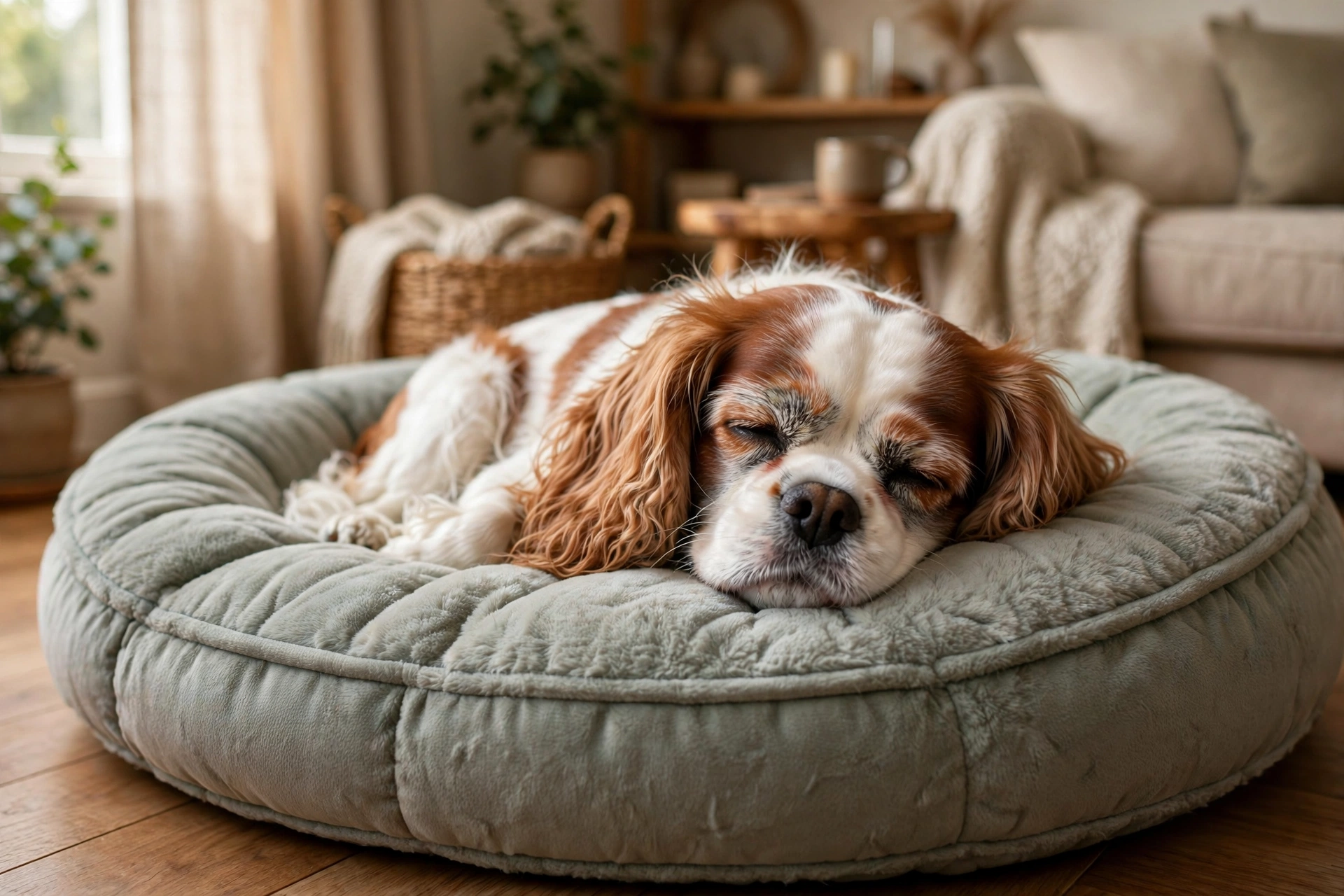
Most Cavaliers enter their senior years around age seven or eight, and that is when thoughtful senior cavalier care starts to matter most. Your graying companion may slow down on walks, sleep a little longer, or hesitate before jumping onto the couch — but with the right adjustments, their golden years can be just as joyful as their puppy days. Below are eight simple, proven things you can do that your senior Cavalier will genuinely thank you for.
1. Upgrade to Orthopedic Bedding

Aging joints ache, and a thin or sagging bed can make stiffness worse by morning. A quality orthopedic bed with memory foam distributes your Cavalier’s weight evenly and takes pressure off elbows, hips, and the spine. Place it in a warm, draft-free spot where your dog already likes to rest, and keep it in the same place every day — seniors find comfort in routine.
If your Cavalier seems restless at night or slow to rise in the morning, the bed is the first thing to upgrade. Washable covers are worth seeking out, since senior dogs can have the occasional accident, and keeping bedding fresh supports healthy skin.
Helpful pick: K&H Original Elevated Pet Cot — an elevated, joint-friendly resting spot that keeps your senior off cold, hard floors.
2. Feed for Joints and Muscle

Senior Cavaliers lose muscle mass more easily and often gain weight as their activity drops. Look for a senior-formula food with high-quality protein to support lean muscle, controlled calories to prevent weight gain, and added omega-3 fatty acids, which support joint health and a healthy coat. Extra pounds put real strain on an aging heart and joints, so weigh food rather than eyeballing it.
Talk to your vet about supplements such as glucosamine or fish oil — these can support joint comfort and mobility in older dogs. Feed on a consistent schedule, and make water easily accessible: place bowls on every floor of the house so your senior never has to climb stairs just for a drink.
Helpful pick: Zesty Paws Wild Alaskan Salmon Oil — omega-rich oil that supports joint, skin, and coat health in senior dogs.
3. Keep Exercise Gentle and Regular

Slowing down does not mean stopping. Regular, low-impact movement keeps muscles toned, joints lubricated, and weight in check. Swap one long walk for two or three short strolls, and let your Cavalier set the pace. Flat, even paths are kinder than hills or uneven trails, and early morning or evening walks avoid the heat that older dogs tolerate poorly.
Watch for signals that it is time to head home: heavy panting, lagging behind, or sitting down. A reflective leash keeps evening walks safe, and a treat pouch makes it easy to reward calm walking and recall practice along the way.
Helpful pick: Mycicy Reflective Rope Dog Leash — a sturdy, visible leash for safe, comfortable senior strolls.
4. Stay Ahead with Vet and Heart Checks

Cavaliers are prone to mitral valve disease, so regular cardiac screening is one of the most valuable parts of senior care. Move to twice-yearly vet visits once your dog turns seven or eight. Your vet can listen for new heart murmurs, check bloodwork, and adjust care before small issues become big ones.
Between visits, do simple at-home monitoring: feel for lumps, check gums for healthy pink color, watch the eyes for cloudiness, and note any changes in appetite, thirst, or energy. A quick weekly once-over takes five minutes and helps you spot changes early.
Helpful pick: PetMedics Non-Contact Pet Thermometer — a stress-free way to check for fever at home between vet visits.
5. Don’t Neglect Dental Care

Small breeds like Cavaliers are prone to dental disease, and sore teeth can make an older dog eat less — or spread bacteria that burden the heart and kidneys. Brush your Cavalier’s teeth a few times a week with a dog-safe toothpaste, and ask your vet about professional cleanings if tartar is building up.
Dental chews are a helpful everyday addition: the chewing action helps reduce plaque while giving your senior a satisfying treat. Look for chews sized for small mouths, and always supervise chewing sessions.
Helpful pick: Greenies Teenie Dental Dog Treats — vet-accepted daily chews that help fight plaque and tartar.
6. Keep Their Mind Engaged
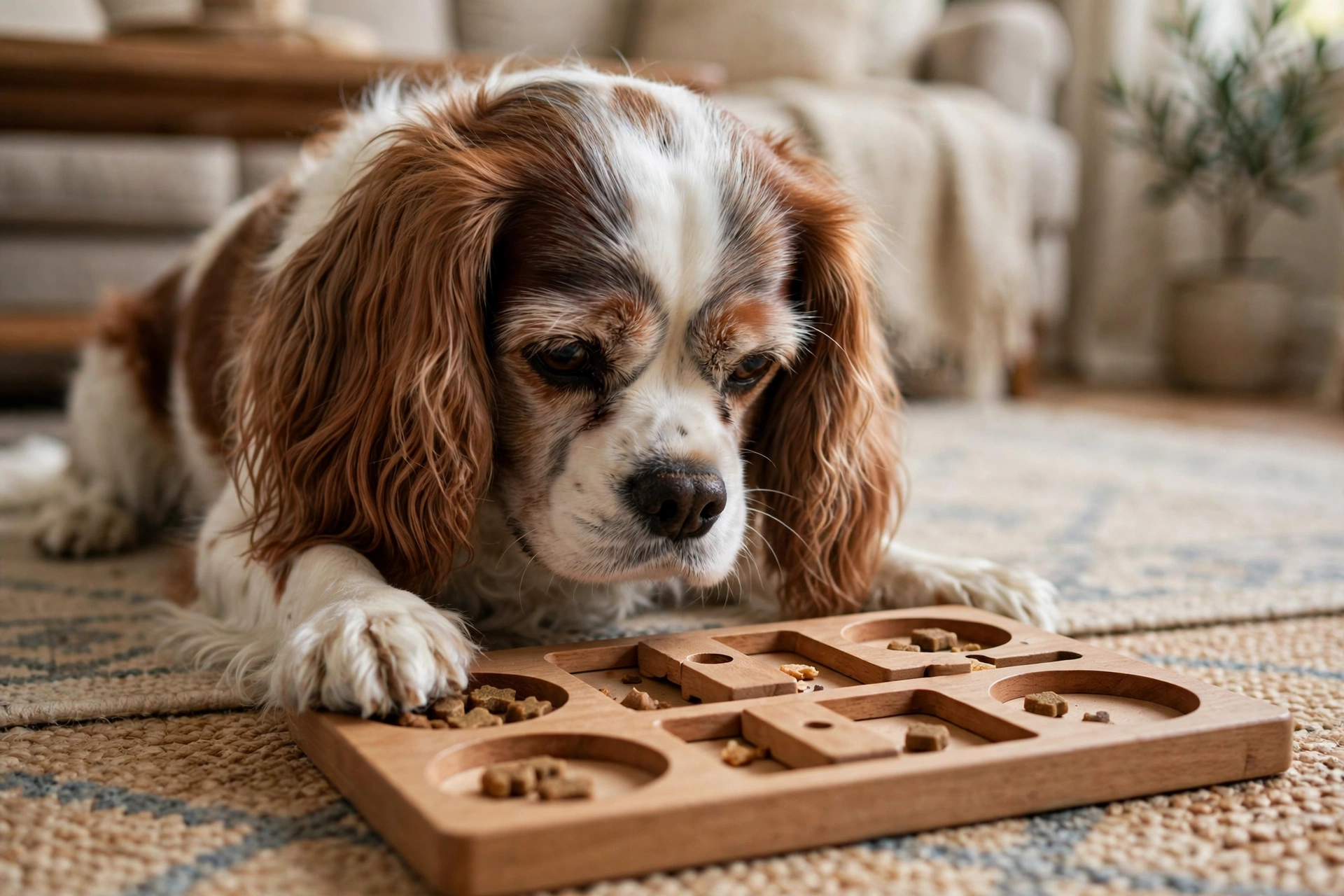
A senior brain still loves a good challenge. Mental enrichment — puzzle feeders, snuffle mats, and simple nose-work games — keeps cognitive function sharper and staves off boredom, which is a common trigger for anxiety in older dogs. Keep sessions short and always end on a win so your Cavalier feels clever, not frustrated.
Even old favorites count: five minutes of trick practice, a “find it” game with treats hidden around one room, or a slow sniffari in the yard all give the brain a workout without taxing the body.
Helpful pick: Outward Hound Dog Brick Puzzle — a beginner-friendly puzzle that rewards gentle problem-solving with treats.
7. Make Stairs and Slippery Floors Safe

Jumping off the couch or climbing stairs gets harder — and riskier — with age. Repeated impact can worsen arthritis and injure a senior spine. A sturdy ramp gives your Cavalier a gentle slope to their favorite spots without the jarring landings, and non-slip rugs or runners over hardwood and tile prevent scary slips.
Introduce the ramp gradually with treats and praise, and never force it. Many seniors take to ramps within a day or two once they realize the couch is back within easy reach. For stairs, a baby gate can prevent unsupervised trips while you are away.
Helpful pick: PetSafe CozyUp Sofa Ramp — a foldable, high-traction ramp that helps senior dogs reach the sofa safely.
8. Offer Extra Patience and Comfort

The heart of a Cavalier never ages, even when the body does. Senior dogs may startle more easily, need longer to wake up, or simply want to be near you all the time. Respond with patience: give them time to get up, keep routines predictable, and offer the gentle physical closeness they crave.
Soft brushing sessions, a warm lap, and calm evening cuddles are not just pleasant — they lower stress for both of you. Senior Cavaliers feel the cold more, so a cozy sweater or a warming spot by the fire is a kindness they will notice. Every quiet moment together is a gift; savor them.
Helpful pick: Zesty Paws Calming Bites — tasty chews that support a sense of calm during stressful moments like storms or fireworks.
Frequently Asked Questions
At what age is a Cavalier considered a senior?
Most Cavaliers are considered seniors around seven to eight years old. You may notice graying around the muzzle, longer naps, and less interest in vigorous play — all normal signs that it is time to adjust their routine.
How often should a senior Cavalier see the vet?
Twice a year is ideal. Bi-annual visits allow your vet to monitor heart health, weight, and bloodwork, catching age-related issues early when they are easiest to manage.
Should I change my senior Cavalier’s food?
Usually, yes. Senior-formula foods offer appropriate protein for maintaining muscle, controlled calories to prevent weight gain, and added joint-supporting nutrients. Ask your vet for a recommendation based on your dog’s health.
Is it normal for an older Cavalier to sleep more?
Yes. Senior dogs commonly sleep 16 to 18 hours a day. As long as your Cavalier is still eating, drinking, and happy to engage when awake, extra sleep is a normal part of aging.
How can I tell if my senior Cavalier is in pain?
Watch for reluctance to climb stairs or jump, stiffness after rest, panting at rest, or a change in appetite or mood. If you notice these signs, schedule a vet visit — pain in older dogs is often treatable.
Keep Reading
- Cavalier King Charles Spaniel Health Issues: What to Watch For
- Start With a Healthy Puppy: A Buyer’s Guide
- Foods Dogs Can and Can’t Eat: The Complete List
- Dog Body Language Guide: What Your Dog Is Telling You
- How to Teach Your Dog to Come When Called
As an Amazon Associate, PetPostHub earns from qualifying purchases.



2 Comments