
7 Best Grooming Brushes for Small Dogs (2026 Buying Guide)

Finding the best grooming brush for small dogs is easier than it sounds once you match the tool to the coat. Small breeds come in every coat type — the short, sleek fur of a Dachshund, the long, flowing hair of a Maltese, and the dense double coat of a Pomeranian — and each one brushes best with a different kind of brush. In this guide, I’ll walk you through how to choose the right brush for your small dog’s coat, then review the 7 best grooming brushes for small dogs in 2026.
Table of Contents
- How to Choose a Grooming Brush for a Small Dog
- The 7 Best Grooming Brushes for Small Dogs
- 1. Hertzko Self-Cleaning Slicker Brush — Best Overall
- 2. FURminator Undercoat deShedding Tool — Best for Shedding
- 3. Hartz Groomer’s Best Combo Brush — Best Budget Two-in-One
- 4. Safari Wire Pin Brush — Best for Fluffy Coats
- 5. FURminator Curry Comb — Best for Short Coats
- 6. GoPets Double-Sided Pin & Bristle Brush — Best Premium Pick
- 7. Andis Stainless-Steel Comb — Best Finishing Comb
- Brushing Tips for Small Dogs
- Frequently Asked Questions
How to Choose a Grooming Brush for a Small Dog
Small dogs have less body surface to cover, but their delicate skin and compact frames mean the wrong brush can scratch, snag, or make grooming a battle. Here’s how to choose wisely:
Match the Brush to the Coat Type
- Short coats (Dachshund, Beagle, French Bulldog): a rubber curry brush or soft bristle brush works best. It lifts loose hair, massages the skin, and distributes natural oils.
- Long coats (Maltese, Shih Tzu, Yorkshire Terrier): a slicker brush plus a steel comb is the classic pair. The slicker removes tangles and loose fur; the comb finds any mats the slicker missed.
- Double coats (Pomeranian, Cavalier King Charles Spaniel): a pin brush for daily upkeep, plus an undercoat de-shedding tool once a week during shedding season.
Slicker vs. Pin vs. De-Shedding
Slicker brushes have fine, angled wire bristles that grab loose fur and break up light tangles. Pin brushes have rounded-tipped metal pins that glide through longer coats without snagging. De-shedding tools have a fine stainless-steel edge that reaches through the topcoat to pull loose undercoat hair — powerful, but should be used only once or twice a week, never pressed hard against the skin.
Comfort and Size Matter
Look for a brush with a small, lightweight head sized for a little body — full-size brushes are clumsy on a Chihuahua. An ergonomic, non-slip handle keeps your hand relaxed, and a self-cleaning button saves real time when you’re brushing a squirmy pup.
The 7 Best Grooming Brushes for Small Dogs
1. Hertzko Self-Cleaning Slicker Brush — Best Overall

Best for: Everyday brushing on small dogs with long or medium coats.
The Hertzko Self-Cleaning Slicker Brush has earned its loyal following for good reason. Its fine, angled bristles glide through small-dog coats, lifting loose hair and breaking up light tangles without scratching delicate skin. When the brush fills with fur, one push of the button retracts the bristles and releases the collected hair in a single pad — no more picking strands out with your fingers. It’s gentle enough for routine use and the compact head suits little bodies perfectly.
- Pros: Push-button self-cleaning; gentle angled bristles; compact head fits small dogs; comfortable grip.
- Cons: Bristles can feel sharp if you press too hard; not meant for heavy matting.
Check the Hertzko Self-Cleaning Slicker Brush on Amazon
2. FURminator Small Dog Undercoat deShedding Tool — Best for Shedding

Best for: Small breeds that shed, especially double-coated dogs like Pomeranians and Cavaliers.
When shedding season hits and fur tumbleweeds take over your home, the FURminator Small Dog Undercoat deShedding Tool (Short Hair) is the heavy hitter. Its stainless-steel edge reaches through the topcoat to remove loose undercoat hair before it ends up on your furniture — no cutting, no scratching when used as directed. The curved edge follows your dog’s body shape, and the FURejector button pushes the collected fur off the blade. Use it once a week, not daily, and with a light touch.
- Pros: Removes dramatically more loose hair than standard brushes; FURejector button for easy cleanup; curved edge for comfort.
- Cons: Easy to overuse — stick to weekly sessions; skip it on very short or delicate coats.
Check the FURminator Small Dog deShedding Tool on Amazon
3. Hartz Groomer’s Best Combo Brush — Best Budget Two-in-One
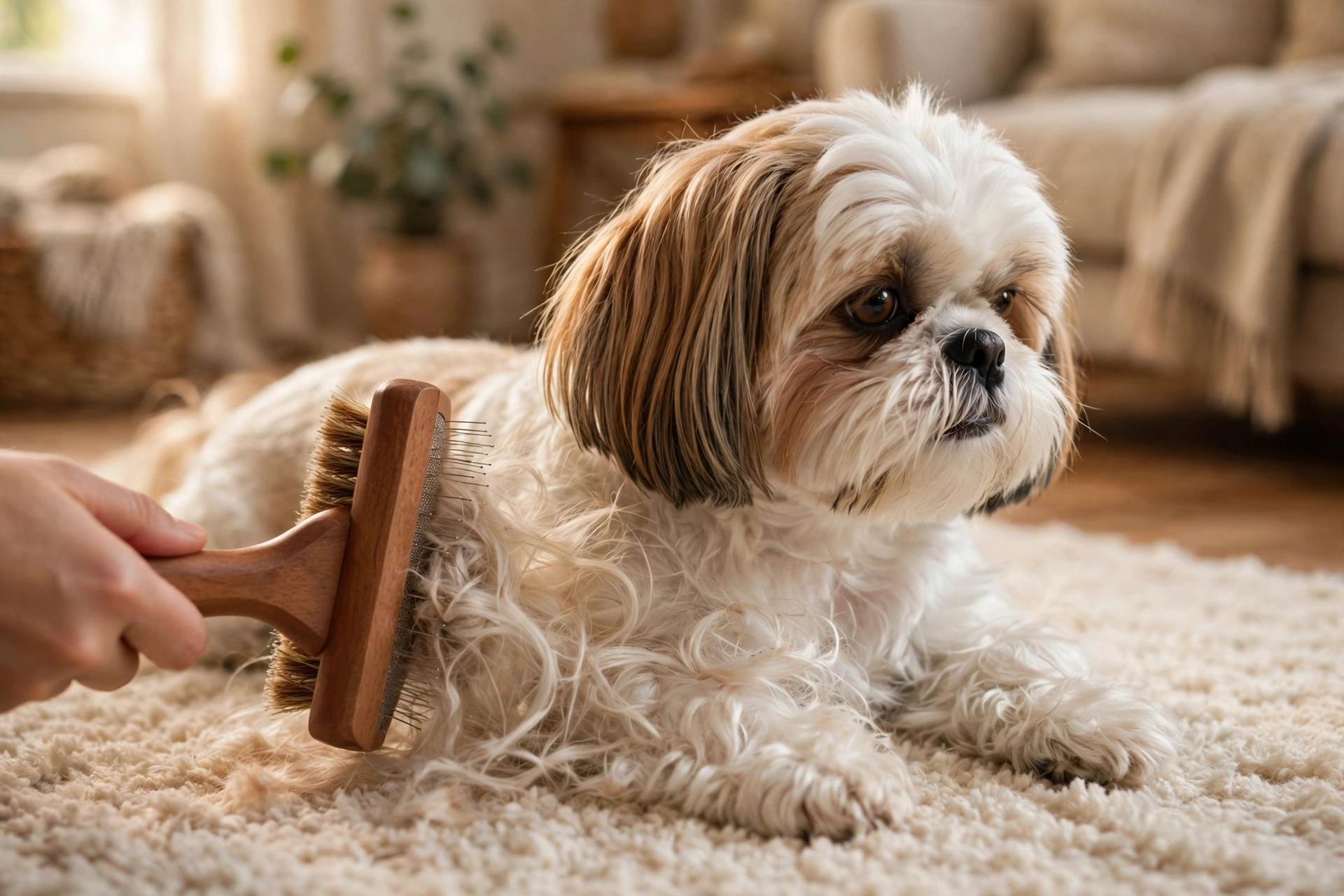
Best for: Owners who want one affordable brush that does two jobs.
The Hartz Groomer’s Best Combo Brush gives you two tools in one: coated stainless-steel pins on one side for detangling and removing loose hair, and dense nylon bristles on the other for smoothing and redistributing natural oils for a healthy shine. The small size is made for cats and small dogs, and the ergonomic handle keeps grooming comfortable. It’s hard to beat the value when a single brush handles both the detangle pass and the finishing pass.
- Pros: Two brushes in one; gentle coated pins; small size suits little dogs; very affordable.
- Cons: The bristle side can be tricky to clean; less effective on very short coats.
Check the Hartz Groomer’s Best Combo Brush on Amazon
4. Safari Wire Pin Brush — Best for Fluffy Coats

Best for: Daily upkeep on fluffy and medium-long coats.
The Safari Wire Pin Brush is a groomer-style classic: rounded wire pins that lift out loose hair and debris while distributing the coat’s natural oils for a shiny, healthy finish. The eco-friendly bamboo handle feels good in the hand, and brushing against the direction of hair growth fluffs the coat beautifully — perfect for Pomeranians, Cavaliers, and other fluffy small breeds. For best results, work through any tangles with a comb first, then follow with this pin brush for a smooth finish.
- Pros: Rounded pins are gentle on skin; distributes natural oils; bamboo handle is sturdy and comfortable; great for fluffing.
- Cons: Won’t tackle mats on its own — pair it with a comb for tangled coats.
Check the Safari Wire Pin Dog Brush on Amazon
5. FURminator Curry Comb — Best for Short Coats
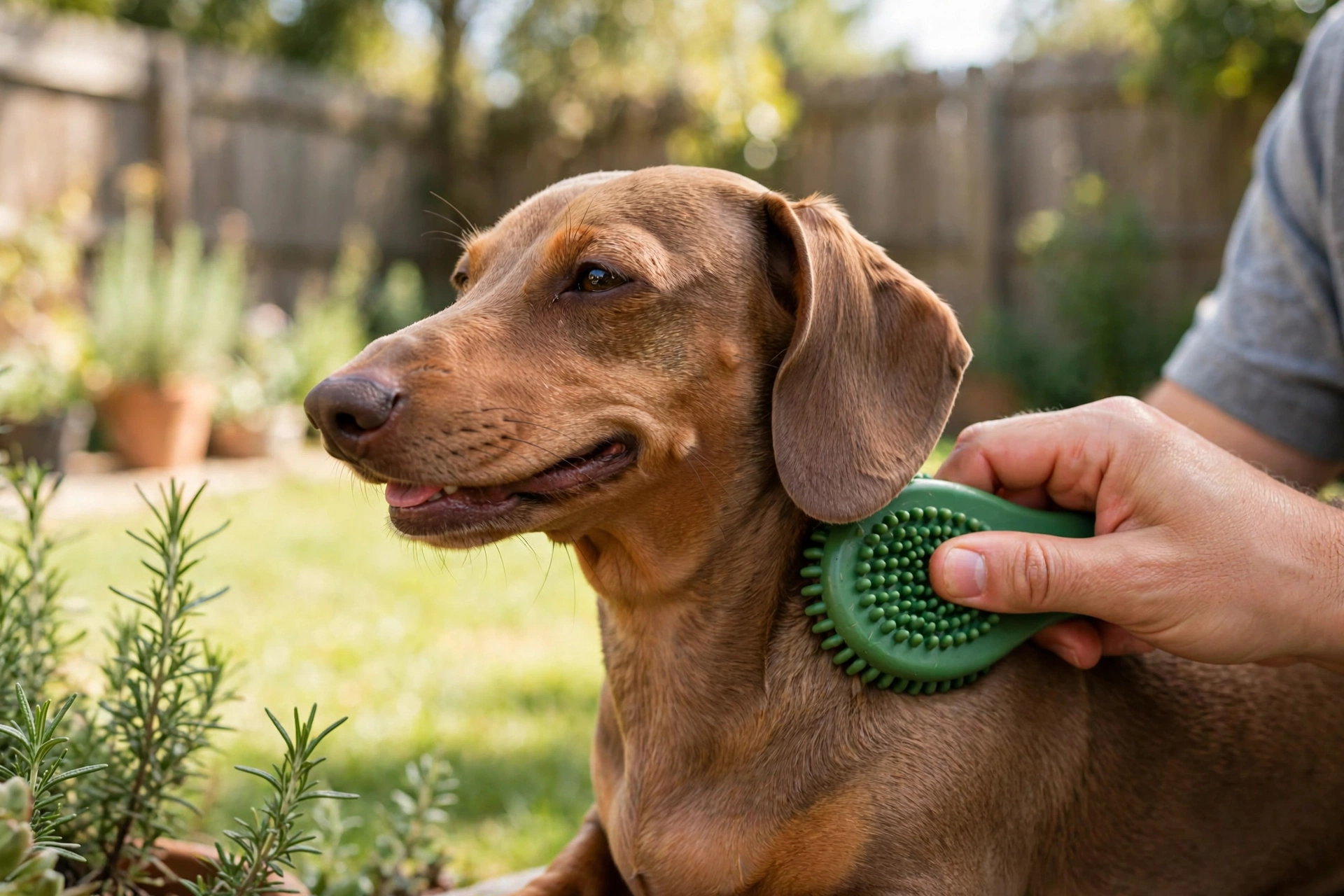
Best for: Short-haired small breeds like Dachshunds, Beagles, and French Bulldogs.
Short coats don’t need wire bristles — they need a rubber curry comb. The FURminator Curry Comb’s molded rubber teeth gently lift loose hair and dirt while massaging the skin, which stimulates the production of natural oils for a shinier coat over time. Most dogs that hate wire brushes happily accept a curry comb. The ergonomic handle with hand strap keeps your grip secure, even on wet fur during bath time.
- Pros: Ideal for short coats; massaging action dogs enjoy; easy to clean; works wet or dry.
- Cons: Not effective on long or matted coats; rubber teeth can feel stiff at first.
Check the FURminator Curry Comb on Amazon
6. GoPets Double-Sided Pin & Bristle Brush — Best Premium Pick

Best for: Owners who want a premium two-in-one brush for detangling and shine.
The GoPets Double-Sided Pin & Bristle Brush combines a rounded-pin side for gentle detangling with a bristle side that smooths and adds shine. The silicone gel-filled handle is genuinely comfortable during longer grooming sessions, and the breather-hole design on the pin side gives the pins a little flex for pain-free brushing on sensitive skin. It’s a step up in build quality from budget combo brushes, and it shows in daily use.
- Pros: Gel-filled ergonomic handle; pins flex for comfort; pin side detangles while bristle side shines; well built.
- Cons: Higher price than basic combo brushes; the larger head can feel bulky on tiny dogs.
Check the GoPets Double-Sided Pin & Bristle Brush on Amazon
7. Andis Stainless-Steel Comb — Best Finishing Comb

Best for: Finding hidden mats and finishing feathered ears, tails, and legs.
Every small-dog grooming kit should include a steel comb. The Andis 7½-inch Stainless-Steel Comb has coarse and fine teeth on one tool: run the fine teeth through feathered ears, tails, and bellies after brushing to catch any tangles the brush missed. If the comb snags, there’s still a tangle to work out — groomers call this the “comb test,” and it’s the most reliable way to know a coat is truly mat-free. Rounded pin ends keep it gentle on skin, and the lightweight build makes it easy to maneuver around little legs and faces.
- Pros: Catches mats brushes miss; coarse + fine teeth in one comb; gentle rounded ends; lightweight and precise.
- Cons: A 7½-inch comb can feel long on very tiny dogs; not a primary brushing tool.
Check the Andis Stainless-Steel Pet Comb on Amazon
Brushing Tips for Small Dogs
- Brush before you bathe. Water tightens mats, so remove tangles while the coat is dry. A quick brush-through with your puppy-safe shampoo wash makes bath time far easier.
- Work in layers. On long or double coats, lift sections of hair and brush from the skin outward in small sections rather than skimming the surface.
- Be gentle around ears, armpits, and bellies. These tangle-prone spots have thin skin — use a light touch and short strokes.
- Keep sessions short and positive. A few minutes daily beats one long, stressful session. Treats and praise turn brushing into bonding time.
- Clean your tools. A self-cleaning slicker makes this easy; for other brushes, pull the fur out after each session so bristles stay effective.
Pair regular brushing with a solid overall routine: clean your dog’s ears, wipe away tear stains, watch for dry, flaky skin, and bathe only as often as your dog needs — see how often you should bathe a dog for guidance.
Frequently Asked Questions
How often should I brush my small dog?
Long-haired small dogs do best with daily brushing to prevent mats; short-haired breeds are fine with a rubber curry brush two to three times a week. Double-coated breeds need daily brushing during shedding season and weekly de-shedding with a tool like the FURminator.
What is the best brush for a small dog with long hair?
A small slicker brush (like the Hertzko) for daily detangling plus a steel comb (like the Andis) for the comb test is the ideal pair for long-haired small dogs such as Maltese, Shih Tzus, and Yorkies.
Can I use a de-shedding tool on my small dog every day?
No. De-shedding tools with metal edges remove undercoat efficiently, but daily use can irritate the skin and thin the coat. Use them once a week at most, with light pressure, and never on wet or irritated skin.
What brush is best for a short-haired small dog?
A rubber curry comb like the FURminator Curry Comb is the top pick for short coats — it lifts loose hair, massages the skin, and most dogs find it pleasant rather than scratchy.
My small dog hates being brushed. What should I do?
Switch to a gentler tool (rubber curry comb or pin brush instead of a slicker), keep sessions to two or three minutes, and reward generously with treats. Brush in calm moments, never after exciting play, and stop before your dog gets frustrated — you can always finish tomorrow.
As an Amazon Associate, PetPostHub earns from qualifying purchases.



One Comment