10 DIY Dog Cage Builds That Are Sturdier Than Store-Bought (2026)

A DIY dog cage built from real lumber and sturdy hardware lasts longer than most store-bought crates — and can look like actual furniture. Below are 10 original DIY dog cage builds with materials, instructions, and safety notes.
Table of Contents
- 1. Farmhouse End-Table Kennel
- 2. Barn-Door Sliding Kennel Cabinet
- 3. Coffee-Table Crate Console
- 4. Industrial Pipe-and-Wood Pen
- 5. A-Frame Flip-Top Kennel
- 6. Built-In Window Bench Kennel
- 7. Stacked Double-Dog Crate Dresser
- 8. Nightstand Kennel with Drawer
- 9. Raised Rectangular Flip-Top Kennel
- 10. Rustic Pallet-Wood Outdoor Kennel
- How to Size Your DIY Dog Cage
- Keep Reading
- FAQ
1. Farmhouse End-Table Kennel
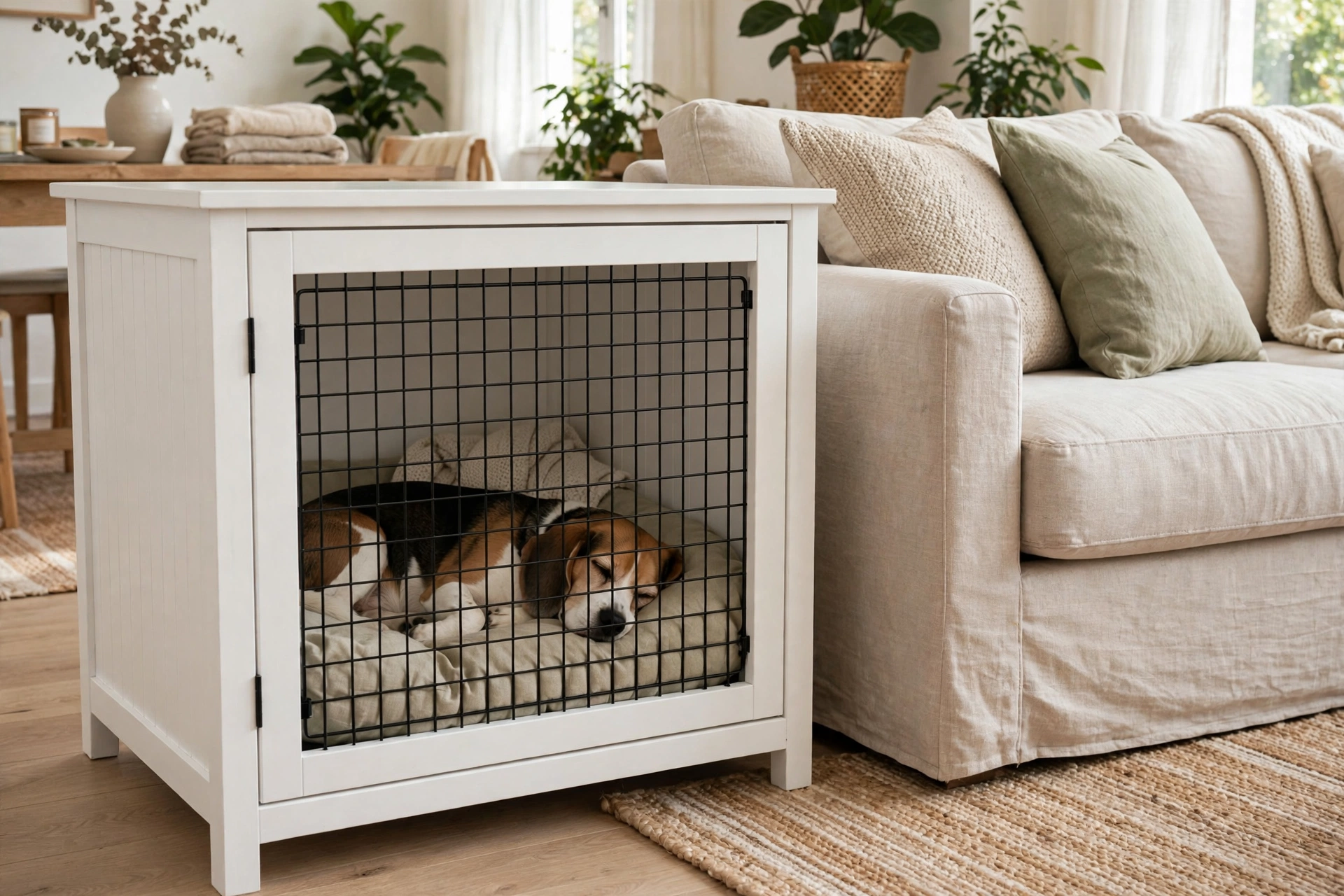
A white shaker-style end table hides a full crate behind a wire-grid door. Size it so your dog can stand, turn, and stretch out — typically 24 to 36 inches wide.
Materials: ¾-inch plywood, 1×2 trim boards, wire grid door panel with latch, wood screws, white latex paint, sandpaper.
Instructions: Cut the plywood panels, frame the front opening with 1×2 trim, and mount the wire door on hinges with a latch. Sand smooth, paint two coats, and let it cure fully.
Helpful pick: MidWest QuietTime Dog Bed — a washable, cushioned bed that fits neatly inside this kennel and keeps your dog off the hard plywood base.
2. Barn-Door Sliding Kennel Cabinet
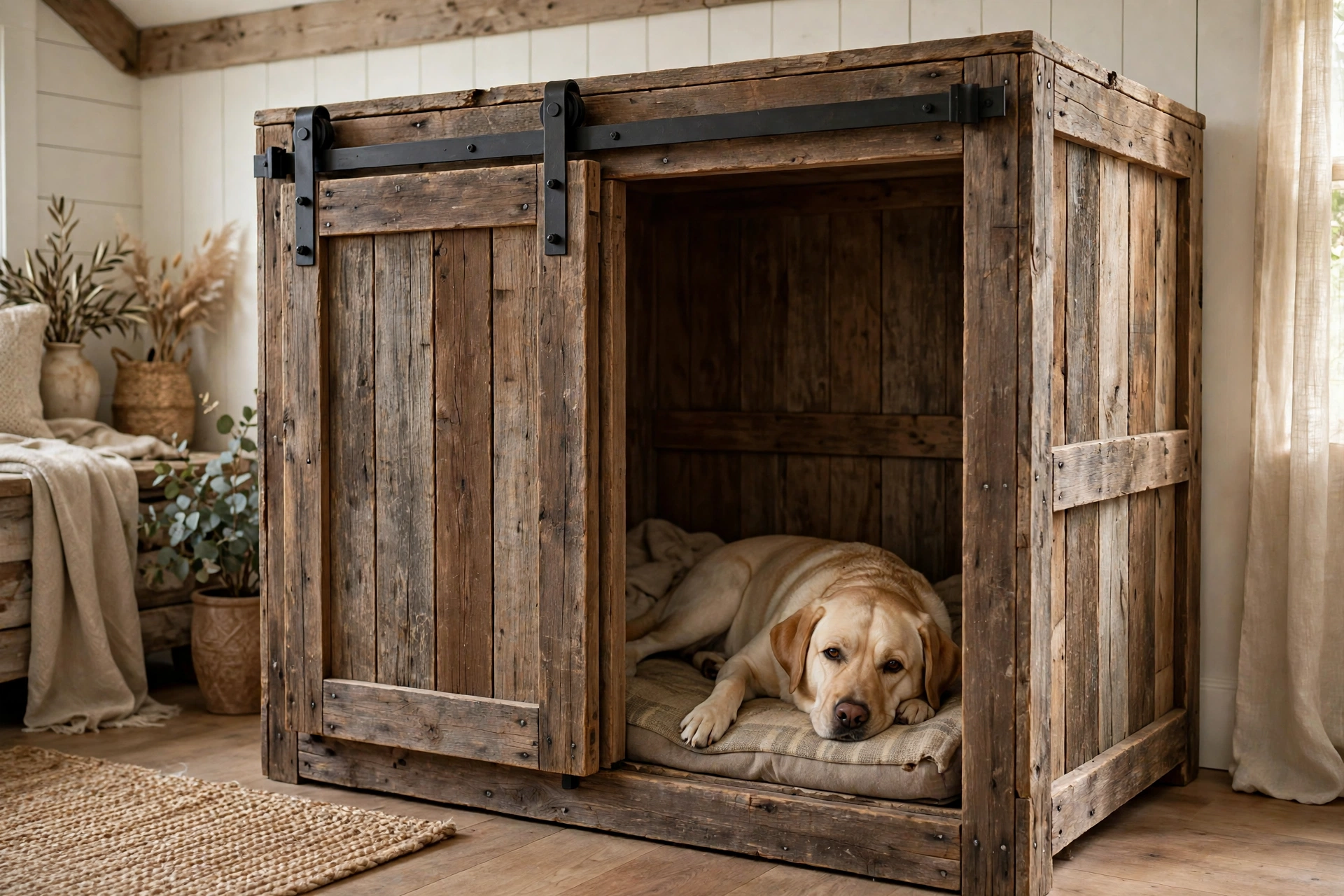
A reclaimed-wood kennel with a sliding barn door suits tight rooms where a swinging door would hit furniture. Mount the black metal track with weight-rated brackets — door plus hardware gets heavy.
Materials: 1×8 reclaimed-style boards or pine, short barn-door track kit, wood screws, dark wood stain, polyurethane.
Instructions: Build the cabinet box with glued, screwed joints and L-brackets at every interior corner. Mount the track level, hang the door, and add a locking latch.
Helpful pick: LSK L Brackets — heavy-duty corner brackets that stiffen this tall cabinet so it never racks or wobbles.
3. Coffee-Table Crate Console

This dark walnut crate console works as a coffee table and a den. Build the interior to your dog’s standing height plus four inches, with half-inch gaps between slats for airflow.
Materials: 1×3 slats, ¾-inch plywood top and base, metal bar door with hinges and latch, wood screws, walnut stain.
Instructions: Assemble the base, attach the slats, and frame the front for the hinged door. Stain before final assembly, then top with a thick plywood panel.
Helpful pick: KILZ Exterior Wood Stain — a durable finish that seals the wood against muddy paws and the occasional spilled water bowl.
4. Industrial Pipe-and-Wood Pen
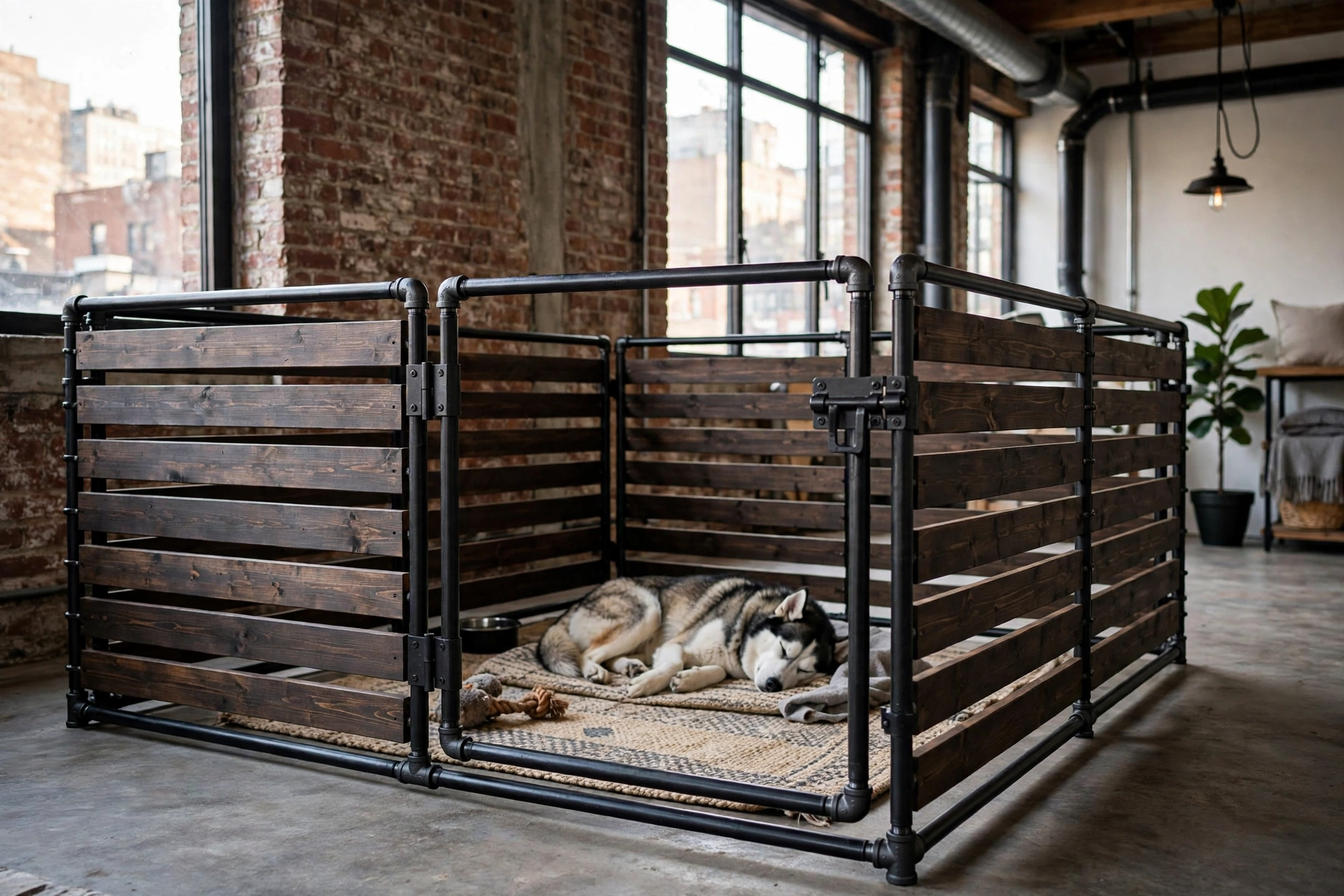
Black iron pipes and stained wood boards make a pen sturdy enough for medium and large dogs. Space boards four inches apart for airflow and set it on a washable mesh floor.
Materials: ¾-inch black iron pipes and fittings, 1×6 stained boards, wire mesh floor panel, hinges and latch for the gate, pipe wrench.
Instructions: Assemble the pipe frame with T-joints, tightening every connection. Slide the stained boards between the uprights, screw in place, hang the gate, and fit a locking latch.
Helpful pick: Fencer Wire Hardware Cloth — a wipe-clean mesh floor panel that protects your flooring and gives the pen a tidy, finished base.
5. A-Frame Flip-Top Kennel
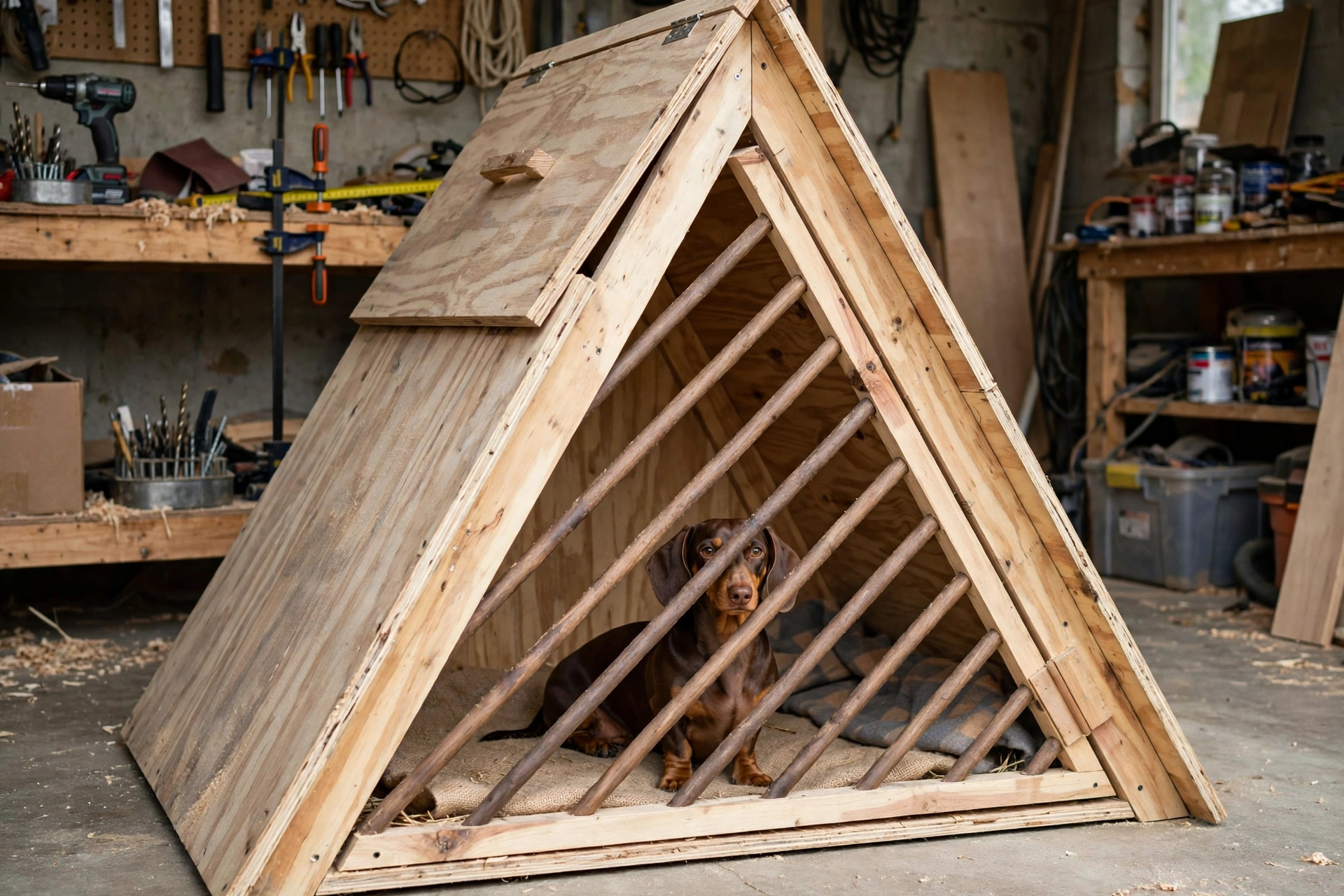
Two angled plywood panels, a solid back, and a diagonal-dowel front gate — this barn-roof kennel shrugs off a leaning 60-pound dog. A flip-top lid on a piano hinge opens wide for easy cleaning.
Materials: ¾-inch plywood, ½-inch hardwood dowels, piano hinge, hook-and-eye latch, 1¼-inch and 2-inch wood screws, wood glue.
Instructions: Cut the side panels at a 45-degree angle, then glue and screw the back panel between them. Rest the base on a lower beam to lift your dog off the cold floor, glue the diagonal dowels into angled holes, and mount the piano hinge.
Helpful pick: BLACK+DECKER Cordless Jigsaw — the tool for cutting those precise 45-degree panel angles and clean dowel-length trims.
6. Built-In Window Bench Kennel

A low wooden bench under a window becomes a sunny den. Build it 18 to 22 inches tall with a wire-grid door on one end; the top stays free for plants or cushions.
Materials: ¾-inch plywood or pine boards, wire grid door panel, hinges and latch, wood screws, paint or stain.
Instructions: Frame the bench box with a solid back and top, fit the wire door on the end panel, and ventilate the far end with drilled holes or mesh. Anchor tall benches to studs.
Helpful pick: PetFusion Orthopedic Dog Bed — supportive foam bedding that turns this bench into the comfiest seat in the house.
7. Stacked Double-Dog Crate Dresser
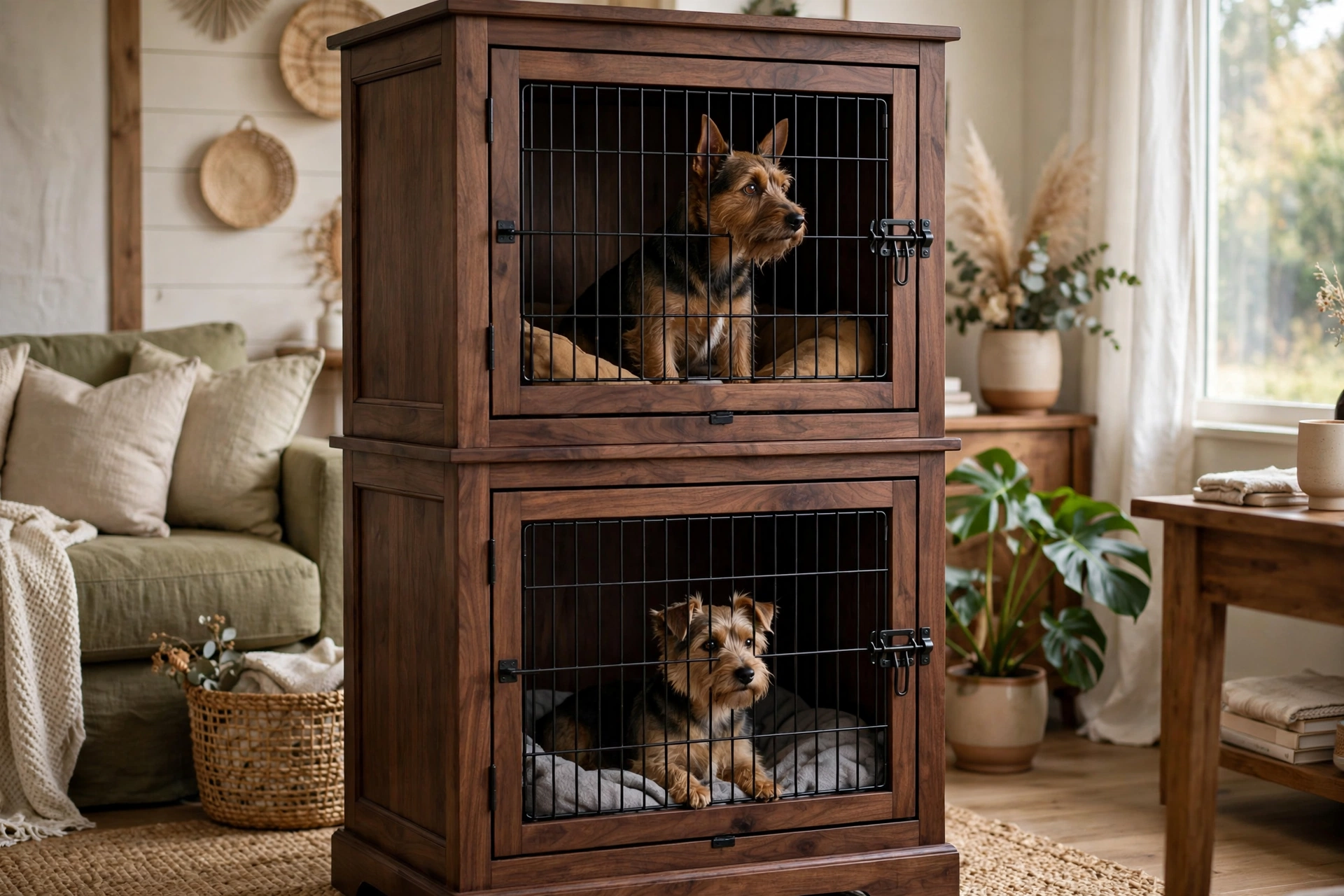
Two dogs, one footprint: this dresser-style cabinet stacks two metal-bar crates. Use 2×4 framing and corner brackets — a plywood divider alone will sag under the upper dog.
Materials: 2×4 framing lumber, ¾-inch plywood panels, two metal-bar doors with hinges and latches, metal L-brackets, wood screws.
Instructions: Build the 2×4 frame, install the divider shelf on heavy-rated brackets, fit each door with two hinges and a locking latch, then paint or stain.
Helpful pick: KONG Classic — stuff it with treats and freeze it to keep each dog happily occupied in their own level.
8. Nightstand Kennel with Drawer

A bedside kennel with a storage drawer on top is ideal for puppies and anxious dogs. Keep the height at 24 to 28 inches so the lamp still works.
Materials: ¾-inch plywood, a small drawer box with slides, wire mesh panel, hinges and latch, wood screws, paint.
Instructions: Build the cabinet with a divider, install the drawer slides level, then cut and frame the front opening for the mesh door with a locking latch.
Helpful pick: UMICKOO LED Strip Lights — a soft stick-on strip inside the crate gives nighttime visibility without a bright lamp disturbing sleep.
9. Raised Rectangular Flip-Top Kennel

A raised base keeps your dog off cold floors, and a hinged flip-top lid opens for fast cleaning. Dowel or slat sides give it a craftsman look.
Materials: ¾-inch plywood, hardwood dowels or 1×2 slats, hinges, hook-and-eye latch, wood screws, wood glue, sandpaper.
Instructions: Build a low platform base, frame the walls with evenly spaced dowels, and fit the lid on two back-edge hinges with a front latch. Seal with pet-safe polyurethane.
Helpful pick: Bedsure Calming Dog Bed — a plush washable cushion that fills this kennel’s base with a den-like, nestable surface.
10. Rustic Pallet-Wood Outdoor Kennel
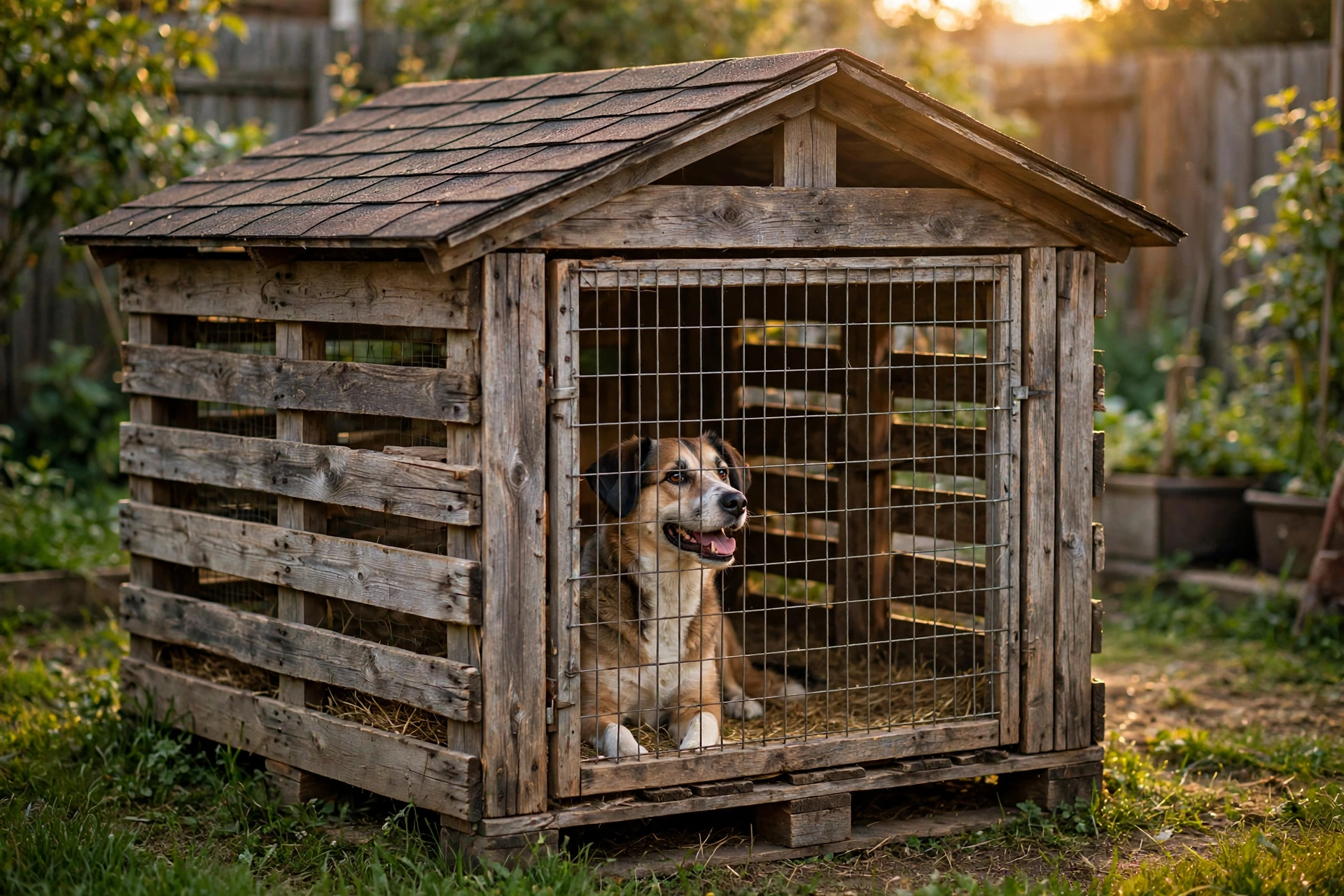
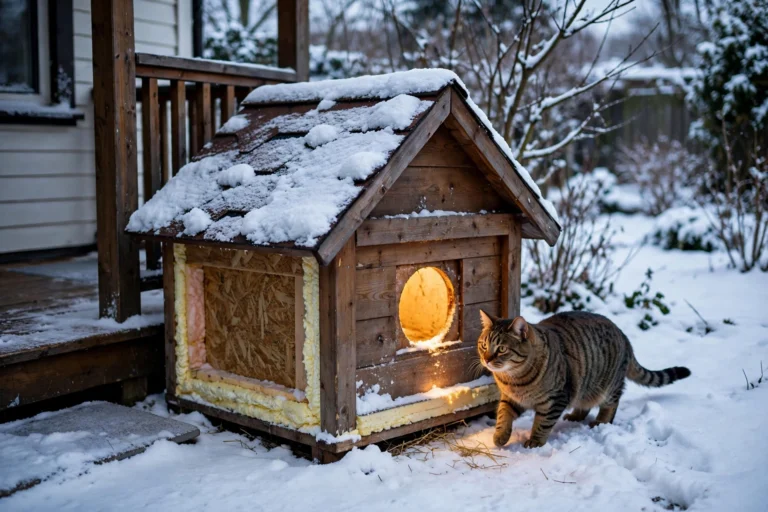
Heat-treated pallet wood and a pitched shingle roof make an outdoor kennel that handles real weather. Use only HT-stamped pallets — never MB (chemically treated) lumber.
Materials: HT-stamped pallet boards, 2×2 framing, wire mesh, bolt latch, exterior screws, asphalt shingles or metal roofing offcuts.
Instructions: Break pallets down and sand the boards. Frame a 2×2 box, skin it with boards leaving air gaps, and add a sloped roof. Hang the mesh door with a bolt latch.
Helpful pick: K&H Thermal Bowl Heated Water Bowl — keeps outdoor water drinkable in cold weather next to the kennel.
How to Size Your DIY Dog Cage
Measure your dog from nose to tail base, and floor to ear top, then add four to six inches to each measurement for the minimum interior size. Introduce the crate gradually with treats over several days.
Keep Reading
- Dog Bunk Beds DIY Ideas
- Indoor Dog Park Ideas
- Hotel for Dogs Design Ideas
- Dog Beds Made from Furniture
- Outdoor Dog Shelter Ideas
FAQ
Is a DIY dog cage safer than a store-bought crate?
Yes, when you use real lumber, weight-rated brackets, and locking latches, and avoid toxic paints or chemically treated wood. A well-built DIY dog cage is often sturdier than a thin wire or plastic crate.
What is the cheapest way to build a DIY dog cage?
HT-stamped pallet wood plus a basic wire-grid door panel is the cheapest route — often just the cost of screws, hinges, and a latch if the pallets are free.
How do I make a dog cage that looks like furniture?
Build a wooden cabinet to the proportions of real furniture — end table, coffee table, or nightstand — and hide the crate behind a wire or slatted front door. Stain or paint it to match the room.
Can I leave my dog in a DIY cage while I am at work?
Yes, once your dog is crate-trained, the cage is sized correctly, and water is available. Start with short sessions and never use the crate as punishment.
What finish is safe for a DIY dog cage?
Use non-toxic, low-VOC paint or water-based polyurethane, and let it cure fully — usually 7 days — before your dog moves in. Avoid oil-based finishes and any wood stamped MB.
As an Amazon Associate, PetPostHub earns from qualifying purchases.