
How to Stop Your Dog from Chewing the Mail: 6 Fixes
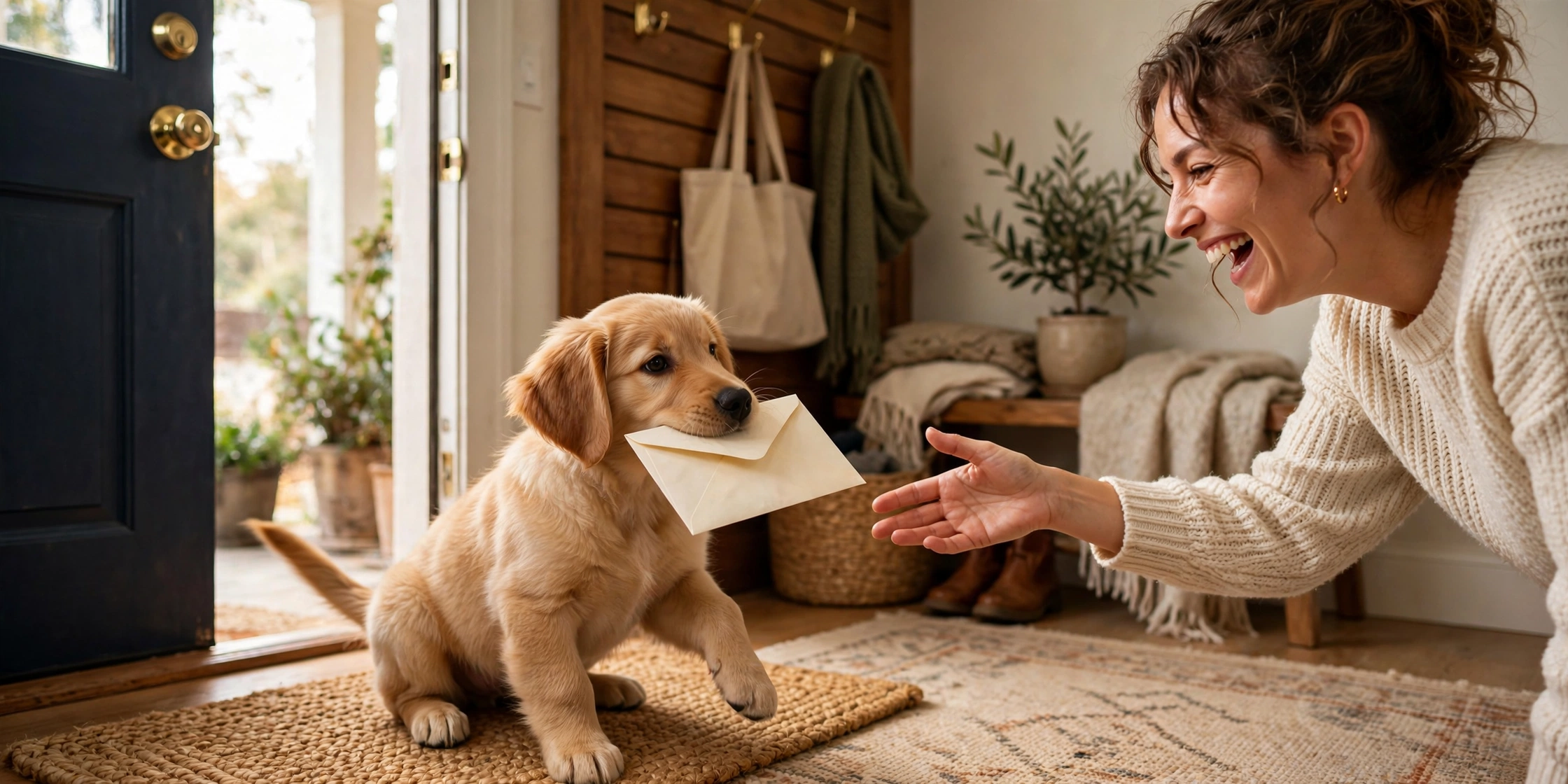
The mail drops through the slot with a thunk — and before you’ve even stood up, your dog is already shredding the envelopes. If you want to know how to stop dog from chewing the mail, the good news is that this habit is fixable with a mix of management (blocking access) and training (teaching what to do instead). In this guide, you’ll get 6 practical fixes that work for door slots, wall mailboxes, and everything in between.
Table of Contents
1. Install a Mail Slot Guard or Catcher

If your mail comes through a slot in the door, a mail slot guard is the fastest fix. A metal letter cage or a fabric mail catcher bag mounts on the inside of the door and catches letters as they fall — so they never scatter across the floor where your dog can grab them. Metal cages are the sturdiest option and keep even determined chewers from reaching the letters through the slot.
How to: Measure your mail slot, then choose a cage or catcher that fits. Metal cages usually screw into the door in minutes; fabric catchers use hook-and-loop strips and need no tools — a good pick for renters.
Tip: Empty the catcher every evening so mail doesn’t pile up and overflow back onto the floor.
Helpful pick: Uniclife Mail Slot Catcher — heavy-duty fabric catcher that keeps letters off the floor and away from curious paws.
2. Switch to an Outside Mailbox

The simplest long-term solution is to remove the temptation entirely: ask your mail carrier to deliver to an outside wall-mounted or curbside mailbox instead of through the door slot. With no mail landing inside the house, there’s nothing for your dog to chew. Many dog owners find this one change ends the problem overnight.
How to: Check with your local post office about delivery-point rules for your address, then mount a weatherproof mailbox by your front door or at the curb. A locking wall-mount mailbox keeps mail secure and completely out of your dog’s reach.
Tip: During the transition, watch how your dog reacts to the carrier at the door — some dogs redirect mail excitement into barking, which you can train separately.
Helpful pick: Gibraltar Mailsafe Wall-Mount Mailbox — a sturdy locking wall mailbox that keeps deliveries outside where your dog can’t get to them.
3. Teach a Solid “Leave It”

“Leave it” is the cue every mail chewer needs. Start with low-value items on the floor, rewarding your dog for looking away. Once that’s reliable, practice with an envelope (ask a friend to push one through the slot for realistic training sessions). The goal: your dog hears the slot clatter and looks at you for a reward instead of lunging at the mail.
How to: Hold a treat in a closed fist, say “leave it,” and reward from the other hand when your dog backs off. Build up to mail on the floor, then mail dropped through the slot while you’re supervising. Keep sessions short — five minutes, twice a day.
Tip: Never chase your dog to grab the mail back — that turns it into a thrilling game and makes the behavior worse.
Helpful pick: Zuke’s Mini Naturals Training Treats — tiny, soft treats that make high-value rewards for practicing “leave it” around mail.
4. Exercise Your Dog Before Delivery Time

A tired dog is a calm dog. Most dogs chew the mail because they’re bored, understimulated, or excited by the sudden event. A solid walk, fetch session, or play date before the mail carrier’s usual arrival burns off the energy that fuels destruction — many dogs that are exercised in the morning simply nap through delivery time.
How to: Learn your carrier’s rough schedule and plan 20–30 minutes of active exercise beforehand. On days you can’t, a stuffed food puzzle left out at delivery time works as a substitute.
Tip: Mental exercise counts too — ten minutes of training tires a dog out as much as a long walk.
Helpful pick: Chuckit! Classic Ball Launcher — throws farther with less effort, so you can tire out your dog quickly before mail time.
5. Redirect to Legal Chew Toys

Dogs need to chew — it’s a natural stress reliever. If the mail is the most exciting thing within reach, it gets chewed. Give your dog something better: a rotating cast of durable chew toys, rubber bones, and food-stuffable toys placed near the front door or wherever mail lands. When your dog goes for a toy instead of an envelope, reward the choice.
How to: Keep three or four toys in rotation (familiar toys get boring). Place a favorite chew near the door so it’s the first thing your dog finds at mail time. Praise and treat every time your dog picks a toy over paper.
Tip: Skip rawhide and choose sturdy rubber or nylon chews that last — flimsy toys just frustrate power chewers.
Helpful pick: Benebone Wishbone Chew Toy — a durable, dog-loved chew that gives your pup a better target than your letters.
6. Crate or Confine When You’re Away
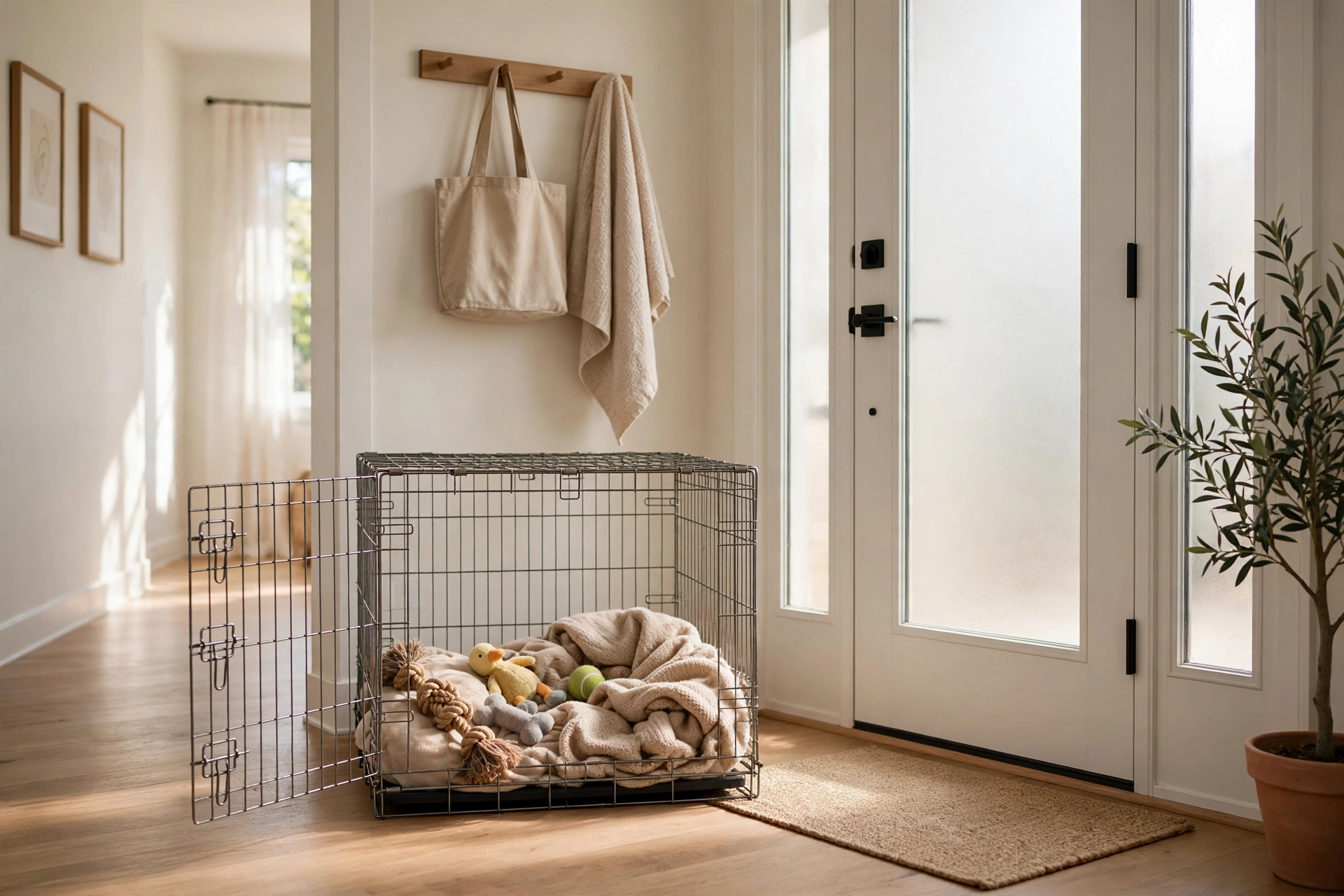
If the mail destruction happens while you’re out, management is the answer: your dog can’t chew mail it can’t reach. A crate-trained dog can rest in the crate during delivery time, or you can confine your dog to a mail-free room with a baby gate. This isn’t punishment — it’s setting your dog up to succeed while the training in steps 1–5 takes hold.
How to: Make the crate a positive place with cozy bedding, a safe chew, and rewards for going in voluntarily. Keep sessions short at first and never use the crate as a time-out spot.
Tip: If you’re home when the mail arrives, practice step 3 (“leave it”) instead of crating — real training happens when you’re there to reinforce it.
Helpful pick: MidWest iCrate Folding Metal Dog Crate — a roomy, sturdy crate that’s easy to fold away when you don’t need it.
Why Dogs Chew the Mail
Understanding the “why” makes the fixes stick. Dogs typically go after the mail because the slot makes a sudden, exciting noise, the letters flutter like prey, and the paper carries interesting smells from the outside world. Add in boredom, teething (in puppies), or mild separation anxiety, and the mail becomes irresistible. Note that glossy leaflets can be dangerous — adhesives on some junk mail can stick to a dog’s mouth, so keeping post out of reach matters for safety too.
The pattern is almost always excitement plus opportunity. Remove the opportunity with a guard or outside mailbox, train a reliable “leave it,” and give your dog a better outlet — and the mail stays intact.
Frequently Asked Questions
Is it dangerous if my dog eats mail?
Usually it’s just annoying, but large amounts of paper can cause an upset stomach, and adhesives on glossy leaflets have been known to glue a dog’s mouth shut in rare cases. Keep mail out of reach and call your vet if your dog eats a lot.
Will a mail slot cover stop my dog from chewing mail?
A cage or catcher on the inside of the door works well because letters never hit the floor. A simple brush or draught excluder over the slot helps with drafts but won’t stop a determined chewer — go for a full cage or bag.
How long does it take to train “leave it” for mail?
Most dogs learn the basics in a week or two of daily five-minute sessions. Reliable behavior around real mail deliveries usually takes three to four weeks of practice.
My dog only chews mail when I’m not home. What should I do?
That’s a management problem, not a training problem — use a crate or a mail-free room, and install a slot guard or catcher so the mail is never accessible unsupervised.
Should I punish my dog for chewing the mail?
No. Punishment after the fact confuses dogs and often increases anxiety-related chewing. Redirect, manage access, and reward the behavior you want instead.
Keep Reading:
- How to Stop Your Dog from Chewing Car Seats
- How to Stop Your Dog from Chewing Blankets
- How to Stop Your Dog from Eating Socks
- How to Teach Your Dog to Come When Called
As an Amazon Associate, PetPostHub earns from qualifying purchases.





One Comment