
Why Does My Dog Lick My Nose? 5 Reasons (2026)

If you’ve ever been surprised by a big, slobbery lick right across your nose, you’re not alone. Dogs seem oddly drawn to this one small spot on your face, and if you’re wondering why does my dog lick my nose, the answer is usually sweet, sometimes a little funny, and almost always completely normal. That wet-nosed kiss is one of the most personal ways your dog says “I love you” — and it comes from instincts that go all the way back to puppyhood.
That said, not every nose lick means the same thing. Some dogs lick noses out of pure affection, others do it because they learned it gets a reaction, and a few have turned it into a cozy little habit. Below are the five most common reasons dogs lick their owners’ noses, plus what each one means and what you should do about it.
1. Affection: The Classic Doggy Kiss

What it means: The most common reason your dog licks your nose is the simplest one — they adore you. In the canine world, licking is a bonding behavior that starts the day a puppy is born. Mother dogs lick their newborns to clean and soothe them, and puppies quickly learn to lick their mom’s face back as a sign of love and respect. When your dog targets your nose, they’re giving you the canine equivalent of a kiss, usually reserved for the humans they feel closest to.
What to do: Nothing — unless you don’t enjoy it. If you love the affection, accept it warmly but keep it brief; long, enthusiastic nose-licking sessions are where germs can spread. If you’d rather your pup not go straight for your face, calmly redirect them to licking your hand or chin instead, then reward that choice with praise.
Helpful pick: Zuke’s Mini Naturals Training Treats — reward calm, gentle affection with a tiny treat so your dog learns that soft kisses earn praise, not just frantic face-licking.
2. Grooming Instinct: You’re Part of the Pack

What it means: Dogs groom each other with their tongues — it’s how pack members show they belong together. When your dog licks your nose, they may simply be “grooming” you the way they’d groom a favorite packmate. This behavior is strongest in dogs that feel deeply bonded and secure with you, and it’s especially common in breeds known for their nurturing streak.
What to do: Treat it as a compliment. If the licking feels excessive, offer your dog a lick mat with a smear of peanut butter to satisfy the grooming urge in a more appropriate way. This gives them the same soothing oral activity without involving your face.
Helpful pick: Earth Rated Pet Grooming Wipes — if your dog loves grooming so much, give them a spa-worthy wipe-down yourself so the grooming urge gets satisfied before it reaches your nose.
3. The Salty Taste: You Smell Delicious

What it means: Dogs explore the world through scent and taste, and human skin — especially around the nose — carries interesting salty traces of sweat, tears, and moisturizer. Your nose is also a scent-rich spot because of how close it is to your breath and mouth. To your dog, licking your nose is a bit like reading your diary: they’re gathering information about where you’ve been, what you ate, and how you’re feeling.
What to do: This is harmless curiosity. If you want to reduce it, skip strong-scented lotions or lip products before cuddle time, and wash your face after eating something tasty. Giving your dog plenty of scent games — like hiding treats around the house — also satisfies their need to investigate with their nose.
Helpful pick: Egiao Dog Treat Pouch — stash treats for indoor scent games so your dog gets their sniff-and-taste fix on a puzzle instead of your nose.
4. Attention-Seeking: It Always Gets a Reaction
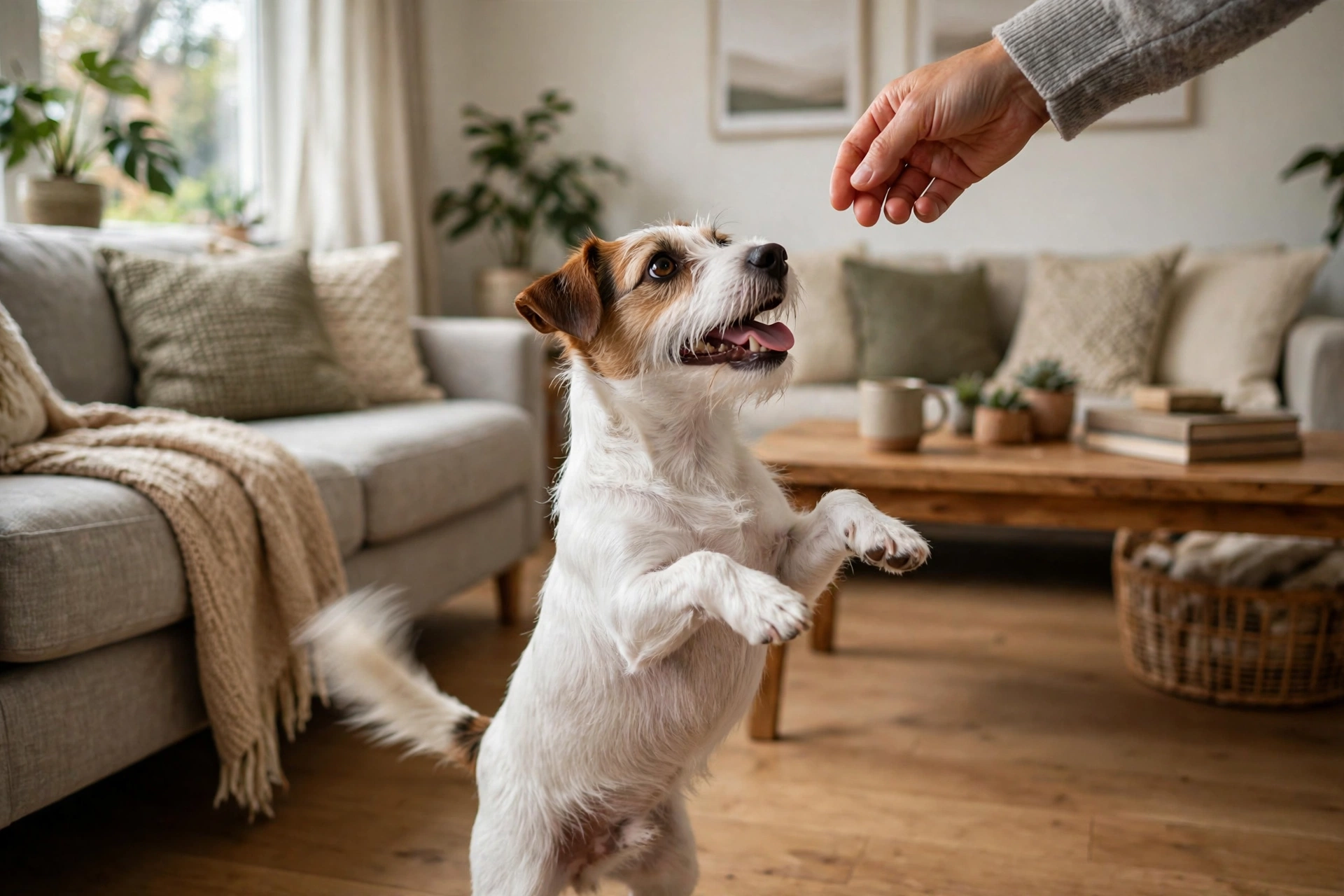
What it means: A nose lick is almost guaranteed to get a reaction — a laugh, a yelp, a push, a cuddle. Dogs are master pattern-detectors, and if nose-licking has ever earned your attention in the past (even the “eww, stop!” kind), they’ve learned it’s a reliable button to press. This is especially common in smart, people-focused breeds and in dogs that feel a little under-stimulated.
What to do: Stay calm and boring when the nose-licking starts — turn your face away without fuss and only give attention when all four paws are on the floor and the licking stops. Then make sure your dog’s attention needs are met with daily play, training games, and quality time so they don’t have to fish for it with their tongue.
Helpful pick: KONG Puppy — stuff it with a treat to give attention-seeking pups a rewarding solo activity that doesn’t involve your face.
5. Learned Habit: It Became “Your Thing”

What it means: Some nose licking starts as affection or curiosity and simply becomes a cozy routine. If you smiled, laughed, or cuddled your dog the first few times they licked your nose, you may have accidentally trained a ritual — the morning nose lick, the bedtime nose lick, the greeting nose lick. Habits like this aren’t bad; they’re just proof that your dog has made the behavior part of your shared language.
What to do: If the habit is cute and doesn’t bother you, let it be — it’s a sign of a strong bond. If you’d like to reshape it, consistently reward an alternative greeting, like a sit or a chin rest, every time your dog approaches your face. Habits fade when they’re no longer rewarded and a better option takes their place.
Helpful pick: Greenies Original Dental Treats — redirect that daily licking energy toward a dental chew that also supports your dog’s oral health.
Is Nose Licking Safe?
A quick lick on the nose from a healthy dog is low risk, but it’s worth being sensible about it. Dogs’ mouths carry bacteria that can occasionally cause issues, especially if you have broken skin, allergies, or a weakened immune system. Try to avoid letting your dog lick inside your nose or around your eyes, and keep up with your dog’s regular vet checkups, vaccinations, and dental care.
Watch for changes in the pattern: if your dog suddenly starts licking noses obsessively, or licks their own nose constantly, that can sometimes signal nausea, anxiety, or allergies — in which case a vet visit is the right move. Occasional, joyful nose kisses, though, are simply part of living with a dog who loves you.
For more on your dog’s quirky licking behaviors, see our guides on why dogs lick ears, why dogs lick hands, and nighttime foot licking.
Frequently Asked Questions
Why does my dog only lick my nose and not other people’s?
You’re their favorite person. Dogs reserve their most intimate gestures — like nose licks — for the humans they feel most bonded to, much like the signs your dog loves you. Your scent is also the most familiar to them, which makes your nose extra interesting.
Should I let my puppy lick my nose?
A quick lick is fine, but it’s smart to set boundaries early. Redirect puppy nose-licking to your hand or chin and reward calm behavior. Puppies that learn “face licking earns nothing” grow into polite adult greeters.
Why does my dog lick my nose when I’m crying?
Dogs read human emotions through scent and body language, and tears have a distinct salty smell. A crying face often triggers comforting, grooming-style licking — your dog’s way of saying “it’s okay.” This overlaps with the curious sniffing we see in dogs that sniff eyes.
Can I train my dog to stop licking my nose?
Yes. Stay neutral when it happens (no laughing, no scolding), turn your head away, and reward an alternative behavior like sitting. Teach a “kisses” cue so licking happens only on your hand and only when invited.
Is it bad if my dog licks inside my nose?
Try to discourage it. The inside of the nose is a sensitive mucous membrane, and dog saliva there carries a slightly higher risk of transferring bacteria. Gently redirect your dog to lick your cheek or hand instead.
As an Amazon Associate, PetPostHub earns from qualifying purchases.


