Why Does My Dog Sniff My Belly? 5 Reasons

If you’ve ever caught your dog pressing his nose firmly against your stomach and sniffing intently, you’re not alone. Why does my dog sniff my belly? This quirky habit is actually one of the most common canine curiosity behaviors — and it’s usually rooted in your dog’s extraordinary sense of smell. A dog’s nose holds up to 300 million scent receptors, and your belly carries a rich mix of skin scents, food aromas, and, at certain life stages, shifting hormones. Let’s break down the five most common reasons your dog is so fascinated with your midsection — and what to do about each one.
1. Scent Curiosity

What it means: Your belly is a scent goldmine. Skin, sweat glands, and the natural bacteria on your skin all produce odors your dog finds fascinating. Since dogs gather information about the world through their noses the way we do through our eyes, sniffing your belly is your dog “reading” you — checking in on your scent the way you’d glance at a familiar face.
What to do: Nothing — this is completely normal. If the sniffing is brief and relaxed, just let him enjoy his favorite book. Rewarding calm sniffing with a quiet “good” can reinforce that he doesn’t need to escalate to nudging or whining to get attention.
Helpful pick: Snuffle Mat for Dogs — a sniffing enrichment mat that supports your dog’s natural foraging curiosity.
2. Hormonal Changes
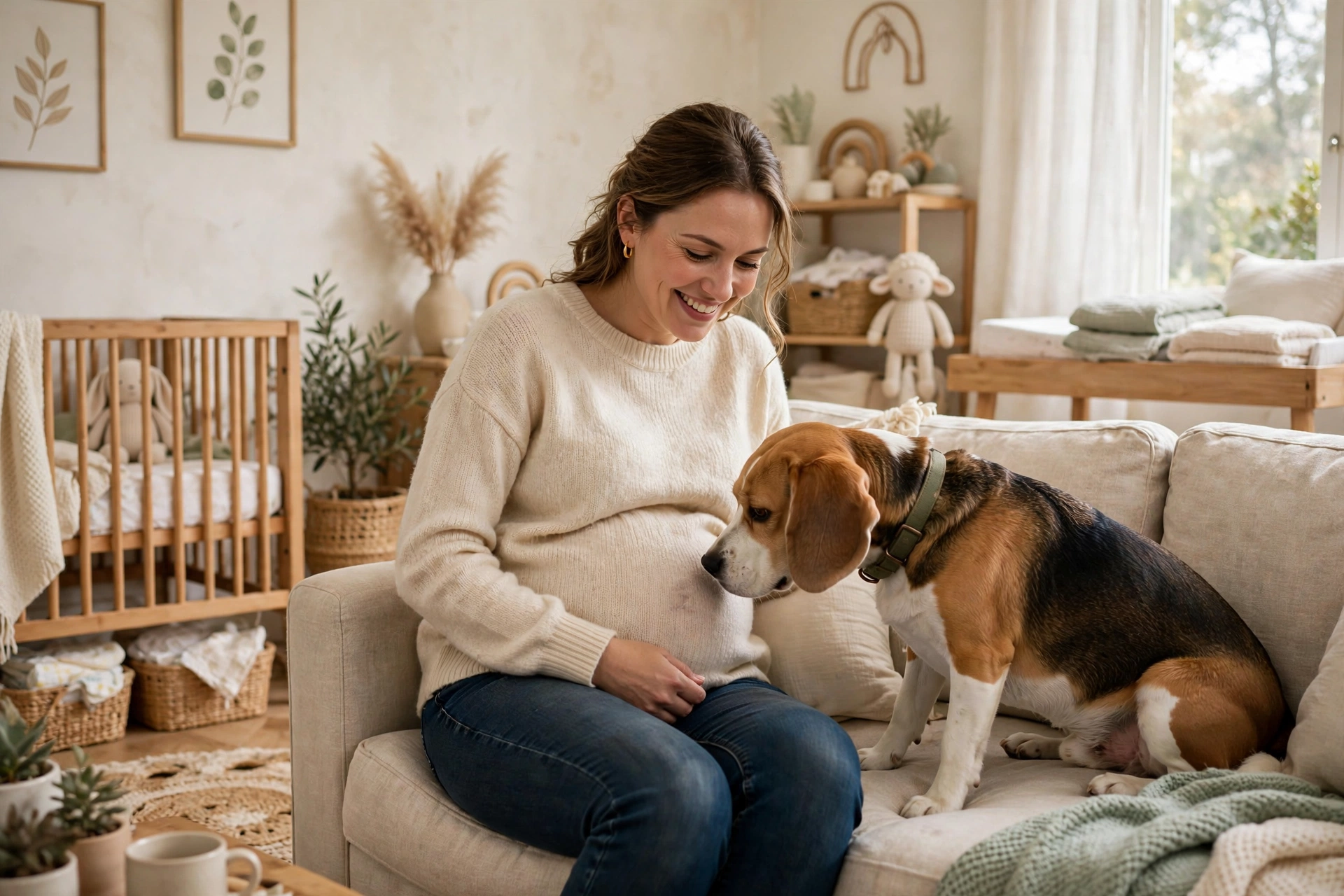
What it means: Dogs may notice shifts in your scent when your hormones change — during your menstrual cycle, pregnancy, menopause, or even illness. Canine noses are remarkably sensitive to subtle shifts in body odor and volatile organic compounds. Many expectant mothers report their dogs becoming more attentive, clingy, or protective during pregnancy, and the belly often becomes the focus of that attention.
What to do: If you’re pregnant, enjoy the extra affection but keep training consistent — big life changes can make dogs anxious too. Keep your dog’s routine as stable as possible: same walk times, same feeding schedule, same bedtime rules. Some owners also find it helpful to introduce baby-related sounds and scents gradually before the baby arrives, so the dog adjusts in stages rather than all at once. Important note: while many owners feel their dog “knew” about a pregnancy, dogs are not diagnostic tools. Never rely on your dog’s nose in place of a medical test or a conversation with your doctor.
Helpful pick: ADAPTIL Calm Home Diffuser — supports a calm, reassuring environment during household changes.
3. Food Scent

What it means: Ate something delicious recently? Your dog knows. Food aromas linger on your skin and clothes, and since the belly is often at nose level for a standing dog, it’s the first stop on his culinary investigation. This is especially common right after meals or when you’re wearing something that absorbed kitchen smells.
What to do: If your dog is sniffing and hoping for scraps, redirect him calmly to his own activity instead of feeding from your plate. A quick game or a stuffed chew toy teaches him that begging at your midsection doesn’t pay off — but playing elsewhere does.
Helpful pick: KONG Classic — fill with treats to redirect food-focused sniffing into a rewarding solo activity.
4. Affection and Bonding

What it means: For many dogs, your belly is simply the most comfortable, warmest spot to press against you. Sniffing and nuzzling your midsection during cuddle time is a bonding behavior — your dog’s way of saying he wants to be close. Dogs that learned as puppies that being near you brings comfort often carry the habit into adulthood, and the belly is an easy, inviting target.
What to do: Lean into it. Gentle physical closeness strengthens your bond and can be calming for both of you. If you ever need space, redirect with a friendly “go to your place” cue rather than pushing him away — you’ll keep the trust while setting boundaries.
Helpful pick: Zesty Paws Calming Chews — a tasty way to support relaxation during calm cuddle sessions.
5. Simple Habit
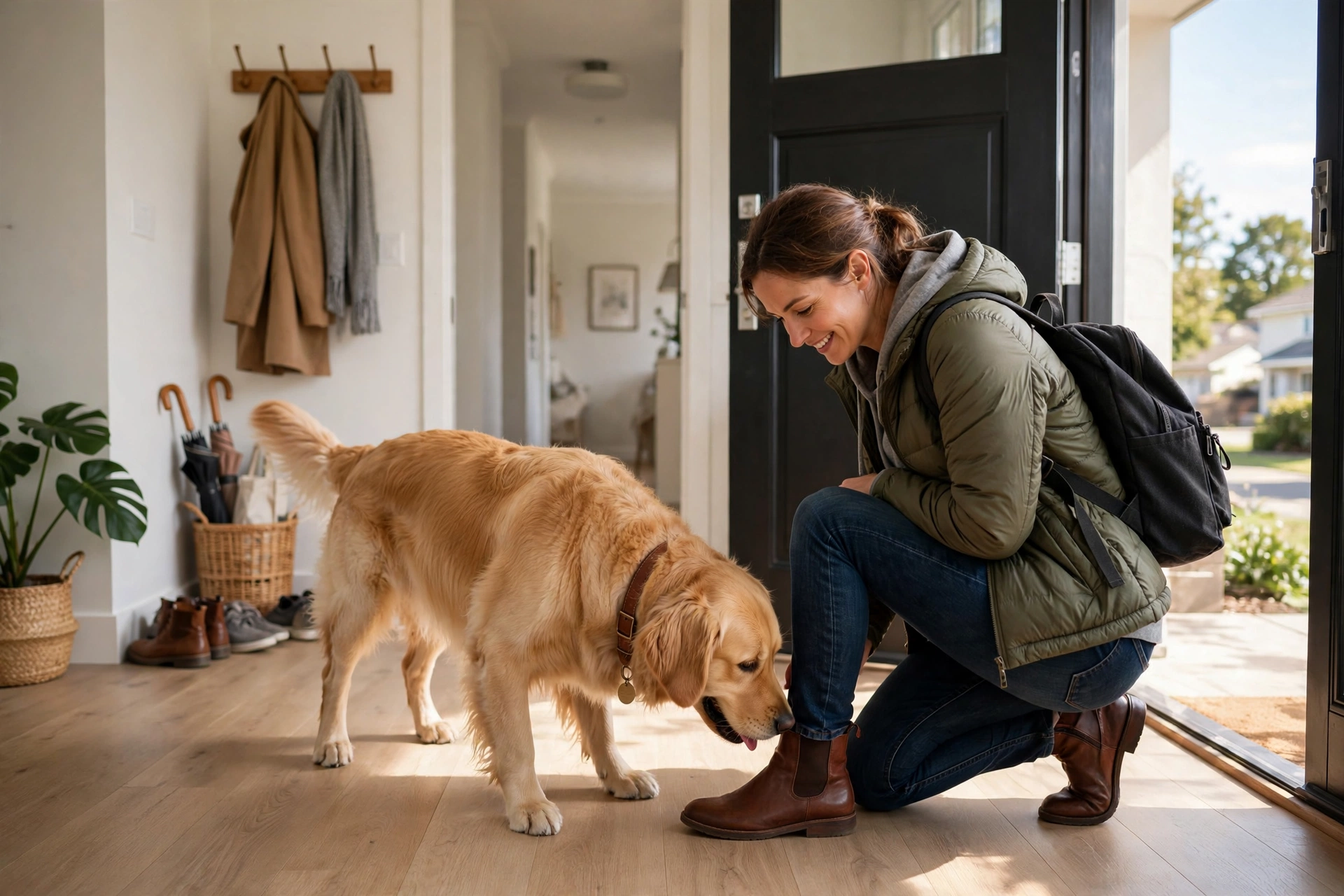
What it means: Sometimes a belly sniff is just part of your dog’s routine — a quick check-in when you walk through the door, sit down, or stand up. Dogs are creatures of habit, and if sniffing your belly once got a laugh or a scratch, he may have decided it’s part of the daily program. Habits like this are usually harmless and self-reinforcing.
What to do: If the habit is charming, keep it. If it’s becoming pushy — blocking you or escalating to pawing — teach a polite alternative. Ask for a sit, reward the calm greeting, and your dog will learn there’s a better way to say hello than a nose-first inspection.
Helpful pick: Egiao Dog Treat Pouch — keeps training treats handy for rewarding polite greetings.
Can Dogs Really Smell Pregnancy?
This is the question everyone asks, so let’s be careful and honest: research specifically proving that dogs can detect pregnancy through scent is limited. What we do know is that dogs can detect subtle hormonal and body-chemistry changes — their noses have picked up volatile organic compounds associated with certain health conditions in trained settings. During pregnancy, the body produces different levels of hormones like estrogen and progesterone, and body odor can change in ways that are detectable even to other humans, so it stands to reason that dogs may pick up on these scent differences.
Many owners report that their dogs behaved differently — more sniffing, following, or protectiveness — during pregnancy. But behavior changes in dogs around pregnant owners may also be caused by routine changes, altered body language, and new smells from pregnancy-related products. In short: your dog may be noticing something, but a dog’s nose is not a pregnancy test. Enjoy the extra snuggles, and confirm any health question with your doctor.
A note on sudden changes: If a dog that never sniffed your belly before suddenly becomes fixated, it’s still most often a benign scent change — a new lotion, medication, or diet shift can all do it. But if the change in your dog’s behavior is dramatic (anxious whining, guarding you, refusing to leave your side) alongside your own health symptoms, treat it as a gentle nudge to check in with your doctor — not because your dog has made a diagnosis, but because paying attention to your body is always wise.
Learn more about reading your dog’s intentions in our dog body language guide.
Frequently Asked Questions
Is it normal for my dog to sniff my belly every day?
Yes — daily belly sniffing is usually just curiosity or habit. It only becomes a concern if the sniffing is obsessive, sudden, and paired with other behavior changes, in which case a vet visit can rule out anxiety or medical issues on your dog’s side.
Does belly sniffing mean I’m pregnant?
Not necessarily, and not reliably. Dogs may notice scent changes during pregnancy, but belly sniffing has many other common causes. Take a test or see your doctor instead of asking your dog.
Why does my dog only sniff my belly and not my face?
Your belly is often right at your dog’s nose level when standing or sitting, so it’s simply the most accessible scent source. There’s no deeper meaning to the location choice.
Should I let my dog sniff my belly during pregnancy?
Mostly yes — gentle sniffing is harmless. Just supervise larger or jumpy dogs so they don’t bump you, and redirect if your dog starts pawing or leaning heavily.
How do I stop obsessive belly sniffing?
Redirect to a trained behavior like “sit” or “go to your place,” reward calm greetings, and make sure your dog gets enough mental enrichment. Persistent obsessive behavior deserves a vet or behaviorist check.
Keep reading: why your dog sniffs your feet, why your dog sniffs your hair, why your dog sniffs your eyes, and signs your dog loves you.
As an Amazon Associate, PetPostHub earns from qualifying purchases.