15 Easy Steps to Draw a Cute Dog (Beginner Tutorials)

Learning how to draw a dog is easier than you think — you just need the right starting shapes and a little patience. Every cute dog doodle below begins with something dead simple: a circle, an oval, or a curved line. Grab an HB pencil, sketch lightly so you can erase, and work through these 15 mini-tutorials at your own pace. By the end, you will have a whole pack of pups drawn by your own hand.
Table of Contents
- 1. The Round Puppy Face
- 2. The Sitting Puppy
- 3. The Curled-Up Sleeper
- 4. The Corgi Loaf
- 5. The Beagle With Long Ears
- 6. The Nose Close-Up Study
- 7. The Droopy-Eared Hound
- 8. The Side-Profile Sitter
- 9. The Zoomies Runner
- 10. The Bandana Pup
- 11. The Doghouse Peek
- 12. The Curious Head Tilt
- 13. The Long Dachshund
- 14. The Bone Holder
- 15. Coloring Your Finished Drawing
1. The Round Puppy Face

The classic beginner pup starts with one big, light circle for the head. Inside it, draw two dot eyes about halfway down, then a small upside-down triangle for the nose with a little “w” under it for the mouth. Floppy ears are just two long rounded shapes dropping from the top sides of the circle. Pro tip: keep your pencil pressure feather-light until every feature sits where you want it, then darken the final lines.
Helpful pick: Strathmore 400 Series Sketch Pad — smooth paper that keeps light sketch lines clean and easy to erase.
2. The Sitting Puppy

Stack two shapes: a circle on top for the head and a tall oval below for the body, slightly overlapping. Connect them with a short neck curve, then add a triangle ear flopping to one side. Front legs are two straight lines with rounded paws; the back leg is a bent curve hugging the body oval. Pro tip: making the head slightly oversized is what sells the “cute” — real puppies have big heads too.
3. The Curled-Up Sleeper

Draw a loose spiral as your guide — the sleeping pup’s body follows that curl. Tuck the head at one end of the spiral with closed eyes (two curved lashes), then sweep the tail around to meet the nose. Add a few short fur flicks along the back curve. Pro tip: leave a tiny gap of white paper along the top edge of the body to suggest soft light on the fur.
Helpful pick: Faber-Castell 9000 Graphite Sketch Pencil Set (12) — the soft B grades make those sleepy shaded areas effortless.
4. The Corgi Loaf

A corgi in loaf mode is basically a rounded rectangle. Sketch a long horizontal capsule for the body, then perch a circle head on the front end with two tall triangle ears. The legs are four tiny stubs peeking out underneath — barely longer than the paws. Pro tip: push the body length a touch; silly proportions are this drawing’s whole charm.
5. The Beagle With Long Ears

Start with the round-face formula from step one, then take the ears further — draw them as long ribbons falling well past the chin on both sides. Beagles have soulful eyes, so make the dots slightly larger and add a tiny white highlight circle in each. Pro tip: shade the inside of the ears a touch darker than the face to give them weight and depth.
Helpful pick: Prismacolor Premier Colored Pencils (24 Count) — creamy cores are perfect for layering that classic tan, black, and white beagle coat.
6. The Nose Close-Up Study
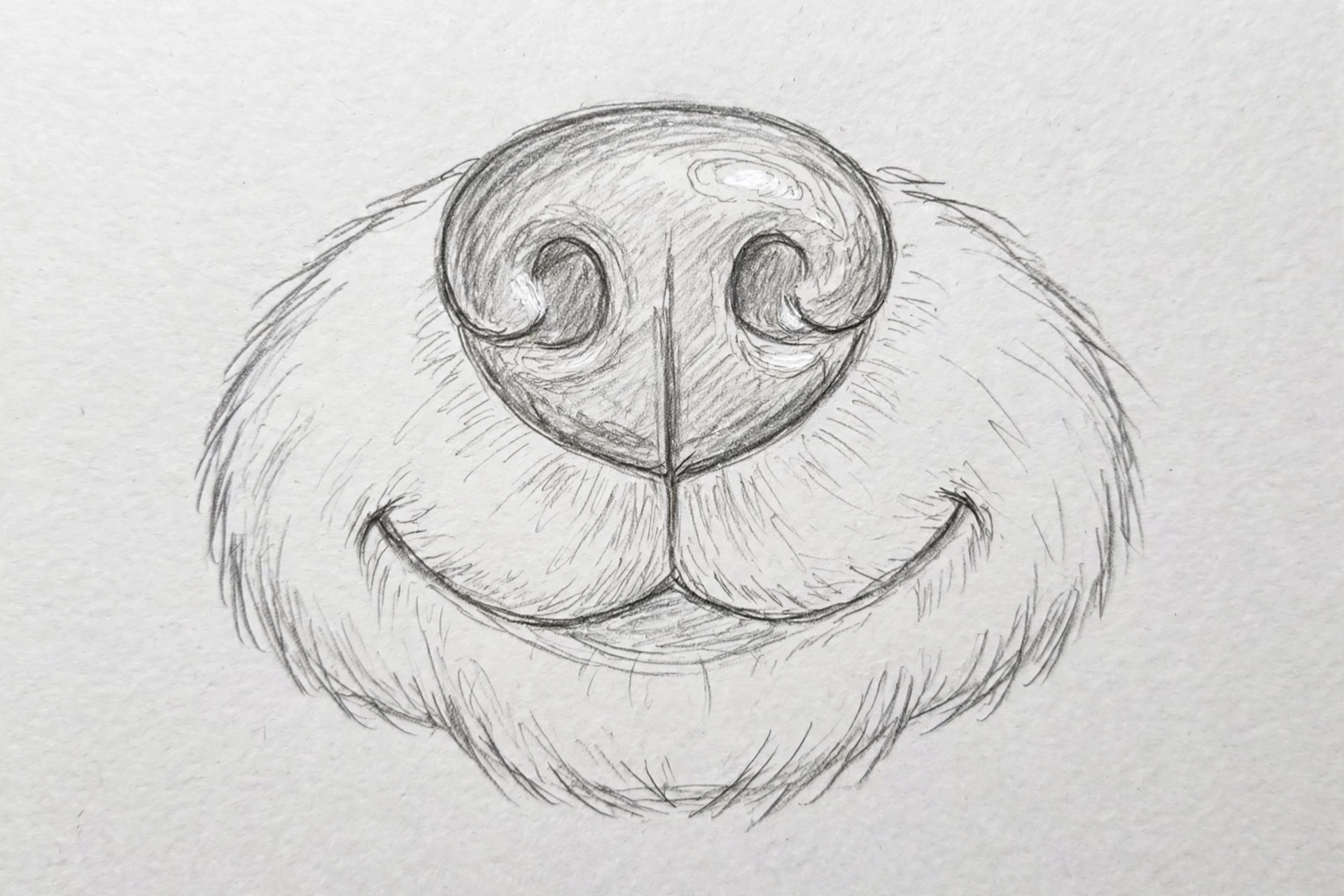
Zoom in! Draw a large rounded triangle for the nose, then two curved lines sweeping down and out for the muzzle, with a small smile curve where they meet. Add two tiny nostril ovals and a bright highlight spot you leave paper-white. Pro tip: noses look wet and shiny when the highlight stays crisp white against dark surrounding shading — resist the urge to fill it in.
7. The Droopy-Eared Hound

Give your hound an extra-long face: stretch the head circle into a tall oval, then hang two ribbon ears from the very top that reach below the chin. Droopy eyes sit lower than you expect — place them in the bottom third of the face with heavy lids. Pro tip: long downward strokes sell the droop; short choppy ones will accidentally make your hound look perky.
Helpful pick: Sakura Pigma Micron Fineliner Pens (6-Pack) — archival ink for tracing your best pencil lines into crisp final outlines.
8. The Side-Profile Sitter
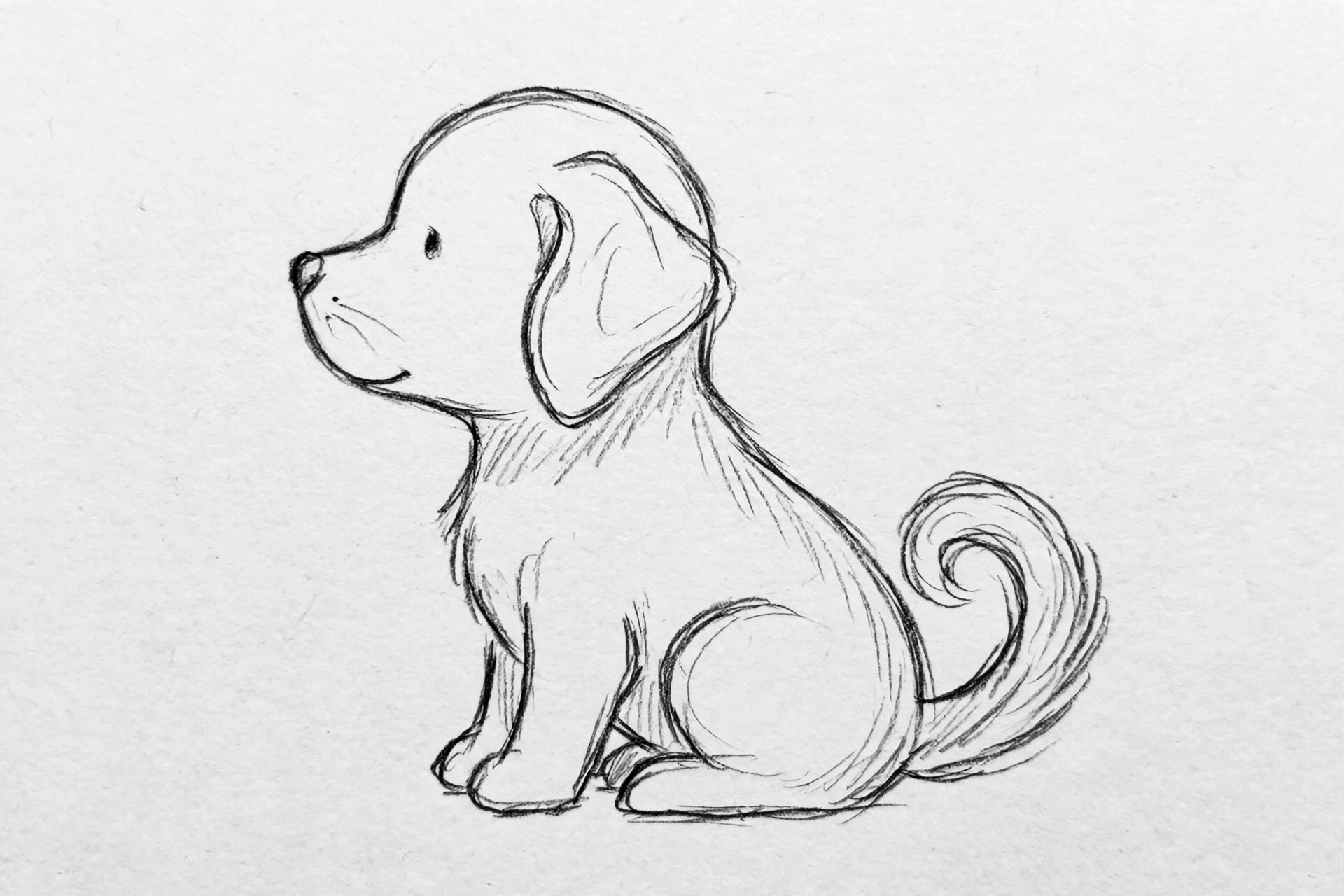
Profiles are simpler than front views because you only draw one side. Sketch a circle for the head with a wedge sticking out for the snout, one triangle ear on top, and a dot eye. The body is the same sitting oval as step two, with a tail curling behind. Pro tip: check that the nose, chest, and front paw line up on the same imaginary vertical line — that keeps the pose balanced.
9. The Zoomies Runner
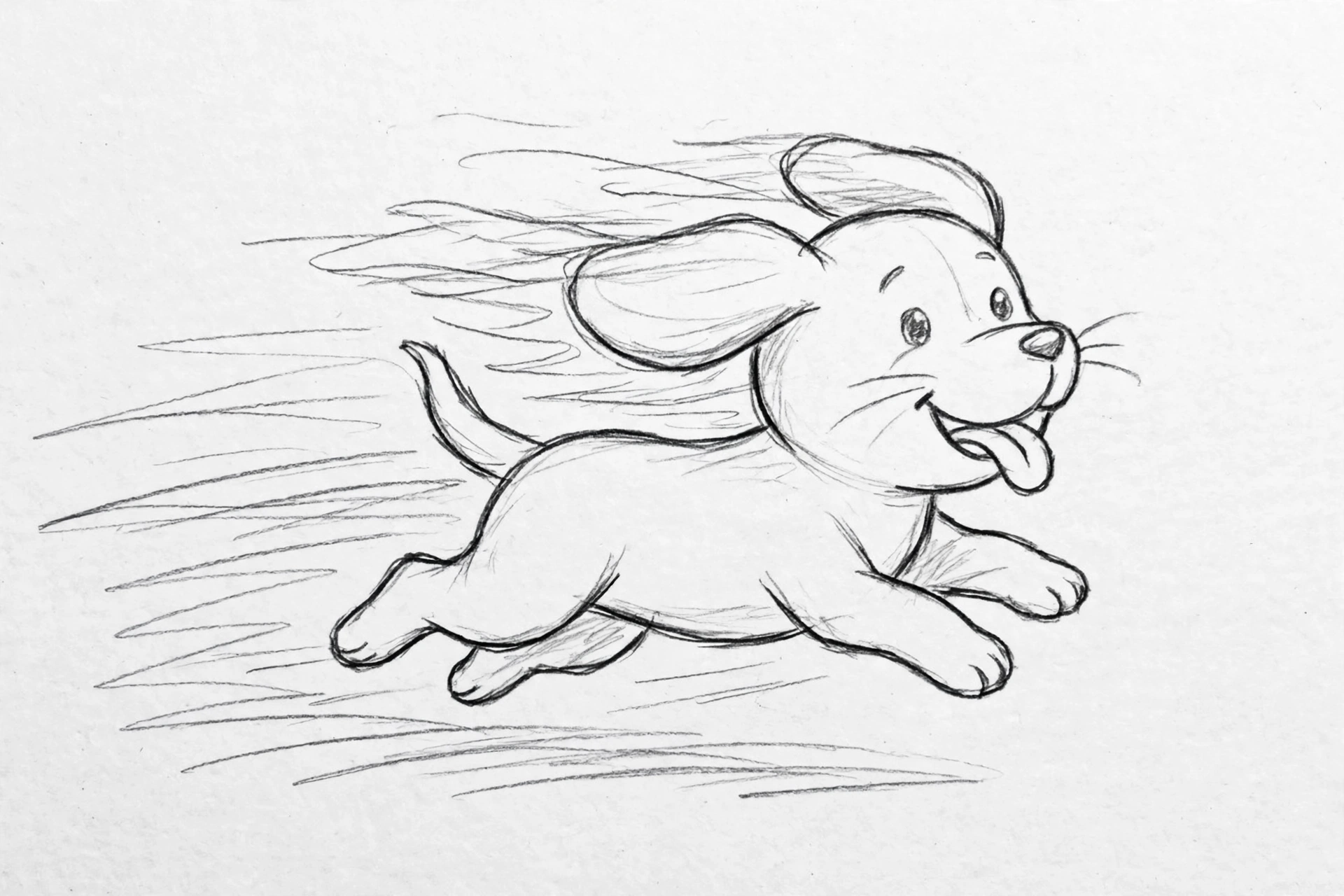
Motion comes from stretched shapes: elongate the body oval horizontally, angle all four legs in a gallop, and sweep the ears straight back. Pro tip: draw the legs in opposite pairs (front-left with back-right forward) — that is how dogs actually run, and it reads instantly as speed.
Helpful pick: Crayola Twistables Colored Pencils (50 Count) — no sharpening needed, so kids can jump straight to coloring their zooming pup.
10. The Bandana Pup
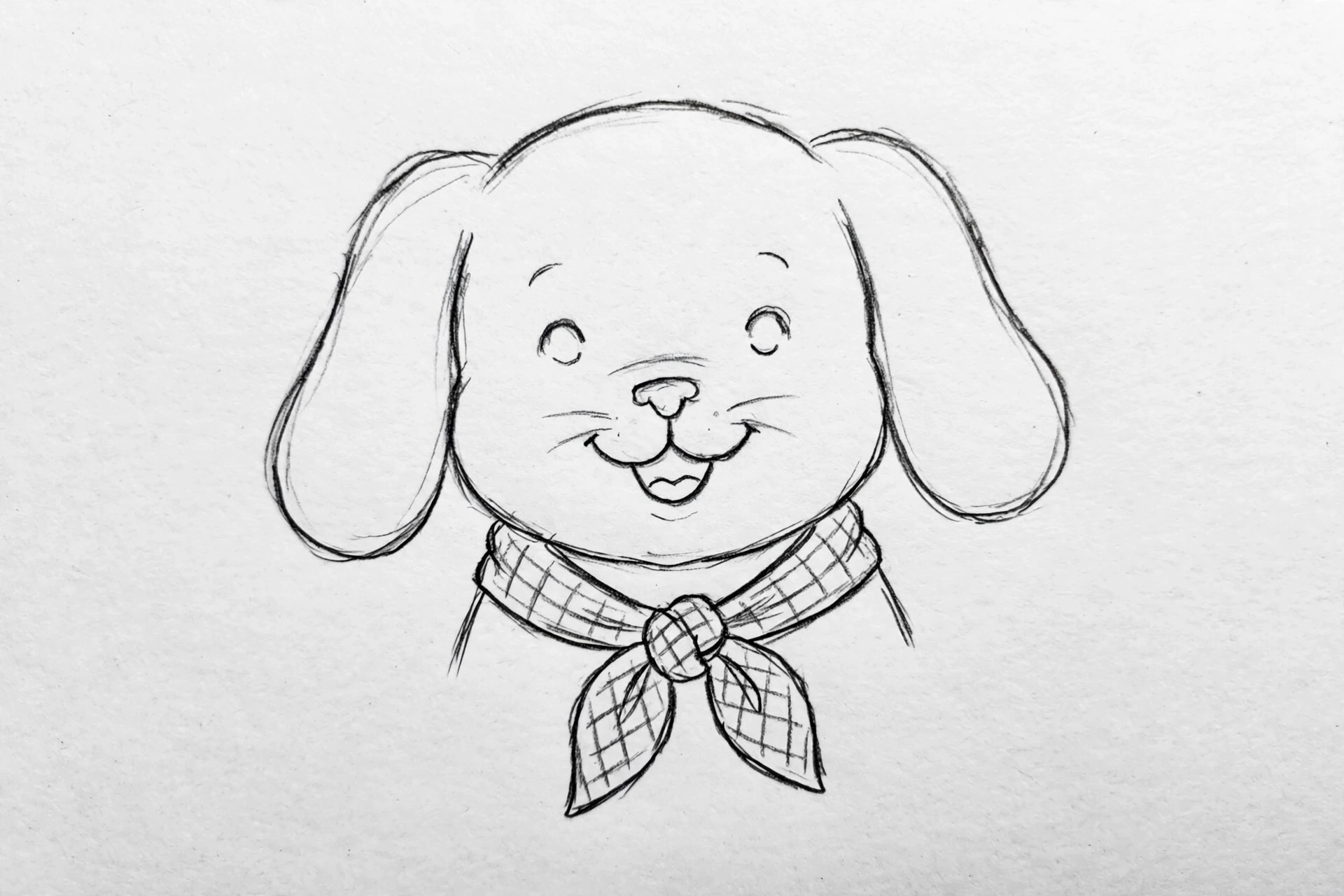
Draw your favorite puppy face, then add a bandana: two curved lines around the neck forming a collar, a triangle of fabric hanging down the chest, and a tiny knot circle at one side. A couple of fold lines make the fabric look real. Pro tip: a patterned bandana (dots or stripes) adds instant personality — draw the pattern small so it reads as fabric, not wallpaper.
11. The Doghouse Peek

Sketch a simple house shape — square plus triangle roof — then cut a rounded doorway arch into it. Your pup’s head pokes through the arch with two paws resting on the door frame’s bottom edge. Pro tip: draw the doghouse slightly larger than feels natural; a roomy doorway frames the face instead of squishing it.
Helpful pick: Faber-Castell Kneaded Erasers (4-Pack) — lifts light sketch lines cleanly without tearing paper when you erase construction guides.
12. The Curious Head Tilt
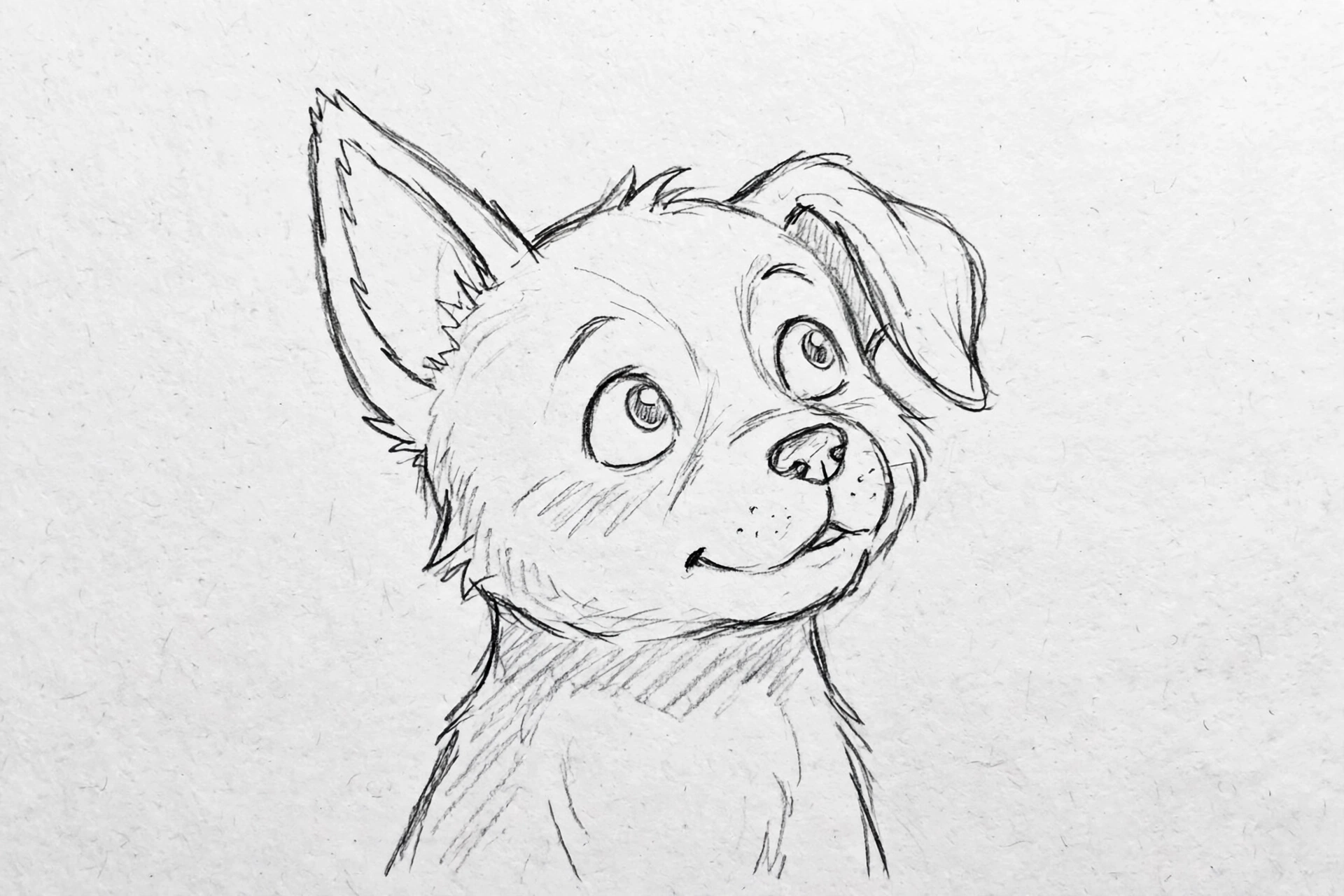
The famous head tilt is just the round-face formula rotated about 15 degrees. Draw the whole head circle tilted, keep the eyes level with each other along the tilt, and flop one ear up while the other hangs. Pro tip: asymmetry is the secret — the tilt, one-up-one-down ears, and a raised eyebrow curve all ask “what was that?”
13. The Long Dachshund

Stretch a hot-dog shape horizontally for the body, attach a circle head at one end with long ears draping back, and give it four stubby legs. The tail is a thin upward curve. Pro tip: keep the belly line low and nearly straight — dachshunds look wrong the moment you give them a tucked-up greyhound waist.
Helpful pick: KOOTIKO Blending Stumps and Tortillions Set (33-Piece) — blends pencil shading into smooth fur tones without smudgy fingers.
14. The Bone Holder

Draw a sitting pup with a proud expression, then place a classic cartoon bone across its mouth: a straight bar with two circles on each end. Overlap the bar slightly behind the muzzle so it looks gripped, not floating. Pro tip: tilt the bone at a jaunty angle and lift the tail high.
15. Coloring Your Finished Drawing
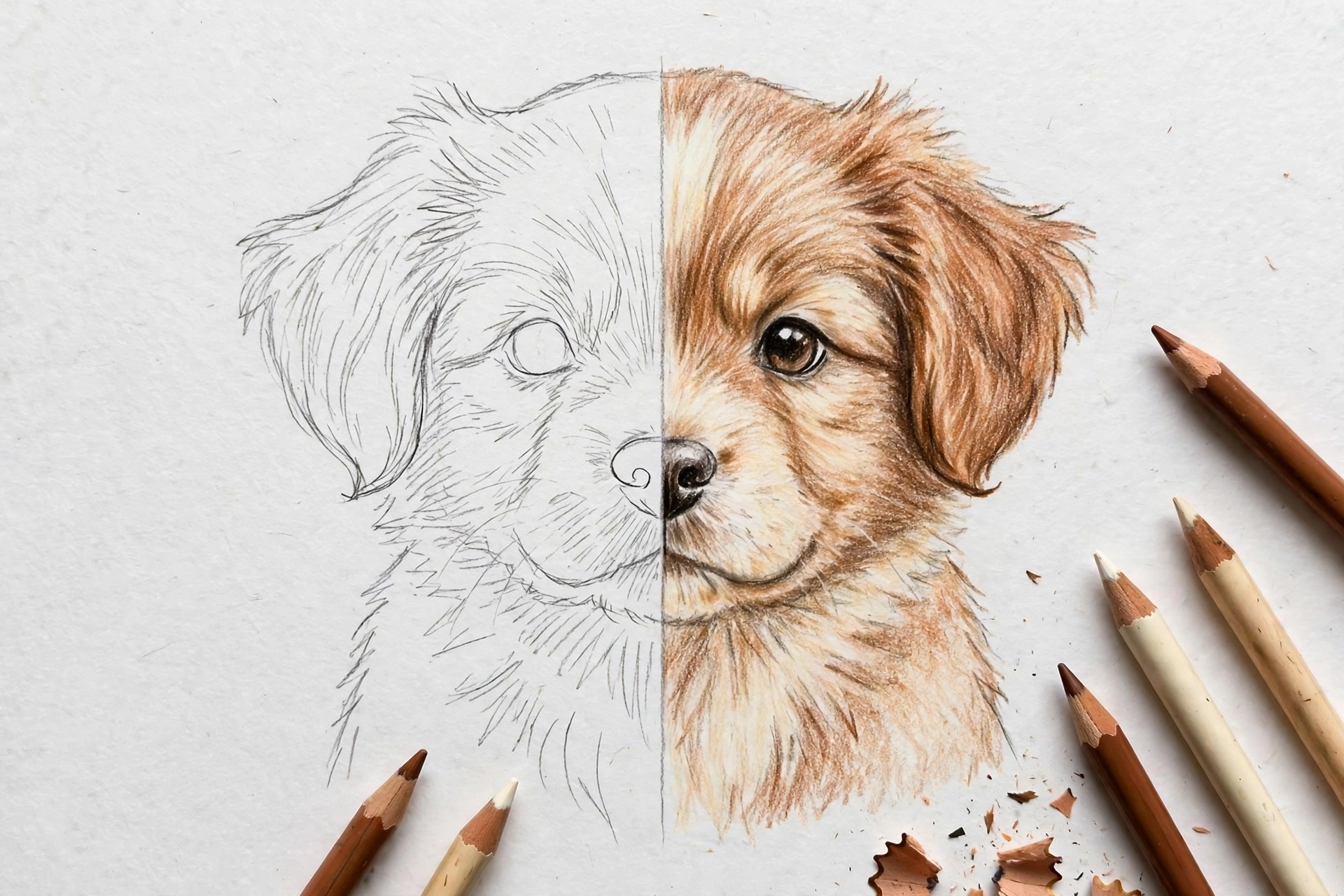
Lay the lightest color down first, then layer darker shades on top with small circular strokes. Leave white highlights in the eyes and nose, and color in the direction the fur grows. Pro tip: finish with a dark outline just around the outer silhouette — it makes the whole drawing pop off the page like a sticker.
Helpful pick: All the Animals: How to Draw Books for Kids by Alli Koch — 40+ more step-by-step animal lessons to keep practicing after these fifteen.
Keep Reading
- 10 Beautiful Dog Painting Ideas
- 10 Creative Dog Photo Ideas
- 10 DIY Dog Jackets That Actually Fit Your Pup
- 5 Best DIY Dog Collars
- How to Bathe a Puppy
Frequently Asked Questions
What is the easiest dog to draw for a beginner?
A simple round-faced puppy (tutorial #1 above) is the easiest starting point — it is one circle, two dot eyes, a triangle nose, and floppy ears. Master that, and every other tutorial gets simpler.
What pencil should I use for sketching dogs?
An HB pencil is the best all-rounder for beginners: dark enough to see, light enough to erase. Move to 2B or 4B later when you want richer shading in fur and ears.
How do I make my dog drawing look cute instead of realistic?
Exaggerate the baby-like proportions — bigger head, bigger eyes, rounder body, shorter legs. Cuteness in drawings comes from the same features that make real puppies cute.
Should I erase my light construction lines?
Yes, once your final outlines are dark and confident. Erasing the pale guide circles and ovals is what transforms a sketchy practice drawing into a clean finished piece.
How long does it take to learn to draw a dog well?
Most beginners see real improvement within a couple of weeks of drawing one pup a day. These fifteen tutorials are designed so each one teaches a new shape skill that stacks onto the last.
As an Amazon Associate, PetPostHub earns from qualifying purchases.