
15 Dog Training Tips That Actually Work: The Ultimate Guide (2026)

If you have ever watched a calm dog walk past a squirrel without flinching and wondered what their owner did differently, you are in the right place. These dog training tips are built for real life: busy mornings, distracted puppies, and stubborn canine teenagers. Training is not about tricks. It is about clear communication, sharp timing, and rewards your dog truly values. Lock in the ground rules below, then work through the fifteen tips. Pick two or three, practice for a week, and watch the change.
Key Takeaways
- Find one reward your dog loves and reserve it for training only.
- Keep sessions short, finish on a win, and say each cue exactly once.
- Match expectations to your dog’s age, energy level, and breed instincts.
- Practice every cue in new places so it works anywhere.
- Get the whole household using the same words and rules from day one.
Table of Contents
- 5 Ground Rules Before Your First Session
- Tip 1: Find Your Dog’s Jackpot Reward
- Tip 2: Keep Sessions Short and Snappy
- Tip 3: Say the Cue Once, Then Wait
- Tip 4: Always Finish on a Win
- Tip 5: Mark the Exact Moment
- Tip 6: Teach “Leave It” Early
- Tip 7: Proof Every Cue in New Places
- Tip 8: Stop Leash Pulling With the Statue Game
- Tip 9: Never Train a Wired or Starving Dog
- Tip 10: Teach a Settle-on-Mat Cue
- Tip 11: Practice Recall Every Single Day
- Tip 12: Fade Treats Onto a Surprise Schedule
- Tip 13: Socialize With a Plan, Not a Dog Park
- Tip 14: Fix Guarding Early With Trade-Up Games
- Tip 15: Get the Whole Household on the Same Page
- When Progress Stalls: The 3-Session Reset Rule
- Training Tools Worth Having (and What to Skip)
- Keep Reading
- Frequently Asked Questions
5 Ground Rules Before Your First Session
These five rules decide whether everything else works. Match the plan to your dog’s age and energy: puppies learn in short bursts, seniors need patience, and high-drive breeds need mental puzzles. Be consistent, because rules enforced only sometimes teach your dog that rules are optional. Reward good choices instead of punishing mistakes, make sure everyone uses the same words for each behavior, and walk your dog before training so a wiggly student becomes a willing one.
Tip 1: Find Your Dog’s Jackpot Reward

Run a taste test: offer two treats and see which your dog picks three times in a row. That winner becomes your training-only jackpot, and keeping pieces pea-sized lets you reward twenty times without overfeeding.
Helpful pick: Amazon Brand Wag Training Treats — soft, tiny chicken-first bites sized for high-rep sessions.
Tip 2: Keep Sessions Short and Snappy

Five focused minutes beat thirty distracted ones. Puppies check out after five to ten minutes; adults after fifteen to twenty. Run two or three mini-sessions a day. Breaks are part of training, not a pause from it.
Helpful pick: PupSensei Dog Treat Pouch — keeps rewards at your hip so short sessions start instantly.
Tip 3: Say the Cue Once, Then Wait

Repeating “sit, sit, SIT” teaches your dog that the first two don’t count. Say the cue once and wait three to five seconds. If nothing happens, guide your dog into position without repeating the word.
Helpful pick: PetSafe Clik-R Dog Training Clicker — a crisp marker that pinpoints the right moment without raised voices.
Tip 4: Always Finish on a Win

Your dog remembers how a session ends. When things go sideways, drop back to something easy your dog knows cold, reward it big, and stop there. Ending happy keeps your dog eager for tomorrow.
Helpful pick: KONG Classic — stuff it, let your dog solve it, and end every session on a high note.
Tip 5: Mark the Exact Moment

A marker word like “yes” or a clicker click bridges the one-second gap between the behavior and the treat. Charge the marker first: click, treat, repeat a dozen times until your dog perks up at the sound.
Helpful pick: Karen Pryor Terry Ryan Click Stick — a pro-grade clicker with a target stick for shaping new behaviors.
Tip 6: Teach “Leave It” Early

“Leave it” is safety training disguised as a trick. Start with a treat in a closed fist; when your dog stops nosing your hand, mark it and reward from the other hand. Build from fist to floor over a week or two.
Helpful pick: Chuckit! Ultra Ball — a high-value distraction for proofing “leave it” against real temptations.
Tip 7: Proof Every Cue in New Places

A perfect “sit” in your kitchen can fall apart on a busy sidewalk. Retrain each cue in five places, from your yard to a park. Expect some backsliding at each step. That is normal, not failure.
Helpful pick: Educator Dog Training Finger Clicker — hands-free clicking that keeps timing sharp while you manage the leash.
Tip 8: Stop Leash Pulling With the Statue Game
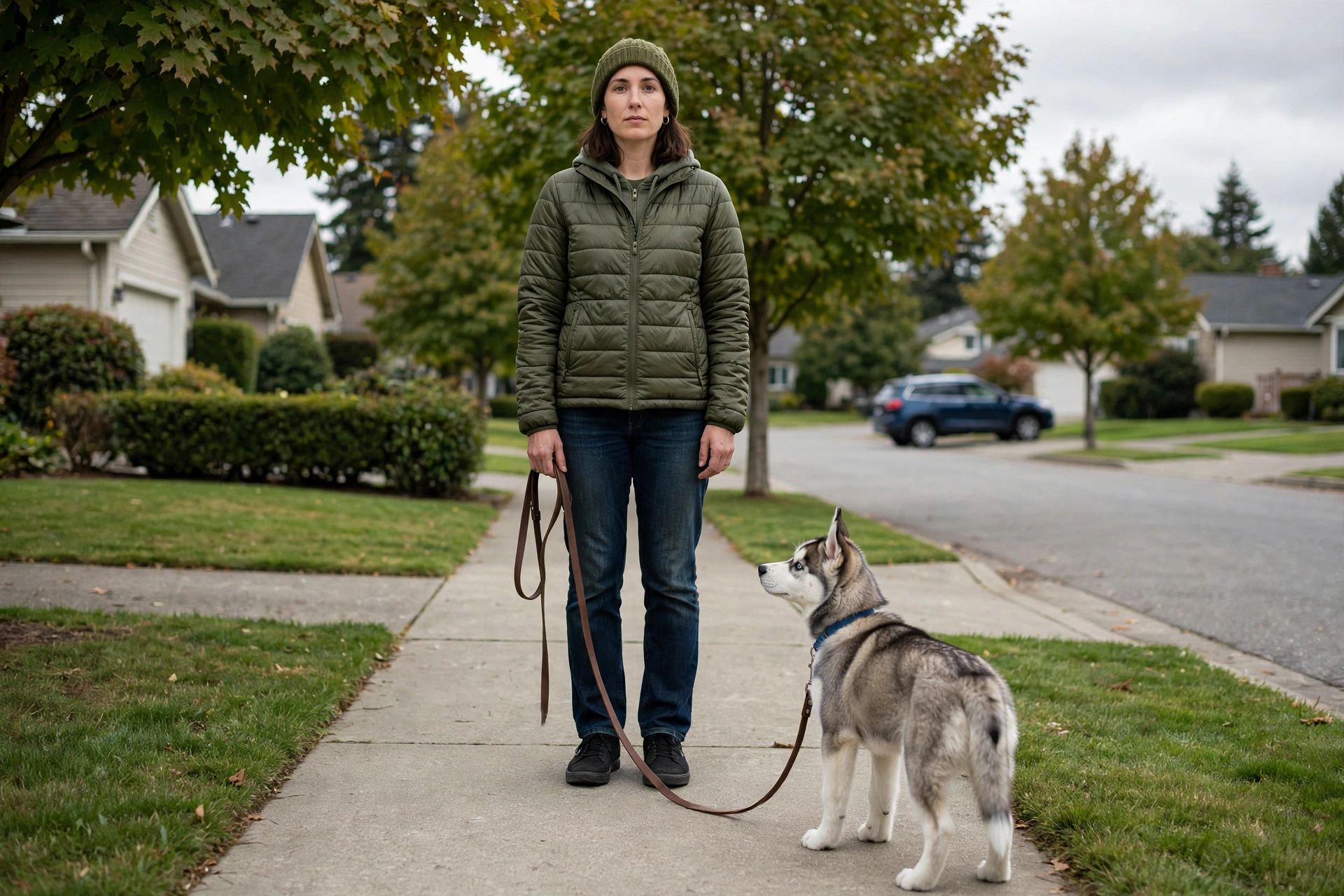
The moment the leash goes tight, freeze. Don’t move until the leash slackens, even if it takes a minute. Your dog learns fast: pulling stops the walk, a slack leash keeps it going.
Helpful pick: rabbitgoo No Pull Dog Harness — the front clip gently redirects pulling while the new habit forms.
Tip 9: Never Train a Wired or Starving Dog

A dog bouncing off the walls is flooded with adrenaline and cannot learn. Wait about two hours after meals, and give an over-excited dog a short walk or calm-down routine first.
Helpful pick: Bedsure Calming Dog Bed — a cozy decompress spot that teaches calm behavior before sessions.
Tip 10: Teach a Settle-on-Mat Cue

One cue that solves a dozen problems: send your dog to a mat to lie down. Use it at dinner, when guests arrive, and at the vet. Lure your dog onto the mat, reward any paw contact, then build duration slowly.
Helpful pick: MidWest QuietTime Bolster Pet Bed — a comfy, defined spot that makes “go to your mat” rewarding.
Tip 11: Practice Recall Every Single Day

Recall can save your dog’s life, so treat it like a daily vitamin. Start indoors at short distances with jackpot rewards, then stretch the distance. Never call your dog for something unpleasant like a bath.
Helpful pick: Joytale 30FT Long Dog Training Leash — freedom to roam with a safety net on every recall rep.
Tip 12: Fade Treats Onto a Surprise Schedule

Once a behavior is solid, reward every other rep, then every third, mixing in praise and play. Random rewards build stronger habits than constant ones.
Helpful pick: FARAER Dog Treat Pouch — a slim pouch for carrying a few surprise rewards on the go.
Tip 13: Socialize With a Plan, Not a Dog Park

Real socialization means calm, positive exposures: quiet streets, outdoor cafes, and one-on-one playdates with steady dogs. Let your puppy watch the world from a distance and reward calm behavior.
Helpful pick: heouvo Dog Treat Pouch with Training Clicker — a grab-and-go pouch and clicker for socialization outings.
Tip 14: Fix Guarding Early With Trade-Up Games

Don’t punish the growl; it is communication, not defiance. Teach your dog that your approach means upgrades: walk by, drop a better treat, or offer a trade. Giving things up pays better than guarding them.
Helpful pick: LECHONG Cotton Rope Tug Toy — a high-value trade item that makes “drop it” a game worth playing.
Tip 15: Get the Whole Household on the Same Page

Training fails when one person rewards jumping and another scolds it. Agree on the exact words, hand signals, and rules, and post them on the fridge. Consistency across people matters as much as consistency across sessions.
Helpful pick: BARKIE Dog Training Kit — pouch, clickers, whistle, and guide so everyone trains with the same tools.
When Progress Stalls: The 3-Session Reset Rule
If a behavior falls apart for three sessions in a row, simplify: go back to an easier version, shorten the distance, or remove distractions. Plateaus are information, not failure.
Training Tools Worth Having (and What to Skip)
You need a six-foot leash, a comfortable collar or harness, a treat pouch, a clicker, and great treats. Skip retractable leashes, which reward pulling, and prong or shock collars, which damage trust. Master the basics first and add specialty tools only when a specific problem demands them.
Keep Reading
- 7 DIY Dog Bunk Beds Your Pup Will Love
- 15 Indoor Dog Park Ideas for Rainy Days
- 10 Dog Hotel Ideas for a Comfy Stay
- 10 Creative Dog Photo Ideas
- 10 Dog Painting Ideas for Pet Lovers
Frequently Asked Questions
At what age should I start training my puppy?
Start the day your puppy comes home, around eight weeks. Keep it to a few minutes of fun basics like name recognition and sit.
How do I stop my dog from barking at strangers?
Reward quiet moments before barking starts, and teach a “look at me” cue to redirect attention. Work at a distance where your dog can stay calm, and never yell.
Can older dogs really learn new commands?
Yes. Older dogs learn well with shorter sessions, extra patience, and high-value rewards. What changes with age is speed, not ability.
Should I hire a trainer or do it myself?
Most owners can handle basics with a good plan. Bring in a certified professional for aggression, severe anxiety, or any behavior that worries you.
How long should each training session be?
Five to ten minutes for puppies, fifteen to twenty for adults. Always stop while your dog is still engaged.
As an Amazon Associate, PetPostHub earns from qualifying purchases.



3 Comments