7 Best Harnesses for Small Dogs (2026 Buying Guide)

Finding the best harness for small dogs is one of the smartest upgrades you can make to your daily walk routine. Small breeds have delicate necks and windpipes, and a collar that yanks against the throat every time your pup lunges at a squirrel can cause real damage over time. A well-fitted harness spreads pressure across the chest and shoulders instead, giving you better control while keeping your little dog safe and comfortable.
But not all harnesses suit tiny frames. Some are bulky, some twist, and some are downright escapable. Below, we break down exactly what to look for in a small-dog harness, then round up our seven favorite picks for 2026 — from no-pull training designs to feather-light mesh vests your pup will barely notice.
Table of Contents
How to Choose a Harness for a Small Dog
Shopping for a small-dog harness is not just about picking the tiniest size on the page. Keep these four factors in mind:
1. Fit and Adjustability
Small dogs come in wildly different shapes — a dachshund and a chihuahua may weigh the same but need totally different strap layouts. Look for at least two or three adjustment points (neck, chest, and belly) so you can dial in a snug fit. Measure your dog’s chest girth at the widest point behind the front legs and shop by that number, not by breed name.
2. No-Pull vs. Vest Style
No-pull harnesses have a leash attachment on the chest (front clip). When your dog pulls, the front clip gently redirects them back toward you, which discourages lunging without any jerking. Vest-style harnesses clip on the back and prioritize comfort and even pressure distribution — ideal for polite walkers and dogs with sensitive necks. Some models, like the rabbitgoo and Ruffwear below, offer both clip points so you get the best of both worlds.
3. Escape-Proof Design
Small dogs are notorious escape artists. A harness that only anchors at the neck and mid-chest can be backed out of by a determined pup. Look for designs with a third belly strap that sits behind the ribcage, snug leg openings, or step-in vests that wrap the torso. Always do the “wiggle test” indoors before heading out.
4. Padding and Material
Thin straps can chafe under tiny armpits. Breathable air mesh keeps small dogs cool, while soft padding prevents rubbing during longer walks. Machine-washable materials are a bonus — small dogs are close to the ground and their gear gets dirty fast. For more help managing walk behavior, see our guide on how to stop dog pulling on leash.
The 7 Best Harnesses for Small Dogs
1. rabbitgoo No Pull Dog Harness — Best for Pullers on a Budget
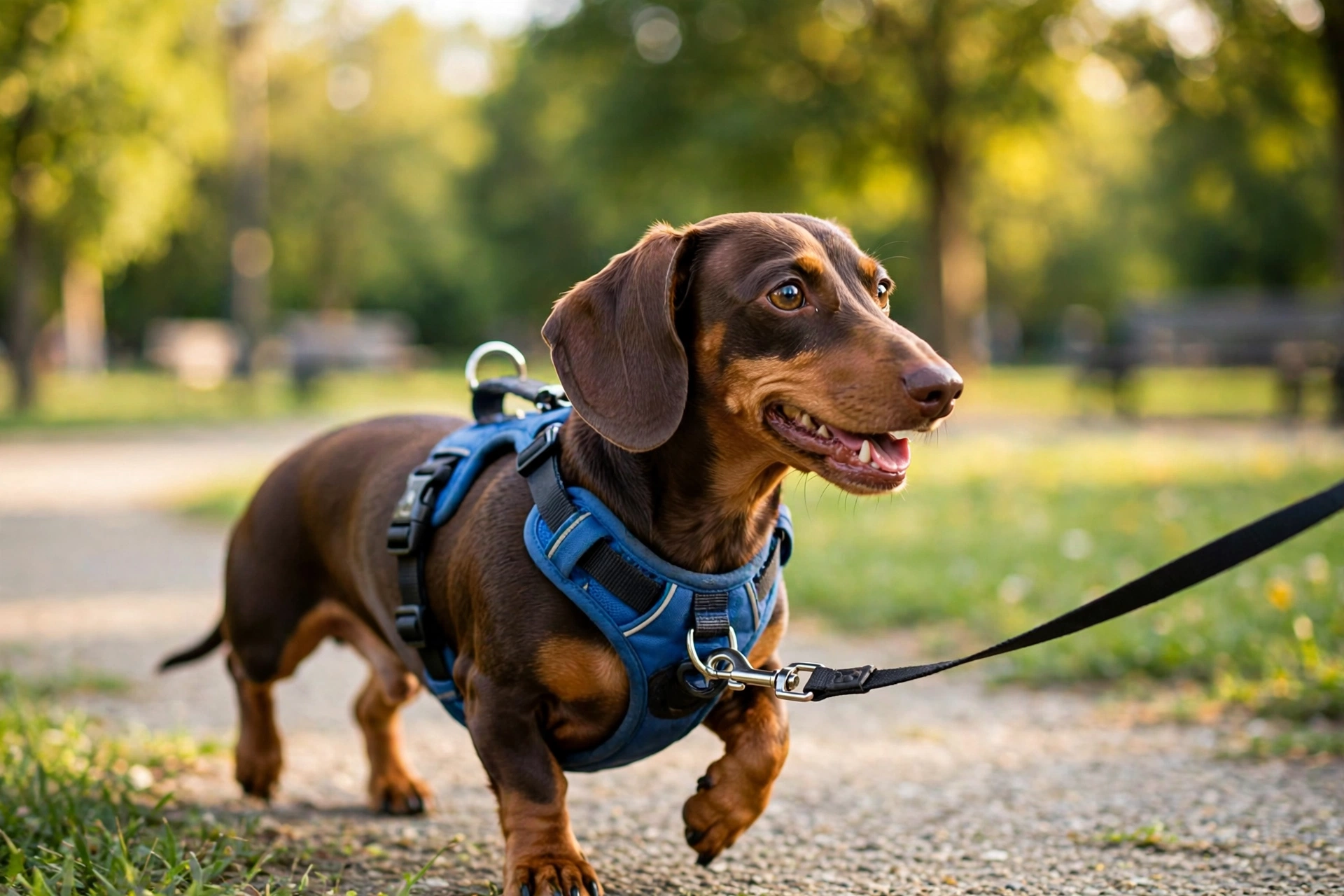
Best for: Small dogs that pull, thanks to its dual front-and-back leash attachments.
This has been a go-to recommendation for years, and it earns its place here for one simple reason: it solves pulling without costing a fortune. The chest D-ring turns your dog toward you when they lunge, while the back ring works for relaxed walks. Four adjustment straps let you get a truly custom fit on small frames, and the reflective trim keeps night walks safer.
- Pros: Front + back clips; 4 adjustable straps; reflective trim; easy on/off buckles
- Cons: Slightly bulkier than vest styles; requires proper strap adjustment to prevent rubbing
Check price on Amazon: rabbitgoo No Pull Dog Harness
2. Puppia Soft Dog Harness — Best for Everyday Comfort

Best for: Dogs with delicate throats — its padded neck opening keeps all pressure off the windpipe.
The Puppia is a longtime favorite among small-breed owners, and slipping one on explains why. Made from soft, breathable air mesh with a padded neck opening, it distributes pressure across the chest rather than the neck. The over-the-head design with an adjustable chest belt and quick-release buckle makes it easy to put on squirmy pups, and it comes in a rainbow of colors.
- Pros: Ultra-soft mesh; no-choke design; machine washable; wide color range
- Cons: Must go over the head (not ideal for head-shy dogs); sizing runs by chest girth, so measure carefully
Check price on Amazon: Puppia Soft Dog Harness
3. Best Pet Supplies Voyager Step-in Air — Best Step-In for Head-Shy Dogs
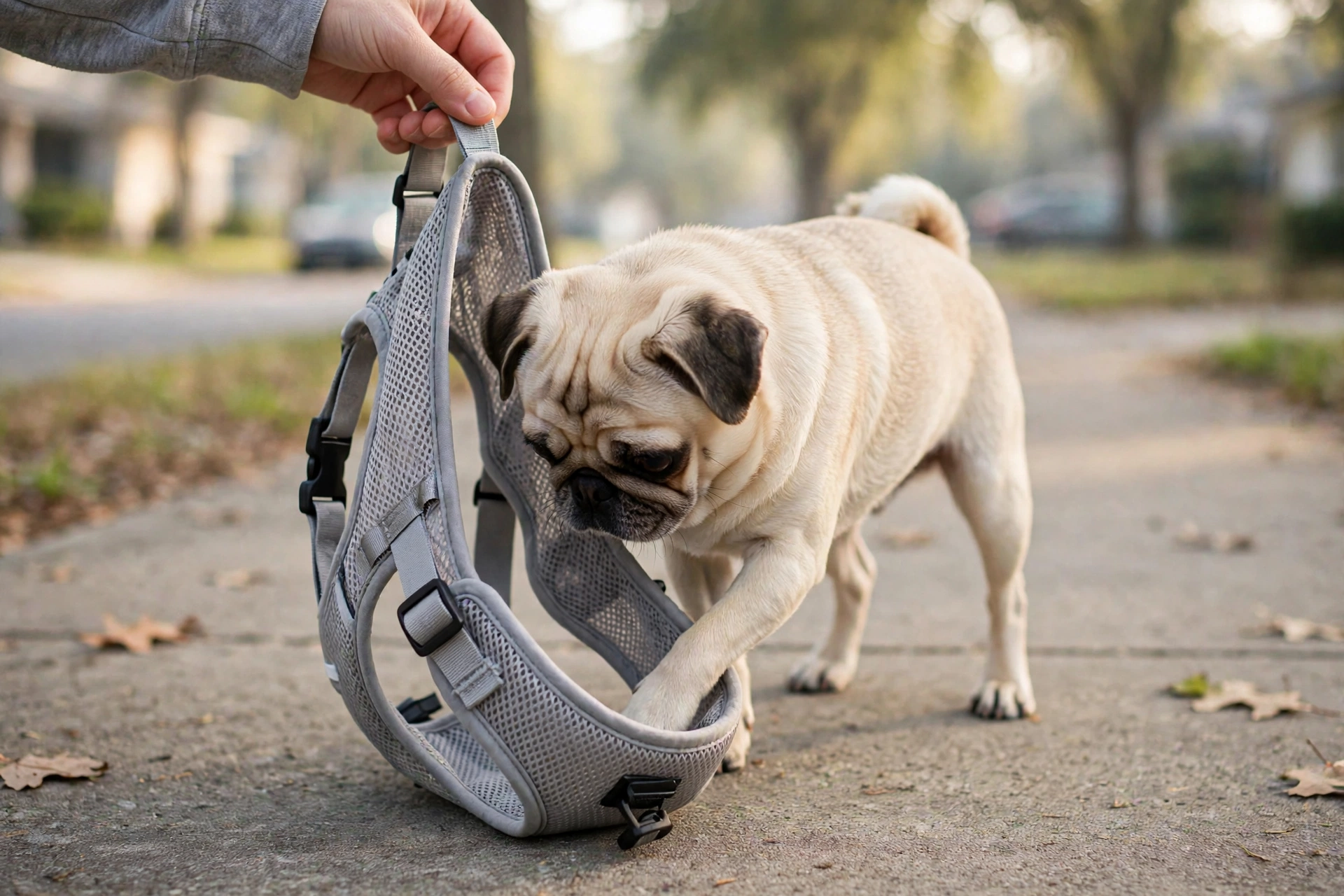
Best for: Nervous or head-shy small dogs that hate having gear pulled over their ears.
If your dog flinches at anything going over their head, a step-in design changes everything. Your pup simply steps into the leg openings, and you secure the hook-and-loop fastener, buckle, and double D-rings — three layers of security in seconds. The all-weather air mesh is feather-light and breathable, with reflective bands for evening visibility. It’s also a consistent best-seller for a reason: it works.
- Pros: No over-the-head struggle; triple security closures; breathable mesh; reflective bands
- Cons: Not adjustable — sizing by chest measurement is critical; Velcro can wear over time
Check price on Amazon: Best Pet Supplies Voyager Step-in Air Harness
4. Ruffwear Front Range Dog Harness — Best Premium Pick for Active Dogs

Best for: Adventurous small dogs that hike, run, or explore — built to last for years.
The Front Range is the best-selling harness in its class, and small dogs get a properly scaled XX-Small version. Four points of adjustment create a custom fit, foam-padded chest and belly panels distribute load evenly, and two leash attachment points (front aluminum V-ring plus back ring) cover both training and casual walking. Reflective trim and an ID pocket round out a genuinely thoughtful design.
- Pros: Dual clips; 4 adjustment points; padded and durable; reflective trim + ID pocket
- Cons: Premium price; more harness than a couch-potato pup strictly needs
Check price on Amazon: Ruffwear Front Range Dog Harness
5. Gooby Soft Mesh X Step-in Harness — Best for Tiny Breeds

Best for: Toy breeds under 10 lbs, thanks to its patented choke-free X-frame.
Gooby designs specifically for small dogs rather than shrinking down a large-dog pattern, and it shows. The patented X-frame creates a deep V-neck that keeps all pressure off the trachea — a genuine concern for breeds like Chihuahuas and Yorkies prone to collapsed trachea. The step-in style with adjustable Velcro closure goes on in seconds, and the thick padded mesh keeps things cozy on long walks.
- Pros: True choke-free X-frame; designed for toy breeds; step-in ease; secure O-ring leash attachment
- Cons: Sizing tops out around 30 lbs; Velcro needs occasional cleaning to stay grippy
Check price on Amazon: Gooby Soft Mesh X Step-in Harness
6. PetSafe Easy Walk Dog Harness — Best for Training Pullers

Best for: Leash training — its patented front-chest martingale loop was designed by a veterinary behaviorist.
The Easy Walk takes a different approach to pulling: a patented martingale loop across the chest applies gentle, gradual pressure to the shoulders when your dog pulls, steering them back to your side without any jerking. The chest strap rests on the breastbone rather than the throat, so there’s no choking or gagging. Four adjustment points and a color-coded belly strap make fitting straightforward.
- Pros: Vet behaviorist-designed; gentle steering; rests on chest, not throat; trainer-trusted
- Cons: Front-clip only (no back option); can shift sideways if not fitted snugly
Check price on Amazon: PetSafe Easy Walk Dog Harness
7. Kurgo Tru-Fit Smart Harness — Best for Car Rides and Walks
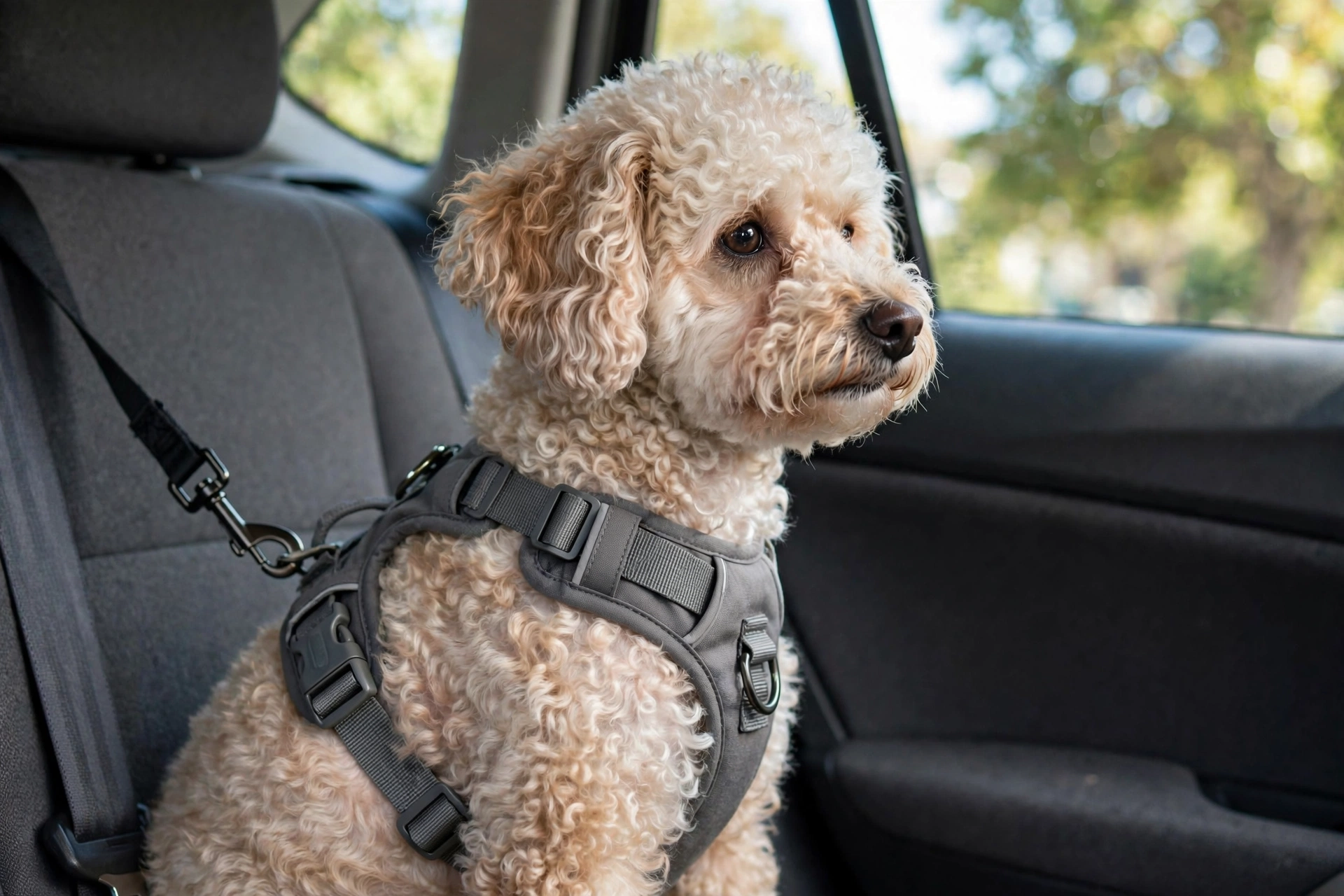
Best for: Dogs that travel — includes a seat belt tether so one harness covers walks and car rides.
If your small dog rides along everywhere, the Tru-Fit doubles as a car safety harness. It ships with a 10-inch seat belt tether that keeps your pup secure in the vehicle, while five adjustment points and a front D-ring handle the walking side. The ripstop fabric stands up to daily use, and the quick-release buckles make transitions fast. Pair it with our guide to the best dog car seats for small dogs for a complete travel setup.
- Pros: Includes car seat belt tether; 5 adjustment points; front no-pull D-ring; durable ripstop fabric
- Cons: Slightly sturdier feel than feather-light vests; overkill if you never drive with your dog
Check price on Amazon: Kurgo Tru-Fit Smart Harness
How to Fit a Harness Correctly
Even the best harness fails if it fits poorly. Follow these steps every time you try a new one:
- Measure first. Use a soft tape around the widest part of your dog’s ribcage, just behind the front legs. Shop by this chest girth number, not by breed or weight.
- Apply the two-finger rule. You should be able to slide two fingers snugly between the harness and your dog’s body at every strap. More room means it’s too loose; if you can’t fit two fingers, it’s too tight.
- Position the straps. The neck strap should sit on the shoulders, not the throat. The chest strap should rest on the breastbone, and the belly strap should sit well behind the front legs.
- Do the wiggle test. Let your dog move, sit, and lie down indoors. Watch for twisting, gaping at the shoulders, or leg openings that creep toward the armpits.
- Recheck regularly. Puppies grow fast, and seasonal coat changes alter fit. Recheck the two-finger rule monthly — and see our puppy socialization checklist for safe early walk experiences.
Frequently Asked Questions
Are harnesses better than collars for small dogs?
For most small dogs, yes. Collars concentrate force on the neck and windpipe, which is a real concern for breeds prone to tracheal issues. A harness distributes pressure across the chest and shoulders, giving you better control with less risk. Many owners keep a collar with ID tags for identification and use a harness for actual walks.
Should I get a front-clip or back-clip harness?
Front-clip harnesses are better for dogs that pull, because the chest attachment redirects lunging. Back-clip harnesses are more comfortable for polite walkers and reduce tangling. If you’re unsure, a dual-clip model (like the rabbitgoo or Ruffwear Front Range above) lets you try both.
Can my small dog sleep in their harness?
It’s best to remove the harness indoors. Even soft vests can rub over long periods, trap moisture, or snag on furniture. Let your dog’s skin breathe at home and save the harness for walks and outings.
How do I stop my small dog from backing out of a harness?
First, tighten straps to the two-finger rule — most escapes happen because the harness is too loose. Choose designs with a third belly strap behind the ribcage or a snug step-in vest. Practice indoors, and reward calm behavior so your dog doesn’t learn that struggling gets them free.
What size harness does a Cavalier King Charles Spaniel need?
Most adult Cavaliers fit a small or medium harness depending on the brand, typically with a chest girth around 16–20 inches. Always measure rather than guessing — and if you’re flying with your pup, check our guide to flying with a small dog for carrier and harness tips. For breed-specific gear advice, our small dogs for apartments guide covers more compact-breed essentials.
As an Amazon Associate, PetPostHub earns from qualifying purchases.