
Flying with a Small Dog: The Complete Stress-Free Travel Guide
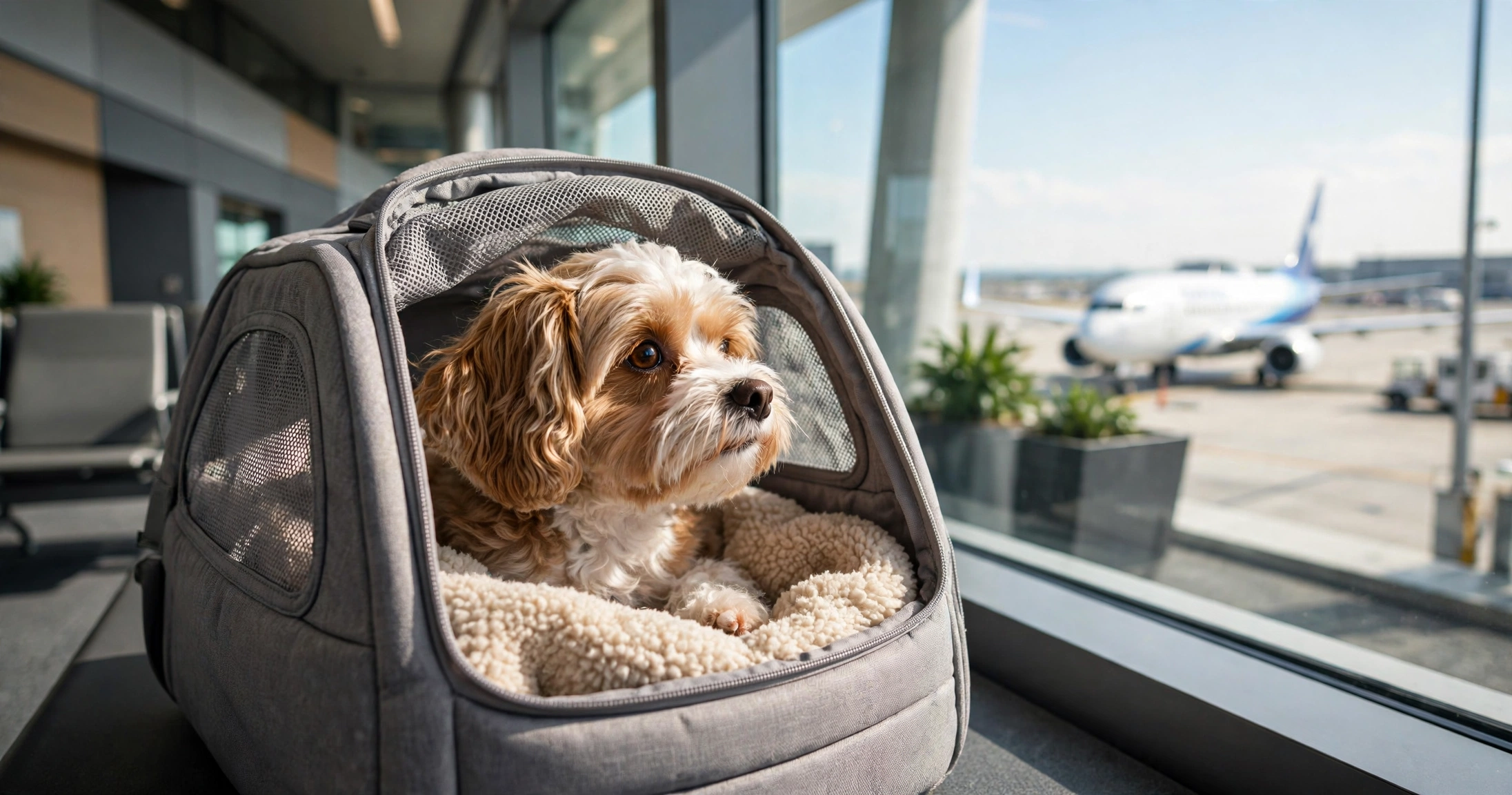
Flying with a small dog can feel overwhelming the first time — the fees, the carrier rules, the paperwork, the worry about your pup in a noisy cabin. But here’s the good news: small dogs are the easiest pets to fly with, because most airlines let them ride right in the cabin with you, tucked under the seat in a soft carrier. No cargo hold, no separation, no stress for either of you.
This guide walks you through everything step by step: cabin vs. cargo, picking a pet-friendly airline, choosing the right carrier, the vet visit and paperwork, booking your dog’s ticket, airport-day tips, in-flight comfort, and what to do after you land.
Table of Contents
- 1. Cabin vs. Cargo: Why Small Dogs Should Fly In-Cabin
- 2. Choosing a Pet-Friendly Airline
- 3. Choosing the Right Carrier
- 4. The Vet Visit & Paperwork
- 5. Booking Your Dog’s Ticket
- 6. Airport Day Tips
- 7. In-Flight Comfort
- 8. After Landing
- Flying with a Dog Checklist
- Frequently Asked Questions
1. Cabin vs. Cargo: Why Small Dogs Should Fly In-Cabin
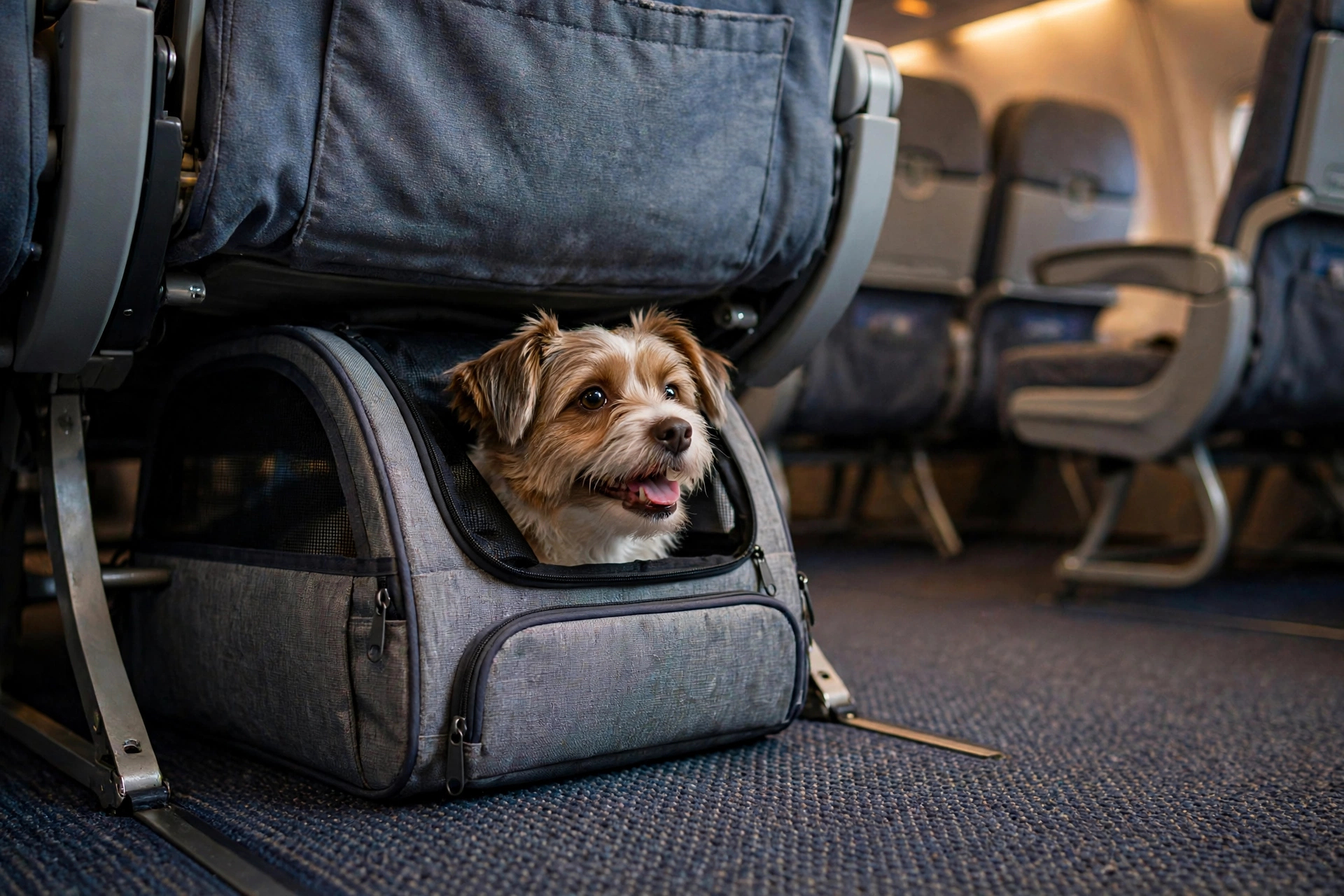
Airlines generally allow small dogs to fly in the cabin as carry-on pets, as long as they fit comfortably in a soft carrier that slides under the seat in front of you. Most U.S. carriers cap the combined weight of dog plus carrier around 15–20 pounds — perfect for breeds like Cavaliers, Maltese, Shih Tzus, and French Bulldogs.
In-cabin is far less stressful than cargo: your dog stays with you, you can monitor their comfort, and there’s no risk of extreme temperatures or handling mishaps in the hold. For a small dog, there is almost never a reason to choose cargo. Brachycephalic (flat-faced) breeds like Pugs and Frenchies are often banned from cargo entirely for safety reasons, so cabin travel is the way to go.
Helpful pick: Sherpa Original Deluxe Airline-Approved Pet Carrier — a classic soft-sided carrier with a spring-wire frame that compresses to fit under the seat; locking zippers and mesh ventilation keep your pup secure and comfy.
2. Choosing a Pet-Friendly Airline

Not all airlines treat four-legged passengers the same. Compare these factors before you book:
- Pet fee: In-cabin fees typically run $95–$200 each way on major U.S. airlines. Confirm the current fee before booking.
- Pets per flight: Most airlines allow only 2–4 pets in the main cabin, so book your dog’s spot as early as possible.
- Weight and breed rules: Check the weight cap (dog + carrier) and any breed restrictions.
- Seat restrictions: Pets often aren’t allowed in exit rows, bulkhead seats, or first class on aircraft with lie-flat seats, since the carrier must fit under the seat in front of you.
Delta, United, American, Alaska, and JetBlue all allow in-cabin small dogs with advance reservations. Alaska and JetBlue tend to get high marks from pet travelers for clear policies and friendly service. Always call the airline’s pet desk after booking your own ticket to add your dog — online systems don’t always handle pet reservations.
Helpful pick: Zesty Paws Calming Chews — start these a few days before travel (with your vet’s okay) to help your dog stay relaxed through the whole flying process.
3. Choosing the Right Carrier
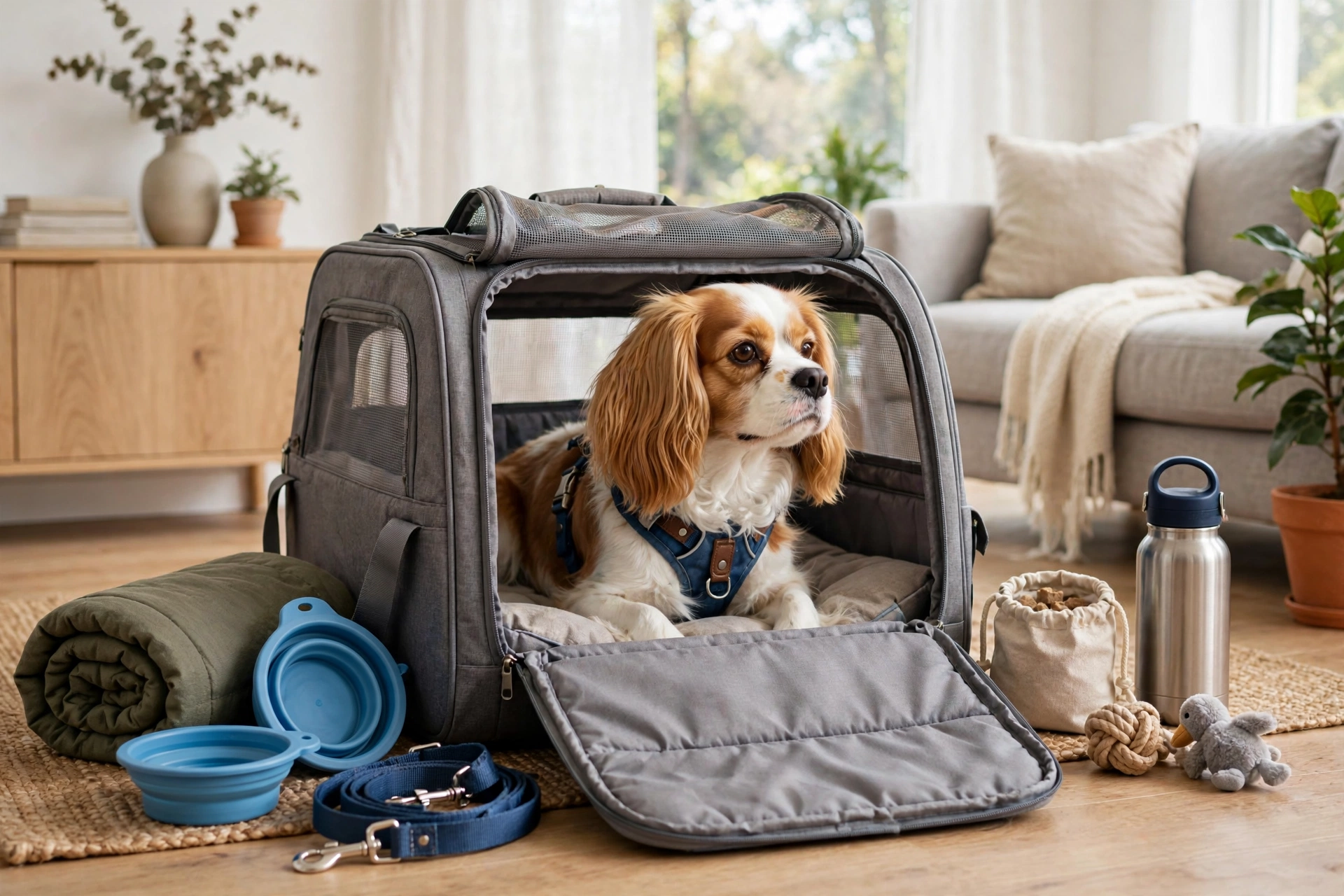
The carrier is the single most important purchase for flying. Airlines require a soft-sided carrier that fits under the seat in front of you, with enough room for your dog to stand, turn around, and lie down comfortably. Look for:
- Soft, compressible sides that squeeze under tight seat spaces
- Mesh panels on at least three sides for ventilation
- Locking zippers (escape artists are real)
- Top and side entries so you can load your dog without a struggle
- A removable, washable liner
Start carrier training weeks before the trip: leave it open at home with treats and a cozy blanket inside, feed meals in it, and take short car rides in it. Your dog should view the carrier as a safe den, not a trap. Never sedate your dog for a flight — most airlines prohibit it because sedation can interfere with breathing and balance at altitude.
Helpful pick: Sleepypod Air In-Cabin Pet Carrier — its folding design expands for more room at cruising altitude and compresses for takeoff and landing, adapting to different airlines’ under-seat dimensions.
4. The Vet Visit & Paperwork
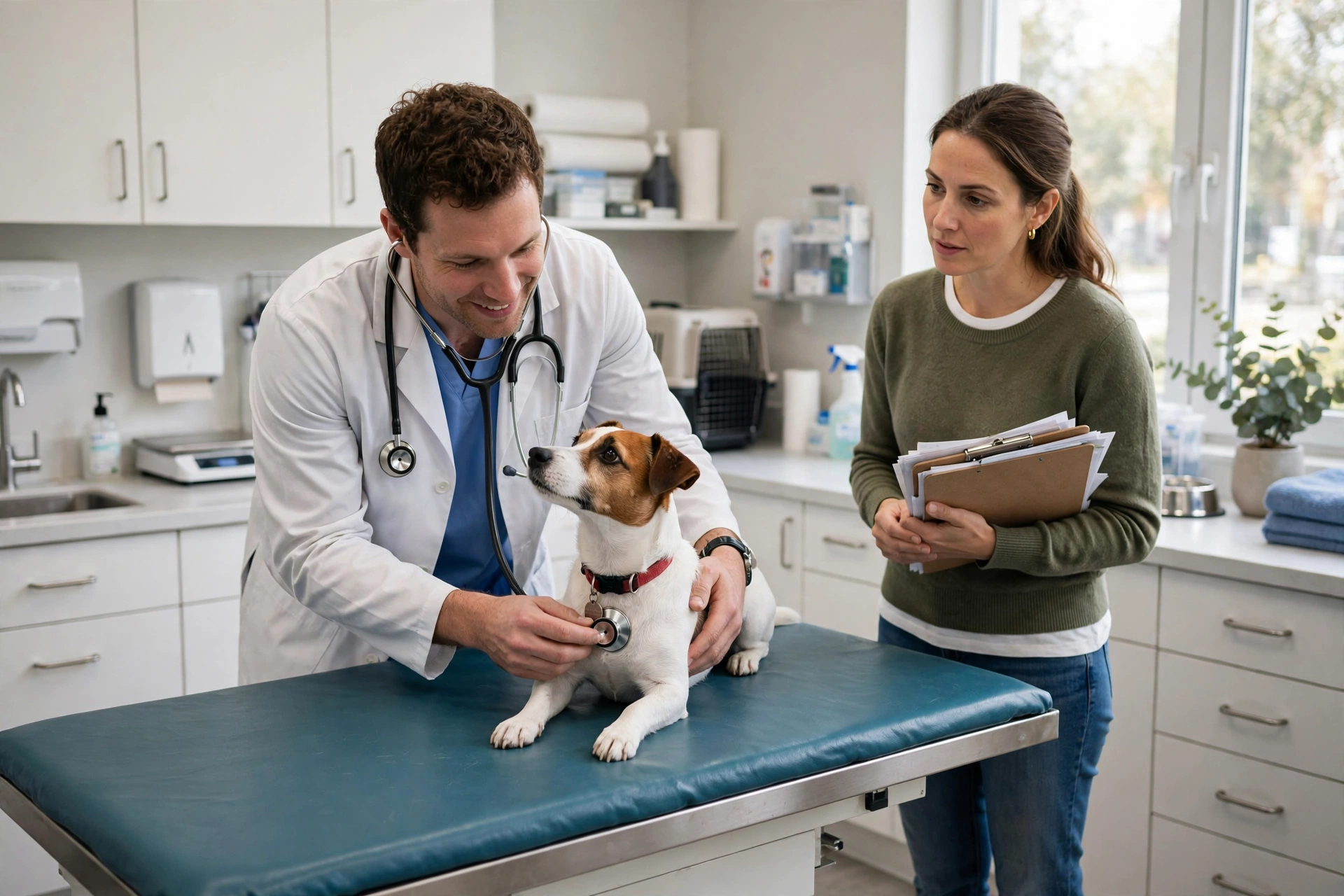
Most domestic flights require a health certificate issued by a USDA-accredited veterinarian within 10 days of departure. During the visit, your vet will confirm your dog is healthy enough to fly, verify rabies vaccination, and complete the certificate. Some states have additional entry requirements, so check ahead.
International travel is stricter: you’ll typically need an APHIS 7001 health certificate, current rabies vaccination, microchip documentation, and sometimes an import permit or additional testing depending on the destination. Start this process weeks — not days — before an international trip.
Keep both digital and paper copies of everything: health certificate, rabies records, and your vet’s contact info. And make sure your dog’s ID tag is current before you leave home — if you somehow get separated in a busy terminal, an up-to-date tag is your fastest reunion ticket.
Helpful pick: GoTags Personalized Engraved Dog ID Tag — deep-engraved with your phone number so it’s readable even in a chaotic airport; update it before you fly.
5. Booking Your Dog’s Ticket
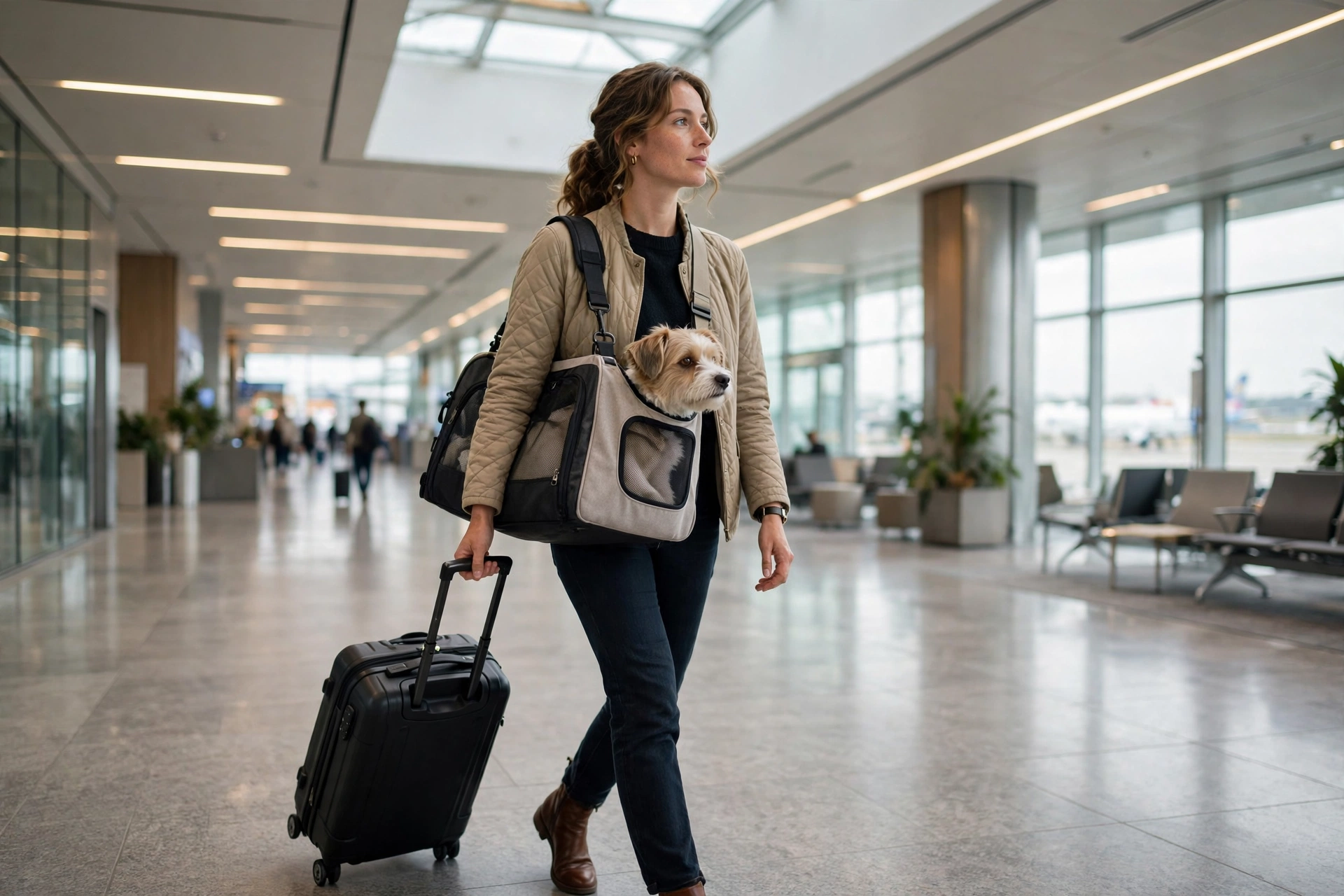
Book your own ticket first, then call the airline immediately to add your dog — pet spots are limited and sell out on popular routes and holidays. Pay the pet fee (usually collected at check-in or when you call), and get written confirmation of the pet reservation on your itinerary.
Choose a direct flight whenever possible. Layovers add hours of stress, and tight connections are risky when you’re moving through the airport with a dog. Also book a window seat if you can — it gives your carrier a bit more under-seat space and keeps your dog away from aisle traffic.
Feed a light meal 4–6 hours before departure, not a full breakfast right before the airport. And plan for hydration from curb to gate: airport walks, security lines, and dry cabin air are thirsty work for a small dog.
Helpful pick: Tuff Pupper PupFlask Portable Water Bottle — the flip-up silicone cup gives your dog water anywhere in the terminal with zero waste, and unused water flows back into the bottle.
6. Airport Day Tips
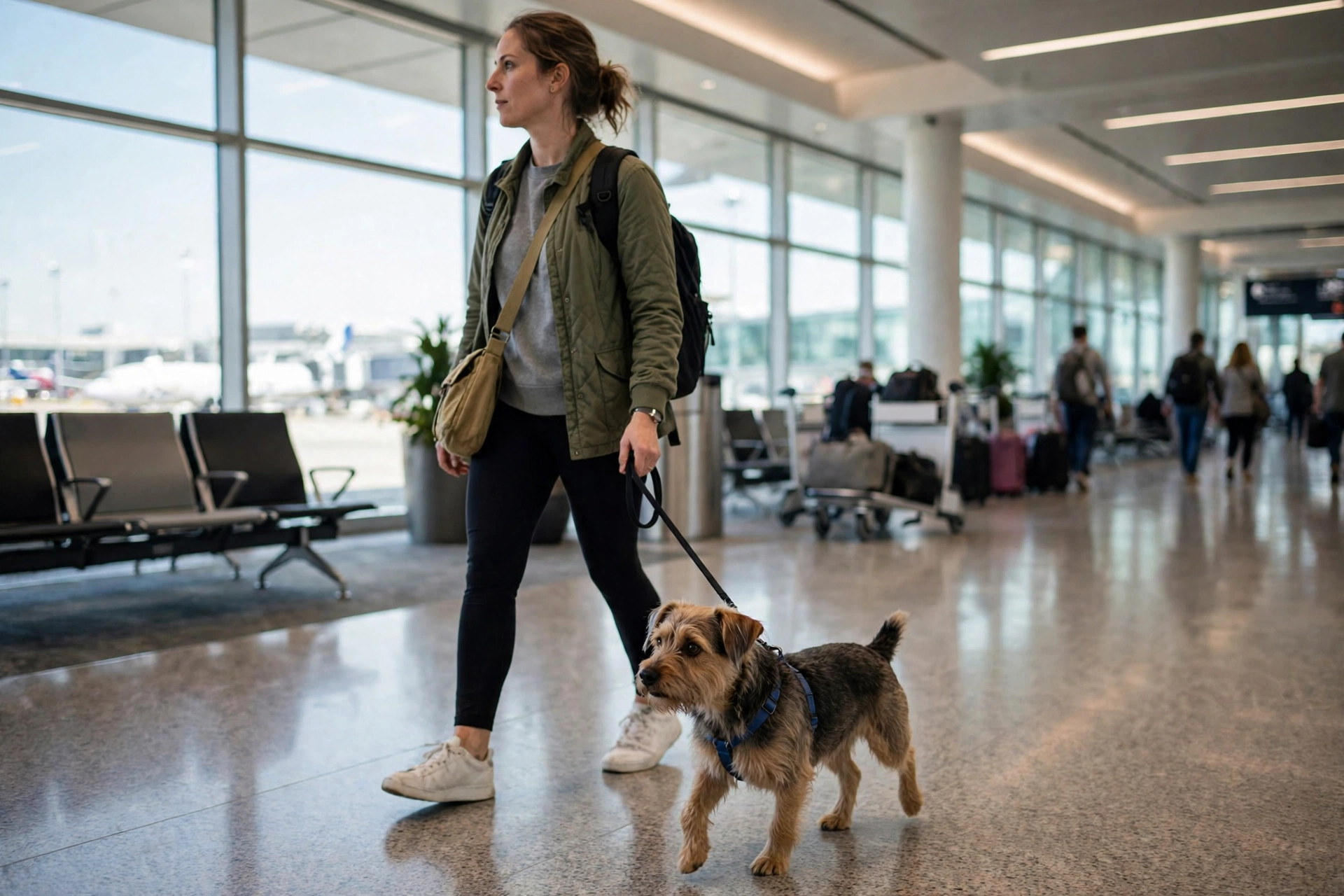
Arrive at least 30–60 minutes earlier than you normally would — pet check-in takes extra time. Give your dog a long walk or play session before you leave for the airport; a tired dog is a calm dog.
At security, you’ll carry your dog through the metal detector while the carrier goes through the X-ray belt (the dog never goes through the scanner). Use a secure harness and a short leash for this moment — it’s the one time your dog is outside the carrier in a very busy place.
Find the airport’s pet relief area before your flight and visit it one more time right before boarding. Accidents still happen, though, especially on long travel days — tuck a few pee pads in an outer pocket of your carry-on just in case.
Helpful pick: Amazon Basics Puppy Pee Pads — pack a couple in your personal item for terminal accidents or long delays; they weigh almost nothing.
7. In-Flight Comfort
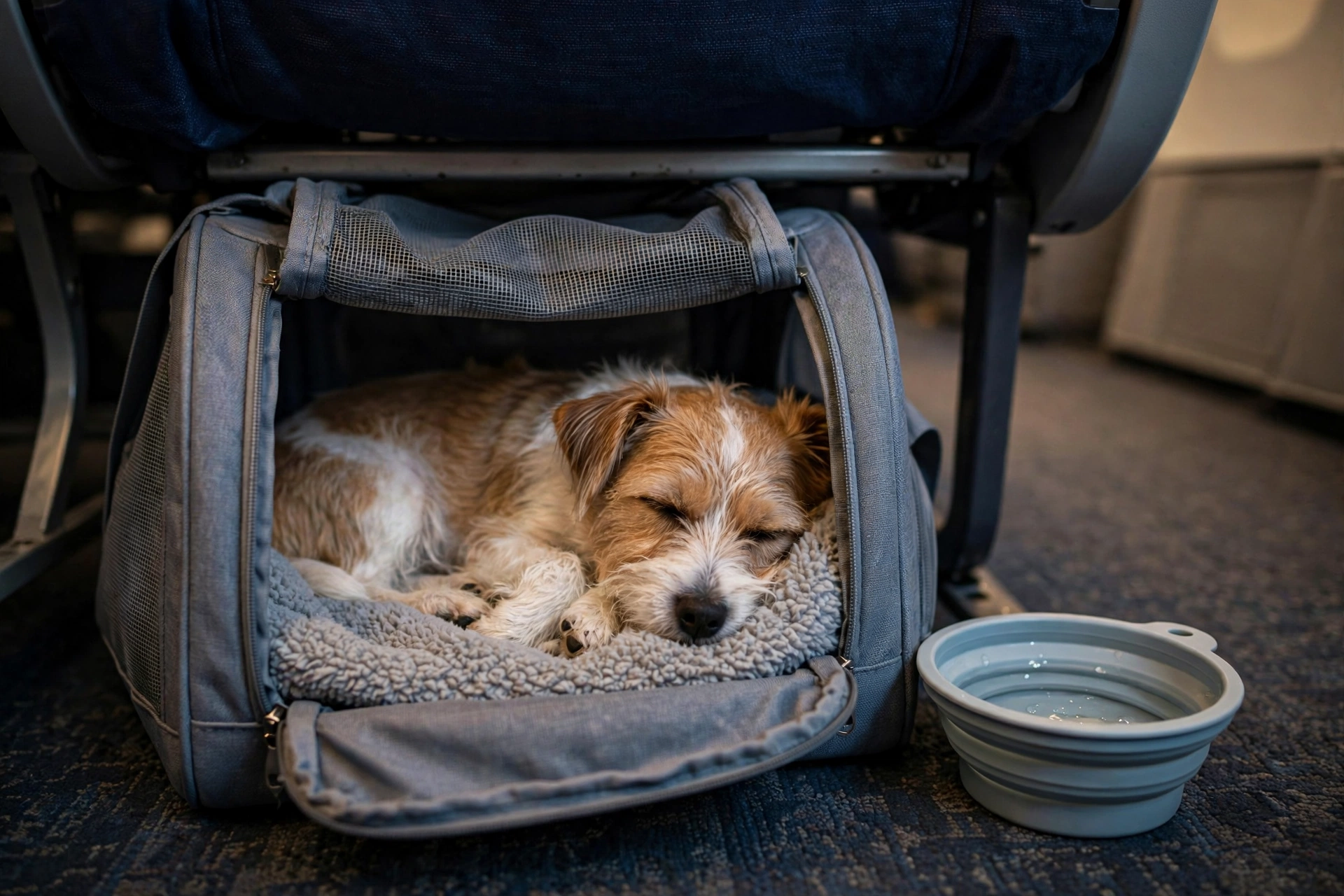
Once you’re at your seat, slide the carrier under the seat in front of you and settle in. Your dog must stay inside the carrier for the entire flight — but you can unzip the top slightly to offer reassurance, a treat, or a sip of water at cruising altitude.
Offer small sips of water during the flight; cabin air is dry and dehydration makes stress worse. Skip the in-flight meal — an empty-ish stomach travels better than a full one. A familiar-smelling blanket inside the carrier and a quiet chew or lick mat (used at home first) can keep your pup occupied and soothed.
Your calm energy matters most. Dogs read your body language, so relaxed breathing and a steady hand on the carrier do more than any gadget. Talk to your dog softly during takeoff and landing, when the noise and pressure changes are most noticeable.
Helpful pick: Prima Pet Collapsible Travel Bowl — folds flat to under half an inch, pops open for mid-flight water, and clips to your bag for the rest of the trip.
8. After Landing
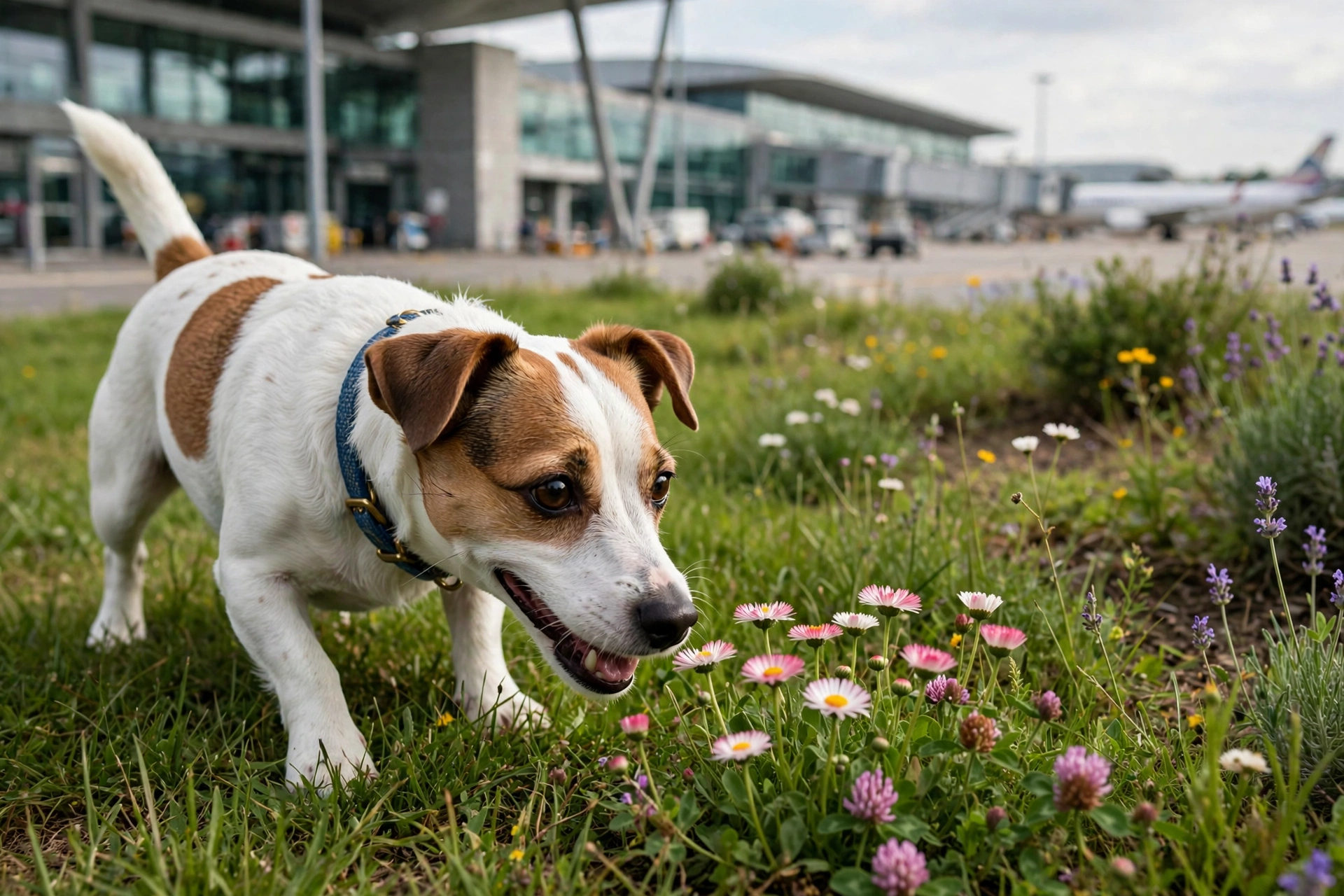
Head straight to a pet relief area or outside once you deplane — your dog has been holding it for hours. Let them sniff, stretch, and decompress before you rush to baggage claim.
New places smell strange and feel strange. Give your dog a familiar comfort item in the hotel or rental: their blanket, a favorite toy, or a heartbeat comfort toy that mimics the warmth of home. Keep the first day low-key — a short walk, a normal meal routine, and plenty of rest will reset their internal clock faster than a packed sightseeing schedule.
Keep your dog’s routine as close to home-normal as possible: same food, same feeding times, same bedtime. Within a day or two, most small dogs bounce back completely — and you’ll have a seasoned little traveler for the next trip.
Helpful pick: Snuggle Puppy Heartbeat Stuffed Toy — the pulsing heartbeat and warmth mimic sleeping next to a companion, easing first-night-in-a-new-place jitters.
Flying with a Dog Checklist
- Airline-approved soft carrier (carrier-trained dog inside it)
- Health certificate (within 10 days) + rabies records — digital and paper copies
- Up-to-date ID tag on collar + leash and harness
- Pet reservation confirmed with the airline; pet fee paid
- Portable water bottle + collapsible bowl
- Pee pads and waste bags
- Treats, a chew, and a familiar blanket
- Calming chews (if your vet approves)
- Comfort toy for the destination
Frequently Asked Questions
How much does it cost to fly with a small dog?
In-cabin pet fees on major U.S. airlines typically run $95–$200 each way. Add a carrier ($40–$150), health certificate ($50–$150), and vet exam, and a domestic cabin trip usually totals $200–$500+.
How old does my dog need to be to fly?
Most airlines require puppies to be at least 8–10 weeks old for domestic flights, and 16 weeks for international travel. Very young puppies handle travel stress poorly, so wait until yours is settled.
Can I take my dog out of the carrier during the flight?
No — airlines require pets to stay inside their carrier under the seat for the entire flight. You can unzip the top briefly to offer water or comfort, but your dog can’t sit on your lap.
Do I need a health certificate for a domestic flight?
Most airlines require one issued within 10 days of travel by a USDA-accredited vet. Requirements vary by airline and destination state, so confirm with your airline before the vet visit.
Is it safe to sedate my dog for a flight?
No. Most airlines prohibit sedation because it can impair breathing and balance at altitude, and a sedated dog can’t regulate body temperature as well. Talk to your vet about calming alternatives instead.
Related reading: questions to ask before boarding your dog (for trips you can’t take them on), helping a dog with separation anxiety, best small dogs for apartments, and Cavalier pros and cons if you’re considering the ultimate travel companion breed.
As an Amazon Associate, PetPostHub earns from qualifying purchases.




2 Comments