
How to Introduce Your Dog to a New Baby: 9 Safety Steps

Bringing a newborn home is one of life’s biggest transitions — and your dog feels it just as deeply as you do. If you’re wondering how to introduce your dog to a new baby safely, the good news is that a little preparation goes a long way. Dogs that are prepared gradually, introduced calmly, and supervised consistently can grow into wonderful, gentle companions for your child. This guide walks you through 9 practical safety steps, starting months before your baby arrives and continuing into those early weeks of family life.
Table of Contents
- 1. Start Training Months Before the Baby Arrives
- 2. Familiarize Your Dog with Baby Sounds and Smells
- 3. Set Up Baby Zones with Gates Before Day One
- 4. Practice Stroller Walks Ahead of Time
- 5. Follow a Calm First-Meeting Protocol
- 6. Never Leave Your Dog and Baby Unsupervised
- 7. Teach Children to Handle Dogs Gently
- 8. Learn to Read Your Dog’s Body Language
- 9. Keep Your Dog’s Routine as Stable as Possible
- Red Flags to Watch
- Frequently Asked Questions
1. Start Training Months Before the Baby Arrives

The best time to polish your dog’s manners is well before the baby comes home. Focus on the behaviors that will matter most: sit, down, stay, leave it, go to your place, and loose-leash walking. A dog that can settle on cue in a busy room will find the chaos of a newborn household far less overwhelming. Practice these commands in short, positive sessions of 5 to 10 minutes, rewarding calm behavior generously.
Also use this window to break undesirable habits — jumping on people, barking at the doorbell, or counter surfing. Trying to fix these behaviors while sleep-deprived with a newborn is miserable, so handle them now while you have the energy.
Helpful pick: STMK Dog Training Clicker Kit — makes rewarding good manners quick and consistent during prep training.
2. Familiarize Your Dog with Baby Sounds and Smells

Babies bring a flood of unfamiliar sounds and scents — crying, babbling, lotions, diapers. These can be startling for a dog that has never encountered them. Start playing recordings of baby sounds at a low volume during relaxed moments, pairing them with treats so your dog builds a positive association. Gradually increase the volume over a couple of weeks.
For smells, bring home a blanket or hat the baby has worn before the first face-to-face meeting. Let your dog sniff it calmly from a distance, reward relaxed interest, and then put it away. This simple pre-introduction makes the baby feel less like a stranger and more like part of the household.
Helpful pick: Dreamegg Baby Sound Machine — play baby sounds at home to desensitize your dog before the big day.
3. Set Up Baby Zones with Gates Before Day One

Dogs need safe spaces and clear boundaries when a baby arrives. Install baby gates at the nursery doorway and any other off-limits areas weeks before the birth so your dog adjusts to the new rules while things are still calm. The nursery should be a dog-free zone — not because your dog is dangerous, but because you need a space where the baby can sleep undisturbed and the dog can’t knock things over in excitement.
Pair the gate with something positive: feed your dog meals near (not in) the nursery area, or give a stuffed chew just outside the gate, so the boundary feels normal rather than punishing. Also set up a cozy dog-only retreat — a bed or crate — where your dog can escape household noise whenever they need quiet time.
Helpful pick: Cumbor Auto-Close Baby Gate — creates clear, safe boundaries without trapping fingers or paws.
4. Practice Stroller Walks Ahead of Time
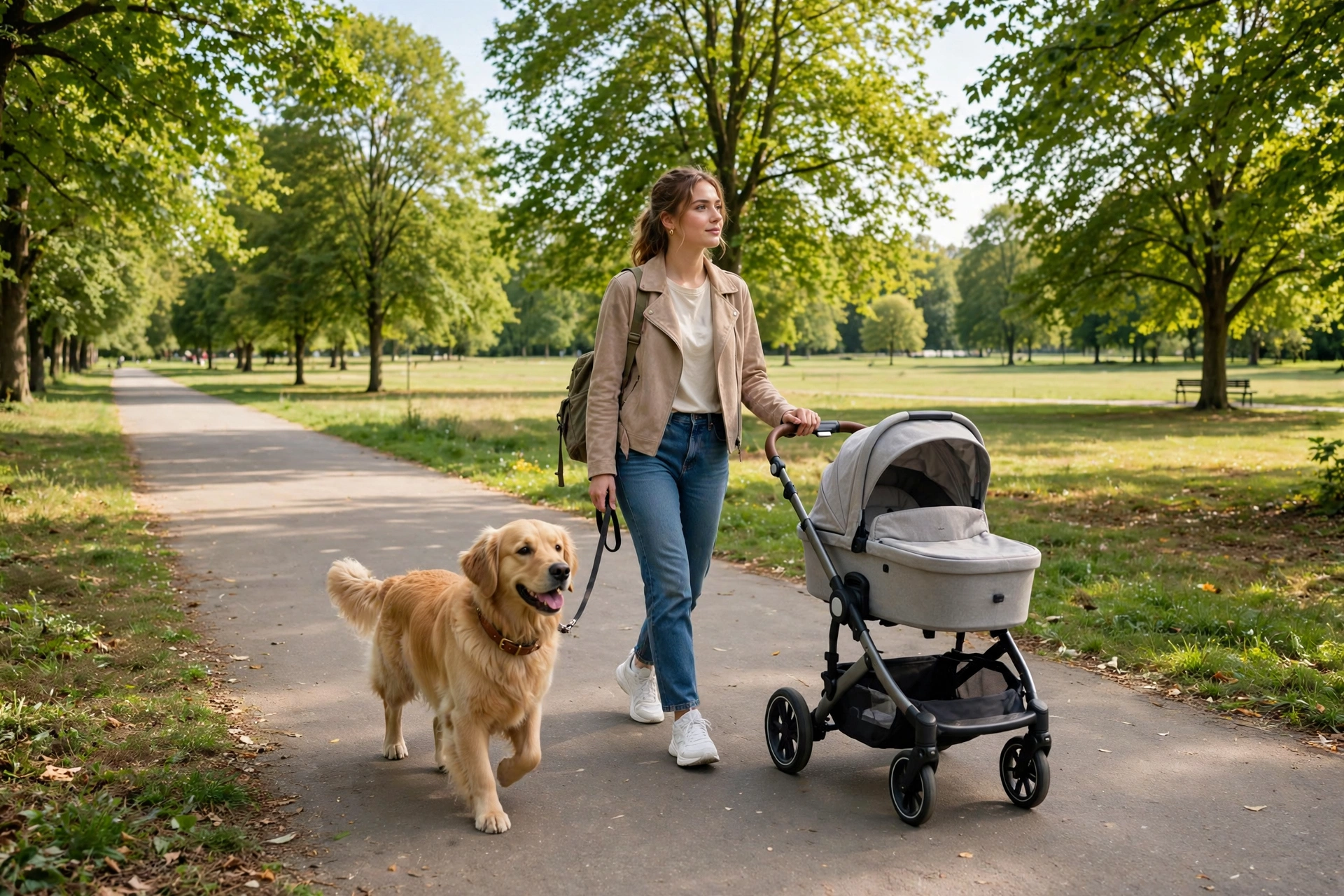
Walking a dog while pushing a stroller is a skill — for you and your dog. The stroller’s wheels, bulk, and unfamiliar motion can unsettle a dog that has never seen one. Take the empty stroller out on several practice walks so your dog learns to walk politely beside it without pulling, lunging, or cutting you off.
Teach a solid heel position on one consistent side. Reward your dog for checking in with you instead of fixating on the stroller. If handling both feels impossible, plan ahead: arrange a walking buddy for the first few weeks, or hire a dog walker for midday outings so exercise doesn’t slip.
Helpful pick: Joytale 30ft Training Leash — great for practicing recall and loose-leash skills during stroller training sessions.
5. Follow a Calm First-Meeting Protocol

When the day comes, keep the first introduction short, calm, and controlled. There’s no rush — waiting a day or two until everyone has rested is completely fine. Have one adult hold the baby while another handles the dog on a leash. Let your dog approach from a short distance, sniff the baby’s feet or wrapped legs, and then calmly walk away. That’s it. Reward relaxed behavior with praise and a treat.
What not to do: don’t put the car seat on the floor and let the dog swarm it. Don’t force interaction if your dog seems nervous or overexcited — just try again later. Keep these leashed greetings brief and repeat them daily until your dog treats the baby as ordinary, boring household background.
Helpful pick: Egiao Dog Treat Pouch — keeps rewards handy for reinforcing calm behavior during introductions.
6. Never Leave Your Dog and Baby Unsupervised
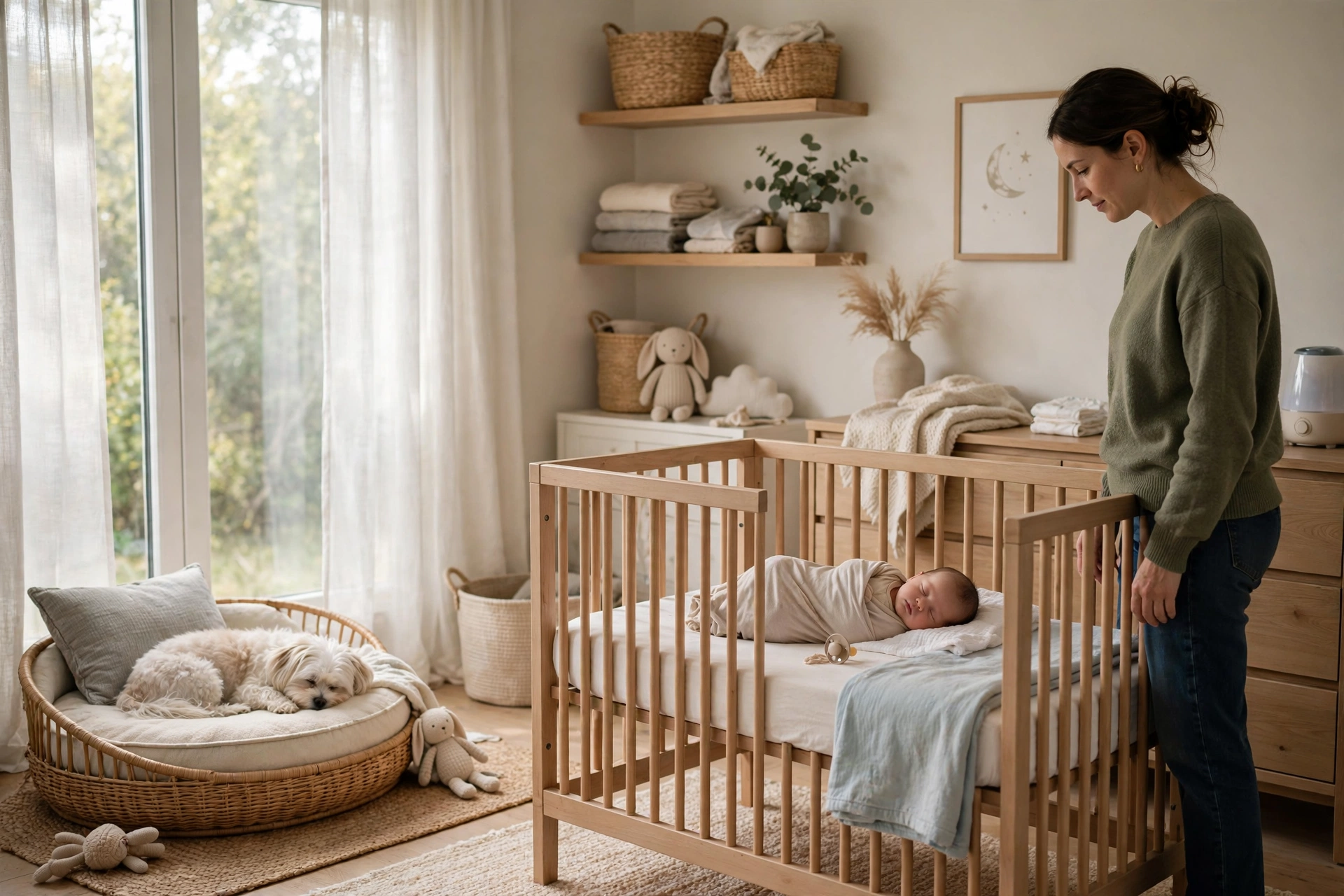
This is the single most important safety rule: never leave your dog and baby alone together — not for a moment, not even if your dog is the gentlest creature alive. Babies have fragile skin and make sudden, unpredictable movements that can startle any dog. Accidents don’t come from “bad” dogs; they come from unsupervised moments.
Use gates, closed doors, and crates to create physical separation whenever you can’t actively supervise. When baby is sleeping, close the nursery door so the dog can’t wander in. As your child grows and becomes mobile, you’ll need even more layers of management — a crawling baby chasing a retreating dog is one of the most common stress points for family dogs.
Helpful pick: KONG Classic — a frozen KONG keeps your dog happily occupied nearby during supervised family time.
7. Teach Children to Handle Dogs Gently

As your baby grows into a toddler, the work shifts from managing the dog to teaching the child. Young children naturally grab, climb, and pull — so start teaching gentle hands early. Show your child how to stroke the dog’s back or shoulder softly, and use words like “gentle” every time they touch the dog.
Set clear rules: no pulling ears or tails, no climbing on the dog, no disturbing the dog while eating or sleeping, and no approaching the dog’s crate — that space is off-limits to little hands. Practice with a stuffed animal first if your toddler is still too grabby. Praise your child warmly for gentle touches, and always supervise so you can redirect before frustration builds on either side.
Helpful pick: Snuggle Puppy Heartbeat Toy — lets kids practice soft, gentle handling before they touch the real dog.
8. Learn to Read Your Dog’s Body Language
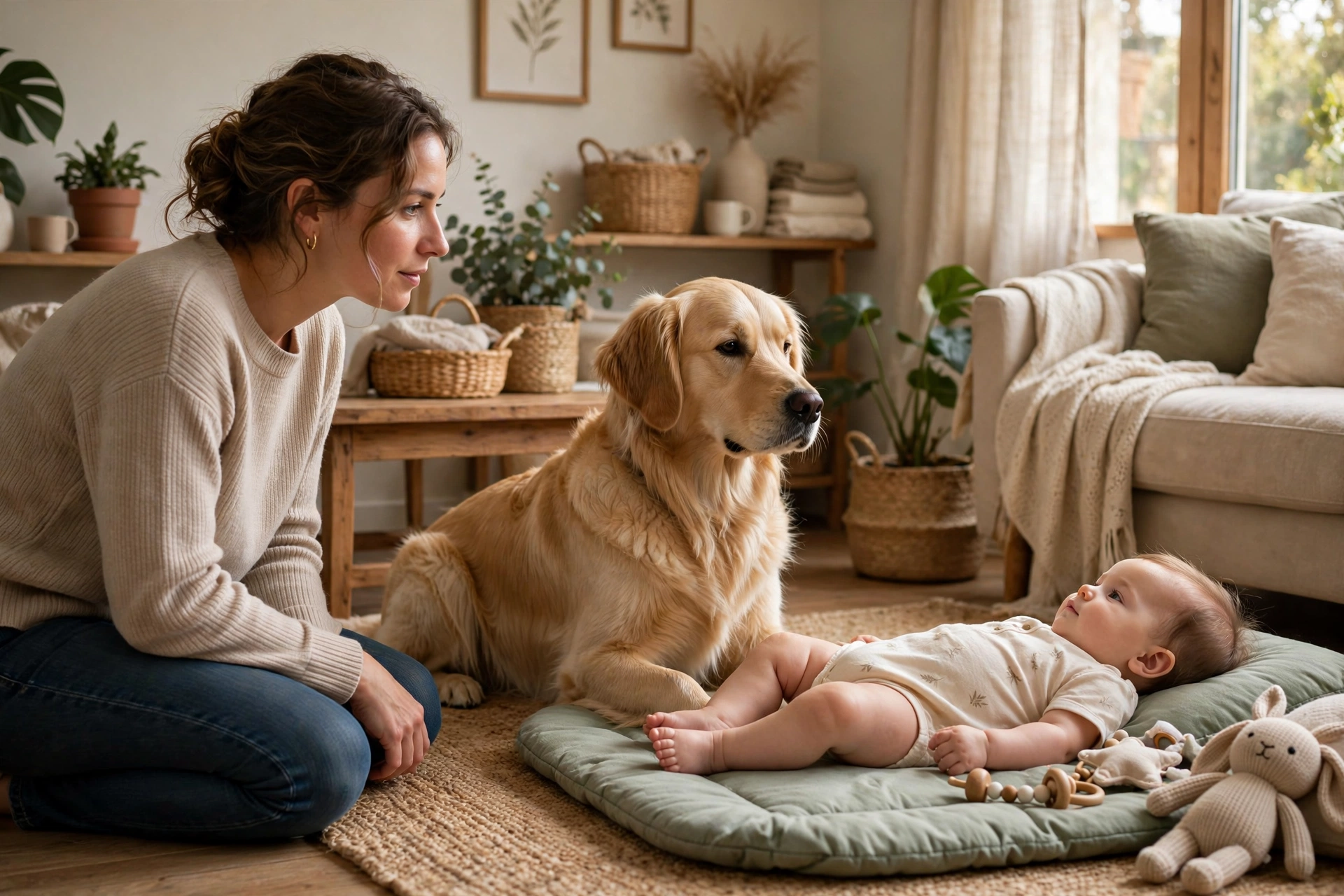
Most dog-baby conflicts are preceded by stress signals that went unnoticed. Learn your dog’s early warning language: lip licking, yawning when not tired, turning away, a tucked tail, pinned-back ears, or a hard stare. These are your dog’s way of saying “I’m uncomfortable” — and they’re your cue to calmly create distance before tension escalates.
Give your dog choice and escape routes. A dog that can move away from the baby will almost always choose to move away rather than react. Watch especially during high-energy moments — crawling babies, loud crying, or chaotic play — and step in early with a calm redirect. The earlier you spot stress, the easier it is to keep everyone safe.
Helpful pick: LickiMat Soother — gives your dog a soothing job to focus on during busy, noisy baby moments.
9. Keep Your Dog’s Routine as Stable as Possible

A new baby disrupts everything — including your dog’s meals, walks, and playtime. Dogs thrive on predictability, so protect your dog’s routine as much as you can. Keep feeding times, walk schedules, and bedtime rituals consistent even when the household is chaotic. If you’ll be too busy, line up help before the birth: a partner, friend, family member, or dog walker who can cover the daily walk.
Resist the urge to shower the dog with extra attention right before the birth and then abruptly withdraw it — that sudden shift is stressful. Instead, gradually build the new normal ahead of time, and carve out small daily moments of one-on-one attention so your dog doesn’t feel forgotten in the shuffle.
Helpful pick: ADAPTIL Calm Home Diffuser — supports a calmer atmosphere for your dog during household transitions.
Red Flags to Watch
Most dogs adjust beautifully, but take these warning signs seriously and consult a certified professional dog trainer or veterinary behaviorist promptly:
- Growling, snapping, or baring teeth directed at the baby or child — never punish growling; it’s communication, and suppressing it removes your warning system.
- Resource guarding food, toys, or resting spots from the child.
- Intense staring or stiffening when the baby cries or moves — a sign of over-arousal that needs professional guidance.
- Escalating anxiety: pacing, drooling, hiding, or refusing to eat since the baby’s arrival.
- Any bite, however minor — separate immediately and get professional help before reintroducing.
Frequently Asked Questions
Should I let my dog sniff the baby?
Yes — a brief, supervised sniff of the baby’s feet or wrapped legs is a healthy first introduction. Keep it short, keep the dog leashed, and reward calm behavior. Never allow face licking or unsupervised access.
How long should I wait before introducing my dog to the baby?
There’s no medical rule; it’s about readiness. Many families introduce the dog within the first day or two, while others wait a week or more to recover. Wait until the dog is calm and you have two adults available.
Do I need to rehome my dog if I’m having a baby?
Almost never. With preparation, supervision, and professional help if needed, the vast majority of dogs adjust well to a new baby. Rehoming is a last resort, not a default step.
Can my dog sleep in the same room as the baby?
Not unsupervised. Keep the nursery door closed and gate off the baby’s sleep area. Even a gentle dog can accidentally roll onto or startle a sleeping infant.
What if my dog seems jealous of the baby?
What looks like jealousy is usually stress from disrupted routines or lost attention. Protect your dog’s walk and play schedule, reward calm behavior around the baby, and give short daily one-on-one sessions to rebuild their confidence.
Introducing a dog to a new baby takes patience, but the payoff is enormous: a loyal four-legged companion who grows up alongside your child. For more guidance, read how to introduce a dog to a cat, introducing a new puppy to an older dog, and our dog body language guide to sharpen your observation skills. You may also find signs your dog is stressed and best dog breeds for kids useful as your family grows.
As an Amazon Associate, PetPostHub earns from qualifying purchases.


