
How to Stop a Dog from Marking Territory: 8 Fixes That Work
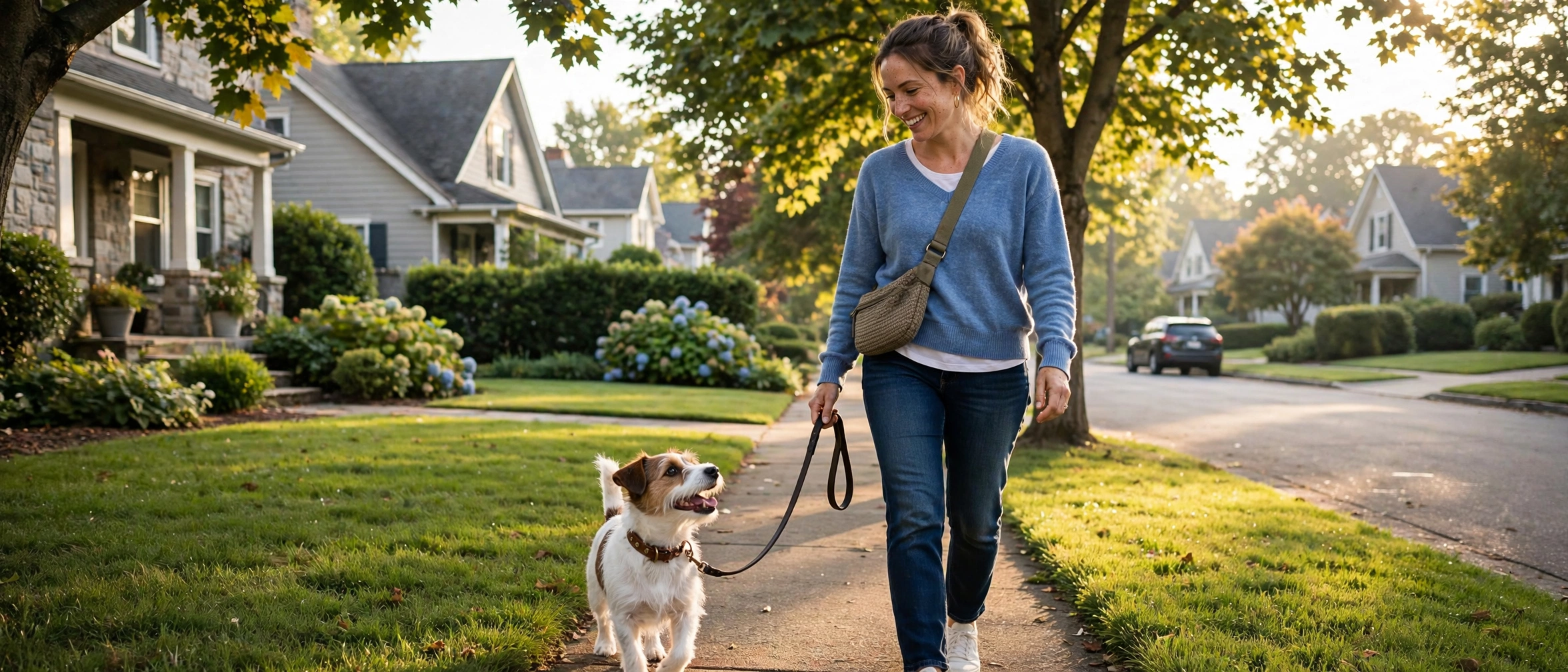
If your dog keeps lifting his leg on the sofa, the curtains, or your guests’ bags, you’re dealing with one of the most frustrating dog behaviors there is. Learning how to stop a dog from marking territory starts with an important realization: marking is not the same as having accidents. Your dog isn’t doing it because he’s “bad” or forgot his house training — he’s communicating the way dogs do.
Urine marking is a normal canine behavior driven by instinct, hormones, anxiety, or excitement. Indoors, though, it becomes a problem fast. The good news is that with the right approach — cleaning properly, managing triggers, and training consistently — most dogs can learn to stop marking inside your home. Let’s walk through 8 fixes that actually work.
Table of Contents
- 1. Clean Old Spots with an Enzymatic Cleaner
- 2. Talk to Your Vet About Spaying or Neutering
- 3. Supervise Closely and Interrupt Calmly
- 4. Use Belly Bands as a Management Tool
- 5. Retrain House Training Basics
- 6. Reduce Triggers (New Dogs, Visitors, Changes)
- 7. Keep a Consistent Routine with Regular Exercise
- 8. Manage Multi-Dog Households Smartly
- Marking vs. Needing to Pee: How to Tell
- What NOT to Do When Your Dog Marks
- Frequently Asked Questions
1. Clean Old Spots with an Enzymatic Cleaner
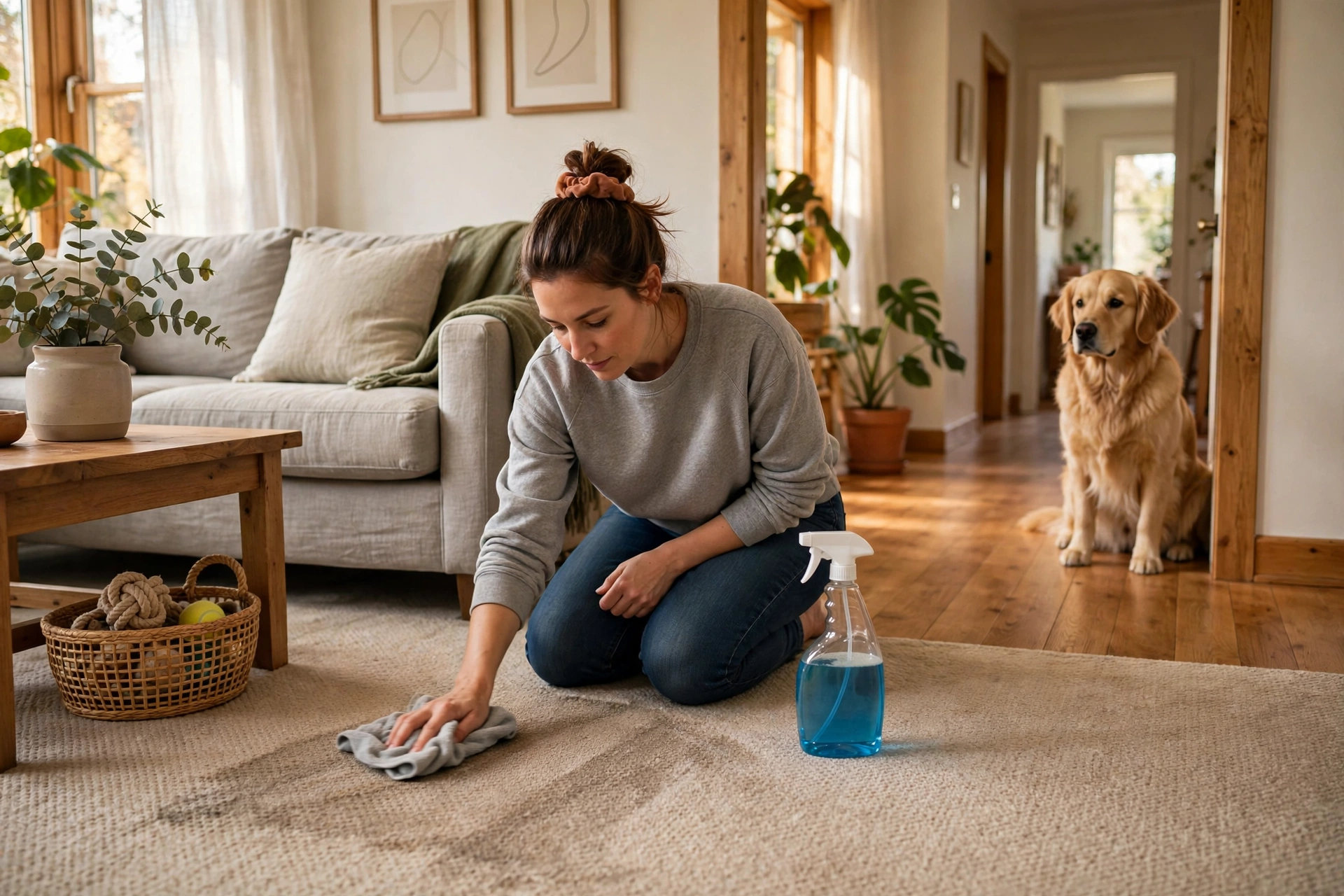
The single biggest mistake owners make is cleaning marked spots with regular household cleaners. Dogs return to spots that still smell like urine — and your nose can’t detect what your dog’s can. Only an enzymatic cleaner actually breaks down the urine proteins that invite repeat marking.
Soak the area generously (not just the surface — the pad underneath matters), let it air-dry completely, and don’t let your dog near the spot while it dries. Use a UV/blacklight flashlight at night to find hidden spots you didn’t even know existed.
Tip: Avoid ammonia-based cleaners. Ammonia smells like urine to dogs and can actually attract more marking.
Helpful pick: Rocco & Roxie Stain & Odor Eliminator — an enzyme-based formula made specifically to destroy pet urine odor at the source.
2. Talk to Your Vet About Spaying or Neutering

Intact male dogs mark far more often than neutered ones — research suggests neutering can cut marking behavior dramatically, especially if done before it becomes a habit. The procedure isn’t instant magic (hormones take weeks to settle), but it’s the most effective single long-term fix for hormonally-driven marking.
Your vet visit does double duty: a checkup also rules out medical causes like urinary tract infections, bladder stones, or incontinence that can look exactly like marking. Never assume a behavior is “just marking” without clearing medical issues first.
Tip: If anxiety is driving the marking, ask your vet about calming support alongside training — anxious dogs often mark to self-soothe.
Helpful pick: ADAPTIL Calm Home Diffuser — releases a vet-recommended calming pheromone that can support anxious markers during behavior changes.
3. Supervise Closely and Interrupt Calmly
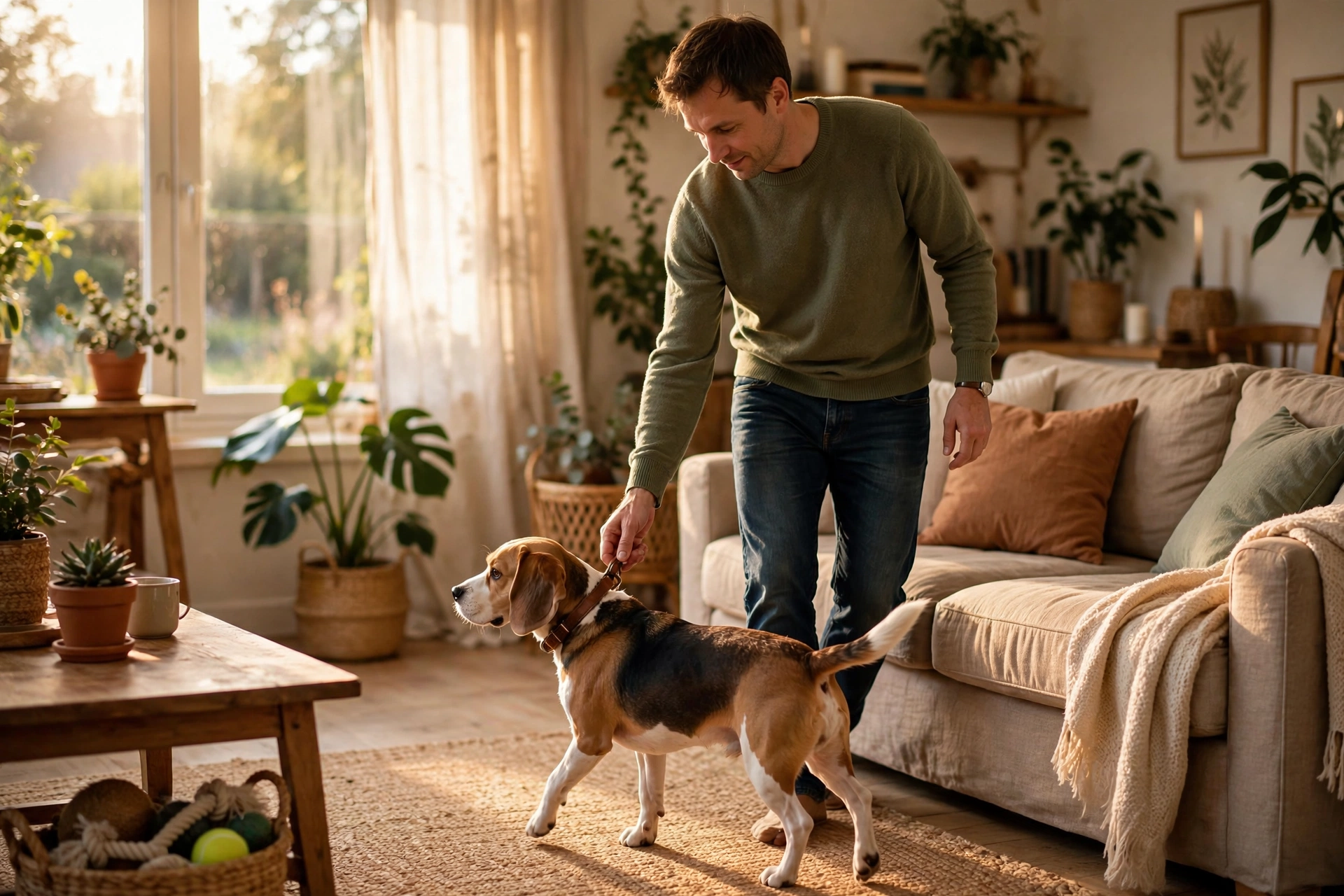
Marking is a moment you can prevent — if you’re there. Until the habit fades, keep your dog in sight indoors. When you can’t supervise, confine him to a crate or an easy-to-clean room. This isn’t punishment; it’s management.
Watch for the telltale lead-up: intense sniffing of a vertical surface, circling, or the start of a leg lift. Interrupt with a calm, neutral sound (a clap or “uh-oh”) — not yelling — then immediately take him outside and reward him for peeing there. Rewarding the right choice is far more powerful than punishing the wrong one.
Tip: A well-timed clicker can sharpen your timing when you redirect and reward — precision matters.
Helpful pick: STMK Dog Training Clicker Kit — marks the exact moment your dog makes the right choice, speeding up redirect training.
4. Use Belly Bands as a Management Tool
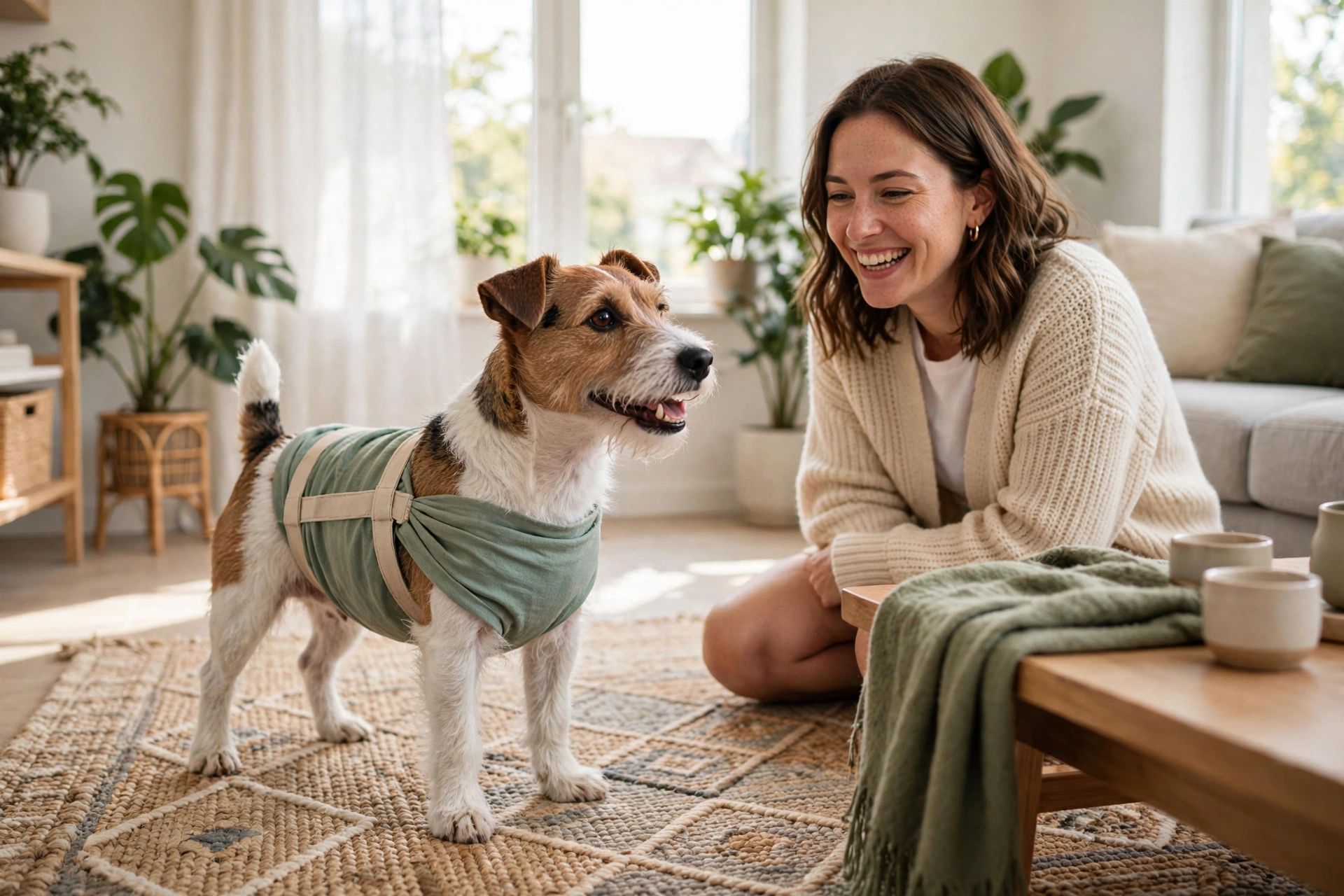
For male dogs, belly bands (absorbent wraps worn around the waist) are a lifesaver during retraining. They don’t teach your dog not to mark — but they protect your furniture and carpets while training takes effect, and many dogs dislike the sensation of wetting the band, which discourages the habit.
Use bands while you’re supervising and actively training, and take them off regularly for breaks. Never use them as a substitute for house training — they’re training wheels, not a solution.
Tip: Measure your dog’s waist right in front of his hind legs and size up if he’s between sizes; a snug (not tight) fit is key.
Helpful pick: PET MAGASIN Male Dog Belly Bands (3-Pack) — washable, adjustable wraps designed for marking and training.
5. Retrain House Training Basics
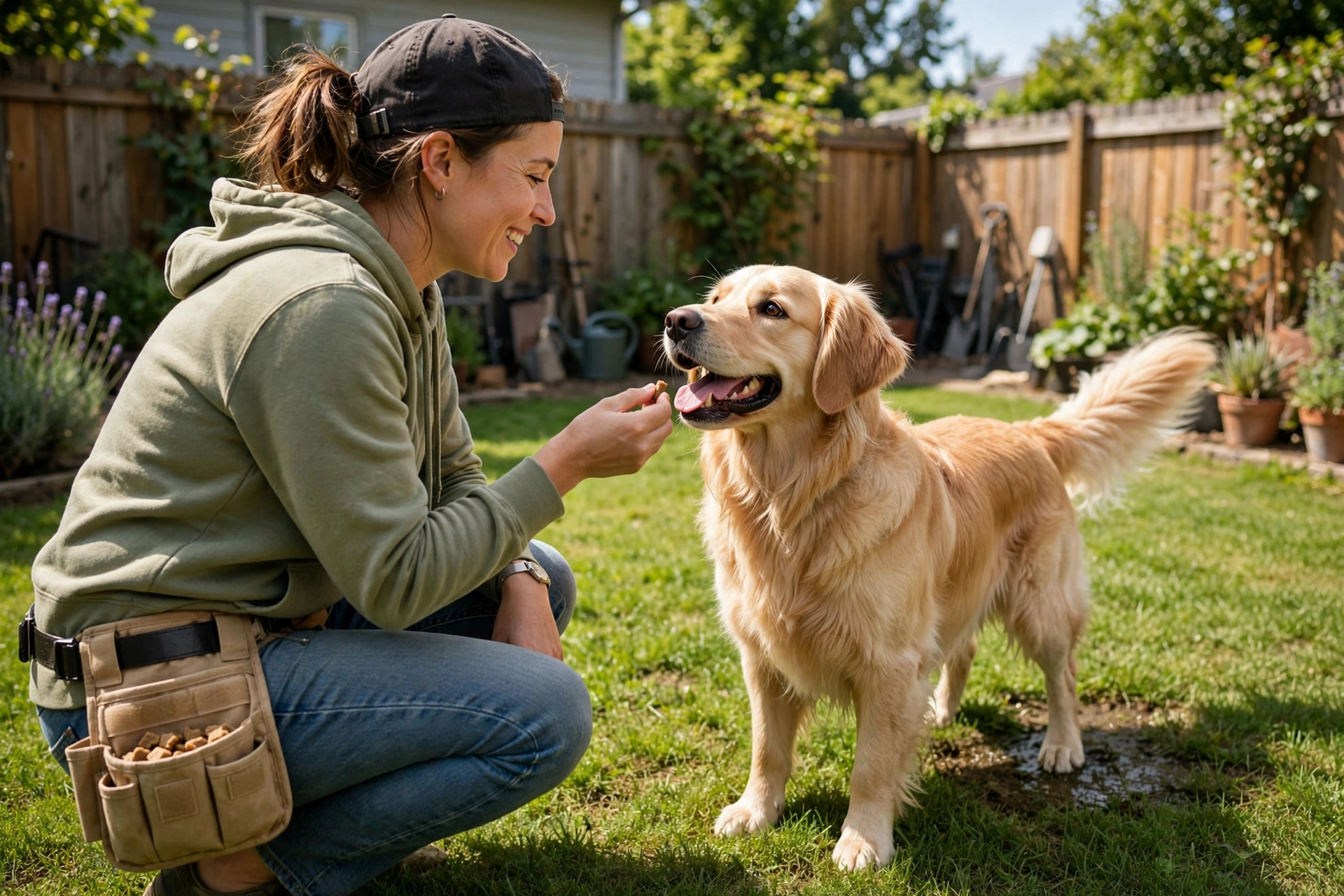
If marking has become a habit, go back to house training 101. Take your dog out on a schedule (first thing in the morning, after meals, after naps, after play), and reward every single outdoor pee like it’s the best thing he’s ever done. Keep a treat pouch on you so the reward lands within seconds.
Practice for at least a few weeks — you’re building a new default. Eventually, peeing outdoors becomes the deeply rewarding habit, and indoor marking fades because it never pays off.
Tip: Keep the schedule boring and predictable. Boredom is good here — routine reduces anxiety-driven marking.
Helpful pick: Egiao Dog Treat Pouch — keeps treats handy so you can reward outdoor elimination instantly.
6. Reduce Triggers (New Dogs, Visitors, Changes)
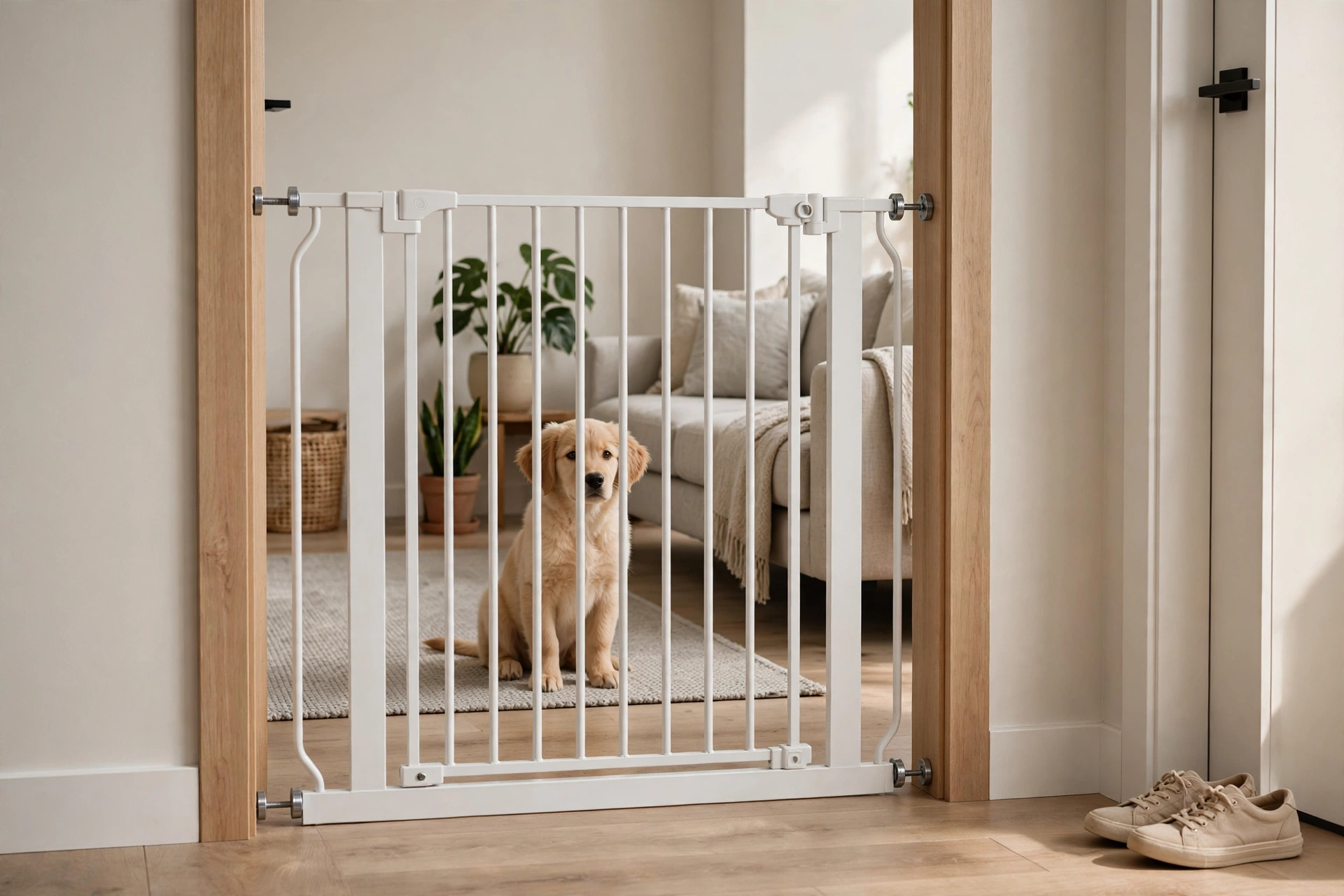
Dogs often mark in response to triggers: a new dog visiting, a houseguest’s bag, new furniture, or even another animal’s scent on your shoes. Identify your dog’s triggers and manage access — close off rooms, use baby gates, or remove tempting new items until the habit breaks.
You can also change the meaning of a previously-marked area: feed meals there, play training games there, or lay down an enrichment toy. Dogs rarely mark where they eat and play.
Tip: When visitors arrive, have your dog on leash nearby doing obedience commands for treats — busy brains don’t mark.
Helpful pick: Cumbor Auto-Close Baby Gate — an easy way to block access to trigger zones and previously-marked rooms.
7. Keep a Consistent Routine with Regular Exercise
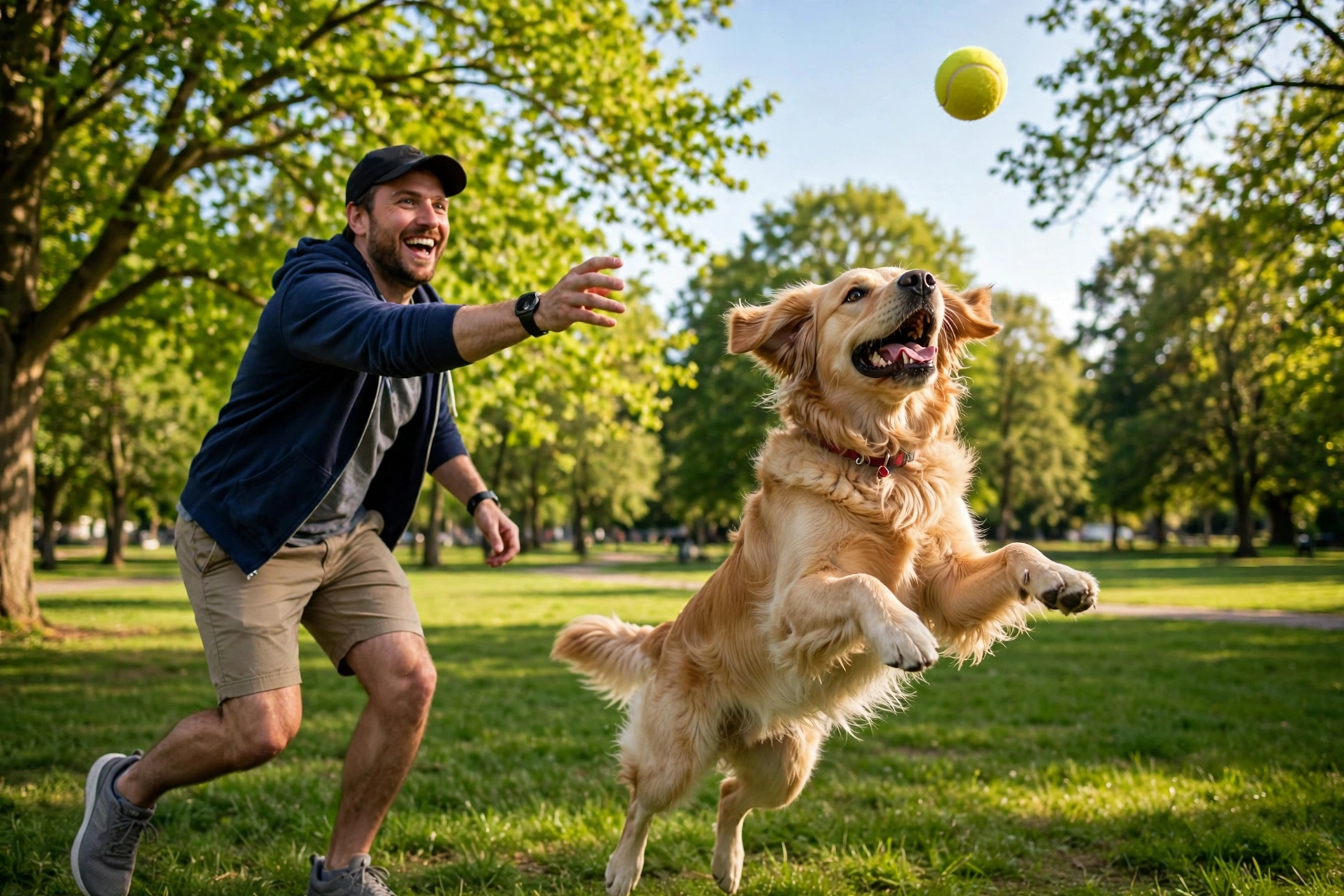
Under-exercised, under-stimulated dogs are more likely to act out — including marking. Daily physical exercise plus mental enrichment (puzzle feeders, sniff walks, training sessions) burns off the restless energy that fuels problem behaviors.
A consistent daily routine also calms anxious markers. Dogs who know when meals, walks, and potty breaks happen feel more secure and mark less.
Tip: A stuffed KONG before you leave can redirect anxious energy and create a calming pre-departure ritual.
Helpful pick: KONG Classic — the go-to enrichment toy for mental stimulation that tires dogs out.
8. Manage Multi-Dog Households Smartly
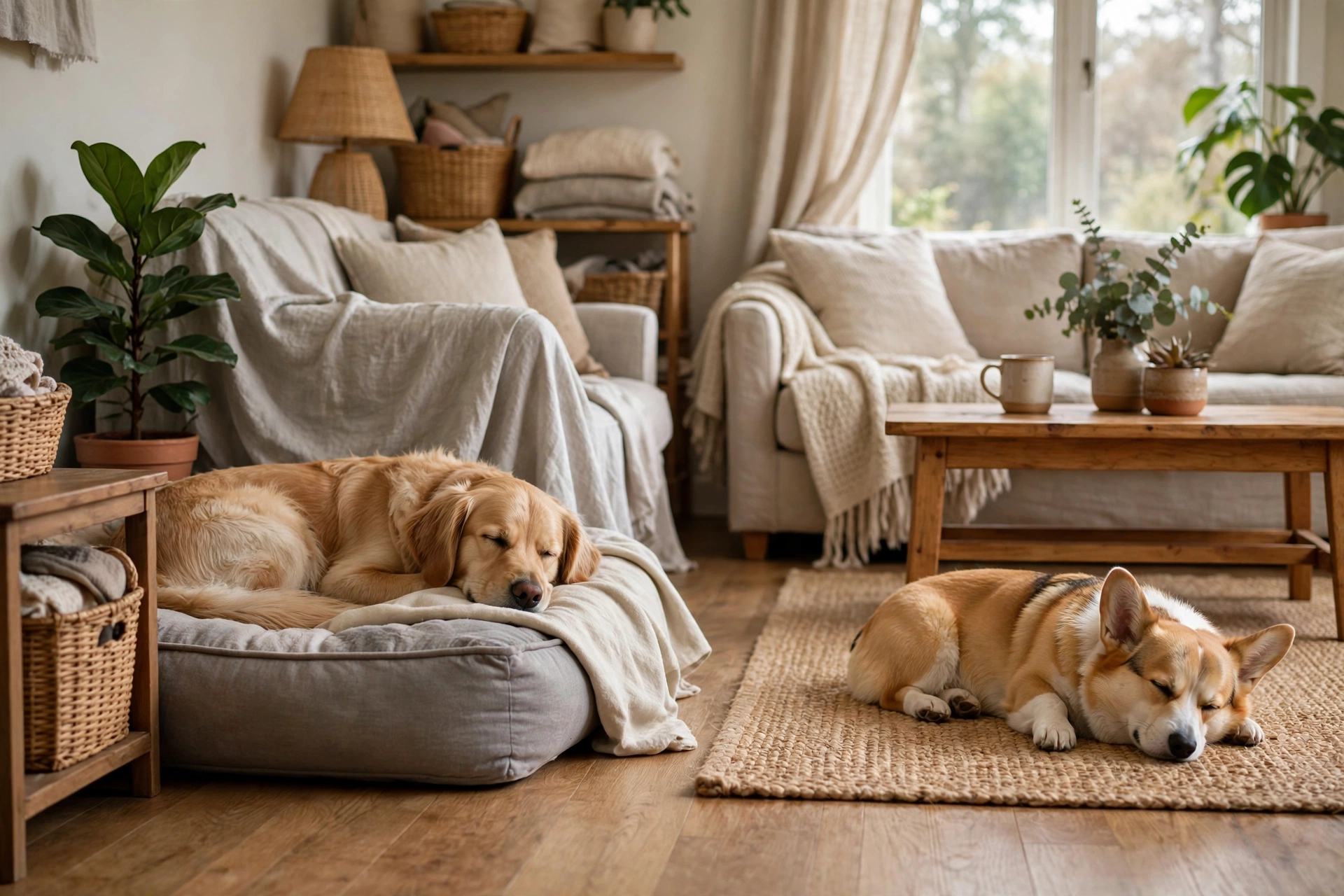
In homes with multiple dogs, marking often becomes competitive — one dog marks, the other marks over it. Break the cycle by giving each dog their own spaces: separate feeding spots, separate sleeping areas, and supervised access to shared rooms until the habit settles.
Train and exercise dogs individually so each gets enough attention and doesn’t feel the need to compete. Clean every spot both dogs have marked, since one dog’s residue is another dog’s invitation.
Tip: A free-standing exercise pen creates instant separate zones without permanently rearranging your home.
Helpful pick: MidWest Exercise Pen — sturdy panels that configure into separate spaces for multi-dog management.
Marking vs. Needing to Pee: How to Tell
Not sure whether it’s marking or a house-training accident? Here’s the quick distinction:
- Marking: small amounts of urine on vertical surfaces (furniture legs, walls, curtains), often in multiple spots; the dog sniffs first, then lifts a leg or backs up. Common near doorways, new items, and other animals’ scents.
- Needing to pee: larger puddles on horizontal surfaces, usually near doors or in one spot, often after the dog was left alone too long.
If your dog suddenly starts having full-bladder accidents (not marking behavior), see your vet — urinary tract infections and other medical issues are common culprits.
What NOT to Do When Your Dog Marks
Some common reactions make marking worse, so it’s worth knowing what to avoid. Never punish your dog after the fact — rubbing his nose in the spot or yelling minutes later teaches him nothing except to fear you, and anxious dogs mark more, not less. Don’t use ammonia-based cleaners (they mimic the smell of urine), and don’t lock a marking dog in a room with the very spots he targets without supervision — that’s just giving him unsupervised practice. Finally, don’t expect belly bands alone to fix anything; they’re a management tool that buys you time while training does the real work. Stay calm, stay consistent, and treat every prevented marking attempt as a win.
Frequently Asked Questions
Why does my dog mark in the house but not outside?
Outside marking is normal dog behavior. Indoor marking usually means a trigger exists inside — residual urine odor, another animal’s scent, anxiety, or an unneutered male responding to hormones. Clean thoroughly with an enzymatic cleaner and identify the trigger.
Will neutering stop my dog from marking completely?
Neutering can significantly reduce marking, especially if done before the habit is well established. It doesn’t erase learned habits overnight though — pair it with training and management for the best results.
Should I punish my dog for marking?
No. Punishing after the fact (rubbing his nose in it, yelling) only creates fear and anxiety, which can make marking worse. Interrupt calmly in the moment, redirect outside, and reward the right choice instead.
Do belly bands stop marking or just catch the urine?
Both, really. They catch accidents so your home stays clean, and the sensation of wetting the band discourages many dogs from marking. Think of them as a management tool that supports training — not a replacement for it.
How long does it take to stop a dog from marking indoors?
With consistent management and training, most dogs show big improvement within 2-4 weeks, though long-standing habits can take a couple of months. Consistency from every person in the household is the key ingredient.
Keep Reading
- How to Stop Your Dog from Chewing Furniture
- How to Stop Your Dog from Jumping on People
- 10 Common Dog Training Mistakes (And How to Fix Them)
- Crate Training Schedule for Puppies
- How to Stop a Dog from Stealing Food: 8 Fixes
As an Amazon Associate, PetPostHub earns from qualifying purchases.


