
How to Stop a Dog from Chewing Walls: 8 Fixes That Work

Discovering chew marks, gouges, or missing chunks of drywall is every dog owner’s nightmare. If you’re wondering how to stop a dog from chewing walls, you’re not alone — this destructive habit is surprisingly common, especially in bored, anxious, or teething dogs. The good news? Wall chewing is fixable. In this guide, you’ll learn why dogs chew walls and get 8 proven fixes that protect your home while keeping your dog happy and healthy.
Table of Contents
- 1. Start with a Vet Check
- 2. Apply a Bitter Deterrent Spray
- 3. Block Access to Targeted Walls
- 4. Redirect to Safe, Satisfying Chews
- 5. Increase Exercise and Mental Enrichment
- 6. Address Separation Anxiety
- 7. Repair Damage and Clean the Area
- 8. Use Supervision and Safe Confinement
- Why Dogs Chew Walls
- Frequently Asked Questions
1. Start with a Vet Check

Before assuming this is a behavior problem, rule out medical causes. In some cases, wall chewing is linked to pica — the habit of eating non-food items — which can be triggered by nutritional deficiencies, gastrointestinal issues, or intestinal parasites. Puppies may also chew walls simply because teething hurts.
Book a wellness exam and mention the chewing specifically. Your vet may recommend bloodwork, a diet review, or a deworming check. If your dog’s diet is missing key nutrients, correcting it can sometimes stop the behavior on its own. If everything checks out medically, you’ll know you can focus on the training and management fixes below with confidence.
Helpful pick: Zesty Paws 8-in-1 Multivitamin Bites — supports overall nutrition with a blend of vitamins your vet may recommend alongside a balanced diet.
2. Apply a Bitter Deterrent Spray
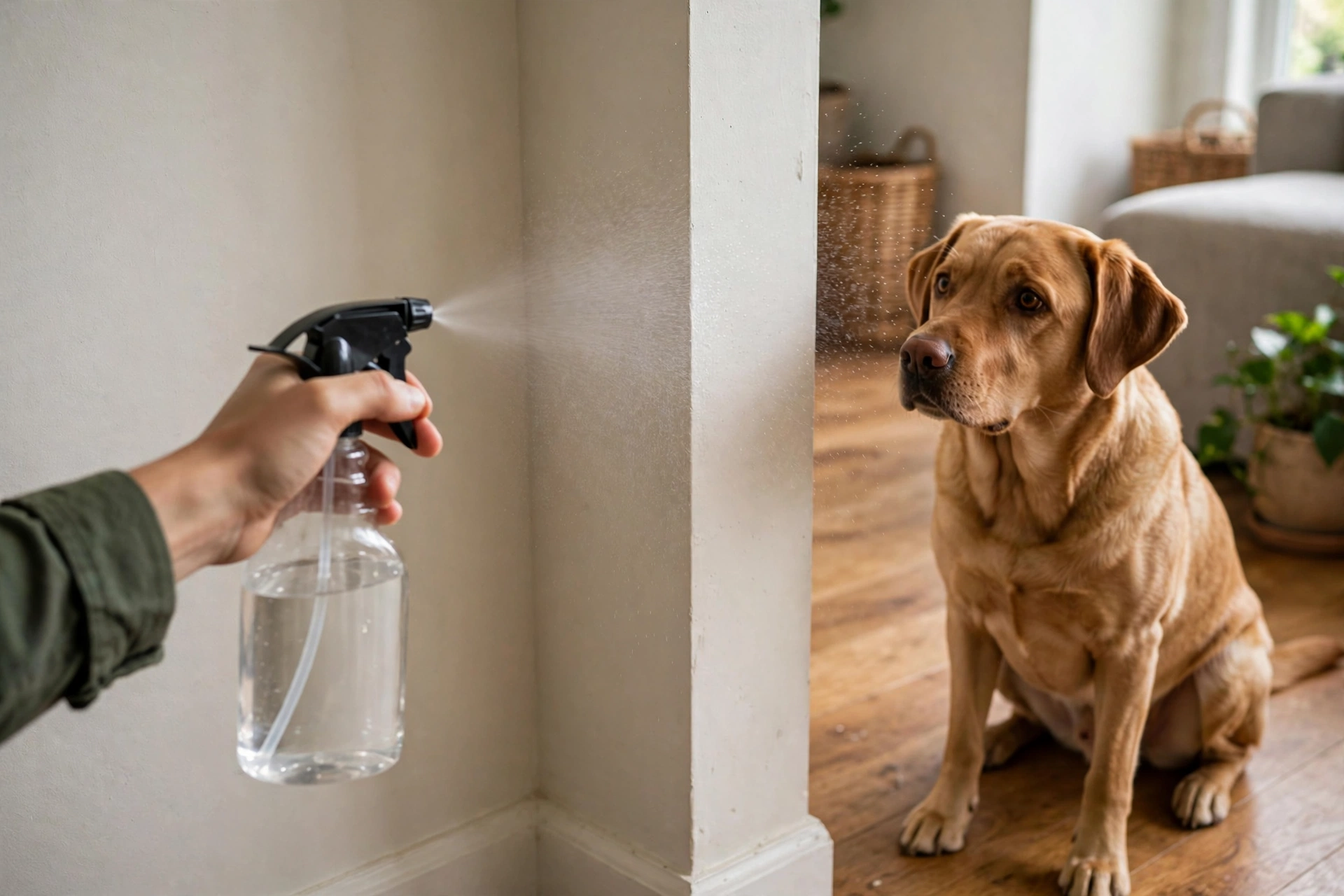
One of the fastest wins for how to stop a dog from chewing walls is making the walls taste terrible. Bitter apple spray is a safe, widely used taste deterrent that discourages chewing on contact — most dogs take one lick and decide the wall is no longer interesting.
Spray it generously on the spots your dog targets, and reapply daily for at least two weeks since the effect fades. Test it on a hidden patch of paint or drywall first to make sure it doesn’t discolor your finish. For best results, combine the deterrent with a tempting alternative nearby (more on that in fix #4) so your dog has a better choice to make.
Helpful pick: Grannick’s Bitter Apple Spray — the classic bitter deterrent spray made to discourage chewing on walls, furniture, and baseboards.
3. Block Access to Targeted Walls
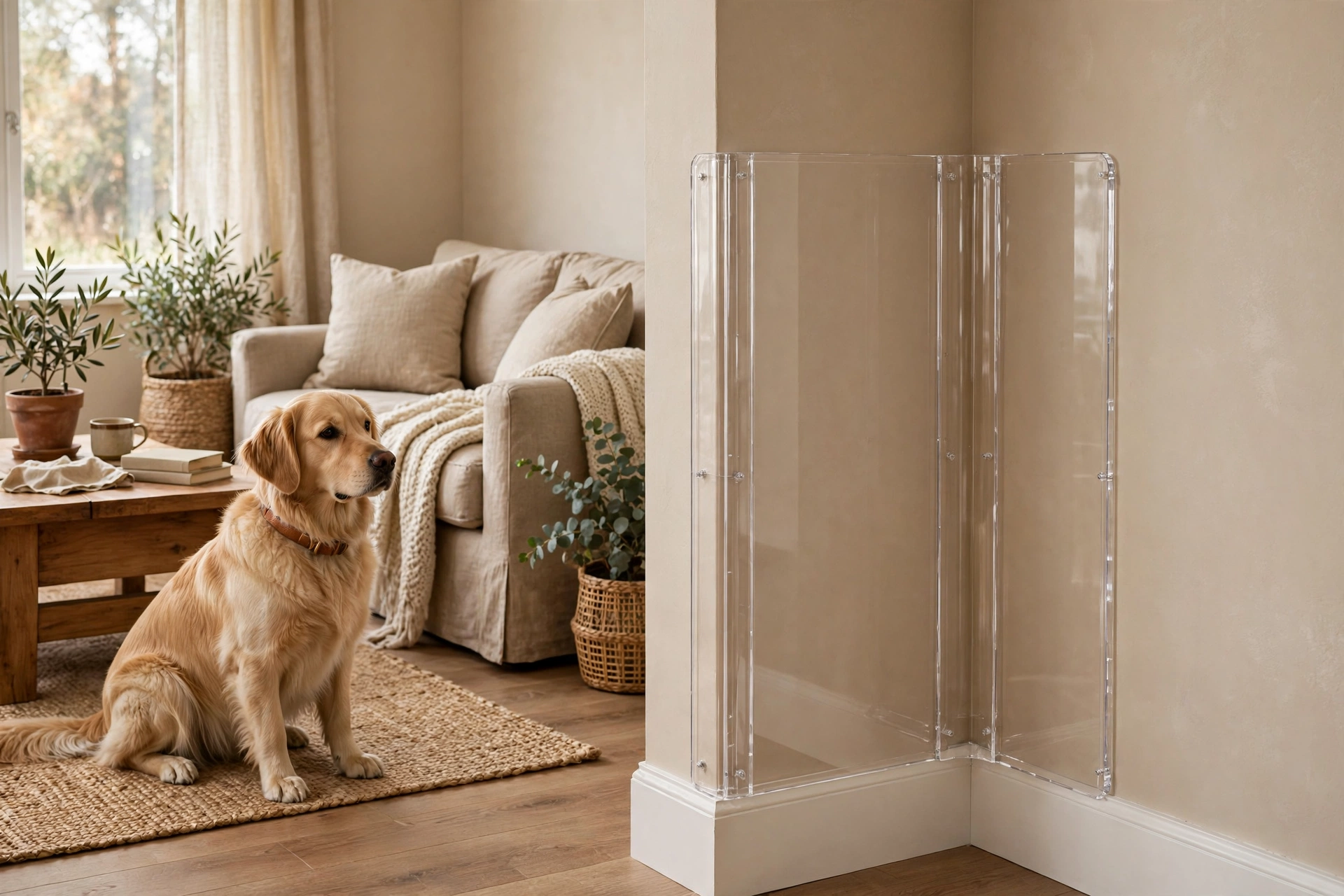
While you’re training the behavior away, protect the walls themselves. Rearrange furniture to block access to favorite chewing spots, or install wall corner guards or scratch shields over the damaged areas — these physical barriers make the wall inaccessible and give you breathing room.
For corners your dog keeps returning to, a rigid shield is more effective than furniture alone since determined chewers will happily squeeze behind a couch. This is pure management, not training — it stops new damage today while the other fixes in this list solve the underlying problem.
Helpful pick: CLAWGUARD Heavy Duty Door Scratch Shield — a tough protective barrier that also works well over chewed wall corners while you train the behavior away.
4. Redirect to Safe, Satisfying Chews

Chewing is a natural, healthy dog behavior — the problem is only the target. The single most important training step is giving your dog something better to chew. Keep a rotation of durable chew toys available, and the moment your dog approaches a wall, calmly redirect them to an approved chew and praise them for taking it.
Variety matters: some dogs prefer rubber toys, others love nylon bones or long-lasting bully sticks. Rotate toys every few days so they stay novel and exciting. Stuffable toys filled with peanut butter and frozen overnight give power chewers a long, satisfying project — perfect for dogs who used to spend that energy on your drywall.
Helpful pick: KONG Classic — the go-to durable rubber chew toy that can be stuffed and frozen for hours of satisfying chewing.
5. Increase Exercise and Mental Enrichment

Ask any trainer about how to stop a dog from chewing walls, and they’ll ask one question first: is this dog tired? A huge share of wall chewing is simply boredom plus pent-up energy. Dogs left alone all day with nothing to do will invent their own entertainment — and drywall is right there.
Add a solid morning walk or fetch session before you leave for the day, plus 10–15 minutes of training games in the evening. Mental work counts too: snuffle mats, puzzle feeders, and “find it” scent games tire dogs out surprisingly fast. A dog that has chewed on a puzzle toy and run in the park rarely has energy left for home demolition.
Helpful pick: Chuckit! Classic Ball Launcher — turns a quick backyard session into a high-energy fetch workout that tires even athletic dogs.
6. Address Separation Anxiety

If the chewing happens only when you’re gone, separation anxiety is the likely driver. Anxious dogs chew doorframes and walls near exits because they’re frantic to find you — this isn’t misbehavior, it’s panic. Punishing it only makes the anxiety worse.
Start desensitization by practicing very short departures (seconds at first) and returning before your dog panics, gradually building duration. Leave worn clothing with your scent, keep departures low-key, and consider a pet camera so you can see exactly when the chewing starts — many owners are shocked to find it begins minutes after they leave. If the anxiety is severe, work with a certified trainer or your vet on a structured plan.
Helpful pick: Furbo Mini 360° Pet Camera — lets you watch your dog’s behavior while you’re away so you can pinpoint when wall chewing starts.
7. Repair Damage and Clean the Area
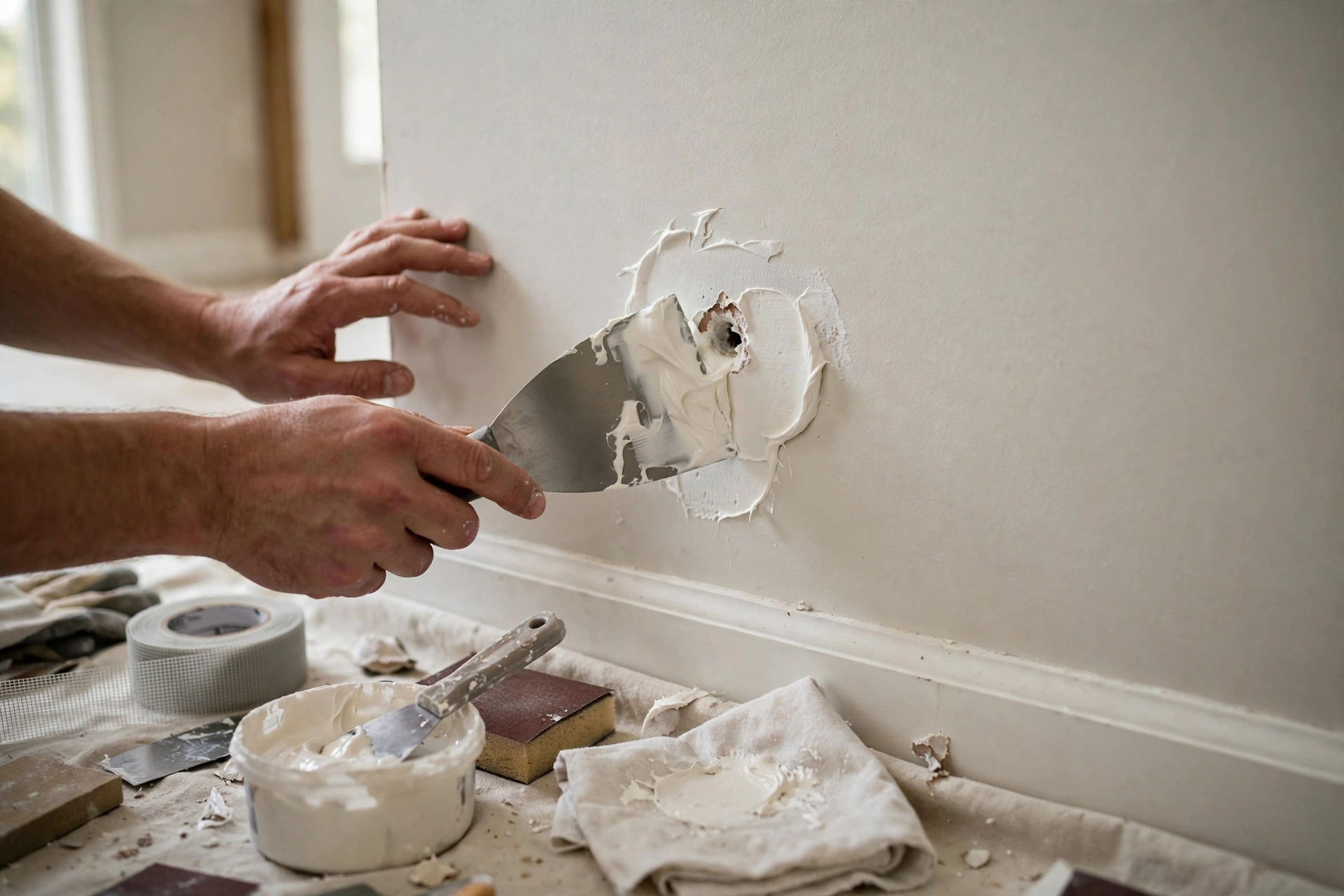
Here’s a detail most owners miss: dogs often return to chew the same spot because it still smells interesting or the texture invites it. Repairing damage properly breaks the habit loop. Patch holes with spackle, sand smooth, prime, and repaint — a smooth, clean surface is far less tempting than a ragged edge.
Before repainting, clean the area thoroughly to remove saliva and scent marks that may draw your dog back. An enzymatic cleaner removes the odor traces that keep your dog revisiting the same spot. Once the wall is repaired and clean, apply your bitter deterrent from fix #2 as insurance while the new behavior patterns settle in.
Helpful pick: Rocco & Roxie Stain & Odor Eliminator — an enzymatic cleaner that removes scent traces from chewed spots before you repair and repaint.
8. Use Supervision and Safe Confinement

Until the habit is broken, don’t give your dog unsupervised access to the whole house. When you’re home, keep your dog in the same room so you can redirect the moment they head for a wall — timing is everything, and a calm “leave it” followed by a chew toy works wonders.
When you can’t supervise, use a properly sized crate or a single dog-proofed room. Crate training, done positively, gives your dog a safe den where chewing the house isn’t an option — never use it as punishment. Many owners find that once the unsupervised opportunities disappear for a few weeks, the wall-chewing habit fades for good.
Helpful pick: MidWest iCrate Dog Crate — a sturdy, well-ventilated crate that doubles as a safe den for unsupervised time.
Why Dogs Chew Walls
Understanding the cause makes every fix above more effective. The most common reasons dogs chew walls include:
- Boredom and excess energy: Under-exercised dogs create their own entertainment.
- Separation anxiety: Panic-driven chewing near doors and exits when left alone.
- Teething: Puppies chew to soothe sore gums during teething phases.
- Pica or nutritional gaps: Some dogs chew non-food items due to dietary deficiencies.
- Taste and curiosity: Fresh paint, plaster dust, or interesting textures can attract curious chewers.
- Attention-seeking: If chewing walls gets a big reaction, some dogs will keep doing it.
Watch when the chewing happens — that’s your biggest clue. Chewing only when alone points to anxiety; chewing anytime points to boredom or habit. Match your fix to the cause, and also check out our guides on stopping furniture chewing and helping a dog with separation anxiety, since the same fixes often apply.
Frequently Asked Questions
Is it dangerous if my dog eats drywall?
Yes, it can be. Drywall contains gypsum and paint that can upset your dog’s stomach, and ingested pieces could cause blockages in severe cases. Stop the behavior promptly and call your vet if your dog vomits, loses appetite, or seems lethargic after chewing drywall.
Why does my dog only chew walls when I’m not home?
That’s the classic signature of separation anxiety — the dog chews near exits trying to reach you. See fix #6: practice short departures, use a pet camera to monitor, and consider professional help if the panic is severe. Our article on stopping door scratching covers closely related fixes.
Will bitter apple spray work for wall chewing?
For most dogs, yes — it’s one of the quickest deterrents. Apply generously and reapply daily for at least two weeks. A small minority of dogs don’t mind the taste, so combine it with redirection to safe chews and the other fixes in this guide.
Can an adult dog be trained to stop chewing walls?
Absolutely. It’s never too late — the combination of management (blocking access, supervising), meeting your dog’s needs (exercise, enrichment, safe chews), and consistent redirection works for dogs of any age. Most owners see improvement within two to three weeks.
Should I punish my dog for chewing the wall?
No. Punishment after the fact doesn’t teach anything — your dog won’t connect the scolding to chewing that happened an hour ago. It can also increase anxiety, making the problem worse. Redirect calmly to an approved chew and reward good choices instead.
As an Amazon Associate, PetPostHub earns from qualifying purchases.



2 Comments