
10 Dog Training Mistakes Owners Make (And How to Fix Them)

Every dog owner wants a well-behaved pup, but here’s the uncomfortable truth: most training problems don’t come from “stubborn” dogs — they come from dog training mistakes that humans make without even realizing it. The good news? These mistakes are easy to fix once you spot them. In this guide, you’ll learn the 10 most common dog training mistakes owners make, why each one backfires, and exactly what to do instead so you and your dog can finally enjoy training together.
Table of Contents
- 1. Being Inconsistent with Rules
- 2. Training Sessions That Are Too Long
- 3. Punishing Instead of Rewarding
- 4. Repeating Commands Over and Over
- 5. Never Proofing Around Distractions
- 6. Skipping Socialization
- 7. Training When You’re Frustrated
- 8. Bribing Instead of Rewarding
- 9. Ignoring Your Dog’s Good Behavior
- 10. Expecting Too Much Too Soon
- The 3 Golden Rules of Dog Training
- Frequently Asked Questions
1. Being Inconsistent with Rules

Why it backfires: Dogs learn through patterns. If the couch is fine on Monday but forbidden on Tuesday, your dog isn’t being disobedient — they’re just confused. Inconsistency between family members is even worse: if one person allows jumping and another scolds for it, your dog learns that cues are optional suggestions rather than reliable rules.
The fix: Get every person in the household on the same page. Write down your house rules (furniture, jumping, begging) and make sure everyone enforces the same boundaries with the same words. Consistency turns confusion into confidence, and confident dogs learn faster.
Helpful pick: Egiao Treat Pouch Kit — keeping treats on your hip means every family member can reward the right behavior the moment it happens.
2. Training Sessions That Are Too Long

Why it backfires: A dog’s attention span is short — especially puppies. Push past 10 to 15 minutes and your dog starts making mistakes, you get frustrated, and training becomes something you both dread. Long, grinding sessions teach your dog that training is boring, which is the opposite of what you want.
The fix: Keep sessions to 5–10 minutes, two or three times a day. End every session on a win — ask for something your dog already knows, reward it big, and stop while they’re still having fun. Three short sessions beat one long one every single time.
Helpful pick: KONG Classic — end a session with a stuffed KONG so your dog winds down happily instead of fizzling out mid-lesson.
3. Punishing Instead of Rewarding

Why it backfires: Yelling, leash jerks, or alpha rolls might stop a behavior in the moment, but they don’t teach your dog what to do instead — and they damage trust. A frightened dog isn’t a trained dog; they’re an anxious one. Studies on learning consistently show that positive reinforcement produces faster, more reliable behavior than punishment-based methods.
The fix: Catch your dog doing things right and reward them for it. Chewing the toy instead of the shoe? Treat. Sitting calmly at the door? Treat. You’ll be amazed how quickly good behavior grows when it’s the behavior that pays.
Helpful pick: STMK Clicker Training Kit — a clicker marks the exact moment your dog gets it right, making rewards precise and communication crystal clear.
4. Repeating Commands Over and Over
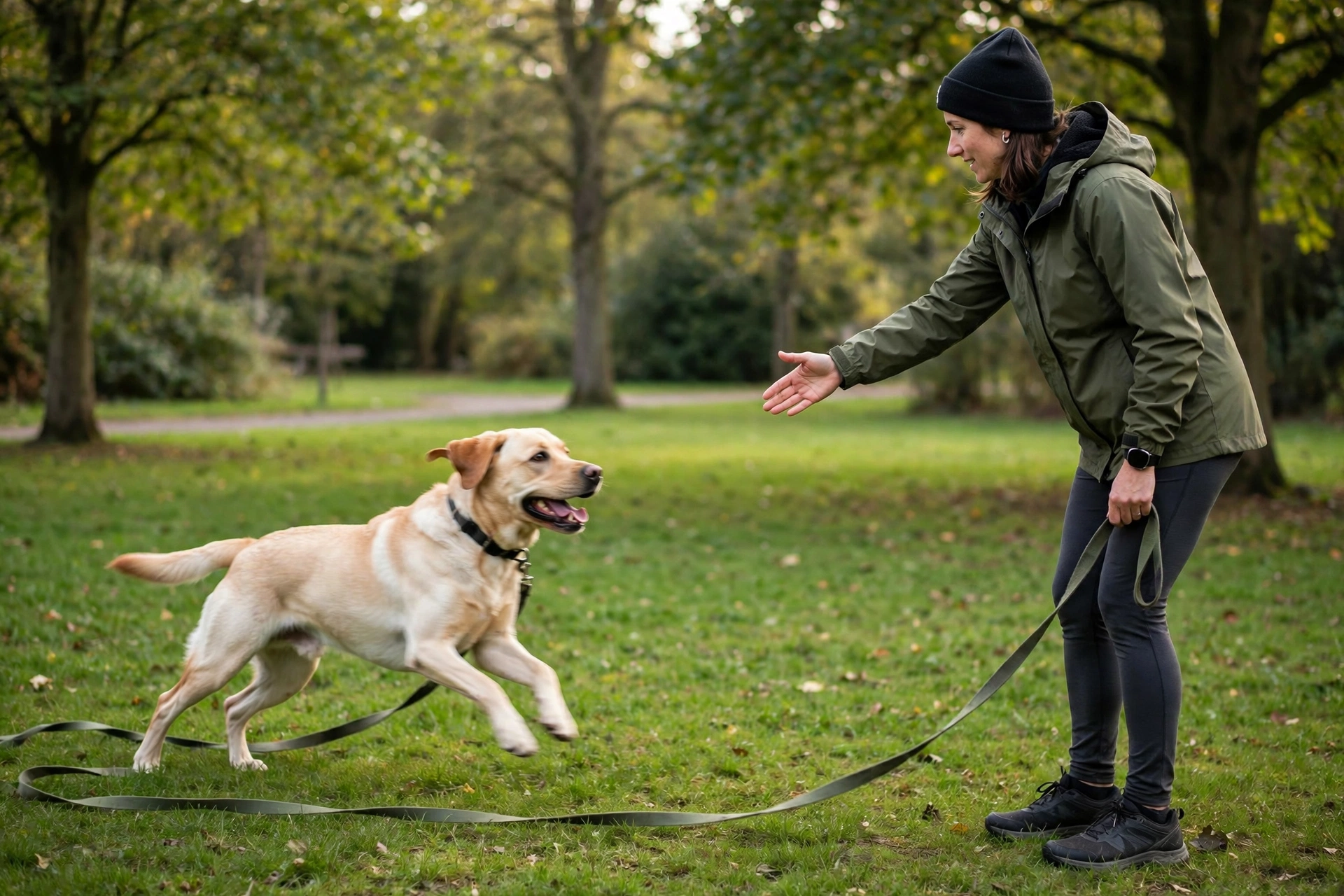
Why it backfires: “Sit. Sit. SIT. Come on, sit!” Sound familiar? Every time you repeat a cue, you teach your dog that the first four don’t count. They learn to tune you out until your tone hits a certain level of frustration — and then you’ve trained a dog that only responds to shouting.
The fix: Say the cue once. If your dog doesn’t respond, don’t repeat it — get their attention, lure or guide them into the behavior, reward, and try again. Better yet, set up the environment so they succeed the first time (start close, minimize distractions), then gradually increase difficulty. This is one of the most common behavior problems owners accidentally create.
Helpful pick: Joytale 30ft Training Leash — practice recall at a distance with gentle guidance instead of repeating “come” fifteen times.
5. Never Proofing Around Distractions

Why it backfires: Your dog sits perfectly in the kitchen — and completely ignores you at the park. That’s not defiance; that’s a dog who was never taught that cues apply everywhere. Training only in one quiet room is like studying for a test but never taking a practice exam.
The fix: Once your dog knows a behavior at home, practice it in slightly harder settings: the yard, a quiet street, then a busier park. Increase difficulty one step at a time, and reward extra generously in new environments. Generalization is a trained skill, not an automatic one.
Helpful pick: Outward Hound Dog Tornado Puzzle — focus games build the impulse control your dog needs to listen even when the world gets exciting.
6. Skipping Socialization

Why it backfires: Dogs that miss early, positive exposure to people, dogs, sounds, and places often become fearful or reactive adults. You can’t train confidence into a dog at age three as easily as you can build it at three months — socialization is time-sensitive, and there’s no shortcut around it.
The fix: Between 3 and 14 weeks, give your puppy lots of short, positive experiences: different people, gentle dogs, car rides, umbrellas, vacuum cleaners — paired with treats and praise. For adult dogs, go slow: short, calm outings at a comfortable distance, always letting your dog set the pace. Dogs with solid early foundations also handle alone time better — see our guide on separation anxiety for related calming work.
Helpful pick: Snuggle Puppy Heartbeat Toy — a familiar comfort item helps nervous pups settle during new experiences and vet visits.
7. Training When You’re Frustrated

Why it backfires: Dogs read body language far better than words. When you’re tense, short-tempered, or rushing, your dog senses it instantly — and stress shuts down learning. Training through frustration teaches your dog that you’re unpredictable, which is the fastest way to erode trust.
The fix: If you feel your patience slipping, stop. Give your dog an enrichment break (a lick mat or chew), take five minutes, and come back calm — or try again tomorrow. A skipped session costs you nothing; a bad session costs you trust.
Helpful pick: LickiMat Classic Soother — spread some peanut butter on it when you need a reset; your dog gets a calming activity while you cool down.
8. Bribing Instead of Rewarding

Why it backfires: There’s a big difference between a bribe (showing the treat first to get compliance) and a reward (paying after the behavior). Dogs trained on bribes only perform when they can see the treat — you’ve built a negotiator, not a learner. The treat becomes a requirement, not a paycheck.
The fix: Keep treats hidden in your pouch or pocket. Ask for the behavior, mark it, then produce the reward. Once your dog knows a behavior well, start rewarding intermittently — this variable schedule actually makes behavior stronger, not weaker.
Helpful pick: Outward Hound Hide N’ Slide Puzzle — puzzle games teach your dog that effort earns rewards, which is exactly the mindset good training builds.
9. Ignoring Your Dog’s Good Behavior
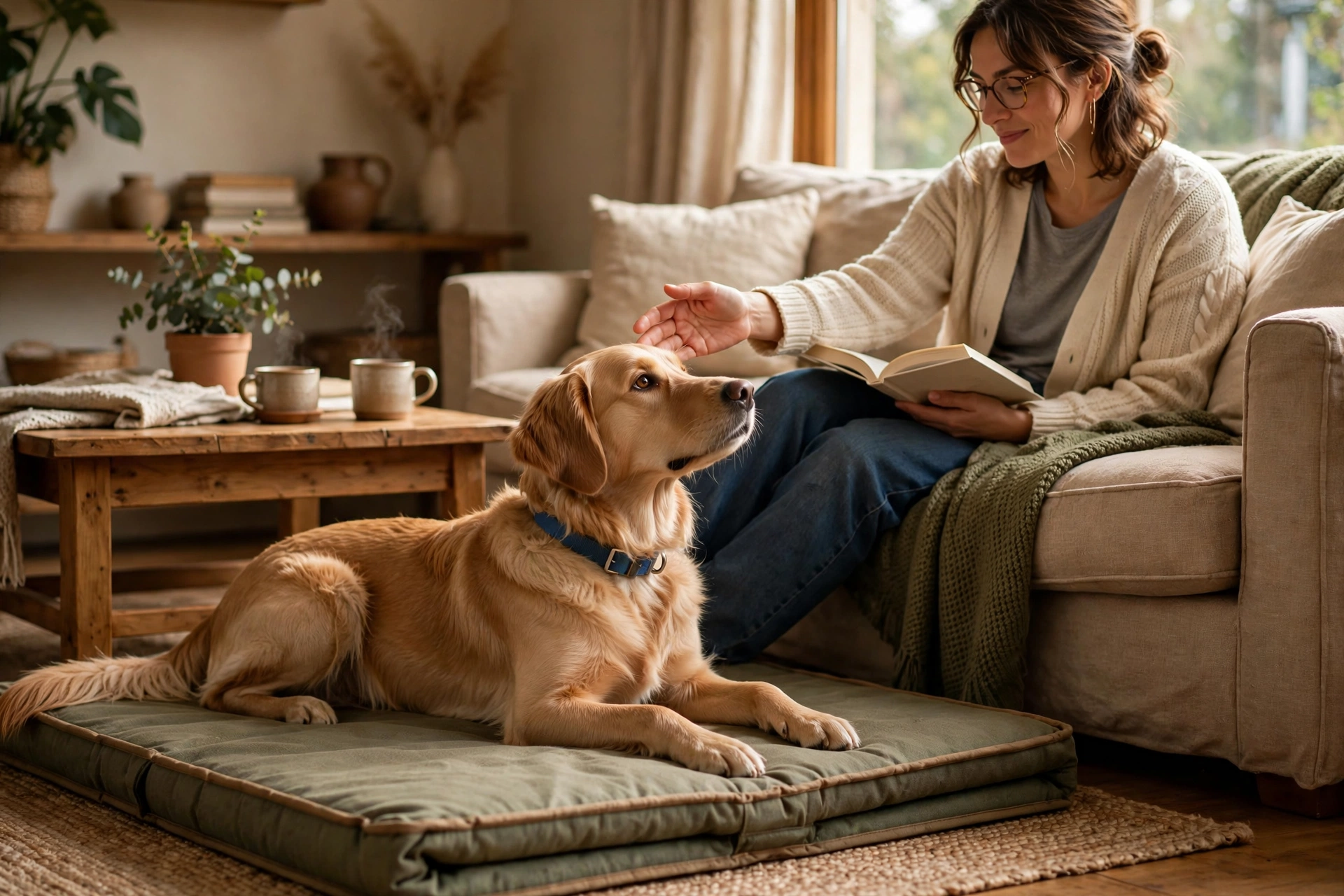
Why it backfires: Most owners only pay attention to their dog when something goes wrong. But behavior that gets no feedback tends to fade — including the good stuff. If lying quietly on the mat never earns a single word of praise, your dog will eventually find something more interesting (and probably louder) to do.
The fix: Reward the boring good stuff. Calm settle? Quiet “good dog” and a treat. Walking nicely without being asked? Jackpot. Dogs repeat what pays, so make sure the paychecks land on the behaviors you want to see more of.
Helpful pick: Snuffle Mat for Dogs — toss a few treats in it when your dog chooses to settle calmly; you’re literally paying them for good decisions.
10. Expecting Too Much Too Soon

Why it backfires: Expecting a 12-week-old puppy to hold a stay for five minutes, or a rescue dog to be perfect in week one, sets everyone up for failure. Unrealistic expectations create pressure, pressure creates frustration, and frustration (see mistake #7) kills learning. Every dog learns at their own pace.
The fix: Break every goal into tiny steps and celebrate each one. “Sit” for one second is a win. Then two seconds. Then with a distraction. Progress is progress — and a dog that wins often is a dog that loves to learn.
Helpful pick: Zesty Paws Calming Chews — for dogs that get over-aroused during training, a calming chew before a session can help them focus and learn.
The 3 Golden Rules of Dog Training
Fix the ten mistakes above and you’re most of the way there, but these three principles tie everything together:
- Be consistent. Same rules, same words, same rewards — from every person, every day. Consistency is the language dogs understand best.
- Reward generously. Pay your dog well for the behaviors you want, especially in the beginning. Generosity builds motivation, and motivation builds reliability.
- Keep it fun. Training should feel like a game, not a chore. Short sessions, big celebrations, and plenty of play keep both of you coming back for more.
Want more help with specific behaviors? Check out our guides on how to train your dog to stop barking and fixing common behavior problems.
Frequently Asked Questions
What is the biggest dog training mistake?
Inconsistency. When rules, cues, or rewards change from day to day or person to person, dogs can’t form reliable patterns — and unreliable patterns mean unreliable behavior. Get the whole household aligned first, and everything else gets easier.
How long should dog training sessions be?
For most dogs, 5 to 10 minutes, two or three times a day. Puppies do best with even shorter sessions of 3 to 5 minutes. Always end on a success so your dog finishes feeling like a winner.
Is it ever too late to fix training mistakes?
Almost never. Dogs of any age can learn new patterns — it just takes a little longer to overwrite old habits than to build fresh ones. The key is patience, consistency, and plenty of rewards for the new, better behavior.
Should I use punishment in dog training?
Positive reinforcement is the most effective and humane approach for the vast majority of behaviors. Punishment tends to suppress behavior temporarily while creating fear or anxiety. Redirect unwanted behavior and reward the alternative you want instead.
Why does my dog only listen at home?
Because you haven’t proofed the behavior around distractions yet (mistake #5). Dogs don’t automatically generalize — practice each cue in gradually more challenging environments, and reward extra well in new places.
As an Amazon Associate, PetPostHub earns from qualifying purchases.


3 Comments