Why Does My Dog Hide Under the Bed? 6 Reasons (2026)

Finding your dog hiding under the bed can be worrying, especially if it is new behavior. So why does my dog hide under the bed? Most of the time, it is a completely normal instinct — your dog is seeking a cozy, den-like spot to feel safe. But sudden or constant hiding can also signal fear, anxiety, or even pain. This guide walks you through the six most common reasons and exactly what to do about each one.
Table of Contents
- 1. Fear of Loud Noises (Storms, Fireworks, Household Sounds)
- 2. Separation Anxiety or General Anxiety
- 3. Pain or Illness
- 4. Den Instinct and Comfort
- 5. Fear of Punishment
- 6. New Environment Stress
- When Hiding Is a Red Flag
- Should You Let Your Dog Hide Under the Bed?
- How to Help a Hiding Dog
- Frequently Asked Questions
1. Fear of Loud Noises (Storms, Fireworks, Household Sounds)
What it means: Thunderstorms, fireworks, construction noise, vacuum cleaners, and even smoke alarms can terrify dogs. Their hearing is far more sensitive than ours, so a storm that sounds dramatic to you can feel overwhelming to them. The space under your bed offers a dark, enclosed shelter where the scary sounds feel muffled and distant.
What to do: Do not force your dog out — let the hiding spot work as a safe zone. Close curtains, play calming background sounds, and act relaxed yourself. For recurring noise phobias, a calming aid used before the storm or fireworks season starts can take the edge off.

Helpful pick: ADAPTIL Calm Home Diffuser — releases a synthetic version of the calming pheromone mother dogs produce, supporting a calmer environment during storms and fireworks.
2. Separation Anxiety or General Anxiety
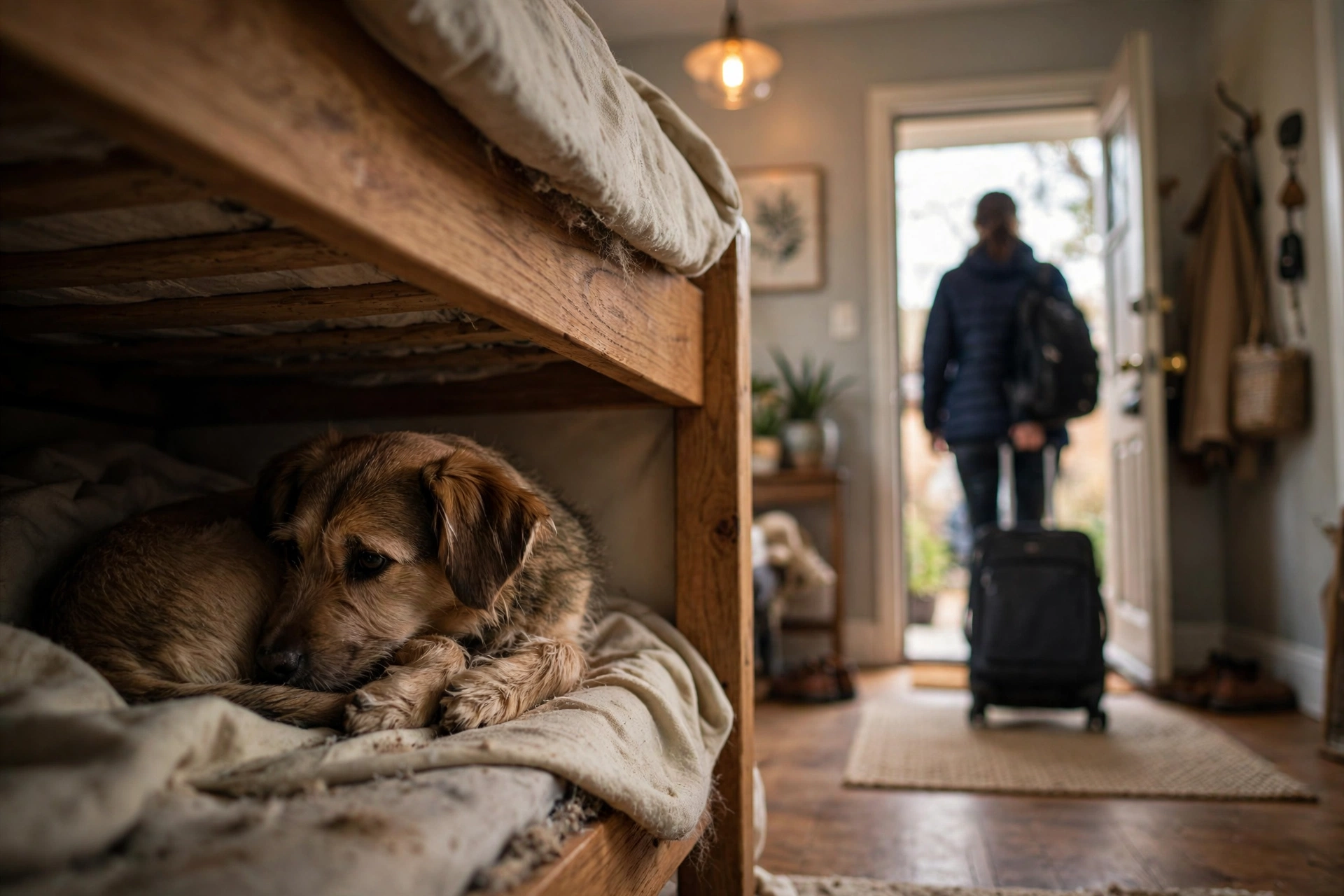
What it means: Dogs with separation anxiety may retreat under the bed when you pick up your keys or leave the house, because your bedroom carries your scent and feels like the safest place to wait. Some anxious dogs also hide during everyday stress, such as a busy household or visitors they find overwhelming.
What to do: Keep departures low-key and practice short absences so your dog learns you always come back. A comfort object — like a heartbeat plush toy — gives an anxious pup something soothing to cuddle while you are away.
Helpful pick: SmartPetLove Snuggle Puppy — a plush companion with a pulsing heartbeat and heat pack, designed to comfort anxious dogs when they are alone.
3. Pain or Illness
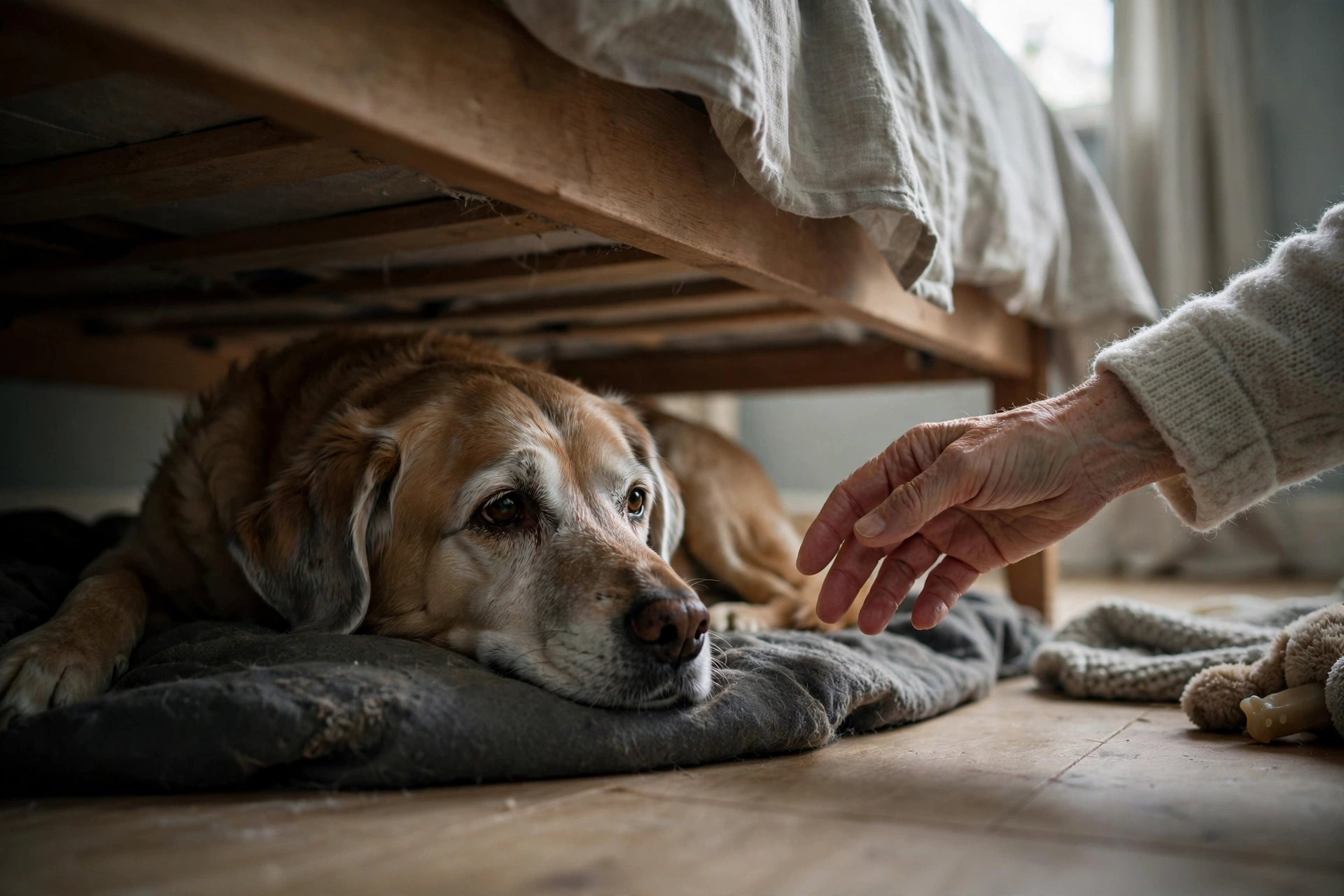
What it means: This is the reason to take seriously. Dogs instinctively withdraw to a quiet spot when they hurt — arthritis, stomach pain, dental pain, infections, or injuries can all drive a dog under the bed. If the hiding is sudden, comes with lethargy, appetite loss, limping, panting, or changes in bathroom habits, treat it as a possible medical issue, not a behavior problem.
What to do: Note when the hiding started and what else changed, then call your vet. Keep an eye on temperature, appetite, and mobility, and never try to diagnose or medicate at home beyond what your vet has already approved.
Helpful pick: PetMedics Non-Contact Pet Thermometer — lets you quickly check your dog’s temperature at home before deciding whether a vet visit is urgent.
4. Den Instinct and Comfort
What it means: Dogs are den animals by nature. The dark, enclosed space under a bed mimics the burrows their wild ancestors used — it feels secure, quiet, and cozy. Many dogs hide under the bed simply because it is comfortable: cool in summer, sheltered in a busy house, and a perfect napping spot. If your dog chooses it calmly, eats and plays normally, and comes out happily, this is just a preference.
What to do: There is nothing to fix. Make sure the space is safe (no sharp edges or stored chemicals) and consider giving them an even better den option of their own.

Helpful pick: Best Friends by Sheri Original Calming Donut Bed — its raised rim mimics the snug, den-like feeling dogs love about hiding under the bed.
5. Fear of Punishment
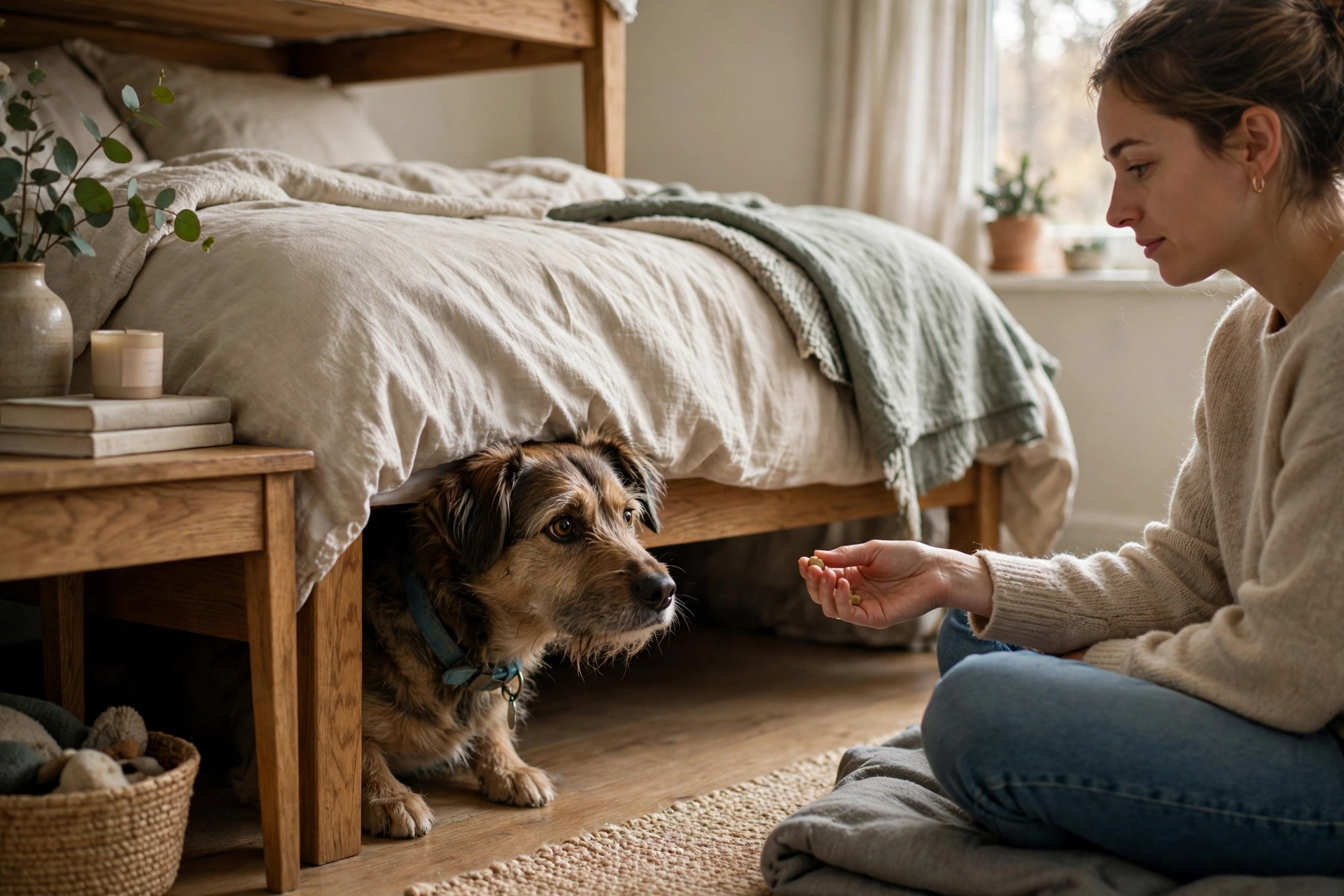
What it means: If a dog has been scolded, yelled at, or punished — especially in or near the bedroom — they may start hiding under the bed to avoid conflict. Rescue dogs and dogs from harsh backgrounds are particularly prone to this. They are not being “guilty”; they are trying to feel safe from a scary interaction.
What to do: Switch to positive, reward-based training and never drag a hiding dog out or punish them while they are hiding. Rebuild trust with treats, gentle voices, and patience — a training clicker helps you mark and reward brave, calm behavior.
Helpful pick: STMK Dog Training Clicker Kit — a clicker and target stick set that makes reward-based training easy, helping fearful dogs build confidence without any punishment.
6. New Environment Stress
What it means: Moving house, a new baby, a new pet, rearranged furniture, or houseguests can overwhelm a dog. Hiding under the bed is their way of waiting out the chaos in a familiar-feeling spot. This usually fades as they adjust, but it can take days or weeks.
What to do: Give them one quiet room with their bed, toys, and water, and let them explore the changes at their own pace. Keep routines consistent, and offer enrichment — a stuffed food toy keeps their mind busy and builds positive associations with the new place.

Helpful pick: KONG Classic — fill it with peanut butter or treats to give your dog a calming, rewarding activity during stressful transitions.
When Hiding Is a Red Flag
Occasional, relaxed hiding is no cause for alarm. But sudden, persistent, or frantic hiding is your dog’s way of telling you something is wrong. Pay close attention to how they hide: a dog that dashes under the bed and refuses to come out for hours, trembles, pants, or growls when approached is likely frightened or in pain.
Watch for these warning signs alongside the hiding: loss of appetite, unusual lethargy, limping or stiffness, excessive panting or drooling, whimpering, vomiting or diarrhea, and changes in drinking or bathroom habits. Any of these paired with new hiding behavior warrants a prompt call to your veterinarian. Stress alone can also suppress appetite and energy, so your vet can help you sort out whether the root cause is emotional or medical.
Senior dogs deserve extra attention here. Canine cognitive dysfunction — the dog equivalent of dementia — can make older dogs confused and clingy about small, enclosed spaces. If your aging dog has recently started hiding, seems disoriented, or has changes in sleep patterns, mention it at their next checkup.
Should You Let Your Dog Hide Under the Bed?
In most cases, yes — with a little management. A dog that calmly chooses the spot under your bed for naps or quiet time is simply enjoying a good den. The trouble starts only if the space is unsafe: check for exposed staples or sharp springs, stored cleaning chemicals, medications, or anything they could chew. Keep the area under the bed reasonably clear and vacuum it regularly, since dust bunnies and lost socks are a favorite hiding-spot décor for dogs.
If you would rather they not claim your bedroom as headquarters, do not block the spot abruptly — that removes their coping tool. Instead, set up an irresistible alternative first: an open-door crate with a soft blanket, a covered bed in a quiet corner, and a few treats to sweeten the deal. Once the new den wins them over, you can gradually discourage the under-bed spot. For dogs whose hiding is driven by separation anxiety, pairing the new den with a comfort object and calm departure rituals works far better than simply shutting the bedroom door.
How to Help a Hiding Dog
No matter the cause, follow these ground rules when your dog hides under the bed:
- Let them hide. A safe hiding spot is a healthy coping strategy — never drag a dog out by force.
- Stay calm. Dogs read your energy. Act relaxed and speak softly so your dog takes the cue from you.
- Offer a better alternative. A crate with the door open or a cozy covered bed gives them a den that is fully theirs.
- Reward bravery. Toss treats near (not into) the hiding spot when your dog peeks out or chooses to stay calm.
- Watch for red flags. Sudden, persistent hiding plus lethargy, appetite loss, panting, or limping means a vet visit, not a training problem.
- Keep learning their language. Knowing the subtle signs of canine stress helps you intervene before hiding becomes their only option.
Frequently Asked Questions
Is it normal for a dog to hide under the bed?
Yes, occasional hiding is normal — it is a den instinct. It becomes a concern when it is sudden, constant, or paired with appetite loss, lethargy, or pain signals.
Should I pull my dog out from under the bed?
No. Forcing them out increases fear and breaks trust. Let them come out on their own, and lure them gently with treats if needed.
Why did my dog suddenly start hiding under the bed?
Sudden hiding often means something changed — a scary event, pain, illness, or household stress. Rule out medical causes with your vet first.
How do I make my dog feel safe during storms?
Keep them indoors, close curtains, provide white noise or calming music, stay calm yourself, and consider a calming aid before storm season.
When should I call the vet about hiding behavior?
Call your vet if hiding is new and persistent, or if it comes with not eating, limping, heavy panting, vomiting, or any sudden behavior change.
As an Amazon Associate, PetPostHub earns from qualifying purchases.