
10 Training Tricks Every Cavalier Can Learn: Step-by-Step Guide

Cavaliers might be famous for their lap-dog charm, but this breed is far smarter than many people assume. The training tricks every Cavalier can learn range from rock-solid basics like sit and stay to crowd-pleasers like spin, bow, and wave — and most of them pick these up faster than you’d expect. The secret is short sessions, irresistible treats, and the one thing your Cavalier already has in abundance: a deep desire to make you happy.
Below are 10 training tricks every Cavalier can learn, arranged roughly from easiest to most impressive. Each one includes step-by-step instructions and a tip for success.
Table of Contents
- 1. Sit
- 2. Down
- 3. Shake (Give Paw)
- 4. Spin
- 5. Roll Over
- 6. Touch (Target Hand)
- 7. Stay
- 8. Come (Reliable Recall)
- 9. Bow
- 10. Wave
1. Sit

Sit is the foundation of every training program and one of the training tricks every Cavalier can learn within the first few sessions. Hold a pea-sized treat between your thumb and forefinger, bring it to your dog’s nose, then slowly move it up and back over their head. Their eyes follow the treat, their chin lifts, and their bottom drops — physics does the teaching. The instant their bottom touches the ground, say “yes” and deliver the treat.
Tip for success: Keep sessions to three or four minutes. Cavaliers learn quickly but bore quickly, so several short daily sessions beat one long one every time.
Helpful pick: Zuke’s Mini Naturals training treats — tiny, soft, and low in calories, perfect for repeat rewards during trick sessions.
2. Down

Once sit is reliable, down is the natural next step. Start with your Cavalier sitting, then hold a treat at their nose and slowly lower it straight toward the floor between their paws. Most dogs follow the lure into a lying position. Mark the moment their belly and elbows touch the floor, then reward. If your Cavalier stands instead, try practicing on carpet or grass, where sliding forward feels easier than on slick floors.
Tip for success: Don’t push down on their back. A gentle lure and patience will get you there — forcing the position teaches them to resist rather than relax.
Helpful pick: Egiao dog treat pouch — keeps treats handy at your hip so your timing stays sharp between reps.
3. Shake (Give Paw)

Shake is the classic crowd-pleaser. Ask your Cavalier to sit, then gently tap or tickle the side of one paw while saying “shake.” The moment they lift the paw — even slightly — catch it, praise, and treat. Within a week, most Cavaliers start throwing their paw at you unprompted.
Tip for success: Reward any paw movement at first, then raise your standards gradually. Early generosity builds enthusiasm; perfection comes later.
Helpful pick: MidWest iCrate — a familiar, safe spot where your dog can rest between training sessions.
4. Spin
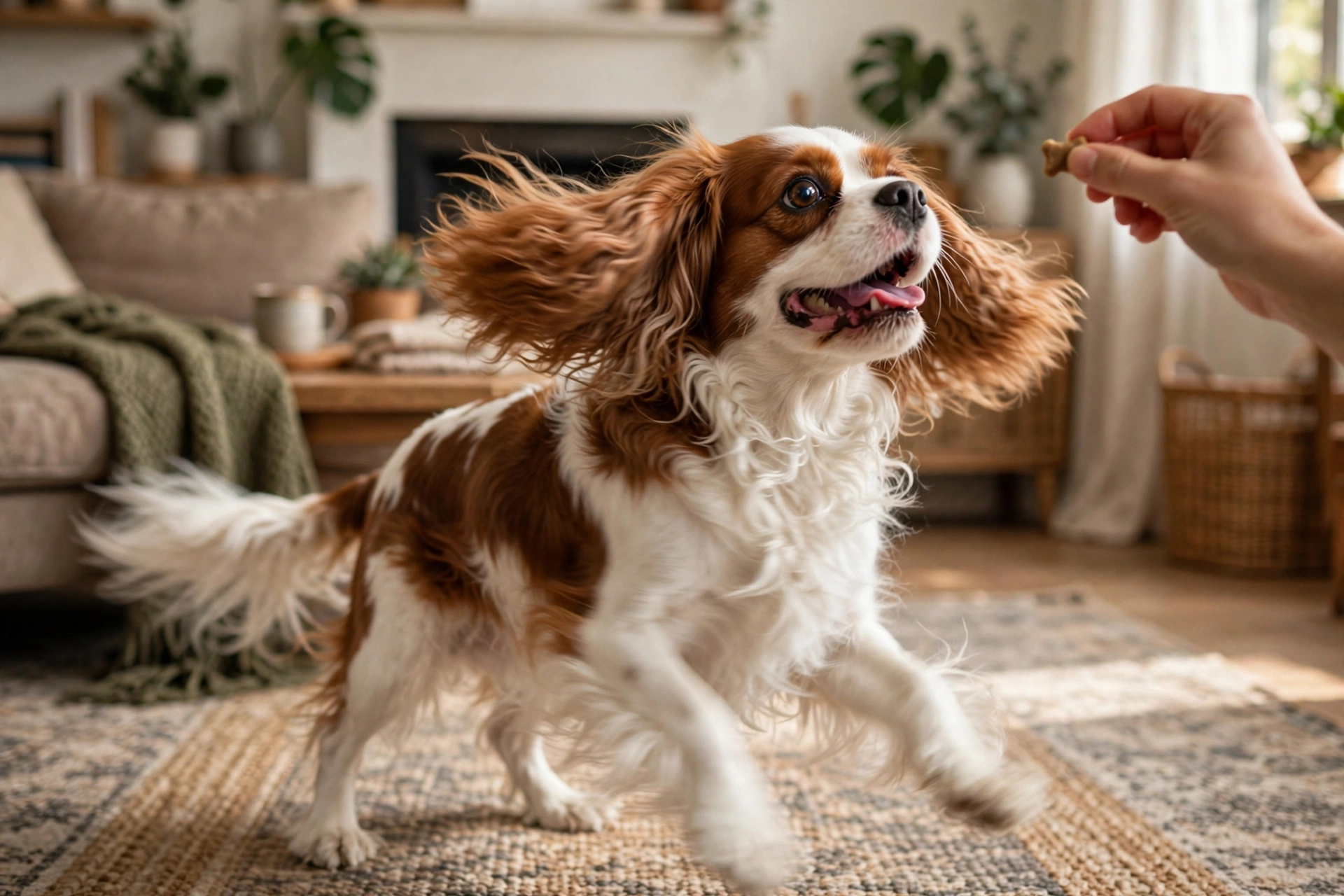
Spin is pure fun and one of the training tricks every Cavalier can learn once they understand luring. Hold a treat at your dog’s nose and slowly move it in a wide circle, letting their nose draw them around. Most Cavaliers follow the lure through the whole rotation on the first try. Say “spin” as they move, then reward the completed circle. Work on one direction first; add the second direction a week later.
Tip for success: Make your circles big and slow at first. Tight, fast lures confuse beginners, while generous arcs let them figure out the game.
Helpful pick: KONG Classic — stuff it with a treat reward for a post-training wind-down your dog will love.
5. Roll Over
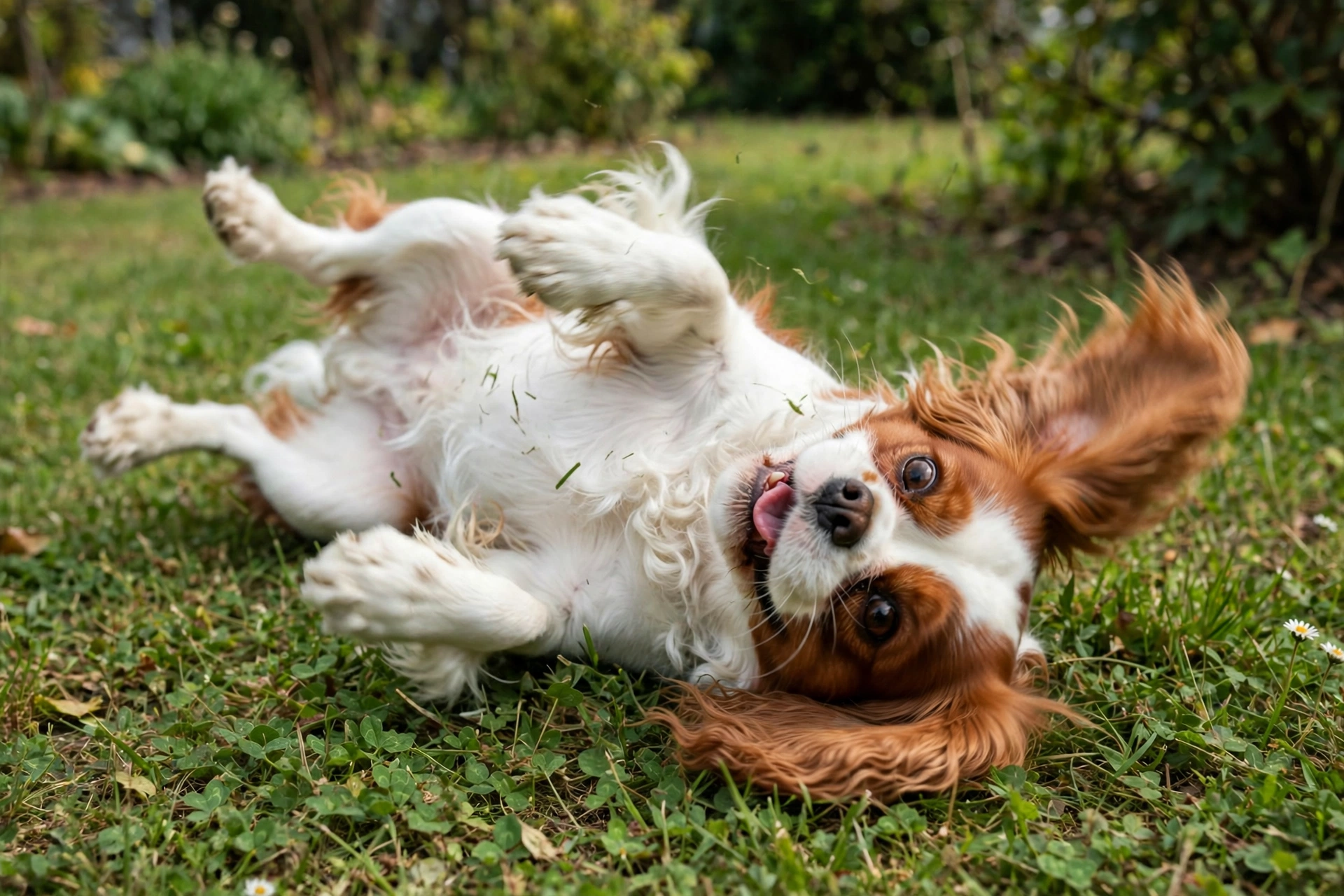
Roll over builds directly on down, so only start it once your Cavalier lies down happily. From the down position, hold a treat at their nose and slowly move it toward their shoulder, encouraging them to flop onto their side. Then continue the arc over the top so the momentum carries them through the roll. Reward generously — rolling is a vulnerable position, and your enthusiasm teaches them it’s safe and fun.
Tip for success: Train on soft surfaces and keep sessions short. Older Cavaliers or those with sore joints should do gentle half-rolls instead; the game still counts.
Helpful pick: Outward Hound Hide-A-Squirrel puzzle toy — keeps clever Cavaliers mentally busy on rest days between training.
6. Touch (Target Hand)

Touch might look unimpressive, but it’s one of the most useful training tricks every Cavalier can learn. Present your flat palm a few inches from your dog’s nose. Most Cavaliers will sniff it out of curiosity — the instant their nose makes contact, say “yes” and treat. Repeat until they boop your hand on purpose, then add the word “touch.” This trick becomes a magic tool for redirecting attention, guiding them into position, and even polite greetings with strangers.
Tip for success: If your dog won’t sniff your hand, smear a dab of peanut butter on your palm for the first few reps, then fade it out.
Helpful pick: MalsiPree portable dog water bottle — handy for training outings so your dog stays hydrated during practice walks.
7. Stay

Stay is equal parts trick and life skill. Ask for a sit or down, show your flat palm like a stop sign, and say “stay.” Pause one second, then reward. Build duration before distance: a solid five-second stay at arm’s length is worth more than a shaky twenty-second stay across the room. Release with an upbeat “okay!” so your dog learns stays have a clear ending.
Tip for success: If your Cavalier breaks, you’ve asked for too much too soon. Go back to the last distance and duration that worked and rebuild from there.
Helpful pick: Earth Rated pet grooming wipes — a quick cleanup for paws after outdoor training sessions.
8. Come (Reliable Recall)

Come is the most important of the training tricks every Cavalier can learn — it’s the one that keeps them safe. Start indoors: crouch down, open your arms, and say “come” in your happiest voice. When your dog runs to you, throw a party of praise and treats. Never call them for something unpleasant, like a bath or nail trim, or the word will lose its magic. Gradually practice in the yard, then in low-distraction parks, always rewarding the best treats only for recalls.
Tip for success: Run backward a few steps as you call. Dogs can’t resist chasing a moving person, and the game builds lightning-fast recall.
Helpful pick: Zesty Paws Calming Bites — supports calm behavior in easily excited Cavaliers before training sessions.
9. Bow

Bow is the showstopper. With your Cavalier standing, hold a treat at their nose and slowly lower it toward the floor while keeping your other hand gently near their belly to discourage a full down. You’re shaping the classic play-bow pose: chest low, rear up. Reward any version of the pose at first, then ask for a deeper, longer bow before treating. A verbal cue like “take a bow” makes the finished trick irresistible to show guests.
Tip for success: Watch your dog’s natural play — Cavaliers offer bows on their own all the time. Capture those moments by saying “yes” and treating when it happens naturally.
Helpful pick: Mycicy reflective rope dog leash — a sturdy leash for training sessions at the park or on evening walks.
10. Wave

Wave is the perfect finale to the training tricks every Cavalier can learn, because it grows naturally out of shake. Ask for a paw, then reward when your dog holds it in the air even a moment longer than usual. Gradually withhold the treat for a beat until they start flicking the paw upward on their own — it looks exactly like waving. Add the cue “wave” and watch your friends melt the first time your Cavalier greets them hello.
Tip for success: End every session on a success. If wave isn’t clicking today, finish with a trick your dog already knows so training always ends happily.
Helpful pick: Chuckit! Ultra Ball — a fetch reward between trick reps that keeps energy up and spirits high.
Frequently Asked Questions
What age should I start training tricks with my Cavalier? You can begin simple tricks like sit and touch as early as eight weeks. Keep puppy sessions under two minutes and focus on play, not precision.
Are Cavaliers hard to train? No — Cavaliers are among the most trainable companion breeds. They learn quickly for praise and treats, though their gentle nature means harsh corrections will shut them down completely. Positive methods are the only way to go.
How long should trick training sessions last? Five minutes is plenty for most Cavaliers, two to three for puppies. Two or three short sessions a day produce faster learning than one marathon session.
What treats work best for trick training? Tiny, soft, strong-smelling treats that your dog can eat in one second. Pea-sized pieces of commercial training treats work well because they don’t fill the dog up mid-session.
Can an older Cavalier learn new tricks? Absolutely. Senior Cavaliers often enjoy trick training more than anything, since it’s mental exercise without physical strain. Just skip anything that demands jumping or rolling if your dog has stiff joints.
Keep Reading
- How to Teach a Dog to Come When Called
- How to Teach Your Dog to Shake
- Dog Body Language Guide
- Signs Your Dog Loves You
- How to Help a Dog With Separation Anxiety
As an Amazon Associate, PetPostHub earns from qualifying purchases.



One Comment