
10 Signs Your Dog Is Stressed (And How to Calm Them Down)
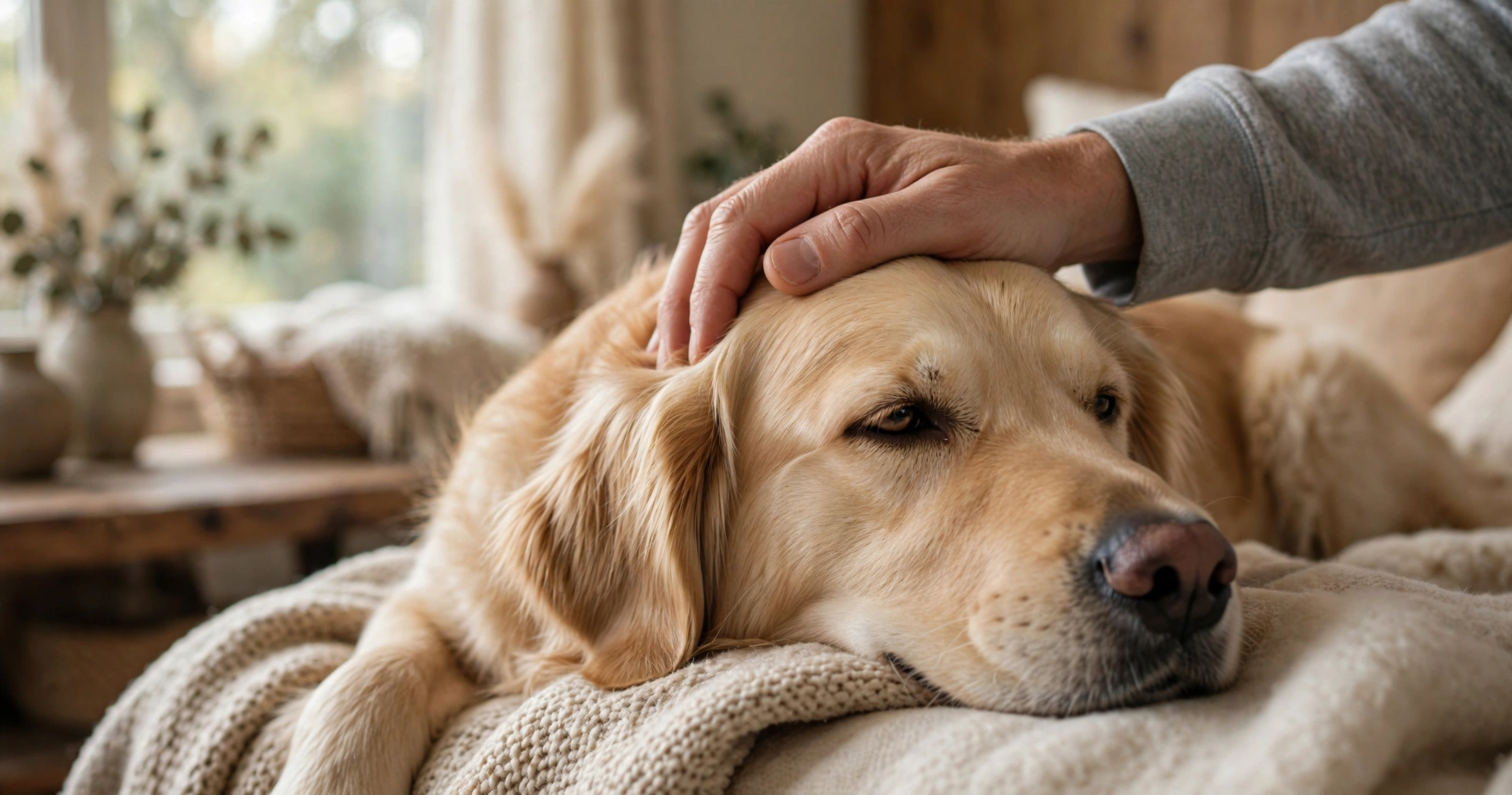
Dogs can’t tell us they’re stressed in words, but they’re constantly talking to us with their bodies. Learning to recognize the signs your dog is stressed is one of the most important skills any dog owner can build — catching stress early lets you step in before anxiety snowballs into fear, destructive behavior, or even aggression. This guide walks you through 10 common stress signals, what triggers them, and exactly how to help your dog feel safe again.
Table of Contents
- 1. Excessive Panting
- 2. Pacing and Restlessness
- 3. Whale Eye
- 4. Lip Licking and Yawning
- 5. Tucked Tail
- 6. Shedding More Than Usual
- 7. Destructive Behavior
- 8. Appetite Changes
- 9. Avoidance and Hiding
- 10. Excessive Barking or Whining
- How to Calm a Stressed Dog
- When Stress Needs a Vet
- Frequently Asked Questions
1. Excessive Panting
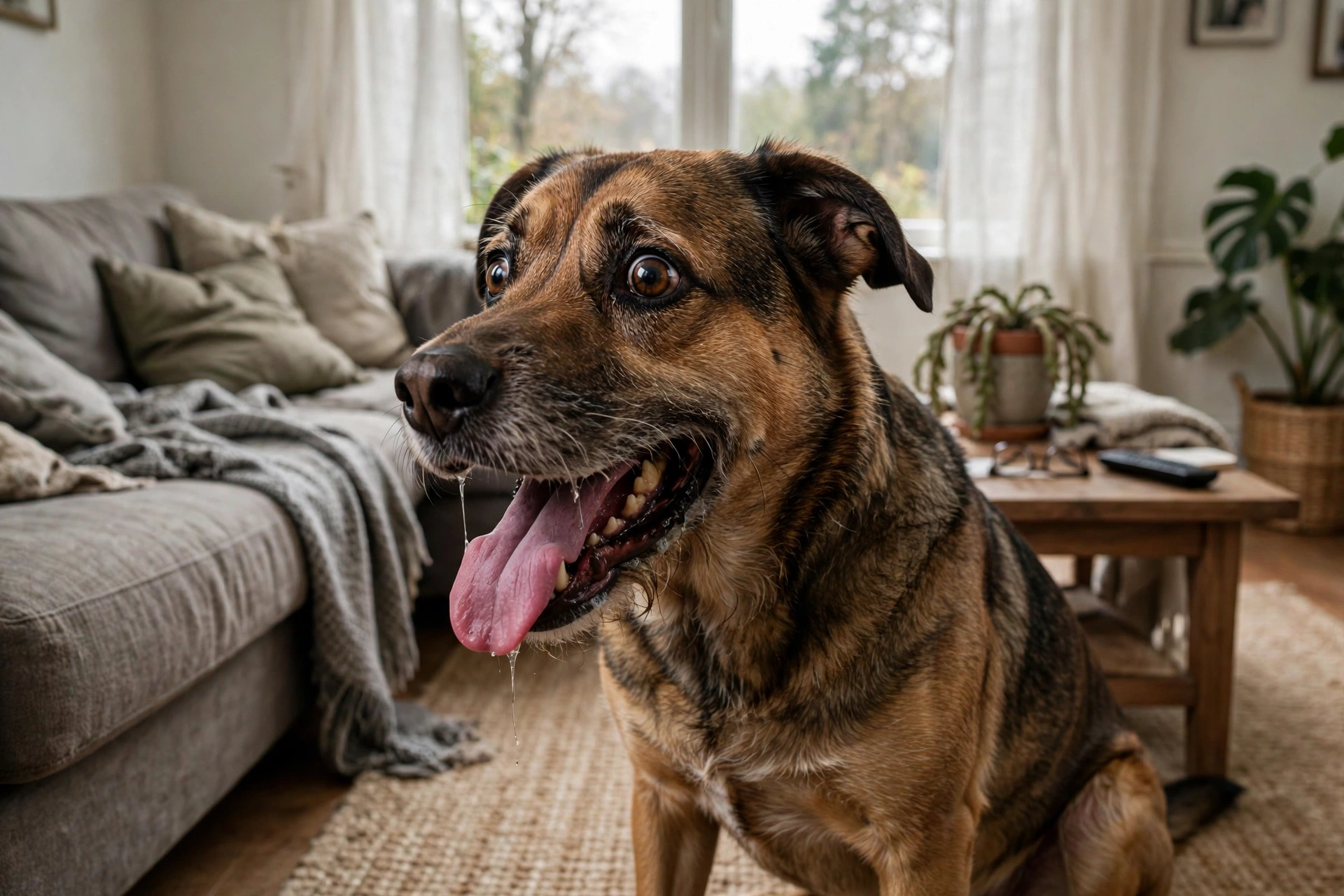
What it looks like: Rapid, shallow panting with the mouth open and tongue hanging out — even though your dog hasn’t exercised and the room isn’t hot. The panting may be louder or faster than normal, and the corners of the mouth often pull back into a tight “grin.”
Likely triggers: Vet visits, car rides, thunderstorms, fireworks, unfamiliar visitors, or any situation your dog finds overwhelming. Panting is a self-soothing mechanism dogs use to release tension.
How to help: First, rule out heat and exertion. Then lower the stimulation: move to a quieter room, speak in a calm low voice, and give your dog space. Offer water and let them settle at their own pace — don’t force affection.
Helpful pick: Zesty Paws Calming Chews — a tasty way to take the edge off during predictable stressors like fireworks or vet days.
2. Pacing and Restlessness
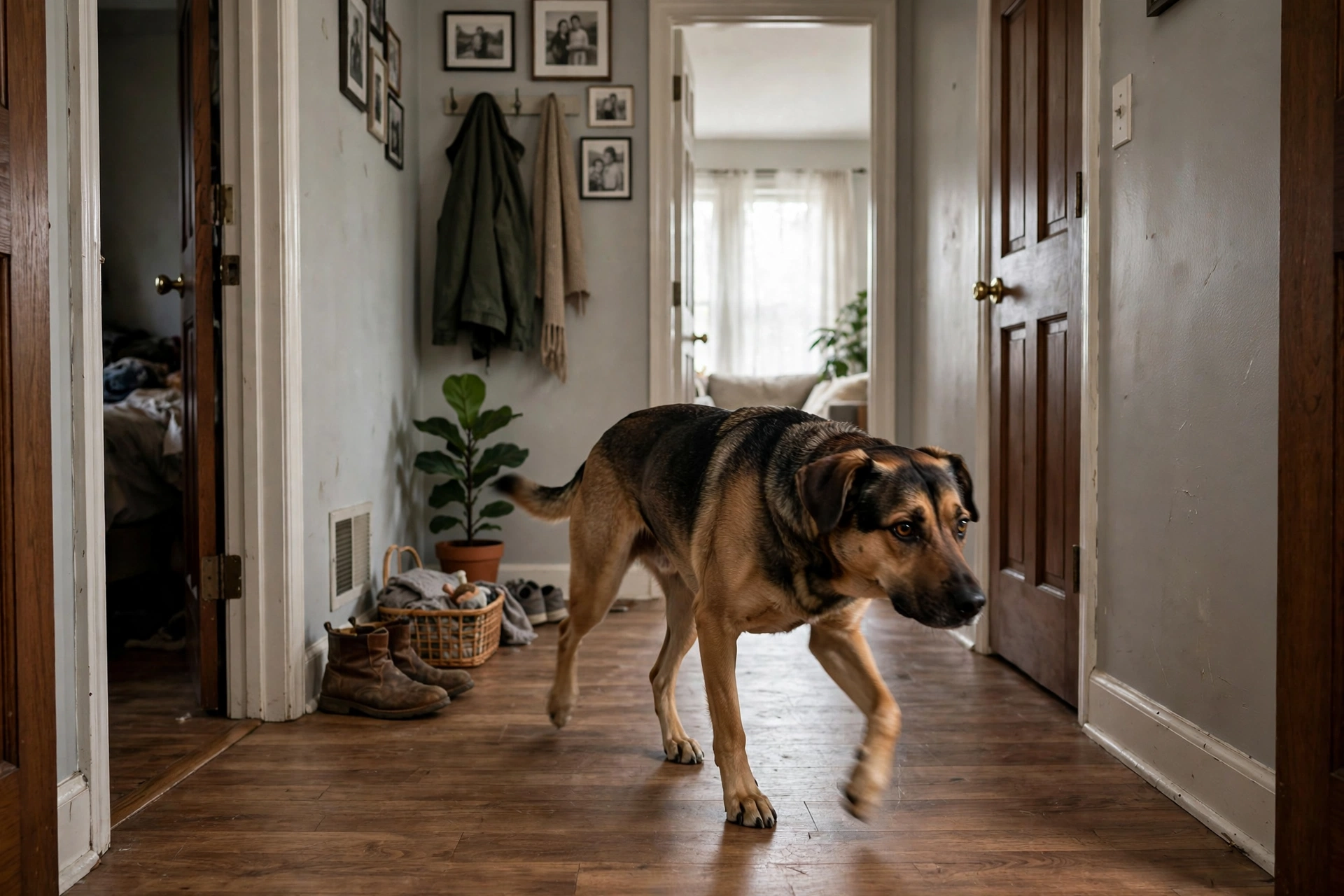
What it looks like: Your dog walks the same path over and over — around the coffee table, down the hallway, back again — unable to lie down and settle. They may follow you from room to room or seem “wired” with nervous energy.
Likely triggers: Anticipation of something scary (you picking up keys, a storm rolling in), pent-up energy from missed walks, or general unease about a change in routine.
How to help: Try a calming activity that engages the brain instead of the body: a sniffy walk at your dog’s pace, a food puzzle, or a lick mat. Predictable routines — same feeding and walk times — also reduce restlessness over time.
Helpful pick: LickiMat Classic Soother — licking is naturally calming and gives a pacer something soothing to focus on.
3. Whale Eye
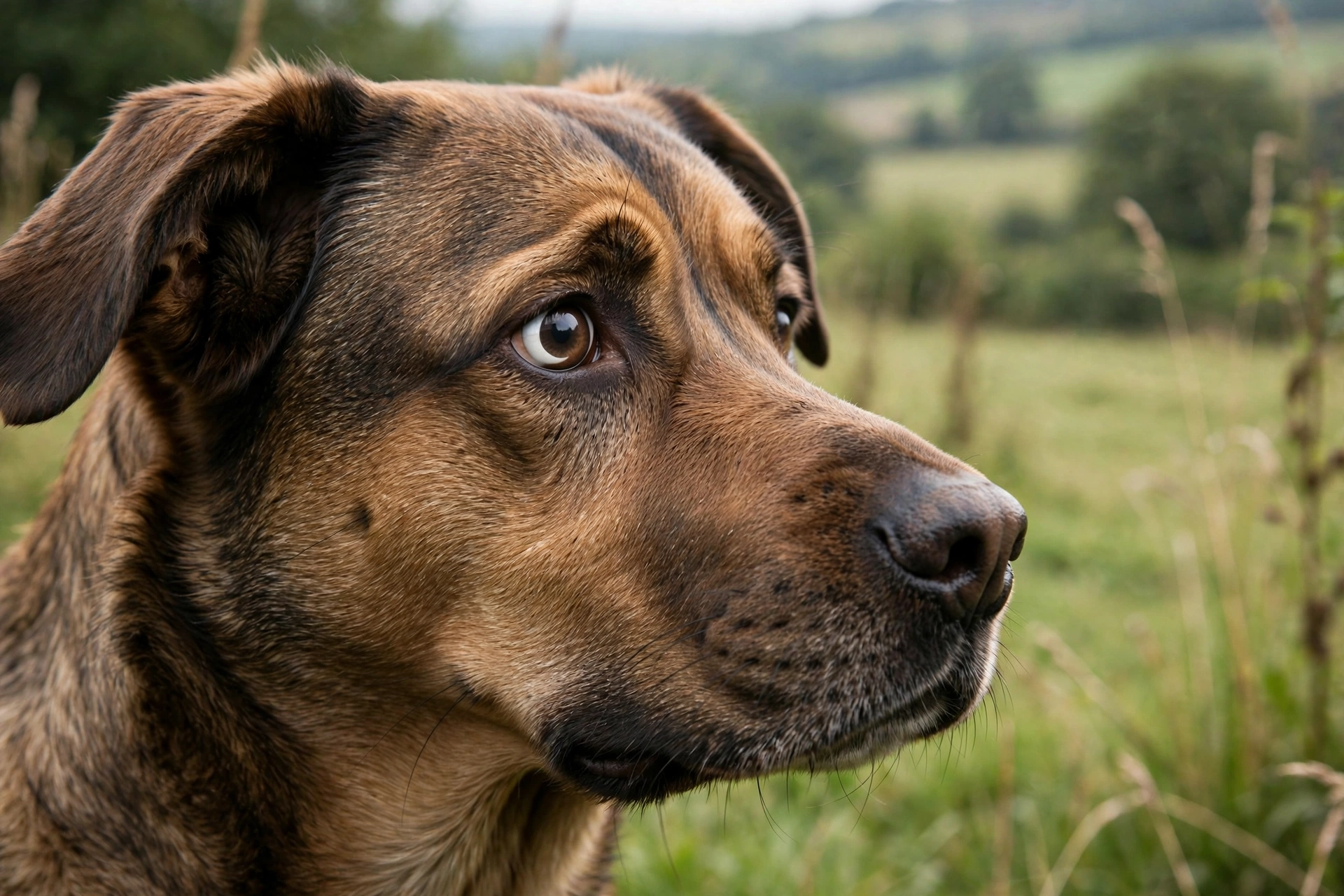
What it looks like: Your dog turns their head away but keeps their eyes fixed on the scary thing, exposing the whites of their eyes in a half-moon shape. It’s one of the clearest “I’m uncomfortable” signals dogs give.
Likely triggers: Being hugged or crowded, a stranger reaching over their head, a child climbing on them, or resource guarding around food and toys. Whale eye is often an early warning before a growl or snap.
How to help: Take it seriously: calmly remove the trigger or give your dog an escape route. Don’t punish the signal — it’s communication, not defiance. Teach kids and guests to respect your dog’s personal space.
Helpful pick: ADAPTIL Calm Diffuser — releases a comforting pheromone that helps dogs feel more secure in their home territory.
4. Lip Licking and Yawning
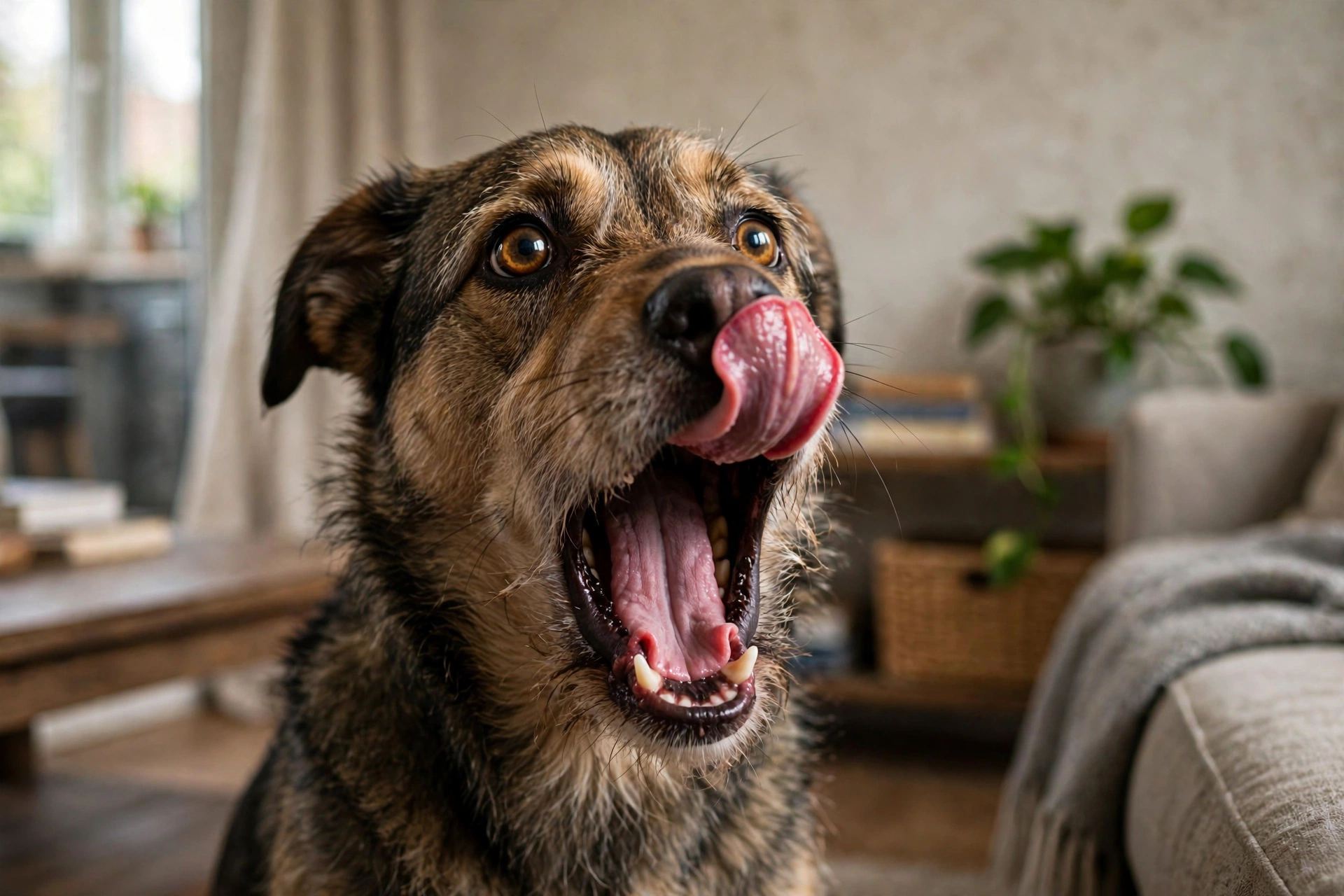
What it looks like: Repeated tongue flicks over the nose and lips when there’s no food around, or big dramatic yawns that clearly aren’t about being sleepy. These are “calming signals” dogs use to defuse tension — their own and yours.
Likely triggers: Training sessions that feel too pressured, scolding, being stared at, new environments, or interactions with unfamiliar dogs.
How to help: Ease the pressure: soften your voice, look away briefly, and give your dog a break. In training, lower the difficulty and reward generously. A comfortable resting spot helps them decompress after the moment passes.
Helpful pick: Snuggle Puppy Heartbeat Toy — the pulsing heartbeat mimics a littermate and soothes dogs during rest and crate time.
5. Tucked Tail
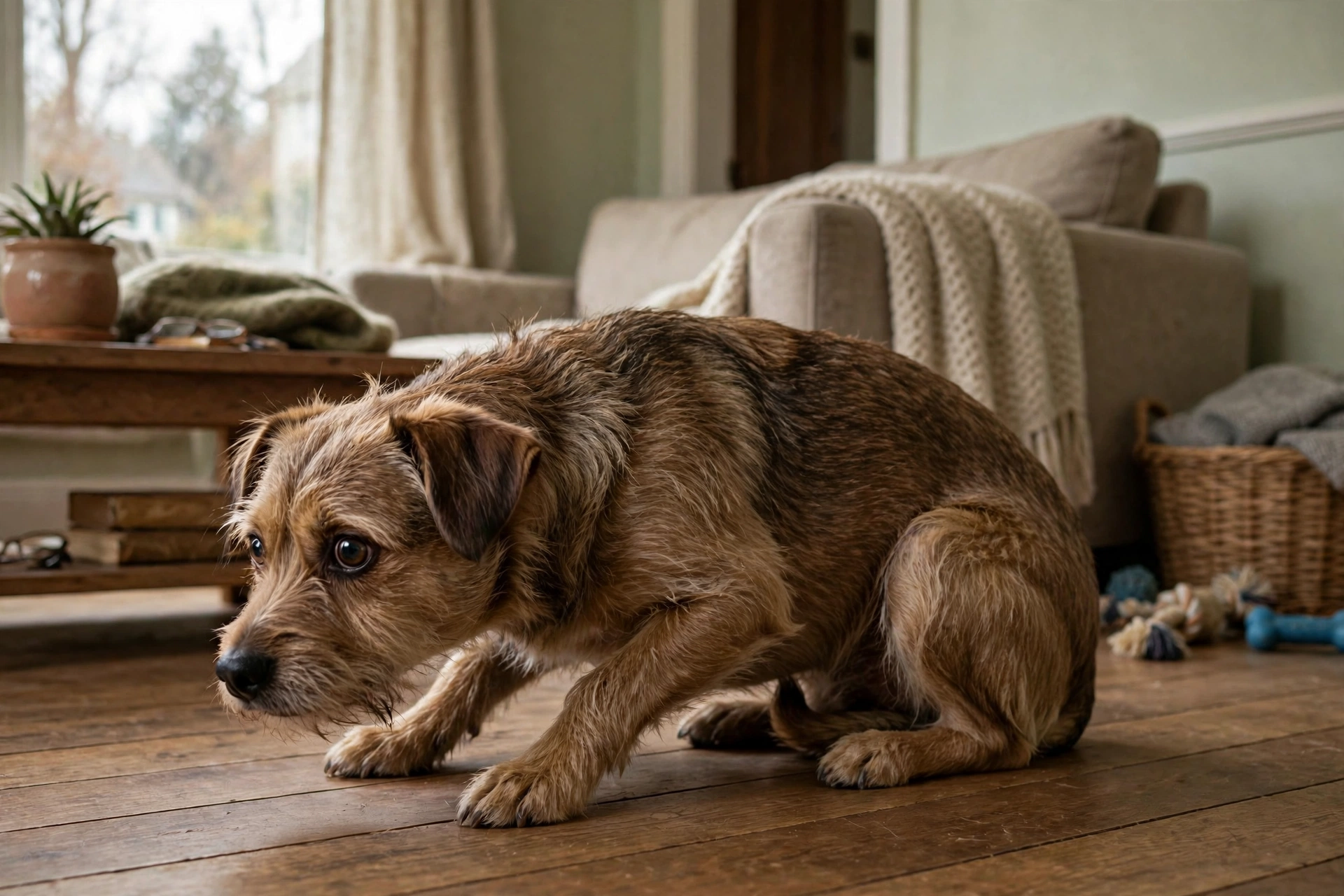
What it looks like: The tail clamps down between the hind legs, sometimes pressed flat against the belly. The body may crouch low, the ears flatten, and your dog might tremble. It’s a classic “please don’t hurt me” posture.
Likely triggers: Loud noises, punishment or harsh corrections, confrontations with bigger dogs, or unfamiliar overwhelming environments.
How to help: Never punish a tucked tail — it means your dog is already frightened. Get low, turn sideways (less threatening than facing head-on), and let them come to you. Keep background noise low and movements slow until they relax.
Helpful pick: Yogasleep Pawzz White Noise Machine — steady background sound masks startling noises and helps nervous dogs settle.
6. Shedding More Than Usual
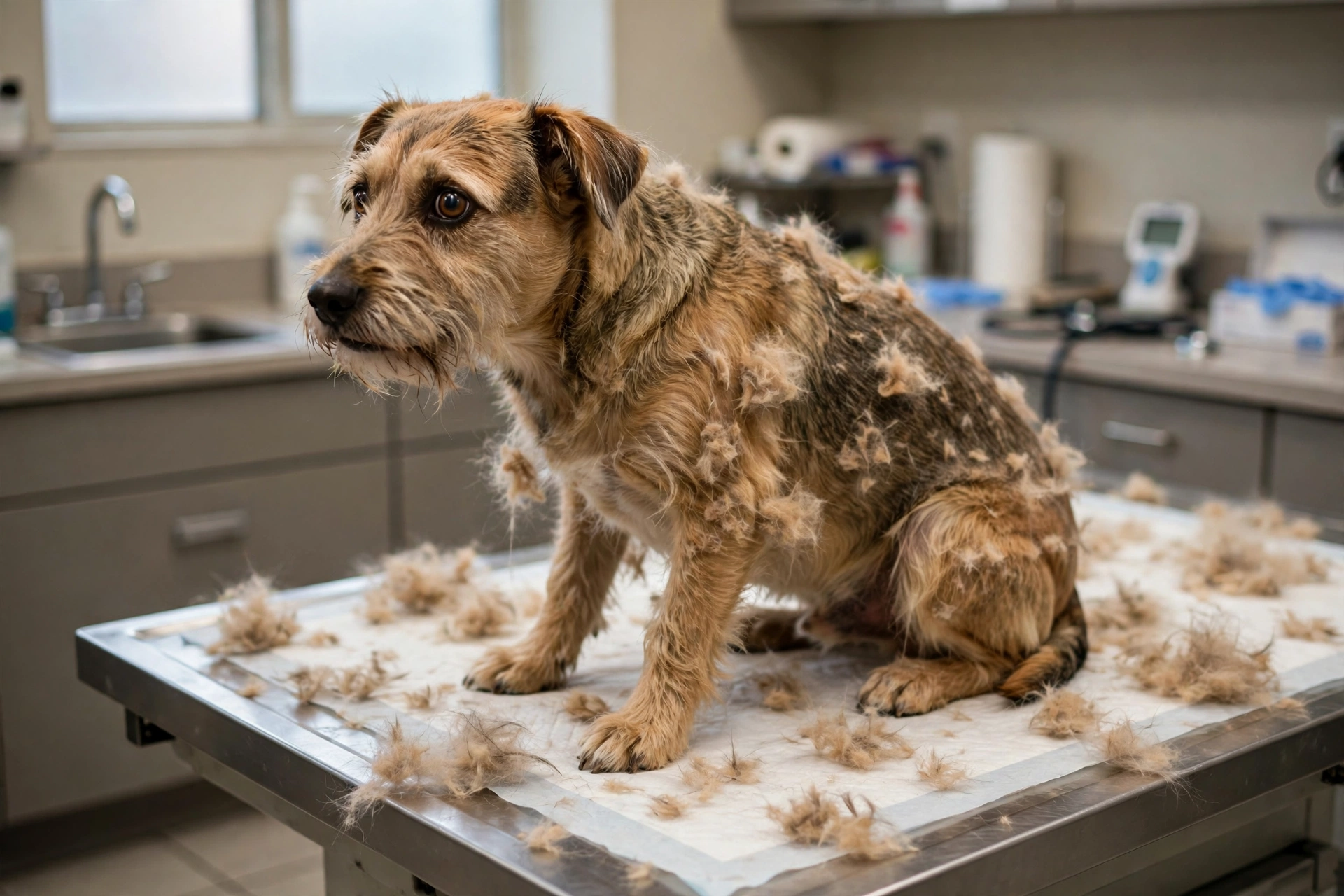
What it looks like: Clumps of hair falling during a specific stressful event — the classic “blowing coat at the vet” moment. If your dog suddenly sheds heavily without a seasonal explanation, stress hormones may be the cause.
Likely triggers: Vet exams, grooming appointments, travel, or any acute scare. Stress-induced shedding is a physical overflow of the fight-or-flight response.
How to help: Note when it happens so you can predict and prepare for those situations. Calm pre-visit routines, familiar blankets, and short, positive exposures to the stressful place (without the scary part) all help over time.
Helpful pick: PetAmi Sherpa Calming Blanket — a familiar-smelling comfort item your dog can retreat to anywhere.
7. Destructive Behavior

What it looks like: Chewed door frames, shredded pillows, scratched-up doors — especially when you’re away. Stress chewing is different from puppy mischief: it’s frantic, focused on exits or your belongings, and happens when the dog is alone.
Likely triggers: Separation anxiety is the big one, but boredom, under-exercise, and frustration also fuel destruction.
How to help: Punishing after the fact never works — your dog can’t connect it to the crime. Instead, tire them out before you leave, provide long-lasting chews or stuffed toys, and work on gradual alone-time training. For severe cases, consult a behaviorist.
Helpful pick: KONG Classic — stuff it with peanut butter and freeze it for a long-lasting, stress-busting solo activity.
8. Appetite Changes

What it looks like: A normally food-obsessed dog suddenly sniffs their bowl and walks away, or eats only reluctantly. Stress suppresses appetite — though some dogs swing the other way and eat frantically or scavenge.
Likely triggers: New home, new pet, travel, boarding, loud household conflict, or any big routine disruption.
How to help: Make meals feel safe and predictable: feed in a quiet spot away from chaos, keep to a schedule, and avoid hovering while they eat. If appetite loss lasts more than 24–48 hours, call your vet to rule out illness.
Helpful pick: Snuffle Mat for Dogs — turning meals into a low-pressure foraging game can coax a stressed appetite back.
9. Avoidance and Hiding
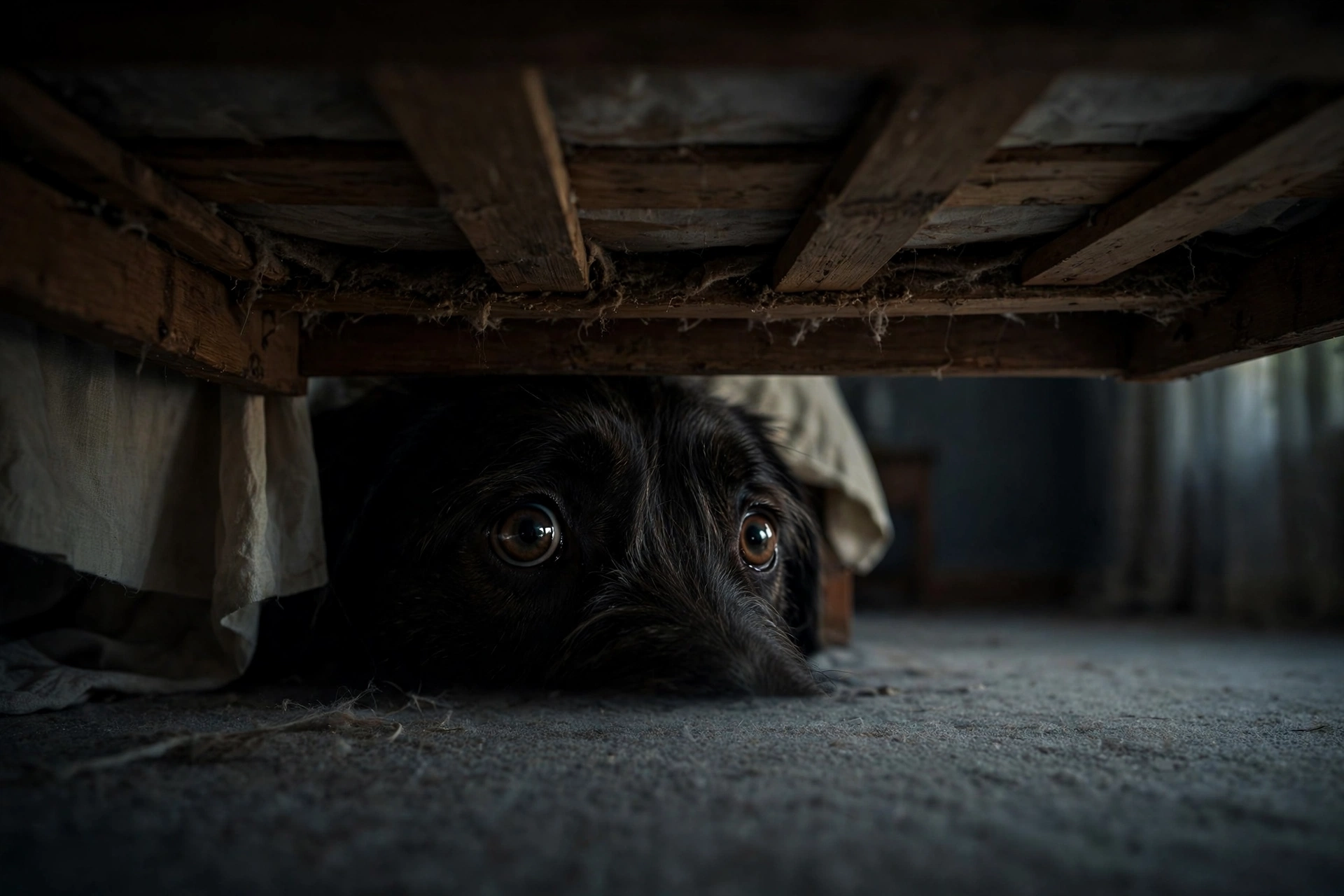
What it looks like: Your dog retreats under the bed, into a closet, behind furniture, or simply leaves the room when a trigger appears. Some dogs “shut down” — going still and unresponsive — which is an extreme form of avoidance.
Likely triggers: Storms, fireworks, house parties, vacuum cleaners, or anything your dog has learned to fear.
How to help: Let them hide — a safe den is a healthy coping strategy, not a problem to fix. Make the hiding spot comfortable with bedding and keep the trigger as distant as possible. Never drag a hiding dog out; it destroys trust.
Helpful pick: Best Friends by Sheri Donut Cuddler Bed — a cozy nest-like bed gives anxious dogs a secure den of their own.
10. Excessive Barking or Whining
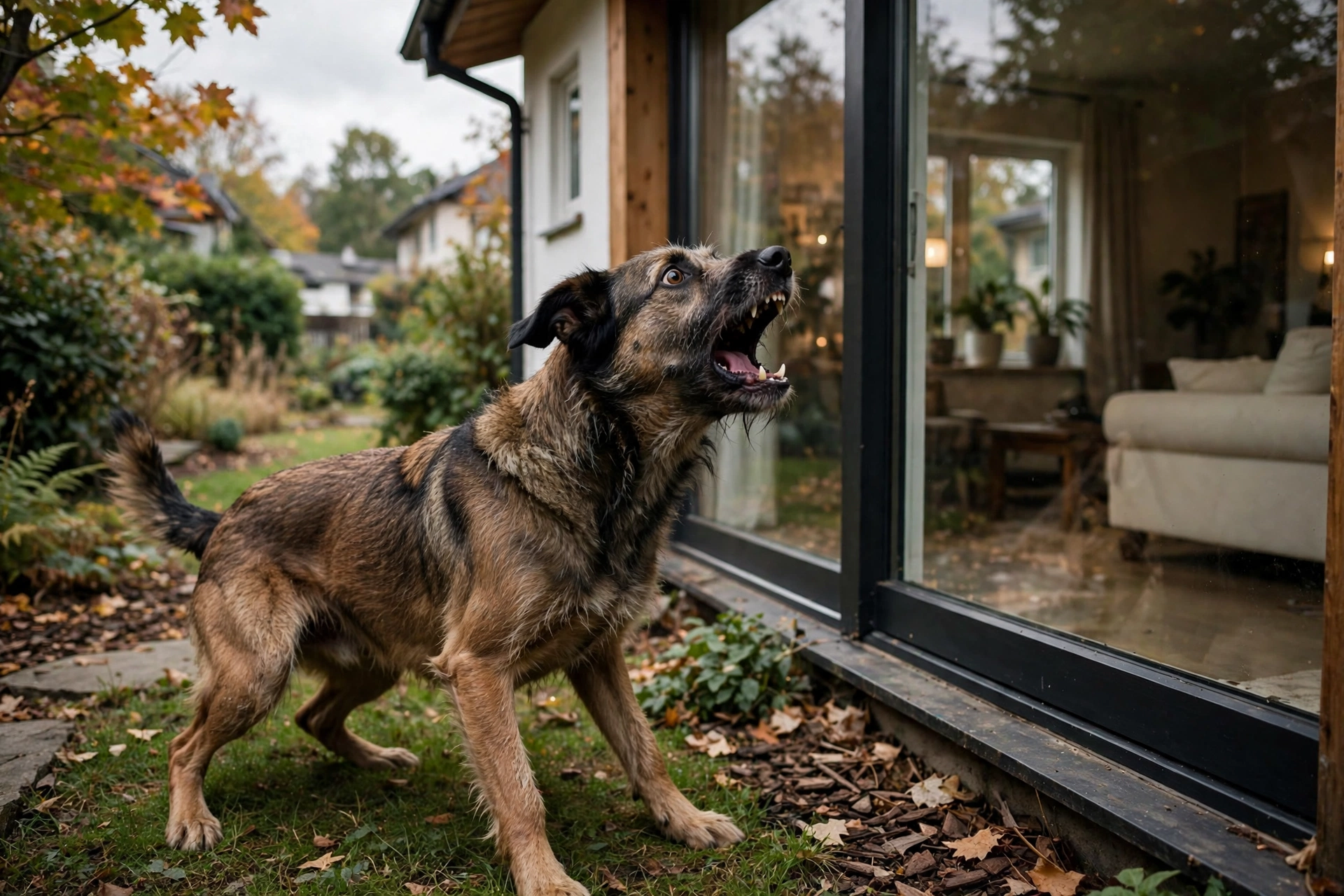
What it looks like: Barking or whining that won’t stop — at nothing you can see, long after the trigger is gone, or in a high-pitched, frantic tone that’s different from alert barking. Vocalization is how dogs vent overwhelming feelings.
Likely triggers: Being left alone, territorial anxiety, overstimulation on walks, or frustration at barriers like fences and crates.
How to help: Identify the pattern: is it when you leave, when the doorbell rings, at other dogs? Address the trigger (desensitization, more exercise, management) rather than yelling at the barking — shouting just adds to the noise stress.
Helpful pick: Furbo 360° Dog Camera — check in and toss treats remotely so alone-time barking doesn’t spiral.
How to Calm a Stressed Dog: A 5-Step Framework
- Spot the signal early. The subtle signs — lip licking, yawning, whale eye — come before the big ones. Catching stress early means a small intervention works.
- Remove or reduce the trigger. Move away from the scary thing, lower the volume, or create distance. Management beats training in the moment.
- Offer a calming activity. Licking, chewing, and sniffing all lower stress hormones. A stuffed Kong, lick mat, or sniffy walk works wonders.
- Be a calm anchor. Your energy is contagious. Slow breathing, a soft voice, and relaxed body language tell your dog the world is safe.
- Build resilience over time. Gradual, positive exposure to mild versions of the trigger — paired with treats — teaches your dog that scary things predict good things.
For a deeper dive into one of the most common stress triggers, read our guide on dog separation anxiety and how barking often connects to stress.
When Stress Needs a Vet
Occasional stress is normal, but see your veterinarian if your dog’s stress signs are sudden and severe, persist for weeks, come with physical symptoms (vomiting, diarrhea, hair loss, weight changes), or escalate despite your efforts. Chronic stress can stem from pain, thyroid issues, cognitive decline in seniors, or true anxiety disorders — all of which may need medical treatment. A vet can also refer you to a certified behaviorist for a tailored plan.
Frequently Asked Questions
Can dogs get stressed from being alone too long?
Yes — loneliness and boredom are major stress sources. Most adult dogs handle 4–6 hours alone fine if their needs are met, but longer stretches without exercise, enrichment, or company commonly trigger separation-related stress. See our separation anxiety guide for a full plan.
Do dogs yawn when stressed or just tired?
Both, but context tells the story. A big stretch-yawn in a tense moment — at the vet, during scolding, meeting a new dog — is a calming signal, not sleepiness. Relaxed bedtime yawns look and feel completely different.
Why does my dog lick their lips so much?
Frequent lip licking with no food around is a classic stress or nausea signal. If it happens in specific situations, it’s likely stress; if it’s constant and paired with drooling or appetite loss, check with your vet. Our article on why dogs lick so much covers all the causes.
How can I tell the difference between stress and excitement?
Look at the whole body: loose wiggly movements, soft eyes, and a relaxed open mouth mean happy excitement. Stiffness, tucked tail, whale eye, panting, and avoidance mean stress — even if the tail is wagging, since wagging alone doesn’t equal happiness.
Should I comfort my dog when they’re scared?
Yes. The old advice that comforting “rewards fear” is a myth — you can’t reinforce an emotion, only behavior. Calm, gentle comfort helps your dog feel safe and actually reduces stress faster. Just keep your own energy relaxed rather than frantic.
As an Amazon Associate, PetPostHub earns from qualifying purchases.




12 Comments