
How to Stop Your Dog from Eating Mulch: 8 Fixes
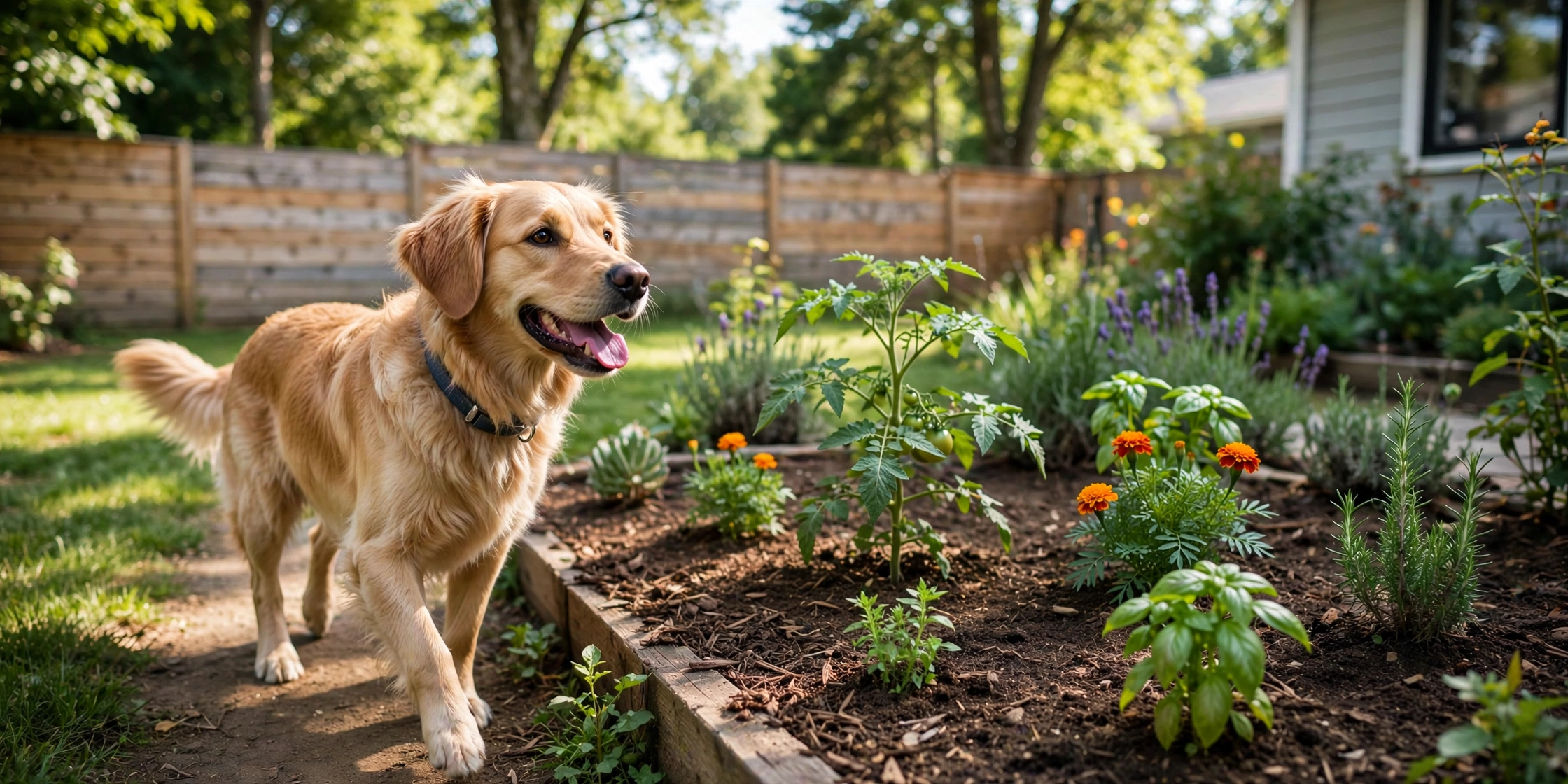
If you’ve ever watched your dog happily crunching a mouthful of bark chips, you’re not alone. Learning how to stop dog from eating mulch is one of the most common yard-safety battles pet parents face. Mulch is everywhere — garden beds, playgrounds, neighborhood paths — and many dogs find the smell, texture, and even the taste irresistible.
But this habit isn’t just annoying for your landscaping budget. Some mulches are genuinely dangerous for dogs. Cocoa mulch (cocoa shell mulch) is made from the shells of cocoa beans and contains theobromine and caffeine — the same compounds that make chocolate toxic to dogs. Even regular wood mulch can splinter, cause intestinal blockages, or be treated with fertilizers, pesticides, and dyes. So if your dog is a mulch muncher, it’s worth fixing. Here are 8 proven fixes.
Table of Contents
- 1. Switch to a Dog-Safe Mulch
- 2. Supervise Yard Time Until the Habit Breaks
- 3. Teach a Rock-Solid “Leave It”
- 4. Burn Off Energy Before Yard Time
- 5. Make the Mulch Taste Awful with Bitter Spray
- 6. Block Off the Garden Beds
- 7. Get a Vet Check for Pica
- 8. Never Punish — Redirect Instead
- Is Mulch Dangerous for Dogs?
- Frequently Asked Questions
1. Switch to a Dog-Safe Mulch
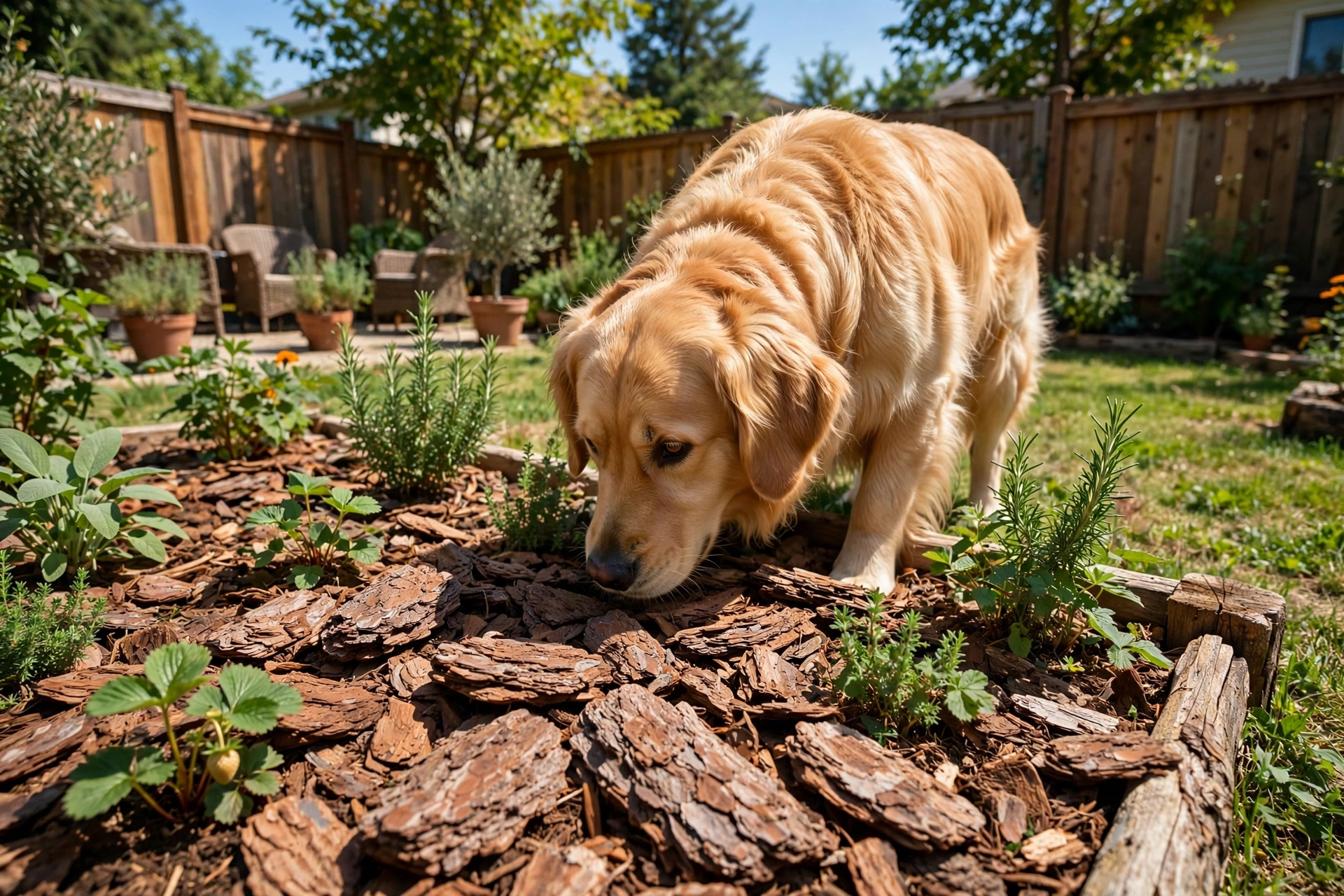
The single most effective fix is removing the temptation at its source. Not all mulches are equally appealing — or equally risky. Large pine bark nuggets are a smart swap: they’re too chunky for most dogs to want to chew, they contain no theobromine, and they still look great in beds. Avoid cocoa shell mulch entirely if you have a dog, and be cautious with dyed mulches and rubber mulch, which can contain chemical residues.
Pro tip: Whatever mulch you choose, check the label for fertilizers, pesticides, or dyes. “Natural” and “untreated” are the keywords you want.
Helpful pick: Soil Sunrise 100% Natural Pine Bark Mulch Nuggets — large, natural nuggets with no additives, far less tempting than cocoa or dyed mulch.
2. Supervise Yard Time Until the Habit Breaks
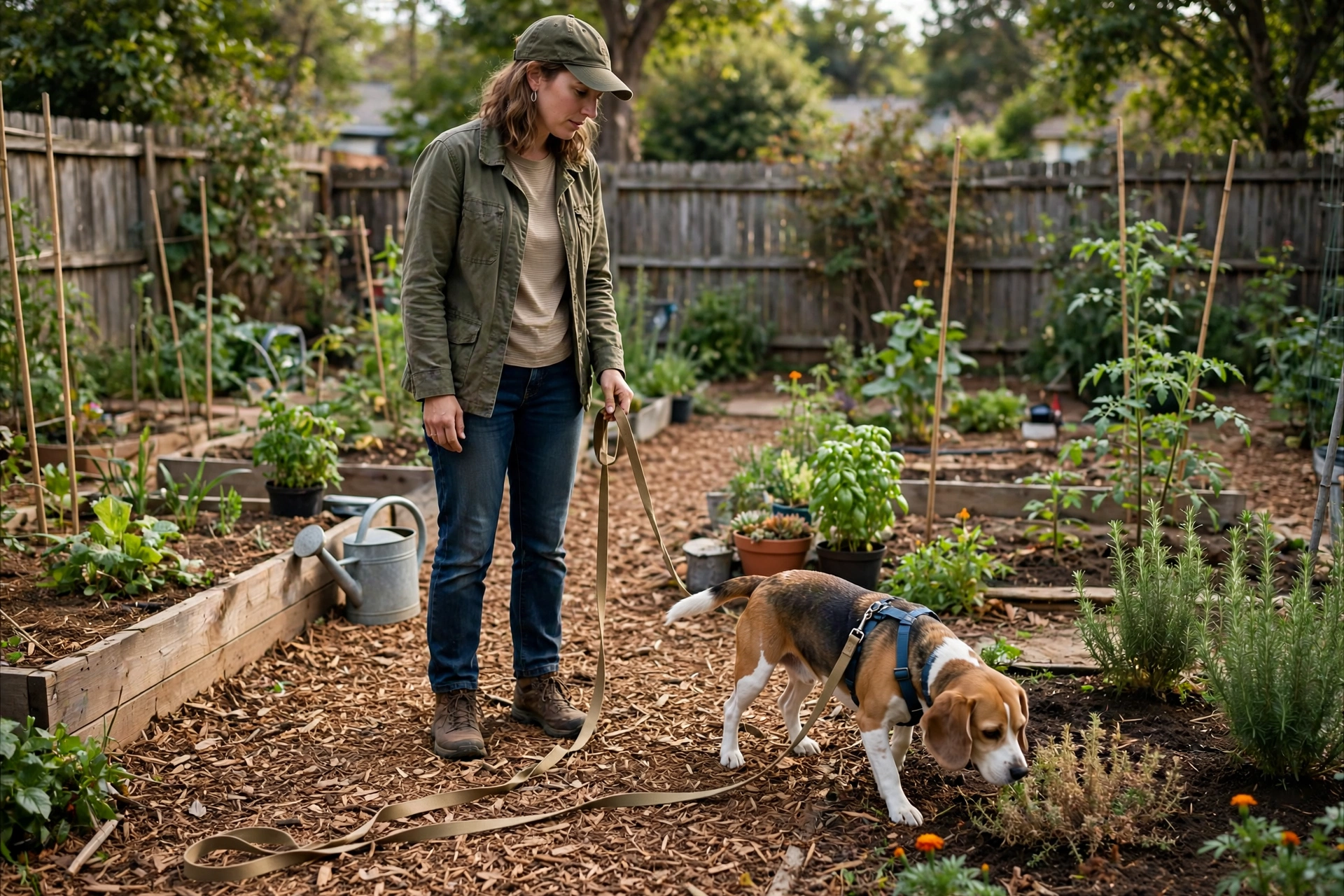
Most mulch munching happens when nobody is watching. Until your dog’s habit is under control, go outside with them — every time. Supervision lets you interrupt the behavior in the moment, which is the only window where a correction actually teaches anything.
A long training line gives your dog freedom to roam while keeping you in control. When they dive for the mulch, you can gently guide them away and redirect to a toy or treat. After a few weeks of consistent interruption, most dogs simply stop bothering.
Pro tip: Bring a pocketful of high-value treats on every yard trip so you always have something better to trade.
Helpful pick: Joytale 30ft Long Training Leash — lets your dog explore the yard while you stay in control of the mulch situation.
3. Teach a Rock-Solid “Leave It”
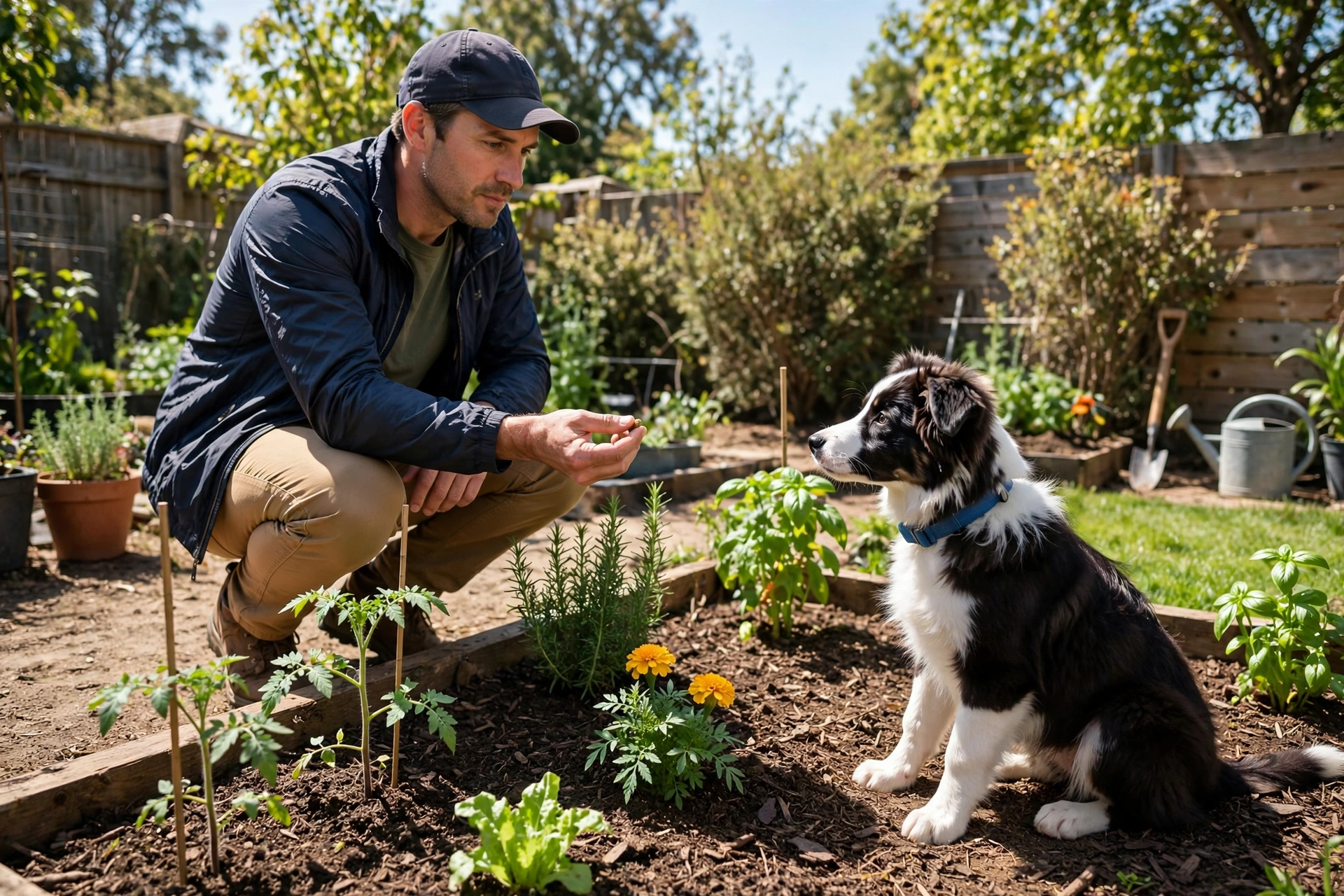
“Leave it” is the single most useful command for a mulch eater. Start indoors with low-value items: hold a treat in a closed fist, say “leave it,” and the instant your dog backs off, reward them with a better treat from your other hand. Gradually work up to dropped food, then to boring objects on the ground, and finally to mulch outdoors.
Practice daily in short 5-minute sessions. Once your dog will ignore mulch on cue, you’ve solved the problem everywhere — your yard, the park, the neighbor’s garden.
Pro tip: Always reward “leave it” with something better than what they’re leaving. A trade, not a trick.
Helpful pick: Egiao Dog Treat Pouch — keeps rewards handy so you can pay your dog for every good “leave it” on the spot.
4. Burn Off Energy Before Yard Time
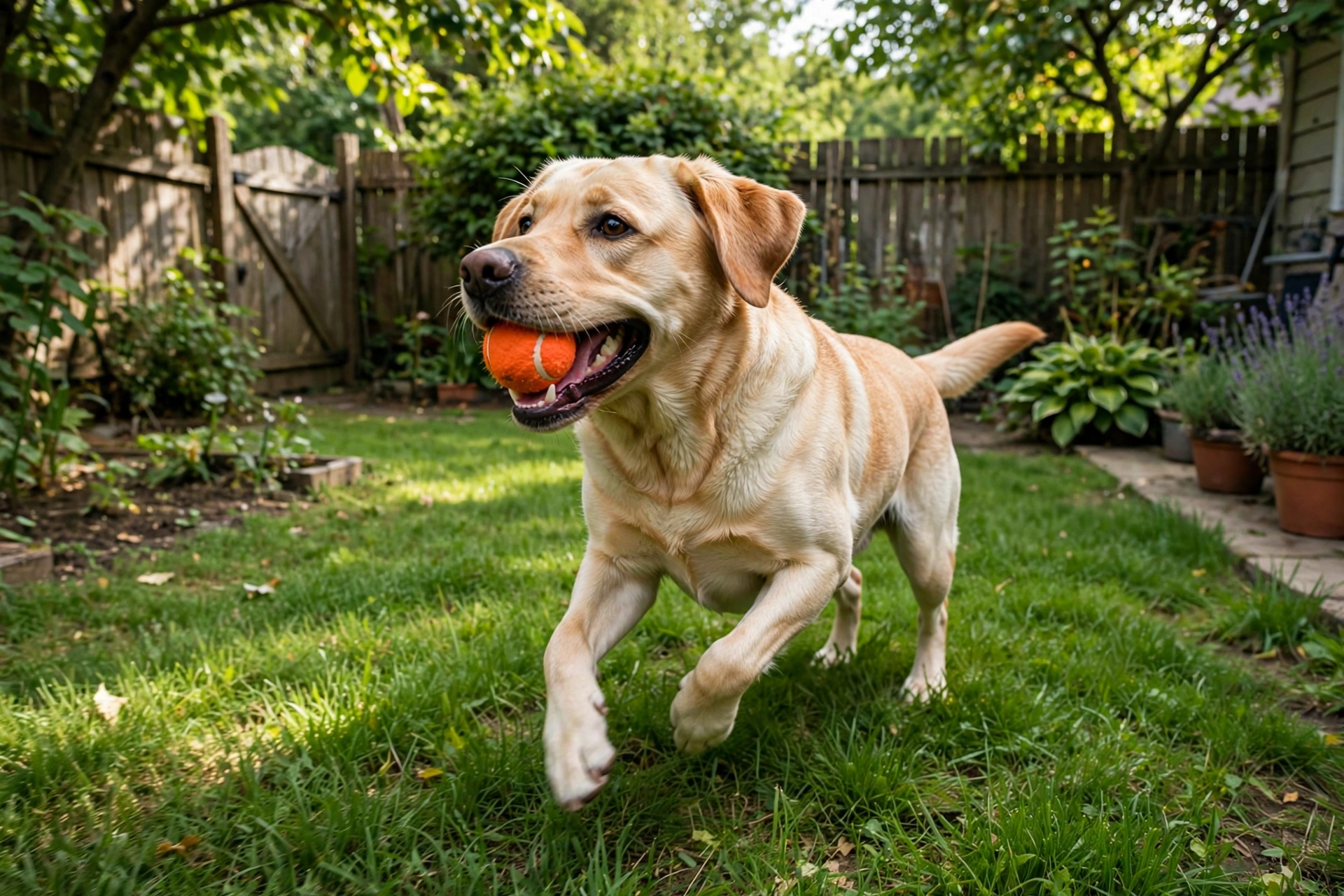
Bored dogs invent their own entertainment, and mulch happens to be right there. A dog that has just had a solid play session is far less likely to wander around sampling bark chips. Exercise before yard time — not after — so your dog is already satisfied when they go out.
Fetch, tug, flirt-pole play, and sniff walks all work. Mental exercise counts too: a puzzle feeder or training session can tire a dog out as fast as a run.
Pro tip: Ten minutes of active play before free yard time can cut mulch munching dramatically.
Helpful pick: KONG Classic — stuff it with peanut butter and freeze it for a workout that also keeps your dog busy in the yard.
5. Make the Mulch Taste Awful with Bitter Spray
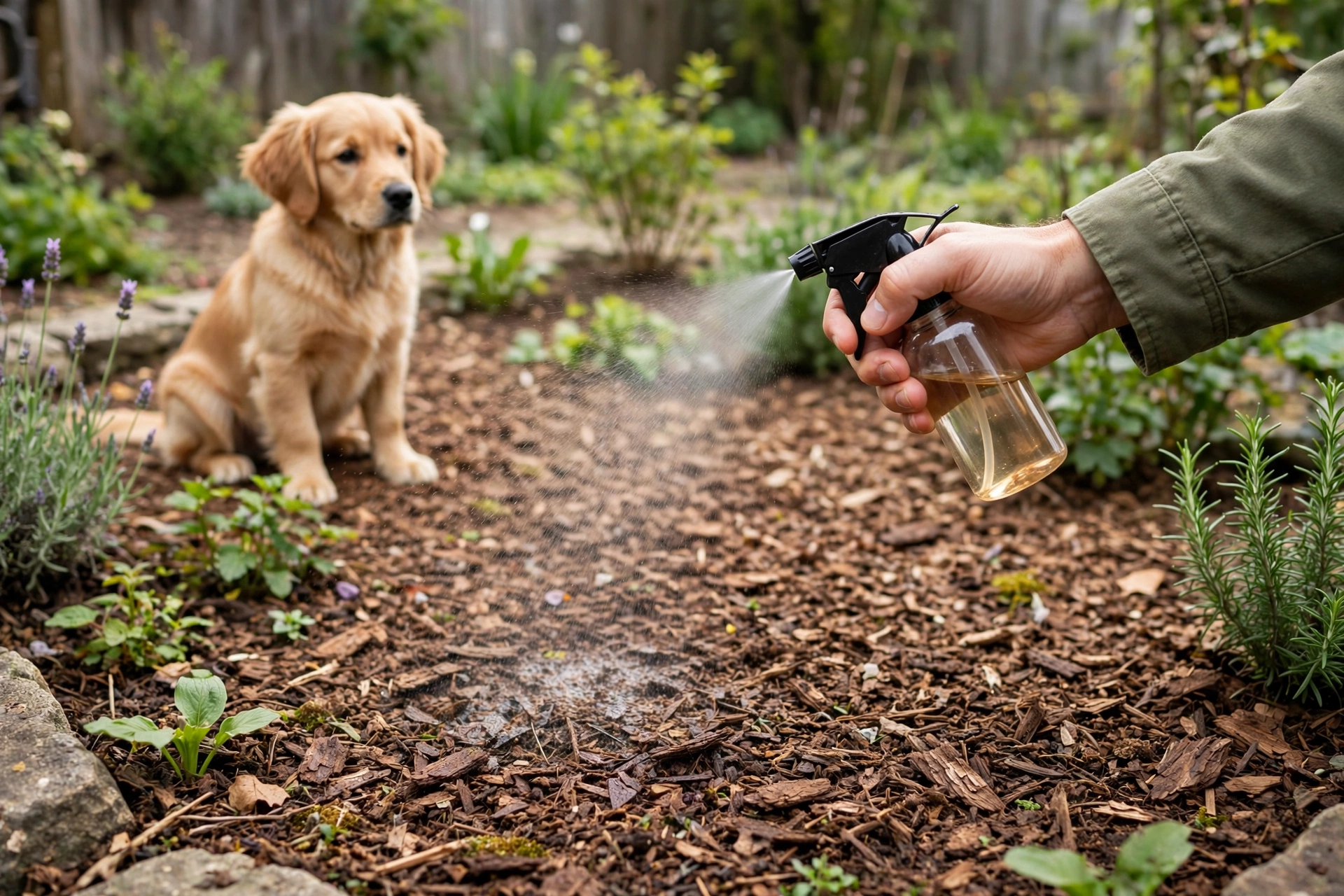
Taste deterrents are one of the simplest tools for this problem. Bitter apple spray is designed to make things taste terrible to dogs, and a light misting over the top layer of mulch can make your dog lose interest fast. Reapply after rain or watering, since it washes off.
Make sure you choose a product labeled safe for plants and pets — you’re spraying it where your dog sniffs and your flowers grow.
Pro tip: Test a small patch first and let your dog discover the bad taste on their own. The “lesson” lands better when it feels like the mulch itself did it.
Helpful pick: Grannick’s Bitter Apple Spray (16 oz) — the classic dog-safe taste deterrent, safe to mist on mulch and plant beds.
6. Block Off the Garden Beds
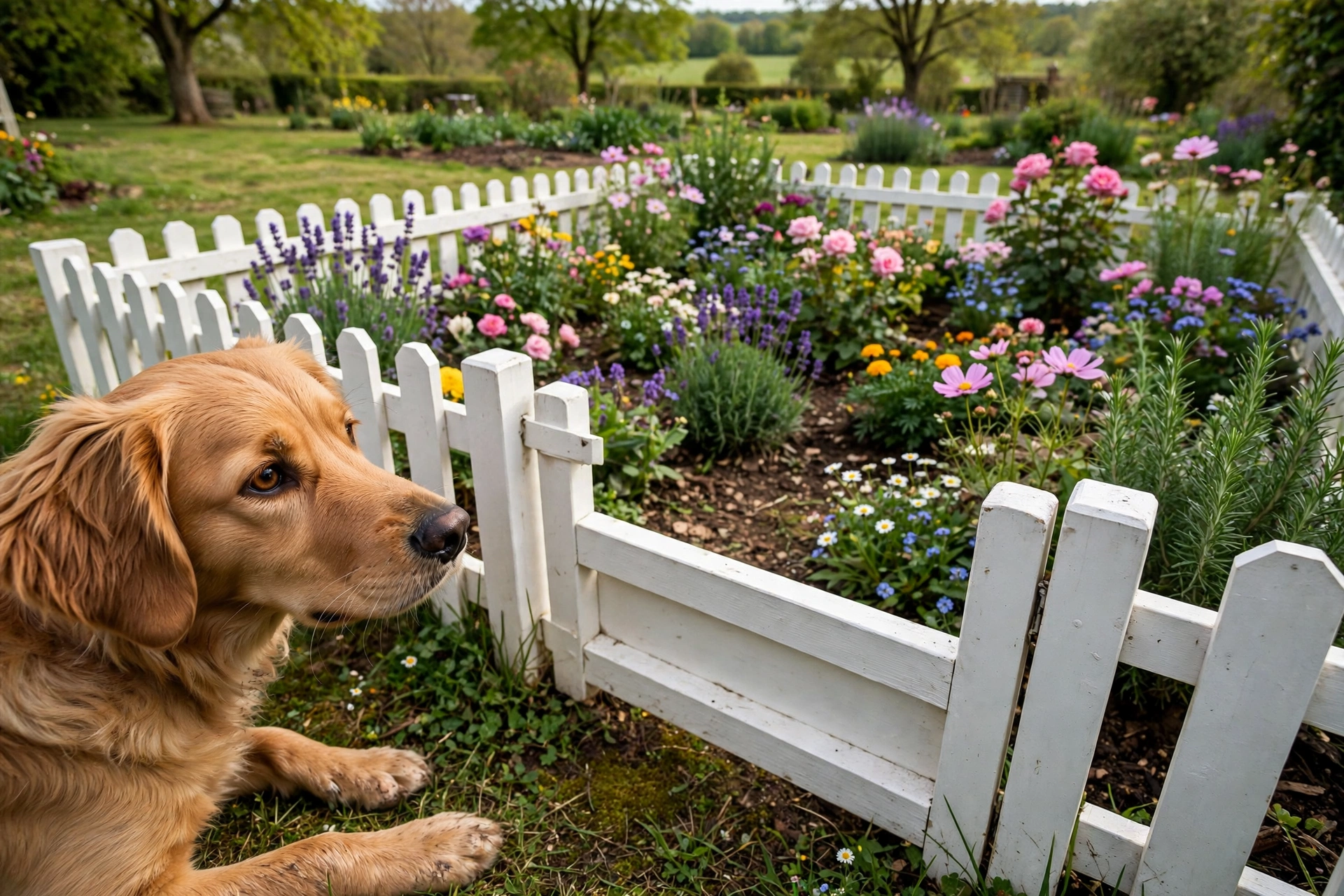
If training isn’t sticking or your dog is unsupervised in the yard sometimes, a physical barrier solves the problem instantly. A low garden fence, decorative edging, or a freestanding gate around your beds keeps paws — and mouths — off the mulch while still letting the garden look nice.
This is especially useful for raised beds or areas with cocoa mulch, where even one successful snack could be an emergency vet visit.
Pro tip: Even a low 2-foot barrier works for most dogs once they learn the beds are off-limits.
Helpful pick: Newnice Baby Gate with Cat Door — freestanding and adjustable, it works perfectly as a quick barrier around garden beds.
7. Get a Vet Check for Pica

If your dog eats mulch obsessively — not just a curious nibble, but compulsively seeking it out — it could be pica, a condition where dogs eat non-food items. Pica is sometimes linked to nutritional deficiencies, gastrointestinal issues, or anxiety disorders, and it deserves a veterinary workup.
Watch for red flags alongside the mulch eating: eating other non-food items (dirt, rocks, fabric), vomiting, diarrhea, weight loss, or lethargy. A vet can run bloodwork, check for deficiencies, and rule out digestive problems.
Pro tip: Keep a note of what your dog eats and how often — it helps your vet spot patterns.
Helpful pick: PetMedics Non-Contact Pet Thermometer — a quick way to check your dog’s temperature at home if mulch eating comes with digestive upset.
8. Never Punish — Redirect Instead
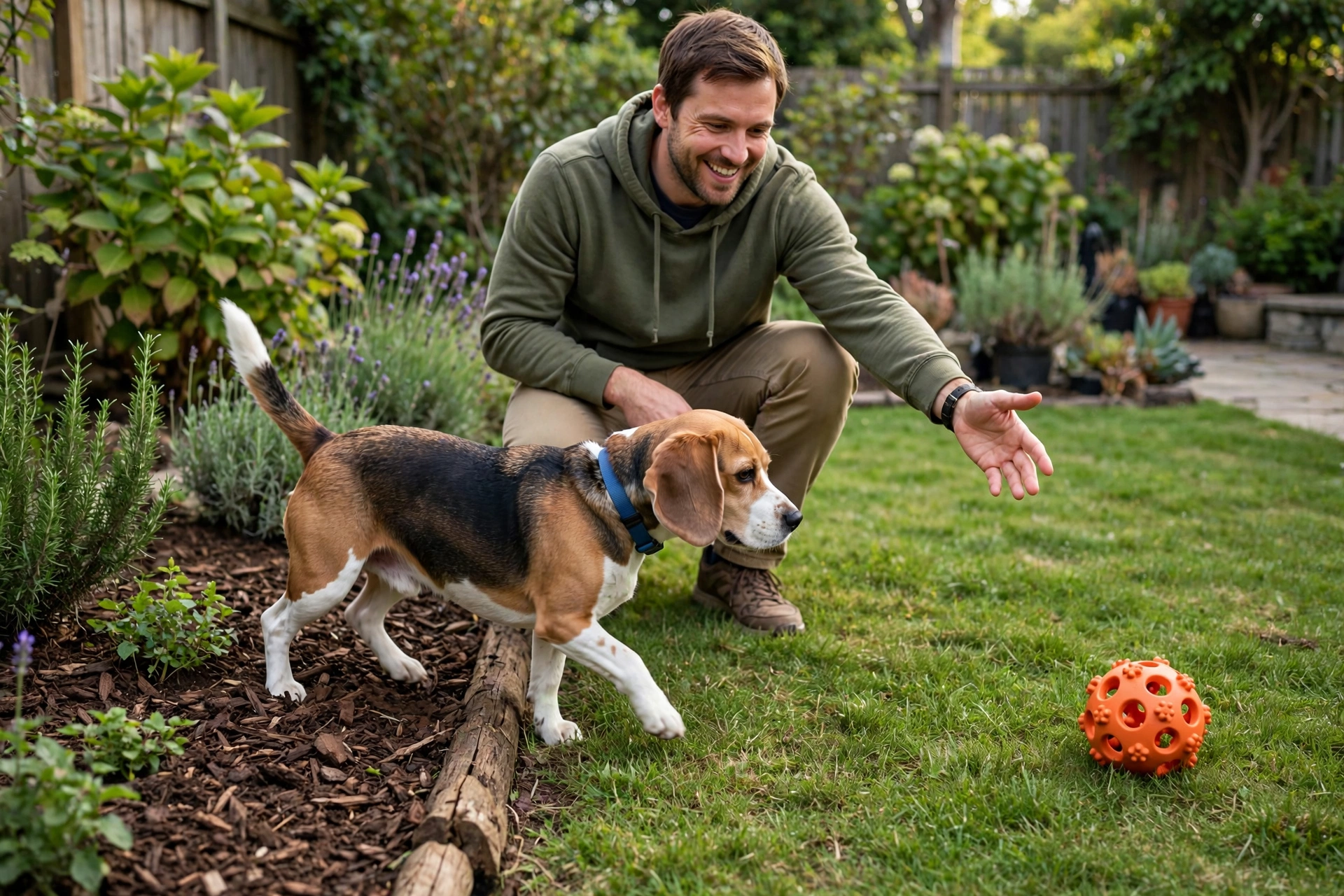
Yelling, scolding, or punishing your dog for eating mulch almost always backfires. It doesn’t teach them what to do instead — it just teaches them to eat mulch when you’re not looking, or to swallow it faster so you can’t take it away (which is actually more dangerous).
Instead, redirect every time: interrupt calmly, call them to you, reward the recall, and hand them an appropriate chew. Dogs repeat behaviors that pay off. Make chewing a toy pay better than chewing mulch, and the problem solves itself.
Pro tip: Keep a “yard toy” box by the door so you always have an acceptable alternative within reach.
Helpful pick: Outward Hound Dog Tornado Puzzle Toy — keeps your dog’s mouth and brain busy with something safe to chew and explore.
Is Mulch Dangerous for Dogs?
It depends on the type. Here’s the quick rundown:
- Cocoa shell mulch — DANGEROUS. Contains theobromine and caffeine, just like chocolate. Even small amounts can cause vomiting, diarrhea, rapid heart rate, muscle tremors, and seizures. Call your vet immediately if your dog eats it.
- Wood and bark mulches — moderate risk. Not chemically toxic, but chunks can splinter, cause choking, or create intestinal blockages if swallowed in quantity.
- Dyed mulches — caution. Colorants are usually non-toxic once dry, but some contain contaminants. Stick to natural, untreated mulch.
- Rubber mulch — caution. Not digestible, can cause blockages, and may contain chemical residues.
Bottom line: any mulch eaten in large amounts can cause GI upset or blockage, and cocoa mulch is a genuine toxin. If your dog eats a large amount of any mulch — or any amount of cocoa mulch — call your vet or animal poison control right away.
Frequently Asked Questions
Why does my dog eat mulch?
Usually boredom, curiosity, or the appealing smell and texture. Puppies explore the world with their mouths, and mulch is right at nose level. In some cases, nutritional deficiencies or pica are behind it — which is why a vet check matters for obsessive cases.
Is cocoa mulch really toxic to dogs?
Yes. Cocoa shell mulch contains theobromine and caffeine, the same compounds that make chocolate dangerous for dogs. Symptoms range from vomiting and diarrhea to rapid heart rate, tremors, and seizures. If your dog eats cocoa mulch, contact your vet immediately.
What mulch is safest for dogs?
Large, untreated pine bark nuggets are a good choice — too chunky to chew and free of toxins. Cedar mulch is also commonly recommended. Avoid cocoa mulch entirely and be cautious with dyed or chemically treated products.
Will bitter apple spray hurt my plants?
Grannick’s Bitter Apple is labeled safe for plants when used as directed. Apply a light mist to the top layer of mulch rather than soaking the soil, and reapply after rain.
My dog only eats mulch on walks. What should I do?
The same fixes apply: a solid “leave it” command, a long training line for management, and high-value treats to reward ignoring the mulch. Bring a toy for your dog to carry — a full mouth can’t pick up mulch.
Keep Reading
- How to Stop Your Dog from Eating Poop: 8 Fixes
- Why Does My Dog Eat Grass at Night? 5 Reasons
- How to Stop Your Dog from Digging in the Yard
- Foods Dogs Can and Can’t Eat: The Complete Guide
- How to Stop Your Dog from Chewing Furniture
As an Amazon Associate, PetPostHub earns from qualifying purchases.



2 Comments