
How to Stop a Dog from Digging in the Yard: 8 Fixes That Work

Nothing ruins the look of a freshly mowed lawn faster than a crater the size of a kiddie pool. If you’re searching for how to stop a dog from digging in the yard, take heart: digging is one of the most natural behaviors a dog has. The good news is that with a little detective work and a few smart strategies, you can absolutely redirect those paws to better targets — without crushing your dog’s spirit (or your landscaping).
In this guide, you’ll get 8 proven fixes that actually work, plus a look at the reasons dogs dig in the first place so you can match the solution to your dog.
Table of Contents
- 1. Figure Out Why Your Dog Digs
- 2. Give Them a Legal Place to Dig
- 3. Burn Off That Extra Energy
- 4. Add Mental Enrichment Outdoors
- 5. Bury Treasures in the Dig Zone
- 6. Supervise and Redirect in the Moment
- 7. Fence Off Your Garden Beds
- 8. Address Anxiety Behind the Digging
- Why Dogs Dig
- Frequently Asked Questions
1. Figure Out Why Your Dog Digs

Before you can stop the digging, you need to play detective. The most common motives are boredom (holes scattered randomly), prey drive (holes concentrated along one path or near a rodent tunnel), and temperature relief (a shallow hollow your dog then lies in on hot days). Watch your dog for a few days and take notes: where, when, and what do they do after?
Tip: If your dog only digs when you’re away, boredom or separation stress is the likely culprit. If the holes trace a straight line, something underground is calling their name.
Helpful pick: Furbo Mini 360° Pet Camera — lets you watch what your dog does (and digs) when you’re not home.
2. Give Them a Legal Place to Dig

Fighting an instinct head-on rarely works; redirecting it almost always does. Set up a designated dig zone — a sandbox or a corner of the yard filled with soft, loose soil — where digging is not just allowed but encouraged. Mark the boundary with low edging or railroad ties so it’s crystal clear where the “yes” zone is.
Tip: A covered sandbox keeps rain and neighborhood cats out, and the soft sand is far more appealing than compacted lawn.
Helpful pick: Step2 Play and Store Sandbox with Cover — the perfect ready-made dig zone with a lid.
3. Burn Off That Extra Energy

A tired dog is a well-behaved dog, and nowhere is that truer than with digging. Most boredom-diggers simply aren’t getting enough exercise. Aim for at least 30–60 minutes of real activity daily — brisk walks, fetch sessions, or flirt-pole play — before your dog gets unsupervised yard time.
Tip: Schedule the big play session before you leave your dog in the yard. A dog that’s already had their fun is far less likely to start landscaping.
Helpful pick: Chuckit! Classic Ball Launcher — throws farther with less effort, so fetch actually tires your dog out.
4. Add Mental Enrichment Outdoors

Physical exercise alone doesn’t always cut it — many dogs dig because their brains are bored, not just their bodies. Leave durable, interactive toys in the yard: stuffed chew toys, treat balls, or a frozen stuffed toy on hot days. Rotate them every few days so they stay novel.
Tip: Freeze a stuffed chew toy overnight; it keeps a bored dog occupied far longer than a dry one.
Helpful pick: KONG Classic — the gold standard for stuffable, boredom-busting outdoor toys.
5. Bury Treasures in the Dig Zone

Here’s the secret that makes the dig zone actually work: make it the most exciting spot in the yard. When your dog isn’t watching, bury a few treats or a favorite toy just under the surface of the sand. When they dig there and hit the jackpot, praise them like they just won the lottery.
Tip: Start with treasures barely covered, then bury them deeper over time. Refresh the “cache” at irregular intervals so the zone stays interesting.
Helpful pick: Zuke’s Mini Naturals Training Treats — small, smelly, and perfect for burying as dig-zone treasure.
6. Supervise and Redirect in the Moment

While the new habits are forming, don’t give your dog unsupervised access to the forbidden areas. When you’re outside together and see the paws start to move, interrupt calmly (a cheerful “let’s go!”), redirect to the dig zone or a toy, and reward the better choice. Never punish after the fact — your dog won’t connect it to the digging.
Tip: A long training line gives your dog freedom while letting you gently guide them away from off-limits spots without a chase.
Helpful pick: Joytale 30ft Training Leash — supervised freedom while you teach new habits.
7. Fence Off Your Garden Beds
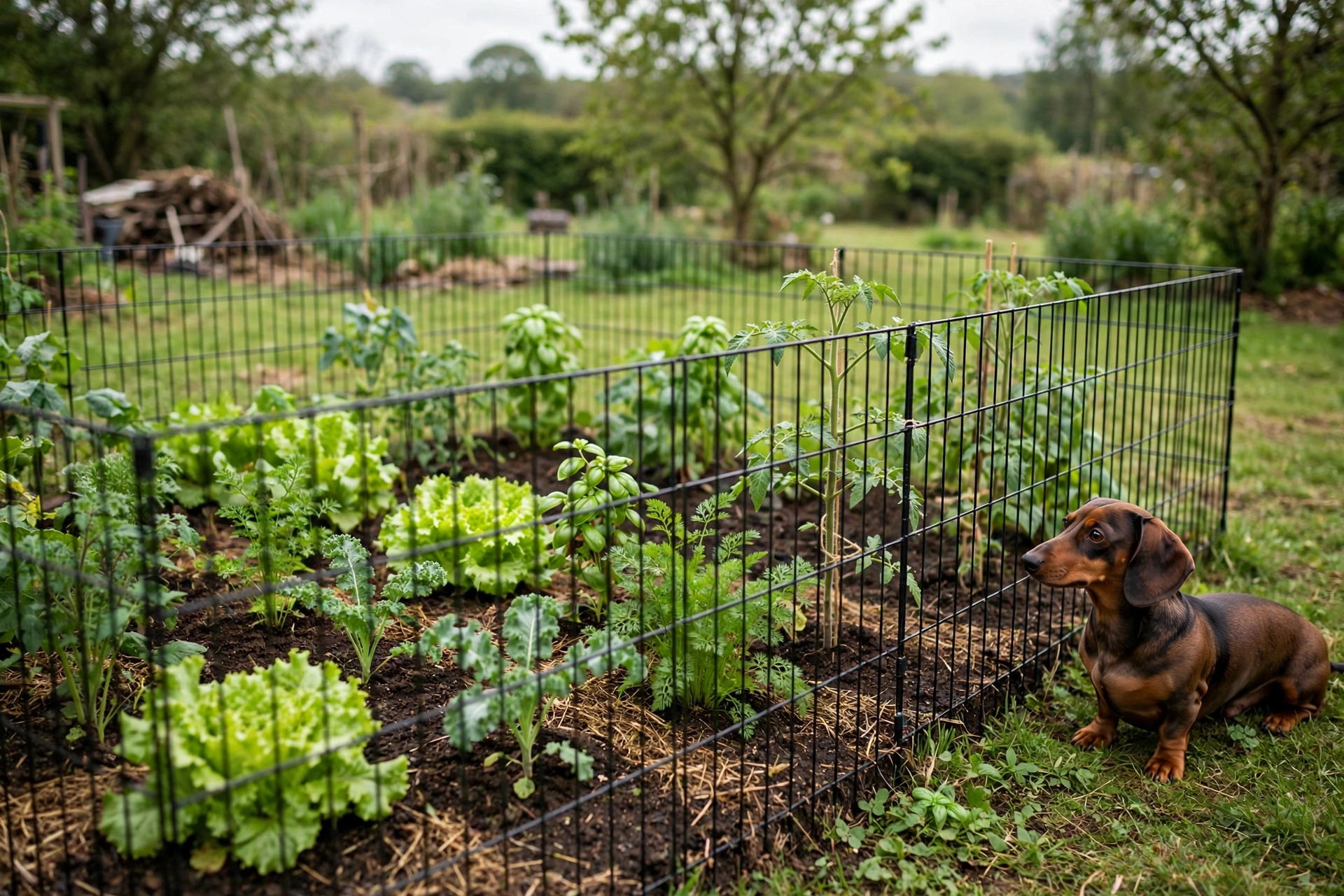
While you’re retraining, manage the environment. Low decorative fencing, garden edging, or even chicken wire laid flat over a favorite digging spot makes the forbidden areas unappealing while the dig zone stays wide open. For dogs targeting fence lines (escape attempts), bury an L-footer of wire along the base.
Tip: Dogs often dig where the soil is freshly turned — your garden beds are irresistible. A simple barrier removes the temptation while you work on the behavior.
Helpful pick: KYATE Garden Fence Panels (10-Pack) — rustproof, no-dig panels that protect beds in minutes.
8. Address Anxiety Behind the Digging

Sometimes frantic digging — especially near doors, gates, or fence lines — is a stress signal. Dogs with separation anxiety may dig to escape and find their person. If the digging comes with pacing, whining, or destruction, focus on the anxiety itself: gradual alone-time training, calming routines, and a safe indoor space.
Tip: Anxious diggers rarely improve with more exercise alone. If the behavior is intense or sudden, loop in your vet or a certified behaviorist.
Helpful pick: ADAPTIL Calm Home Diffuser — clinically studied pheromone support for anxious dogs.
Why Dogs Dig
Digging isn’t mischief — it’s a survival behavior wired into your dog’s DNA. Terriers and dachshunds were literally bred to dig prey out of burrows, while northern breeds dig to create cool resting spots. Dogs also dig to bury valuables (an old instinct for hiding food), to escape (fence-line digging), or simply because it’s fun. Understanding which motive fits your dog is what turns a frustrating habit into a solvable puzzle.
It’s also worth knowing that some breeds are simply more committed diggers than others. If you share your home with a terrier, beagle, dachshund, husky, or border collie, expect digging to be a lifelong hobby you’ll manage rather than a phase you’ll cure. That’s not bad news — it just means the dig zone in Fix #2 isn’t optional for these breeds, it’s essential.
Finally, keep your expectations realistic. Most owners see a dramatic drop in unwanted digging within two to three weeks of consistent redirection, but the instinct never fully disappears — and that’s okay. A dog with a legal place to dig, enough exercise, and a stimulated brain is a dog that leaves your lawn alone. For more on keeping your dog happily occupied while you’re away, see our guide on how to keep your dog entertained while at work, and if energy is the root cause, how to calm a hyper puppy has great crossover tips. When unwanted digging starts damaging more than the lawn, our guide to stopping destructive chewing covers the same redirect-not-punish philosophy indoors.
What NOT to Do
While you’re working through the fixes above, avoid a few common approaches that tend to backfire. First, don’t punish after the fact — dragging your dog to a hole hours later only teaches them that you get angry near holes, not that digging is the problem. Second, skip aversive booby traps like filling holes with harsh chemicals or irritants; these can injure paws, noses, and eyes, and they don’t teach your dog where digging is allowed. Third, don’t chain or crate your dog for long stretches as a “solution” — confinement without addressing boredom or anxiety just bottles up the energy that caused the digging. And finally, don’t chase your dog away from holes in anger. To many dogs, being chased is the best game ever, and you’ll accidentally reward exactly the behavior you want to stop.
Frequently Asked Questions
Will my dog ever stop digging on their own?
Puppies often dig more and may slow down with age, but most adult diggers keep the habit unless it’s actively redirected. A dig zone gives the instinct somewhere legal to live — and once your dog learns the sandbox is their personal treasure pit, the rest of the yard usually loses its appeal. The key is making the legal spot more rewarding than the illegal ones, which takes consistent burying of surprises for at least a few weeks.
Is it cruel to stop a dog from digging?
Not at all — as long as you redirect rather than just suppress. Providing an approved digging spot respects the instinct while protecting your yard. Dogs don’t need to dig everywhere; they just need to dig somewhere. Think of it like giving a cat a scratching post instead of scolding them for scratching the couch.
What can I put in holes to stop my dog digging there?
The most reliable approach is management (fencing, supervision) plus redirection to a dig zone. Laying chicken wire flat over a favorite spot or covering it with patio stones makes that location unappealing, but always combine it with teaching them where digging is okay — otherwise they’ll simply pick a new spot. Avoid burying anything sharp or chemical-based in holes, which can injure your dog.
Why does my dog only dig when I’m not home?
That’s the classic boredom or separation-stress pattern. More exercise, enrichment, and shorter unsupervised stretches usually help — see our guide on puzzle toys for dogs for brain-busting ideas. If the digging comes with pacing, drooling, or escape attempts, treat it as a possible anxiety issue rather than a boredom one.
Should I fill the holes back in?
Yes — a half-filled hole is an invitation to “finish the job.” Fill holes, tamp the soil firmly, and redirect to the dig zone every time. Consistency is everything: every family member needs to follow the same rules, or your dog will quickly learn that digging is fine when a particular person isn’t watching.
As an Amazon Associate, PetPostHub earns from qualifying purchases.






One Comment