Why Does My Dog Lick My Elbow? 5 Reasons (2026)

You’re stretched out on the couch, and your dog zeroes in on one spot — your elbow. Lick, lick, lick. Why the elbow, of all places? If you’re wondering why does my dog lick my elbow, the answer is a mix of taste, scent, and simple canine communication. Elbows are easy to reach, carry concentrated scent, and often taste a little salty, making them a favorite licking target for many dogs. Let’s break down the five most common reasons — and what to do about each.
Table of Contents
- 1. You Taste Salty (Especially After a Workout)
- 2. They’re Grooming You
- 3. It’s a Sign of Affection
- 4. They Want Your Attention
- 5. It Became a Habit
- How to Redirect Elbow Licking
- Frequently Asked Questions
1. You Taste Salty (Especially After a Workout)
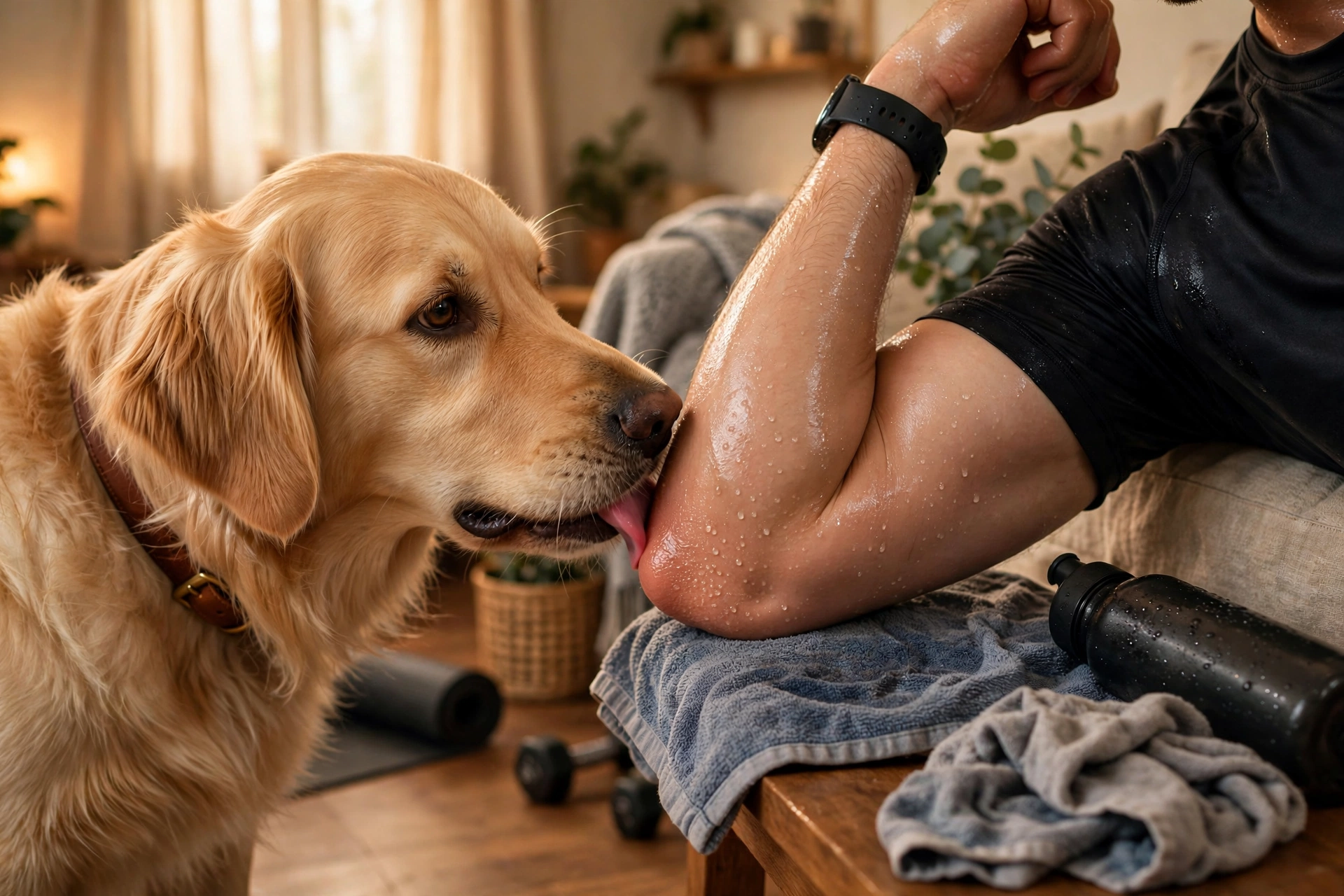
What it means: The most likely reason your dog licks your elbow is simple: you taste good. Human skin naturally carries salt and minerals from sweat, and the inner elbow — with its soft skin and concentration of sweat glands — is one of the saltiest, most flavor-packed spots on your arm. After exercise, yard work, or a warm day, that salty flavor is even stronger, which is why many dogs go straight for the elbow right when you walk through the door after a workout. Dry or flaky skin can also carry an interesting taste and texture that curious dogs find hard to resist.
What to do: If the licking happens mostly after you’ve been sweating, try rinsing your arms when you come inside before settling down with your dog. Keeping a towel by the door for a quick wipe-down removes the salty temptation. You can also offer a quick drink of fresh water to your dog first — thirsty dogs are more drawn to salty tastes. And if you’ve been wondering why this keeps happening with arm licking too, the salty-skin explanation covers both spots.
Helpful pick: Greenies Original Dental Treats — a crunchy, tasty alternative that gives your dog a more interesting flavor to focus on than your elbow.
2. They’re Grooming You

What it means: In the wild, dogs groom each other as a sign of care and belonging — it’s called allogrooming, and it’s how pack members show trust. When your dog licks your elbow, they may be treating you like a fellow pack member who deserves a good cleaning. Elbows with dry skin or rough patches can seem like something that “needs attention” to a dog’s mind, so the licking is their version of helping out. This kind of grooming behavior is especially common in dogs that are strongly bonded to their people and tend to check on them constantly.
What to do: Grooming licks are a compliment, so there’s no need to punish them — but you can shape the behavior. Accept a lick or two, say “thank you,” and then calmly move your arm away and redirect your dog to a toy or a chew. Keeping your skin moisturized with plain lotion can also make your elbows less interesting targets. If grooming-style licking extends to other body parts, you may notice the same pattern in how your dog licks your shoulder — it’s the same pack-bonding instinct at work.
Helpful pick: Zuke’s Mini Naturals Training Treats — reward your dog the moment they stop licking and settle calmly, building a new habit without scolding.
3. It’s a Sign of Affection
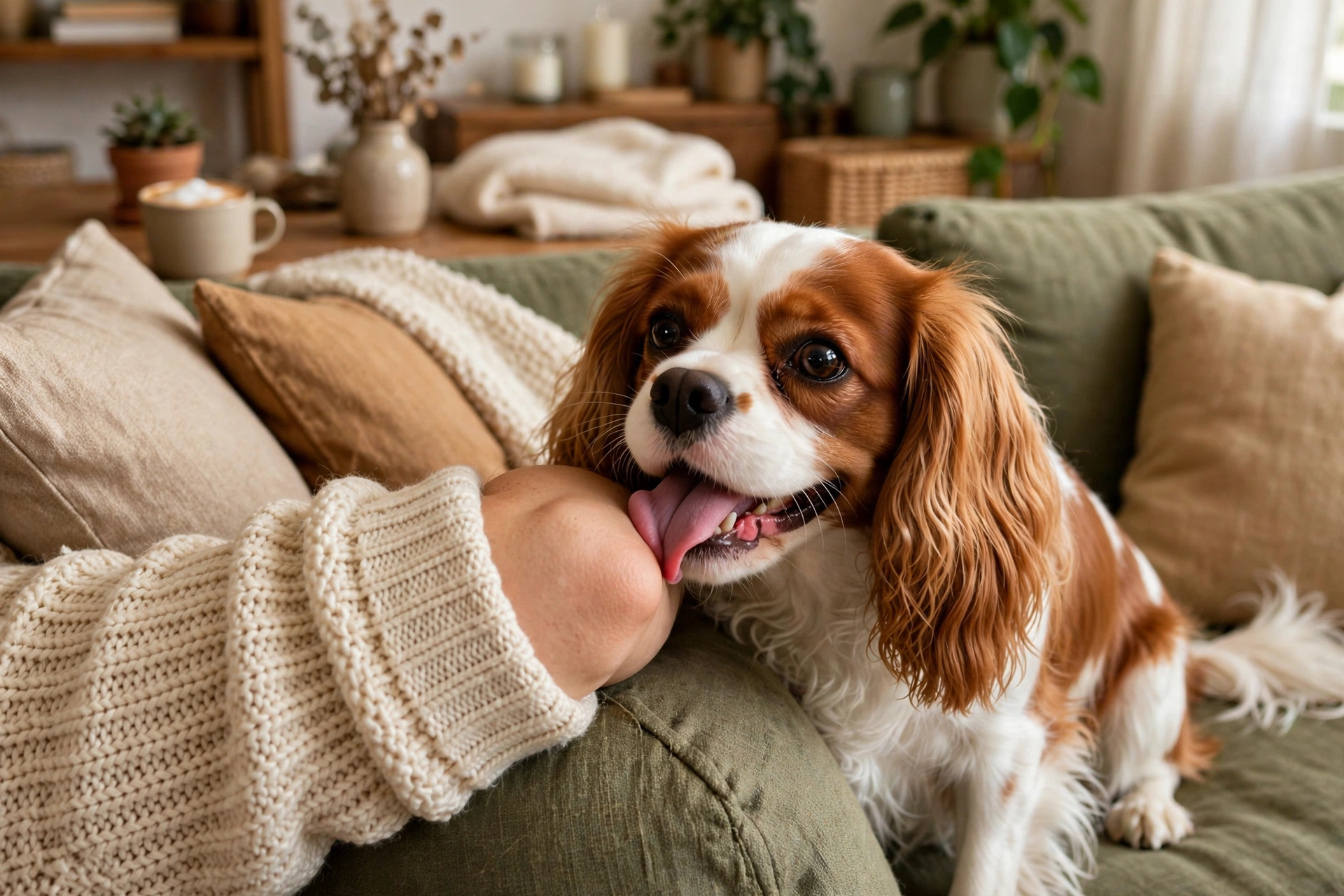
What it means: Many dog owners think of licking as doggy kisses, and in most cases, they’re right. Licking releases feel-good endorphins in dogs, and licking someone they love feels genuinely comforting. The elbow just happens to be the most convenient spot — it’s right at nose level when you’re sitting, easy to reach while you’re petting them, and doesn’t require them to stretch or climb. So when your dog settles in and starts licking your elbow during cuddle time, they’re usually just saying “I love being close to you.” These affectionate moments are among the clearest signs your dog loves you.
What to do: Affection licking is perfectly healthy in small doses. Enjoy a lick or two, give your dog a scratch behind the ears as a thank-you, and then gently redirect their mouth to something more appropriate — like a soft toy they can nuzzle. If you never want the licking to start at all, try giving them attention first: a quick belly rub before they resort to licking teaches them that cuddles come freely.
Helpful pick: KONG Classic — fill it with peanut butter and freeze it, so your dog has a cozy cuddle-time activity that doesn’t involve your elbow.
4. They Want Your Attention

What it means: Dogs are excellent students of cause and effect. If you laughed, talked to them, or even just looked at them the first time they licked your elbow, they learned a valuable lesson: elbow licks get a reaction. Now, whenever they’re bored, want dinner, need to go outside, or just feel ignored, out comes the tongue. Elbow licking is especially effective because it’s hard to ignore — it’s tickly, a little odd, and impossible to pretend isn’t happening. If the licking spikes when you’re on your phone or watching TV, attention-seeking is almost certainly the driver.
What to do: The fix is simple but requires consistency: don’t reward the licking with what they want. Calmly stand up, fold your arms, and turn away for a few seconds — then, when all four paws are on the floor and the tongue is put away, reward the calm behavior with attention or a treat. Also make sure your dog’s underlying needs are met first: a tired, well-fed, well-played-with dog is far less likely to invent attention-getting tricks. Just like chest licking, the behavior sticks around only as long as it keeps working.
Helpful pick: Egiao Dog Treat Pouch — keep treats on your waistband so you can instantly reward calm, no-licking behavior the moment it happens.
5. It Became a Habit

What it means: Sometimes elbow licking doesn’t start with a reason at all — it just becomes a routine. Licking releases endorphins, so it feels good, and anything that feels good can turn into a habit, the same way some dogs lick their own paws or the couch cushions. Once the habit forms, your dog may lick your elbow automatically: when they’re settling down for a nap, when they’re a little bored, or when they’re self-soothing during mild stress. If the licking is rhythmic, repetitive, and happens at predictable times (like every evening on the couch), it’s likely a comfort habit rather than a message.
What to do: Break the habit by giving your dog a better ritual. When they settle next to you and start licking, redirect them to a chew toy or a stuffed bone so their mouth stays busy. Enrichment helps a lot: puzzle toys, snuffle mats, and regular play sessions reduce the idle time when habits form. If the licking seems tied to stress — like during thunderstorms or when guests visit — a calming routine plus a safe spot can help them settle without needing your elbow as a security blanket.
Helpful pick: ADAPTIL Calm Home Diffuser — releases a calming pheromone that helps ease mild anxiety, which can reduce comfort-licking habits.
How to Redirect Elbow Licking
If the elbow licking has gone from cute to constant, a few consistent steps will tone it down without hurting your bond:
- Remove the reward: When the licking starts, calmly withdraw your arm and stand up for 10–15 seconds. No scolding — just make the licking unproductive.
- Reward the alternative: The moment your dog stops and settles, offer a treat, a toy, or a pet. They learn quickly which behavior earns the good stuff.
- Give them a job: A chew toy, a frozen stuffed KONG, or a snuffle mat gives their mouth and brain something better to do.
- Meet their needs first: Enough exercise, playtime, and mental stimulation prevent most attention-seeking and habit licking before it starts.
- Check in with your vet: If the licking is sudden, obsessive, or paired with skin changes on you or them, rule out medical causes first.
Watching your dog’s overall communication helps too — learning to read subtle cues like why they sniff your eyes or how they ask for attention will help you catch needs before they turn into licking.
Frequently Asked Questions
Is it safe to let my dog lick my elbow?
For most healthy people, occasional elbow licking is harmless. However, you should avoid letting your dog lick broken skin, rashes, cuts, or recently applied creams and medications, since a dog’s mouth can introduce bacteria. Wash the area if your skin is irritated.
Why does my dog only lick my elbow and nowhere else?
Elbows are convenient (right at nose height when you’re sitting), often salty from sweat, and carry concentrated personal scent. Your dog may simply have decided this spot gives the best “return” for their effort.
Should I stop my dog from licking my elbow?
A lick or two is fine — it’s a normal, affectionate behavior. Step in only if it becomes obsessive, bothers you, or irritates your skin. Redirect rather than punish, so you don’t damage your bond.
Does elbow licking mean my dog is stressed?
It can be a self-soothing behavior during mild stress, but most elbow licking is about taste, habit, or attention. Look at the bigger picture: if your dog is also panting, pacing, or hiding, stress may be the cause and a vet visit is a good idea.
Why does my dog lick my elbow more after I exercise?
Sweat! After a workout, your skin — especially the inner elbow — is coated in salty sweat that dogs find irresistible. Rinsing off or wiping down when you get home usually solves this one quickly.
As an Amazon Associate, PetPostHub earns from qualifying purchases.