
How to Stop Your Dog from Chewing Window Sills: 6 Fixes (2026)
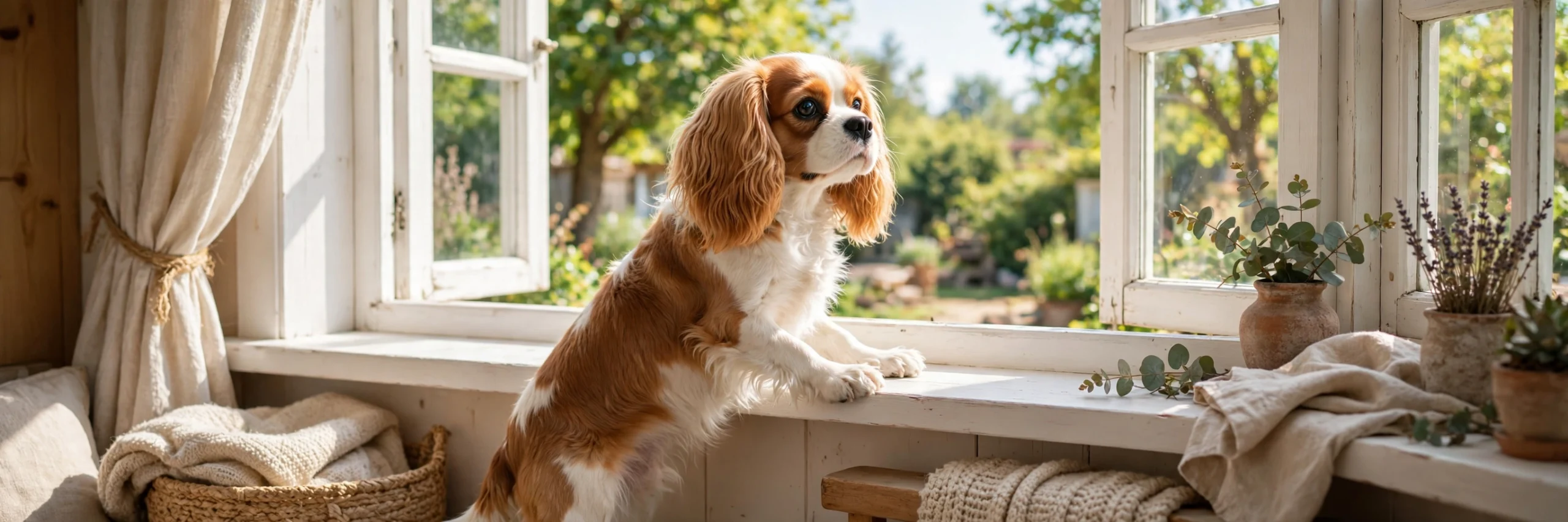
You walk into the living room and spot it: fresh tooth marks dug into the white window sill, paint flaking and wood exposed. If you’re wondering how to stop dog from chewing window sills, you’re far from alone — the sill sits at perfect chewing height for most dogs, and the wood is just the right texture for gnawing. Chewed sills aren’t only an eyesore; splinters can injure your dog’s mouth and gums, and ingested wood or paint chips can upset their stomach. The good news is that window-sill chewing is one of the most fixable destructive behaviors. Below are 6 proven fixes that protect your trim and redirect your dog’s chewing to better things.
Table of Contents
- Fix 1: Make the Sill Taste Terrible
- Fix 2: Give Chewing a Better Outlet
- Fix 3: Block Access to the Window
- Fix 4: Teach “Leave It”
- Fix 5: Burn Off Energy Before Alone Time
- Fix 6: Use the Crate When You Can’t Supervise
- Why Dogs Chew Window Sills
- How to Repair a Chewed Window Sill
- Frequently Asked Questions
Fix 1: Make the Sill Taste Terrible
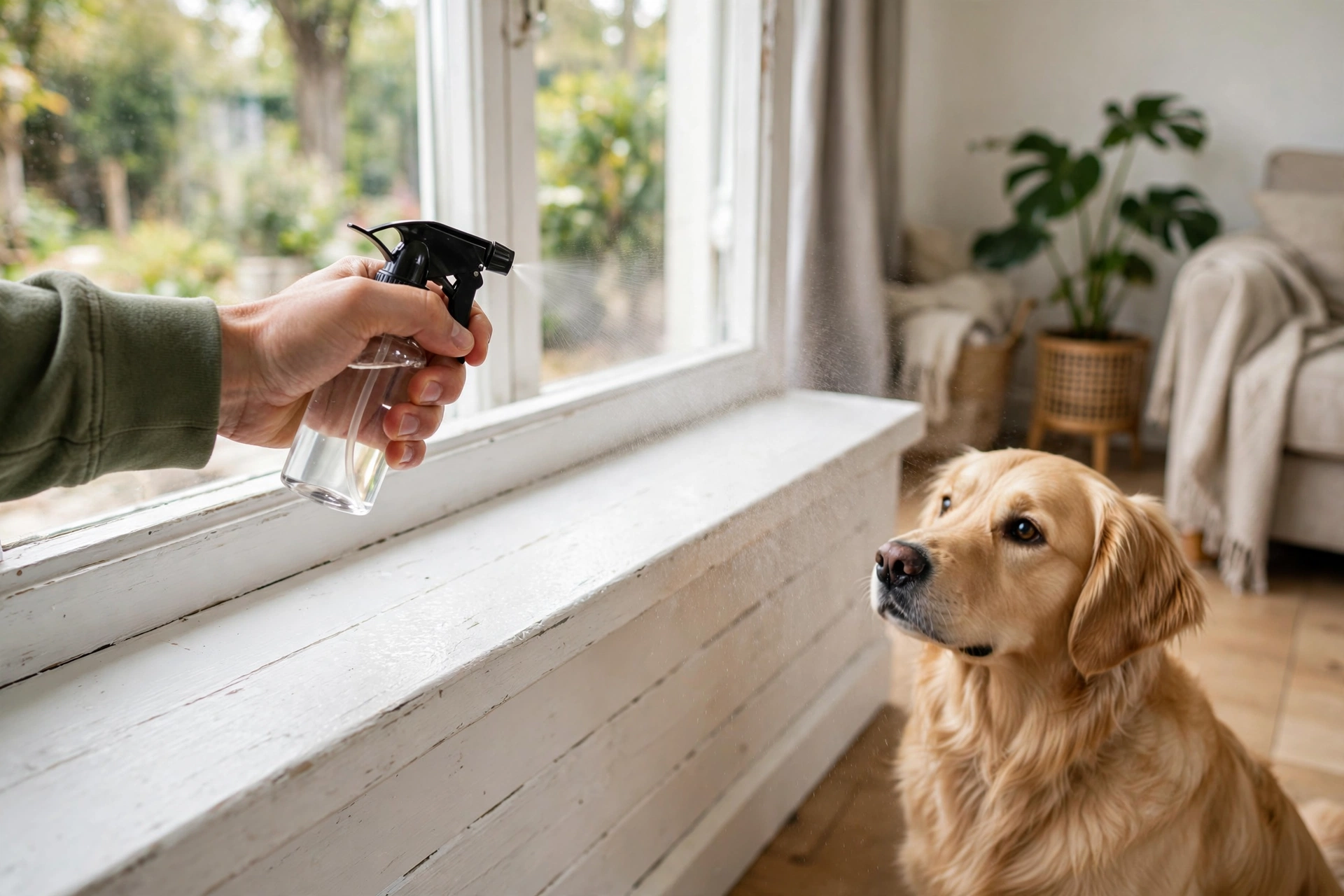
Bitter chew-deterrent sprays make the sill taste awful while staying safe for most painted and sealed wood surfaces. Spray a light, even coat over the chewed area and a few inches around it, reapplying every few days or after cleaning. Tip: test the spray on a hidden spot first to make sure it doesn’t discolor your paint or finish. Some dogs need two or three applications before the association sticks, so be consistent — and keep praising your dog for chewing their own toys while the spray does the discouraging.
Helpful pick: Grannick’s Bitter Apple Spray — the classic bitter deterrent for furniture and trim.
Fix 2: Give Chewing a Better Outlet
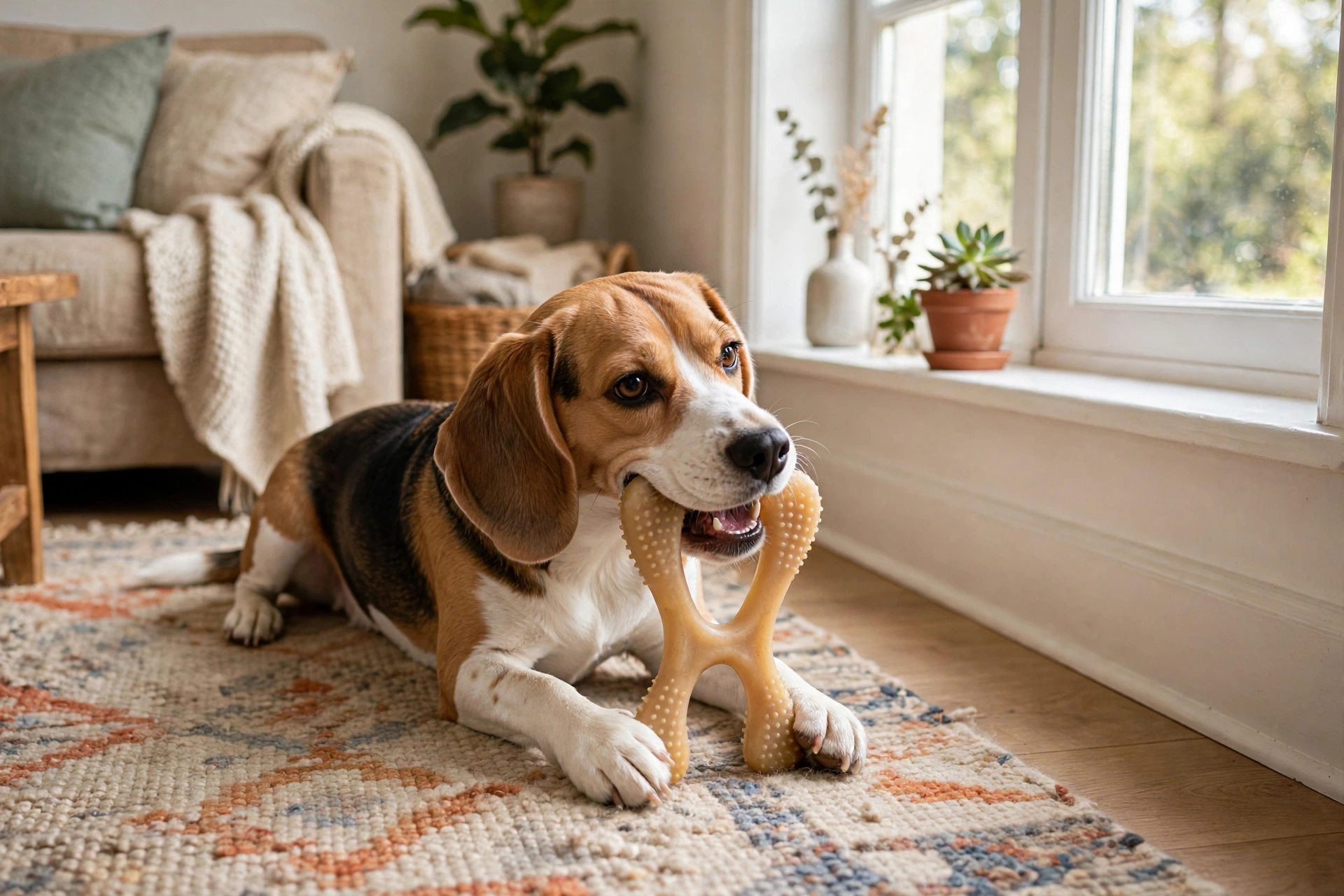
Dogs chew because they have to — it’s stress relief, boredom relief, and dental exercise all in one. When the sill becomes the favorite, it usually means legal chews aren’t interesting enough. Rotate through long-lasting options: a sturdy rubber toy stuffed with peanut butter, a wishbone-style nylon chew, and a puzzle toy. Tip: offer the chew right after a walk when your dog is relaxed but still looking for something to settle with — that’s the moment they usually wander to the window and start gnawing.
Helpful pick: Benebone Wishbone Chew Toy — an ergonomic, long-lasting chew dogs actually prefer.
Fix 3: Block Access to the Window
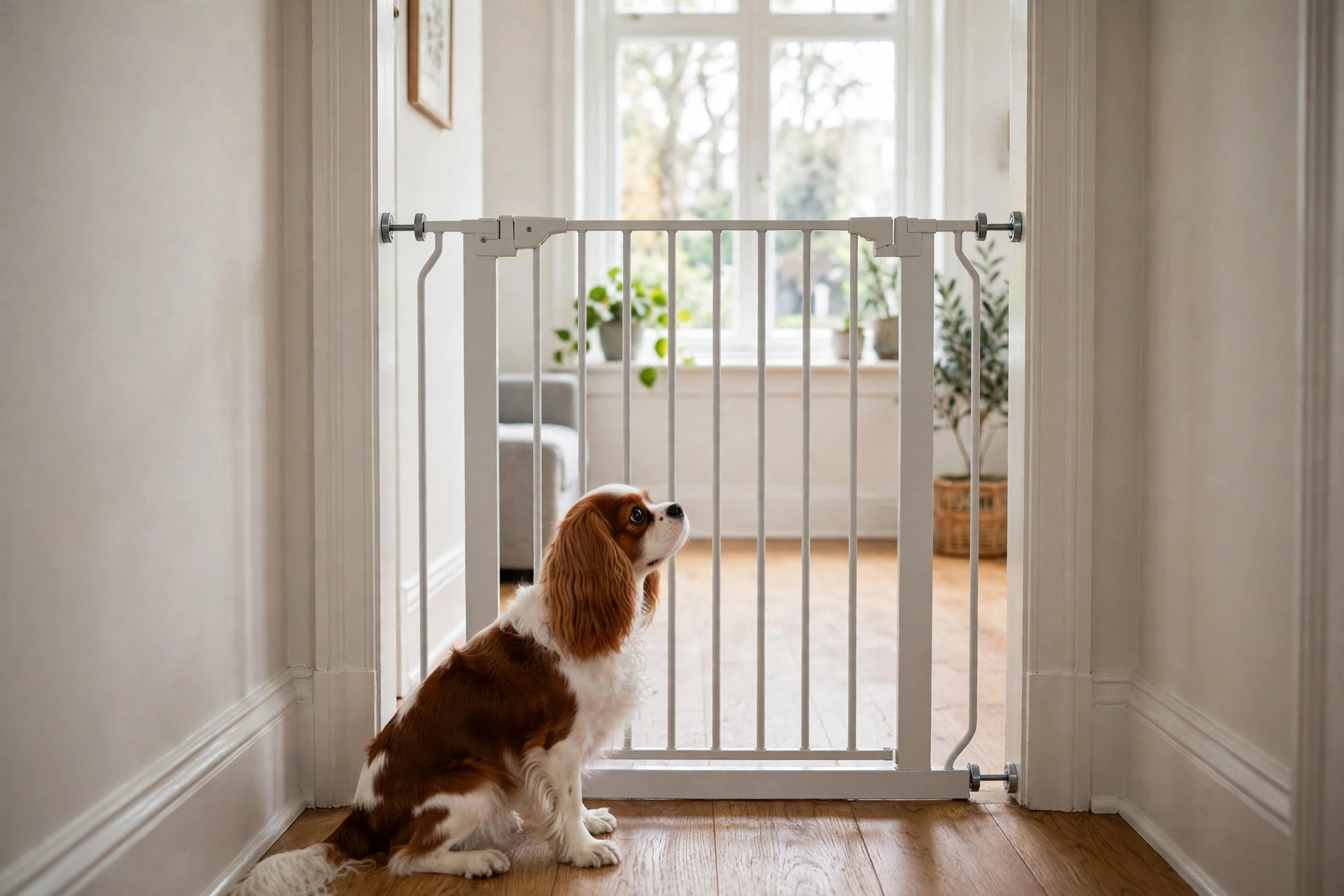
The simplest fix of all: if the dog can’t reach the sill, they can’t chew it. Use a baby gate or pen to keep them out of the room when you can’t watch them, or set up a clear acrylic sheet over the sill as a physical shield. Tip: if your dog watches the world from one favorite window, give them an approved viewing platform — a sturdy ottoman or dog bed placed a few feet back — so they get the entertainment without the damage.
Helpful pick: Newnice Baby Gate with Small Cat Door — a sturdy, no-drill way to close off window access.
Fix 4: Teach “Leave It”

“Leave it” is the single most useful cue for destructive chewers. Start away from the window: hold a treat in a closed fist, say “leave it,” and reward the instant your dog looks away. Work up to placing the treat on the floor, then practice near the window itself. When your dog sniffs the sill and chooses to look away, reward generously. Tip: practice in short 2–3 minute sessions a few times a day. The goal is for “leave it” to become automatic before you ever need it in the heat of a chewing moment.
Helpful pick: Egiao Dog Treat Pouch — keeps training treats handy for instant rewards.
Fix 5: Burn Off Energy Before Alone Time

Window-sill chewing very often happens when a bored, under-exercised dog is left near a window. A tired dog simply doesn’t look for trouble. Aim for a proper walk or play session before you leave for work, plus 10 minutes of mental work (training, puzzle feeder, sniff games). Tip: dogs that chew out of separation anxiety need calm departures and a soothing routine, not more punishment — if your dog only destroys the sill when you leave, anxiety may be the root cause.
Helpful pick: Chuckit! Classic Ball Launcher — tires out high-energy dogs fast before you head out.
Fix 6: Use the Crate When You Can’t Supervise
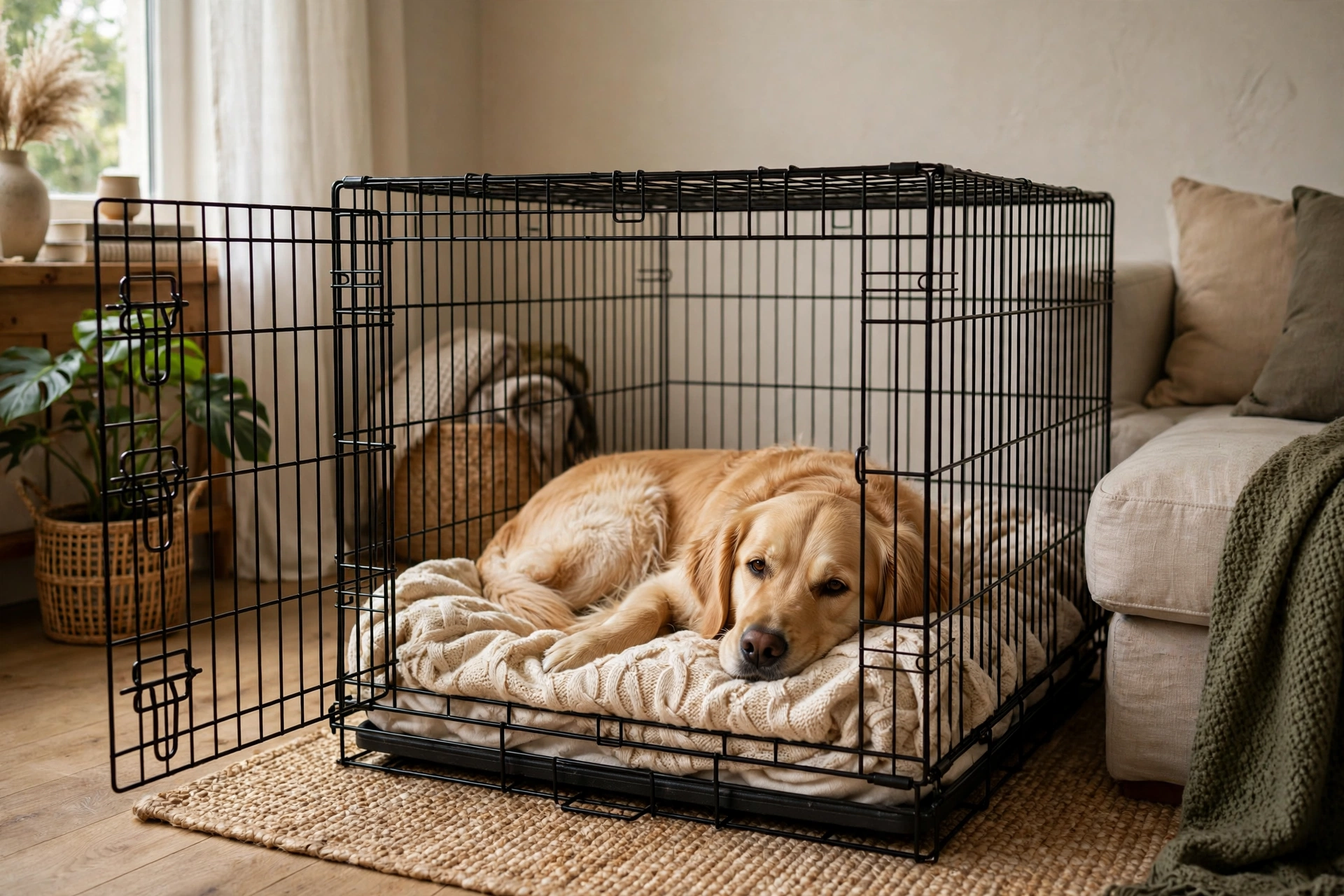
While you’re retraining the habit, prevention matters as much as training. A comfortable crate with a cozy blanket and a long-lasting chew keeps your dog safe when you’re away or busy. Tip: the crate must be introduced gradually with rewards — a dog that panics in a crate may redirect their anxiety onto worse targets. Pair the crate with a stuffed frozen Kong so alone time feels like a reward, not a punishment.
Helpful pick: MidWest iCrate Folding Metal Dog Crate — a secure, well-ventilated home base for unsupervised time.
Why Dogs Chew Window Sills
Window sills attract dogs for a few predictable reasons. Boredom is the biggest one — the window is the most interesting spot in the room, and chewing turns it into entertainment. Puppies and young dogs chew sills during teething for the pressure relief; a puppy between 3 and 7 months will chew almost anything within reach, and the sill edge is perfectly positioned. Anxiety (especially separation anxiety) drives dogs to chew the barrier between them and their owner, and windows face the door you left through — many owners discover the damage only after leaving the house. Sound and motion triggers also play a role: dogs that bark at passersby, squirrels, or delivery trucks work themselves into a frenzy at the window, and chewing the sill becomes part of that aroused, frustrated state. Finally, some dogs simply love the texture and taste of painted wood, especially older painted trim that has a slightly sweet or mineral taste. Understanding which motivation fits your dog helps you pick the right fixes: a bored dog needs Fixes 2 and 5, an anxious dog needs Fixes 5 and 6, and a barrier-frustrated dog benefits most from Fixes 3 and 4.
How to Repair a Chewed Window Sill
Once the chewing habit is under control, you can restore the damage. For shallow tooth marks, sand the area smooth with 120-grit sandpaper, wipe away dust, fill the grooves with wood filler or spackling, let it dry, sand again with 220-grit paper, then prime and repaint. For deep gouges where wood is missing, apply filler in two thin layers (thick layers crack), or use an epoxy wood filler for extra strength on corners. Tip: if your dog still shows interest in the sill, apply the bitter spray over the repaired paint too, and keep chew toys nearby during the repair drying time. When the damage runs deeper than about a quarter inch or the sill edge is structurally broken, replacing that section of trim is the cleaner option — most window sills are simple stock molding a handyman can swap in an afternoon.
If you’ve struggled with nearby targets, these guides cover the same fixes applied elsewhere: wood floors, bed frames, curtains, rugs, and a general recall command that helps interrupt bad habits anywhere.
Frequently Asked Questions
Is it dangerous if my dog chewed and swallowed paint?
A few paint chips usually pass through, but watch for vomiting, drooling, or loss of appetite. If the paint is old enough to possibly contain lead (pre-1978 homes), call your vet right away.
Will bitter spray ruin my window sill?
Most sprays are safe on painted and sealed wood — always test a hidden spot first. Avoid using them on raw, unfinished wood, which can absorb the liquid and discolor.
Why does my dog only chew the sill when I’m gone?
That’s a classic sign of separation anxiety or boredom. Focus on Fix 5 (exercise) and Fix 6 (crate training) rather than punishment, which won’t address the underlying emotion.
How do I repair a chewed window sill?
Small gouges can be filled with wood filler, sanded smooth, and repainted. Deep damage may need a carpenter to replace the section of trim.
How long until the chewing stops?
With consistent deterrent + redirection + exercise, most dogs stop within 1–2 weeks. Separation-anxiety cases take longer and may need a trainer’s help.
As an Amazon Associate, PetPostHub earns from qualifying purchases.




One Comment