7 Cavalier King Charles Spaniel Misconceptions Debunked (2026)

Ask ten people about the Cavalier King Charles Spaniel, and you may hear ten different stories: they’re porcelain-fragile, they never need walks, they can’t be left alone for a minute, or one coat color is healthier than the rest. When it comes to cavalier king charles spaniel misconceptions, few breeds are as misunderstood as this gentle little spaniel. Some of the myths are harmless, but others can lead new owners to make real mistakes — skipping exercise, overprotecting the dog, or choosing a breeder for the wrong reasons. This guide sets the record straight on the seven most common myths, so you can see Cavaliers for what they truly are.
Table of Contents
- Myth 1: Cavaliers Are Too Fragile to Play
- Myth 2: Cavaliers Don’t Need Exercise
- Myth 3: All Cavaliers Are Sickly
- Myth 4: Cavaliers Are Impossible to Housebreak
- Myth 5: Cavaliers Are Just Pretty Faces
- Myth 6: One Coat Color Is Healthier Than the Others
- Myth 7: Cavaliers Are Fine Being Left Alone All Day
- Frequently Asked Questions
- Keep Reading
Myth 1: Cavaliers Are Too Fragile to Play
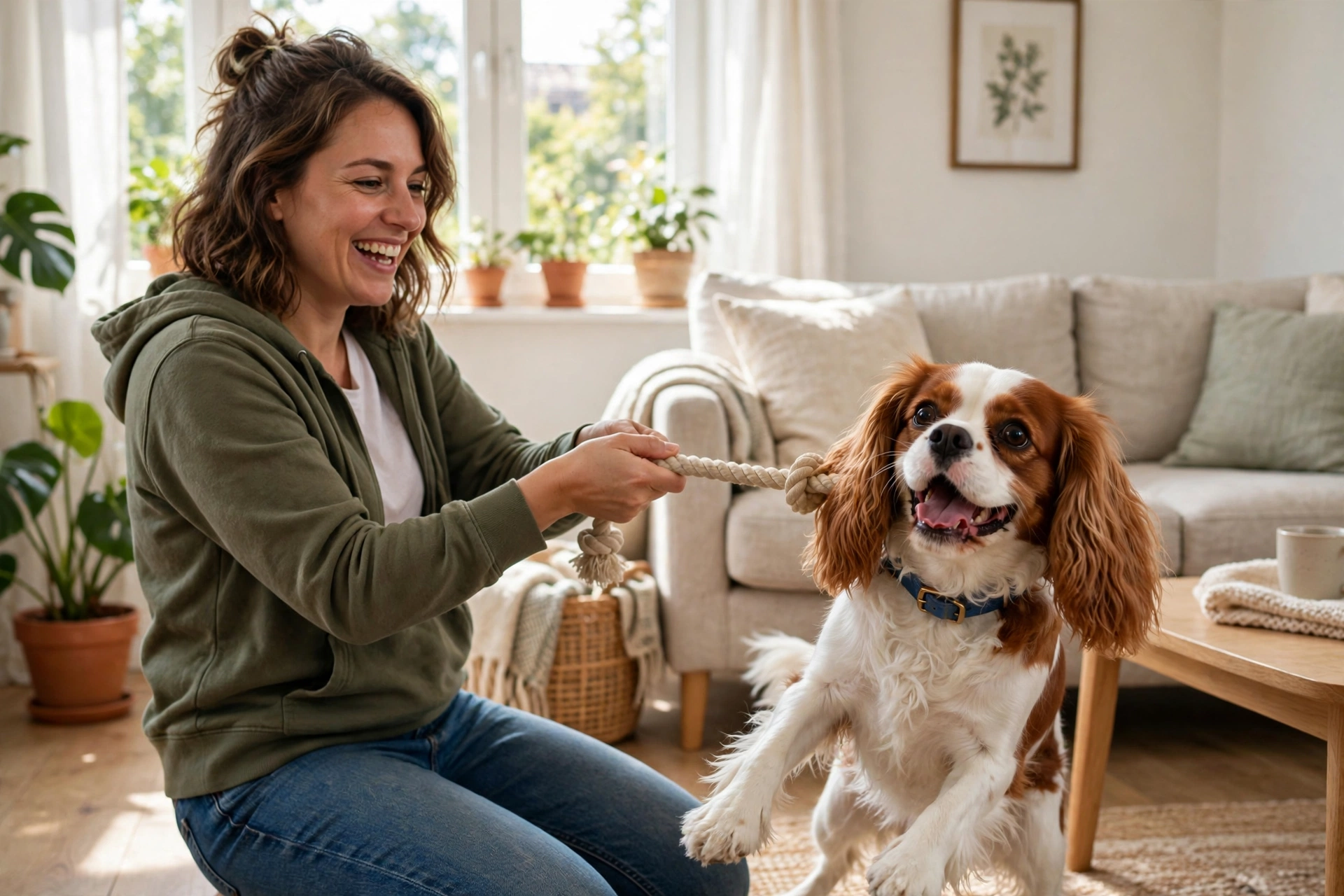
The myth: Because they’re small and refined-looking, Cavaliers must be handled like glass ornaments — no rough play, no fetch, no romping.
The reality: Cavaliers are sporting spaniels at heart. They were bred from hunting companions, and most of them genuinely love an active game of fetch, tug, or chase. While a puppy’s joints should be protected from extreme jumping and long stair climbs, a healthy adult Cavalier is sturdy enough for normal play. Constantly treating your dog as fragile can actually backfire — it limits the exercise and mental stimulation they need to stay happy. Let them play, supervise sensibly, and you’ll have a fitter, more confident dog.
Myth 2: Cavaliers Don’t Need Exercise

The myth: They’re lap dogs, so a quick trip to the yard is all the exercise a Cavalier requires.
The reality: A Cavalier that never gets real exercise often becomes bored, anxious, and overweight — and obesity is one of the biggest threats to the breed’s heart health. Most Cavaliers thrive on 30 to 60 minutes of daily activity: walks, hikes, fetch sessions, or scent games in the yard. They adapt to their owner’s lifestyle, so a relaxed household gets a relaxed dog, but the baseline requirement is real. An exercised Cavalier is calmer, sleeps better, and is far less likely to develop problem behaviors like nuisance barking or destructive chewing.
Myth 3: All Cavaliers Are Sickly

The myth: Cavaliers are a walking collection of genetic problems, so owning one means constant vet visits and heartbreak.
The reality: The breed does carry real genetic risks — mitral valve disease and syringomyelia are the well-known ones — but “all Cavaliers are sickly” is a distortion. Responsible breeders screen hearts, eyes, hips, and patellas, and many Cavaliers live 12 to 14 healthy years. Health testing has genuinely moved the needle: dogs from tested lines have markedly better odds. What matters is where the puppy comes from. A Cavalier from health-tested parents, kept at a healthy weight with regular vet care, is typically a robust, joyful companion — not a fragile patient.
Myth 4: Cavaliers Are Impossible to Housebreak

The myth: Cavaliers are too soft and distractible to ever master house training, so you’ll be cleaning up accidents forever.
The reality: Cavaliers are actually one of the easier toy breeds to housebreak — they’re intelligent, eager to please, and strongly motivated by praise and treats. When house training drags on, the cause is almost always inconsistency (irregular schedules, unsupervised freedom, missed signals) rather than the breed. A clear routine — out after meals, naps, and play, with immediate rewards for going outside — produces reliable results in weeks for most puppies. Their people-pleasing nature is a genuine advantage if you pair it with patience and structure.
Myth 5: Cavaliers Are Just Pretty Faces

The myth: Those big soulful eyes and silky coats are the whole package — Cavaliers are decorative, not clever.
The reality: Spend a week training a Cavalier and this myth collapses. They’re observant, quick to learn routines, and read human emotions remarkably well — many owners say their Cavalier seems to know exactly how they’re feeling. They excel in therapy work, rally, and trick training, and they pick up puzzle toys faster than most people expect. Ranked around the middle of the pack in formal obedience studies, they compensate with something the rankings don’t measure: an intense desire to cooperate with their person. Beauty and brains is an accurate description here.
Myth 6: One Coat Color Is Healthier Than the Others

The myth: Blenheims are the hardiest, or tricolors live longer — coat color predicts health in Cavaliers.
The reality: There is no scientific link between a Cavalier’s coat color and its health. Blenheim, tricolor, ruby, and black and tan are all equally capable of producing healthy — or unhealthy — puppies, depending entirely on the breeder’s health testing and practices. This myth can be genuinely harmful when buyers choose a puppy by color instead of by health screening, or when breeders charge “rare color” premiums for markings with no health advantage. Judge a Cavalier by cardiac, eye, and orthopedic clearances, not by which shade of chestnut it wears.
Myth 7: Cavaliers Are Fine Being Left Alone All Day

The myth: Cavaliers are so easygoing that they don’t mind being alone for a full workday — they’ll just nap until you return.
The reality: This is the myth most likely to make a Cavalier miserable. The breed was developed purely as a companion dog, and they are wired to be near people. Long, regular stretches of solitude frequently trigger separation anxiety — whining, pacing, destructive behavior, and even self-harm in severe cases. This doesn’t mean you can never leave the house; it means a Cavalier needs company, gradual alone-time training from puppyhood, and a plan for long days (a dog walker, daycare, or a second pet). If your lifestyle keeps you away for 10+ hours daily with no backup, a Cavalier may not be the right breed.
Frequently Asked Questions
Are Cavalier King Charles Spaniels good family dogs?
Yes. Their gentle, patient temperament makes them one of the best toy breeds for families, including homes with children. As with any breed, supervise interactions with very young kids and teach respectful handling.
Are Cavaliers really hard to train?
No — this is one of the most persistent myths. Cavaliers respond beautifully to positive reinforcement and are motivated by praise, treats, and play. Short, upbeat sessions work best.
How much exercise does a Cavalier need?
Most do well with 30 to 60 minutes of daily activity, split between walks and play. They also need mental stimulation — training games, scent work, and puzzle toys keep them sharp.
Do Cavaliers bark a lot?
Generally, no. They’re a relatively quiet breed, though any dog can develop barking problems from boredom or separation anxiety. Meeting their exercise and companionship needs keeps vocalizing low.
Are Cavaliers good for first-time dog owners?
Yes. They’re forgiving, trainable, and not overly demanding, which makes them an excellent match for first-time owners — as long as you can give them the companionship and exercise they need.