
Start with a Healthy Puppy: Buyer’s Health Checklist

Bringing home a puppy is one of the most exciting moments in a dog lover’s life — but it is also one of the most important purchases you will ever make. If you want to start with a healthy puppy, the work begins long before pickup day: it starts with knowing exactly what health evidence to ask for, what warning signs to watch for, and what paperwork protects you if something goes wrong.
This buyer’s health checklist walks you through every step, from the health tests a responsible breeder should run on the parents to the vet visits you should book in your puppy’s first weeks home. A little diligence now can save you thousands in vet bills — and years of heartache — later.
Table of Contents
- 1. Health Tests to Demand from the Breeder
- 2. Insist on a Vet Check Before Pickup
- 3. Read the Vaccination and Deworming Records
- 4. How to Spot a Sick Puppy at the Visit
- 5. Get the Contract and Health Guarantee in Writing
- 6. Your First Vet Visit Timeline
- 7. Consider Pet Insurance from Day One
- Frequently Asked Questions
1. Health Tests to Demand from the Breeder
The single biggest predictor of your puppy’s long-term health is not the puppy itself — it is the parents. Responsible breeders screen their breeding dogs for the hereditary conditions common to the breed before ever producing a litter. For Cavalier King Charles Spaniels, that means, at minimum, heart, eye, and orthopedic clearances.
Ask to see documented results, not just verbal reassurances. Heart clearances should come from a board-certified cardiologist (not just a general-practice vet listening with a stethoscope), eye exams should be current and performed by a veterinary ophthalmologist, and hips and patellas should be evaluated through an orthopedic registry. If the sire and dam are still young, inherited problems may not have surfaced yet — so ask about the grandparents’ health history too.
A breeder who becomes defensive or vague when you ask for test paperwork is telling you everything you need to know. Ethical breeders are proud of their health testing and will hand you the documentation without being asked twice.
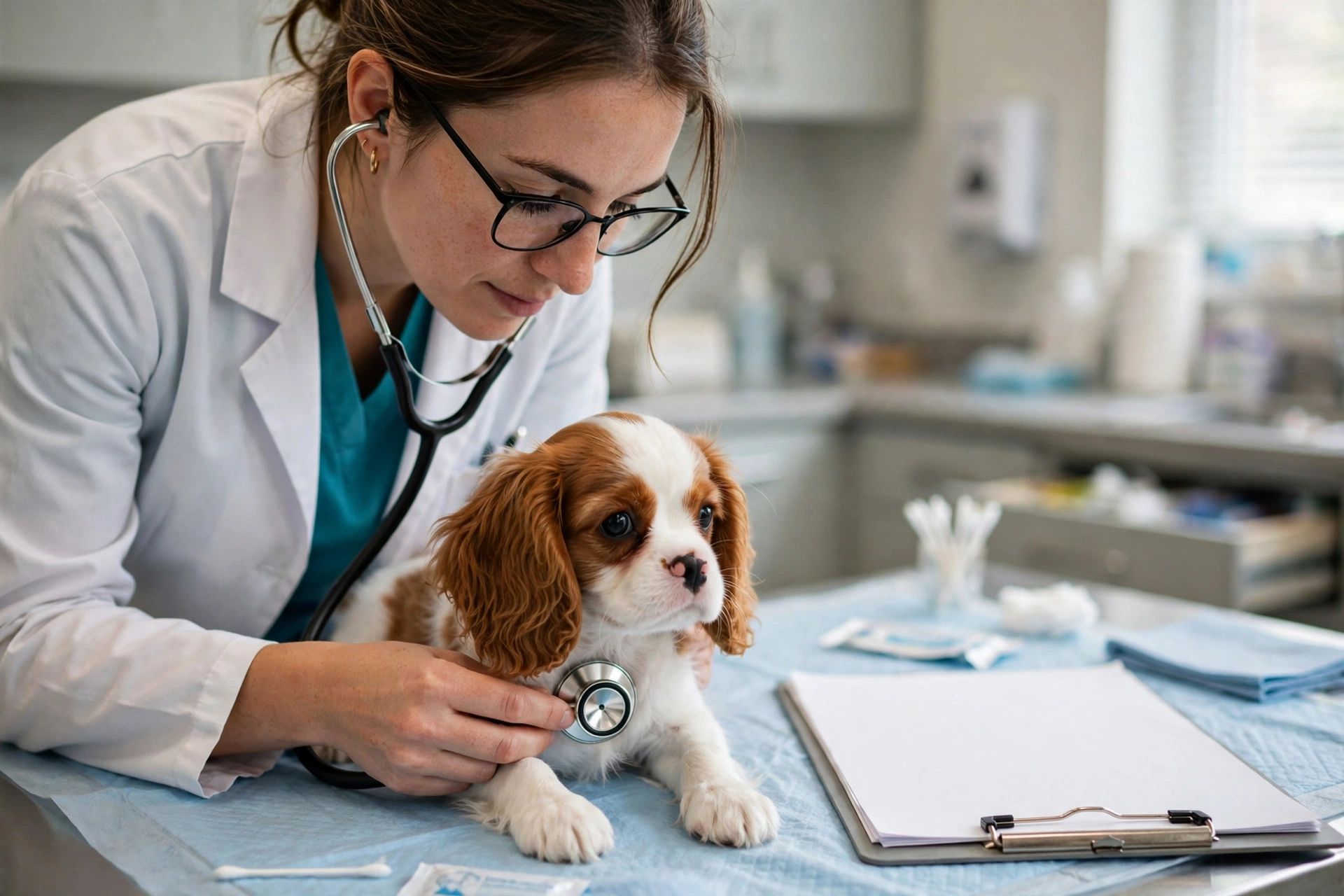
2. Insist on a Vet Check Before Pickup
Before any money changes hands, find out how many times a veterinarian has examined the puppy. A well-raised litter will have been checked at least once by the breeder’s vet, and you should receive a written copy of those exam notes. These notes typically cover weight gain, heart and lung sounds, eyes, ears, teeth, and any concerns the vet flagged.
Read those notes carefully. Minor comments like “slight umbilical hernia” are common and usually harmless, but anything involving heart murmurs, open fontanels, or chronic digestive issues deserves a follow-up conversation with your own vet before you commit.
Also confirm the breeder’s return policy in writing: if your own veterinarian discovers a significant health problem within the first few days, you should be able to return the puppy for a refund or replacement. A breeder who refuses this basic protection is a breeder to walk away from.

3. Read the Vaccination and Deworming Records
A reputable breeder will hand you a complete, dated record of every vaccine and deworming treatment the puppy has received. Puppies typically begin their core vaccination series around six to eight weeks of age, and most will have had at least one round before going home at eight to ten weeks.
Check that the records are specific: vaccine names, dates given, lot numbers, and the name of the administering vet or clinic. Vague entries like “shots done” or records with no dates are a red flag. Deworming should also be documented, since intestinal parasites are extremely common in young puppies and can stunt growth if left untreated.
Bring these records to your first vet appointment so your veterinarian can build the rest of the vaccine schedule on accurate information rather than guessing — or worse, re-vaccinating unnecessarily.

4. How to Spot a Sick Puppy at the Visit
When you visit the litter, spend time simply observing before you let your heart decide. A healthy puppy is bright, curious, and eager to interact — it moves well, plays with its littermates, and recovers quickly from a startle. Trust what you see over what you are told.
Look closely at the details: eyes should be clear with no discharge or cloudiness, ears should smell clean with no redness, the coat should be soft and full with no bald patches or sores, and breathing should be quiet and easy. Watch the puppy walk — the gait should be steady with no limping, stumbling, or stiffness in the legs.
Pay attention to the environment too. Clean bedding, fresh water, and puppies that are comfortable being handled all point to a well-managed litter. Puppies that cower, seem lethargic, or have dirty living conditions are warning signs that the breeder’s standards — and the puppies’ health — may not be what you were promised.

5. Get the Contract and Health Guarantee in Writing
Never buy a puppy on a handshake. A proper sales contract protects both you and the breeder, and it should spell out exactly what happens if the puppy develops a covered health condition. Read every line before you sign — and do not let anyone rush you through it.
A meaningful health guarantee typically covers hereditary and congenital conditions for at least one to two years, and it should clearly state your remedies: refund, replacement puppy, or reimbursement of vet costs up to the purchase price. Be wary of guarantees full of loopholes, such as ones that require you to return the puppy you have already bonded with in order to get any compensation.
The contract should also cover the practical basics: the puppy’s microchip number, spay/neuter terms if applicable, whether breeding rights are included, and a requirement (or strong recommendation) that you take the puppy to your own vet within 72 hours. If a breeder will not put any of this in writing, walk away — no matter how cute the puppies are.

6. Your First Vet Visit Timeline
Book your puppy’s first vet appointment before you even pick them up — ideally within 48 to 72 hours of bringing them home. This first visit establishes a health baseline, lets your vet verify the breeder’s records, and catches any issues early while the health guarantee is still in its strongest window.
Bring everything with you: vaccination and deworming records, the breeder’s vet exam notes, the contract, and a fresh stool sample. Your vet will do a full nose-to-tail exam, confirm the vaccine schedule, discuss parasite prevention, and talk through nutrition and growth expectations for the breed.
After that first visit, expect a series of follow-ups every three to four weeks until the puppy is about sixteen weeks old to complete the core vaccine series. Use these visits to ask every question you have — good veterinarians would much rather answer a “silly” question early than treat a preventable problem late.

7. Consider Pet Insurance from Day One
Puppies are wonderfully accident-prone: swallowed socks, sprained legs from wild zoomies, and the occasional mystery stomach upset. Pet insurance is cheapest — and most useful — when you enroll a young, healthy puppy before any pre-existing conditions develop.
Compare policies on the details that matter: what is covered (accidents, illness, hereditary conditions), the deductible and reimbursement rate, annual limits, and waiting periods. For breeds prone to specific hereditary issues, confirm those conditions are not excluded. Enrolling in the first week home usually means coverage kicks in just as the puppy starts exploring the world at full speed.
Insurance does not replace an emergency fund — most policies reimburse you after you pay the vet — but it can turn a $4,000 emergency surgery from a financial crisis into a manageable bill. Think of it as part of the true cost of responsible puppy ownership, right alongside quality food and training.

Frequently Asked Questions
What health tests should a Cavalier breeder do before breeding?
At minimum, breeding Cavaliers should have cardiologist-cleared hearts, current eye exams by a veterinary ophthalmologist, and evaluated hips and patellas. Ask to see the actual certificates — reputable breeders provide them willingly.
How soon should I take my new puppy to the vet?
Within 48 to 72 hours of bringing your puppy home. This establishes a baseline, verifies the breeder’s health records, and keeps you inside the strongest window of most health guarantees.
What are red flags when visiting a breeder?
No health testing on the parents, no written contract or health guarantee, refusal to let you visit in person, many breeds raised at once, puppies always available, and pressure to pay quickly. Any one of these is reason to walk away.
Should I get pet insurance for a healthy puppy?
Yes — enrolling a young, healthy puppy is when insurance is cheapest and most effective, since pre-existing conditions are excluded from most policies. Compare coverage for hereditary conditions if you are buying a breed prone to them.
Can I return a puppy if my vet finds a health problem?
Only if the breeder agreed to it in writing beforehand. This is exactly why a written contract with a return clause and health guarantee matters — get it signed before you take the puppy home.






8 Comments