Why Does My Dog Howl? 7 Reasons Behind the Howling

A dog’s howl can stop you in your tracks. One minute your pup is snoozing on the rug, and the next they’re throwing their head back with a sound straight out of the wilderness. If you’ve been wondering, “why does my dog howl?”, you’re far from alone — it’s one of the most searched questions by dog parents, and the answer is rarely simple.
Below, we break down the seven most common reasons dogs howl, what to do about each one, and the warning signs worth watching for.
Table of Contents
- 1. Responding to Sirens and High-Pitched Sounds
- 2. Separation Anxiety
- 3. Seeking Attention
- 4. Territorial Announcement
- 5. Pain or Illness
- 6. Excitement and Play
- 7. Breed Instinct — It’s in Their DNA
- When Howling Signals a Problem
- How to Reduce Excessive Howling
- Frequently Asked Questions
1. Responding to Sirens and High-Pitched Sounds

The classic howling trigger is sound. An ambulance wails past, or you hold a piano note, and suddenly your dog is singing along. A siren’s long, rising tone closely resembles a canine howl, so your dog answers what it hears as another dog calling out.
This is a social reflex inherited from wolves, who howl to locate pack members across distances. Your dog doesn’t think the fire truck is family — the pitch itself triggers the instinct to join in.
What to do: If the howling stops when the sound stops, there’s nothing to fix. If it bothers the neighbors, mask outside noise with a white noise machine and desensitize your dog by playing siren sounds at very low volume while offering treats, raising the volume slightly over several days.
Helpful pick: LectroFan High Fidelity White Noise Machine — masks passing sirens and street noise so trigger howling stays low.
2. Separation Anxiety
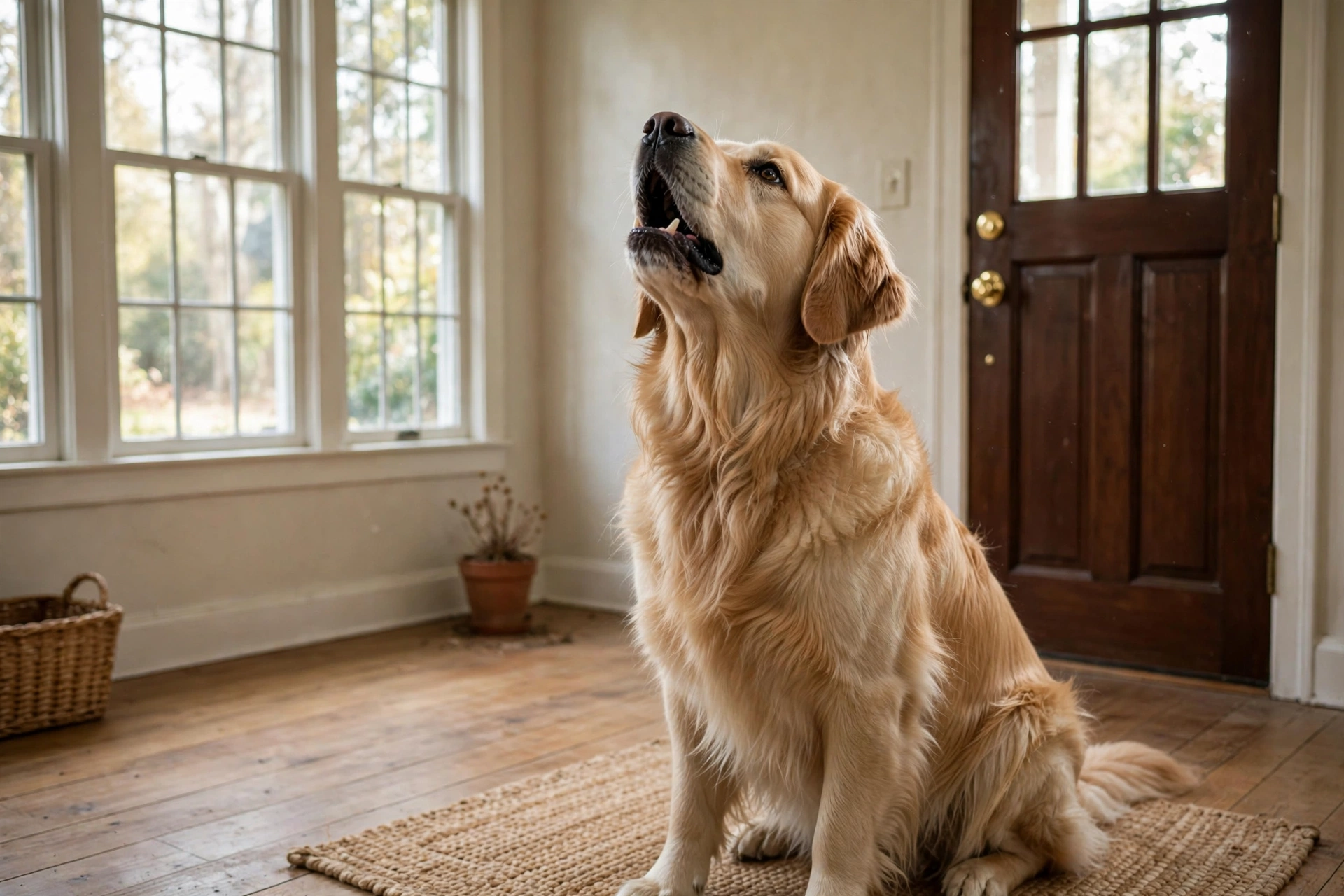
If howling starts only when you leave — especially if neighbors report a mournful concert while you’re at work — separation anxiety may be the cause. Dogs are deeply social, and for some, being alone feels genuinely unsafe. That howl is a distress call: “Where did my pack go?”
Anxiety howling rarely happens alone. Watch for pacing, scratching at doors, drooling, destructive chewing, or house soiling that occurs only when the dog is left by itself. See our guide on helping a dog with separation anxiety for the full picture.
What to do: Never punish anxiety-driven howling — it deepens the stress. Practice very short departures and gradually build alone time, keep arrivals and departures low-key, and leave a stuffed food toy for distraction. For severe cases, a vet or certified behaviorist can design a treatment plan.
Helpful pick: Zesty Paws Calming Chews for Dogs — helps take the edge off everyday stress on days your dog must stay home alone.
3. Seeking Attention

Sometimes a howl just means, “Hey, look at me!” Dogs learn fast: if howling once earned a treat, an opened door, or a belly rub, they’ll try it again. It works especially well from a crate (“Let me out!”) or at dinner time (“Feed me now!”).
Attention-seeking howls come with a clear audience — your dog looks at you, pauses to check your reaction, and adjusts the volume based on your response. This is one of the easiest howling types to influence, because your response is what keeps it going.
What to do: Once basic needs (food, water, potty, exercise) are met, don’t reward the howl — no scolding, eye contact, or treats while the noise is happening. The moment your dog goes quiet, mark it with a calm “yes” and a reward. Dogs repeat what pays off, so paying for silence teaches them a better strategy.
Helpful pick: Zuke’s Mini Naturals Training Treats — tiny 2-calorie rewards, perfect for paying your dog for quiet, calm behavior.
4. Territorial Announcement
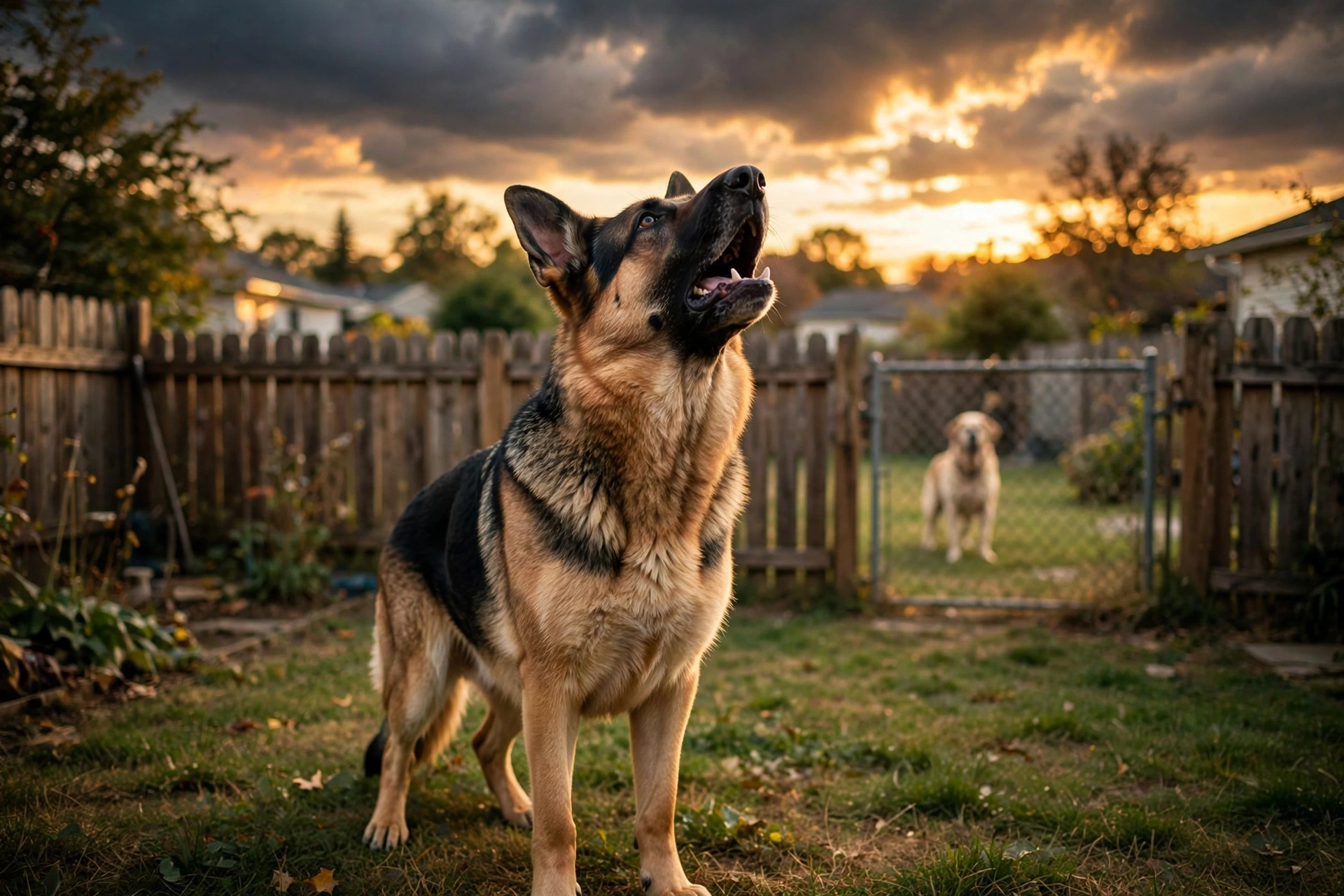
A howl can be a dog’s version of a planted flag. Wild canids howl to tell other packs an area is claimed, and domestic dogs do the same — often when another dog passes the window or someone approaches the door. It comes with tall, stiff body language: ears forward, tail high, standing squarely.
Unlike anxious howling, which looks distressed, territorial howling looks self-assured. Your dog isn’t afraid; they’re broadcasting a message to whoever might be listening.
What to do: Manage triggers where you can — close blinds during peak passerby hours and supervise yard time. Give your dog a job instead: training, nose work, and regular exercise burn off the confident energy that fuels announcement howling. A pet camera can show you exactly when it happens while you’re away.
Helpful pick: Furbo 360° Dog Camera — check in, talk to your pup, and toss a treat remotely when you can’t be home.
5. Pain or Illness

This is the reason every dog parent wants to rule out first. A dog who suddenly starts howling when they never used to — or whose howl sounds different — may be telling you something hurts. Pain howls tend to be sharper and more urgent than the long, relaxed howls of a dog answering a siren.
Watch for the package deal: restlessness, limping, appetite loss, stiffness, panting at rest, or guarding a body part. Senior dogs deserve extra attention, since arthritis, dental pain, and cognitive changes can all bring on new vocalization. See our article on the signs your dog is in pain for the subtler cues.
What to do: Don’t train through this one. If the howling is new, frequent, or paired with any physical change, book a vet visit and note exactly when it happens and what it sounds like — video helps. Meanwhile, a supportive resting spot can genuinely comfort a sore or aging dog.
Helpful pick: Bedsure Orthopedic Dog Bed — memory foam support that eases pressure on joints for senior or achy dogs.
6. Excitement and Play

Not every howl is a cry for help — some are pure joy. Many dogs howl when they’re thrilled: when you come home, when the leash comes out, or when play hits its peak. Think of it as a canine cheer of excitement.
It’s usually short-lived and tied to a fun moment, and it’s the kind of howling most owners happily live with.
What to do: Enjoy it, but channel it. Make sure your dog gets enough daily exercise and mental stimulation — an under-exercised dog turns excitement into noise, while a well-exercised dog turns it into a nap. Interactive toys that make your dog think are especially good at burning off buzzing energy indoors.
Helpful pick: Outward Hound Nina Ottosson Dog Brick Puzzle Toy — turns excess excitement into focused problem-solving with hidden treats.
7. Breed Instinct — It’s in Their DNA

Sometimes the answer to “why does my dog howl” is simply: because they were born to. Some breeds howl the way retrievers fetch — it’s hardwired. Siberian Huskies, Alaskan Malamutes, Beagles, Basset Hounds, Bloodhounds, and Dachshunds are all famous vocalists.
For these dogs, howling can be triggered by almost nothing — a mood, a moonlit night, the sheer joy of having a voice. It’s not a behavior problem; it’s a feature. Even the most vocal breeds can learn when howling is welcome and when it isn’t.
What to do: Give the instinct a healthy outlet — scent games, controlled “sing-along” sessions, and plenty of chew toys. If your husky or beagle is a nonstop nighttime singer, check that boredom isn’t the real amplifier: a tired hound is a quieter hound. For more breed quirks, see why your dog stares at you.
Helpful pick: KONG Classic Stuffable Dog Toy — the gold-standard chew toy that gives vocal breeds a satisfying job for their mouths.
When Howling Signals a Problem
Most howling is normal communication, but certain patterns deserve a closer look. Call your vet or a certified behavior professional if you notice:
- A sudden change: A normally quiet dog starts howling, or the howl sounds different — sharper, more frantic, or distressed.
- Howling with physical symptoms: Limping, appetite loss, stiffness, panting at rest, or changes in bathroom habits.
- Nighttime howling in seniors: May point to pain, vision or hearing loss, or canine cognitive dysfunction.
- Self-harm or destruction: Scratching doors until nails bleed, breaking teeth on a crate, or destroying the house while you’re gone signals serious separation distress.
- Escalation: The howling is getting louder, longer, or more frequent over weeks.
You know your dog’s normal soundtrack better than anyone, and a real change in the music is always worth investigating. If stress is part of the picture, our guide to the signs your dog is stressed helps you read the full body-language story.
How to Reduce Excessive Howling
Once you know why your dog howls, you can shape the behavior without silencing their voice. These principles work for almost every type:
- Find the trigger. Log when howling happens and what came just before — patterns jump out fast.
- Reward the quiet. Catch your dog being calm where they’d usually howl, and pay them. Our guide to training your dog to stop barking uses the same reward-based principles.
- Meet the underlying need. A howling dog is usually a dog with an unmet need — company, exercise, stimulation, or relief from pain. Training treats the symptom; meeting the need fixes the cause.
- Desensitize sound triggers. Play the trigger at barely-audible volume while feeding treats, raising it gradually over days. Slow rewiring wins.
- Never punish howling. Yelling “quiet!” mid-howl sounds like joining in, and punishment for anxious howling makes anxiety worse.
- Exercise generously. A walked, sniffed, played, and mentally worked dog has far less energy for vocal performances at night.
Frequently Asked Questions
Why does my dog howl at sirens?
Sirens make long, sustained, high-pitched tones that resemble a canine howl. Your dog likely interprets it as another dog calling out and instinctively answers — a social reflex inherited from wolves. It’s almost never a sign of pain, and it usually stops when the siren passes.
Why does my dog howl at night?
The night is quieter, so distant sounds — sirens, other dogs, wildlife — become more noticeable and can trigger howling. Dogs left alone at night may also howl from loneliness. In senior dogs, new nighttime howling can signal pain or cognitive decline and is worth a vet check.
Is howling a sign my dog is sad?
Not necessarily. Howling is communication — dogs howl when excited, bored, lonely, territorial, or answering a sound. Read the whole picture: body language, timing, and context. A relaxed, wagging dog howling at a siren is happy; a pacing, drooling dog howling alone all day is distressed.
Do all dogs howl?
No. Howling is instinctive but varies by breed and individual. Huskies, Malamutes, and Beagles howl readily, while many dogs rarely or never howl. A dog that doesn’t howl is completely normal.
Can I train my dog to stop howling?
You can reduce excessive howling but shouldn’t eliminate it entirely — it’s natural communication. Identify the cause, reward calm behavior, provide exercise and enrichment, desensitize sound triggers gradually, and get professional help for anxiety or medical issues. Consistency and patience matter more than any single trick.
As an Amazon Associate, PetPostHub earns from qualifying purchases. This means we may earn a small commission when you buy through links on this page, at no extra cost to you.