Why Ignoring Your Cavalier’s Weight Gain Is Dangerous: 7 Health Risks Explained

Ignoring your Cavalier weight gain is dangerous, and not just because of a snug collar or a rounder silhouette on the couch. Those extra pounds quietly strain your dog’s heart, joints, and breathing every single day. In this guide, we break down the 7 biggest health risks of letting your Cavalier King Charles Spaniel stay overweight — and what you can do to turn things around with your vet’s help.
Table of Contents
- 1. Extra Strain on the Heart
- 2. Joint and Mobility Problems
- 3. Breathing Difficulties
- 4. Higher Diabetes Risk
- 5. A Shorter Lifespan
- 6. Reduced Quality of Life
- 7. Riskier Vet Procedures
- Frequently Asked Questions
How to Tell If Your Cavalier Is Gaining Too Much
Weight gain creeps up slowly, so it helps to check regularly. Run your hands along your dog’s sides once a week — you should feel the ribs under a light layer of fat without pressing hard. From above, look for a visible waistline behind the ribs. If the ribs have disappeared or the waist has filled in, those are clear signals it’s time to act.
A monthly weigh-in is even better. Step on the scale holding your dog, then weigh yourself alone and subtract — a simple routine that catches small gains before they become big problems. Always confirm concerns with your vet, who can score your dog’s body condition and set a healthy target weight.
1. Extra Strain on the Heart

Every extra pound of body fat forces your Cavalier’s heart to work harder to pump blood around the body. That might not sound dramatic, but for a breed already prone to mitral valve disease, the added workload matters. Fat tissue also increases blood pressure and can make existing heart murmurs progress faster.
What to do: Ask your vet about a heart-friendly feeding plan, keep treats to 10% of daily calories, and schedule regular cardiac checkups. Daily omega-3 support is often recommended as part of a heart-conscious routine.
Helpful pick: Zesty Paws Wild Alaskan Salmon Oil — supports heart and coat health as part of a balanced diet.
2. Joint and Mobility Problems

Think of your Cavalier’s joints as shock absorbers. When there’s too much weight pressing down on them, the cartilage wears faster, which can lead to stiffness, limping, and arthritis — sometimes years earlier than it would otherwise. An overweight Cavalier that once bounded up the stairs may start hesitating or refusing altogether.
What to do: Keep walks gentle and consistent rather than long and punishing. Ramps for the couch and car reduce impact on sore joints, and keeping weight in the healthy range is the single best thing you can do for long-term mobility.
Helpful pick: Mycicy Reflective Rope Dog Leash — sturdy and comfortable for the short, regular walks that keep joints moving.
3. Breathing Difficulties

Fat deposits around the chest and neck compress the airways, making each breath a little harder. Overweight Cavaliers often pant heavily after mild activity, snore louder at night, and struggle in warm weather. Labored breathing also makes exercise less appealing, which creates a vicious cycle: less movement, more weight gain, worse breathing.
What to do: Exercise during cooler parts of the day, watch for excessive panting as a signal to stop, and swap high-energy play for calm indoor enrichment when the air is hot or humid.
Helpful pick: KONG Classic — stuff it with healthy fillings for engaging indoor fun that doesn’t overtax breathing.
4. Higher Diabetes Risk

Just like in people, carrying too much weight can interfere with how a dog’s body uses insulin. Overweight Cavaliers face a notably higher risk of developing diabetes, a lifelong condition that means daily monitoring, dietary changes, and often insulin injections. It’s manageable, but it’s far better avoided.
What to do: Measure every meal instead of free-feeding, cut out table scraps, and swap calorie-dense treats for healthier training rewards. Slow feeders also help food-obsessed Cavaliers feel satisfied with less.
Helpful pick: Zuke’s Mini Naturals Training Treats — low-calorie rewards your Cavalier will still go wild for.
5. A Shorter Lifespan

This is the hardest truth of all: studies on dogs have consistently shown that overweight dogs live shorter lives than their lean counterparts — sometimes by a year or more. For a breed with an average lifespan of 9 to 14 years, that’s a meaningful slice of the time you get together.
What to do: Think of weight management as a gift of time. A consistent routine of measured meals and daily activity adds up enormously over a lifetime. Track your dog’s weight monthly so small gains get caught before they become big ones.
Helpful pick: Chuckit! Ultra Ball — a durable fetch toy that makes daily play sessions irresistible.
6. Reduced Quality of Life
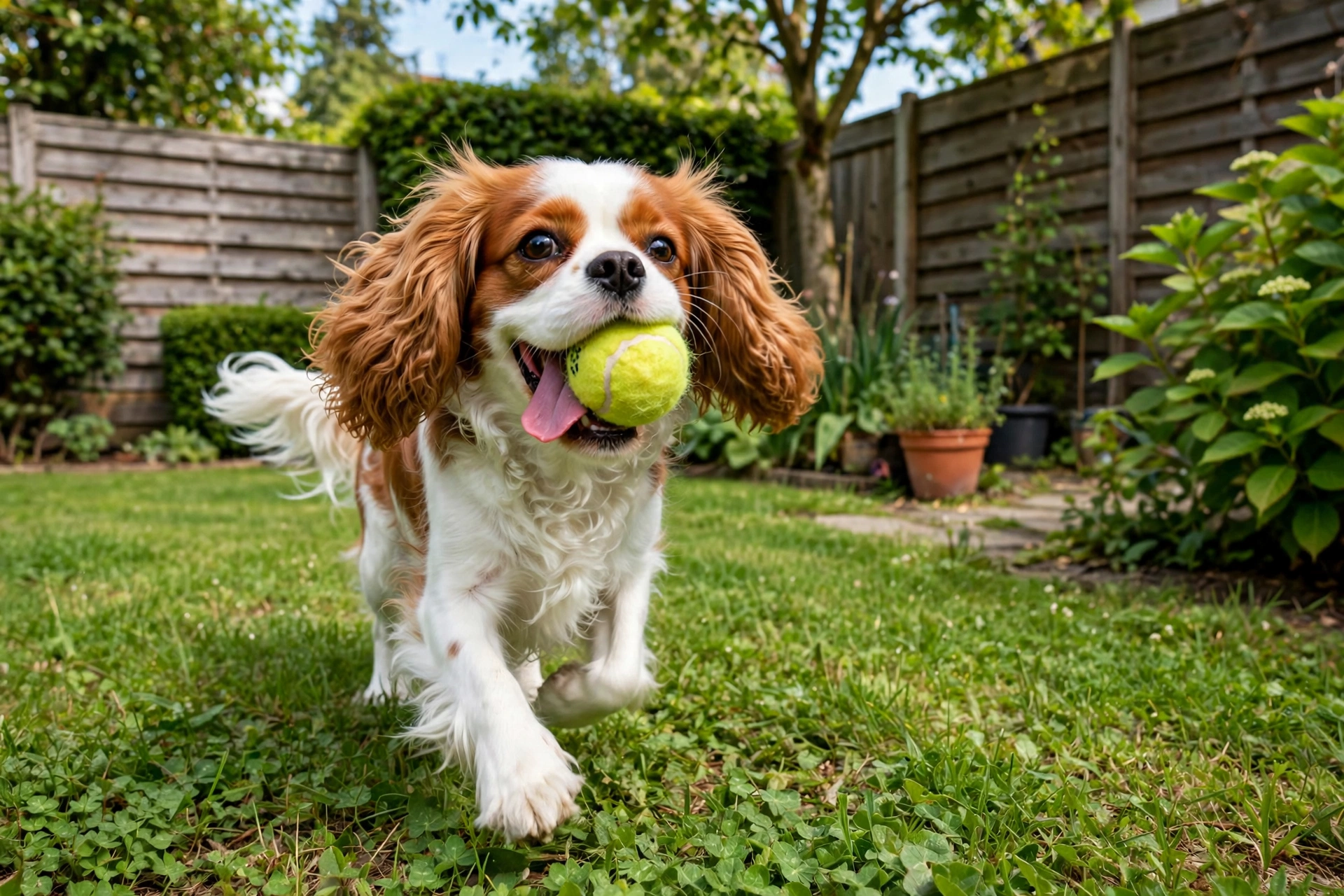
Weight gain doesn’t just shorten life — it shrinks it. Overweight Cavaliers often lose enthusiasm for play, lag behind on walks, sleep through family activities, and miss out on the adventures they once loved. A dog that used to race to the door may now watch from the rug.
What to do: Rebuild an active routine gradually. Short, frequent outings beat rare marathon walks. Mental enrichment — sniff games, puzzle toys, gentle training — keeps spirits high even while the pounds come off.
Helpful pick: LickiMat Classic Soother — calming licking enrichment that keeps your Cavalier happily engaged between walks.
7. Riskier Vet Procedures

When an overweight Cavalier needs surgery or dental work, everything gets more complicated. Anesthesia dosing is trickier with excess body fat, recovery tends to be slower, wound healing can be delayed, and even routine medications may need careful recalculation. Your vet can handle it — but a lean dog is simply a safer patient.
What to do: Keep up with regular vet visits so weight trends are spotted early. A calm, cooperative dog also makes examinations, blood draws, and weigh-ins smoother and less stressful for everyone.
Helpful pick: Zesty Paws Calming Bites — supports calm behavior before vet visits and travel.
Frequently Asked Questions
How can I tell if my Cavalier is overweight?
Run your hands along your dog’s sides — you should be able to feel the ribs with a light layer of fat over them, without pressing hard. Viewed from above, there should be a visible waistline behind the ribs. If you can’t feel ribs or spot a waist, talk to your vet about a weight plan.
How much should a Cavalier King Charles Spaniel weigh?
Most adult Cavaliers weigh between 12 and 18 pounds, though healthy weight depends on frame size. Your vet can assess your individual dog’s body condition score and set a target weight.
How fast should my Cavalier lose weight?
Safe weight loss is gradual — typically 1 to 2% of body weight per week. Crash dieting is dangerous for dogs. Your vet can design a feeding plan that trims calories without sacrificing nutrition.
Are some Cavaliers just naturally chunky?
Body frame varies, but “naturally chunky” is rarely a thing. If your vet confirms your Cavalier is overweight, it’s worth addressing — those puppy-dog eyes have probably been earning too many extras.
What’s the best exercise for an overweight Cavalier?
Start with short, gentle walks and build up gradually. Swimming is excellent low-impact exercise if your dog enjoys it. Avoid intense running or jumping until your vet clears your dog for more activity.
Keep Reading
- Cavalier King Charles Spaniel Health Issues to Watch For
- Cavalier King Charles Spaniel Feeding Guide
- Cavalier King Charles Spaniel Exercise Needs
- 5 Best Supplements for Cavalier King Charles Spaniels
- 8 Things Senior Cavaliers Will Thank You For Doing
As an Amazon Associate, PetPostHub earns from qualifying purchases.