Cavalier King Charles Spaniel Exercise Needs: Complete Guide

Cavaliers are famous for their love of laps, but anyone who shares a home with one knows there is an athlete hiding under all that silky fur. Understanding your Cavalier King Charles Spaniel exercise needs is the key to a dog that is calm in the house, healthy in the body, and happy in the heart.
This guide breaks down how much activity your Cavalier needs at every life stage, the best exercise types for the breed, and how to tell when the routine needs a tweak.
Table of Contents
- How Much Exercise Does a Cavalier Need Each Day?
- The Best Types of Exercise for Cavaliers
- Exercise Rules for Cavalier Puppies
- Building an Exercise Routine for Adult Cavaliers
- Gentle Exercise Options for Senior Cavaliers
- Weather and Safety Tips
- Signs Your Cavalier Needs More (or Less) Exercise
- Frequently Asked Questions
How Much Exercise Does a Cavalier Need Each Day?

Most adult Cavaliers thrive on 30 to 60 minutes of exercise per day. That does not have to mean one long outing — two 20-minute walks plus a play session in the yard easily covers it. What matters most is consistency.
Exercise for this breed should mix physical movement with mental engagement. A sniff-heavy walk where your dog explores scents is more tiring (in a good way) than the same distance marched briskly with no stops. Training games and puzzle feeders all count toward the daily total.
Daily activity supports a healthy weight — especially important since Cavaliers gain weight easily, and extra pounds strain their hearts and joints. A well-exercised Cavalier is also far more likely to settle quietly on the sofa in the evening.
Helpful pick: A sturdy reflective leash like the Mycicy Reflective Rope Dog Leash makes daily walks safer, especially in early morning or evening light.
The Best Types of Exercise for Cavaliers

Walking is the foundation of Cavalier fitness. It is low-impact, suits every fitness level, and gives your dog the sniffing and exploring time their brain craves. Aim for 1 to 2 miles total per day, split into shorter outings if that suits your schedule better.
Fetch and interactive games are a Cavalier favorite. A few rounds of fetch in a fenced yard burn energy fast and strengthen your bond. Tug games work too — just keep sessions short and let your dog win sometimes.
Swimming is wonderful, especially for Cavaliers with stiff joints — it builds muscle without pounding them. Supervise closely, introduce water gradually, and rinse that feathered coat afterward to prevent matting.
Light jogging suits fit adults in small doses — short, easy runs rather than long outings. This is a small companion breed, not a marathon partner.
Beginner agility challenges both body and mind: low jumps, tunnels, and weave poles. Start slowly and keep everything low-impact while your dog learns the movements.
Helpful pick: The KONG Classic is a durable fetch and chew toy that stands up to daily play sessions.
Exercise Rules for Cavalier Puppies

Cavalier puppies need about 20 to 30 minutes of exercise per day, broken into several short sessions. Their joints are still developing, and overdoing it now can cause problems that show up years later.
A useful guideline many vets suggest is roughly five minutes of structured walking per month of age, twice a day — so a four-month-old puppy gets about 20 minutes per walk. The rest of their “exercise” should be free play: exploring the yard, gentle wrestling with toys, and short training games that tire the brain more than the body.
Hold off on forced running, long hikes, and repetitive jumping until your Cavalier is fully grown, usually around 12 to 18 months. Early training should focus on leash manners, recall, and positive outdoor experiences rather than distance.
Once fully vaccinated, short walks in new environments are excellent — new sights and smells give huge mental stimulation at very low physical cost.
Helpful pick: The Outward Hound Hide-A-Squirrel Puzzle Toy gives puppies gentle mental stimulation without overdoing physical exercise.
Building an Exercise Routine for Adult Cavaliers
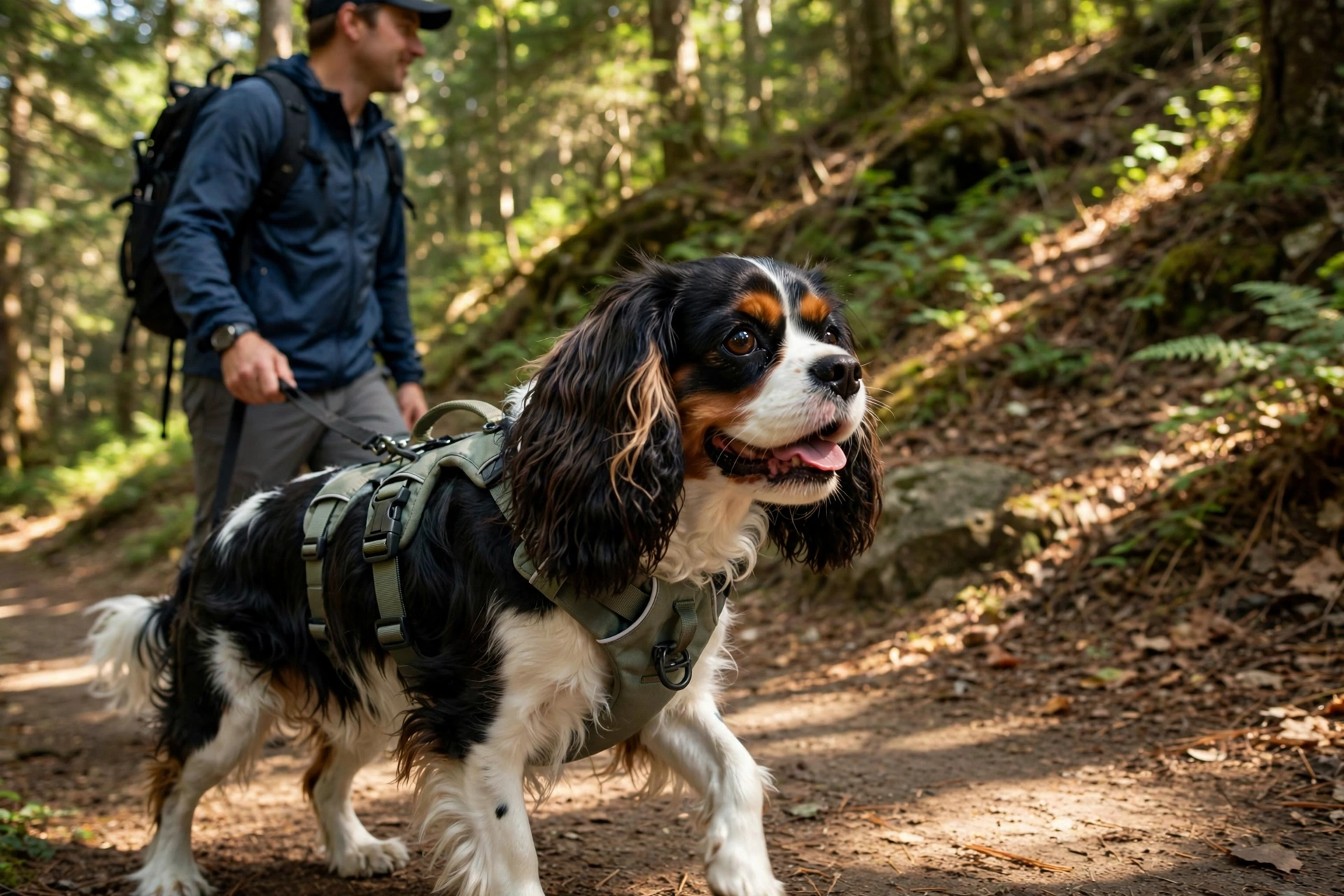
Adult Cavaliers (roughly 1 to 8 years old) are at their physical peak and ready for the full 30 to 60 minutes of daily activity. The secret to a routine that lasts is variety mixed with predictability.
A sample day might look like this: a 20-minute morning walk, a midday fetch or training session of 10 to 15 minutes, and a relaxed evening stroll.
Build intensity gradually. If your Cavalier has been a couch companion, start with shorter outings and add five minutes every few days. Introduce new activities like swimming or hiking in small doses before making them regular.
Cavaliers will tell you when they have had enough by slowing down, seeking shade, or lying down mid-walk. Respect those signals instead of pushing through.
Helpful pick: A handy treat pouch like the Egiao Dog Training Treat Pouch keeps rewards within easy reach during walks and training sessions.
Gentle Exercise Options for Senior Cavaliers

Once your Cavalier passes 8 or 9 years old, exercise needs shift from building fitness to preserving mobility. Most seniors do well with 20 to 30 minutes of gentle activity per day, split into two or three very easy outings.
Slow sniff walks are perfect for older dogs — fresh air, mental stimulation, and gentle movement without strain. Swimming is often the best senior workout, since water supports their weight while muscles work.
Watch for signs an activity is too much: lagging behind, panting that takes long to settle, stiffness after rest, or reluctance to start out. Scale back at the first hint rather than waiting for it to worsen.
Senior Cavaliers are prone to heart conditions like mitral valve disease. If your older dog coughs during exercise, tires unusually fast, or breathes heavily at rest, check with your vet before continuing the routine.
Helpful pick: The ADAPTIL Calm Home Diffuser supports a relaxed home environment where senior dogs can rest comfortably between outings.
Weather and Safety Tips

Cavaliers are not built for weather extremes, so a little planning keeps exercise safe year-round.
In summer heat: Walk early in the morning or after sunset, stick to shaded routes, and bring water for both of you. Test pavement with the back of your hand — if it is too hot to hold for five seconds, it is too hot for paws. Cut sessions short on humid days and never leave your dog in a parked car.
In winter cold: This thin-coated breed feels the chill. Keep walks shorter, consider a dog coat on very cold days, and wipe paws afterward to remove road salt. Indoor play — hallway fetch, trick training, puzzle toys — fills the gap on bitter days.
Everyday safety: Use a secure harness rather than a collar-only setup for walks, keep your dog leashed in unfenced areas (that spaniel nose follows scents fast), and always carry water on longer outings. After countryside walks, check ears and paws for ticks, burrs, and foxtails.
Helpful pick: An LED collar light like the HIGO LED Dog Collar Light helps drivers and cyclists spot your dog during dawn, dusk, or winter-afternoon walks.
Signs Your Cavalier Needs More (or Less) Exercise

Your dog’s behavior is the most honest exercise tracker you own. Here is how to read it.
Signs they may need MORE activity: evening restlessness, destructive chewing, excessive barking, weight gain, midnight zoomies, or constant pestering for attention. Adding a walk or play session often settles these within days.
Signs they may need LESS (or gentler) activity: lagging on familiar walks, lying down mid-outing, panting that persists long after stopping, limping, next-morning stiffness, or reluctance to head out. Scale back — and if the change is sudden, talk to your vet, since pain or illness can masquerade as laziness.
Every Cavalier is an individual. Learn your dog’s baseline when healthy and happy, then adjust around it rather than chasing a number.
Helpful pick: Zesty Paws Calming Bites support relaxation for dogs that get overexcited or restless around exercise time.
Frequently Asked Questions
Can I take my Cavalier hiking or running with me?
Yes, for easy hikes and short, gentle runs with a fit adult Cavalier. Build up distance gradually, bring water, and watch for fatigue — this breed is not built for endurance outings.
How do I know if I am over-exercising my Cavalier?
Watch for excessive panting that does not settle quickly, lagging behind, lying down during the walk, limping, or unusual tiredness afterward. When in doubt, cut the session short — you can always add more tomorrow.
Is one long walk or several short walks better?
Several short outings usually win. Two or three 15 to 20-minute walks spread through the day give your Cavalier regular potty breaks, mental stimulation, and movement without the fatigue of one long march.
What is the best exercise for a Cavalier with joint problems?
Swimming is the top choice since it works muscles without stressing joints. Short, flat sniff walks are a close second. Avoid stairs, jumping, and long runs, and ask your vet about a tailored low-impact plan.
Do Cavaliers really need daily exercise if they mostly sleep?
Yes — the “lap dog” reputation describes their cuddle style, not their energy level. Without daily activity, Cavaliers tend toward weight gain, boredom behaviors, and anxiety. Even 30 minutes of walks and play transforms their mood.
Keep Reading
- Cavalier King Charles Spaniel Health Issues
- How to Teach Your Dog to Come When Called
- Dog Body Language Guide
- Signs Your Dog Loves You
- Best Dog Food for Allergies
As an Amazon Associate, PetPostHub earns from qualifying purchases.