Coconut Oil for Dogs: Benefits, Dosage, and Safety (2026)

You have probably heard other dog owners rave about coconut oil for dogs, and wondered whether it is worth adding to your own dog’s routine. The truth sits somewhere between the miracle-cure claims and total skepticism: coconut oil can genuinely support your dog’s skin, coat, and digestion when used correctly, but it can also cause stomach upset or weight gain when overused. This guide gives you the honest, balanced picture — what it does, when it helps, when to skip it, and exactly how much to use.
Table of Contents
- What Coconut Oil Actually Is
- Realistic Benefits You Can Expect
- Dogs Who Should Skip Coconut Oil
- How Much to Give: Dosage by Weight
- Ways to Use It: Food Bowl and Beyond
- Choosing Quality Oil and When to Call Your Vet
- Keep Reading
- Frequently Asked Questions
What Coconut Oil Actually Is

Coconut oil is a plant-based fat pressed from the white flesh of mature coconuts. Most of its fat is saturated, which is why it stays solid at room temperature and melts around 76°F. What makes it different from other cooking oils is its high concentration of medium-chain triglycerides (MCTs) and lauric acid, the two compounds behind most of the claimed benefits for dogs.
MCTs are digested faster than the longer-chain fats found in most animal foods, which is why they are often described as a quick energy source. Lauric acid is a fatty acid with mild antimicrobial properties, which is the reason coconut oil gets recommended for minor skin issues. Neither compound is a drug or a cure, but both can be useful additions to a dog’s care routine in the right amounts.
One important thing to understand up front: coconut oil is calorie-dense, packing roughly 120 calories per tablespoon. That is why dosage is the make-or-break detail with this oil.
Realistic Benefits You Can Expect

Let us set honest expectations: coconut oil will not fix a food allergy, cure a chronic skin disease, or replace a vet-prescribed treatment. What it can do is support skin, coat, and digestion over two to three weeks of consistent use.
Here is what you can realistically expect, written in plain terms:
- Softer, calmer skin. The fatty acids in coconut oil help moisturize dry, flaky skin and can ease mild itching caused by dryness. It works a bit like a dog-safe lotion, applied topically in small amounts or given in food so the skin is nourished from the inside.
- A glossier coat. Conditioning the hair shaft with dietary fats tends to make dull coats look shinier over time. Regular brushing alongside it helps distribute the natural oils.
- A gentle energy lift. Because MCTs digest quickly, some owners of senior or sluggish dogs notice a little more pep. This is a subtle effect, not a jolt of caffeine-like energy.
- Digestive support. A small amount of coconut oil can support smoother digestion and better nutrient absorption in some dogs. It is not a treatment for chronic digestive disease.
- Mild antimicrobial support. Lauric acid has properties that may help keep minor skin irritations and small hot spots cleaner while they heal, though it should never replace proper wound care.
If your dog’s skin problem involves open sores, heavy flaking, hair loss, or constant chewing, that is a vet visit — not a coconut oil moment.
Dogs Who Should Skip Coconut Oil

Coconut oil is not for every dog. The high saturated-fat content that makes it useful for some dogs makes it risky for others. Skip it — or ask your vet first — in these cases:
- Dogs with pancreatitis or a history of it. The concentrated fat can trigger a painful, sometimes dangerous flare-up.
- Overweight or obese dogs. At 120 calories per tablespoon, coconut oil can quietly blow a weight-loss plan. Calories from the oil should come from somewhere, not be added on top.
- Dogs with fat metabolism disorders. Dogs with hyperlipidemia or similar conditions cannot process fats normally, and coconut oil can make the problem worse.
- Dogs with chronic diarrhea or very sensitive stomachs. Even a small amount can loosen stools further.
- Dogs on certain medications. High-fat additions can interact with some drugs, including certain blood thinners, diabetes medications, and thyroid medication. Check with your vet first.
How Much to Give: Dosage by Weight
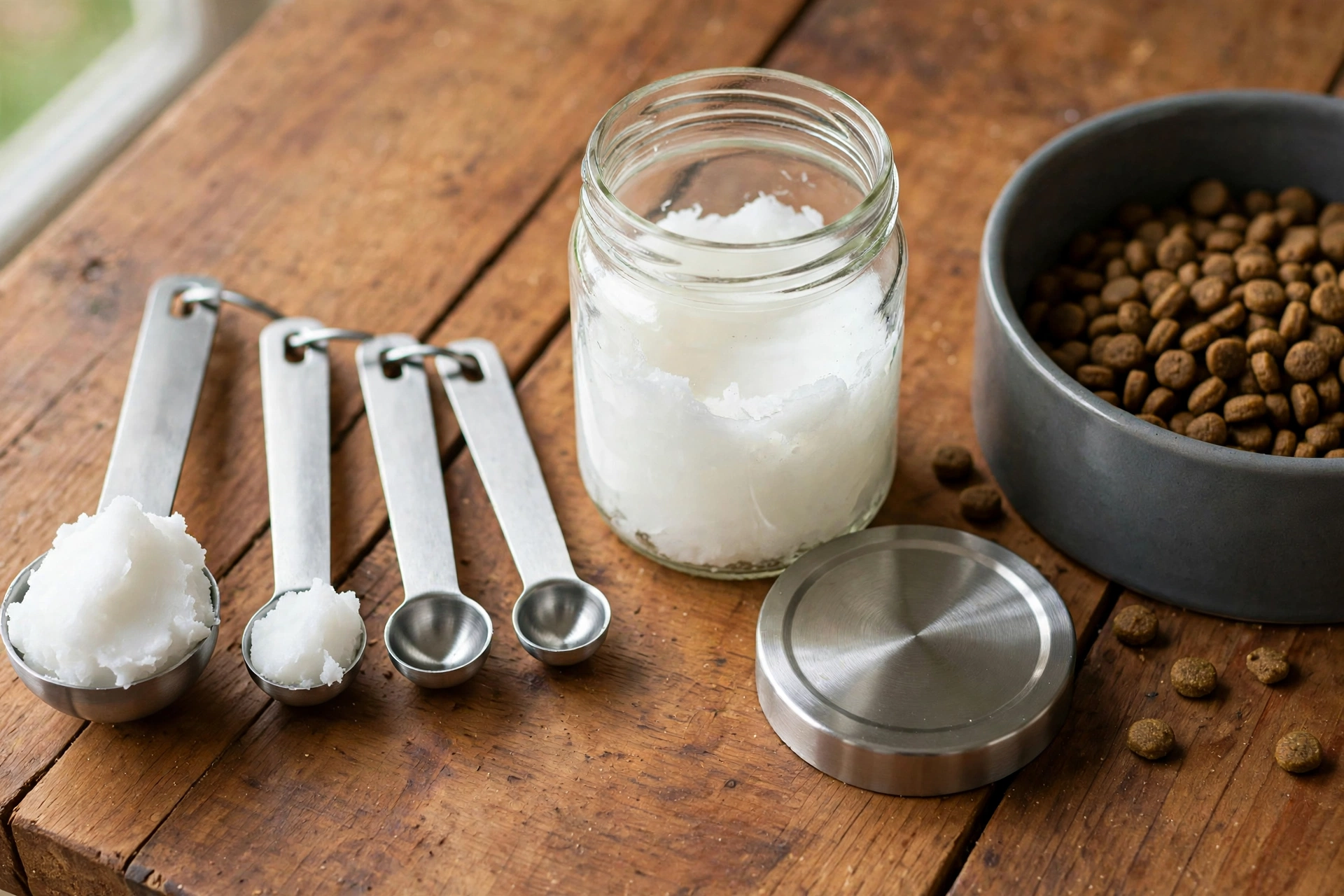
Dosing is the most important part of this entire article. The widely used guideline is about 1 teaspoon per 10 pounds of body weight per day, but you should not start there. Begin with roughly a quarter of the target amount and build up over one to two weeks so your dog’s stomach can adjust.
Here is a simple quick-reference chart:
| Dog Size | Starting Amount | Full Daily Amount |
|---|---|---|
| Small (10–25 lbs) | 1/8 to 1/4 tsp | 1/4 to 1/2 tsp |
| Medium (25–50 lbs) | 1/4 to 1/2 tsp | 1/2 to 1 tsp |
| Large (50–75 lbs) | 1/2 to 3/4 tsp | 1 to 1 1/2 tsp |
| Extra-large (75+ lbs) | 3/4 to 1 tsp | 1 1/2 to 2 tsp |
You can give the full amount once a day or split it across meals. Most dogs like the taste, and warming it slightly helps it melt invisibly into food.
Watch for signs of too much: loose stools within a few hours of feeding, greasy stools, an oily coat days after application, or creeping weight gain. If any show up, drop back to the starting amount and rebuild more slowly.
Ways to Use It: Food Bowl and Beyond

Coconut oil is not just a food add-in. It also works as a simple topical balm for the parts of your dog that dry out the fastest. Here are the most practical ways to use it, inside and out:
- Mixed into meals. Stir the melted oil into kibble or canned food. Pairing it with a little plain pumpkin puree can be a nice option for dogs with mildly sensitive stomachs.
- Cracked paw pads. Rub a pea-sized amount into each dry or rough pad once or twice a day until they soften. A thin layer is plenty — too much leaves greasy paw prints on your floors.
- Dry, crusty noses. A tiny dab smoothed over a dry nose helps keep it moisturized, especially in winter or dry climates.
- Hot spots. After gently cleaning the area, apply a thin layer two to three times a day. The antimicrobial properties may support healing, but if the spot spreads, oozes, or does not improve within a couple of days, see your vet.
- Minor scrapes. On a cleaned, superficial scratch, a dab of coconut oil can act as a light protective layer while the skin heals.
- Weekly paw and nose maintenance. Once things look healthy, a weekly light application helps keep pads and noses supple through rough weather or allergy season.
For topical use, expect your dog to try to lick it off — that is normal. Distract them for a minute after applying so the oil absorbs.
Choosing Quality Oil and When to Call Your Vet

Not every jar on the shelf is equal. Since this is something your dog will eat, buy with the same care you would use for your own food. Look for these markers of quality:
- USDA Organic certification. This means the coconuts were grown without synthetic pesticides or fertilizers.
- Cold-pressed or expeller-pressed. These gentler extraction methods preserve the compounds that heat destroys.
- Virgin or extra-virgin. Oil from the first pressing generally retains more of its nutrients.
- Non-hydrogenated. Hydrogenation creates trans fats, which have no place in your dog’s diet.
Words like “natural” or “pure” sound reassuring but are not regulated, so they tell you nothing on their own. Stick with verifiable certifications rather than marketing language.
If your dog has any health condition — pancreatitis history, diabetes, thyroid issues, obesity, or a sensitive gut — ask your vet about a safe dose and possible medication interactions before starting. Stop use and call your vet right away if you notice vomiting, abdominal pain, lethargy, or severe diarrhea.
Used thoughtfully, coconut oil is a simple, affordable addition that can support your dog’s skin, coat, and digestion. It is not a cure-all, but for a healthy dog at the right dose, it is a genuinely useful tool to keep in the pantry.
Keep Reading
- DIY Dog Bath: Gentle At-Home Washing Guide
- 12 Dog Grooming Tips Every Pet Parent Should Know
- Homemade Dog Food Recipes: Complete Guide
- Natural Remedies for Yeast Infection in Dogs
- Grain-Free Dog Treats: Recipes and Guide
Frequently Asked Questions
Can puppies have coconut oil?
Start with about a quarter teaspoon per day for a small puppy and build up slowly. Check with your vet first — puppies have sensitive digestive systems and tightly balanced calorie needs.
Does coconut oil go bad after opening?
It lasts much longer than most cooking oils, typically a year or more at room temperature. Discard it if it smells off or sour, changes color, or tastes rancid.
Can coconut oil interact with my dog’s medications?
It can, especially with blood thinners, diabetes medications, and thyroid medication, because of the concentrated fat. Talk to your vet first if your dog takes any prescription drugs.
Is refined or unrefined coconut oil better for dogs?
Unrefined (virgin or extra-virgin) is the better pick — less processing means more of the natural compounds stay intact. Refined oil works in a pinch.
How long before I see results on my dog’s coat?
Most owners notice softer skin and a shinier coat after two to three weeks of consistent, correctly dosed use. If nothing changes after a month, check with your vet.