
15 Dog Fence Ideas for a Safe, Stylish, and Budget-Friendly Yard
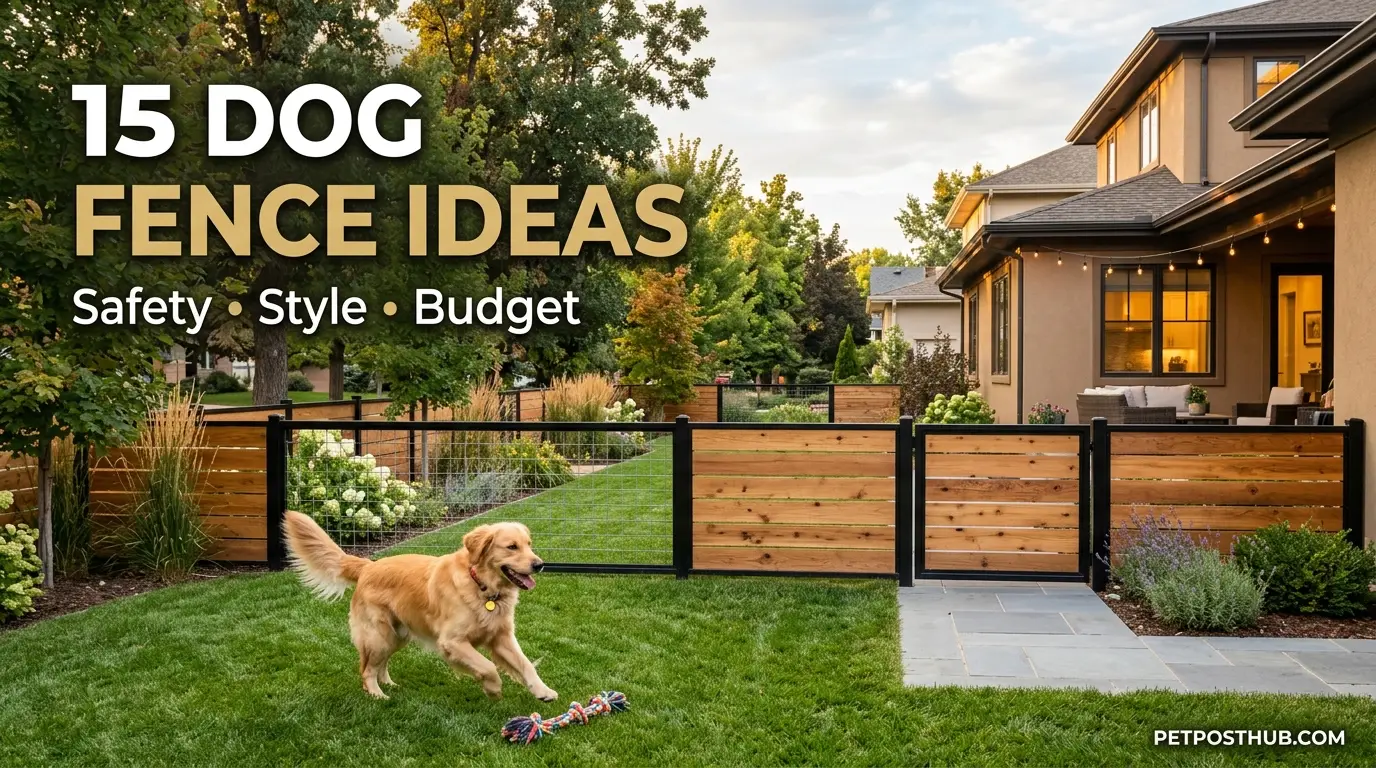
A good dog fence should do more than mark the edge of your yard. It should keep your dog safely contained, withstand digging and jumping, and still fit the look of your outdoor space. Fortunately, you don’t need an expensive custom fence to get all three.
Whether you have a large backyard, a narrow side yard, a garden that needs protection, or a determined escape artist, these 15 dog fence ideas offer practical solutions for different spaces and budgets.
1. Cedar and Wire Panel Fence


6
Combine sturdy cedar posts with welded wire panels for a fence that feels open rather than boxed in. The wood adds warmth while the wire provides visibility and reliable containment.
This is especially useful when you want a DIY-friendly fence that looks attractive from both sides.
Best for: Large yards, DIY projects, open views.
2. Wooden Picket Gate


6
A simple wooden picket gate can create a secure entrance without making your yard look overly industrial. Choose a strong latch and check that the spacing between pickets is appropriate for your dog’s size.
For dogs that jump or push gates, place the latch high enough that they cannot easily reach it.
Best for: Front yards, patios, cottage-style homes.
3. Portable Mesh Dog Fence


6
Need a temporary solution? Portable mesh panels can create a contained play area without permanent posts or digging.
They are convenient for renters, travel, camping, or temporarily separating part of a yard.
Best for: Temporary containment and smaller dogs.
4. Black Chain-Link Dog Run


6
Chain-link fencing remains one of the practical choices for creating a dedicated dog run. A dark or vinyl-coated finish can blend more naturally with landscaping.
For dogs that climb or jump, consider an appropriately tall fence and secure the top and bottom carefully.
Best for: Active dogs and larger outdoor runs.
5. Decorative Metal Fence


6
Ornamental metal fencing gives you security without completely hiding the yard. Decorative patterns can also complement your home’s exterior.
Just make sure the openings are small enough for your dog and that the height suits their jumping ability.
Best for: Stylish front yards and visible boundaries.
6. Garden Protection Fence


5
If your dog respects the main yard but loves digging in flower beds, you may only need a smaller garden barrier.
Use decorative metal panels around plants and landscaping rather than fencing the entire property.
Best for: Protecting flowers, vegetables, and landscaping.
7. Freestanding Folding Pet Gate


6
A folding pet gate is useful when you want flexibility instead of a permanent installation. You can reposition it to block patios, decks, doorways, or other areas.
Look for a stable design that your dog cannot easily knock over.
Best for: Small spaces and flexible boundaries.
8. Rustic Log Rail Fence


5
For a farmhouse or natural landscape, a rustic log fence can blend beautifully into the surroundings.
Because large gaps can allow dogs to squeeze through, add suitable wire mesh if necessary and inspect the wood regularly for splinters or damage.
Best for: Rural properties and rustic yards.
9. Timber Border and Patio Fence


5
You can use timber borders to clearly separate lawns, patios, planting areas, and your dog’s main space.
This approach is less about building a tall perimeter fence and more about designing the yard so your dog naturally stays within the intended area.
Best for: Dog-friendly landscaping and defined yard zones.
10. Curved Aluminum Slat Fence


6
A curved aluminum fence can create a polished modern boundary around gardens or other areas you want your dog to avoid.
Aluminum is also relatively easy to clean and doesn’t have the same rot concerns as untreated wood.
Best for: Modern homes and garden protection.
11. Steel Panel Dog Run


6
Create a dedicated dog run with modular steel panels and a durable ground surface such as suitable drainage-friendly gravel.
Adding shade and a weather-resistant dog shelter makes the area more useful throughout the day.
Best for: Energetic dogs and dedicated exercise areas.
12. Welded-Wire Backyard Run


6
Welded wire attached to sturdy posts offers good visibility while creating a defined outdoor area.
Pay particular attention to the bottom edge. Dogs that dig can exploit even a small gap underneath a fence.
Best for: Budget-conscious DIY projects.
13. Cedar Side-Yard Dog Run


6
A narrow side yard can become a practical dog run with cedar framing, wire panels, and a durable pathway.
Adding stepping stones or another stable walking surface can also help reduce mud around entrances.
Best for: Narrow yards and side passages.
14. Cedar Privacy Fence


5
A solid cedar privacy fence provides more visual separation than wire or chain link. It can be especially useful if your dog becomes overly excited by people, pets, or traffic outside the property.
Make the gate just as secure as the fence itself—many escapes happen through poorly latched gates.
Best for: Privacy, reactive dogs, and suburban yards.
15. Desert-Style Dog Run


5
For dry climates, a dog run using decomposed granite, low-maintenance plants, rocks, and metal fencing can create an attractive alternative to a traditional lawn.
Choose surfaces and plants carefully so they remain comfortable and safe for your dog’s paws.
Best for: Dry climates and low-maintenance yards.
How to Choose the Right Dog Fence
Before buying materials, consider your dog’s size, jumping ability, digging habits, and personality. A fence that works for a calm small dog may be completely unsuitable for a strong jumper or determined digger.
Also check local rules before installation. Fence height, placement, materials, and property-line requirements can vary.
For escape-prone dogs, focus on the entire system—not just the fence panels. Gates, latches, corners, and the bottom edge all need to be secure.
Final Thoughts
The best dog fence doesn’t have to be the most expensive one. A well-planned cedar-and-wire fence, decorative garden barrier, portable enclosure, or dedicated dog run can give your pet room to explore while keeping your yard looking great.
Start with your dog’s biggest escape habit—jumping, digging, squeezing through gaps, or pushing gates—and choose your fence design around that problem.