7 DIY Indoor Dog Gates That Actually Hold Up

Store-bought pet gates do the job, but they rarely look like they belong in your home, and they almost never fit that one odd doorway. Building DIY indoor dog gates solves both problems at once: you get a barrier sized exactly for your space, in a style that matches your decor, usually for less money than a store model.
These seven builds cover every skill level, from a five-minute no-tools fabric gate to a sliding barn-style showpiece, each with a materials list, steps, and a shopping shortcut for the key supply.
Table of Contents
- 1. The No-Tools Tension-Rod Fabric Gate
- 2. The Accordion-Fold Wooden Slat Gate
- 3. The Sliding Barn-Style Gate
- 4. The Painted Shaker-Style Gate
- 5. The No-Sew Fabric Panel Gate
- 6. The Custom-Cut Plywood Gate
- 7. The See-Through Acrylic Panel Gate
- Keep Reading
- Frequently Asked Questions
1. The No-Tools Tension-Rod Fabric Gate
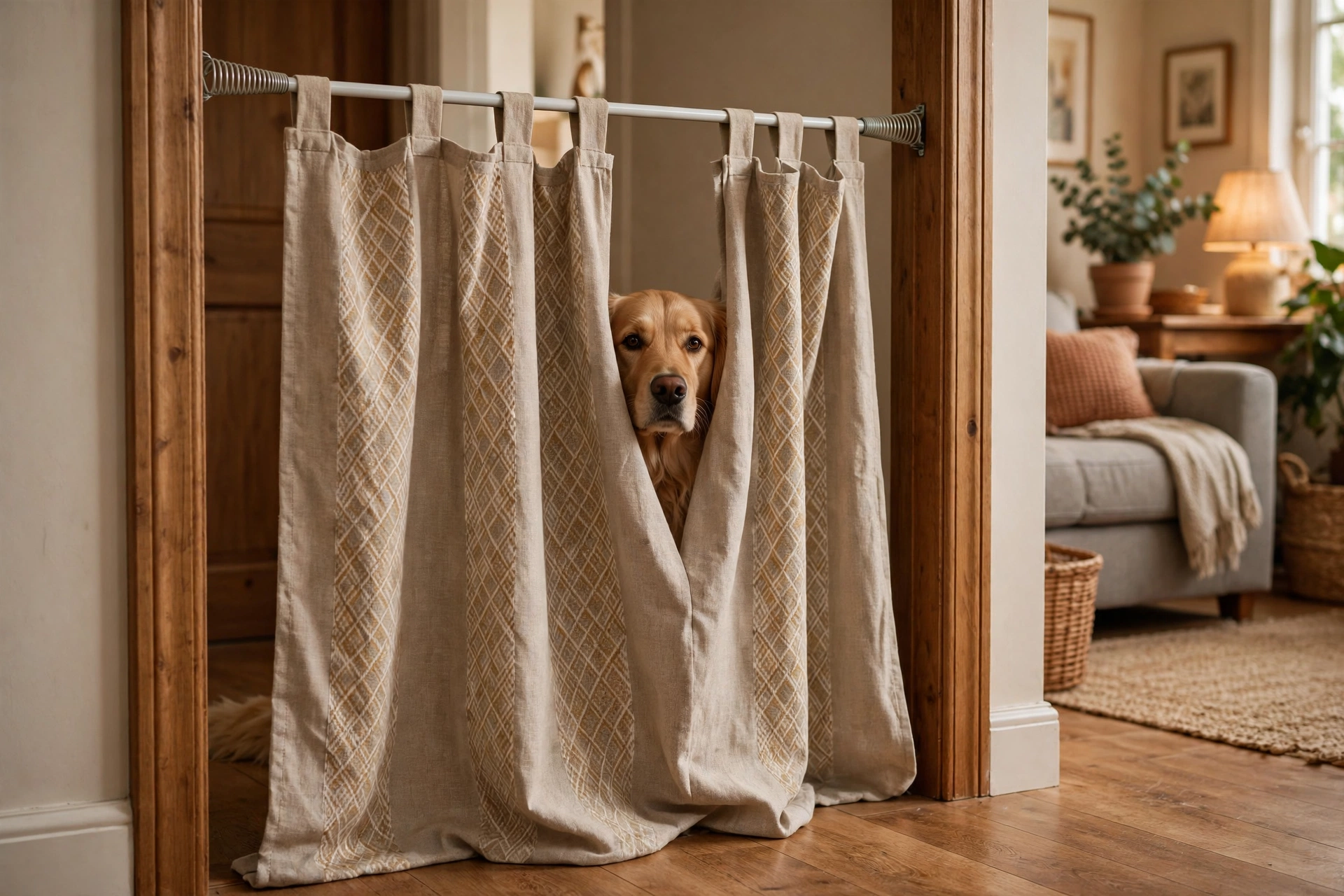
For renters who want zero holes in the wall, a tension rod plus a fabric panel is the fastest gate you can make. The rod wedges between the doorframe sides and the fabric hangs as a soft barrier — ideal for calm dogs and wide doorways.
What You’ll Need
- Spring tension rod sized for your doorway
- Sturdy fabric panel (canvas drop cloth or a curtain panel)
- Clip rings or a rod-pocket hem
How to Build It
- Measure the doorway width at the height you plan to hang the gate.
- Choose a tension rod that covers that span.
- Slide the fabric onto the rod using the rod pocket or clip rings.
- Twist the rod to extend it until it presses firmly against both sides of the frame.
- Hang it low enough that your dog can’t duck under, and high enough it reads as a barrier.
Tip: Use a panel reaching within two inches of the floor so small dogs can’t slip under.
Helpful pick: Amazon Basics Adjustable Spring Tension Curtain Rod — the backbone of this build; twists to fit doorways from 54 to 90 inches with no drilling.
2. The Accordion-Fold Wooden Slat Gate
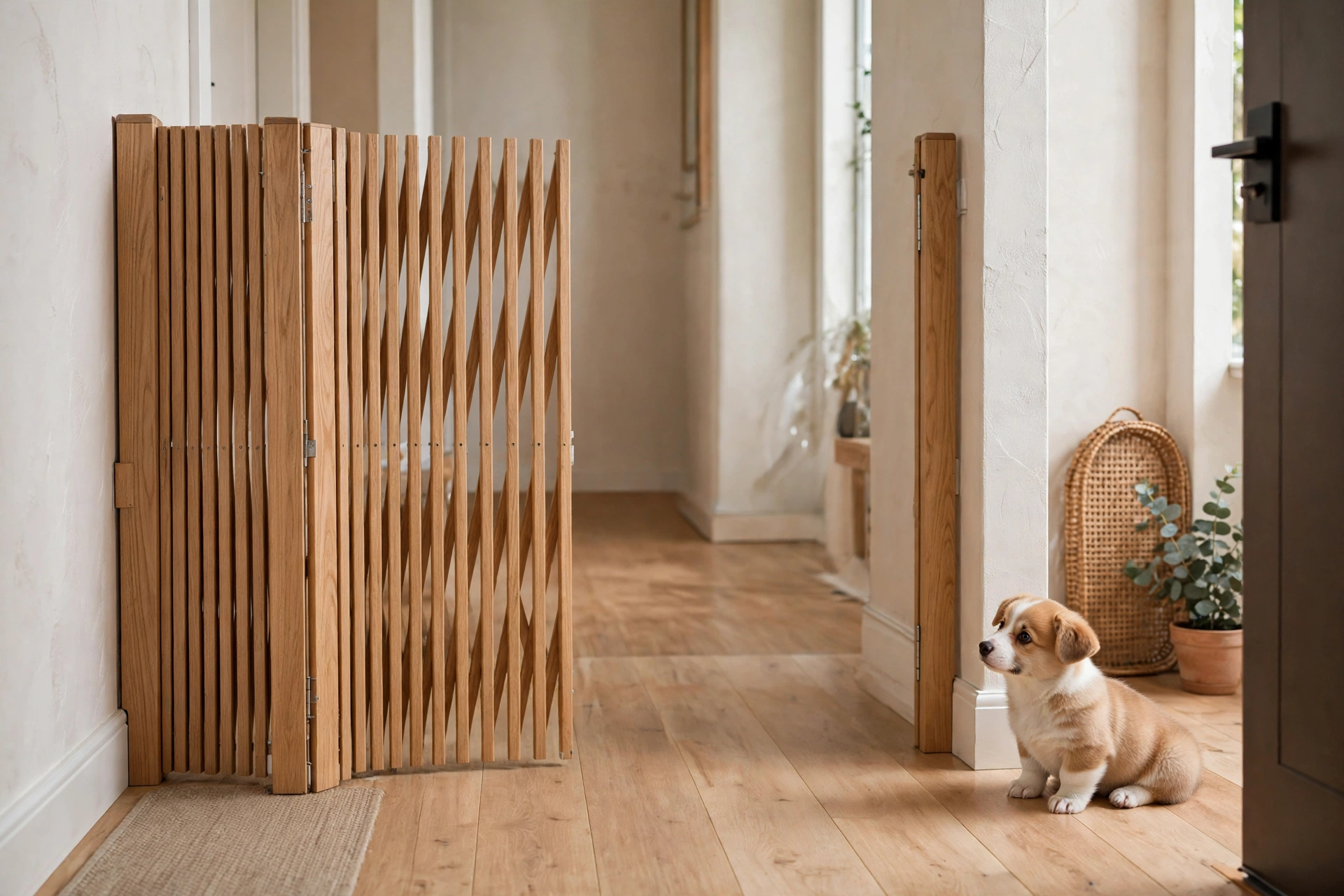
Three narrow hinged panels that fold like an accordion make a freestanding gate needing no mounting. Set it up anywhere, fold it flat for storage, and move it room to room — perfect for wide openings and odd corners.
What You’ll Need
- 1×2 pine boards for frames and slats
- Small hinges (four per joint)
- Corner L-brackets
- Wood screws, sandpaper, paint or stain
How to Build It
- Build three equal panels: a rectangle frame with horizontal slats spaced about two inches apart.
- Join the panels edge to edge with hinges so they zigzag.
- Reinforce every panel corner with an L-bracket.
- Sand everything smooth, then paint or stain to taste.
- Stand the folded gate in the opening and pull it open to wedge it in place.
Tip: Add non-slip pads under the feet so the gate doesn’t walk across hard floors.
Helpful pick: LSK Heavy Duty L Brackets Corner Brace Set — reinforces every panel corner so the accordion folds and unfolds without racking.
3. The Sliding Barn-Style Gate
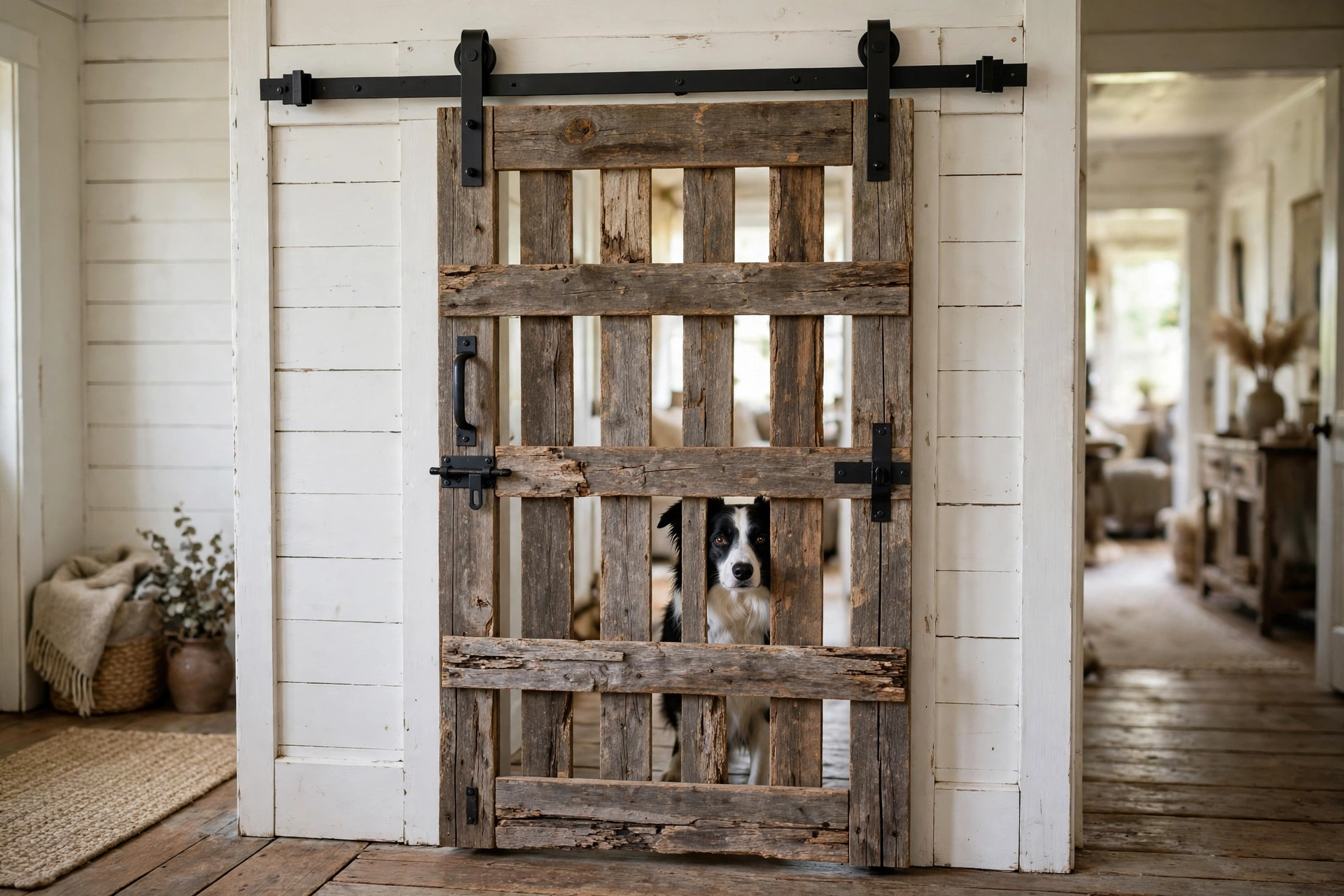
The showpiece build: a plank gate gliding along a wall-mounted track, farmhouse style. The track sits above the doorway, so nothing is on the floor to trip over, and the gate parks neatly against the wall when open.
What You’ll Need
- Pine or cedar boards for the plank panel
- Sliding barn door hardware kit (track, rollers, floor guide, stoppers)
- Wood screws and wood stain
How to Build It
- Build the plank panel and back it with a Z-brace for rigidity.
- Attach the roller hangers to the top of the panel.
- Mount the track level above the opening, driving every lag bolt into a wall stud.
- Hang the gate on the track and add the floor guide and end stoppers.
- Stain or seal the wood to finish.
Tip: Mount the track into studs, not drywall alone — a leaning dog needs real structural support.
Helpful pick: STIALO Sliding Barn Door Hardware Kit — track, rollers, floor guide, and stoppers in one box, sized for a single gate panel.
4. The Painted Shaker-Style Gate

A framed gate with recessed panels, painted to match your trim, looks like it came with the house — the classic choice for the bottom of the stairs.
What You’ll Need
- 1×3 boards for the frame
- Thin plywood for the recessed panels
- Wood glue, screws, wood filler
- Stain-blocking primer and paint
- Hinges and a latch
How to Build It
- Build a rectangular frame sized to the opening.
- Cut the plywood panels to fit inside the frame and glue them in.
- Fill screw holes, sand smooth, and prime with a stain-blocking primer.
- Apply two coats of paint in your trim color.
- Hang the gate on hinges and add a latch on the swing side.
Tip: Prime knotty pine first — knots bleed yellow through white paint within weeks.
Helpful pick: KILZ Interior Wood Stain and Primer — seals knots and grain so the topcoat stays a clean, even color.
5. The No-Sew Fabric Panel Gate
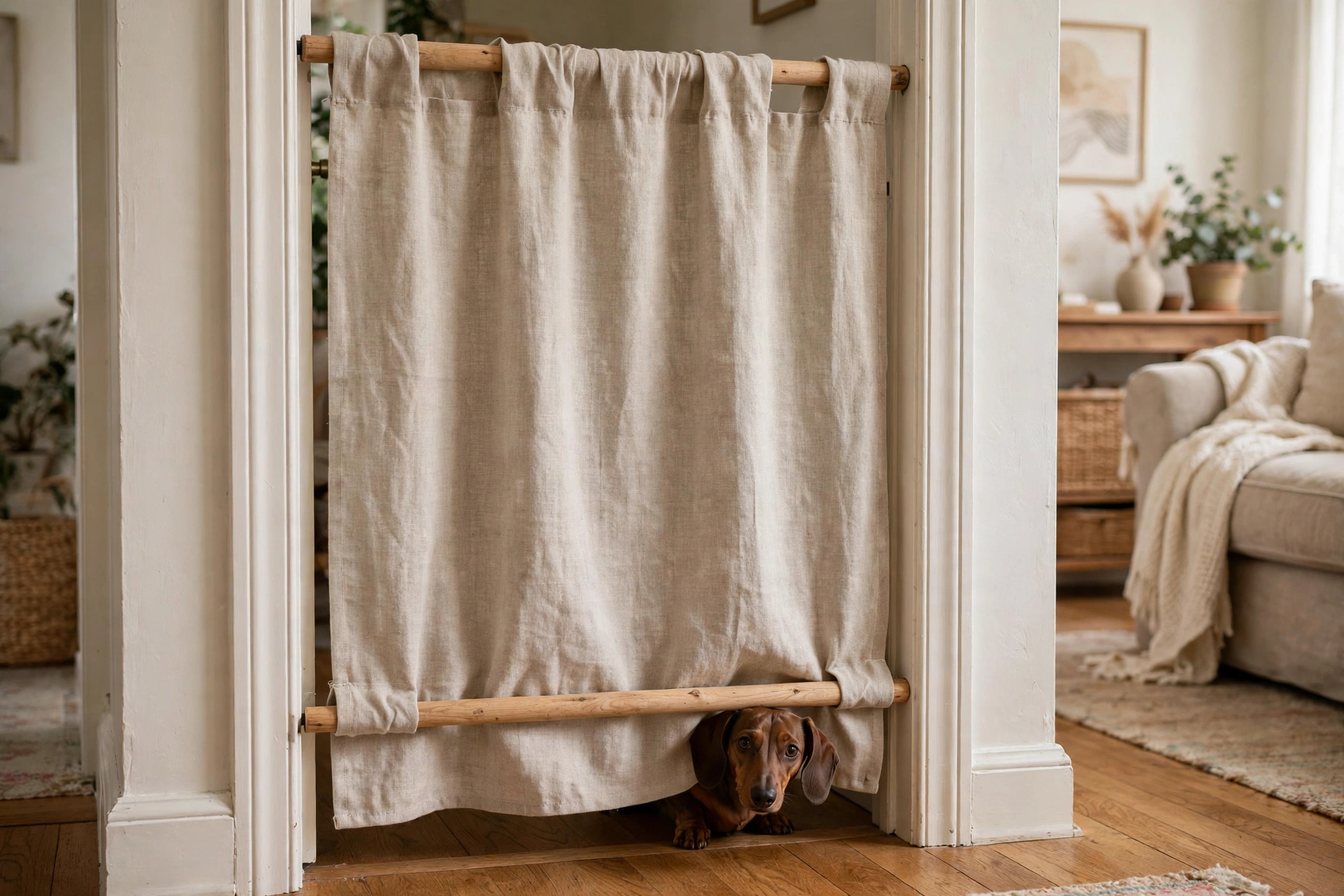
A fabric rectangle glued (not sewn) around two dowels and hung on adhesive hooks makes the gentlest gate of all — light, quiet, and forgiving for puppies and easily startled seniors.
What You’ll Need
- Canvas or upholstery-weight fabric
- Two wooden dowels
- Hot glue gun and glue sticks
- Adhesive wall hooks
- Scissors
How to Build It
- Cut the fabric to your opening size plus a few inches of margin top and bottom.
- Wrap the top and bottom edges around the dowels and hot-glue them in place.
- Stick a pair of adhesive hooks on each side of the doorframe.
- Rest the dowels on the hooks and adjust until the panel hangs taut.
Tip: Use heavy upholstery fabric — thin cotton billows and tempts dogs to push through.
Helpful pick: Surebonder Glue Gun — bonds fabric to dowel in seconds and holds through daily tugs and washes.
6. The Custom-Cut Plywood Gate
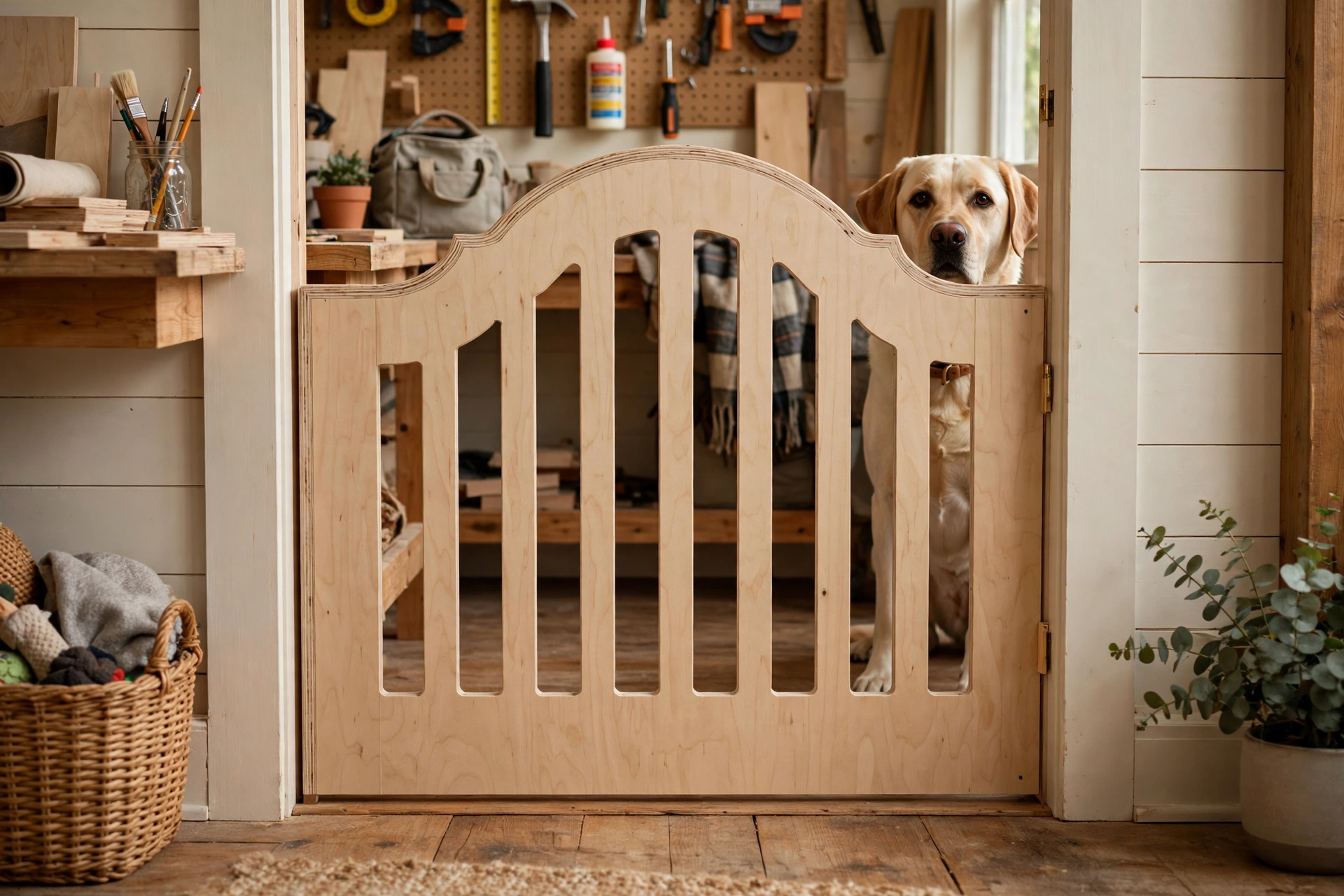
One sheet of plywood cut to your exact opening with a decorative top edge is the fastest solid gate for an unusual doorway — the arched top turns a plain board into something intentional.
What You’ll Need
- 1/2-inch or 3/4-inch plywood sheet
- Jigsaw
- Sandpaper and edge trim
- Paint, hinges, and a latch
How to Build It
- Measure the opening carefully at the top, middle, and bottom.
- Transfer the measurements to the plywood and sketch your decorative top edge.
- Cut the panel and the top edge with a jigsaw.
- Sand every edge and corner smooth, then paint.
- Hinge the panel into the doorway and add a latch.
Tip: Round every edge after cutting — jigsaw edges can leave sharp spots dogs rub against.
Helpful pick: BLACK+DECKER Jigsaw — cuts the curved top edge cleanly without splintering the plywood veneer.
7. The See-Through Acrylic Panel Gate
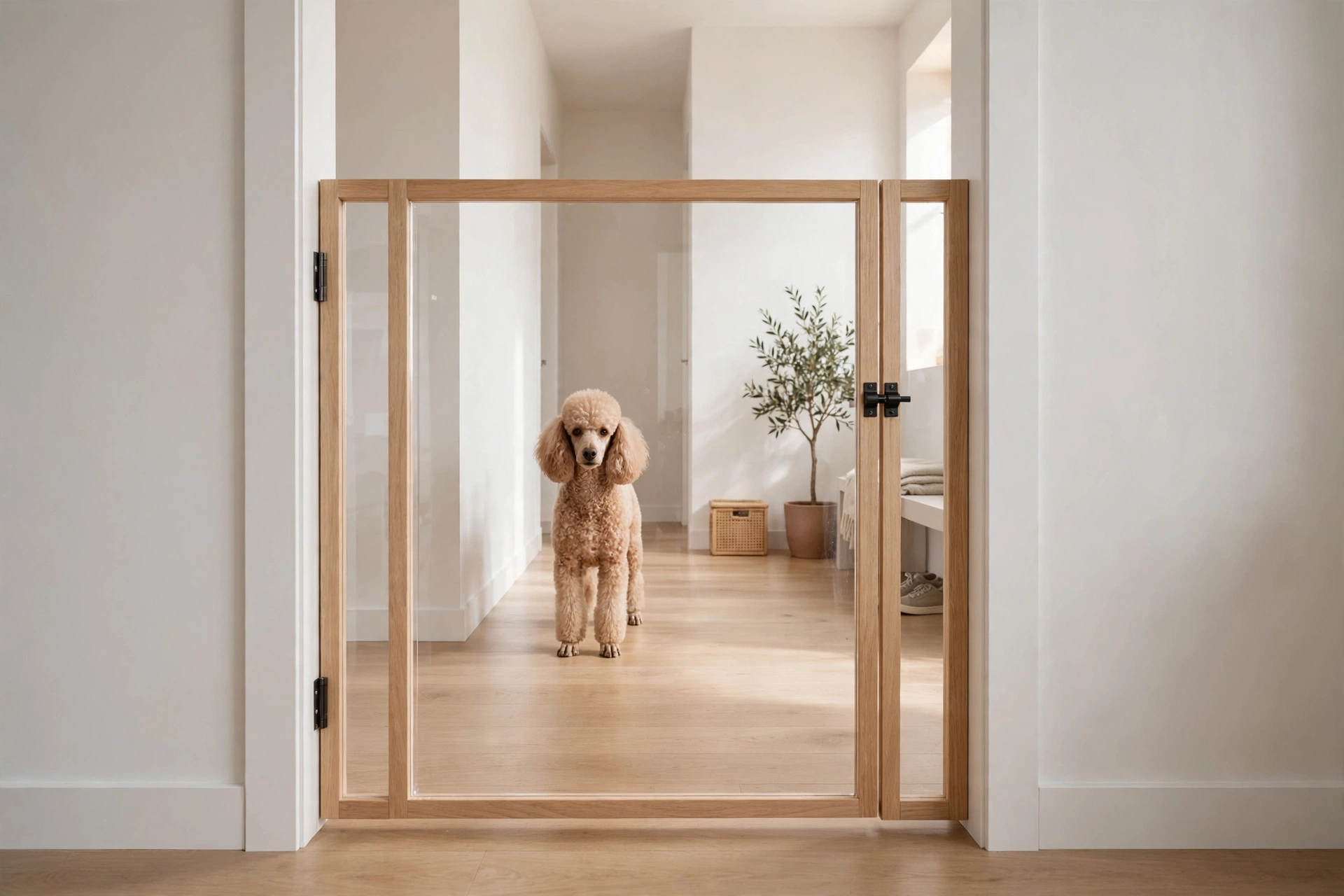
A crystal-clear acrylic panel in a slim wood frame blocks the dog without blocking light or sightlines — ideal for dogs that panic when they can’t see their people, and for dark hallways.
What You’ll Need
- Clear acrylic sheet, cut to size
- 1×2 boards for a slim frame
- Wood screws, hinges, and a latch
How to Build It
- Build a slim rectangular frame to fit your opening.
- Cut a groove or use screws with rubber washers to seat the acrylic sheet inside the frame.
- Sand and finish the wooden frame.
- Hang the gate on hinges and add a latch.
- Peel the protective film off the acrylic last.
Tip: Leave the protective film on until installation is finished — scratches show badly on clear panels.
Helpful pick: Duco Clear Acrylic Sheet 24×36 — shatter-resistant and glass-clear, the perfect see-through panel for this build.
Gate Safety Basics
- Mind the gaps: keep slat spacing at two inches or less so small dogs can’t squeeze through or get stuck.
- Go tall enough: the gate should reach at least three-quarters of your dog’s shoulder height; athletic jumpers need more.
- Mount stairs into studs: any gate at the stairs must be hardware-mounted into solid wood, never pressure-fit.
- Skip the top-of-stairs pressure gate: a leaning dog can pop a tension gate off — and fall.
- Sand and seal: smooth every edge and use pet-safe finishes, since dogs will chew the corners.
Keep Reading
- 7 DIY Dog Bunk Beds for Small Spaces
- 15 Indoor Dog Park Ideas for Rainy Days
- 10 Hotel-Style Dog Room Ideas
- 10 Dog Photo Ideas for Picture Day
- 10 Dog Painting Ideas for Pet Lovers
Frequently Asked Questions
How tall should an indoor dog gate be?
At least three-quarters of your dog’s shoulder height is a good baseline. Athletic breeds and determined jumpers need a gate as tall as the doorway allows, plus a latch they can’t nose open.
Can I use a DIY gate at the top of the stairs?
Yes, but only a hardware-mounted gate screwed into wall studs — never a pressure-mounted gate, which a leaning dog can knock loose.
What spacing is safe between gate slats?
Two inches or less. Wider gaps let small dogs squeeze through and create a trapping hazard for curious paws and heads.
How do I stop my dog from chewing the gate?
Offer a chew toy near the gate, use a bitter deterrent spray on the corners, and build with hardwoods rather than soft pine, which shreds easily.
Are tension-rod gates safe for large dogs?
They suit calm dogs in low-traffic doorways. Strong or pushy dogs can dislodge a tension rod, so large breeds do better with a mounted wooden or sliding gate.
As an Amazon Associate, PetPostHub earns from qualifying purchases.