
How Long Can a Cavalier Be Left Alone? (2026 Guide)
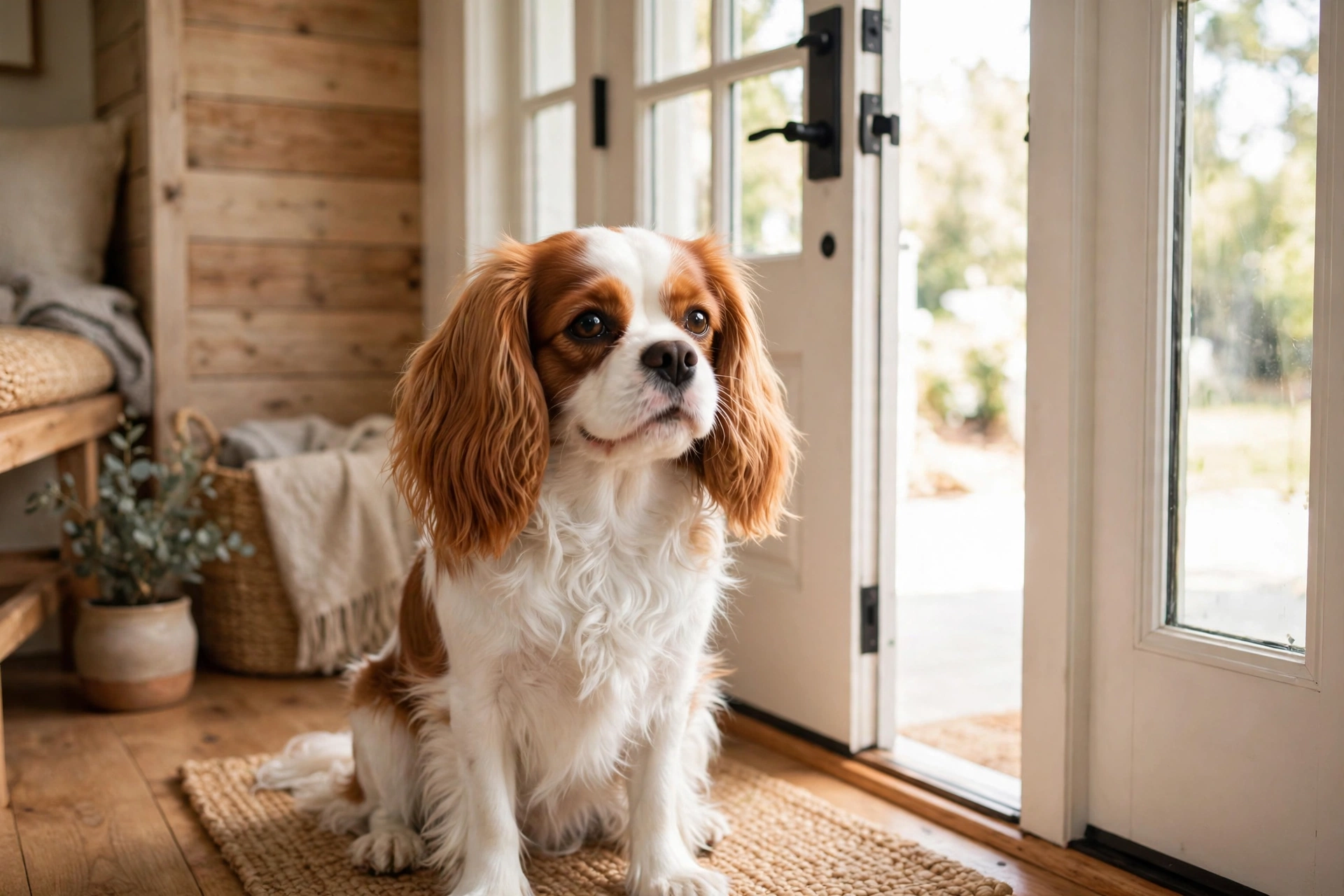
Wondering how long can a Cavalier be left alone without getting stressed? It is one of the most common questions new Cavalier King Charles Spaniel owners ask — and for good reason. These affectionate little dogs were bred for one job above all others: keeping humans company. Leave them solo for too long, and you may come home to howling, chewed furniture, or a very unhappy pup.
The good news: with the right approach, most adult Cavaliers can learn to handle a few hours alone calmly. This guide covers why being alone is hard for them, realistic time limits by age, warning signs of separation anxiety, and a practical plan to build their confidence step by step.
Why Cavaliers Hate Being Alone

Cavalier King Charles Spaniels are the ultimate companion breed. For centuries they were lap dogs of royalty — bred to sit with people all day. That history is written into their temperament: they bond intensely, follow you from room to room, and genuinely struggle when the house goes quiet.
This is not clinginess — it is simply how the breed is wired. A Cavalier left alone too long does not just get bored; they can feel genuinely distressed. Understanding this helps you approach alone-time training with patience rather than frustration.
Creating a calm atmosphere before you leave makes a real difference. A plug-in calming diffuser that supports relaxation can take the edge off an anxious dog’s nerves during the first weeks of training.
Helpful pick: ADAPTIL Calm Home Diffuser — supports a calmer home environment during alone-time training.
Maximum Alone Time by Age

How long a Cavalier can be left alone depends heavily on age. Puppies under six months should rarely be alone more than 2 hours — they need frequent potty breaks, meals, and reassurance. Between 6 and 12 months, most manage 3 to 4 hours with proper training.
A healthy adult Cavalier (over a year old) can typically handle 4 to 6 hours alone on a regular workday, provided they get a good walk beforehand and have water, comfort, and something to do. Stretching much beyond 6 hours daily is where even well-adjusted Cavaliers start to struggle — and it is unfair to ask regularly of a breed this people-oriented.
Senior Cavaliers deserve shorter stretches too, since they may need more frequent bathroom breaks. When in doubt, shorter is kinder.
A sturdy crate set up as a den — never as punishment — gives your dog a familiar spot to settle into while you are gone.
Helpful pick: MidWest iCrate Double Door Dog Crate — a secure, well-ventilated home base for alone time.
Signs of Separation Anxiety

There is a difference between a dog who mildly dislikes your departure and one with true separation anxiety. Watch for these red flags:
- Destructive behavior — chewing door frames, scratching at exits, or shredding bedding only when left alone.
- Excessive vocalizing — persistent barking, howling, or whining that starts soon after you leave.
- Pacing and restlessness — wearing a path by the door, or getting agitated as you pick up your keys.
- House soiling — a previously house-trained dog having accidents only during absences.
- Self-harm — excessive licking, chewing paws, or scratching themselves raw.
- Appetite changes — refusing treats or meals while you are gone.
If you spot several of these together, your Cavalier is not being naughty — they are panicking. Scale back alone time and rebuild slowly, and talk to your vet if the distress is severe. Calming chews that support relaxation can be a useful part of a broader anxiety-management routine.
Helpful pick: Zesty Paws Calming Bites — supports calm behavior during stressful moments.
Preparing Your Dog for Alone Time

Start with a proper walk or play session so your Cavalier is pleasantly tired — a dog with full energy is far more likely to fret. Follow it with a potty break, fresh water, and a comfortable resting spot.
Then comes the most important rule: make departures boring. Long emotional goodbyes teach your dog that your leaving is a Big Event worth worrying about. Keep it casual — a calm pat, no farewell speech, and out the door. Do the same on return: walk in quietly, let your dog settle, and greet them warmly only once they are calm.
Scatter a few departure cues (keys, shoes, bag) throughout the day without leaving, so those triggers lose their power. A durable stuffed toy filled with a little peanut butter can keep your dog happily occupied as you head out.
Helpful pick: KONG Classic — stuff it for a perfect goodbye-time distraction.
Enrichment While You’re Away

An empty, silent house is the hardest environment for a social dog. A few simple additions help:
- Background sound — leave calm music or a talk-radio station on at low volume; familiar human voices are soothing.
- Food puzzles — snuffle mats, treat balls, and frozen lick mats turn a meal into a 20-minute project.
- Rotation toys — keep a small box of “away-only” toys and rotate them so they stay novel.
- Window access — a safe perch with a view gives many dogs pleasant passive entertainment.
- Comfort items — an unwashed T-shirt that smells like you can be surprisingly reassuring.
Avoid leaving anything your dog could chew apart and swallow unsupervised — stick to sturdy, size-appropriate toys.
A lick mat smeared with a thin layer of dog-safe peanut butter or yogurt provides soothing, repetitive activity.
Helpful pick: LickiMat Classic Soother — calming licking activity that keeps dogs busy.
Alternatives: Daycare, Walkers & Company

Sometimes the honest answer is that your schedule asks too much of a Cavalier. If you regularly need to be gone 8+ hours, arrange company rather than pushing your dog past their limit. A midday walker splits a long day into two manageable halves, and Cavaliers usually adore daycare’s social atmosphere — 2–3 days a week is plenty.
Other options: a second calm pet for company (not a cure for anxiety on its own), a work-from-home day or two, or a trusted sitter for occasional long days. Introduce new people gradually so midday visits come from someone your dog already knows and trusts.
A comfortable, reflective leash makes midday walks with a walker safer and more enjoyable.
Helpful pick: Mycicy Reflective Rope Dog Leash — sturdy and visible for daily walker outings.
Building Up Gradually: A 2-Week Plan

Alone-time tolerance is a skill, built in small steps:
- Days 1–3: Practice 5–15 minute absences. Step out, return before your dog gets upset, and reward calm behavior with a treat.
- Days 4–7: Stretch to 30–60 minutes, varying the duration so your dog cannot predict your return.
- Days 8–10: Aim for 1–2 hours, pairing departures with a special long-lasting chew.
- Days 11–14: Build to 3–4 hours for adults. Keep arrivals boring and praise relaxed greetings.
The golden rule: only increase time when your dog is relaxed at the current level. If you see stress signals, drop back a step for a few days. Rushing is the most common reason training fails — patience now saves months of anxiety later. Keep tiny training treats on hand to reward every calm return.
Helpful pick: Zuke’s Mini Naturals Training Treats — perfect bite-size rewards for calm behavior.
Frequently Asked Questions
Can I leave my Cavalier alone for 8 hours while I work?
Eight hours is too long for a Cavalier to be alone daily. Aim for a maximum of 4–6 hours for a healthy adult, and arrange a midday walker or daycare if your workday is longer.
Should I crate my Cavalier when I leave?
A crate can be a wonderful safe den if your dog has been positively trained to love it — but never use it as punishment, and do not crate a puppy longer than they can hold their bladder (roughly one hour per month of age). Some adult Cavaliers do better with a puppy-proofed room instead.
Will getting a second dog cure separation anxiety?
Not reliably. A companion can reduce boredom, but true separation anxiety is about missing you. Work on alone-time training first; add a second pet because you want one, not as a fix.
At what age can a Cavalier be left alone all day?
Even adult Cavaliers should not routinely be left alone for a full 8–10 hour workday. Most owners find that by 12–18 months, their dog handles 4–6 hour stretches well with proper training.
When should I call the vet about separation anxiety?
Call your vet if your dog injures themselves, refuses all food when alone, or shows no improvement after several weeks of gradual training. Your vet can rule out medical causes and may suggest professional behaviorist guidance.
Keep Reading
- How to Help a Dog With Separation Anxiety
- Dog Body Language Guide: What Your Dog Is Telling You
- Signs Your Dog Loves You
- How to Teach Your Dog to Come When Called
- Cavalier King Charles Spaniel Health Issues to Know
As an Amazon Associate, PetPostHub earns from qualifying purchases.


One Comment