
How to Stop a Dog from Jumping on the Couch: 8 Tips
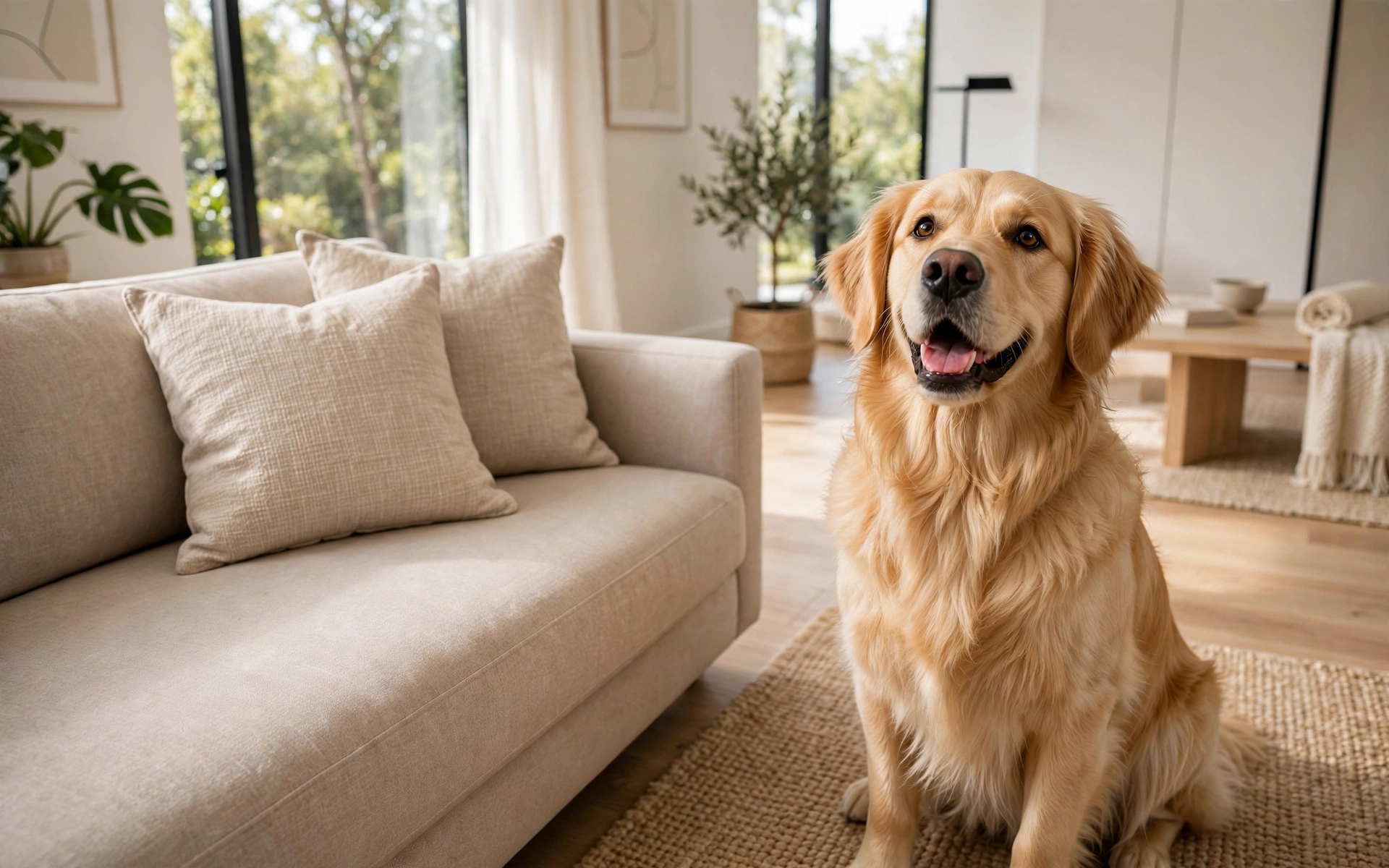
If your dog treats the couch like his personal throne, you are not alone. Couches are warm, soft, and usually right next to you — which is exactly why dogs love them. But muddy paws, shedding fur, and scratched-up cushions can wear thin fast. Learning how to stop a dog from jumping on the couch is not about being strict; it is about giving your dog a clear rule, a comfy alternative, and plenty of rewards for getting it right.
This guide walks you through 8 practical tips that actually work, using kind, reward-based training. No yelling, no spray bottles, no guilt — just a plan that helps your dog understand that the floor (and his own cozy bed) is the place to be.
Table of Contents
- 1. Decide the Rule First
- 2. Teach a Solid “Off” Command
- 3. Reward Four-on-the-Floor
- 4. Give a Comfy Alternative Bed
- 5. Manage Access When You’re Not Around
- 6. Never Punish — Redirect Instead
- 7. Get Everyone in the House Consistent
- 8. Train a “Place” Cue
- When It’s OK to Let Your Dog on the Couch
- Frequently Asked Questions
1. Decide the Rule First

Before you train anything, make the household decision: is the couch fully off-limits, or is it allowed sometimes (like when invited)? Dogs do not understand gray areas, so the rule has to be crystal clear and identical for everyone.
Most trainers find that starting with a strict no-couch rule is easier. You can always relax it later into an “invitation only” policy once your dog has the habit down. What you cannot do is bounce between “get off” one day and “okay, come cuddle” the next — that just teaches your dog that persistence pays off.
Write the rule down if it helps, and make sure visitors and kids know it too. A guest who says “oh, it’s fine, let him up” can undo a week of training in one evening.
Helpful pick: STMK Dog Training Clicker Kit — a clicker gives every family member the same clear marker for good behavior.
2. Teach a Solid “Off” Command
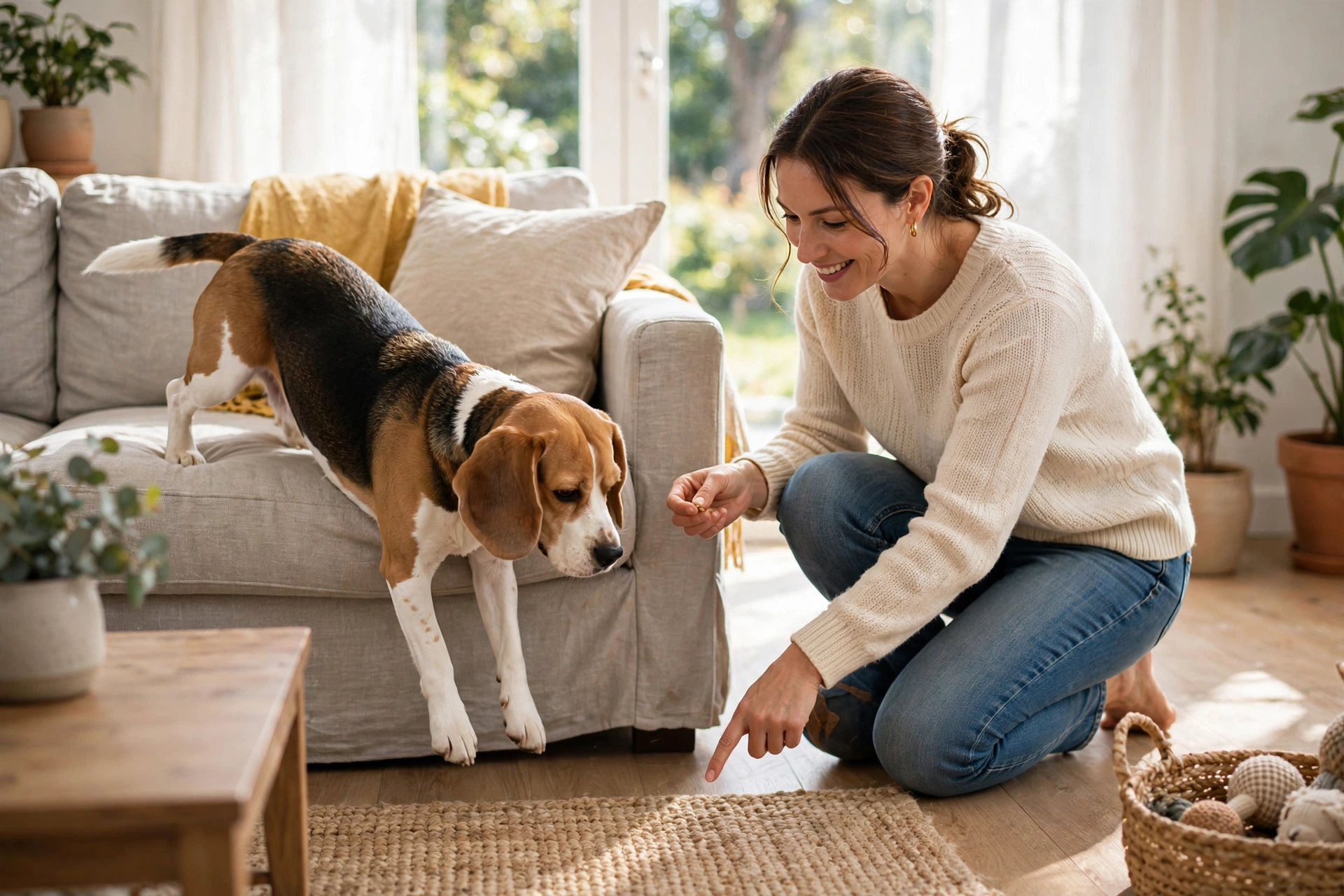
“Off” simply means: put all four paws on the floor. It is one of the most useful cues a dog can know, and it applies far beyond the couch.
Here is a simple way to teach it:
- Let your dog get on the couch (yes, on purpose — this is practice).
- Hold a treat near his nose, say “Off” once in a friendly voice, and lure him down to the floor.
- The moment all four paws hit the floor, say “Yes!” and reward.
- Repeat 5–10 times per session, once or twice a day.
Within a few days, most dogs start hopping down on the word alone. Gradually reduce the treat lure until the word is enough, then reward with praise and the occasional surprise treat to keep the behavior strong.
Helpful pick: Egiao Dog Treat Pouch — keeping treats on your hip means you can reward “off” the instant it happens.
3. Reward Four-on-the-Floor

Here is the secret most people miss: reward your dog for doing nothing on the floor. Dogs repeat whatever earns a payoff. If lying calmly on the rug near the couch earns treats and praise, your dog will start choosing the rug on his own.
Whenever you notice your dog lying on the floor near the couch — not begging, not jumping — quietly toss him a treat between his paws. No fanfare needed; calm rewards build calm behavior. This is called “capturing,” and it is one of the fastest ways to teach a default settle.
Do this consistently for a couple of weeks and many dogs stop trying the couch altogether, simply because the floor pays better.
Helpful pick: Zuke’s Mini Naturals Training Treats — tiny, soft, and perfect for frequent rewards without overfeeding.
4. Give a Comfy Alternative Bed

It is not fair to banish your dog from the couch without offering something just as good. Place a truly comfortable dog bed right next to the couch, so your dog can still be close to you — which is what he wants in the first place.
Make the bed irresistible: add a blanket that smells like you, toss a few treats in it when your dog is not looking, and feed his meals there for a while. The goal is for your dog to think, “My bed is actually better than the couch.”
Dogs with joint stiffness or older pups may prefer an orthopedic bed that is low to the ground and easy to climb into. The comfier the bed, the less appealing the couch looks.
Helpful pick: Best Friends by Sheri The Original Calming Donut Dog Bed — the bolstered edges make most dogs feel snug and secure.
5. Manage Access When You’re Not Around
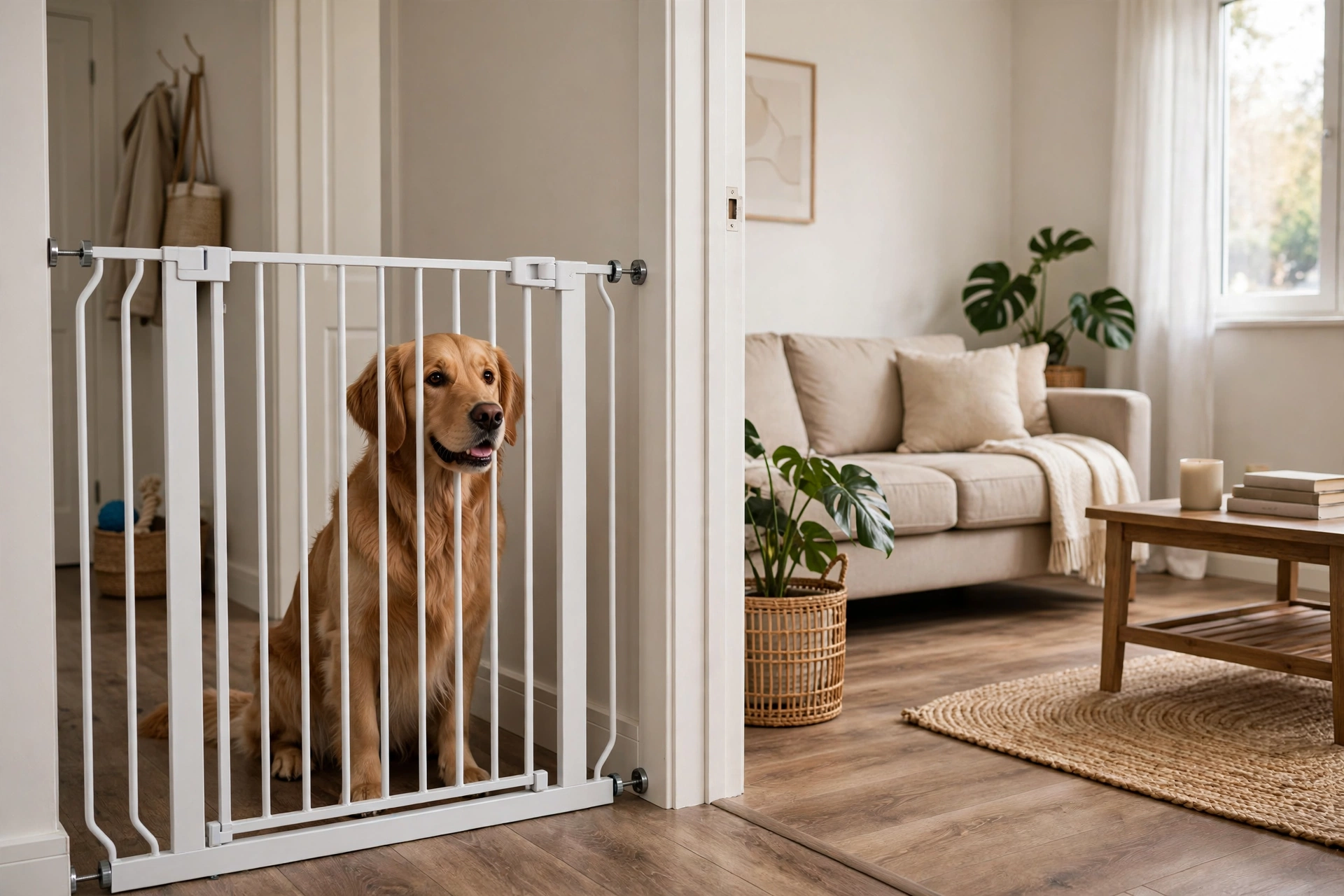
You cannot train what you cannot supervise. Every time your dog gets on the couch while you are gone, he is practicing the exact behavior you are trying to undo. Management is not cheating — it is part of training.
Simple options that work:
- Use a baby gate or pet gate to close off the living room when you are out.
- Lay a couple of sofa cushions upright on the seat so it is awkward to hop up.
- Crate-train your dog so unsupervised time happens in a cozy crate instead.
Keep managing the environment until your dog has gone at least 3–4 weeks without even attempting the couch. At that point, the habit is usually broken enough to relax the management.
Helpful pick: Regalo Easy Step Extra Wide Baby Gate — a sturdy pressure-mount gate that works great for keeping dogs out of the living room unsupervised.
6. Never Punish — Redirect Instead

It is tempting to yell, clap loudly, or shove your dog off the couch when you catch him up there. Do not. Punishment teaches your dog to be sneaky — to wait until you leave the room — rather than teaching him the floor is a good choice.
Worse, scolding can create anxiety around the living room, which can surface as other problem behaviors like barking or chewing. Dogs learn best when training feels safe.
Instead, calmly ask for “off,” reward the moment he lands, and then redirect him to his bed with a chew or a stuffed toy. Every calm redirection is a lesson; every shout is just noise that confuses him.
Helpful pick: Zesty Paws Calming Bites for Dogs — supporting a calmer baseline makes positive training sessions go much smoother.
7. Get Everyone in the House Consistent
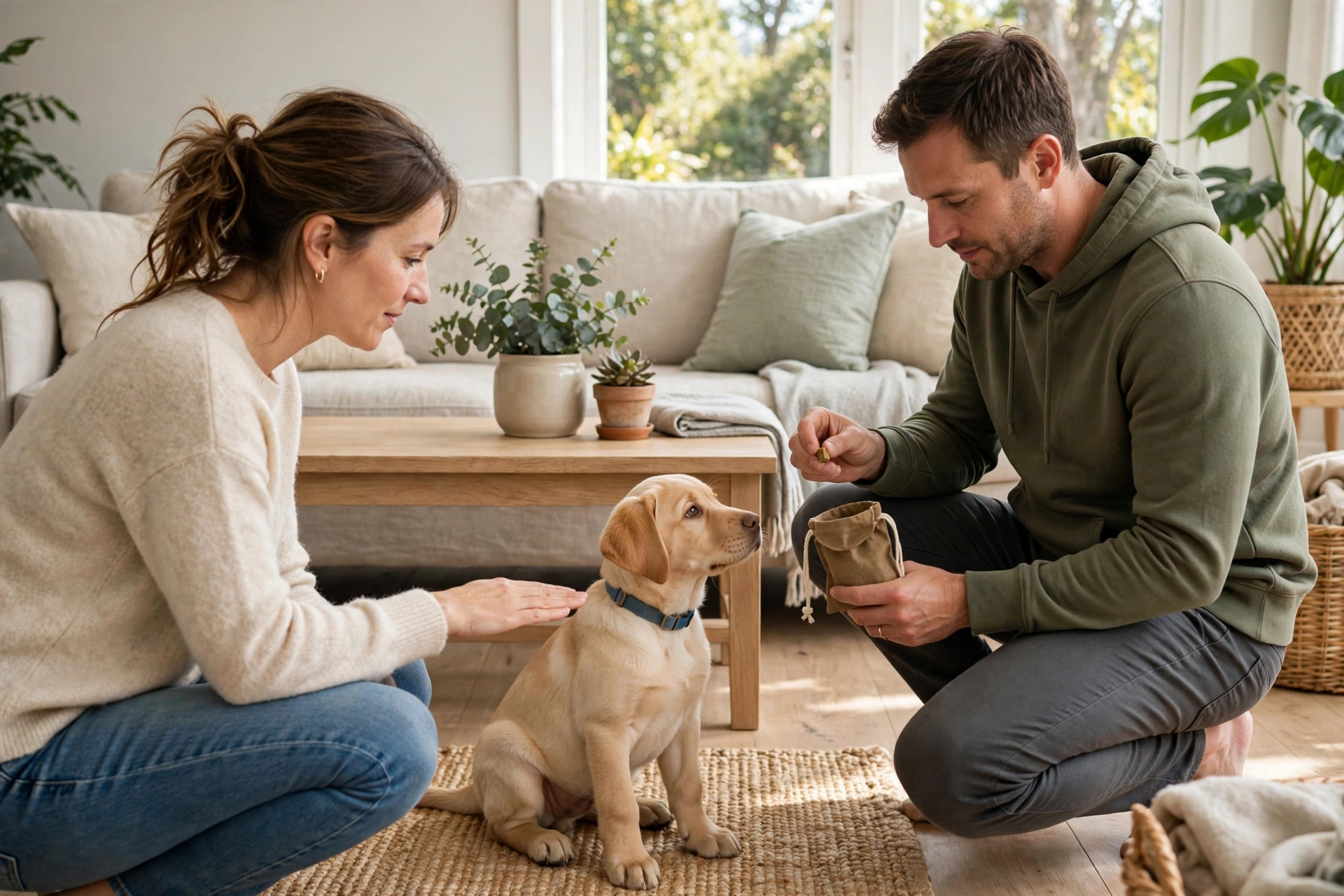
This is the tip that makes or breaks everything. If one person enforces the rule and another person lets the dog up “just this once,” your dog learns that the rule is negotiable — and dogs are excellent negotiators.
Hold a quick family meeting (kids included) and agree on:
- The exact word everyone uses (“Off” — not “down,” not “get off,” not “no”).
- What happens when the dog jumps up (cue “off,” reward, redirect — same script every time).
- Where the dog’s bed is, and that guests follow the same rule.
Consistency also protects your furniture during the training period. A washable couch cover is a cheap insurance policy while the whole household gets on the same page.
Helpful pick: PureFit Reversible Quilted Sofa Cover — washable and non-slip, so your couch survives the training phase unscathed.
8. Train a “Place” Cue

While “off” tells your dog what not to do, “place” gives him a clear job: go to your mat or bed and settle there until released. It is the perfect companion cue for couch training.
Start close to the mat:
- Lure your dog onto the mat and reward any paw contact with it.
- Add the word “Place” just before he steps on.
- Reward him for lying down on the mat, then build duration slowly — 10 seconds, then 30, then a few minutes.
- Practice in the living room near the couch, where the temptation is real.
Once “place” is solid, you can send your dog to his spot during movie nights or when guests arrive, and everyone relaxes — including you.
Helpful pick: Furhaven Orthopedic Sofa Dog Bed — a low, supportive bed that doubles as a perfect “place” station.
When It’s OK to Let Your Dog on the Couch
Not everyone wants a strict no-couch house — and that is completely fine. Plenty of owners happily share the sofa with their dog. The key is making it permission-based rather than a free-for-all.
Teach an “up” cue the same way you taught “off”: lure your dog onto the couch with the word “Up,” reward, and only allow it after an invitation. If he jumps up uninvited, calmly cue “off,” wait a few minutes, and invite him up only when he is waiting politely on the floor. Over time he learns that couch time is a privilege he earns by being calm — which makes the cuddles even better.
Whatever you decide, stick with it. A clear, kind rule — enforced the same way every day — is all it takes. For more training help, see our guides on how to stop a dog from jumping, how to teach your dog to shake, and leash training a puppy. And if your dog needs a better spot of his own, check out the best dog beds for Cavaliers and our tips on stopping door scratching.
Frequently Asked Questions
How long does it take to train a dog to stay off the couch?
Most dogs pick up the basics in 1–2 weeks with consistent daily practice, but fully breaking the habit usually takes 4–6 weeks. Management (gates, barriers) during that period makes a huge difference.
Is it mean to not let my dog on the couch?
Not at all. Dogs do not need the couch to be happy — they need comfort, company, and clear boundaries. A cozy bed next to the couch gives them everything they want.
Why does my dog only get on the couch when I leave?
Because he knows the rule only applies when you are watching! This is a management issue, not a defiance issue. Close off the room or crate your dog while you are out until the habit is fully broken.
Can an older dog learn to stay off the couch?
Absolutely. Older dogs may take a little longer to unlearn a long-standing habit, but the same steps — “off,” rewards, a comfy bed, and management — work at any age.
Should I use aluminum foil or a scat mat on the couch?
Deterrent gadgets can work as a short-term backup, but they are no substitute for training. Pair any management tool with “off,” rewards, and a great alternative bed for lasting results.
As an Amazon Associate, PetPostHub earns from qualifying purchases.





One Comment