
How to Teach Your Dog to High Five: 8 Steps
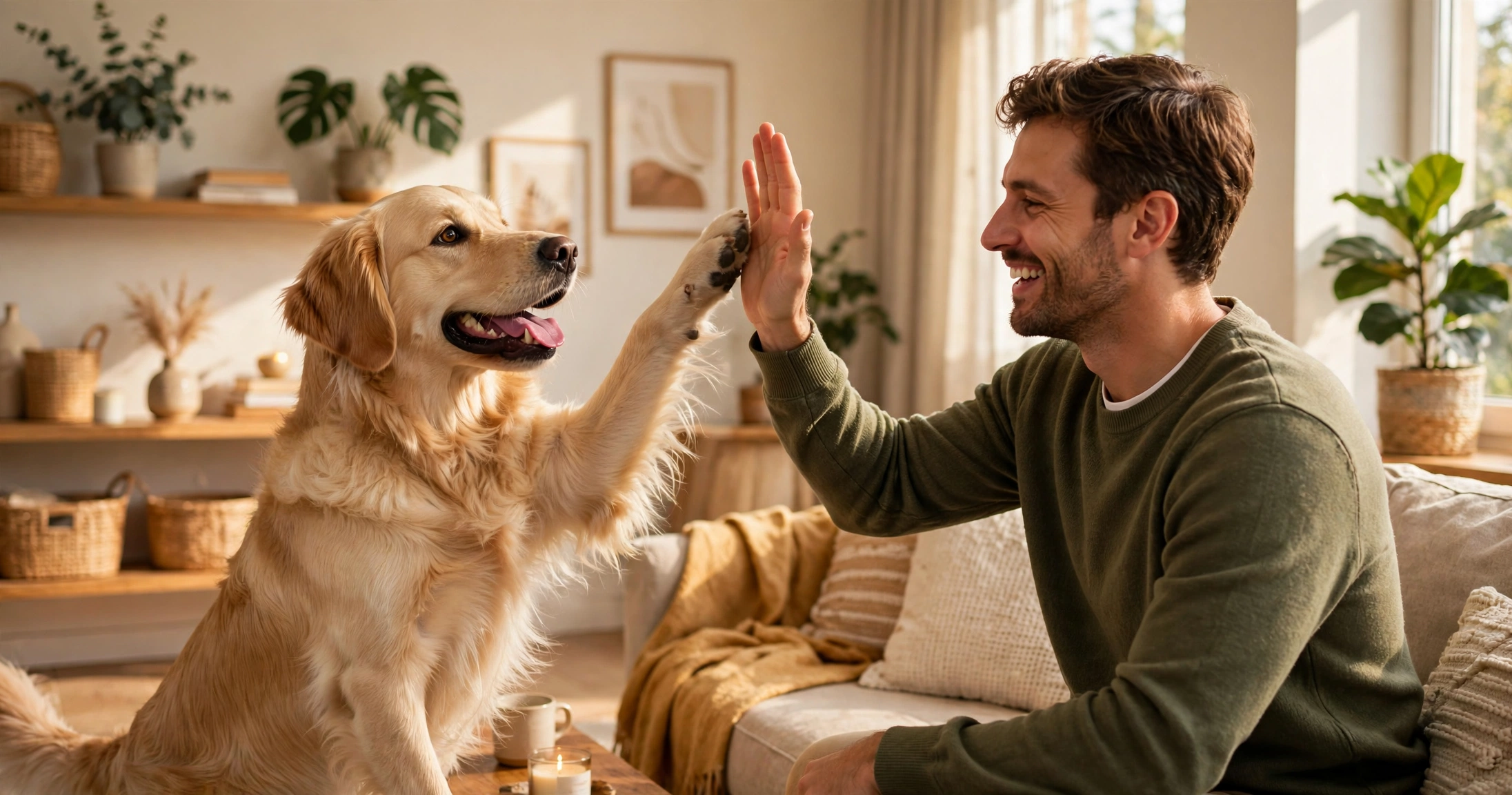
A dog that high-fives on cue is pure joy. It is one of the friendliest tricks a dog can learn, it takes no special equipment, and most dogs pick it up in a few short sessions. If you have ever wondered how to teach dog to high five without frustrating yourself or your pup, this guide walks you through it step by step — the fun, positive way.
High five is also a fantastic first trick for beginners. It builds on a natural behavior (dogs paw at things when they want them), it strengthens your bond, and it gives your dog a party trick that never fails to get a smile. Grab some small treats and let’s get started.
Step 1: Start with a Solid Sit
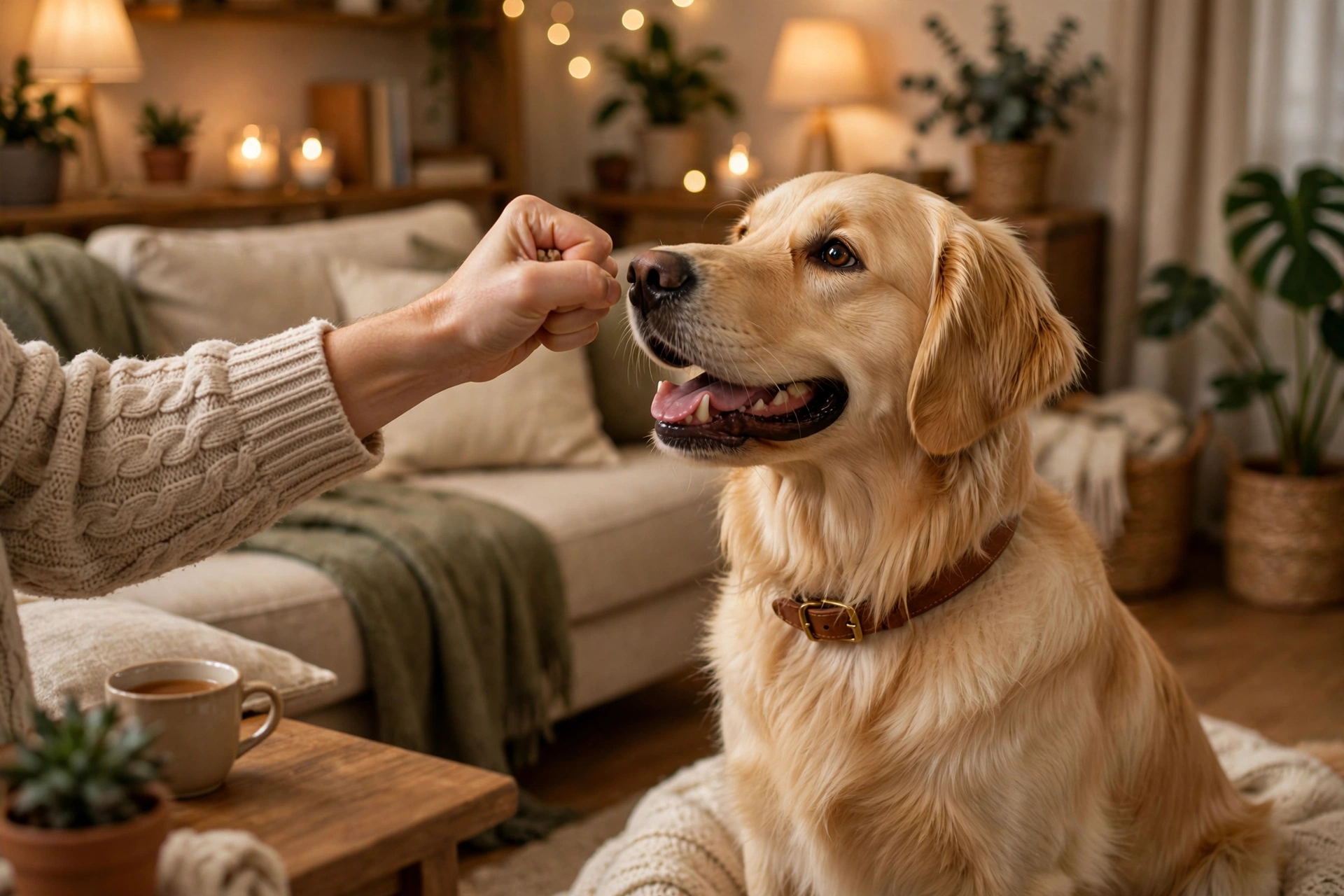
Every good high five starts with a calm, stable sit. If your dog can sit reliably for a few seconds, you are ready to begin. Have your dog sit in front of you in a quiet, distraction-free room. If “sit” is not rock solid yet, spend a day or two reinforcing it first — the trick goes much faster on top of a good sit.
Keep a handful of tiny, smelly treats ready. Small, soft treats work best because your dog can eat them in one second and stay focused on you.
Helpful pick: Zuke’s Mini Naturals Training Treats — tiny, soft treats that are perfect for rapid-fire training rewards.
Step 2: Lure the Paw Up with a Treat
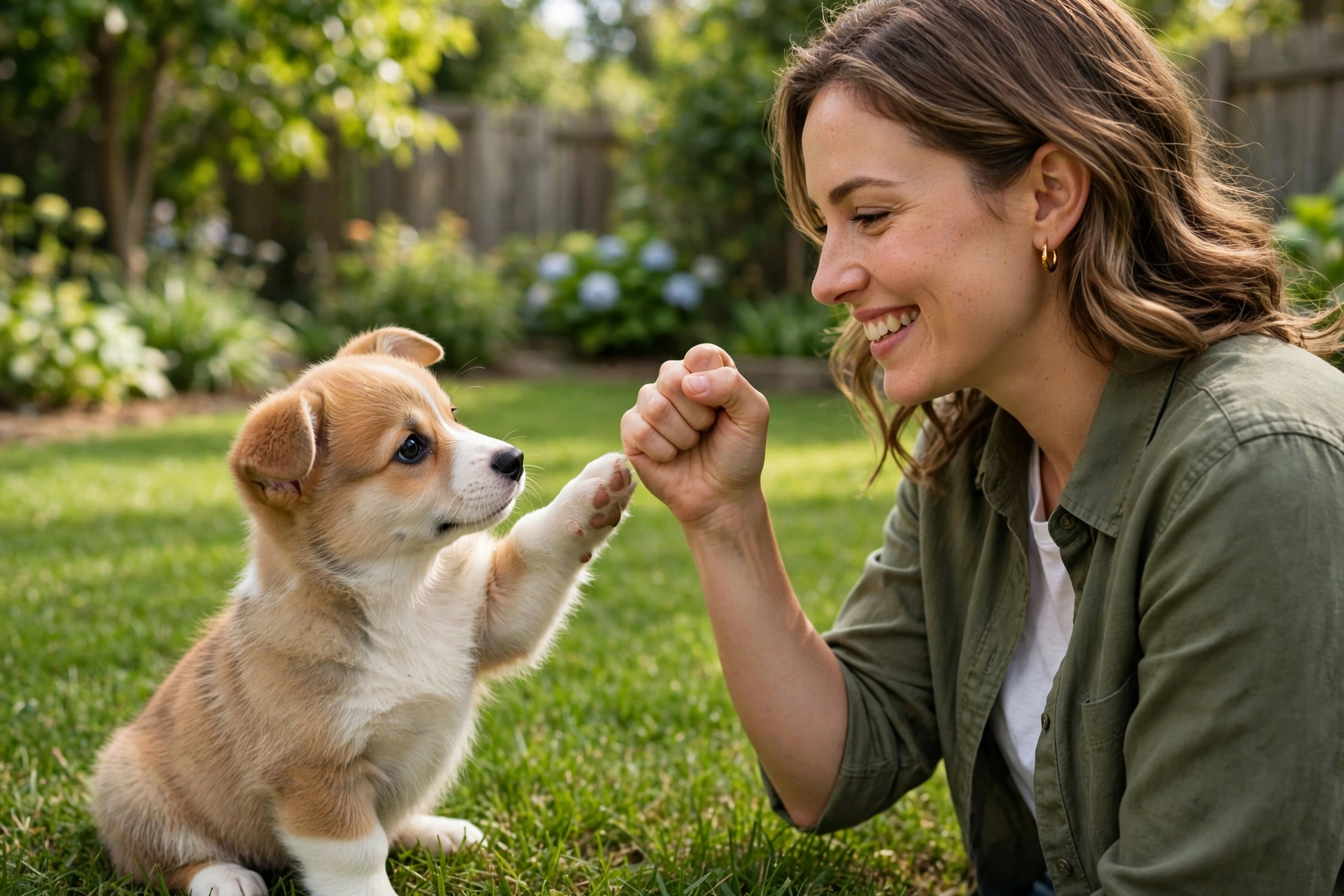
Place a treat in your hand and close your fist around it. Hold your closed fist at your dog’s nose level — not too high, or they will jump, and not too low, or they will lie down. Then just wait.
Your dog will sniff the fist, maybe nudge it with their nose, and eventually get a little impatient and bat at your hand with a paw. The instant that paw touches your fist — yes! — mark it (say “yes!” or click a clicker) and give them the treat from your other hand. That separation matters: the treat in the fist is the lure, and the reward comes from elsewhere.
Helpful pick: Egiao Dog Treat Pouch — keeps your reward treats handy so your timing stays snappy.
Step 3: Mark and Reward the Touch
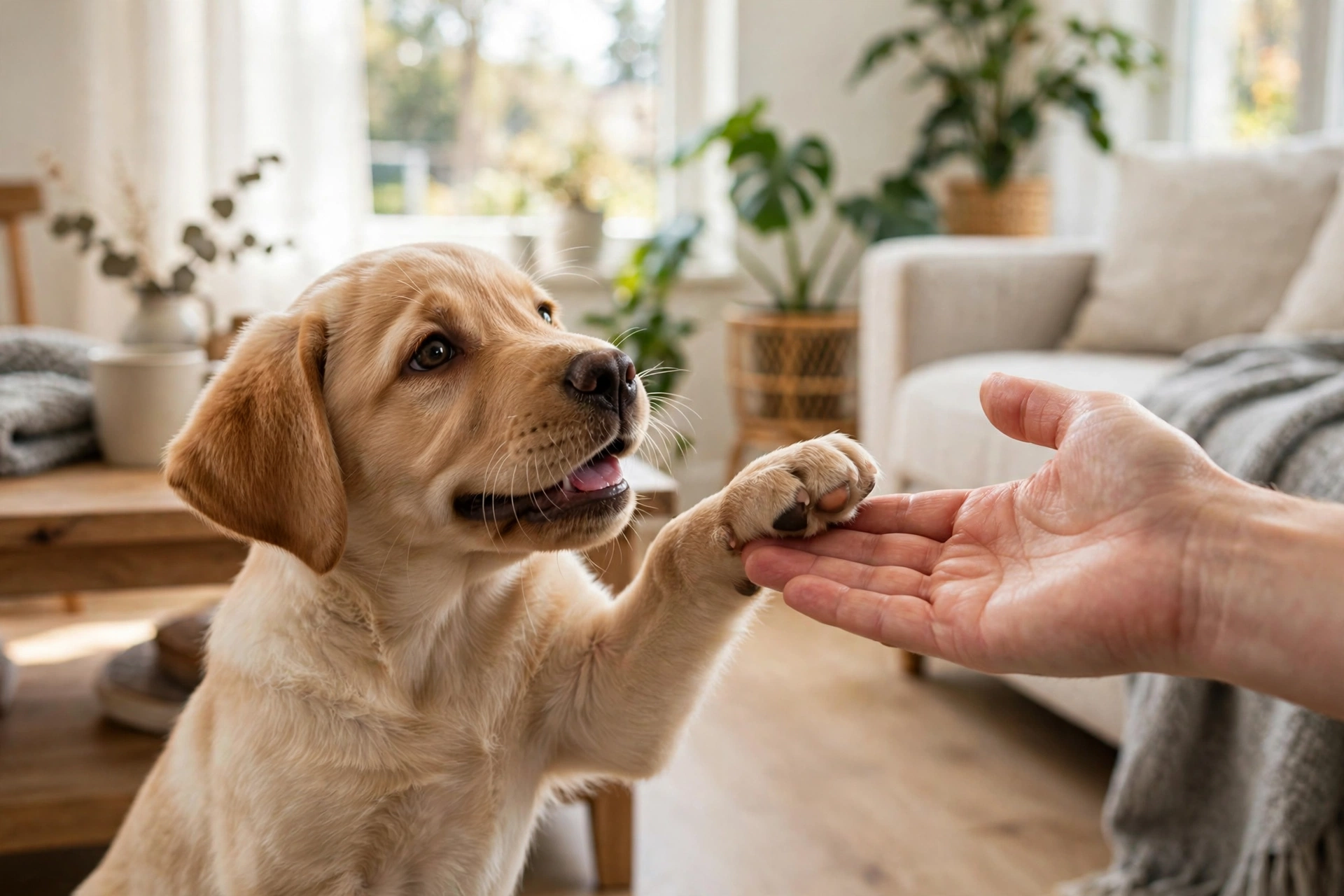
Timing is everything in trick training. The “mark” — a click or a cheerful “yes!” — tells your dog exactly which behavior earned the treat. Mark the moment the paw contacts your hand, not a second later, and reward within a second or two of the mark.
Repeat the fist-paw game about five times in a row. Most dogs quickly realize: paw hits hand = treat appears. End while your dog is still eager — quitting on a win keeps them excited for the next session.
Helpful pick: STMK Dog Training Clicker Kit — a clicker gives you razor-sharp marking timing that your voice alone can’t match.
Step 4: Add the Hand Target
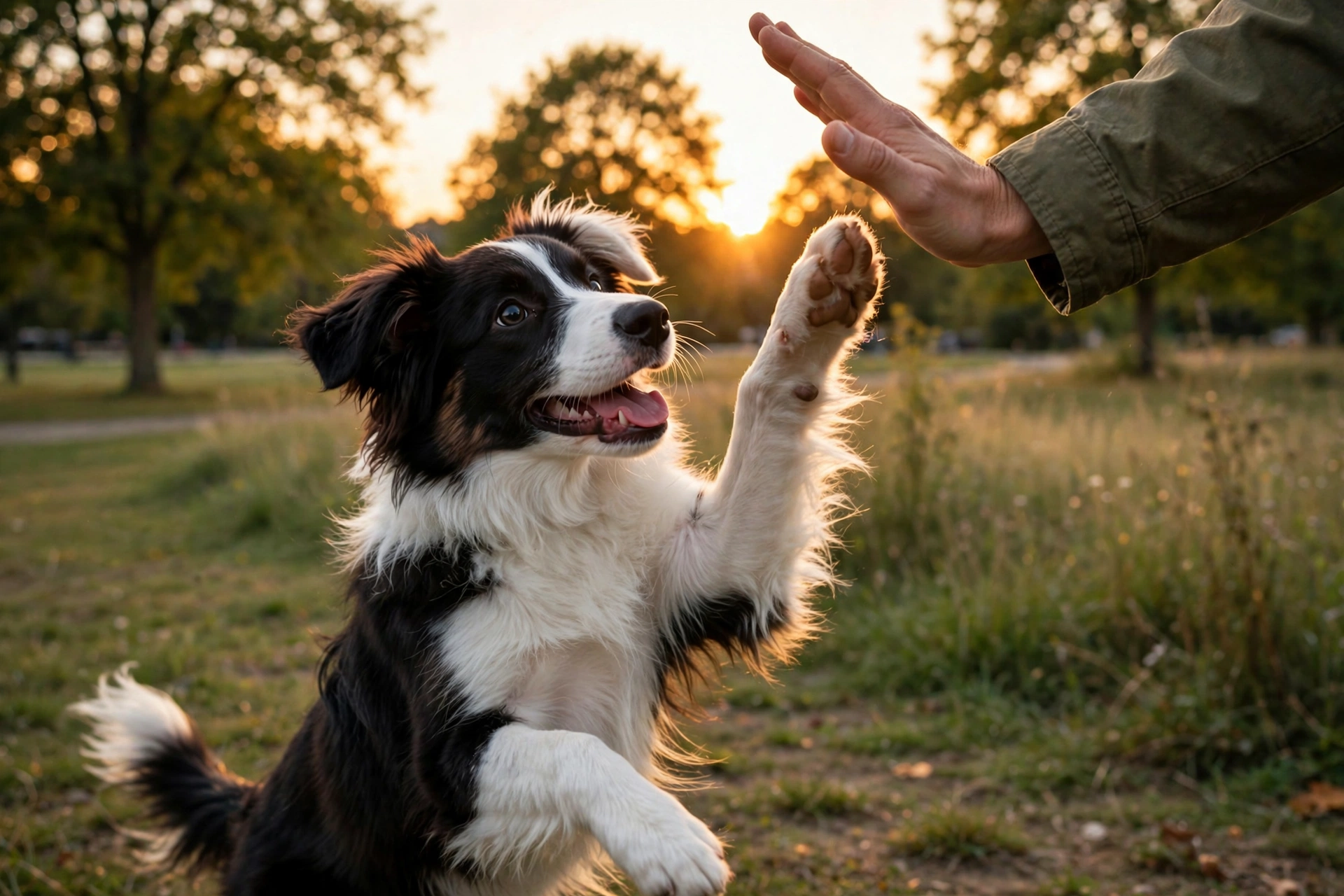
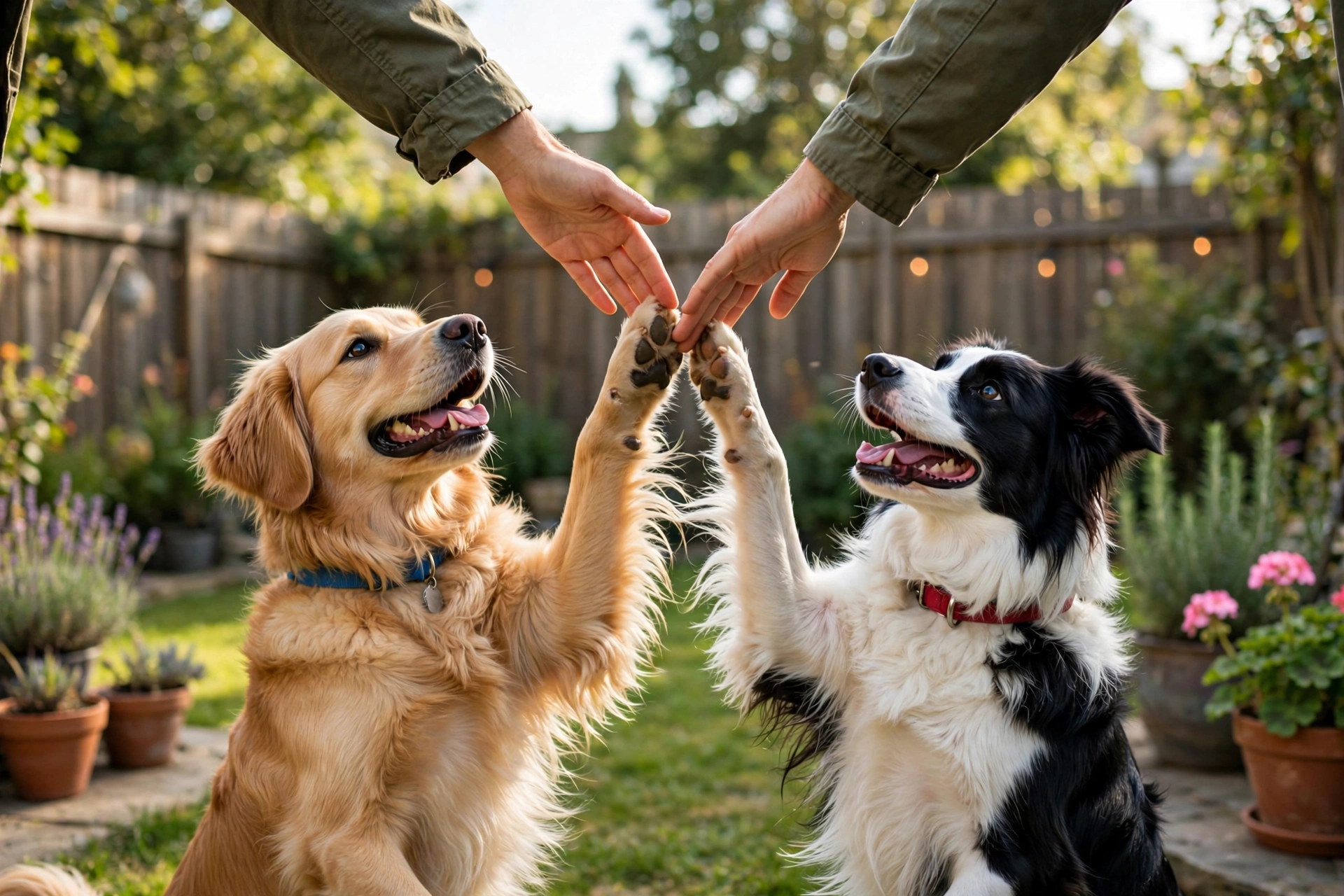
Once your dog is happily pawing your closed fist, it is time to reshape that fist into a real high five. Hold your empty fist up, say “high five” right before they lift their paw, and mark and reward when they touch it. Then open your hand flat, palm facing your dog, and raise it a little higher.
If your dog looks confused by the flat hand, step back for a few reps: hold the empty fist again so they succeed, then flash the flat palm for one rep. Bridging this way prevents frustration.
Helpful pick: PetSafe Treat Pouch Sport — a roomy, easy-access pouch so your reward hand is never fumbling.
Step 5: Name the Trick
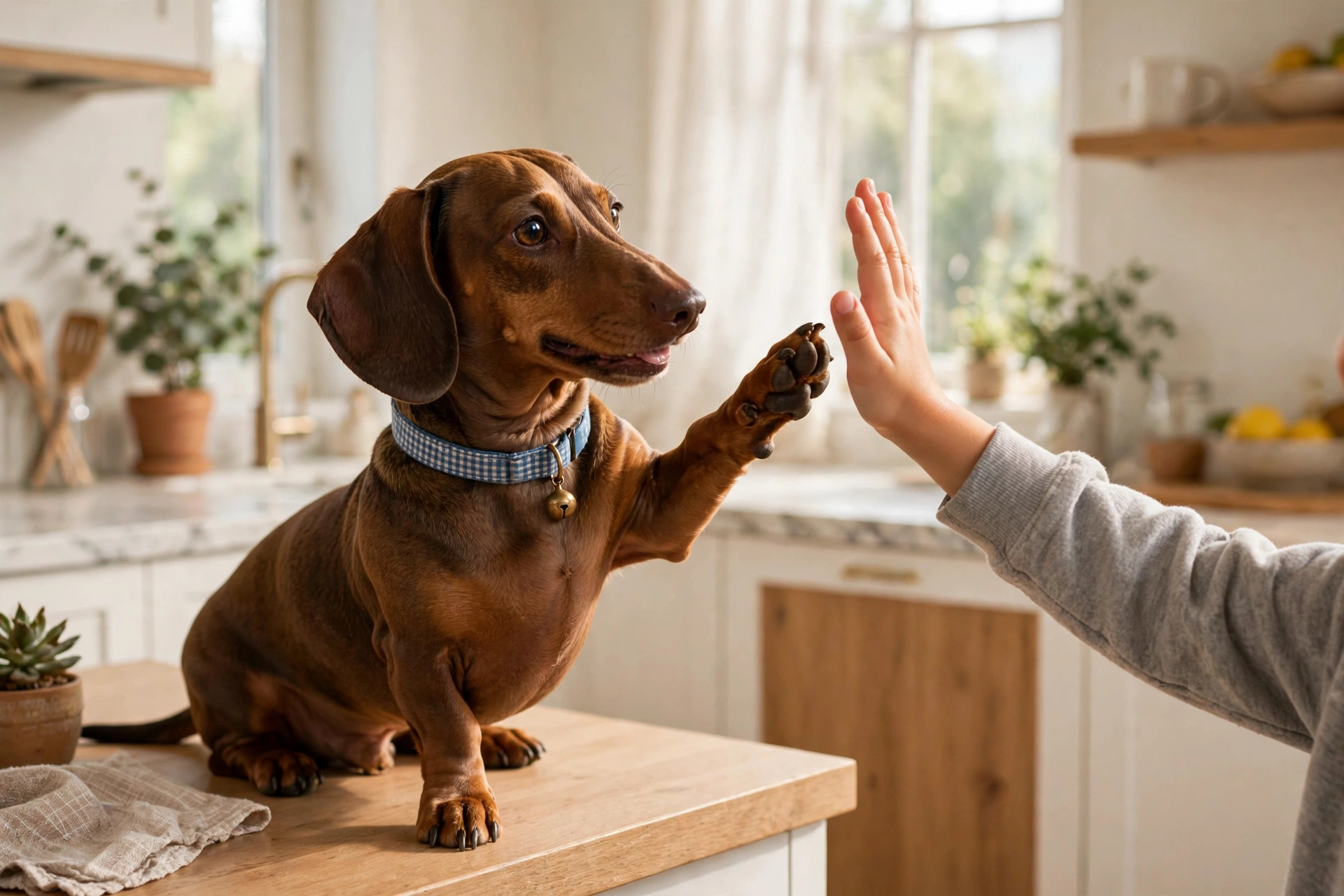
By now your dog understands the game: paw touches hand, treat happens. Now give that behavior a name. Say “high five!” in a bright, upbeat voice just before you present your palm. After several repetitions, your dog will start offering the paw the moment they hear the words — that is when you know the cue is sticking.
Keep your hand signal consistent too: palm up, fingers pointing skyward, at about your dog’s nose height. Dogs read body language better than words, so the visual cue does most of the talking.
Helpful pick: KONG Classic — stuff it with peanut butter for a perfect end-of-session jackpot reward.
Step 6: Raise the Criteria Gradually
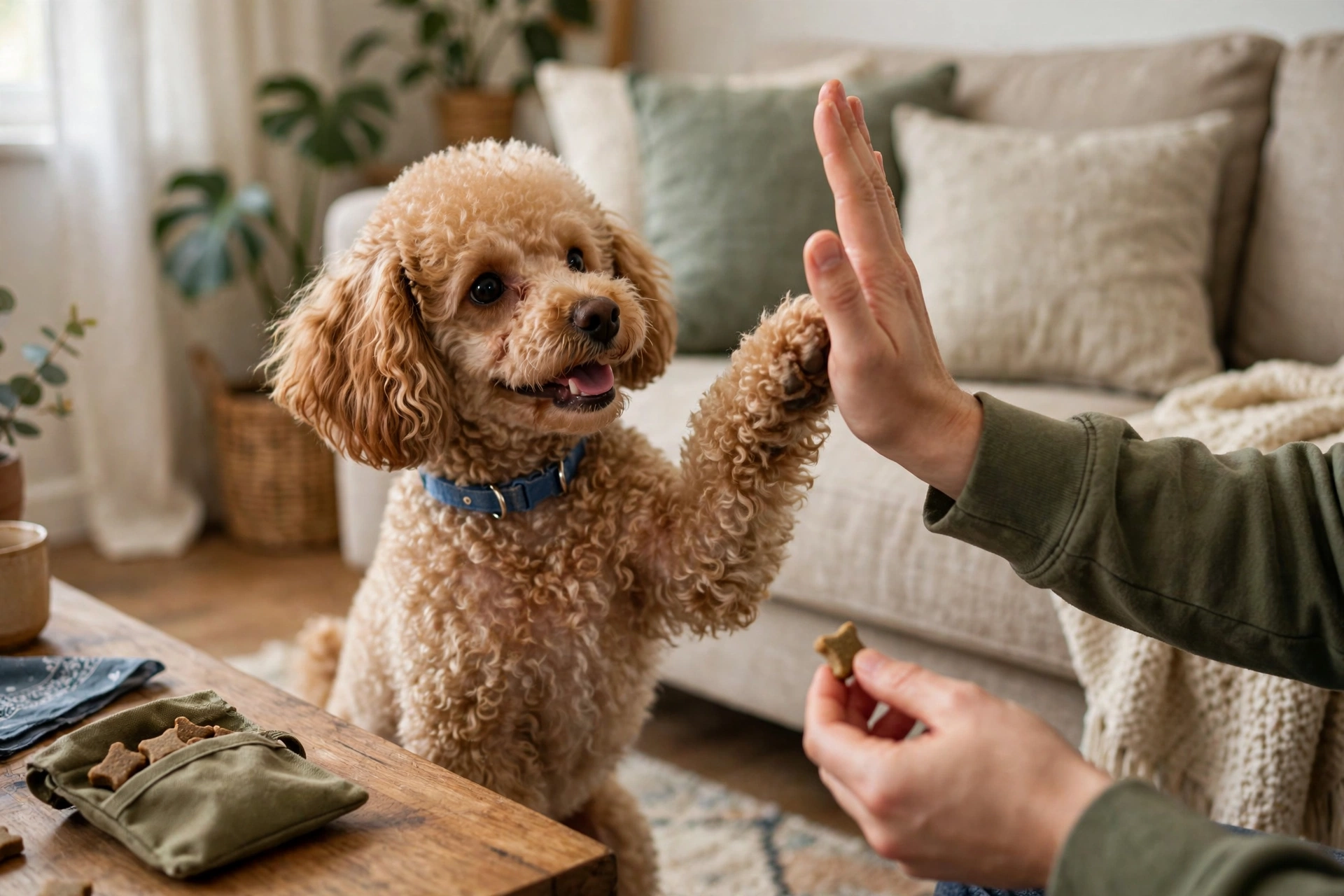
Once your dog is offering a solid high five, raise the bar in small increments. Ask for a slightly higher paw touch, a longer hold before you mark, or a high five from a few feet away. Only change one thing at a time — if you ask for a higher paw and more distance in the same rep, you are setting your dog up to fail.
A great variation once the basics are solid: teach both paws. Hold up your other hand and reward your dog for using the opposite paw. Soon you will have a two-handed double high five that steals the show at every gathering.
Helpful pick: Snuffle Mat — a fun between-sessions activity that burns mental energy so training stays sharp.
Step 7: Keep Sessions Short and Fun
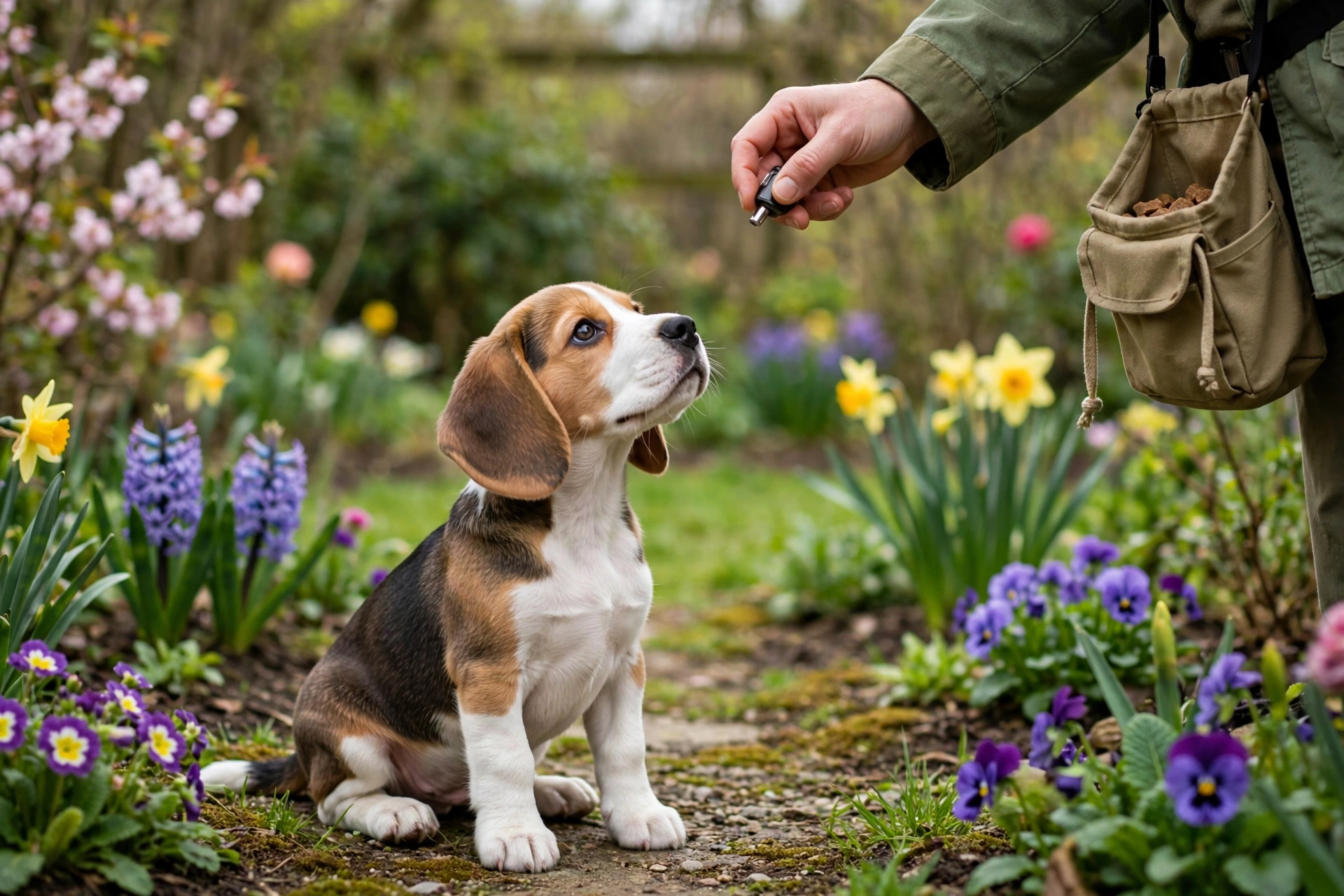
Five to ten minutes is the sweet spot for trick training. Two or three mini-sessions a day beat one long, tiring session every time. Watch your dog’s body language: a bright, bouncy pup wants to keep playing; yawning, sniffing the ground, or wandering off means it is time to wrap up with one easy win and a treat.
Always end on a success, even if that means asking for something easy your dog already knows. Ending happy means your dog will be thrilled when the next session starts.
Helpful pick: Chuckit! Ball Launcher — a quick game of fetch is the perfect playful reward between training sessions.
Step 8: Troubleshoot Common Snags
Stuck? Here are the two most common roadblocks and how to fix them:
Your dog won’t offer the paw at all. Make the lure more tempting — use a smellier treat, hold the fist closer to their nose, and be patient. Some dogs need a full minute of thinking time on the first rep. Never grab their paw and lift it; that startles most dogs and teaches them nothing.
Your dog gets too excited and jumps or mouths your hand. Lower your hand, slow your movements, and reward only calm paw touches. If excitement is boiling over, pause, ask for a sit, and reset. Calm energy from you creates calm responses from your dog.
Helpful pick: Zesty Paws Calming Chews — a gentle option for dogs who get over-the-top excited during training.
Common Mistakes to Avoid
Most high-five training goes wrong in the same few ways. Grabbing your dog’s paw to “show” them the trick is the biggest one — it can make paw-shy dogs anxious and slows learning. Skipping the sit foundation is another: a dog that can’t hold still will keep wandering off mid-lesson. And the sneakiest mistake is training too long; an over-drilled dog gets bored and starts offering sloppy, half-hearted paws. Keep it short, keep it happy, and let your dog’s enthusiasm do the heavy lifting.
If your dog already knows how to shake, you have a head start — you are simply asking for the same paw at a higher angle. Many owners also love pairing high five with a solid recall so their dog comes running and celebrates on arrival. And if your pup is the toy-obsessed type, a quick round with one of the best puzzle toys afterward keeps their brain happily busy.
Frequently Asked Questions
How long does it take to teach a dog to high five?
Most dogs grasp the basic concept within 15 to 30 minutes of total training, usually spread over a few short sessions. Reliable, on-cue high fives typically take one to two weeks of consistent practice.
What age can a puppy learn to high five?
Puppies as young as 8 to 10 weeks can start learning, as long as sessions are very short (two to three minutes) and always fun. It is one of the easiest tricks for young puppies because it uses a natural pawing instinct.
My dog already knows shake — will that confuse the high five?
Not at all. Shake and high five use the same paw-lift behavior; the only difference is your hand position and the verbal cue. Many trainers teach shake first, then transition to high five by raising the palm higher.
Should I use a clicker or just say “yes”?
Both work. A clicker is more precise and consistent, which can speed up learning. But a clear, upbeat marker word like “yes!” works perfectly well for casual trick training — the key is marking the exact moment of the paw touch.
My dog paws at everything now. Did I create a monster?
A little bit, but it is an easy fix. Only reward the paw when you have cued “high five” — ignore (don’t scold) uncued pawing, and teach a clear “all done” signal to end trick sessions. Dogs quickly learn that the paw only pays off on cue.
As an Amazon Associate, PetPostHub earns from qualifying purchases.



4 Comments